Experts Matter. Find Yours.
Connect for media, speaking, professional opportunities & more.

TORONTO, ON., May 29, 2020 — International Data Corporation (IDC) Canada announced today the release of 20 new research reports to help vendors understand the impact of COVID-19 on the Canadian ICT market, including five new forecast documents. In addition, most analysts have created an additional report analyzing the impact of COVID-19 on their specific technology patch, providing our clients with additional details on the impact and guidance for vendors in that market. IDC Market Forecasts help technology suppliers identify market drivers and size, measure current performance, analyze leading market indicators, as well as plan for future opportunities and growth. The five forecast reports are listed below: Canadian Communications Services Forecast, 2020–2024: COVID-19 Turns Telecom Inside Out (IDC# CA45063520 ). This IDC study presents IDC Canada's five-year forecasts for communications services spending by market and customer segments, company size, industry sector, and region for 2020–2024 based on the annual update of IDC Canada's Communications Market Model and replaces our previous comprehensive spring and fall 2019 forecasts. "Communications providers are largely recession proof and fortunately investments in next-gen network technologies and architectures are allowing communications service providers to cope with unrivalled demand," says study coauthor Lawrence Surtees, vice president of Communications Research and principal analyst at IDC Canada. "But the duration of the COVID-19 pandemic is still a great unknown and its associated economic shocks could dramatically impact the current forecast." Canadian IT Professional Services Forecast, 2020–2024 (IDC# CA45064220 ). This IDC study provides the spring 2020 market size and forecasts for the Canadian IT professional services market. The professional services market is made up of four submarkets: Custom application development, IS consulting, Network consulting & integration, and Systems integration. "The Canadian IT professional services market relies on discretionary capital spending budgets, which are typically suspended or curtailed in times of economic uncertainty. 2020 will be a challenging year for professional services firms due to the COVID-19 pandemic, but the market is expected to recover as the Canadian and global economies recover and businesses reinstate capital spending for IT projects," says Jim Westcott, research manager, Professional Services, IDC Canada. Canadian Infrastructure Outsourcing Services Forecast, 2020–2024 (IDC#CA45058420). This IDC study provides IDC's forecast for the Canadian infrastructure outsourcing services market for 2020–2024. It is an update of the previous forecast published in Canadian Infrastructure Outsourcing Services Forecast, 2019–2023 (IDC #CA43804019, May 2019). "The infrastructure outsourcing market continues to change, and COVID-19 will likely accelerate change. The decline in 1st and 2nd Platform technologies is leading to slow outsourcing spending on these areas, while the growth in 3rd Platform technologies to support digital transformation are increasingly incorporated into outsourcing and managed service engagements," says Jason Bremner, research vice president, Industry and Business Solutions. Canadian Consumer Wireless, Internet, and Wireline Voice Services Forecast, 2020–2024 (IDC# CA45059520). "In an already-competitive consumer market in the middle of great technological change, the global Coronavirus pandemic and the precautionary restrictions it has placed on Canadians has not only caused drastic socioeconomic changes but has forced consumers to weigh out the value proposition of each consumer service," says coauthor Manish Nargas, senior analyst for Consumer Services and Mobility. "Survival of the fittest is the call of the hour, and it seems that some consumer services will fare better than others after the dust has settled. While easier said than done, service providers need to think beyond the today's losses in order to plan for tomorrow's win." Canadian Consumer TV Services Forecast, 2020-2024 (IDC#CA45059620). This IDC study examines the forecast for Canadian consumer TV services subscribers and revenue. It also addresses the factors shaping the market as well as the key drivers and inhibitors underlying the forecast. "TV service providers will have to bring out their A game as they look to harness their next-gen TV service capabilities and create symbiotic, seemingly 'complementary' partnerships with OTT video providers to keep consumer eyeballs on their TV service platforms all the while combating economic ill effects of COVID-19 restrictions in the short term," says coauthor Manish Nargas, senior analyst, Consumer Services and Mobility at IDC Canada. "Based on our forecasts from May 1, 2020, we’re looking at an unprecedented 5.4 per cent decline for the year for the combination of telecom and IT spending in Canada. The cumulative impact of trade restrictions, supply chain impairments, commodity price declines, significant lay-offs and freefalling consumer and business confidence has led to a more dramatic impact on the overall ICT market than we had predicted in early April," says Nigel Wallis, vice president, IoT & Industries at IDC Canada. IDC develops detailed forecasting reports and analysis for major technology markets in Canada, which are published annually during the month of May. IDC's Forecast Scenario Assumptions for the Canadian ICT Market, 2020 and Beyond (IDC# CA46217620 , May 20 20 ) supports the underlying macroeconomic assumptions for each of the ICT market forecast reports. We also recently released a new interactive Canadian COVID-19 IT Impact Dashboard tool to help our clients visualize the impacts, in partnership with Rel8ed.to, which is available for everyone to use. For our clients that need to know the impact of the pandemic on ICT Spending beyond Canada’s borders, IDC created our global COVID-19 Resources microsite which contains more research reports, webinars, press releases and blog posts from around the world. We’ve also done a series of free webcasts for our clients with the first one on April 2 and the second one on May 6. Our third webcast in this series will occur on June 4th. Register today for COVID-19 Impact: Preparing for Recovery in the Canadian Tech Market. Here’s the list of our recently published Canadian-based COVID-19 research reports to help our clients meet the challenges from the pandemic, anticipate market changes and keep business moving: COVID-19 Impact on the Canadian ICT Market (IDC#CA46134820) Canadian Datacenter Infrastructure Action Item, Q2 2020: The Impact of COVID-19 (IDC#CA45057420) Impact of COVID-19: Canadian IT Services Market (IDC#CA46166120) All Priorities Aside: The Canadian Government's Singular Response to COVID-19 (IDC#CA46166920) The Impact of COVID-19: Canadian Security Solutions Market (IDC#CA46166520) Canadian Communications Service Provider Capex Spending, 2019–2020 (IDC#CA45063820) Canadian Government Wireless Price Policy - Ill-conceived and Horribly Timed (IDC# CA45663920) COVID-19 Business Impact: Hierarchy of Needs; Moving from Pandemic Risk Management to Organizational Agility (IDC# CA46228420) How is the Pandemic Crisis Impacting Digital Transformation in Canada? (IDC# CA46235620) Impact of COVID-19: Canadian Software as a Service Market (IDC# CA46166620) COVID-19 Impact: What’s Next for the Canadian Tech Market (IDC# CA46281820) COVID-19 Impact: Canadian Retail & Wholesale Market (IDC# CA45674020) COVID-19 Leadership: Canadian CIOs Strategize on Responses to COVID-19 (forthcoming) Critical Networks Provide Critical Care: Role of Communication Networks to Treat and Prevent COVID-19 (forthcoming) COVID-19 Impact: Canadian Vertical Markets Overview (forthcoming) For more information about the market forecast reports, the COVID-19 related reports, or to arrange a one on one interview with any of the report authors, please contact Cristina Santander at AskIDC@IDCcanada.com.

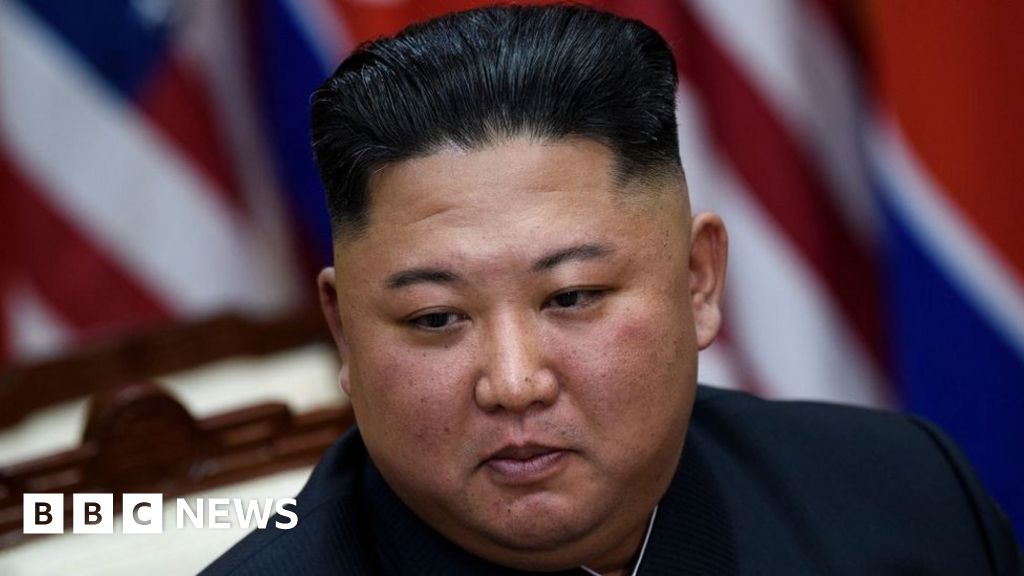
As the world watches – Many wonder who is next in line in to the throne in North Korea?
It’s the rumor that won’t go away. The mysterious leader of North Korea, Kim Jong-un is dealing with serious health issues. Some are even speculating death may be close or has even potentially occurred. The news of a nuclear armed rogue nation that could soon be leaderless has the west watching and worried. If you’re a journalist covering, there are many questions to be asked. What is the succession plan for North Korea’s leadership? Will the traditionally patriarchal country allow Kim Yo-jong, Kim Jong-un's younger sister to ascend to power? Are there more distant relatives who could make a claim to the role? Is there a chance North Korea could accept a change in power structure or even adopt a non-dictatorial style of government? And, is now the opportunity for change in North Korea? If you are covering, we’re here to help. Dr. Glen Duerr's research interests include comparative politics and international relations theory. Glen is an expert on this subject and is available to speak to media regarding this topic– simply click on his icon to arrange an interview.


As the global pandemic touches almost all parts of the United States – it is essential that the public receives only accurate and definitive information from credible and expert sources as news, media and information reaches million of people across the country. An invisible enemy is killing thousands and forcing people worldwide to cower behind closed doors. Unfounded conspiracy theories and miracle “cures” abound on social media. Politicians and pundits send mixed messages about how to protect yourself. Who you gonna call? - Bedford Gazette, April 14 As the coronavirus rampages, the public increasingly is turning to experts in academia and government -- the educated, experienced “elites” that many Americans had tuned out. The Coronavirus 2019 (COVID-19) situation is certainly new to all of us. As guidance from the CDC changes and instructional methods transition, there are experts at Georgia Southern who can help to answer questions such as: How should we best address this pandemic as a nation? How should we best address this pandemic individually? What does it mean to “flatten the curve?" What is the economic impact of COVID-19? How do you best manage employees virtually? Why are grocery stores having trouble keeping inventory on their shelves? Should we prepare for a lapse in groceries and goods? What contributes to the fear and panic in disasters and pandemics? What do educators, parents and students need to know to prepare for online learning in the K-12 and college settings? If you are a reporter covering COVID-19, let the team of experts from Georgia Southern help with your coverage. Public Health: Atin Adhikari, Ph.D. Associate Professor of Environmental Health Sciences, Department of Biostatistics, Epidemiology and Environmental Health Sciences, Jiann-Ping Hsu College of Public Health Dr. Adhikari brings over 15 years of extensive research experience on aerosols, airborne microorganisms, other air pollutants, and related respiratory disorders. His current research areas include environmental air quality, exposure assessment, occupational health and safety, environmental microbiology, and respiratory health. Before joining JPHCOPH, Dr. Adhikari was also involved (Co-I) with two DoD-DTRA and U.S. Office of Naval Research funded projects on inactivation of hazardous microorganisms. Chun Hai (Isaac) Fung, Ph.D. Associate Professor, Department of Biostatistics, Epidemiology and Environmental Health Sciences, Jiann-Ping Hsu College of Public Health Dr. Isaac Chun-Hai Fung is a digital health expert and an infectious disease epidemiologist. He analyses social media data for public health surveillance and health communication and uses digital technologies for public health interventions. He investigates the transmission of communicable diseases with a focus on respiratory infections and environmentally transmitted infections. He applied a variety of methods, from classical statistical methods to machine learning and mathematical modeling, to address public health problems and to provide solutions to policy-makers. He is especially interested in assisting public health agencies in their responses to public health emergencies. He is currently a guest researcher with the Health Economics and Modeling Unit, Division of Preparedness and Emerging Infections, National Center for Emerging and Zoonotic Infectious Diseases, Centers for Disease Control and Prevention (CDC). Examples of his recent projects include: Surveillance of unplanned school closures through social media platforms, Analysis of social media posts pertinent to public health emergencies, such as Ebola, MERS and Zika. Jessica Schwind, Ph.D. Assistant Professor, Department of Biostatistics, Epidemiology, and Environmental Health Sciences, Jiann-Ping Hsu College of Public Health Dr. Jessica Smith Schwind is an epidemiologist and program evaluator. She joined the Department of Biostatistics, Epidemiology and Environmental Health Sciences at JPHCOPH in August 2017. Her current research interests include disease surveillance, capacity building and risk communication for the prevention and/or early recognition of outbreaks with a focus on: best practices for operationalizing the ‘One Health’ approach, understanding and improving capacity building efforts and priorities for increasing health surveillance, and improving early warning systems for disease detection and response by bridging the gap between global digital databases and local health information. Schwind also conducts SoTL research on innovative online/onsite teaching and evaluation with a focus on immersive and service-learning practices. Pandemics, panic and the public: Amy Ballagh, Ed.D. Associate Vice President of Enrollment Management Featured in the Washington Post : Jessica Schwind, Ph.D. Assistant Professor, Department of Biostatistics, Epidemiology, and Environmental Health Sciences, Jiann-Ping Hsu College of Public Health Dr. Jessica Smith Schwind is an epidemiologist and program evaluator. She joined the Department of Biostatistics, Epidemiology and Environmental Health Sciences at JPHCOPH in August 2017. Her current research interests include disease surveillance, capacity building and risk communication for the prevention and/or early recognition of outbreaks with a focus on: best practices for operationalizing the ‘One Health’ approach, understanding and improving capacity building efforts and priorities for increasing health surveillance, and improving early warning systems for disease detection and response by bridging the gap between global digital databases and local health information. Schwind also conducts SoTL research on innovative online/onsite teaching and evaluation with a focus on immersive and service-learning practices. Jodi Caldwell, Ph.D. Executive Director of the Georgia Southern University Counseling Center On a national level, Dr. Caldwell is currently serving her second elected term to the Directorate Board of the Commission for Counseling and Psychological Services of the American College Personnel Association and is a certified Red Cross Disaster Mental Health Responder. COVID-19 and logistics, the economy and the workforce: Alan Mackelprang, Ph.D. Associate Professor, Department of Logistics & Supply Chain Management Currently the director of the Ph.D. in Logistics and Supply Chain Management program, his research interests include examining interdependencies among supply chain partners, JIT/Lean production, manufacturing flexibility as well as supply chain integration. Scott Ellis, Ph.D. Associate Professor, Department of Logistics & Supply Chain Management Scott Ellis’ research interests center on the study of purchasing and supply management processes and functions. He has published in Journal of Operations Management and Journal of Supply Chain Management, among others. Richard McGrath, Ph.D. Professor, Parker College of Business Richard McGrath researches immigration, consumer survey methodology, and applied microeconomics. He is a long time expert on the economy in Savannah and the Coastal Empire. Michael Toma, Ph.D. Fuller E. Callaway Professor of Economics Michael Toma is a professor and lead analyst for the Center for Business Analytics and Economic Research, a student- and faculty-staffed applied research group focused on the Savannah-area economy that works with many local partners on special initiatives, customized applied business research and impact studies. Based on Toma's analytics, the Center publishes the quarterly Coastal Empire Economic Monitor, a closely watched economic report. Toma's community ties are also strong in the area. He serves on the Board of Directors for United Way of the Coastal Empire and on the organization's Executive Committee as chair of the Community Investments Committee. David Sikora, Ph.D. Assistant professor of management David Sikora’s research interests include strategic human resource management and the business impact of employee management practices. He has published his research in such journals as the Journal of Applied Psychology, Leadership Quarterly, Human Resources Management Review, International Journal of Selection and Assessment, and International Journal of Human Resources Development and Management. Prior to his academic career, David had extensive corporate experience in human resources and marketing including serving as human resources vice president at Cigna Corporation and director of human resources product management at Gevity HR, Incorporated. Steven Charlier, Ph.D. Associate Professor, Department of Management Charlier’s research interests are focused on the modern work environment, and include virtual teams, e-learning, leadership in a virtual world, and management education. His work has been published in several leading international academic journals, including The Leadership Quarterly, Human Resource Management, Journal of Organizational Behavior, Academy of Management Learning & Education, and Human Resource Management Review. Online teaching and learning: Charles Hodges, Ph.D. Professor, Department of Leadership, Technology and Human Development Hodges is a tenured professor of instructional technology at Georgia Southern with over 20 years of online teaching experience. As an active researcher in online teaching and learning, Hodges presents regularly at the national and international levels. He currently serves as the editor-in-chief of the journal and he is a long-time member of the Association for Educational Communications and Technologies, a professional organization for Educational Technology scholars and practitioners. Featured in the Inside Higher Ed article (published 3/11/20): Jeffrey Tysinger, Ph.D. and Dawn Tysinger, Ph.D. Professors, Department of Leadership, Technology and Human Development The Tysingers are one of very few individuals who are actively researching in the area of crisis preparedness in K-12 online learning Professors, Department of Leadership, Technology and Human Development The Tysingers are one of very few individuals who are actively researching in the area of crisis preparedness in K-12 online learning: o https://digitalcommons.georgiasouthern.edu/nyar/vol2/iss1/4/ o https://dl.acm.org/doi/10.5555/2811036.2811057 o https://eric.ed.gov/?q=Tysinger&id=EJ1147626 o https://eric.ed.gov/?q=Tysinger&id=ED595756 Dawn Tysinger, NCSP, serves as professor and program director for the nationally-recognized, National Association of School Psychologists-Approved Education Specialist program in school psychology at Georgia Southern University. Tysinger has contributed to her field through active participation in NASP, publications in school psychology journals, and presentations at the local, state, regional, national, and international levels. She currently serves on the NASP program review board for school psychology programs and as a member of the editorial boards of Journal of School Psychology, Psychology in the Schools, Trainers’ Forum: Journal of the Trainers of School Psychologists, National Youth-At-Risk Journal and Journal of Online Learning Research. Jeff Tysinger, NCSP, is a professor of school psychology at Georgia Southern University. He has been the president of the Kansas Association of School Psychologists (KASP), editor of the KASP Newsletter, KASP Futures committee member, KASP NCSP committee member, member of National Association of School Psychologists (NASP) since 1997, Nationally Certified School Psychologist since 1997, NASP Program Reviewer, NCSP Portfolio Reviewer, member of NCATE Board of Examiners, member of Georgia Association of School For parents at home with (k-12) children now distance learning: Chelda Smith Associate Professor, Department of Elementary and Special Education Smith’s master's thesis focused on parents as the first teachers of children and can speak to how parents can be empowered in that role. Her research agenda continues to focus on home and community assets, of which parents/caregivers are the primary influence and factor for positive outcomes. Lastly, as a parent of both a middle schooler and a toddler, Smith is navigating the process of being a primary educator in the home in real-time. Each expert is available to speak with media – simply contact Melanie Simon at 912.313.3245 to arrange an interview today.

The race for the White House is still on – is anyone paying attention?
No matter what, this is an election year. In fact, despite a crisis of any proportion, according to the U.S. Constitution, the end of term for any sitting President happens this January. But as the Democrats try and figure out what is left of their primary and President Trump is embroiled in the COVID-19 pandemic, what remains of the campaigns on either side of the aisle is anyone's guess. Journalists and pollsters are still paying attention, and no doubt the campaigns are keeping close watch, but how the candidates move forward without rallies, the requisite handshaking and the whistle-stop events may force a new approach to engaging voters and getting messages across for November. How each candidate behaves, reacts and endures during this crisis may also be critical to swaying voters about competence and leadership. Biden, who does not currently hold office, has been struggling to stay in the public eye as the coronavirus forced millions of Americans inside their homes. While Trump has held daily televised briefings about the virus, Biden has had to shut down fundraisers and other campaign events, and election officials in many states have postponed their nominating contests. Still, the poll found that the number of people who approve of Trump in general, and also those who like the way he has handled the U.S. coronavirus response, has changed very little over the past few weeks. About 44% said they approved of Trump's overall performance, and 48% said they liked the way he had responded to the coronavirus outbreak. April 01 - Reuters The election is going to happen this November - but how it is done and which campaign masters the new normal of politics is still unknown. If you are a journalist looking to know more or cover this topic – then let our experts help. Dr. Stephen Farnsworth is a sought-after political commentator on subjects ranging from presidential politics to the local Virginia congressional races. He has been widely featured in national media, including The Washington Post, Reuters, The Chicago Tribune and MSNBC. He is author or co-author of six books on presidential communication. His latest work, "Late Night with Trump: Political Humor and the American Presidency" examines the role late night television has played in shaping the perception of presidential politics. Dr. Farnsworth is available to speak with media and help with your coverage – simply click on his icon to arrange an interview today.



Op Ed: In coronavirus crisis, Don't prioritize economics over public health
The following is an excerpt from Op Ed that ran in the Detroit Free Press late last week. Th full piece is attached below for your reading pleasure. President Donald Trump said this week that he hopes to see economic activity ramped up and social distancing practices and other public health measures reduced by Easter, which is April 12. This is a recipe for disaster and it again vividly illustrates his dismissal of medical and scientific expertise for his own political goals. The rhetoric he uses suggests that the financial pain the nation will experience over the next year or longer is not worth the lives that will be lost as a result of dialing back public health restrictions. I am an ethicist. To me, Trump is forcing Sophie’s Choice decisions by people who have taken an oath to “first do no harm.” Trump and his advisers ignore the ethical pain that health professionals will have to endure who must decide who lives and who dies because we have too few ventilators or too few ICU beds to treat all the patients who need those beds for survival. Those harsh choices are very real right now. They would become even more tragic if public health measures now in place were loosened in order to improve economic activity. March 27 - Detroit Free Press There are many angles to explore and cover as the COVID-19 pandemic impacts just about every segment of American life. If you're a journalist covering the ethics involved and the leadership decisions taking place at each level of government, then let our experts help. Leonard M. Fleck is the Director of the Center for Ethics at Michigan State University. He is an expert in the areas of health care justice and served as a member of the Clinton Administration’s Health Care Reform Task Force in 1993 and as a state ethicist for Michigan regarding access to health care. Dr. Fleck is available to speak with media – simply click on his icon to arrange an interview.


My Friend Just Lost Her Job. How Do I Respond?
Baylor expert on grief shares ways people can speak with and minister to those who are unemployed due to COVID-19 For the week ending March 21, a record 3.28 million workers applied for unemployment benefits, a result of the sweeping economic consequences of COVID-19, according to a report from the U.S. Department of Labor. In the proverbial “blink of an eye,” many find their neighbors, friends, family – and even themselves – out of jobs that only a few weeks ago seemed safe and secure. The jobless are grieving. What’s our role? How do we help? How do we engage? Helen Harris, Ed.D., associate professor in Baylor University’s Diana R. Garland School of Social Work, is a nationally recognized expert on grief. She says one key to helping others is to imagine changing places with them – putting yourself in their position – and being the person you’d hope they’d be if the tables were turned. “The key to helping is to think about how we feel when we need help and what helps us feel comfortable,” Harris said. “This is a time to ‘do unto others as we would have them do unto us.’” In this Q&A, Harris shares tips that can help us be the neighbors, friends and family we need to be at this time. Q: With the rapid shuttering of businesses including retail stores, movie theaters and restaurants, many of our neighbors have found themselves without jobs. What are some ways we can help them during this time? Harris: This is such a hard time. People who lose their jobs feel even more anxious and vulnerable at a time when everyone is already struggling. Hopefully unemployment and the federal government allocations will make a difference, but those are not immediate. In the meantime, consider what we can do to help directly, through agencies and through our churches. It is important during this time that we reach out to our neighbors who are unemployed, not only with an encouraging word but also with concrete help like meals and supplies or rent and utilities. For families with infants, for example, we provide formula and diapers or the financial help to buy them. We can also contribute to the agencies that provide assistance to families during these hard times. Those of us who are working and earning an income have an opportunity to share with our neighbors. We can also remind them that job loss right now is about this crisis and will not last forever while being careful not to minimize what they are experiencing. This is really hard. Q: When someone is grieving – in this case due to the loss of a job – what should people say? What should they NOT say? Should we even address it at all? Harris: As is true with any loss, it is important to acknowledge it and share how sorry we are that they are going through this hard time. I would avoid minimizing or blaming for the job loss. That just is not helpful. Letting someone know that we care about their painful experience helps with isolation at a time when social distancing is already creating a sense of isolation. We need to stay socially connected even while we keep our physical distance from one another. Acknowledging how hard it is not to have a job to go to matters even as folks apply for other jobs, apply for unemployment and support one another. Q: In terms of actions, should people ask before donating money or groceries or other items? Harris: That’s a hard one. A lot depends on how well we know them and what will make them comfortable. I think when we cook a casserole or pot of beans and cornbread, cooking enough for our friend/neighbor too doesn’t require checking ahead of time. Otherwise, it makes sense to ask how we can help and then do what we can. When we are headed to get groceries or other items, we can check to see if our friend/neighbor needs something and then deliver it with the assurance of the blessing it is for us to be able to help out. There may be ways to do our helping anonymously as well when possible. Q: Is there anything else you’d like to share? Harris: When reaching out to people, it might be appropriate to use a statement like: “I like to believe that when I need help, and we all do sometimes, that someone will be there for me and my family. Right now, I am able to help. Next time, it could be me who needs help. I believe we are best when we are there for each other. So, thanks for letting me help.” It can also be a huge help to let folks know when we are aware of job possibilities and willing to put in a good word for them. Also Read: “Unintended Consequences of COVID-19,” an article by Baylor University’s Helen Harris, Ed.D., associate professor of social work, and Bill Hoy, D.M., clinical professor of medical humanities. ABOUT BAYLOR UNIVERSITY Baylor University is a private Christian University and a nationally ranked research institution. The University provides a vibrant campus community for more than 18,000 students by blending interdisciplinary research with an international reputation for educational excellence and a faculty commitment to teaching and scholarship. Chartered in 1845 by the Republic of Texas through the efforts of Baptist pioneers, Baylor is the oldest continually operating University in Texas. Located in Waco, Baylor welcomes students from all 50 states and more than 90 countries to study a broad range of degrees among its 12 nationally recognized academic divisions. ABOUT THE DIANA R. GARLAND SCHOOL OF SOCIAL WORK AT BAYLOR UNIVERSITY Baylor University’s Diana R. Garland School of Social Work is home to one of the leading graduate social work programs in the nation with a research agenda focused on the integration of faith and practice. Upholding its mission of preparing social workers in a Christian context for worldwide service and leadership, the School offers a baccalaureate degree (B.S.W.); a Master of Social Work (M.S.W.) degree available on the Waco or Houston campuses or online; three joint-degree options, M.S.W./M.B.A., M.S.W./M.Div. and M.S.W./M.T.S., through a partnership with Baylor’s Hankamer School of Business and George W. Truett Theological Seminary; and an online Ph.D. program. Visit www.baylor.edu/social_work to learn more.


Don’t Neglect Spiritual, Mental Health During this Time of Health Crisis, Baylor Expert Says
In a difficult and ever-changing time of crisis surrounding the spread of coronavirus, the basic needs of health and safety come first. But as these basic physiological needs are met, the more advanced care for spiritual and mental health can remain overlooked or ignored altogether. Baylor University’s Holly Oxhandler, Ph.D., LMSW., associate dean for research and faculty development and assistant professor the Diana R. Garland School of Social Work, is an expert on mental health, primarily anxiety and depression, as well as religion and spirituality in clinical practice. In this Q&A, she shares tips and resources to help unhook from the baser instincts of fear and anxiety, even momentarily, to monitor and care for spiritual and mental health needs. Q: During a crisis, why do spiritual and mental health needs tend to be overlooked or ignored? A: In the midst of a crisis, our natural reaction is to go into a fight-or-flight response to the situation. Our most basic needs must be met, such as finding a sense of safety, and our bodies are doing what they were designed to do: to protect us. For example, if we were to encounter a bear on a hiking trail, our sympathetic nervous system would be activated to meet the basic need of keeping us safe. Our spiritual and mental health are not primary needs in that moment of crisis. If we were to run from that bear and reach safety, our emotions would eventually become regulated, our breathing would become normal, and we could return to a generally balanced way of being that allows for attention to our spiritual and mental health. However, we are in a prolonged moment of crisis surrounded by uncertainty, constantly evolving news updates and daily threats to our and loved ones’ safety regarding our health, finances and sense of normalcy. In this state of constant stress, it can be really hard to unhook from the fight-or-flight response and remember to tend to our spiritual and mental health. Q: How can people tend to their spiritual health during this time of crisis? A: In this moment, most of us are being forced to be still and/or surrender the illusion of control in ways we have never faced before. In this stillness, our spiritual practices can help remind us of a divine Love that is with us through each moment, but we must intentionally set time aside to practice them. Plus, many research studies have shown healthy, positive spiritual practices have the potential to support our mental and physical health. One thing that’s very important, especially in the midst of this crisis, is that we do not spiritually bypass what’s happening. It may be tempting to want to jump to hope and ignore the pain, but to the best of our ability, our faith traditions teach us we must sit with and feel the grief rooted in the overwhelming change and loss we and our neighbors are facing. As Fr. Richard Rohr says, “If we do not transform the pain, we will most assuredly transmit it – usually to those closest to us.” We must be with the fear and uncertainty, grieve the loss of life as we knew it a few weeks ago, pray the psalms of lament, and feel the freedom to wrestle with and/or cry out to God in ways we read about others doing so in our sacred texts. The important thing is that each of us engages in something tied to our faith, regardless of what we believe in, and to be consistent in the practice, continually learning to surrender that sense of control we’re all finding ourselves learning to do right now. Spiritual Health Tips Prayer Reading our sacred text Meditation Centering prayer (my personal favorite, which teaches us silence, solitude and stillness) Breath prayers (here are some examples) Engaging in creativity (music, dance, art) as an act of worship Practicing gratitude Seeking beauty in the mundane Yoga Journaling Especially in this time of increased isolation, I would recommend inviting others into these practices for a sense of solidarity and community, including those within our home or via social media, video conferencing or by phone. Q: How can people tend to their mental health needs? A: The first practice I would recommend is to pause and breathe deep for 4-5 seconds, noticing your belly rise instead of your chest, and breathe out for 6-7 seconds. The second would be grounding. When our brain is flooded with information and emotion, it is hard to stay present. In grounding, we take a deep breath and ask ourselves five questions to return to the present moment: What do I smell right now? What do I taste? What do I see in front of me? What can I touch and feel the surface of? What do I hear? A third recommendation would be to get outside as often as you can and, ideally, into some sunlight. I would also recommend the practice of tuning into our bodies. For many of us, it can be difficult to pay attention to what our bodies are trying to tell us, in the same way our thoughts and emotions communicate with us. Especially now, pay attention to the tension in your neck, the overall exhaustion, the pain in your arm muscles, the tightness in your chest, or any other experiences you notice by tuning in. Your body may be trying to tell you to spend less time watching the news (maybe cut back to 1-2 times a day), to take a nap or to move it and exercise. Last, and perhaps most importantly, do not hesitate to reach out for help if you are noticing changes in your appetite, sleep, mood, thoughts or feelings. Stay in communication with loved ones but just as you would seek a medical doctor for a broken arm, seek a therapist when you notice changes in your mental health. Many therapists are quickly adapting to telehealth services in this moment to meet growing demands and social distancing expectations. Some sites for finding a therapist include Psychology Today or HelpPRO, and if you or a loved one are deeply struggling, please reach out to the National Suicide Hotline or call 800-273-TALK (8255). Reaching out for help with your mental health is a sign of courage, not weakness. Q: During this time of crisis, what populations do you feel are most vulnerable to mental or spiritual health decline? A: Honestly, I think every single one of us are vulnerable to mental and spiritual health decline during this moment for varying reasons. As mentioned before, these parts of us are easily brushed aside when we’re most focused on ensuring our basic needs of safety and security are met. Still, there are a few groups I’m especially sensitive to. The first are the helpers on the front line facing far more need than resources, time or energy to meet those needs. These include our health care providers, social workers, therapists, grocery and restaurant employees, teachers, parents, nonprofit organizations, faith leaders, volunteers, community leaders, pharmacists, lab technicians, scientists and more. These helpers are at such high risk of burnout and my hope is that, to the best of their ability, they are caring for themselves holistically in order to care for others well. I’m also sensitive to a few other groups who are vulnerable to mental and spiritual health decline. First, older adults are the most religious cohort and are already at risk for depression and isolation even without a crisis, so I worry for them in light of the necessary social distancing. Second, in light of added pressures, those with various mental illnesses must continue to care for themselves via the medication or therapy they need. Third, I’m sensitive to those who are recovering from a substance or behavioral addiction and are now surrounded by overwhelming stressors that put them at a higher risk of relapse. Thankfully, recovery groups are now moving online and I would encourage those in recovery or remain plugged into a group. Q: Many people are unable to access a doctor or professional therapist to get help. What are some resources for those that may need free or low-cost options? A: There are a number of websites that can help individuals find a professional mental health care provider, such as a licensed clinical social worker, psychologist, counselor or marriage and family therapist. I mentioned Psychology Today, HelpPRO, and the Suicide Prevention Hotline above, but there are others. Better Help and Talk Space are two growing online therapy sites and Low Cost Help elevates providers with affordable rates. I also host a weekly podcast, CXMH: Christianity and Mental Health, which has a ton of episodes on various topics related to this intersection, including a recent one specifically on COVID-19. You can also contact your insurance provider to see who is in network or, if you do have a primary care provider, see if they have any recommendations. Your local faith communities may also have a list of mental health care providers to consider. There are also many organizations committed to providing resources, including the Substance Abuse & Mental Health Services Administration, National Alliance on Mental Illness, and the National Institute on Mental Health. Q: How can neighbors help neighbors and individuals help individuals outside of the professional or therapy setting? A: I really want to emphasize that, especially in this moment, we must practice extending grace, being still and holistically caring for ourselves so that we can care for others well. We can do our part to serve those who are serving others, even if that means practicing social distancing and stillness, while tending to our spiritual and mental health. Discerning what is ours to do in this moment to offer help, healing, hope and love to our neighbors as well as ourselves, and to help protect our helpers from burning out, will be critical in the days and weeks ahead. As Chris and Phileena Heuertz shared in their prayer, A Call to Solidarity During COVID-19: “You’re not alone. We’re in this together. We’ll do everything we can to help.” ABOUT BAYLOR UNIVERSITY Baylor University is a private Christian University and a nationally ranked research institution. The University provides a vibrant campus community for more than 18,000 students by blending interdisciplinary research with an international reputation for educational excellence and a faculty commitment to teaching and scholarship. Chartered in 1845 by the Republic of Texas through the efforts of Baptist pioneers, Baylor is the oldest continually operating University in Texas. Located in Waco, Baylor welcomes students from all 50 states and more than 90 countries to study a broad range of degrees among its 12 nationally recognized academic divisions. ABOUT THE DIANA R. GARLAND SCHOOL OF SOCIAL WORK AT BAYLOR UNIVERSITY Baylor University’s Diana R. Garland School of Social Work is home to one of the leading graduate social work programs in the nation with a research agenda focused on the integration of faith and practice. Upholding its mission of preparing social workers in a Christian context for worldwide service and leadership, the School offers a baccalaureate degree (B.S.W.); a Master of Social Work (M.S.W.) degree available on the Waco or Houston campuses or online; three joint-degree options, M.S.W./M.B.A., M.S.W./M.Div. and M.S.W./M.T.S., through a partnership with Baylor’s Hankamer School of Business and George W. Truett Theological Seminary; and an online Ph.D. program. Visit www.baylor.edu/social_work to learn more.


Baylor Gerontology Expert Shares Tips to Care for Aging Population During Coronavirus Pandemic
“This is not a vacation from caring; it is a time when caring is needed most of all,” social work professor says The Center for Disease Control and Prevention (CDC) has announced that older adults and people who have serious chronic medical conditions such as heart disease, diabetes and lung disease are at a high risk for the coronavirus. The virus hit hard in late January at a nursing facility in the state of Washington, where a number of residents died. As a result, the CDC has recommended strong restrictions on visitors to long-term care facilities, and the health organization continues to preach limited physical contact and “social distancing” – creating intentional space of six feet or more between each person – to stem the spread of the virus. James Ellor, Ph.D., The Dorothy Barfield Kronzer Endowed Professor in Baylor University’s Diana R. Garland School of Social Work, is an expert on working with older adults as well as disaster behavioral health. He said it’s important in this time of uncertainty to continue to support and minister to those older adults who are self-isolating in their homes and those in long-term care facilities. “Remember, no one stops caring about others just because germs are in the way,” Ellor said. “Express your caring in appropriate ways. This is not a vacation from caring; it is a time when caring is needed most of all. We also know that prayer is very important. Hold the person in prayer and let them know you are doing so.” In the following Q&A, Ellor shares tips on how to care for this population during this time. Q: What are some ways we can check on older relatives and neighbors without using physical touch and interaction? A: There is a fine line in this unknown time between caution and paranoia. Respect for each other’s boundaries is the critical value. It seems very awkward to want to affirm someone, yet not shake their hand. However, we need to use our words and ask what the other person is comfortable with, and by the same measure, let them know what you are comfortable with. At this point, the most obvious ways to check on people is through social media or paper and pencil. Drop them a note, call them on a phone, use other social media devices as appropriate. I would suggest that if you normally visit them, say on Fridays, be sure to continue to do that, albeit by phone or even just drop them a card. Q: If people have chosen to self-isolate or if they’re scared to venture out due to this health crisis, what are some ways people can help? A: Be consistent. If you have a pattern, continue the pattern. Remember the principles above. If the person is feeling out of control, talk quietly with them and offer them a card or other gesture of caring. Q: Can you explain the importance of personal interaction for people who are shut in? A: People with human contact simply live longer than those completely cut off from the world, with few exceptions. While about 15 percent of older adults are “shut in,” only about 5 percent are bed bound. That means that persons who are dependent on oxygen, for example, will be in their house, but not in bed. They depend on all of their outside contacts. Keep your normal visiting pattern, albeit with a card in the mail or phone call. If you are a member of a church, have the youth group use some of their extra “stay at home” time to make greeting cards intended to cheer up a person in your church or group that is home bound. Older adults like tactile things, particularly if they are sensory-impaired. If you make a card, put a feather in it, or some other feel-good item. If you are purchasing a card, there are some that have things in them that you can feel, or even hear. Some cards will allow you to record a short message. Q: Since so many long-term care facilities now have strict rules about visitors, are there any ways that people can interact or show support to residents in a safe manner? A: Most facilities are cutting off all contact from the outside. Only their own staff, physicians and hospice nurses are being allowed in. Even social workers, chaplains and other clergy are being kept out. In the Waco area, physicians are being screened for a fever or cough and could be turned away. As such, phone calls, cards and letters are all important. Several facilities in this area have begun to put room numbers on the windows of their facility, so that family can come by and wave through the window. Persons in long-term care facilities, even those with dementia, will pick up on the anxiety of the staff and especially the TV, which is often on all the time. A person with dementia may not be able to understand the anxiety but will be anxious when others are anxious. This makes the job of staff that much harder. Q: Anything else you’d like to share? A: The workers at these homes have a much harder job now. Don’t hesitate to send them a card or a treat if it can be obtained safely. Staff, even the people at the door telling you that you can’t come in to see your loved one, have a tough job now and need extra support from everyone. ABOUT JAMES ELLOR, PH.D. James Ellor, Ph.D., serves as professor and The Dorothy Barfield Kronzer Endowed Professor in Family Studies in Baylor University’s Diana R. Garland School of Social Work. works with older adults around issues of mental and spiritual health. He has served on the executive committee of the Midwestern Geriatric Education Center and provided education, counseling, and planning for individuals and groups who work with seniors. His research includes work in entrostomal therapy, hunger, the church as service provider, spiritual assessment, and intervention techniques with cognitively impaired older adults. ABOUT BAYLOR UNIVERSITY Baylor University is a private Christian University and a nationally ranked research institution. The University provides a vibrant campus community for more than 18,000 students by blending interdisciplinary research with an international reputation for educational excellence and a faculty commitment to teaching and scholarship. Chartered in 1845 by the Republic of Texas through the efforts of Baptist pioneers, Baylor is the oldest continually operating University in Texas. Located in Waco, Baylor welcomes students from all 50 states and more than 90 countries to study a broad range of degrees among its 12 nationally recognized academic divisions. ABOUT THE DIANA R. GARLAND SCHOOL OF SOCIAL WORK AT BAYLOR UNIVERSITY Baylor University’s Diana R. Garland School of Social Work is home to one of the leading graduate social work programs in the nation with a research agenda focused on the integration of faith and practice. Upholding its mission of preparing social workers in a Christian context for worldwide service and leadership, the School offers a baccalaureate degree (B.S.W.); a Master of Social Work (M.S.W.) degree available on the Waco or Houston campuses or online; three joint-degree options, M.S.W./M.B.A., M.S.W./M.Div. and M.S.W./M.T.S., through a partnership with Baylor’s Hankamer School of Business and George W. Truett Theological Seminary; and an online Ph.D. program. Visit www.baylor.edu/social_work to learn more.

It may be the most wonderful time of the year, but for those delivering packages to houses and homes across America this holiday season it’s also the busiest one. In fact, it’s expected that Amazon alone will ship close to 300 million packages for Christmas. Customers want their purchases quicker and cheaper and it’s changing how the landscape works. It's estimated that free shipping will cost Amazon more than a billion dollars this quarter alone. This explains why shippers are looking at some radical new technologies to cut the cost of the last mile – and this is not just limited to the retail shopping industry. “Technology-driven innovations such as delivery drones or driverless vehicles not only facilitate last-mile delivery, they help with the inclusion of new sets of “customers, especially those in remote locations or rural areas with poor infrastructure, says Morvarid Rahmani, assistant professor of Operations Management at Scheller College of Business at Georgia Institute of Technology. For instance, companies like UPS, CVS, and WakeMed are exploring the idea of drugs and other health-related items being delivered by drones. In a first, collaboration between the FAA and UPS partner Matternet made deliveries from a CVS pharmacy in Cary, North Carolina as well a customer’s retirement community in November. Rahmani thinks this type of delivery shows promise. “Using drones to deliver medical packages can give rural communities access to products and medical supplies, which they would not be able to access otherwise. This delivery model is a way of incorporating social concerns and conditions of underserved populations into business practices. Using drones to deliver medial packages is a great example of collaboration between a governmental agency and for-profit companies, which is toward the dual goals of promoting efficiency and inclusion,” she notes. So, while most consumers are coming to terms with drone technology as a means for the Amazons of the world to replace it’s fleet of trucks, many customers are seeing the future of receiving essential, potentially life-saving drugs to their doorstep. “These technologies enable inclusive retailing and distribution for large (excluded) communities all over the world, says Rahmani. “Successful implementation of inclusive business practices requires collaboration of for-profit firms with the public sector, civil society organizations, and communities”.CBS News - December 15, 2019 Morvarid Rahmani is an Assistant Professor of Operations Management at Scheller College of Business at Georgia Tech. She is an expert in the areas of research is on collaboration in work processes such as new product development, management/IT consulting, and education. Dr. Rahmani is available to speak with media regarding this topic – simple click on her icon to arrange an interview. About Scheller College of Business The Georgia Tech Scheller College of Business is located in a state-of-the-art building in Georgia Tech’s vibrant Technology Square, the core of the Atlanta’s high-tech business community. The College offers an internationally recognized business education, including full-time, evening, and executive MBA options as well as undergraduate and Ph.D. degrees, to approximately 2,000 degree-seeking students each year. Scheller College collaborates across Georgia Tech to offer joint MS degrees in quantitative and computational finance and business analytics. Custom and open enrollment programs for executives and professionals are offered through the Huang Executive Education Center, located within the College. Interdisciplinary centers for teaching and research within the College enrich the educational experience, the campus and the community by providing a direct connection with the real world. They fuel collaborative teaching and research in some of the most relevant areas in business today: leadership, innovation, sustainability, the global enterprise, and business ethics. For more information, contact media@scheller.gatech.edu


With 2018 in full swing there’s no sign that the issue of fake news is going away. In fact, it continues to plague major social platforms such as Facebook as well as the traditional media players. This erosion of trust begs the question – how can we ensure the right experts on important topics are at the center of the conversation? If your organization has experts, there is a silver lining. There has never been a more important time for experts – the real ones – not the “fake it till you make it” collection of posers and promoters that have read a blog on personal branding. We’re talking about the people who have put in their 10,000 hours of researching, building and publishing. Presenting your top people in a more visible, engaging and approachable way presents huge opportunities for you to build trust and deepen relationships with a variety of audiences, including customers and partners – not just the media. However, to really capitalize, you have to look closely at how audiences interact with your expert content. Based on our work with thousands of experts and their organizations, we’ve prepared a list of key trends and predictions you need to watch if you’re a communications and digital media professional. Trend 1: Organizations are measuring their “Internal Bench Strength”. The power behind any organization is its people, but many organizations fall short in taking stock of their roster of experts who are capable of building voice and reputation with key audiences. Communicators are increasingly turning to internal pulse surveys and annual assessments that better identify competencies, professional interests and attitudes across the organization. Smart organizations are using surveys to create an efficient roster of internal experts and match them to the news cycle. Identifying a “core group” of go-to experts who will best benefit from programs such as media training and carefully mapping key topics to experts will ensure the organization is aligned to support communications objectives – both for proactive story development and responding quickly to breaking news opportunities. Trend 2: Organizations are starting to function more like newsrooms. As newsrooms in the print and broadcast world continue to be streamlined and downsized, organizations can play a key role in helping journalists by making relevant content and credible sources more accessible. Incorporating better search features that allow journalists to quickly find experts using simple keyword searches is an important starting point. Showcasing experts in the context of key news events in a content hub with interesting story angles are increasing in popularity Trend 3: Next generation newsroom platforms will change how media find expert sources. Journalists have a challenging role today amidst a backdrop of fake news and increasing cynicism about the credibility and sources of information. They still have the same day deadlines, but with an increased responsibility to get the story right, so reliable sources are critical to their success. So it’s not surprising that journalists, television bookers and producers are gravitating to solutions that make it easier for them to discover, evaluate and connect with expert sources. We recently integrated our ExpertFile global directory into the Associated Press newsroom software which is used by thousands of print, broadcast and digital newsrooms around the world. The AP, as the world’s leading news organization, recognizes the pressures that publishers and broadcasters are under. They are committed to technology advances that help news organizations. Few journalists have the time to rummage around in poorly designed corporate websites and university faculty directories looking for the best expert. And if you think it’s just junior reporters using these online tools think again. We’re seeing seasoned journalists from top media outlets including The New York Times, CNN, Time Magazine, NBC, The Washington Post, the BBC, NPR Radio and the CBC making regular use of the ExpertFile platform. The bottom line: If you aren’t thinking about broader distribution of your expert content beyond your website you are missing out. Trend 4: New search technologies are helping organizations cut through the content clutter. Searching for the right person based on attributes such as key topics, publications, or geography inside an organization remains a challenge – even for those organizations that have invested heavily in content management solutions and intranet platforms. The organic and onsite search user experience has become a top issue for marketing and IT teams. Audiences who have been spoiled by “Google-like simplicity” expect to find relevant information, or they’re gone within seconds. That’s why many organizations are investing in new search technologies powered by machine learning to provide faster discovery and connections with their subject-matter experts. Last year we built Elasticsearch features right into our platform to save our clients the time and money of doing this for themselves. Search remains one of the biggest opportunities to quickly drive more market attention and audience engagement, as well as to improve internal collaboration between experts. Trend 5: Video will continue to outperform all other forms of content. There’s nothing quite like video to drive the value of owned content. But remember that video is becoming essential to boosting earned media. We’re continually impressed by the new research that continues to emerge on the power of video content. Last fall, LinkedIn reported audience engagement numbers for its new video feed feature that showed 20 times more engagement for video vs. all other forms of content on its platform. As more audiences demand video content, so does the demand in television newsrooms for broadcast-ready experts. That’s why we also partnered with Dejero to help broadcasters who use their platform to search for experts suitable for interviews. If you are looking to get more television coverage, then you have to invest some of your budget on video to showcase your experts. We predict that the most successful organizations will adopt a video-centric approach to storytelling, creating snackable multimedia content that connects with a range of audiences. Many marketers are overthinking video as something requiring a massive production with a big annual shoot”. That doesn’t work for audiences such as journalists who are feeding a real-time news cycle. Our simple advice – look carefully at your video strategy and identify opportunities to use video across your digital properties in areas such as your homepage, media room and even landing pages. We’re interested to hear how your organization is capitalizing on these trends to better promote your experts to key audiences. For more information on how ExpertFile can help your organization incorporate the latest software and services innovations into your thought leadership and expert marketing strategies please drop us a line at dtaenzer@expertfile.com.