
Experts Matter. Find Yours.
Connect for media, speaking, professional opportunities & more.

Virtual Reality-Based Surgical Simulations Could Make Patients Safer
Suvranu De, the director of the Center for Modeling, Simulation, and Imaging in Medicine at Rensselaer, has dedicated more than a decade of research to making surgery safer by developing virtual reality-based surgical training simulations that closely mimic the optics and haptics a surgeon may encounter in the operating room. A new $2.3 million grant from the National Institute of Biomedical Imaging and Bioengineering of the National Institutes of Health will further his research in this space, by supporting the development of a collaborative virtual reality-based surgical simulation environment that allows medical professionals to practice technical, cognitive, and interpersonal skills as a team. “People will be wearing head-mounted displays, and they will be immersed in a virtual operating room working on a virtual patient as a team,” De said. “We want to have an expert team in the operating room focused on the treatment of a patient, and not just a team of experts.” Conceptually, this approach is similar to crew resource management practiced by aviation pilots, which has led to a significant reduction in aircraft accidents. The Virtual Operating Room Team Experience (VORTeX) simulation system will provide realistic distractions, interruptions, and other stressors that medical professionals may encounter in an operating room. Traditionally, this type of simulation training has required mannequins, instructors, and a dedicated space, as well as significant coordination and resources. In contrast, the VORTeX system will be both distributed and asynchronous – allowing participants to join the simulation from different locations, and instructors to review the simulation and provide feedback at their convenience. Machine learning algorithms will be used to crunch the data and provide feedback to participants, who will be able to return to the virtual environment to review their performance. De is available to discuss how this type of virtual training is developed and implemented.


A New Kind of "Zoom" Science Lesson
With the end of the school year just around the corner and numerous COVID-19 restrictions still in place for the foreseeable future, many parents are worried. Summer camps in Pennsylvania are beginning to open—but with limited capacity. So, what are working caretakers to do with their kids all day? Villanova University professor of chemistry Marta Guron, PhD, and six of her students have created informative science lessons that bring learning and fun together in a virtual environment. In a typical year, Dr. Guron gathers a group together who volunteer their time by visiting local elementary schools to perform hands-on science experiments with fourth-graders, fifth-graders and sixth-graders. When in-person lessons were no longer an option due to the pandemic, the Villanovans adapted their strategy. Though finals are over and Villanova's campus remains empty, six dedicated undergraduate and graduate students are still finding time to go virtual with their lessons. In the following video, Dr. Guron and the Villanova students use PowerPoint, plastic containers, water and their choice of "solids" to talk about density. The supplies for this outreach program are typically provided by Villanova, but in light of everyone being "stuck at home," Dr. Guron encouraged the grade school students to experiment. "If there is something that you don't have at home, it's OK to try to replace different things. For example, some students, when they added different solids, they might have added a penny or a piece of wood. But others might have a bead or something else. It doesn't... much matter." She adds, "Please make sure you talk to your mom and dad before you take anything out!" Some other experiments the team has done include assessing symmetry in crystals, making the gooey, Double Dare-inspired "gak," building a fruit battery, investigating sound and studying capillary action in flowers. Dr. Guron is grateful that her students were still interested in the project, even after the end of a particularly unusual semester. "I thought it was awesome that these students all volunteered time and effort after their final exams were over because of their dedication to the program and to the kids. We are truly a community of helpers."

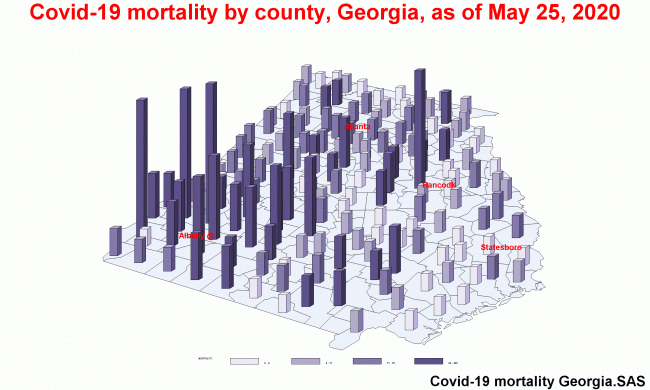
Graduate students in the Jiann-Ping Hsu College of Public Health at Georgia Southern University analyzed mortality data to reveal that a county in southwest Georgia is dealing with deaths from COVID-19 at a rate higher than most other counties in the country. The students found that the mortality rate of 305 per 100,000 residents (as of May 28, 2020) for Terrell County in southwestern Georgia, is 50% higher than that of New York state’s Nassau County, the documented highest rate in New York. The three other Georgia counties that are highest in terms of mortality rate are Hancock, Early and Dougherty counties. Three out of these four are in southwest Georgia, around the Albany area. That accounts for almost half of the 10 counties in the United States with the highest mortality rate, which is defined as a measure of the frequency of occurrence of death among a defined population. However, it’s interesting to note that none of Georgia counties reached the top 20 in terms of incidence and the death numbers per 100 confirmed Covid-19 cases, said professor Dr. Jian Zhang, a veteran medical epidemiologist. “Georgia is doing pretty well to stop the spread of the virus, and hospitals in Georgia are doing well to save hospitalized COVID-19 patients. The high mortality rate, in this case, may be deeply rooted in the historical burden of poverty in Georgia,” Zhang said. The findings are part of a service-learning project Zhang led. A six-student group formed the surveillance team that began running a real-time COVID-19 numbers in his Public Health Surveillance class. If you are a journalist covering COVID-19 and would like to learn more about this research taking place at Georgia Southern University – then let us help. Dr. Jian Zhang has worked with the Chinese Centers for Disease Control and Prevention, and the World Health Organization prior to moving to the United States.


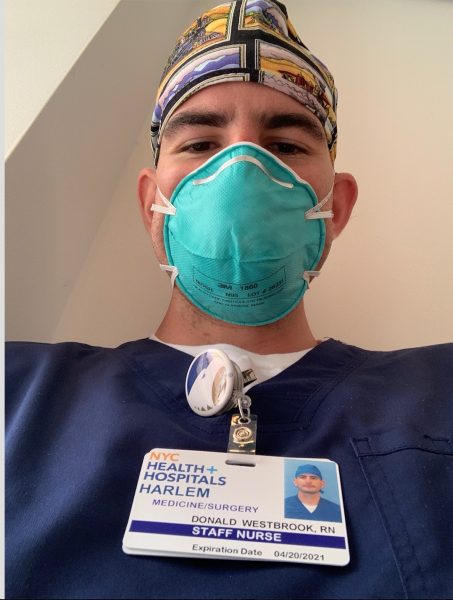
Diary of a COVID-19 crisis nurse in NYC: A Georgia Southern student’s first job
On May 1, Tucker Westbrook could finally sleep in. He’d been on duty as a COVID-19 crisis nurse at Harlem Hospital Center in New York City for 11 consecutive days, with a routine that began before the sun came up and ended long after the city had gone dark. Most mornings, he’d wake at 5:45 am., center himself with prayer and meditation, eat breakfast, and hop on a bus in time to clock in for his shift at the largest public hospital in Central Harlem by 7 a.m. Each day as he entered the halls of the facility’s surgical floor, which was transformed into a COVID-19 holding unit for the larger part of his three-week work rotation, he was unsure of what he’d encounter. Just weeks earlier, Westbrook, a May 2019 Georgia Southern University nursing graduate from Butler, Georgia, accepted a short-term contract to assist with the Coronavirus pandemic in the epicenter of the U.S. outbreak. This was Westbrook’s first professional job, following what was supposed to be a yearlong mission trip in Southeast Asia, but was cut short due to the pandemic, and nothing could fully prepare him for the impact of his initial experience. “The first day, I thought, ‘I’m not prepared for this,’” he admitted. “Those first few days I was on pins and needles and thought, ‘how am I going to mess up?’” The stakes were high. By the time he arrived in New York City, thousands had already been hospitalized, and many had died. Seasoned nurses and doctors were depleted and morale was low across the city, he explained on the phone as he looked out over a desolate Times Square from his hotel window. “They asked me, ‘why did you come here?’” Westbrook recalled. “And I said that I wanted to be, hopefully, a light in this dark place right now. The patients, the doctors, the nurses, the nursing assistants, the janitorial assistants — my goal is to learn everyone’s names and greet them with a smile behind my mask.” A friend encouraged Westbrook to look for a temporary nursing job upon his return from abroad. When he applied for highly competitive positions with a crisis staffing agency, he requested placement in an area hard hit by the pandemic. “Just like Southeast Asia, I wanted to go where there was the biggest need, and I had enough gifts to meet that need,” Westbrook said. This was Westbrook’s first trip to New York, and he stepped into a scene where images of makeshift morgues and ventilator shortages splashed across the media came to life in front of him. “It has been surreal to see,” he said. Assigned to provide cluster care to potential COVID-19-positive patients for minimal exposure, Westbrook also focused on simple acts of kindness to help ease increased anxiety among the patients. “That might be things as small as giving a wet rag to wipe their face,” Westbrook said. “It may be filling their jars with ice cold water in the morning. Whatever might help them feel more comfortable.” Westbrook’s patients were diverse: a teenage gunshot victim who sobbed at the prospect of being infected with the virus; an adult male who discussed intimate thoughts about death with his family over the phone; and a woman who was depressed until Westbrook sat with her so she didn’t feel alone. Experiencing humanity in its most delicate form was life-defining. “I was learning more about nursing care but also continuing to serve (my patients) beyond simply giving them medicine,” Westbrook said. “I was able to advocate for them with the doctor, especially without their families there. I’m learning how to go above and beyond, and what our job responsibilities are. I want to keep growing and learning to continue to give care to my patients.” The hospital staff also offered enormous support and guidance to Westbrook, who almost two weeks into the job felt exponentially more confident in his abilities. “If you had told me about any of this I wouldn’t believe it,” he said. “It has been incredible. I did not think I could do that at all, and here I am on the other side. This was such a lofty and high goal to complete this and do well. I’m thankful to even be here and have this opportunity.” Westbrook credits his father for encouraging him to study nursing, and Georgia Southern faculty for their expert instruction, which he put to use in New York, as well as their sage advice. “I wasn’t sure I was going to get my license,” he said. “My desire to become a doctor or a missionary became more and more compelling, but my professors assured me that it would be worthwhile to pursue my license, and they were right.” Following a quarantine in his family’s home, Westbrook will begin pre-medicine classes at Georgia Southern this summer. If you are a journalist looking to know more about Tucker’s story or the nursing program at Georgia Southern University – let us help with your coverage. Barry Joyner is the dean of Georgia Southern University’s Waters College of Health Professions - simply click on his icon to arrange an interview today.


As the global pandemic touches almost all parts of the United States – it is essential that the public receives only accurate and definitive information from credible and expert sources as news, media and information reaches million of people across the country. An invisible enemy is killing thousands and forcing people worldwide to cower behind closed doors. Unfounded conspiracy theories and miracle “cures” abound on social media. Politicians and pundits send mixed messages about how to protect yourself. Who you gonna call? - Bedford Gazette, April 14 As the coronavirus rampages, the public increasingly is turning to experts in academia and government -- the educated, experienced “elites” that many Americans had tuned out. The Coronavirus 2019 (COVID-19) situation is certainly new to all of us. As guidance from the CDC changes and instructional methods transition, there are experts at Georgia Southern who can help to answer questions such as: How should we best address this pandemic as a nation? How should we best address this pandemic individually? What does it mean to “flatten the curve?" What is the economic impact of COVID-19? How do you best manage employees virtually? Why are grocery stores having trouble keeping inventory on their shelves? Should we prepare for a lapse in groceries and goods? What contributes to the fear and panic in disasters and pandemics? What do educators, parents and students need to know to prepare for online learning in the K-12 and college settings? If you are a reporter covering COVID-19, let the team of experts from Georgia Southern help with your coverage. Public Health: Atin Adhikari, Ph.D. Associate Professor of Environmental Health Sciences, Department of Biostatistics, Epidemiology and Environmental Health Sciences, Jiann-Ping Hsu College of Public Health Dr. Adhikari brings over 15 years of extensive research experience on aerosols, airborne microorganisms, other air pollutants, and related respiratory disorders. His current research areas include environmental air quality, exposure assessment, occupational health and safety, environmental microbiology, and respiratory health. Before joining JPHCOPH, Dr. Adhikari was also involved (Co-I) with two DoD-DTRA and U.S. Office of Naval Research funded projects on inactivation of hazardous microorganisms. Chun Hai (Isaac) Fung, Ph.D. Associate Professor, Department of Biostatistics, Epidemiology and Environmental Health Sciences, Jiann-Ping Hsu College of Public Health Dr. Isaac Chun-Hai Fung is a digital health expert and an infectious disease epidemiologist. He analyses social media data for public health surveillance and health communication and uses digital technologies for public health interventions. He investigates the transmission of communicable diseases with a focus on respiratory infections and environmentally transmitted infections. He applied a variety of methods, from classical statistical methods to machine learning and mathematical modeling, to address public health problems and to provide solutions to policy-makers. He is especially interested in assisting public health agencies in their responses to public health emergencies. He is currently a guest researcher with the Health Economics and Modeling Unit, Division of Preparedness and Emerging Infections, National Center for Emerging and Zoonotic Infectious Diseases, Centers for Disease Control and Prevention (CDC). Examples of his recent projects include: Surveillance of unplanned school closures through social media platforms, Analysis of social media posts pertinent to public health emergencies, such as Ebola, MERS and Zika. Jessica Schwind, Ph.D. Assistant Professor, Department of Biostatistics, Epidemiology, and Environmental Health Sciences, Jiann-Ping Hsu College of Public Health Dr. Jessica Smith Schwind is an epidemiologist and program evaluator. She joined the Department of Biostatistics, Epidemiology and Environmental Health Sciences at JPHCOPH in August 2017. Her current research interests include disease surveillance, capacity building and risk communication for the prevention and/or early recognition of outbreaks with a focus on: best practices for operationalizing the ‘One Health’ approach, understanding and improving capacity building efforts and priorities for increasing health surveillance, and improving early warning systems for disease detection and response by bridging the gap between global digital databases and local health information. Schwind also conducts SoTL research on innovative online/onsite teaching and evaluation with a focus on immersive and service-learning practices. Pandemics, panic and the public: Amy Ballagh, Ed.D. Associate Vice President of Enrollment Management Featured in the Washington Post : Jessica Schwind, Ph.D. Assistant Professor, Department of Biostatistics, Epidemiology, and Environmental Health Sciences, Jiann-Ping Hsu College of Public Health Dr. Jessica Smith Schwind is an epidemiologist and program evaluator. She joined the Department of Biostatistics, Epidemiology and Environmental Health Sciences at JPHCOPH in August 2017. Her current research interests include disease surveillance, capacity building and risk communication for the prevention and/or early recognition of outbreaks with a focus on: best practices for operationalizing the ‘One Health’ approach, understanding and improving capacity building efforts and priorities for increasing health surveillance, and improving early warning systems for disease detection and response by bridging the gap between global digital databases and local health information. Schwind also conducts SoTL research on innovative online/onsite teaching and evaluation with a focus on immersive and service-learning practices. Jodi Caldwell, Ph.D. Executive Director of the Georgia Southern University Counseling Center On a national level, Dr. Caldwell is currently serving her second elected term to the Directorate Board of the Commission for Counseling and Psychological Services of the American College Personnel Association and is a certified Red Cross Disaster Mental Health Responder. COVID-19 and logistics, the economy and the workforce: Alan Mackelprang, Ph.D. Associate Professor, Department of Logistics & Supply Chain Management Currently the director of the Ph.D. in Logistics and Supply Chain Management program, his research interests include examining interdependencies among supply chain partners, JIT/Lean production, manufacturing flexibility as well as supply chain integration. Scott Ellis, Ph.D. Associate Professor, Department of Logistics & Supply Chain Management Scott Ellis’ research interests center on the study of purchasing and supply management processes and functions. He has published in Journal of Operations Management and Journal of Supply Chain Management, among others. Richard McGrath, Ph.D. Professor, Parker College of Business Richard McGrath researches immigration, consumer survey methodology, and applied microeconomics. He is a long time expert on the economy in Savannah and the Coastal Empire. Michael Toma, Ph.D. Fuller E. Callaway Professor of Economics Michael Toma is a professor and lead analyst for the Center for Business Analytics and Economic Research, a student- and faculty-staffed applied research group focused on the Savannah-area economy that works with many local partners on special initiatives, customized applied business research and impact studies. Based on Toma's analytics, the Center publishes the quarterly Coastal Empire Economic Monitor, a closely watched economic report. Toma's community ties are also strong in the area. He serves on the Board of Directors for United Way of the Coastal Empire and on the organization's Executive Committee as chair of the Community Investments Committee. David Sikora, Ph.D. Assistant professor of management David Sikora’s research interests include strategic human resource management and the business impact of employee management practices. He has published his research in such journals as the Journal of Applied Psychology, Leadership Quarterly, Human Resources Management Review, International Journal of Selection and Assessment, and International Journal of Human Resources Development and Management. Prior to his academic career, David had extensive corporate experience in human resources and marketing including serving as human resources vice president at Cigna Corporation and director of human resources product management at Gevity HR, Incorporated. Steven Charlier, Ph.D. Associate Professor, Department of Management Charlier’s research interests are focused on the modern work environment, and include virtual teams, e-learning, leadership in a virtual world, and management education. His work has been published in several leading international academic journals, including The Leadership Quarterly, Human Resource Management, Journal of Organizational Behavior, Academy of Management Learning & Education, and Human Resource Management Review. Online teaching and learning: Charles Hodges, Ph.D. Professor, Department of Leadership, Technology and Human Development Hodges is a tenured professor of instructional technology at Georgia Southern with over 20 years of online teaching experience. As an active researcher in online teaching and learning, Hodges presents regularly at the national and international levels. He currently serves as the editor-in-chief of the journal and he is a long-time member of the Association for Educational Communications and Technologies, a professional organization for Educational Technology scholars and practitioners. Featured in the Inside Higher Ed article (published 3/11/20): Jeffrey Tysinger, Ph.D. and Dawn Tysinger, Ph.D. Professors, Department of Leadership, Technology and Human Development The Tysingers are one of very few individuals who are actively researching in the area of crisis preparedness in K-12 online learning Professors, Department of Leadership, Technology and Human Development The Tysingers are one of very few individuals who are actively researching in the area of crisis preparedness in K-12 online learning: o https://digitalcommons.georgiasouthern.edu/nyar/vol2/iss1/4/ o https://dl.acm.org/doi/10.5555/2811036.2811057 o https://eric.ed.gov/?q=Tysinger&id=EJ1147626 o https://eric.ed.gov/?q=Tysinger&id=ED595756 Dawn Tysinger, NCSP, serves as professor and program director for the nationally-recognized, National Association of School Psychologists-Approved Education Specialist program in school psychology at Georgia Southern University. Tysinger has contributed to her field through active participation in NASP, publications in school psychology journals, and presentations at the local, state, regional, national, and international levels. She currently serves on the NASP program review board for school psychology programs and as a member of the editorial boards of Journal of School Psychology, Psychology in the Schools, Trainers’ Forum: Journal of the Trainers of School Psychologists, National Youth-At-Risk Journal and Journal of Online Learning Research. Jeff Tysinger, NCSP, is a professor of school psychology at Georgia Southern University. He has been the president of the Kansas Association of School Psychologists (KASP), editor of the KASP Newsletter, KASP Futures committee member, KASP NCSP committee member, member of National Association of School Psychologists (NASP) since 1997, Nationally Certified School Psychologist since 1997, NASP Program Reviewer, NCSP Portfolio Reviewer, member of NCATE Board of Examiners, member of Georgia Association of School For parents at home with (k-12) children now distance learning: Chelda Smith Associate Professor, Department of Elementary and Special Education Smith’s master's thesis focused on parents as the first teachers of children and can speak to how parents can be empowered in that role. Her research agenda continues to focus on home and community assets, of which parents/caregivers are the primary influence and factor for positive outcomes. Lastly, as a parent of both a middle schooler and a toddler, Smith is navigating the process of being a primary educator in the home in real-time. Each expert is available to speak with media – simply contact Melanie Simon at 912.313.3245 to arrange an interview today.

What's Next for the Telecom Industry in Canada?
What's Next for the Telecom Industry in Canada? The global COVID-19 pandemic and the necessary containment measures put in place by governments will substantially impact the Canadian telecommunications services market producing negative growth in 2020 before rebounding in 2021. IDC Canada expects that the telecom services market will contract by almost C$2 billion with the overall revenue expected to fall to C$47.9 billion – a negative -0.8 per cent decline from a year earlier. As recently as December 2019, we had projected positive 3.2 per cent annual growth for the sector in 2020. By comparison, IT spending in Canada is expected to decline by -5.0 per cent in 2020, according to IDC Canada's most recent forecast estimate. Canadian Total Telecom Spending Growth for 2020 Revised Down to -0.8% from 3.2% in the Most Probable IDC Canada Forecast Scenario Compared to Canada's IT market, the C$48-billion-dollar telecom services sector has been historically more resilient or “recession-proof,” said Lawrence Surtees , Research Vice-President of Communications at IDC Canada. Even during the 2008-2009 financial crisis, telecom services retained positive annual growth. A decade later, telecom services have become further insulated to crisis as consumers and enterprises are more dependent on these services, especially internet and wireless. However, with new stringent containment and lockdown measures in place across Canada, resulting in a rapidly deteriorating economic outlook, GDP forecasts have recently been revised down sharply for the second and third quarters of 2020. The recent composite quarterly GDP forecasts of the five major banks, which is one input underlying IDC Canada's telecom and IT forecast scenarios, now show a steeper quarterly decline than all other recent economic downturns, including the financial crisis of 2008-09, the 1990-1992 contraction and the 1981-1982 recession. "The impact of the COVID-19 crisis represents the most significant deceleration in ICT spending growth Canada has experienced in modern time" said Lars Goransson, Managing Director at IDC Canada. IDC Canada developed three forecast scenarios (optimistic, probable, and pessimistic). "The probable scenario assumes the coronavirus is broadly contained by June. The optimistic scenario, which appears very unlikely, assumes the virus is more rapidly contained, and business and investments recover quickly and accelerate in Q3” said Tony Olvet , Group Vice-President Research, at IDC Canada. “Finally, a pessimistic scenario that considers a less controlled, longer-lasting, virus 'rebound' effect through Q3 and Q4." Mandatory self-isolation and social distancing has led to double-digit growth in the number of people working from home and restrictions on business travel has made telecom services of even greater strategic importance to all consumers and enterprises. However, we anticipate the COVID-19 pandemic will have a greater negative impact on the Canadian telecom sector than that of the 2008-2009 financial crisis, due to massive layoffs and challenges for small and medium businesses that will lead to projected business failures. Hence, we anticipate telecom revenue to decline into negative growth for both our probable and pessimistic scenarios. In the most probable scenario, IDC projects Canadian telecom spending to decline to -0.8% in constant currency this year, down from our previous forecast of 3.2% growth published at the end of 2019. The greatest adverse impact on telecom spending forecasts is the projected number of business failures. Small business, of which there are almost one million firms in Canada, are the hardest hit. And several vertical segments are worse off, including airline transportation, energy, manufacturing and hospitality. IDC Canada will summarize these specific impacts in our forthcoming annual five-year forecast report. In the current pessimistic scenario, IDC Canada expects telecom spending to record a ‑2.0 per cent decline to C$47.2 billion in 2020. While it is easy to be distracted by the slightly higher forecast growth rate in 2021, it is worth noting that we estimate revenue from the four primary markets—wireline voice, data, internet and wireless – will contract by almost C$2 billion under our probable scenario for 2020, compared to our previous forecast. Although we predict all telecom market segments will show reduced revenue from the previous forecast, some positive factors will moderate the downturn such as the exploding need for conferencing, remote collaboration and increased broadband access. Our new probable outlook predicts the wireline voice and enterprise data communications segments to be the hardest hit: - Wireline voice, which has been a shrinking market, remains the worst-performing segment under all scenarios because of continued wireless and internet substitution. Consumer and enterprise responses to the COVID-19 pandemic may accelerate cost-saving measures such as cord-cutting for some consumers and due to business failures. However, the formerly lackluster in the interim from burgeoning double-digit growth of toll-free long-distance use for conferencing. - Data wide area networking (WAN) services are essential for larger enterprises and are subscribed to on long-term contracts, so this segment is less likely to be affected by temporary events but it’s also most susceptible to business failures. The different growth rates among the three scenarios differ mainly on the number of businesses that are anticipated to fail to recover due to COVID-19 shutdowns. - Internet will be one of the most insulated markets during this pandemic crisis as broadband access has become a greater necessity with many people working from home, students taking online lessons, and families being entertained at home. Network providers are experiencing an unprecedented increase in bandwidth/data consumption since the first day of mandatory work-from-home restrictions. However, higher usage does not translate directly to revenue growth due to elimination or expansion of data caps currently provided as temporary relief by most major Canadian Service Providers (ISPs). To meet increased network capacity needs, Canadian ISPs are upgrading their networks to increase available network bandwidth. The costs for this expansion will need to be recovered in 2021. In fact, some smaller ISPs have already served notice that they will still raise monthly prices later this Spring due to increased telecom wholesale costs to manage increased network load. - Wireless services, which account for almost one-half of telecom revenue in Canada, remain essential especially to customers whose wireless devices are the only means of communication with coworkers, friends and family. However, stringent travel restrictions between Canada and the rest of the world has put an immediate halt to roaming revenue. The loss of roaming revenue will increase as the lock-down persists. The rollout of initial 5G wireless services at the end of this year, however, may help providers to recover some of their costs associated with the pandemic. We expect the telecom market to get back on track in 2021 provided most businesses return to normal, people return to work, and consumer confidence recovers. However, the duration of the pandemic crisis poses the greatest uncertainty and will impact the magnitude of its economic and social affects. As containment measures have not yet halted the spread of COVID-19 and the number of people infected with the virus continues to expand exponentially, the downside risks in forecast models increase almost daily. "In such a rapidly changing environment, it is still too early to assess the overall impact on the Canadian ICT market fully," said Nigel Wallis, Research VP, IoT & Industries at IDC Canada. Recent announcements that senior federal and provincial government officials anticipate that the quarantine efforts such as school closings and bans on group gatherings will continue until late June means that IDC Canada's optimistic scenario is now unlikely. IDC Canada has extended out the probable scenario by a few weeks – and noted a possible second wave of recurring infections through the third quarter of 2020. GDP and affiliated macro-economic markers have had equivalent reductions. "Nevertheless, there are areas in which spending will grow," said Meng Cong, Manager, Market Insights & Analytics, at IDC Canada. "Specific solutions such as videoconferencing, intelligent supply, chatbots, and e-learning platforms, among others, highlight how technology can help businesses and societies address these new challenges." IDC Canada's team will continue to closely monitor the reaction of the ICT markets to the coronavirus crisis through multiple research initiatives: this includes monthly surveys to poll Canadian digital leaders on their organizations' digital investment plans in light of COVID-19 scenarios; and forecast scenario revisions. If you are interested in knowing more about this topic, please register now to watch IDC Canada’s Complimentary Webcast, COVID-19 Impact on the Canadian Technology Market. To learn more about what to expect in the months ahead and what organizations should do in response to this market turmoil, please visit www.idc.com/ca and IDC’s Global COVID-19 resources microsite at: https://www.idc.com/misc/covid19. Contact Information: If you'd like to learn more about how IDC Canada can help you, please feel free to contact us at askidc@idccanada.com or your IDC representative directly with any questions.


Dance From Home: Performance-Based Classes in a Distance-Learning World
The sudden switch to online-only courses has left many educators aching to provide their students with just as full a learning experience as they would have in the classroom. Uncertainties about technology and internet access are now ubiquitous in the education sphere, but those teaching classes with a performance element have something else to consider. "I think the performance classes have a particular challenge in all this," says Bess Rowen, PhD, who made changes to her "Creativity" course. "The syllabus called for them to bring in poems that inspired them. The original assignment was supposed to be to break up into small groups and make your poems into a brief performance piece with movement and sound." Obviously, with all of Dr. Rowen's students practicing social distancing, they were unable to meet up. Instead, they created virtual performance pieces that they acted out for their classmates over Zoom. Dr. Rowen reported, "The results were awesome! Some had repeated themes; others used images, musical cues or gestures. Some included found images, others made images themselves and still others used live action. I was really pleased with the results!" Barby Hobyak-Roche is a professor of dance, and her concerns also involved the lack of ability to be in a physical space together. She's "missing [her students'] energy and movement and personalities and expression. Virtual connection is a gift- yet dance and theater are experiential. A living, present art form and language. I miss them and I can see in their eyes (on the screen and their video submissions) that they are working to adjust. All of us are." According to Hobyak-Roche the key to that adjustment is, ironically for a dancer, "flexibility." She's had to adjust both her syllabus and the dance moves themselves. "I have completely shifted choreography. I am not overloading them with too much at once. I began with just having them establish new patterns... setting up the YouTube account, re-learning and submitting already learned movement. [It's hard] for them without the rest of us there to feel each other's energy—or for me to respond to their physical needs in real time, in the same room." Additionally for Professor Hobyak-Roche, "This transition for my courses goes beyond just becoming online at the moment—many of my students are in bedrooms, in kitchens, in garages, basements, outside... some of them in very tight quarters. They are dealing with both a computer screen instead of human contact in a class environment and tight physical space. I teach at a dance studio as well and am taking cues as to what works (or doesn't work) online from my experienced dancers there (and from watching my fellow dancers and educators in classes because we are all figuring this out together). My students who have not trained before need things pulled way back—both because they are still, essentially, mostly beginners, but also have no space to move in. I need to be aware of the floor they are on, that they may not be able to extend fully… lots of shifts!" The most important takeaway? "If they need things simplified or adjusted right now or me to be more lenient about expectations... that is a given in my eyes."

Will schools reopen before semester ends? Georgia Southern pandemic expert can give perspective
While education has moved into homes across the country because of the COVID-19 pandemic, people are wondering if the shutdowns will actually help stop the spread of the disease. Isaac Chun-Hai Fung, Ph.D., a digital health expert and infectious disease epidemiologist at Georgia Southern University, said school closures can delay the peak of the outbreak, reduce the amount of cases and decelerate the spread of the virus. Fung was a part of a study in 2015 that modeled a potential flu pandemic. The study showed that delaying the spread of a virus can give health care professionals more time to come up with vaccines and other treatments, as well as giving the system time to brace itself for the onslaught of patients. “The key message of my paper is not necessarily how quickly we shut down schools,” Fung told Rolling Stone. “It is the duration of school closure that matters. Whenever we relax social distancing measures, we will see a bounce-back of the cases, unless we are able to completely block all transmission chains and have driven the case number to zero — i.e., extinction of the virus, as in the case of SARS in 2003.” While some think opening schools and other public places would benefit the economy, Fung said doing so could leave the country vulnerable. “To save the U.S. economy, we must control this disease first,” Hung said to Rolling Stone. “That is what China is going to achieve — even if they have already suffered a great deal economically due to COVID-19. That is why (Narendra) Modi asks the whole of India to stay home for three weeks. That is also what Boris Johnson asks the British people to do now. The Americans should take heed.” Fung analyses social media data for public health surveillance and health communication and uses digital technologies for public health interventions. He investigates the transmission of communicable diseases with a focus on respiratory infections and environmentally transmitted infections. He applied a variety of methods, from classical statistical methods to machine learning and mathematical modeling, to address public health problems and to provide solutions to policymakers. He is especially interested in assisting public health agencies in their responses to public health emergencies. Fung is available to speak with media regarding this topic — simply reach out to Georgia Southern Director of Communications Jennifer Wise at jwise@georgiasouthern.edu to arrange an interview.


Don’t Neglect Spiritual, Mental Health During this Time of Health Crisis, Baylor Expert Says
In a difficult and ever-changing time of crisis surrounding the spread of coronavirus, the basic needs of health and safety come first. But as these basic physiological needs are met, the more advanced care for spiritual and mental health can remain overlooked or ignored altogether. Baylor University’s Holly Oxhandler, Ph.D., LMSW., associate dean for research and faculty development and assistant professor the Diana R. Garland School of Social Work, is an expert on mental health, primarily anxiety and depression, as well as religion and spirituality in clinical practice. In this Q&A, she shares tips and resources to help unhook from the baser instincts of fear and anxiety, even momentarily, to monitor and care for spiritual and mental health needs. Q: During a crisis, why do spiritual and mental health needs tend to be overlooked or ignored? A: In the midst of a crisis, our natural reaction is to go into a fight-or-flight response to the situation. Our most basic needs must be met, such as finding a sense of safety, and our bodies are doing what they were designed to do: to protect us. For example, if we were to encounter a bear on a hiking trail, our sympathetic nervous system would be activated to meet the basic need of keeping us safe. Our spiritual and mental health are not primary needs in that moment of crisis. If we were to run from that bear and reach safety, our emotions would eventually become regulated, our breathing would become normal, and we could return to a generally balanced way of being that allows for attention to our spiritual and mental health. However, we are in a prolonged moment of crisis surrounded by uncertainty, constantly evolving news updates and daily threats to our and loved ones’ safety regarding our health, finances and sense of normalcy. In this state of constant stress, it can be really hard to unhook from the fight-or-flight response and remember to tend to our spiritual and mental health. Q: How can people tend to their spiritual health during this time of crisis? A: In this moment, most of us are being forced to be still and/or surrender the illusion of control in ways we have never faced before. In this stillness, our spiritual practices can help remind us of a divine Love that is with us through each moment, but we must intentionally set time aside to practice them. Plus, many research studies have shown healthy, positive spiritual practices have the potential to support our mental and physical health. One thing that’s very important, especially in the midst of this crisis, is that we do not spiritually bypass what’s happening. It may be tempting to want to jump to hope and ignore the pain, but to the best of our ability, our faith traditions teach us we must sit with and feel the grief rooted in the overwhelming change and loss we and our neighbors are facing. As Fr. Richard Rohr says, “If we do not transform the pain, we will most assuredly transmit it – usually to those closest to us.” We must be with the fear and uncertainty, grieve the loss of life as we knew it a few weeks ago, pray the psalms of lament, and feel the freedom to wrestle with and/or cry out to God in ways we read about others doing so in our sacred texts. The important thing is that each of us engages in something tied to our faith, regardless of what we believe in, and to be consistent in the practice, continually learning to surrender that sense of control we’re all finding ourselves learning to do right now. Spiritual Health Tips Prayer Reading our sacred text Meditation Centering prayer (my personal favorite, which teaches us silence, solitude and stillness) Breath prayers (here are some examples) Engaging in creativity (music, dance, art) as an act of worship Practicing gratitude Seeking beauty in the mundane Yoga Journaling Especially in this time of increased isolation, I would recommend inviting others into these practices for a sense of solidarity and community, including those within our home or via social media, video conferencing or by phone. Q: How can people tend to their mental health needs? A: The first practice I would recommend is to pause and breathe deep for 4-5 seconds, noticing your belly rise instead of your chest, and breathe out for 6-7 seconds. The second would be grounding. When our brain is flooded with information and emotion, it is hard to stay present. In grounding, we take a deep breath and ask ourselves five questions to return to the present moment: What do I smell right now? What do I taste? What do I see in front of me? What can I touch and feel the surface of? What do I hear? A third recommendation would be to get outside as often as you can and, ideally, into some sunlight. I would also recommend the practice of tuning into our bodies. For many of us, it can be difficult to pay attention to what our bodies are trying to tell us, in the same way our thoughts and emotions communicate with us. Especially now, pay attention to the tension in your neck, the overall exhaustion, the pain in your arm muscles, the tightness in your chest, or any other experiences you notice by tuning in. Your body may be trying to tell you to spend less time watching the news (maybe cut back to 1-2 times a day), to take a nap or to move it and exercise. Last, and perhaps most importantly, do not hesitate to reach out for help if you are noticing changes in your appetite, sleep, mood, thoughts or feelings. Stay in communication with loved ones but just as you would seek a medical doctor for a broken arm, seek a therapist when you notice changes in your mental health. Many therapists are quickly adapting to telehealth services in this moment to meet growing demands and social distancing expectations. Some sites for finding a therapist include Psychology Today or HelpPRO, and if you or a loved one are deeply struggling, please reach out to the National Suicide Hotline or call 800-273-TALK (8255). Reaching out for help with your mental health is a sign of courage, not weakness. Q: During this time of crisis, what populations do you feel are most vulnerable to mental or spiritual health decline? A: Honestly, I think every single one of us are vulnerable to mental and spiritual health decline during this moment for varying reasons. As mentioned before, these parts of us are easily brushed aside when we’re most focused on ensuring our basic needs of safety and security are met. Still, there are a few groups I’m especially sensitive to. The first are the helpers on the front line facing far more need than resources, time or energy to meet those needs. These include our health care providers, social workers, therapists, grocery and restaurant employees, teachers, parents, nonprofit organizations, faith leaders, volunteers, community leaders, pharmacists, lab technicians, scientists and more. These helpers are at such high risk of burnout and my hope is that, to the best of their ability, they are caring for themselves holistically in order to care for others well. I’m also sensitive to a few other groups who are vulnerable to mental and spiritual health decline. First, older adults are the most religious cohort and are already at risk for depression and isolation even without a crisis, so I worry for them in light of the necessary social distancing. Second, in light of added pressures, those with various mental illnesses must continue to care for themselves via the medication or therapy they need. Third, I’m sensitive to those who are recovering from a substance or behavioral addiction and are now surrounded by overwhelming stressors that put them at a higher risk of relapse. Thankfully, recovery groups are now moving online and I would encourage those in recovery or remain plugged into a group. Q: Many people are unable to access a doctor or professional therapist to get help. What are some resources for those that may need free or low-cost options? A: There are a number of websites that can help individuals find a professional mental health care provider, such as a licensed clinical social worker, psychologist, counselor or marriage and family therapist. I mentioned Psychology Today, HelpPRO, and the Suicide Prevention Hotline above, but there are others. Better Help and Talk Space are two growing online therapy sites and Low Cost Help elevates providers with affordable rates. I also host a weekly podcast, CXMH: Christianity and Mental Health, which has a ton of episodes on various topics related to this intersection, including a recent one specifically on COVID-19. You can also contact your insurance provider to see who is in network or, if you do have a primary care provider, see if they have any recommendations. Your local faith communities may also have a list of mental health care providers to consider. There are also many organizations committed to providing resources, including the Substance Abuse & Mental Health Services Administration, National Alliance on Mental Illness, and the National Institute on Mental Health. Q: How can neighbors help neighbors and individuals help individuals outside of the professional or therapy setting? A: I really want to emphasize that, especially in this moment, we must practice extending grace, being still and holistically caring for ourselves so that we can care for others well. We can do our part to serve those who are serving others, even if that means practicing social distancing and stillness, while tending to our spiritual and mental health. Discerning what is ours to do in this moment to offer help, healing, hope and love to our neighbors as well as ourselves, and to help protect our helpers from burning out, will be critical in the days and weeks ahead. As Chris and Phileena Heuertz shared in their prayer, A Call to Solidarity During COVID-19: “You’re not alone. We’re in this together. We’ll do everything we can to help.” ABOUT BAYLOR UNIVERSITY Baylor University is a private Christian University and a nationally ranked research institution. The University provides a vibrant campus community for more than 18,000 students by blending interdisciplinary research with an international reputation for educational excellence and a faculty commitment to teaching and scholarship. Chartered in 1845 by the Republic of Texas through the efforts of Baptist pioneers, Baylor is the oldest continually operating University in Texas. Located in Waco, Baylor welcomes students from all 50 states and more than 90 countries to study a broad range of degrees among its 12 nationally recognized academic divisions. ABOUT THE DIANA R. GARLAND SCHOOL OF SOCIAL WORK AT BAYLOR UNIVERSITY Baylor University’s Diana R. Garland School of Social Work is home to one of the leading graduate social work programs in the nation with a research agenda focused on the integration of faith and practice. Upholding its mission of preparing social workers in a Christian context for worldwide service and leadership, the School offers a baccalaureate degree (B.S.W.); a Master of Social Work (M.S.W.) degree available on the Waco or Houston campuses or online; three joint-degree options, M.S.W./M.B.A., M.S.W./M.Div. and M.S.W./M.T.S., through a partnership with Baylor’s Hankamer School of Business and George W. Truett Theological Seminary; and an online Ph.D. program. Visit www.baylor.edu/social_work to learn more.


Baylor Expert on Remote Work Shares 5 Key Tips to Make the Most of Working from Home
The international response to the COVID-19 public health crisis has led millions of workers to make home their new office as communities and organizations promote social distancing to slow the spread of the virus. For many individuals, this spring marks the first time they will have worked from home for a substantial amount of time. Sara Perry, Ph.D., assistant professor of management in Baylor University’s Hankamer School of Business, an internationally-recognized remote work researcher and author of a 2018 study published in the European Journal of Work and Organizational Psychology, offers tips in five key areas for employees to consider as they make the most of working from home. “Research has given us some good empirical evidence of key areas that will help remote work be more successful,” Perry said. Create a physical work space. Perry: If it’s possible, we have to have a separate working space, especially if you can close the door to focus. This would be ideal, but if you can't do that, try setting up different workspaces around your home that are well-defined and that you can “close” at the end of the day to help maintain a balance in terms of your family and your work. Now, if you have kids in the mix as well, then I think we need to set up a workstation for them as well. It can be the kitchen table or the bar. Younger kids can have stations of their own, too – like the stations they would have in preschool. Some people even talk about making a standing desk with books, to be able to move your position throughout the day. Everyone in the family might even like to rotate around throughout the day, sharing the different work spaces. Think about how you can work outside, too, weather permitting. Adhere to a work schedule – and take breaks. Perry: We aren't going to have clear boundaries of time. We're going to have to make them. The best thing to do is to start with a schedule similar to what you would already be doing if you went to work. If you can try to stick close to the same schedule, you're going to find the transition easier. Don't start sleeping in and doing things completely differently — that will make the adjustment a lot harder. Take breaks. Research by my colleagues Emily Hunter and Cindy Wu found that optimal breaks come mid-morning, and it can set you up for the rest of the day. It’s important to get up and move away from the screen periodically. A short break can help preserve your focus and attention resources for the rest of the day. For your further well-being, you will need to turn work off at the end of the day, because no one is going to shut it off for you. Pick a way that you're going to do that, whether it's to put your stuff away, or by planning some sort of transition time that would replace what your commute would have done. Some people will call someone or listen to a podcast. For others, or a walk around the neighborhood provides something to transition and decompress. Think about what you would normally do (or want to do) and see if you can work that in for your own transition from work to family time. Connect with others. Perry: The change in physical environment is going to be a big change even for people who are used to working remotely. At work, you may feel a sense of connection to people even if you don’t even talk to them. You at least have their presence, and we’re going to miss that in the coming weeks. One of the biggest concerns in the remote work literature is isolation, and while individuals who have families at home might not feel isolated from people in general, we might feel isolated from our professional lives and identity. We’ll have to be more proactive about using technology in a way to stay connected while still remaining productive. We don’t want to have virtual meetings for the sake of meetings, but we might want to have some for the sake of connection. For leaders, check in and make sure people have resources and that they are doing okay as we all adapt to a virtual workspace. Try to be proactive about it. Maybe we have a video call simply to check in for 30 minutes at the end of the day or whenever, just try to stay connected. Help children and family adjust. Perry: With my children, I’m thinking about how to create some type of structure, taking lessons from our homeschool friends about how they set up their day. I’ve found that my children and my friends’ children get excited about reconstructing their own schedule from school at home. So, let them have some input about what their day should look like, and try to work your schedule in tandem or in parallel with that. Scheduling loose blocks of time for tasks throughout the day can help with this, too. Blocking off time can help you communicate, “for the next 30 minutes or the next hour, we’re all going to work on this activity at our separate stations, then meet and redirect. We know it's possible because a lot of schools have a model where students are self-directed. You give them direction and then they go do it. However, we also don’t want to over-schedule, or over-do anything. We need to enjoy the time that we have with them, and be grateful for that, and practice gratitude daily as we try to manage all of this.” Manage expectations. Perry: In light of everything that we're facing, it’s important to stay flexible. That’s true for leaders—really try to have flexibility and allow your employees to figure out how remote work best works for them. We can't micromanage from afar. We can check in, make sure everyone has resources, make sure people are doing OK. Some people need a little more of that than others, but we really need to just adapt and be flexible. It’s important that everyone should try to be realistic, be clear with expectations, but also try to be realistic about what's actually going to happen over the next several weeks. All of us are under a lot of stress, more stress than normal. So, we just have to have realistic expectations and recognize that all of us, and our leaders, are experiencing a learning curve. We need to think about the big picture as we roll this out, and really keep employee wellbeing as the number one consideration. Note: This interview is adapted from Dr. Perry’s interview on the Baylor Connections podcast. Visit the Baylor Connections website to listen to the full interview. ABOUT BAYLOR UNIVERSITY Baylor University is a private Christian University and a nationally ranked research institution. The University provides a vibrant campus community for more than 18,000 students by blending interdisciplinary research with an international reputation for educational excellence and a faculty commitment to teaching and scholarship. Chartered in 1845 by the Republic of Texas through the efforts of Baptist pioneers, Baylor is the oldest continually operating University in Texas. Located in Waco, Baylor welcomes students from all 50 states and more than 90 countries to study a broad range of degrees among its 12 nationally recognized academic divisions. ABOUT HANKAMER SCHOOL OF BUSINESS AT BAYLOR UNIVERSITY At Baylor University’s Hankamer School of Business, integrity stands shoulder-to-shoulder with analytic and strategic strengths. The School’s top-ranked programs combine rigorous classroom learning, hands-on experience in the real world, a solid foundation in Christian values and a global outlook. Making up approximately 25 percent of the University’s total enrollment, undergraduate students choose from 16 major areas of study. Graduate students choose from full-time, executive or online MBA or other specialized master’s programs, and Ph.D. programs in Information Systems, Entrepreneurship or Health Services Research. The Business School also has campuses located in Austin and Dallas, Texas. Visit www.baylor.edu/business and follow on Twitter at twitter.com/Baylor_Business.
