
Experts Matter. Find Yours.
Connect for media, speaking, professional opportunities & more.

Optimizing Expertise in the Higher Education Sector: Southern Utah University
Higher education institutions are amongst the wealthiest knowledge-based organizations when it comes to expert resources. While many of these organizations acknowledge the value of their in-house experts, they often struggle to harness their expertise and communicate their strengths to external audiences. But when higher education institutions do take steps to market their expertise, the payoff is exponential. Here’s how Southern Utah University (SUU) leveraged expertise marketing to celebrate their staff, grow their digital presence and drive close to a 10x increase in media inquiries. Embracing Expertise SUU has been acknowledged as a leading university in the U.S. Most recently, the U.S. News and World Report’s 2019 Best Colleges list ranked SUU as one of the top Regional Universities in the West and the highest-ranked public school in all of Utah. Southern Utah University President, Scott L. Wyatt, attributes these accolades to the people within his organization: “Our faculty and staff have dedicated themselves to creating the best educational experience at Southern Utah University,” said Wyatt. “This recognition acknowledges their success and the wonderful learning community they have created!” In fact, SUU is so proud of their people that their initial motivation for expertise marketing was to show their experts exactly how much they were valued. SUU’s faculty and staff bring a wealth of expertise in their professional disciplines, but they’re also deeply immersed in the university’s culture and surrounding environment – including the region’s breathtaking national parks. With this in mind, SUU set out to celebrate their experts’ professional and personal achievements through expertise marketing. Optimizing Expert Content While SUU had expert content on their website, they didn’t have a great process for structuring, organizing and publishing. “We had an Expert Directory, but it just didn’t have background structure we needed to nimbly change profiles and deliver up-to-date content,” said Kenzie Lundberg, Internal Communications Specialist at SUU. ExpertFile’s Platform gave SUU the tools they needed to manage their content, but they still needed a bit of help optimizing their expertise marketing program. They reached out to our customer success team to see how they could better leverage the ExpertFile tool and implement best practices for expertise marketing. After auditing their digital presence, we identified three main areas for SUU to focus on: Showcasing Faculty with Relevant Stories: While SUU had some expert content on their website, it wasn’t structured in a user-friendly way. ExpertFile suggested that Spotlight posts would help them make their content more accessible and encourage audiences to get in touch with their organization. Unlike a standard blog post, ExpertFile’s Spotlights enable users to connect with experts or media relation teams directly from the post while simultaneously distributing the post to the Associated Press, Dejero and ExpertFile Search. By using Spotlights in multiple areas of their website, SUU would be able to drastically improve their visibility and gain better traction with media outlets. Highlighting Specialized Areas of Expertise within SUU: SUU used the ExpertFile Platform to organize and attribute areas of expertise in their expert profiles, but our audit revealed that the topics needed to be more specific to garner audience engagement. ExpertFile recommended that SUU add areas of niche expertise to their expert profiles. For example, a biology professor might list topics like “Invertebrate Evolution” or “Cardiovascular Physiology” in addition to the term “biology.” This optimization would make it easier for audiences like journalists and media outlets to find experts on specific topics. Expanding SUU’s Digital Footprint: One of the key advantages of the ExpertFile Platform is how easy it is for organizations to improve their digital presence. For example, the ExpertFile Design Lab allows marketers to quickly create, publish and manage Expert Directories and Spotlights across various pages on their website (click links for examples). To help SUU better utilize this feature, we suggested linking to their Expert Directory and Spotlights directly from the homepage. This would make it easier for audiences to find their expert content and increase opportunities for engagement. SUU’s Results SUU took the ExpertFile Customer Success team’s advice and their results reflected just how valuable expertise can be to the bottom line. From Q1 in 2018 to Q1 in 2019, SUU went from 3,030 views and 12 media inquiries to 11,949 views and 115 media inquiries. And their success didn’t end there. SUU’s latest analysis of their expertise marketing program revealed some truly impressive results: CALmatters Feature: David Berri, professor of economics, was requested for an interview on equal pay in sports in September 2018. From the interview and stories that followed, SUU received the equivalent of $112,500 in publicity value and 25.3 million unique views. The State Journal Feature: Michael Mower, executive director of SUU Aviation, was asked to be featured in a story highlighting SUU’s partnership with Marshall University in March 2019. The story was published on The State Journal’s website and had the potential to be seen by 800,000 unique visitors. Qualtric’s X4 Conference: Ravi Roy, assistant professor of political science, was asked to join the ranks of the visionaries and leaders behind the world’s most iconic organizations and present at the 2019 X4 conference. Other presenters included President Barack Obama, Oprah Winfrey, and Sir Richard Branson. Over 15,000 people attended the conference. “I really enjoy using the ExpertFile Platform,” said Lundberg. “It’s great that I’ve been able to learn about our experts’ backgrounds – we have some really fascinating people. It’s so unique to be able to see all of their talents and to be able to highlight that for them.” Kenzie Lundberg – Internal Communications Specialist SUU The team at ExpertFile is thrilled that SUU has seen so much success from the optimization of their expertise marketing program. We can’t wait to see what the future holds for their organization and their experts. Download the Complete Guide to Expertise Marketing For a comprehensive look at how expertise marketing benefits the entire organization and drives measurable return on investment, follow the link below to download a copy of ExpertFile’s Complete Guide to Expertise Marketing: The Next Wave in Digital Strategy or download one of our tailored Guides for Corporate & Professional Services, Higher Education Institutions, Healthcare Institutions or Association & Not-for-Profits.



With 2018 in full swing there’s no sign that the issue of fake news is going away. In fact, it continues to plague major social platforms such as Facebook as well as the traditional media players. This erosion of trust begs the question – how can we ensure the right experts on important topics are at the center of the conversation? If your organization has experts, there is a silver lining. There has never been a more important time for experts – the real ones – not the “fake it till you make it” collection of posers and promoters that have read a blog on personal branding. We’re talking about the people who have put in their 10,000 hours of researching, building and publishing. Presenting your top people in a more visible, engaging and approachable way presents huge opportunities for you to build trust and deepen relationships with a variety of audiences, including customers and partners – not just the media. However, to really capitalize, you have to look closely at how audiences interact with your expert content. Based on our work with thousands of experts and their organizations, we’ve prepared a list of key trends and predictions you need to watch if you’re a communications and digital media professional. Trend 1: Organizations are measuring their “Internal Bench Strength”. The power behind any organization is its people, but many organizations fall short in taking stock of their roster of experts who are capable of building voice and reputation with key audiences. Communicators are increasingly turning to internal pulse surveys and annual assessments that better identify competencies, professional interests and attitudes across the organization. Smart organizations are using surveys to create an efficient roster of internal experts and match them to the news cycle. Identifying a “core group” of go-to experts who will best benefit from programs such as media training and carefully mapping key topics to experts will ensure the organization is aligned to support communications objectives – both for proactive story development and responding quickly to breaking news opportunities. Trend 2: Organizations are starting to function more like newsrooms. As newsrooms in the print and broadcast world continue to be streamlined and downsized, organizations can play a key role in helping journalists by making relevant content and credible sources more accessible. Incorporating better search features that allow journalists to quickly find experts using simple keyword searches is an important starting point. Showcasing experts in the context of key news events in a content hub with interesting story angles are increasing in popularity Trend 3: Next generation newsroom platforms will change how media find expert sources. Journalists have a challenging role today amidst a backdrop of fake news and increasing cynicism about the credibility and sources of information. They still have the same day deadlines, but with an increased responsibility to get the story right, so reliable sources are critical to their success. So it’s not surprising that journalists, television bookers and producers are gravitating to solutions that make it easier for them to discover, evaluate and connect with expert sources. We recently integrated our ExpertFile global directory into the Associated Press newsroom software which is used by thousands of print, broadcast and digital newsrooms around the world. The AP, as the world’s leading news organization, recognizes the pressures that publishers and broadcasters are under. They are committed to technology advances that help news organizations. Few journalists have the time to rummage around in poorly designed corporate websites and university faculty directories looking for the best expert. And if you think it’s just junior reporters using these online tools think again. We’re seeing seasoned journalists from top media outlets including The New York Times, CNN, Time Magazine, NBC, The Washington Post, the BBC, NPR Radio and the CBC making regular use of the ExpertFile platform. The bottom line: If you aren’t thinking about broader distribution of your expert content beyond your website you are missing out. Trend 4: New search technologies are helping organizations cut through the content clutter. Searching for the right person based on attributes such as key topics, publications, or geography inside an organization remains a challenge – even for those organizations that have invested heavily in content management solutions and intranet platforms. The organic and onsite search user experience has become a top issue for marketing and IT teams. Audiences who have been spoiled by “Google-like simplicity” expect to find relevant information, or they’re gone within seconds. That’s why many organizations are investing in new search technologies powered by machine learning to provide faster discovery and connections with their subject-matter experts. Last year we built Elasticsearch features right into our platform to save our clients the time and money of doing this for themselves. Search remains one of the biggest opportunities to quickly drive more market attention and audience engagement, as well as to improve internal collaboration between experts. Trend 5: Video will continue to outperform all other forms of content. There’s nothing quite like video to drive the value of owned content. But remember that video is becoming essential to boosting earned media. We’re continually impressed by the new research that continues to emerge on the power of video content. Last fall, LinkedIn reported audience engagement numbers for its new video feed feature that showed 20 times more engagement for video vs. all other forms of content on its platform. As more audiences demand video content, so does the demand in television newsrooms for broadcast-ready experts. That’s why we also partnered with Dejero to help broadcasters who use their platform to search for experts suitable for interviews. If you are looking to get more television coverage, then you have to invest some of your budget on video to showcase your experts. We predict that the most successful organizations will adopt a video-centric approach to storytelling, creating snackable multimedia content that connects with a range of audiences. Many marketers are overthinking video as something requiring a massive production with a big annual shoot”. That doesn’t work for audiences such as journalists who are feeding a real-time news cycle. Our simple advice – look carefully at your video strategy and identify opportunities to use video across your digital properties in areas such as your homepage, media room and even landing pages. We’re interested to hear how your organization is capitalizing on these trends to better promote your experts to key audiences. For more information on how ExpertFile can help your organization incorporate the latest software and services innovations into your thought leadership and expert marketing strategies please drop us a line at dtaenzer@expertfile.com.


The Many Faces of Expertise: Theres more than one way to define an expert!
As the lead researcher at ExpertFile I spend a lot of my time thinking about the nature of expertise. I often get asked about the criteria that we use to identify experts, and it’s actually a very difficult concept to pin down. One of my favourite services that we provide to our clients is sitting down with them and helping them articulate what exactly “expertise” means to them. Sometimes this is an easy question, sometimes it is very, very difficult. The fact remains that there is no definition of expertise that perfectly encapsulates every organization’s requirements. How do you begin to select your experts to showcase? Well, there are many different ways of exhibiting expertise. A lot of our clients are higher education institutions who are seeking to promote their academics. The evidence demonstrating their unique experience in their respective fields are easily encapsulated in their academic credentials, awards, grants, publications and professional affiliations. Academics are often at the cutting edge of their fields, and are very experienced telling meaningful stories about them. If a reporter is writing a story about the mountains of Pluto, then an astronomer who has dedicated their lives to the study of extra-Neptunian objects is a perfect choice. By contrast, expertise in the corporate realm is more based on personal experience than academic credentials. This significantly differentiates corporate expert marketing programs from higher education. Although education and credentials remain important, it is generally more graded with a personal experience with the topic at hand. For example, a senior engineer at Google (with extensive media experience) would obviously be a tier A source for explaining the science behind contemporary web search engines, despite potentially having no university education in computer science! (Note: Some fields in computer science, such as machine learning, have a much more academic basis). Both the astronomer and computer scientist are clearly experts, but the means that we used to evaluate their expertise are very different. I’m sure that you can see that both academics and practitioners have meaningful comments to add to news reporters. At ExpertFile, we think that the most important skill an expert can have is the ability to distill their domain-specific knowledge into a compelling, relevant and meaningful story. This ability to tell stories transcends experience, or credentials. A Harvard professor may be a nobel prize winner, but unless he can effectively communicate his research to the media and the public, he will not be perceived as an expert. In contrast, a professor at a local community college may have less august credentials, but if they can tell a good story, then they will engage with the public and media much more effectively. In fact, in some cases “lowly” adjuncts bring vibrant life-experiences and direct understanding of the real world applications of academic theory, and may therefore eclipse the atrophied viewpoints of some tenured faculty isolated for decades in the academy. So at ExpertFile, we feel that a balanced representation of both academics and practitioners at every level is crucial for creating a balanced marketplace of experts that is a valuable resource for all our users. Although our platform contains thousands of academics, some from top flight institutions, we also list thousands of incredibly credible, engaging experts with real world, contemporary experience that can often eclipse that of tenured faculty. We are very proud of our network, and curate an active and vibrant community with a diversity of different voices and perspectives on topics of breaking news interest. We don’t open our network to anyone, the ability to distill meaningful and engaging content for others is crucial, so those who are only shilling a product or self-promoting are not welcome. Some people think that only academics belong on an expert network, but at ExpertFile we believe that would exclude many people with extensive expertise. Similarly, it would be the height of elitism for us to restrict our database to tenured academics from top-tier universities. This would do our users a great disservice by removing those voices with a perspectives gained from practical experience.

Baylor Study: Fear of Missing Out (FOMO) Plus Social Media Connections Can Equal Happiness
FOMO – aka the “fear of missing out” – can have a positive impact on well-being when it leads to social media use that increases social connections, according to a new Baylor University study. James A. Roberts, Ph.D., The Ben H. Williams Professor of Marketing, and Meredith David, Ph.D., assistant professor of marketing in Baylor’s Hankamer School of Business, coauthored the study, “The Social Media Party: Fear of Missing Out (FOMO), Social Media Intensity, Connection, and Well-Being,” published in the International Journal of Human-Computer Interaction. Roberts and David collaborate often and are nationally recognized experts on the effects of technology and social media on relationships and well-being. For this collaboration, the researchers conducted two studies consisting of 565 college students from a large U.S. university to determine the effect FOMO has on social media use, social connection to others and psychological well-being. FOMO is defined in the study as apprehension that others might be having a rewarding experience from which one is absent. According to Roberts, approximately 75% of young adults struggle with FOMO. “The human need to belong is an innate drive that dictates much of our behavior. Social media capitalizes on this need to belong,” Roberts said. “Social media has a dual nature. It lets us interact with others, which is good, but it also exposes us to more social opportunities than we can take part in that fosters a sense of missing out and inadequacy.” The study found: FOMO is a significant predictor of subjective well-being, and social media intensity had a slight significant effect on well-being. Social media is an omnipresent conduit for attempting to make such connections. It is likely that FOMO encourages the use of social media to stay connected. From the first study of 107 college students, David and Roberts gathered data to measure FOMO, social media intensity and social connection. Although FOMO typically has a negative connotation on social interactions, the study showed that the fear of missing out can lead to greater feelings of social connection. “We found that FOMO might actually have a positive impact on social connection through its impact on social media intensity and attachment,” Roberts said. “FOMO drives our use of social media to connect socially with others. Being socially connected leads to happier people.” The second study of 458 college students used the same measures, but also included an assessment on subjective well-being (happiness). The study tested their complete conceptual model in which subjective well-being is an ultimate outcome of FOMO (through its impact on social media intensity and social connection). Roberts said that social media can be a positive resource to help those with FOMO create social interactions, if it is being used actively through online actions such as posting, liking and commenting. “The problem is that people often turn to social media but use it passively – such as creeping on people or viewing pages without interacting – which can then lead to lower levels of happiness because creeping does not foster social connection,” Roberts said. “FOMO can lead to happier people if it drives people to use social media to connect but not simply to ‘creep’ on others.” ABOUT THE STUDY AND AUTHORS James A. Roberts, Ph.D., The Ben H. Williams Professor of Marketing, and Meredith David, Ph.D., assistant professor of marketing in Baylor University’s Hankamer School of Business, coauthored the study, “The Social Media Party: Fear of Missing Out (FOMO), Social Media Intensity, Connection, and Well-Being,” which is published in the International Journal of Human-Computer Interaction. OTHER RESEARCH BY ROBERTS AND DAVID Cellphones Can Damage Romantic Relationships, Lead to Depression People Who Are “Phone Snubbed” By Others Often Turn To Their Own Phones, Social Media For Acceptance Bosses Who “Phone Snub” Their Employees Risk Losing Trust and Engagement When ‘Religiosity’ Competes with Materialism, Charitable Giving Takes a Hit ABOUT BAYLOR UNIVERSITY Baylor University is a private Christian University and a nationally ranked research institution. The University provides a vibrant campus community for more than 17,000 students by blending interdisciplinary research with an international reputation for educational excellence and a faculty commitment to teaching and scholarship. Chartered in 1845 by the Republic of Texas through the efforts of Baptist pioneers, Baylor is the oldest continually operating University in Texas. Located in Waco, Baylor welcomes students from all 50 states and more than 90 countries to study a broad range of degrees among its 12 nationally recognized academic divisions. ABOUT HANKAMER SCHOOL OF BUSINESS AT BAYLOR UNIVERSITY At Baylor University’s Hankamer School of Business, integrity stands shoulder-to-shoulder with analytic and strategic strengths. The School’s top-ranked programs combine rigorous classroom learning, hands-on experience in the real world, a solid foundation in Christian values and a global outlook. Making up approximately 25 percent of the University’s total enrollment, undergraduate students choose from 16 major areas of study. Graduate students choose from full-time, executive or online MBA or other specialized master’s programs, and Ph.D. programs in Information Systems, Entrepreneurship or Health Services Research. The Business School also has campuses located in Austin and Dallas, Texas. Visit www.baylor.edu/business and follow on Twitter at twitter.com/Baylor_Business.


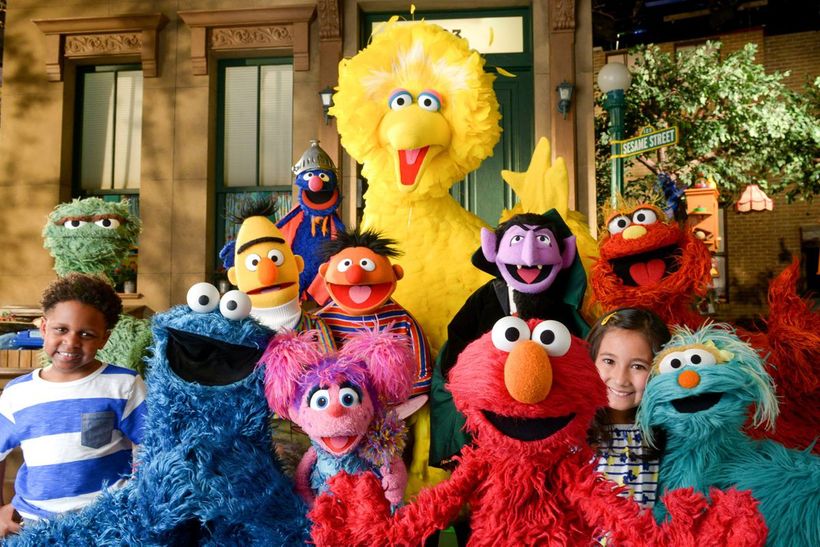
Sesame Street Celebrates 50 Years
Sesame Street, the longest-running children's show in American history, recently celebrated its 50th anniversary. Villanova's Emory Woodard, PhD, Dean of Graduate Studies in the College of Liberal Arts and Sciences, spent time working at Children's Television Workshop (now Sesame Workshop), the nonprofit organization that puts on Sesame Street. He reflects back on its legacy, its important focus on diversity and what lies ahead. Concerning the Program's Legacy "Sesame Street transformed the landscape for educational television at a time when very few content producers were paying attention to quality content for children. The show has effectively reduced the school readiness gap and prepared millions for scholastic success." On Special Memories "My parents could not afford to send me to preschool but used Sesame Street to reinforce the literacy and numeracy skills they taught me. I have fond memories of learning to count with Count von Count, learning the alphabet with Cookie Monster and even getting phonetics lessons with Big Bird. I cannot tell you how much of a delight it was to have Big Bird speak at one of our Commencement Ceremonies... "Perhaps more than the literacy and numeracy skills that I learned from Sesame Street, I remember the prosocial lessons of the show. At such a formative stage, I remember learning about sharing, cooperation and appreciating the differences between people." On Sesame Street and Diversity "Sesame Street has been keenly aware of the dual audiences it engages: children and their parents. At the preschool age, parents tend to be very involved in the media diet of their children. Sesame Street has taught a generation of parents to be more sensitive to issues of diversity." On the Program's Future "I think the future is bright. With the advent of increasingly diverse content distribution platforms (e.g., Netflix, Sling, Roku, Apple TV, etc.), the demand for quality content will remain strong. The makers of Sesame Street may have to be creative in figuring out how to support the production of their high-quality content while still serving their primary mission. Nonetheless, their longevity is a testament to the good thinkers they have charting the course to ongoing success. "The partnership with HBO is an industry reality. The funding for public television remains under threat and the choice is to either fold or be financially creative. I am delighted that the makers of Sesame Street have chosen to be financially creative. Moreover, they chose to partner with an outlet that has demonstrated itself to be a purveyor of high-quality content. As long as that content is shared with platforms that are more accessible to the economically disadvantaged, I do not see this much differently than the decision to use television as a distribution platform that was not universally accessible back in the late 1960s. "Sesame Street will remain relevant as long as they remain true to their original mission of bringing literacy and numeracy skills to disadvantaged populations through high-quality content. No one is and perhaps will ever be better at it than the makers of Sesame Street."


Baylor Study: What Does It Take to Be an ‘Ideal Daughter?’
Researchers say new study gives voice to daughters and value to their role in the family WACO, Texas (Nov. 11, 2019) – The roles of daughters in the family structure and in society are difficult to define and they’re rarely understood – even by daughters themselves – said Allison Alford, Ph.D., clinical assistant professor of business communication in Baylor University’s Hankamer School of Business. Alford, who served as an editor on the book “Constructing Motherhood and Daughterhood Across the Lifespan,” is the lead author on a new study, “Role Expectations and Role Evaluations in Daughtering: Constructing the Good Daughter,” published in the latest edition of the Journal of Family Communication. “Our research has found that ‘daughtering’ is invisible work that is not often credited, and it’s as unique as the individual women who are doing the work,” Alford said. “This study and subsequent conversations hopefully will bring to light the idea of daughtering. And as more people hear about it and learn about it, then we’ll start to give credit to it and notice it in our own lives.” The study centers on mother-daughter relationships, specifically, and looks at how daughters perceive and define their roles in that relationship. Researchers interviewed 33 women, ages 25-45, who have living mothers under the age of 70. Those age ranges were chosen in order to capture a time period for mothers and daughters with the greatest likelihood that neither individual was the caregiver of the other and both were in relatively good health, the researchers wrote. Expectations of the “Ideal Daughter” Alford said analysis of the interviews with the daughters revealed four themes or role expectations for an “ideal daughter” in relation to her mother: Showing respect Providing protection Eliciting mothering Making time for connection Each of those efforts requires work, and that work often goes unnoticed or is undervalued – even by daughters themselves, Alford said. The study noted that many of the women who were interviewed initially – almost naturally – anticipated talking about their mothers instead of themselves. “When asked to think about themselves as daughters and their communication in the relationship, many found themselves doing so for the very first time,” the researchers wrote. “These women noted that putting the emphasis on themselves and describing their role as adult daughters felt strange or awkward in its newness.” Showing Respect Respect, the study showed, was the most common topic addressed by the daughters. Based on the interviews, a daughter’s respect for her mother could be demonstrated by avoiding conflict, silencing one’s disagreement with her mother, reacting positively to her mother’s messages and supporting her mother’s power position. “Daughters demonstrated respect by adapting their communication to affirm their mothers’ competence or otherwise avoid offending and disregarding them,” the researchers wrote. One woman, identified as Kelsey in the study, said she listens to her mother talk about things she dislikes and sometimes apologizes to her mother even when she doesn’t feel apologetic. “I would never say, ‘Mom, I don’t want to hear it,’ because I would never say that to my mom. Ever. I would listen to her … I would listen to her tell me things I don’t wanna hear all day long, and never tell her,” Kelsey said. Providing Protection A number of the adult daughters interviewed felt there was an expectation that they would actively protect their mothers. This could be a daughter protecting her mother’s wellbeing, protecting her mother from being taken advantage of, or protecting her from the disrespectful actions of others, including siblings. One woman, Sabine, described a time when she had to stand up to her brother because she felt he was taking advantage of their mother’s goodwill. In addition, she said she had to “get after” her mother for not employing boundaries with the brother. The examples in the study illustrated that many daughters were happy to be champions for their mothers, but some noted that it was difficult to be protectors. Eliciting Mothering A number of the daughters who were interviewed said they struggle a bit with their roles as adults – or even as mothers themselves – who still need to engage with their mothers and ask for assistance. Many said they still seek interaction and approval from their mothers as a sense of pride. “When a daughter calls upon her mother for guidance or activates a need for an emotional evaluation such as pride, she is fulfilling her role expectations,” the researchers wrote. One woman, Lottie, said of her mother: “She compliments me as a mother. I think I feel like a good daughter when I feel like I am making her proud and she lets me know that she is proud of me … and I guess that makes me feel like a good daughter.” Connection In their descriptions of “good daughters,” a number of the daughters interviewed said it was important to set aside time to connect with their mothers. This, the study showed, could be anything from talking on the phone, meeting face to face, taking grandchildren to visit or even moving to a home nearby. Sometimes the expectations are stated outright by the mothers, but that’s not always the case, the researchers explained. Changing the Language Alford said her research has shown that the “language” of daughtering is almost nonexistent in social discourse as well as in scholarly or popular works. For example, she said, a daughter who is caring or supportive is often described as being “motherly.” “That’s an example of giving credit to mothers as being the only people who care for others, versus saying that the daughter is a caring person or that she’s supportive,” Alford said. “We want to think of daughtering as its own form of work and responsibility and put a value on that, so we can see the value that we’re putting into our family relationships and family systems.” One desired outcome of research into this area, Alford said, is that daughters will be given a voice and their valuable work within the family will be acknowledged. “The work that daughters do is important and valuable and the more that we talk about it and bring it to light, the more that we will understand what daughters can bring to the relationship and improve the mother-daughter relationship,” she said. ABOUT THE STUDY The study, “Role Expectations and Role Evaluations in Daughtering: Constructing the Good Daughter,” is published in the Journal of Family Communication. Authors are Allison Alford, Ph.D., clinical assistant professor of business communication in Baylor University’s Hankamer School of Business; and Meredith Marko Harrigan, Ph.D., professor of communication at SUNY Geneseo. ABOUT BAYLOR UNIVERSITY Baylor University is a private Christian University and a nationally ranked research institution. The University provides a vibrant campus community for more than 17,000 students by blending interdisciplinary research with an international reputation for educational excellence and a faculty commitment to teaching and scholarship. Chartered in 1845 by the Republic of Texas through the efforts of Baptist pioneers, Baylor is the oldest continually operating University in Texas. Located in Waco, Baylor welcomes students from all 50 states and more than 90 countries to study a broad range of degrees among its 12 nationally recognized academic divisions. ABOUT HANKAMER SCHOOL OF BUSINESS AT BAYLOR UNIVERSITY At Baylor University’s Hankamer School of Business, integrity stands shoulder-to-shoulder with analytic and strategic strengths. The School’s top-ranked programs combine rigorous classroom learning, hands-on experience in the real world, a solid foundation in Christian values and a global outlook. Making up approximately 25 percent of the University’s total enrollment, undergraduate students choose from 16 major areas of study. Graduate students choose from full-time, executive or online MBA or other specialized master’s programs, and Ph.D. programs in Information Systems, Entrepreneurship or Health Services Research. The Business School also has campuses located in Austin and Dallas, Texas. Visit www.baylor.edu/business and follow on Twitter at twitter.com/Baylor_Business.


D. Tyler McQuade, Ph.D., professor in the Department of Chemical and Life Science Engineering at Virginia Commonwealth University College of Engineering, is principal investigator of a multi-university project seeking to use artificial intelligence to help scientists come up with the perfect molecule for everything from a better shampoo to coatings on advanced microchips. The project is one of the first in the U.S. to be selected for $994,433 in funding as part of a new pilot project of the National Science Foundation (NSF) called the Convergence Accelerator (C-Accel). McQuade and his collaborators will pitch their prototype in March 2020 in a bid for additional funding of up to $5 million over five years. Adam Luxon, a Ph.D. student in the Department of Chemical and Life Science Engineering who has been involved from the beginning, explained it this way: “We want to essentially make the Alexa of chemistry.” Just as Amazon, Google and Netflix use data algorithms to suggest customized predictions, the team plans to build a platform and open knowledge network that can combine and help users make sense of molecular sciences data pulled from a wide range of sources including academia, industry and government. The idea is right in line with the goal of the NSF program: to speed up the transition of convergence research into practice in nationally critical areas such as “Harnessing the Data Revolution.” The team itself reflects expertise across several specialties. Working with McQuade are James K. Ferri, Ph.D., professor in the Department of Chemical and Life Science Engineering; Carol A. Parish, Ph.D., professor of chemistry and the Floyd D. and Elisabeth S. Gottwald Chair in the Department of Chemistry at the University of Richmond; and Adrian E. Roitberg, Ph.D., professor in the Department of Chemistry at University of Florida. Two companies are also involved with the project: Two Six Labs, based in Arlington, Virginia, and Fathom Information Design, based in Boston, Massachusetts. Currently, there is no shared network or central portal where molecular scientists and engineers can harness artificial intelligence and data science tools to build models to support their needs. What’s more, while scientists have been able to depict what elements make up a molecule, how the atoms are arranged in space and what the properties of that molecule are (such as its melting point), there is no standard way to represent — or predict — molecular performance. The team aims to fill these gaps by advancing the concept of a “molecular imprint.” The collaborators will create a new system that represents molecules by combining line-drawing, geometry and quantum chemical calculations into a single, machine-learnable format. They will develop a central platform for collecting data, creating these molecular imprints and developing algorithms for mining the data, and will develop machine learning tools to create performance prediction models. Parish said, “The ability to compute molecular properties using computational techniques, and to dovetail that data with experimental measurements, will generate databases that will produce the most comprehensive results in the molecular sciences. “There are many laboratories around the world working in this space; however, there are few organizational structures available that encourage open sharing of these data for the benefit of the community and the common good. We seek to collaborate with others to provide this structure; an open knowledge network or repository where scientists can deposit their molecular-level experimental and computational data in exchange for user-friendly tools to help manage and query the data.” The initial response to their idea has been strong from potential partners. Ferri and the others have already collected more than a dozen letters from major corporations such as Dow and Merck expressing interest in participating. Also on board are Idaho National Laboratory and Argonne National Laboratory, as well as national chemical engineering and chemistry organizations. McQuade said that chemical engineers in major industries including consumer products and oil and gas producers expend a lot of effort running experiments to determine the molecule they want to use, such as finding the best shampoo additive that doesn’t make babies cry. “The ability to design the properties you want is still more art than science.” The team also plans to develop a toolkit for processing and visualizing the data. Roitberg, whose research focuses include advanced visualization, said this could take the form of a virtual reality realm in which a user could find materials that are soluble in water but not oil, for instance, and then be able to browse for similar materials nearby. “We envision a very interactive platform where the user can explore relations between data and desired material properties,” he said.


Making Children's Mental Health and School Safety a Priority
The U.S. Department of Education announced $71.6 million in grant awards to enhance safety in schools and improve student access to mental health resources. The grants will allow local leaders to tailor their approach to school safety and mental health in ways that meet their students' individual needs and their particular school's unique challenges. "This is a strong step towards helping children across the U.S. who have experienced traumatic events. We know from previous research that traumatic experiences, even those in early childhood, affect an individual at any time in their life," says Elizabeth Dowdell, PhD, RN, FAAN, professor at Villanova's M. Louise Fitzpatrick College of Nursing. "In healthcare, assessing, identifying and treating trauma has become a major public health challenge since trauma exposures frequently go unrecognized and unaddressed." The same is true in the educational system. For many children, adolescents, and adults, trauma results from an event, series of events or set of circumstances which are perceived or experienced to be physically or emotionally harmful or life-threatening. The landmark Adverse Childhood Experience study (1998) found that, in a population of 17,377 adult participants, 63% experienced at least one trauma exposure as a child and 20% experienced more than three trauma exposures. The experience of repeated trauma is sometimes referred to as toxic stress, which can have damaging effects on learning, behavior and health across the life span. These exposures included physical and sexual abuse, neglect and household dysfunction. Increased stress from family violence and chaos is trauma and, when combined with injury, is the leading preventable cause of morbidity and mortality. The lasting adverse effects from the trauma can affect a child's functioning and well-being, specifically mental and physical health, social, emotional and spiritual well-being as they age and develop. "Healthcare is shifting to a trauma-informed framework that focuses on what happened to the person rather than what is wrong with them and recognizes that individual's strengths and resilience. Schools are ideal locations for identification of traumatized children and the implementation of services to help them," says Dr. Dowdell. "School districts have to create physical safety and psychological safe places where all children can learn."


Responding to increased pressure, Facebook has "doubled down" on identifying and removing posts by online extremists and the groups they use to share content. As noted in a recent NBC News article, these increased efforts include using artificial intelligence and machine learning to proactively identify and remove posts and groups that break the rules, and promoting tools that would hold group administrators more accountable for posted content." Megan Squire is a professor of computer science who has conducted extensive research tracking connections between online hate groups and how they leverage social media platforms to recruit new members and spread propaganda. Squire told NBC News that she's skeptical that even these more high-tech efforts will meaningfully curtail the activity of online extremists. “Same stuff, different day,” Squire told NBC News. “Just in the past month, I reported groups calling for a global purge of Islam, extermination of people based on religion, and calling for violence through a race war, and Facebook’s response was that none of these groups was a violation of community standards.” If Dr. Squire can assist with your reporting about social media and online extremism, please reach out to Owen Covington, director of the Elon University News Bureau, at ocovington@elon.edu or (336) 278-7413. Dr. Squire is available for phone, email and broadcast interviews.


Baylor Faculty Member Earns $5 Million Grant to Study Meal Deliveries for Rural Students
Baylor University’s Texas Hunger Initiative has taken an important step this week in helping move the University towards its Research 1/Tier 1 aspirations with the announcement of a $5 million grant to expand access to food for students living in rural Texas communities. Kathy Krey, Ph.D., assistant research professor and director of research and administration for Baylor’s Texas Hunger Initiative, has been awarded the three-year grant from the United States Department of Agriculture for a research project aimed at testing a novel approach to distributing food during the summer to rural students age 18 and under. The grant is from USDA’s Food and Nutrition Service. According to the National Center for Education Statistics, more than 3 million children in Texas receive free or reduced-price meals during the school year. During the summer when schools are not in session, food is available to eligible families through federal and state programs, but some students – particularly those who live in rural areas – may have difficulty accessing the food programs, leaving them without consistent access to nutrition. “The current solution to this problem, the federal Summer Food Service Program, doesn’t fit every scenario, because it requires that students congregate at a summer feeding site, often at a school or other central location,” Krey said. “Especially in rural areas, which Texas has a lot of, those meal sites can be less effective because there are transportation, cost or awareness barriers for students who are more broadly dispersed from schools and other potential meal sites.” Improving access to summer meals through mail delivery Krey and her colleagues at THI will be testing a program where families in selected areas of the state who don’t have access to a summer meal site can receive food deliveries through the mail. Grant funding will be used to purchase shelf-stable, nutritionally complete meals, including fruits and vegetables, which are packaged and delivered directly to families. The goal in designing this program, Krey said, is not to eliminate site-based summer feeding programs, but to supplement them with other mechanisms that can be more effective for Texas students whose food needs may not be met by the current system. “We envision a future in which summer feeding sites still exist. In communities where populations are centrally located, the site-based model can make a lot of sense, but we know that it’s going to take a lot of innovative solutions to meet the diversity of the problem especially in a state like Texas that has so many different geographies and different realities in terms of population density,” Krey said. The dual problems of hunger and poverty are closely related since students who don’t have access to healthy meals are at greater risk of low academic achievement and disciplinary problems. A failure to address nutritional deficiencies, Krey said, can contribute to a cycle of poverty that continues from generation to generation. “Research has proven that students need consistent access to healthy food to perform optimally in school,” she said. “If we think about generational poverty, education is such a key factor in students’ being able to break that cycle, and one way they can be equipped to do that learning is by having regular access to nutritious food. “In the summer, there aren’t as many resources and opportunities to get food, which is why it’s so important that we figure out innovative ways to use public and private resources to make sure that low-income kids have access to food during the summer,” she said. The grant also will provide research opportunities for undergraduate and graduate students. Andrea Skipor, graduate student in Baylor’s Diana R. Garland School of Social Work, said her work with the project provides important experiences in application of the concepts taught in class. “In social work, evidence-based practice is a huge part of what we do,” Skipor said. “We learn so much in a classroom, but we don’t always get the opportunity to use it. This project has really given me a way to use my social work and community research skills in a way that has sparked an interest in research for my future practice.” Krey credits students like Skipor with providing invaluable assistance in carrying out important research. “We’ve been really honored with the student researchers and student workers who have come alongside us and acquired great experience in designing a pilot research project. We’ve been so impressed with the Baylor University students’ talent and commitment and we’re really honored to have them as part of this project,” Krey said. The Texas Hunger Initiative is a multi-disciplinary project dedicated to ending hunger through research and innovation and committed to strengthening public policy to address domestic food insecurity. Jeremy Everett, founder and executive director of THI, said the organization was founded on a realization that complex societal problems like hunger and poverty need solutions that leverage the resources of the public and private sectors, faith-based organizations and university researchers. The initiative’s broad-based approach includes a widely-dispersed staff that can observe problems first-hand to come up with evidence-based solutions. “We have field staff throughout the state working in a learning-lab capacity. The average researcher might have their own laboratory. Our laboratory is the state of Texas,” Everett said. It’s a strategy that Everett said is fundamental to Baylor’s mission to positively impact the lives of people in need. “We want to leave society better than we found it,” Everett said. “Our faculty and students want to be engaged in research and evaluation, but they also want to see how that makes a difference in a young child getting access to food who previously wouldn’t have had it without that engagement.” ABOUT BAYLOR UNIVERSITY Baylor University is a private Christian University and a nationally ranked research institution. The University provides a vibrant campus community for more than 17,000 students by blending interdisciplinary research with an international reputation for educational excellence and a faculty commitment to teaching and scholarship. Chartered in 1845 by the Republic of Texas through the efforts of Baptist pioneers, Baylor is the oldest continually operating University in Texas. Located in Waco, Baylor welcomes students from all 50 states and more than 90 countries to study a broad range of degrees among its 12 nationally recognized academic divisions. ABOUT THE TEXAS HUNGER INITIATIVE AT BAYLOR UNIVERSITY The Texas Hunger Initiative (THI) at Baylor University is a capacity-building and collaborative project, which develops and implements strategies to end hunger through policy, education, research, community organizing and community development. THI works to make the state food secure by ensuring that every individual has access to three healthy meals a day, seven days a week. THI convenes federal, state and local government stakeholders with non-profits, faith communities and business leaders to create an efficient system of accountability that increases food security in Texas. THI’s work is supported by the Walmart Foundation, No Kid Hungry, and PepsiCo’s Food for Good. Along with its office located within the Diana R. Garland School of Social Work at Baylor, THI has offices located in Austin, Dallas, Houston, Lubbock, McAllen and San Angelo. For more information, visit www.baylor.edu/texashunger.