
Experts Matter. Find Yours.
Connect for media, speaking, professional opportunities & more.

Is Wall Street hedging on a Trump win in 2020? Let our experts tell you why.
“The economy, stupid!” It’s a famous quote that Bill Clinton campaigner James Carville used in 1992. And the Ragin’ Cajun was right – odds are, when it comes to Americans casting a vote in presidential elections – the economy calls the shots on how they vote. And despite the scandals, the Tweets, the gaffes and the indictments – the economy under President Donald Trump is booming. So, while convention and traditional politics would likely write of the presidency of Donald Trump as a one term wonder - an article about a recent report commissioned by Goldman Sachs says Democrats and pundits shouldn’t be so sure to write him off. ‘In a comprehensive report released late Saturday, the investment bank gave its preliminary thoughts on a general election that’s still more than a year away. While Trump re-election is far from assured, Goldman’s economists believe the president is bolstered by “the advantage of first-term incumbency and the relatively strong economic performance,” in what is sure to be a “close call” election.’ - Yahoo! Finance Are you covering the race for 2020? Should Democrats change their focus away from the scandals and the Mueller Report and focus on economics? If not, what are the issues that will sway undecideds next year? And what will a potential run by an Independent candidate mean for the race? There are so many storylines already at play and a long way to go before November 2020 – but the election is already daily news and that’s where our experts can help. Dr. Marc Clauson is a professor of history and law at Cedarville. Marc is an expert in the fields of political and economic philosophy Dr. Clauson is available to speak with media – simply click on his icon to arrange an interview.

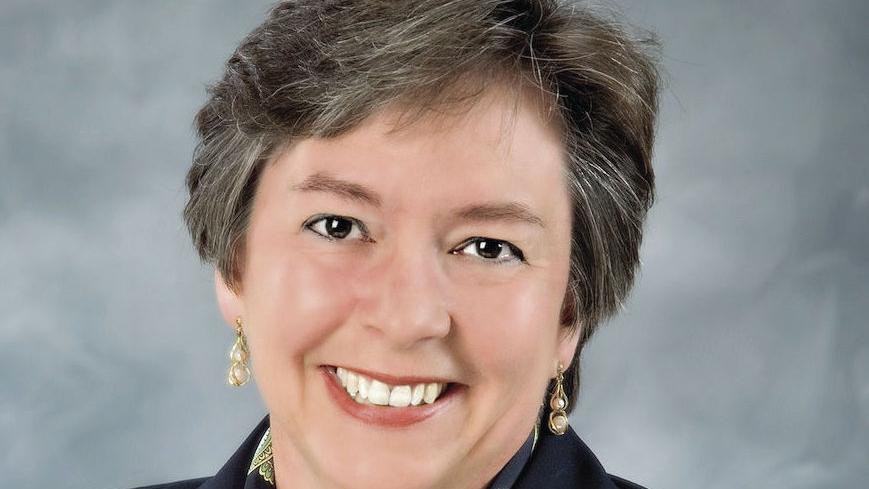
In her most recent column with The Free Lance-Star, University of Mary Washington’s Lynne Richardson extols a witty, pointed and yet optimistic piece about bad bosses, why they might be bad and how there’s even a silver lining to each bad boss’ behavior. Here’s a piece from her open letter. “Dear Bad Boss, Your staff complains about you. You’re a micro-manager. Or maybe you’re a detached manager, showing little interest in your people or the work they do. Or maybe you put such pressure on your employees that they feel stressed all the time and hate coming to work. Of course, because of this, productivity suffers. Maybe you have incredibly high expectations that are unachievable, especially because you either don’t know to hire or you don’t train your folks. There is no possible way for the folks in your organization to reach your ridiculous expectations. Whatever the reason your folks don’t respect you, I want to thank you. Say what? Yes, Bad Boss, I appreciate you being bad. And I have two reasons…” If you like this – read the rest of the article attached below. So, do you have a bad boss? Do you know someone who does? Any chance … you just might be a bad boss? Worry not – our experts can help. Dr. Lynne Richardson is a columnist, mentor and her expertise focuses on leadership management and higher education administration. She is available to speak with media about leadership … and even bad bosses. Simply click on her icon to talk with her and arrange an interview.

Is it Time to Rethink Digital Transformation? Join our experts May 02 to Find Out!
Organizations are rethinking digital transformation. After some high-profile failures, innovation being treated as a sideshow, and elusive ROIs, organizations are reshaping their digital visions and their tactics for getting there. With greater clarity about what the future enterprise will look like and what it will take to compete in redefined industries, companies are pivoting away from digital for the sake of innovation to digital for the sake of the business. Join us and catch Dave Pearson, Research Director and Team Lead for IDC Canada's Infrastructure Solutions Research Group presenting: ‘The New Infrastructure Data World ’ at IDC Directions 2019 in Toronto on May 02. Data growth and capacity concerns continue to the be the number one stress on data centers in Canada. At the same time, IT is expected to support Digital Transformation (DX) and new business initiatives at nearline speed. What will your next generation of infrastructure need to look like to support the variety of workloads, applications, and data sources your organization requires, from core to cloud to edge? Find out in Dave's breakout session at IDC Directions in Toronto Location St. James Cathedral Centre: Snell Hall 65 Church Street | Toronto Date May 2, 2019 Time 8:00 AM - 8:30 AM - Registration & Networking Breakfast 8:30 AM - 3:30 PM Conference Program Register Today before it's too late! If you're a member of the media and would like to attend this event, please contact Cristina Santander at csantander@idc.com


Ungrading – is putting down the pen an A+ idea for post-secondary professors?
It’s a growing movement among professors – ungrading. There’s a popular trend out there that says teachers are spending too much time grading and evaluating as opposed to educating. Some professors feel that students need to be engaged by what they learn and not necessarily fixated on the grades they earn. In a recent blog post (see below) UMW’s Jesse Stommel showed how strongly he backs the concept. “There are a surprising number of faculty questioning grades in productive ways, and experimenting with alternative modes of assessment,” said Jesse Stommel, executive director of the Division of Teaching and Learning Technologies at University of Mary Washington, and an early evangelist of ungrading. “If, as teachers, we just ask students why, when and how they learn, what we can get back is way more valuable than any standardized assessment mechanism can reveal.” Ungrading “creates space for that kind of honest reflection and dialogue,” he said. - TaxProfBlog The concept is novel and has support – but will it catch on? Will academia take a turn away from the traditional ways of grading? What will students think and how will they measure progress? And what about parents and potential employers who might rely on the old system when hiring or validating the costs of higher-education? Jesse Stommel is the Executive Director of Teaching and Learning Technologies at the University of Mary Washington and is an expert in faculty development, digital education and modern learning. Jesses is available to speak with media regarding ungrading – simply click on his icon to arrange an interview.

Essays for sale – our experts weigh in with ABC news
As the college admissions scandal is becoming the story that just won’t end for some of the leading schools in the country – recently Good Morning America opened another chapter in the book that revealed just how easily college entrance essays are being offered and acquired by prospective students. From ghost writing, to essays up for grabs online at a steep price - It’s a multi-million-dollar industry and it’s growing. A leading expert from UMW was recently interviews by Good Morning America about the problem. “Contract cheating has grown a great deal over the past ten years, “said Professor David Rettinger of the University of Mary Washington in Fredericksburg, Virginia. Rettinger is president of the International Center for Academic Integrity, an organization that promotes integrity in academia throughout the world. "Students are willing to use internet sites, family members, friends and other technology to get contractors to do their work.” Are you covering this topic? We can help. Dr. David Rettinger is available to speak with media regarding this scandal as well as the importance of education in America. Simply click on his icon to arrange an interview.

Trading rights for favors – Are Brunei’s new anti-LGBT laws all about pleasing Saudi Arabia?
Brunei is now the first country in Southeast Asia to adopt a country-wide sharia penal code – this decision swiftly brought with it concern and condemnation from around leaders around the globe and organizations like Amnesty International. The Sultan of Brunei laid down new and harsh anti-LGBT laws earlier this month that under a new penal code that now includes death by stoning for gay sex and adultery. But why so harsh and why now? Brunei’s economy is faltering, and some are wondering if these moves are simply to curry favor and please countries like Saudi Arabia as it seeks distance from the dependence it has on China and America as trading partners. University of Mary Washington’s Professor of Political Science and International affairs Elizabeth Freund Larus recently weighed in on the situation with media. "Early measures included the 2015 ban on the celebration of Christmas and jail terms for homosexuality. The most recent measures announced Wednesday put some teeth into Brunei’s penal code." April 05 – MEAWW Are you covering this topic? Do you need an expert to help explain the political and economic situation Brunei faces and what these measures may mean in the short and long term for the small country? That’s where our experts can help. Professor Larus teaches political science at the University of Mary Washington and is an #expert on China and the field of Asian studies. She is available to speak to other media pursuing this this subject – simply click on her icon to arrange an interview.


Musculoskeletal disorders are the number one reason for soldier evacuation and account for almost 25 percent of all military injuries compared to combat injuries, which account for 14 percent in the armed forces. It was with that knowledge that students from Georgia Southern University’s Department of Rehabilitation Sciences met up with soldiers from the Army’s 3rd Infantry Division at Fort Stewart-Hunter Army Airfield in Georgia to gear up and better understand soldiers’ unique physical challenges and how they can help better prepare them for combat. “The event provided our students with a much better insight as to the physical demands of soldiers at Fort Stewart,” said Nancy Henderson, DPT, assistant professor of rehabilitation sciences on Georgia Southern’s Armstrong Campus in Savannah . “This added knowledge will help them to better tailor their education while working with soldiers.” As technology and equipment change and adjust between each theatre of operation it is imperative that the America’s soldiers stay fit and have all the knowledge and resources, they require to achieve their assigned task. But why were so many soldiers suffering from musculoskeletal disorders? Is the issue easily solved? And how can every branch of the armed forces adopt and adapt how they’re operating on the ground to avoid these issues? There are a lot of questions to be answered and that’s where our experts can help. Dr. Nancy Henderson is an assistant professor in the Department of Rehabilitation Sciences at Georgia Southern University. She is an expert in injury prevention, running form and assessing meaningful change of interventions. Nancy is available to speak with media regarding this topic – simply click on her icon to arrange an interview.


Do the religious really have a right NOT to vaccinate? Contact our experts to find out.
As measles, mumps and other once easily controlled and previously eradicated diseases are now spreading across states and communities in America – the great vaccination debate is once again in full swing. The fact is – vaccinations work. The world’s leading health organizations have proven that beyond a shadow of a doubt. But these days, more and more people are opting out of vaccinating themselves and their children – for a variety of reasons. The most recent is in Florida where children can opt out for necessary medical or religious reasons. This year, more than 25,000 students have claimed religion as their reason not to be inoculated. And, it’s a number that’s increasing every year. There are concerns among public health experts in Florida that this decision-making is being empowered by the online and well funded anti-vaccination groups who can reach massive amounts of people with its misinformation. And outbreaks are occurring as a result. Medically compromised people are at risk. So, is it time for states to reconsider religion when allowing children not to be vaccinated? Is there a way to prevent the system from further abuse? And what are the consequences to the greater population if this continues to grow at the near exponential pace it is? Or … is this a right that is protected and beyond question? There are a lot of questions and that’s where the experts from Cedarville University can help with multiple angles regarding this topic. Dr. Marc Sweeney is the Founding Dean of the School of Pharmacy at Cedarville University. Dan DeWitt, Ph. D. is the Director of the Center for Biblical Apologetics and Public Christianity at Cedarville University. Both experts are available to speak with media regarding this growing issue – simply click on either of their icons to arrange an interview.
The amazing story of General Casimir Pulaski and the secret the war hero took to the grave
He’s a person who has intrigued Americans for centuries and will be the subject of a documentary airing Monday. Scientists have confirmed that legendary Revolutionary War hero and famed General Casimir Pulaski took a secret to the grave. The General was intersex. News of this was enough to inspire an episode in Smithsonian Channel's "America's Hidden Stories" documentary series. Georgia Southern University’s Virginia Hutton Estabrook, Ph.D., assistant professor of anthropology, was recently contacted by media for expert perspective and comment. In the documentary — “The General Was Female?” — which premieres Monday, scientists use skeletal remains and DNA testing to make a case that the skeleton was Pulaski’s and that the Polish-born general was intersex, or what used to be known as a hermaphrodite.“That’s pretty much the only way to explain the combination of features that we see,” said Estabrook, who participated in the most recent effort to identify the bones, and appears in the documentary.“He was so important as a touchstone for the Polish community. And it’s kind of cool that in the 21st century, Pulaski can be a touchstone for a different group of people: That, hey, there were intersex people in history, too, and here’s this one who had this really amazing life: heroic, resourceful, all of the features in the American narrative that we value and treasure.” – Chicago Tribune This discovery unearths questions about what this might mean as we all look back at history and the real people who helped write it. Are you covering this story and need to expert perspective, insight and information? That’s where the experts from Georgia Southern University can help. Virginia Hutton Estabrook is an assistant professor of anthropology and played an integral role in this discovery. She is available to speak with media – simply click on her icon to arrange an interview.

Phasing out opioids – can it be done?
It’s a crisis that’s gripped America and has hit epidemic levels. More and more Americans are hooked on prescription painkillers, in fact, in 2017 close to 50,000 people in the United States died due to overdose from pills. And recently, it’s been suggested that perhaps phasing out and replacing these pills with less addictive and dangerous options is the only way to solve this issue? “FDA Commissioner Scott Gottlieb, who plans to leave his job at the agency next week, wants companies to develop pain drugs that could eventually allow older opioids to be restricted or to come off the market entirely. “Given the public health crisis we face, and that American families are still being destroyed by the opioids epidemic, I believe that the FDA should treat opioids, as a class, differently from other drugs,” Gottlieb told a Senate appropriations subcommittee on Thursday.” - Denver Post It's a bold statement from a bureaucrat leaving his post – but is it possible? · Will big pharma comply? · Is it a matter of money over morality or are more rigids rules required? · Or is the only aspect left legal and government intervention? There are a lot of questions to be answered and that’s where an expert from Cedarville University help. Dr. Marc Sweeney is the Founding Dean of the School of Pharmacy at Cedarville University and is an expert in the fields of drug abuse, prescription drug abuse and Opioid addiction. Marc is available to speak with media regarding this growing issue. Simply click on his icon to arrange an interview.