
Experts Matter. Find Yours.
Connect for media, speaking, professional opportunities & more.

How Blockchain Can Help Medical Facilities Control the Spread of Coronavirus
In the United States at least 12,000 people have tested positive for COVID-19, and 194 people have died as of Friday, March 20. Villanova College of Engineering professor Hasshi Sudler explains there are two critical areas where blockchain can help control the spread of coronavirus. "As individuals travel across borders, medical facilities need immutable, trustworthy medical data quickly and electronically. A critical requirement to contain coronavirus is to track any individual having tested positive and to track the health of anyone who has come in contact with that individual, even if those encounters were across borders," says Prof. Sudler, an expert on electrical and computer engineering. "The blockchain can be a common source of data that allows medical facilities to share immutable information internationally." Sudler cautions that, with the potential for people to provide false information about symptoms and travel history, medical facilities need a method to share trustworthy data with one another in real-time about individuals tested, their test results and test kits used (as some kits have proven faulty). Another requirement for controlling the spread of the virus is to validate quality medical advice while also identifying misinformation that could be circulating in society. "In the event of a pandemic, misinformation can be extremely dangerous. The public needs a way to confirm official statements made by reputable sources," says Prof. Sudler. While social media may be a popular source of information, it can also be a means of spreading myths, conspiracies and opinions often presented as facts. "The blockchain can serve as a means to verify quality advice the public should follow versus false claims the public should disregard," says Prof. Sudler.


What fate awaits Florida’s tourism industry?
As the ripples from the COVID-19 pandemic stretch across all of America – popular attractions like Disney are closed, airlines are restricting travel and borders are being shut. All of this could amount to economic freefall for a state like Florida that relies on the more than 126 million tourists that visit the state each year injecting more than $40 billion annually into the economy. The coronavirus is hitting the economy in Central Florida hard, with several counties missing out on millions due to conventions and events being canceled. Orange County officials said the county has lost more than $280 million due to conventions being canceled amid fears of the coronavirus, and it could lose even more. Several Central Florida cities and counties have declared states of emergency. President Donald Trump declared a national emergency. Channel 9 spoke with financial advisers on the impacts the coronavirus could have on Central Florida. “Because we are highly reliant on tourism and leisure, we could see a potential financial slowdown in Central Florida. The scope and magnitude will be dependent on how long it takes to peak and level out. We are already seeing the effects with the closure of theme parks, cruises, flights, professional sports,” said Dale Crossley, a financial adviser. March 13 – ABC News At the moment, it seems there is no end in sight and for the hotels, theme parks and countless other destinations and small business that rely on tourists to stay afloat, there’s concern about who will be left standing once life returns to normal, or at least a new normal. There are a lot of questions that remain: How long can the marquee destinations like Disney and Universal Resorts remain closed? Are there any substantial bailouts or government assistance to be expected? Once travel resumes, what will it take to assure visitors of their safety? And, can we expect incentives from industry or the government to lure people, and their wallets back to the Sunshine State and what will they look like? If you are a journalist looking to cover this angle of the COVID-19 pandemic – then let us help. Peter Ricci is a clinical associate professor and director of the Department of Marketing and Hospitality Management in FAU’s College of Business. He is a hospitality industry veteran with more than 20 years of managerial experience in segments including food service, lodging, incentive travel, and destination marketing. Peter is available to speak with media about this topic – simply click on his icon to arrange an interview.



Baylor Gerontology Expert Shares Tips to Care for Aging Population During Coronavirus Pandemic
“This is not a vacation from caring; it is a time when caring is needed most of all,” social work professor says The Center for Disease Control and Prevention (CDC) has announced that older adults and people who have serious chronic medical conditions such as heart disease, diabetes and lung disease are at a high risk for the coronavirus. The virus hit hard in late January at a nursing facility in the state of Washington, where a number of residents died. As a result, the CDC has recommended strong restrictions on visitors to long-term care facilities, and the health organization continues to preach limited physical contact and “social distancing” – creating intentional space of six feet or more between each person – to stem the spread of the virus. James Ellor, Ph.D., The Dorothy Barfield Kronzer Endowed Professor in Baylor University’s Diana R. Garland School of Social Work, is an expert on working with older adults as well as disaster behavioral health. He said it’s important in this time of uncertainty to continue to support and minister to those older adults who are self-isolating in their homes and those in long-term care facilities. “Remember, no one stops caring about others just because germs are in the way,” Ellor said. “Express your caring in appropriate ways. This is not a vacation from caring; it is a time when caring is needed most of all. We also know that prayer is very important. Hold the person in prayer and let them know you are doing so.” In the following Q&A, Ellor shares tips on how to care for this population during this time. Q: What are some ways we can check on older relatives and neighbors without using physical touch and interaction? A: There is a fine line in this unknown time between caution and paranoia. Respect for each other’s boundaries is the critical value. It seems very awkward to want to affirm someone, yet not shake their hand. However, we need to use our words and ask what the other person is comfortable with, and by the same measure, let them know what you are comfortable with. At this point, the most obvious ways to check on people is through social media or paper and pencil. Drop them a note, call them on a phone, use other social media devices as appropriate. I would suggest that if you normally visit them, say on Fridays, be sure to continue to do that, albeit by phone or even just drop them a card. Q: If people have chosen to self-isolate or if they’re scared to venture out due to this health crisis, what are some ways people can help? A: Be consistent. If you have a pattern, continue the pattern. Remember the principles above. If the person is feeling out of control, talk quietly with them and offer them a card or other gesture of caring. Q: Can you explain the importance of personal interaction for people who are shut in? A: People with human contact simply live longer than those completely cut off from the world, with few exceptions. While about 15 percent of older adults are “shut in,” only about 5 percent are bed bound. That means that persons who are dependent on oxygen, for example, will be in their house, but not in bed. They depend on all of their outside contacts. Keep your normal visiting pattern, albeit with a card in the mail or phone call. If you are a member of a church, have the youth group use some of their extra “stay at home” time to make greeting cards intended to cheer up a person in your church or group that is home bound. Older adults like tactile things, particularly if they are sensory-impaired. If you make a card, put a feather in it, or some other feel-good item. If you are purchasing a card, there are some that have things in them that you can feel, or even hear. Some cards will allow you to record a short message. Q: Since so many long-term care facilities now have strict rules about visitors, are there any ways that people can interact or show support to residents in a safe manner? A: Most facilities are cutting off all contact from the outside. Only their own staff, physicians and hospice nurses are being allowed in. Even social workers, chaplains and other clergy are being kept out. In the Waco area, physicians are being screened for a fever or cough and could be turned away. As such, phone calls, cards and letters are all important. Several facilities in this area have begun to put room numbers on the windows of their facility, so that family can come by and wave through the window. Persons in long-term care facilities, even those with dementia, will pick up on the anxiety of the staff and especially the TV, which is often on all the time. A person with dementia may not be able to understand the anxiety but will be anxious when others are anxious. This makes the job of staff that much harder. Q: Anything else you’d like to share? A: The workers at these homes have a much harder job now. Don’t hesitate to send them a card or a treat if it can be obtained safely. Staff, even the people at the door telling you that you can’t come in to see your loved one, have a tough job now and need extra support from everyone. ABOUT JAMES ELLOR, PH.D. James Ellor, Ph.D., serves as professor and The Dorothy Barfield Kronzer Endowed Professor in Family Studies in Baylor University’s Diana R. Garland School of Social Work. works with older adults around issues of mental and spiritual health. He has served on the executive committee of the Midwestern Geriatric Education Center and provided education, counseling, and planning for individuals and groups who work with seniors. His research includes work in entrostomal therapy, hunger, the church as service provider, spiritual assessment, and intervention techniques with cognitively impaired older adults. ABOUT BAYLOR UNIVERSITY Baylor University is a private Christian University and a nationally ranked research institution. The University provides a vibrant campus community for more than 18,000 students by blending interdisciplinary research with an international reputation for educational excellence and a faculty commitment to teaching and scholarship. Chartered in 1845 by the Republic of Texas through the efforts of Baptist pioneers, Baylor is the oldest continually operating University in Texas. Located in Waco, Baylor welcomes students from all 50 states and more than 90 countries to study a broad range of degrees among its 12 nationally recognized academic divisions. ABOUT THE DIANA R. GARLAND SCHOOL OF SOCIAL WORK AT BAYLOR UNIVERSITY Baylor University’s Diana R. Garland School of Social Work is home to one of the leading graduate social work programs in the nation with a research agenda focused on the integration of faith and practice. Upholding its mission of preparing social workers in a Christian context for worldwide service and leadership, the School offers a baccalaureate degree (B.S.W.); a Master of Social Work (M.S.W.) degree available on the Waco or Houston campuses or online; three joint-degree options, M.S.W./M.B.A., M.S.W./M.Div. and M.S.W./M.T.S., through a partnership with Baylor’s Hankamer School of Business and George W. Truett Theological Seminary; and an online Ph.D. program. Visit www.baylor.edu/social_work to learn more.

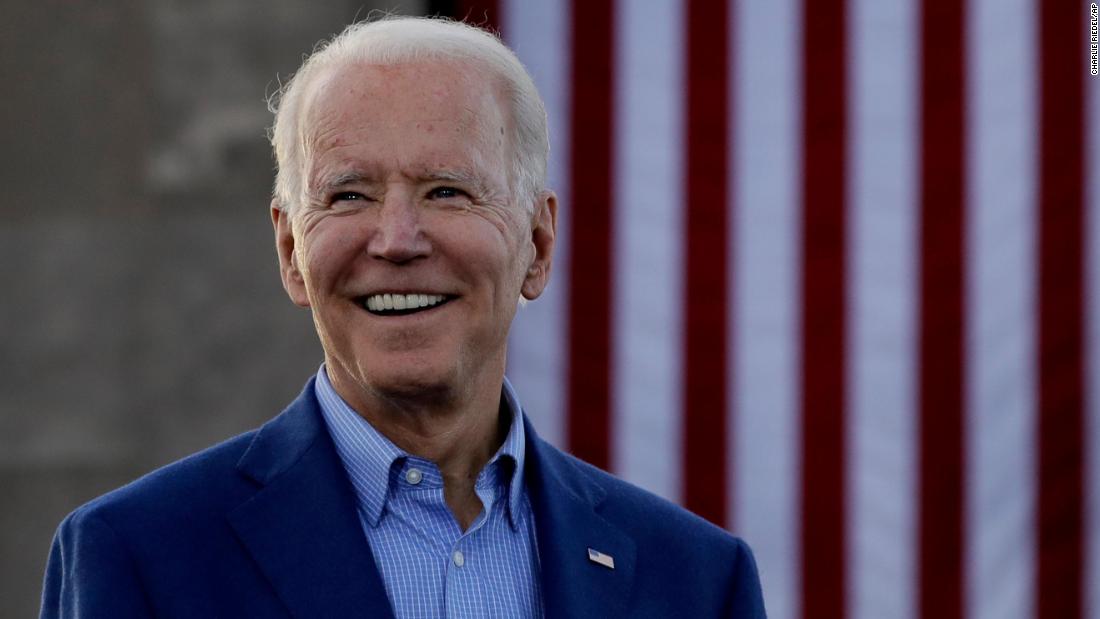
Who will Biden’s running mate be?
It seemed a bit of the cuff and unplanned, but the most recent DNC Primary debate, Joe Biden let it be known that’s he’s already set aside some very specific criteria for his would be V.P. should he win the Democratic nomination. "If I'm elected president, my Cabinet, my administration will look like the country, and I commit that I will, in fact, appoint a, pick a woman to be vice president," Biden said at the CNN-Univision debate in Washington, DC. Biden continued, "There are a number of women who are qualified to be president tomorrow. I would pick a woman to be my vice president." The comments come as Biden is seeing a surge in the presidential race over Vermont Sen. Bernie Sanders and seeks to broaden his appeal and unify the Democratic Party. March 15 - CNN There’s a long list of extremely qualified females for the job – but his comments have pundits and political junkies speculating on just who it could be? Kamala Harris is a solid candidate but being from Democratic friendly California and the scathing comments she levelled his way during the early primary may take her out of contention. Elizabeth Warren and Amy Klobuchar are also political heavy weights, both with very different perspectives on what America needs. What about the outliers like Tulsi Gabbard? The list goes on and on. And there’s always a dreamer’s chance Michelle Obama could make the ticket? It may be crazy, but not entirely impossible. Photo courtesy: Los Angeles Times Either way, there’s a lot of speculation out there, and if you are a journalist looking to rank the contenders or help figure out who has a chance – then let our experts help. Mark Caleb Smith is the Director of the Center for Political Studies at Cedarville University. Mark is available to speak with media regarding the DNC Primary, running mates and the upcoming election. Simply click on his icon to arrange an interview.


Coronavirus: What Voices Should We Listen To In These Uncertain Times?
Our smartphones, social media accounts, televisions and radios are clogged with information about COVID-19. Some is good information. Much is bad. So which voices do we listen to during this uncertain time of pandemic? Baylor University’s Marlene Neill, Ph.D., APR, associate professor of journalism, public relations and new media, is an expert on public relations ethics and management, and integrated communications. In this brief Q&A, she shares some tips to discover which voices to trust and follow during a crisis. Q: In this time of confusion and mixed messages, what are some steps people should take to find credible and consistent content and updates regarding Coronavirus? A: I used to work in city government and worked very closely with public health district officials. I prefer to seek out information from official government agency sources such as the CDC, public health district officials, physicians and epidemiologists. A good example is the CDC's coronavirus site. Local newspapers also have set up informational pages regarding local closures and cancellations. I personally am very skeptical of information I see on social media claiming to be from someone who experienced the coronavirus in another country or others whose credentials are unknown. Q: What are some characteristics of trustworthy messages? A: I trust information from credible sources in the medical community and public health. The information should be consistent with that reported by these official government sources. If you are unsure, double check online rumor websites such as snopes.com or consult official government websites. We need to start with doctors, epidemiologists and public health officials. This is their area of expertise and they want people to be properly informed to protect themselves and our communities. ABOUT BAYLOR UNIVERSITY Baylor University is a private Christian University and a nationally ranked research institution. The University provides a vibrant campus community for more than 17,000 students by blending interdisciplinary research with an international reputation for educational excellence and a faculty commitment to teaching and scholarship. Chartered in 1845 by the Republic of Texas through the efforts of Baptist pioneers, Baylor is the oldest continually operating University in Texas. Located in Waco, Baylor welcomes students from all 50 states and more than 90 countries to study a broad range of degrees among its 12 nationally recognized academic divisions.


Conquering COVID -19. Is a cure or a vaccine close?
With a pandemic now touching just about every part of the globe, the race is on by scientists and researchers to find a vaccine or cure for COVID-19. Can it be done, by when and how long to get to market? With testing and lengthy trials – could it even help? As well, with SARS, MERS, H1N1 and the flu all appearing in dangerous scenarios this century, why weren’t there already vaccines in place for the next time a coronavirus took flight? There’s a lot of information out there, and in an effort to keep the public informed with objective opinions and evidence-based facts – that’s where our experts can help. Dr. Marc Sweeney is the Founding Dean of the School of Pharmacy at Cedarville University. He is an expert in health and wellness and advanced medical equipment. Dr. Sweeney is available to speak to media regarding this topic – simply click on his icon to arrange an interview.

How to Find Quality Family Time During the Coronavirus Pandemic
Planning schedules, screen time and social connectedness during the coronavirus crisis can parents and children reduce stress, be productive and create meaningful family moments With many schools closed as a measure against the spread of coronavirus, and many parents working remotely, families can incorporate a variety of activities — including educational ones — to keep kids engaged and ready to continue learning when they return to school, say family experts at Baylor University. “Life will look a little different over the next few weeks” amid the social distancing recommend by the Centers for Disease Control and Prevention, said Karen K. Melton, Ph.D., assistant professor of child and family studies in Baylor’s Robbins College of Health and Human Sciences. “For the next few weeks, we are going to get to spend extra quality time with our loved ones at home, likely resulting in more laughs and tears. “A sense of routine can help us stay calm and keep moving forward,” she said. “As we all lean into the changes that surround us, we offer three S’s for being intentional while kids are home: schedules, screen time and social connectedness.” SCHEDULES Schedules can take time and effort to create, but once established, they will help reduce stress, Melton said. “You can create a full-day schedule or just a morning/afternoon schedule when you need to get other work done. By providing a family’s schedule, you will reduce boredom and anxiety while increasing a sense of belonging and competency. Some families may allow kids to watch TV in the morning and then work through their schedule. If they complete all their activities, then they can earn additional screen time in the late afternoon.” Some schedule suggestions: Art and/or music Outdoor play Free play Learning activities/educational worksheets Reading Chores Board games Screen time SCREEN TIME “Your kids will likely have more screen time than usual,” Melton said. “For older children, limit screen time so that it does not replace physical activity, sleep or other healthy behaviors. Parents also may want to consider that all screen time is not equal, not only by the ways we interact — smartphones, tablets, computers, gaming devices and televisions — but by different categories for screen time use.” Among those: Watching educational shows versus watching entertaining shows Playing educational games versus playing entertainment games Constructive social media versus destructive social media use SOCIAL CONNECTEDNESS Apps and other technology offer ways to stay connected with those outside the home. But each day of the week also provides opportunities for meaningful moments with family at home, said Nicole McAninch, Ph.D., clinical associate professor of child and family studies at Baylor, who co-directors the Intentional Family Project at Baylor. Some ideas: Dust off the board games. Teach your kids a family recipe. Have a family dance party. Play a video game as a family. Have a family movie night. “Life will be a little crazier than usual over the next few weeks,” Melton said. “Remember, we are all in this together. We will all need to sacrifice and be more flexible. If we spend a little time being intentional with schedules, screen time and social connections, then we can look back at this time, having created meaningful moments that help our family thrive.” ABOUT BAYLOR UNIVERSITY Baylor University is a private Christian University and a nationally ranked research institution. The University provides a vibrant campus community for more than 17,000 students by blending interdisciplinary research with an international reputation for educational excellence and a faculty commitment to teaching and scholarship. Chartered in 1845 by the Republic of Texas through the efforts of Baptist pioneers, Baylor is the oldest continually operating University in Texas. Located in Waco, Baylor welcomes students from all 50 states and more than 90 countries to study a broad range of degrees among its 12 nationally recognized academic divisions.


Baylor University Marketing Professor Jim Roberts, Ph.D., has been studying consumer behavior and spending habits for decades. He is recognized internationally for his research and commentary on the subject. He said the consumer response during the current coronavirus pandemic -- evidenced by the frequent image of empty shelves of essentials -- is concerning and advises shoppers to refocus their actions on the good of the community. “This crisis is an ethical litmus test. I strongly suggest that people not horde essentials, but that they buy only enough for the near future. I am deeply disappointed when I see shoppers with carts full of water, Purell, toilet paper, etc. Essentially, they are saying, ‘Every man for himself,’ instead of, ‘What can we do to survive this crisis together?’ Working with each other always leads to better results. The Golden Rule should dictate at times like these as well as every day of our lives.” ABOUT JIM ROBERTS, PH.D. Jim Roberts, Ph.D., The Ben H. Williams Professor of Marketing in Baylor University’s Hankamer School of Business, is a nationally and internationally recognized expert on consumer behavior and has been quoted extensively in the media. He has appeared on CBS’ Early Show, ABC’s World News Tonight, ABC’s Good Morning America and NBC’s The Today Show. He has been quoted and/or featured in The New York Times, The Wall Street Journal, USA Today, National Public Radio, Cosmopolitan Magazine, Glamour and U.S. News and World Report, among many other newspapers, magazines, websites and television outlets.


Jon Quinn, lecturer in marketing at the Indiana University Kelley School of Business, who has served in senior marketing positions in the financial and food services industries, explains why many Americans may be unnecessarily hoarding supplies and seeking comfort through retail shopping. “The pandemic and the constant reporting of it is creating a significant threat and disruption to consumers’ perceived control over their daily lives, similar to a hurricane. This leads to a reduced feeling of security and well-being, driving us downward in our hierarchy of needs. When this happens, we rely more on our instinctive behaviors of self-preservation. We cease thinking logically and think and act more impulsively or even primitively. “As consumers, we have been conditioned to address problems and challenges by consumption-based solutions. We need to restore some sense of control and security, so we look for consumption-based solutions. In cases such as coming natural disasters or a pandemic, those solutions are everyday staples and items specific to protecting ourselves from the specific threat.” What should we do? -- “In a situation like this, retailers have to act with the greater good of society in mind. However, acting in such a way is also in their own best interest in the long-term. Putting quantity limits on products that are being purchased out of panic is the right thing to do, but retailers need to do a better job at explaining why. They can do this through social media, point-of-purchase and public relations. “This is an opportunity for retailers to build or fortify trust and loyalty and they can do that through dependability – avoiding stock outages as much as possible – as well as open and timely communication (explaining unit purchase limits) and accurately managing customer expectations (if they are out of stock, when will the items be back in stock). “Consumers should resist the natural and conditioned impulses and think logically. The greater the proportion of society that is protected, the greater the likelihood the spread will be contained and the greater the likelihood you and those close to you can remain healthy. Consumption will not make you safer. “Consumers will respond better if the media identified society-benefitting behaviors and demonstrated them by how these behaviors will benefit them personally. I have not seen such a message widely disseminated – but it needs to be.” Quinn can be reached at 614-390-1287 (m), 812-855-4671 (o) and jonquinn@iu.edu.


It truly has been a roller coaster of a month for those working in, invested in, or keeping a close eye on the financial markets this past month. It’s been the perfect winter storm of plunging oil prices, jittery investors and even a much over-due market correction. And now, with a pandemic declared, it looks like financial markets will continue on their wild ride due in part to COVID-19. If you are a journalist covering the markets and have questions about what possibly lies ahead – then let us help. W. Todd Roberson, Indiana University Kelley School of Business senior lecturer in finance, can discuss changes to financial markets, including stock markets, bond markets, interest rates and Fed policy changes. Professor Roberson can also give his thoughts and perspectives on what it means for investors and what investors should know and do in response to changing market conditions. Professor Roberson is available to speak with media, and if you would like to arrange an interview contact Teresa Mackin at tmackin@iu.edu or 317-274-2233.