
Experts Matter. Find Yours.
Connect for media, speaking, professional opportunities & more.

Back-to-school stress? Here’s how it can be a good thing.
As America heads back to school, the renewed whirlwind of expectations for students and parents — from demanding coursework to social dynamics and balancing pick-up-and-drop-off schedules — can trigger anxiety for students and parents alike. Jeremy Jamieson, associate professor of psychology who leads the University of Rochester’s Social Stress Lab, studies how social stressors affect decisions, emotion, and achievement and how embracing, rather than battling, those reactions can boost resilience. “We’re not passive receivers of stress,” Jamieson told National Public Radio last year. “We’re active agents in actually making our own stress response.” Jamieson’s research reveals that stress can be helpful when it is reframed as a mobilizer of energy and focus. In a study of students preparing for the GRE, for instance, those who were primed to view physical stress symptoms (like a racing heart) as beneficial outperformed their peers who didn’t reframe those symptoms. As students confront the fall’s demands, a simple shift in mindset can make all the difference. Jamieson’s research has so many practical applications that he is regularly sought out by media outlets on a wide variety of topics. In the last year, he has talked to Golf Digest about battling the “yips,” to The Atlantic about the rise of “anxiety-inducing” television, and to New York Magazine about the stress some people feel when talking on the phone. He is available to discuss his research and to help explain and navigate seasonal pressures. Connect with him by clicking on his profile.



Before you scroll past thinking, “Oh, another scam alert,” please pause. This isn’t your average “don’t answer spam calls” notice. What follows is an examination of the growing sophistication of grandparent scams—complete with call centers, scripts, and even AI voice cloning. More importantly, it’s about how to protect yourself and, especially, the older members of your family. Read on—not just for awareness, but for fundamental tools to keep your loved ones safe. Even Elvis Isn't Safe From Scammers You know the world has gone topsy-turvy when even the King of Rock 'n' Roll isn't immune to fraud. I've written before about the recent attempt to scam Elvis Presley's Graceland estate, but a recent story about senior fraud really got my blood boiling. U.S. authorities in Boston just charged 13 people connected to what I can only describe as a "grandparent scam industrial complex" – a sophisticated operation that bilked over 400 elderly Americans out of more than $5 million. These weren't your run-of-the-mill phone scammers calling from their basement. Oh no. These criminals were running call centers with scripts, managers, and daily money-making leaderboards like they were selling insurance, not breaking hearts. The math alone should make you furious: $5 million divided by 400 victims equals about $12,500 per person. That's not pocket change – that's someone's emergency fund, their vacation savings, or money they've been carefully setting aside for healthcare costs. The Grandparent Scam: Emotional Manipulation 101 If you're not familiar with grandparent scams, buckle up. These predators have turned family love into their business model, and they're disgustingly good at it. Here's their playbook: Step 1: The Panic Call – "Grandma, it's me! I'm in jail and need bail money RIGHT NOW!" Step 2: The Identity Theft – Using social media details (yes, those cute Facebook posts about little Johnny's soccer game), they sound convincingly like your grandchild. Some are even using AI voice-cloning technology. Step 3: The Time Crunch – Everything's an emergency. No time to think, no time to verify. Just panic and send money. Real emergencies, by the way, allow time for a phone call to confirm details. Step 4: The Collection – Cash via courier, rideshare driver pickup, wire transfers, even Bitcoin. Anything except the legitimate ways actual legal systems collect bail money (spoiler alert: the good guys don't send Uber drivers to your house). The Boston Grandparent Fraud Case: Scamming at Scale The level of organization in this Boston case reads like a twisted business manual. These criminals weren't just winging it – they had: • Dedicated "Opener" staff who made initial contact with victims • Specialized "Closers" who pretended to be lawyers demanding payment • Management training programs for their scam employees • Daily performance systems (because nothing says "organized crime" quite like gamifying elderly financial abuse) A number of things bothered me about this case The fraudsters got over $5 million from 400 victims. The simple math shows that, on average, each victim would have lost $12,500 – that’s not “walking around” money. I suspect many would have had to tap into a variety of savings accounts or possibly borrow from others to source funds on short notice. This creates an extra degree of hardship for victims who are struggling to manage on a fixed income. The average age of the victims was 84. This breaks my heart. The oldest in this cohort are especially vulnerable. At this age, many seniors live alone or are more isolated, making them easier prey for these deceitful tactics. Many of them are still uninformed about how these scams operate. The scammers showed a very high level of sophistication. According to court documents from the U.S. Department of Justice, District of Massachusetts (2025), the scammers operated a sophisticated “call center” with technology at multiple sites, enabling them to place a massive number of calls to unsuspecting victims. • These scams would begin with an “Opener” employee, who would call victims and read a script (see below) pretending to be a grandson or granddaughter who was in an accident. • Then, a “Closer” would allegedly follow up with another call, pretending to be their grandchild’s attorney, asking for a sum of money to pay for their grandchild’s fees due to the accident. Each of these call center locations had managers overseeing staff who trained, supervised, and paid employees. The most sickening part? They kept detailed records of how much money they stole each day, treating vulnerable seniors like ATM machines with feelings. Here is an actual photo of their “Leaderboard” taken as evidence in the Boston case. When it came to handling cash, they also had a plan for that. Most often, they used unsuspecting rideshare drivers whom they ordered to do a package pickup at the victim’s house. And these heartless criminals often went back for seconds and thirds. Using lines designed to trigger seniors into emptying their bank accounts. They would say things like "Oh, there's been a mix-up," or "A pregnant woman's baby was lost in the crash" – any lie to squeeze more money from people who'd already been devastated once. Now, I’ve been in enough boardrooms to know that leaderboards usually track sales of widgets, mortgages, or, at worst, how many stale muffins are left in the breakroom. But imagine walking into work and your boss says, “Congratulations, you scammed the most grandmas today—you win Employee of the Month!” That’s not just evil, it’s the kind of thing that should earn you a permanent bunk bed in a tiny jail cell. And using Uber drivers to pick up cash? Please. The only thing Uber should be picking up is takeout and slightly tipsy people at 11 p.m.—not Grandma’s retirement savings. Some of These Scams Are Coming From Inside Canada Here's where this story hits close to home. While we might imagine these scams operating from some far-off location, some of the biggest operations have been running right here in Canada. In March 2025, Montreal police arrested 23 people connected to a massive network that allegedly defrauded seniors across 40 U.S. states of $30 million over three years. The suspected ringleader, Montreal developer Gareth West, allegedly ran call centers from Quebec properties and laundered the proceeds into luxury real estate. West remains at large, proving that sometimes the worst criminals are hiding in plain sight in Canadian suburbs. The Canadian Reality Check According to the Canadian Anti-Fraud Centre, emergency or 'grandparent scams' have become one of the fastest-growing crimes targeting seniors in Canada, with reported losses rising from $2.4 million in 2021 to over $11.3 million in 2023. Here's where it gets even more interesting. Those figures are just the losses for gradparent fraud that are reported – experts estimate the true losses are at least ten times higher since only 5-10% of fraud victims come forward. Let that sink in: we could be looking at over $100 million in actual losses annually in Canada alone. Here’s the part that really stings: no one is exempt. Not me, not you, not even that friend who insists they “don’t answer unknown numbers.” (Sure, Jan. We all know you still pick up when it says “potential spam.”) This isn’t just about losing money—it’s about losing confidence. The shame, the self-doubt, and the “How could I fall for that?” spiral are often worse than the financial loss. I’ve seen strong, capable people withdraw after being scammed, too embarrassed to tell their own families. And honestly—I get the same chill when I read these stories: Would I have caught it in time? It’s a reminder that vigilance is like flossing—we all know we should do it daily, and yet… sometimes we forget until it hurts. Supporting an Elder Who’s Been Scammed Here’s where we need to step up as families and communities Practical Support: • Help them file a report with the police and the Canadian Anti-Fraud Centre. • Contact their bank to determine if the funds can be recovered. • Lock down social media and adjust privacy settings so future scammers have less ammunition. Emotional Support: • Listen without judgment. Don’t say, “I would never have fallen for that.” (Trust me—you might.) or “you know better, Granddad”. • Normalize the experience: this can happen to anyone. If AI can clone voices and manipulate emotions, it’s not about intelligence—it’s about being human. • Follow up regularly. Shame makes people pull back, so check in to ensure they’re not withdrawing or losing confidence. Your Family’s Fraud Fighting Toolkit Look, I've spent over 30 years in the financial industry, and I can tell you that preventing fraud is always easier than recovering from it. Here's your family's defence strategy: The P-A-U-S-E Method Pause – Don't act immediately, no matter how urgent the request sounds. Ask questions only family members would immediately know ("What's Mom's maiden name?") Use known phone numbers to call your grandchild directly and verify information Set up systems to protect family members (like a secret family password) Explain to others – share this information widely with all family members Know the Red Flags • Demands for immediate action (real emergencies allow verification time) • Requests for secrecy ("Don't tell Mom and Dad!") • Payment via courier, rideshare, wire transfer, or cryptocurrency • Emotional manipulation ("I'm so scared, Grandma!") • Any request for cash payment to resolve legal issues Family Password System Set up a secret word or phrase that only your family knows. Make it something memorable but not guessable from social media. "Fluffy" (your childhood dog) is better than a pet name you posted on a recent social media post. What to Do If You're Targeted Stop. Don't. Send. Money. Instead: • Hang up immediately • Call your local police to file a report • Report to the Canadian Anti-Fraud Centre: 1-888-495-8501 or visit antifraudcentre-centreantifraude.ca • If you've already sent money, contact your bank immediately • Tell other family members what happened – you're not the only target These criminals exploit the most powerful human emotions: love, fear, and the desire to protect our families. They've turned grandparents' natural instinct to help their grandchildren into a multi-million-dollar crime operation. But here's what they're banking on (pun intended): that we'll be too embarrassed to talk about it, too confused to verify it, and too panicked to think clearly. Don't give them that satisfaction. Remember, the average age of victims in the Boston case was 84. These aren't people who have time to recover from financial mistakes. Every dollar stolen from a senior is a dollar that won't be there for healthcare, housing, or basic dignity in their final years. We Can Fight Back Knowledge is power, and conversation offers protection. The more we discuss these scams openly – around dinner tables, in community centres, at family gatherings – the more we hinder these criminals from succeeding. Share this post with the seniors in your life. Not because they're naive, but because they're caring. And because caring people deserve to know how heartless criminals are trying to exploit their love. What is your family doing to protect against fraud? What are your strategies and ideas for keeping our loved ones safe? I’m also particularly interested in what financial institutions and various government agencies are doing these days to combat fraud and protect this vulnerable group. As I research this topic more, I’d love to hear from you. Remember: Real grandchildren in genuine emergencies can wait five minutes for you to confirm who you're talking to. Scammers can't. Helpful Resources: • Canadian Anti-Fraud Centre: 1-888-495-8501 • Report online: antifraudcentre-centreantifraude.ca • For more retirement security tips, visit retirewithequity.ca Stay safe. Don't Retire - Rewire! Sue


MEDIA RELEASE: Nearly All Manitoba Parents Report Unsafe Driving in School Zones, CAA Study Finds.
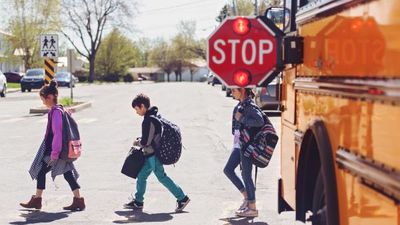
With the new school year days away, CAA Manitoba (CAA MB) is releasing new findings on school zone safety. A recent survey found that nearly all (90 per cent) Manitoba parents and guardians have reported unsafe driving behaviours in their school zone. As a result, most parents (62 per cent) consider their child’s school zone very unsafe. “Every parent wants to see their child to and from school safely,” says Ewald Friesen, manager, government & community Relations for CAA Manitoba. “Driving dangerously in areas where vulnerable road users are active such as children, always presents heightened road safety concerns.” Parents call for greater safety precautions in school zones According to the data, parents cited speeding, drivers blocking school bus zones and distracted driving as the most dangerous driving behaviours they witnessed in their school zone. The study also found that 43 per cent of parents choose to drive their kids to school over walking, cycling or taking a school bus, contributing to the increase in vehicle traffic in these areas. “This is an eight per cent increase in parents driving their children compared to our last survey in 2023,” says Friesen. “Parents stated their reasons for driving their children included convenience and distance between home and school, but the most concerning answer was because of traffic safety concerns.” Most Manitoba parents favour greater safety precautions in school zones, including lower speed limits, enhanced infrastructure, improved enforcement and education. The data shows that the majority of parents (83 per cent) support reducing speed limits in school zones during the school year, a common practice in the province. A majority of parents also believe that automated speed enforcement (ASE) is an effective deterrent to speeding in school zones, while recognizing there are other tools, including speed bumps and digital speed detection signs, as effective ways to slow drivers around their child’s school. CAA Manitoba is encouraging motorists to make responsible driving choices to protect children as they travel to and from school. CAA Manitoba has the following tips when travelling in school zones: Help reduce traffic with active school travel: Encourage your kids to walk or wheel to school to ease traffic congestion. If your school is a further distance, CAA MB encourages parents and guardians to park a block away and walk to school to reduce the volume of vehicles and improve sightlines. Put away distractions: It’s important to put away distractions such as phones and be extra attentive in school zones for both motorists and pedestrians. Slow down: Know and respect the speed limit in your neighbourhood’s school zones. Give yourself plenty of time to drop off your kids at school to avoid rushing. Choose a safe spot to drop off and pick up your children from school: Follow your school’s rules and avoid double parking or stopping on crosswalks, dropping off or picking up your kids on the opposite side of the street, and stopping in moving traffic as kids rush out. Instead, use the designated drop-off areas or consider a spot a bit farther away from school that is easily accessible and safe. Make eye contact with pedestrians: With the excitement of going back to school, anticipate that children may not easily see or hear your moving vehicle, so make eye contact with pedestrians crossing the road. Stop for school buses: Never pass a stopped school bus with an activated stop arm and flashing red lights as children get on and off the bus. Passing a school bus as it loads and unloads children – not only is this dangerous, but it’s also illegal. Watch for CAA School Safety Patrollers: When travelling through school zones, watch for CAA School Safety Patrollers in their lime green safety vests, as they play an important role in ensuring the roadway is safe before kids cross on their own. Visit schoolpatrolmanitoba.com for more information. CAA supports safety in school zones through the CAA School Safety Patrol® program. The program was developed to protect, educate and empower elementary school children on safe road-crossing practices. For more school zone safety tips, visit caamanitoba.com/schoolzonesafety. The online survey was conducted by DIG Insights in May 2025, with 516 Manitoba parents/guardians with children attending school from kindergarten to grade 8. Based on the sample size of n=516 and with a confidence level of 95 per cent, the margin of error for this research is +/- 3%.)



New findings from CAA South Central Ontario (CAA SCO) show that parents believe that school zone congestion is increasing. Eight in 10 Ontario parents report traffic buildup during both drop-off (81 per cent) and pick-up (84 per cent) times. These numbers are up from 77 per cent and 79 per cent in 2024, respectively. “Every parent wants to see their child get to school safely, and an increase in vehicle traffic in these areas can pose a serious safety risk to young road users,” says Lauren Fisher, manager, government relations for CAA SCO. “Our survey reveals that parents are choosing to drive their kids to school because of the distance between home and school, convenience and traffic safety concerns.” Parents Support Stricter School Zone Safety Measures A majority of parents (83 per cent) have reported seeing unsafe driving behaviours in their child’s school zone – up three per cent from 2024. As a result, most parents (63 per cent) consider their child’s school zone very unsafe, a number that has climbed since 2023 (55 per cent). “Speeding, stopping in undesignated areas and double parking are all commonly reported unsafe driving behaviours parents see in their child’s school zones,” says Fisher. “To help deal with that, most parents are in favour of increasing safety precautions in school zones, including improved enforcement and penalties.” Most parents are in favour of reducing the speed limit in school zones, with nearly half considering 30km/h as the most appropriate speed in these areas. Many parents also believe that automated speed enforcement (ASE) effectively deters speeding in school zones. With the new school year just days away, CAA SCO encourages motorists to make responsible driving choices to protect children as they travel to, from and around school. CAA SCO has the following tips when travelling in school zones: Help reduce traffic with active school travel: Encourage your kids to walk or wheel to school to ease traffic congestion. If your school is a further distance, CAA SCO encourages parents and guardians to park a block away and walk to school to reduce the volume of vehicles and improve sightlines. Put away distractions: It’s essential to put away distractions such as phones and be extra attentive in school zones, for both motorists and pedestrians. Slow down: Know and respect the speed limit in your neighbourhood’s school zones. Give yourself plenty of time to drop off your kids at school to avoid rushing. Choose a safe spot to drop off and pick up your children from school: Follow your school’s rules and avoid double parking or stopping on crosswalks, dropping off or picking up your kids on the opposite side of the street, and stopping in moving traffic as kids rush out. Instead, use the designated drop-off areas or consider a spot a bit farther away from school that is easily accessible and safe. Make eye contact with pedestrians: With the excitement of going back to school, anticipate that children may not easily see or hear your moving vehicle, so ensure to make eye contact with pedestrians crossing the road. Stop for school buses: Never pass a stopped school bus with an activated stop arm and flashing red lights as children get on and off the bus. Passing a school bus as it loads and unloads children – not only is this dangerous, but it’s also illegal. Watch for CAA School Safety Patrollers: When travelling through school zones, watch for CAA School Safety Patrollers in their lime green safety vests, as they play an important role in ensuring the roadway is safe before kids cross on their own. Visit caaschoolsafetypatrol.com for more information. For more school zone safety tips, visit caasco.com/schoolzone. CAA supports safety in school zones through the CAA School Safety Patrol® program, developed to protect and educate elementary school children on safe road-crossing practices. CAA’s Ontario Road Safety Resource is a toolkit with valuable lesson plans for teachers to help educate students about road safety. To learn more, please visit www.caasco.com/schoolzone. The online survey was conducted by DIG Insights in May 2025, with 1,511 Ontario parents/guardians with children attending school from kindergarten to grade 8. Based on the sample size of n=1,511 and with a confidence level of 95 per cent, the margin of error for this research is +/- 2%.)


Unlocking Liquidity Through Fine Art Appraisal and Lending
As financial markets shift, fine art collectors and investors are discovering new ways to unlock liquidity without parting with prized works. Art-backed loans, supported by professional appraisal, allow owners to access capital while maintaining ownership and display rights. This article explores how lenders and borrowers alike can benefit from these arrangements—when supported by rigorous appraisal standards and careful risk management. What’s covered: • The role of USPAP-compliant appraisal in fine art lending • How fair market value differs from insurance replacement value • Loan-to-Value (LTV) ratios and best practices in structuring art-backed loans • Key borrower responsibilities: insurance, storage, and title maintenance • Risk considerations for lenders, including authenticity, liquidity, and due diligence Connect with the Experts Amanda McConaha Senior Fine Art Appraiser Expert in Post-War, Contemporary, and Emerging Fine Art valuations, specializing in collateral loans and insurance appraisals. amanda.mcconaha@jsheld.com Michael Alexander Senior Vice President, Economic Damages & Valuations Brings deep expertise in valuation methodologies, forensic investigations, and financial analysis. michael.alexander@jsheld.com Dalton Campbell Consultant, Economic Damages & Valuations Provides financial and economic analysis with a focus on valuation, estate law, and all stages of pre-litigation and litigation support. dalton.campbell@jsheld.com For any media inquiries, contact : Kristi L. Stathis, J.S. Held +1 786 833 4864 Kristi.Stathis@JSHeld.com.


Are GCSEs delivering for students and society?
Ahead of the GCSEs results being released on Thursday 21 August Aston University work psychologist, Dr Paul Jones, discusses whether the exams are fit for purpose. He believes that our exam system narrows thinking, and GCSEs emphasise “right answers” and rote recall, creating risk-averse learners who are afraid to fail or think differently. Exams are harming wellbeing GCSEs were designed in the 1980s, when many left education at 16. Today, almost all young people continue to 18, yet they still face a stressful halfway checkpoint that often does more harm than good. Research shows GCSEs are linked to anxiety, sleeplessness and even self-harm. This isn’t about students being “less resilient”, t’s about a system that has prioritised bureaucracy, league tables, and exam statistics over wellbeing. GCSEs don’t prepare students for life Exams reward the ability to memorise and recall under pressure, but the world beyond school demands much more. Employers and universities want young people who can think critically, manage their own learning, collaborate, and adapt. By the time many reach university, students are burnt out from years of high-stakes testing. They often struggle with independence, risk-taking, and curiosity, the very qualities they need to succeed. Over-assessment stifles innovation Our exam system narrows thinking. GCSEs emphasise “right answers” and rote recall, creating risk-averse learners who are afraid to fail or think differently. Innovation, however, requires psychological safety: the freedom to explore, experiment, and make mistakes. In a world where AI can already handle routine tasks like recall and pattern analysis, the human edge lies in breaking moulds, challenging assumptions, and combining knowledge in new ways. Our current system suppresses exactly those skills. Moving GCSEs into the future We need fewer, smarter assessments and a curriculum that builds creativity, resilience, and innovation. Other countries use project-based learning, portfolios, and sampling tests to capture what young people can really do. Wales is already embedding wellbeing and digital skills into its new curriculum. England risks being left behind if it continues to cling to an exam-heavy model designed for a different era. The bottom line Our young people deserve an education that prepares them for life, not just for exams. We should be measuring what really matters: wellbeing, creativity, and the ability to thrive in a fast-changing, AI-driven world. To speak to Dr Jones or for any media inquiries in relation to this please contact Nicola Jones, Press and Communications Manager, Aston University on (+44) 7825 342091 or email: n.jones6@aston.ac.uk


Intangible assets now make up more than 90% of S&P 500 market value — yet many organizations still lack a dedicated executive role to manage them strategically. This is where the Chief Intellectual Property Officer (CIPO) comes in. In this expert-backed piece, J.S. Held's Chief Intellectual Property Officer James E. Malackowski, CPA, CLP, and his colleague David Ngo unpack the economic forces shaping this role, the skills CIPOs bring to the table, and why forward-thinking companies are making IP leadership a boardroom priority. What you’ll learn: • The economic forces driving the rise of CIPO leadership • How CIPOs bridge legal, technical, and commercial priorities to unlock value • The growing relevance of CIPOs in consulting, insurance, and AI-driven industries • Practical strategies for integrating IP leadership into portfolio and risk management • Why the next decade will define the CIPO’s role in corporate success With deep expertise in IP strategy, valuation, and litigation, Malackowski and Ngo offer a clear, compelling case for elevating IP leadership to the C-suite. Looking to connect with the experts? Click on their profiles to arrange an interview or gain deeper insights into intellectual property strategy, risk, and valuation. James E. Malackowski, CPA, CLP Chief Intellectual Property Officer, J.S. Held | Co-founder and Senior Managing Director, Ocean Tomo Global leader in intellectual property valuation, strategic advisory, and expert testimony. Recognized among IAM’s “World’s Leading IP Strategists” and a pioneer in IP exchange models. David Ngo Senior Analyst, Intellectual Property Disputes Financial Expert Testimony, Ocean Tomo, a part of J.S. Held Specialist in quantifying economic damages in IP disputes and valuing intangible assets, with expertise in applying economic and financial analysis to complex litigation. For any other media inquiries, contact : Kristi L. Stathis, J.S. Held +1 786 833 4864 Kristi.Stathis@JSHeld.com.


Dr. Sameer Hinduja is one of the world’s foremost experts on cyberbullying, adolescent mental health, and digital safety. A Professor at Florida Atlantic University’s School of Criminology and Criminal Justice and Co-Director of the Cyberbullying Research Center, he has advised the White House, testified before federal agencies, and worked with schools and tech companies worldwide to protect young people online. View Full Profile→ Amid the U.S. youth mental health crisis, his latest peer-reviewed study, published through FAU Newsdesk, reveals that hope not only boosts well-being and academic achievement but also acts as a powerful shield against bullying and cyberbullying in adolescents. Results, published in the journal Frontiers in Sociology, show that students with less hope were 56% more likely to cyberbully others than their peers over their lifetime, and 57% more likely over the last 30 days. Those with more hope were 36% less likely to cyberbully others over their lifetime and over the last 30 days when compared to their peers with lower levels of hope. The key takeaway? Hope matters. It buffers against the urge to aggress against others online and off. “Hope acts as a powerful protective factor against both school bullying and cyberbullying among youth,” said Sameer Hinduja, Ph.D., lead author, a professor in the School of Criminology and Criminal Justice within FAU’s College of Social Work and Criminal Justice, co-director of the Cyberbullying Research Center, and a faculty associate at the Berkman Klein Center at Harvard University. “When young people believe in their ability to set meaningful goals and stay motivated to reach them, they are far less likely to lash out or harm others. Hope gives them a sense of direction – and that can make all the difference.” Hinduja's previous research has been featured in The Washington Post, where he emphasized that cyberbullying is not just emotionally distressing—it can cause trauma responses in teens that mirror clinical Post-Traumatic Stress Disorder. “As our research clearly shows, cyberbullying in any form — whether it’s exclusion from a group chat or direct threats — can lead to significant trauma in youth,” Sameer Hinduja, a professor in Florida Atlantic University’s School of Criminology and Criminal Justice and the paper’s lead author, said in a news release. “We were surprised to find that no single type of cyberbullying caused more harm than others; all carried a similar risk of traumatic outcomes. This means we can’t afford to dismiss or trivialize certain behaviors as ‘less serious’ — being left out or targeted by rumors can be just as detrimental as more overt attacks.” Why This Matters Now As students return to school this fall, Hinduja’s research offers a clear reminder: digital harm is real harm. Emotional safety in online environments deserves the same urgency as physical safety in school buildings. His work calls for: • Preventive education over punitive responses • Trauma-informed approaches in schools • Support systems that validate and protect victims • Tech accountability and policy reform ⸻ Dr. Hinduja is available for media interviews on topics such as: Adolescent Mental Health • Cyberbullying • PTSD • Digital Safety • School Culture Click on the icon below to connect.



Dr. Brian LaPointe, Research Professor at Florida Atlantic University’s Harbor Branch Oceanographic Institute, is one of the nation’s most recognized experts on marine ecosystems. His work spans algal physiology, biochemistry, biodiversity, and coastal conservation — with more than a decade of dedicated research focused on the rise and impact of sargassum blooms across the Atlantic. LaPointe confirmed that sargassum levels in the North Atlantic have hit a new biomass record — and much of it is now washing ashore across South Florida’s coastlines. The scale of this bloom, he says, could have lasting consequences for marine ecosystems, tourism, and public health. LaPointe recently spoke to CNN about why this record bloom is raising alarm bells: “Sargassum goes from being a very beneficial resource of the North Atlantic to becoming what we refer to as… a harmful algal bloom when it comes ashore in excessive biomass.” Ammonia is another problem emitted by the decaying seaweed, LaPointe noted. The chemical compound “strips the oxygen out of the waters along our coastal ecosystems like mangroves, coral reefs, seagrass beds,” he said. The scale of the bloom is staggering. According to University of South Florida estimates cited by LaPointe, over 31 million tons of sargassum have been detected this year — a 40% increase over the previous record. Dr. Brian LaPointe is available to speak with the media on this topic. For interviews, click below to view his full profile and click the connect button.


Unexpected A-Level results? Here’s advice from a psychologist
On 14 August young people across England, Northern Ireland and Wales will receive their A Level results. Many will receive the grades they hoped for however those who receive results that aren’t as expected, either worse or better, there is the option of entering Clearing, the period when universities advertise remaining places on undergraduate courses Aston University is offering guidance to help secure a place on a degree course and those who already have their results can enter Clearing from 5 August. There is more information about the process on the Aston University website at https://www.aston.ac.uk/clearing/guide Going through the process of waiting for and receiving A Level results can be overwhelming Dr Natalia Stanulewicz-Buckley is a social health psychologist and is a lecturer in the School of Psychology and Aston Medical School at Aston University. She has the following advice for anyone who doesn’t get the grades for which they hoped: “What if your A-level results are not what you hoped for? Breathe. Feel. Regroup. The path ahead still holds endless possibilities. “As people get older and gain more life experience, they often realise that what once seemed like a humongous failure or disappointment, with time, bears a lighter load. So, what advice would I share with young people facing A-level results that may not have aligned with their expectations and hopes, and who might be facing Clearing or having to consider other options? “First of all, take a few long inhales and even longer exhales (for 3-4 minutes). This kind of breathing exercise can help you feel calmer when facing a stressful situation. “Next, acknowledge your feelings. It’s okay to feel disappointed, disheartened, or even angry when life doesn’t go according to plan. These emotions show that this outcome matters deeply to you. But they don’t mean that all is lost. “Take time to sit with your emotions and try to share your concerns with people who might be going through a similar experience, or with those you trust to support you - friends, siblings, family members, or teachers. There is truth in the saying, ‘A problem shared is a problem halved.’ “Once you've made space for your emotions and worked through them - remember, emotions are like waves; they arise, reach a peak, and then subside - you might feel more ready to consider your options. Believe me, there will be many, Clearing, taking a year out to travel or volunteer, doing an internship, and more. “Ask yourself, 'What path is most aligned with my plans and ambitions for the future?' Follow that answer. And who knows - perhaps in time, you’ll look back on this stressful moment and the decisions you made in response to it and realise that having to re-adjust your university plans was the best thing that could have happened. “As the saying goes, ‘When one door closes, another one opens.’ But most importantly, please be kind to yourself. Treat yourself as you would a close friend—with understanding, support, and compassion. It may be reassuring to remember that you did the best you could in the situation you were in, with the resources you had. That is all anyone could ever ask of you.” To interview Dr Stanulewicz-Buckley or for other media enquiries contact Nicola Jones, Press and Communications Manager, on (+44) 7825 342091 or email: n.jones6@aston.ac.uk To find out more about Dr Stanulewicz-Buckley’s work visit https://research.aston.ac.uk/en/persons/natalia-stanulewicz-buckley Courses available through clearing at Aston University can be viewed at https://www.aston.ac.uk/clearing/vacancies and anyone who is waiting for their results can register for Priority Clearing at https://www.aston.ac.uk/clearing#register to receive vacancy alerts, advice and tips. From 8am Thursday 14 August there will be three easy ways to apply for courses at Aston University through Clearing, either call 0800 917 5923 to speak with an adviser, submit a Clearing application form at https://www.aston.ac.uk/clearing/guide or use the online live chat service. Finally, students can message on Instagram at https://www.instagram.com/AstonUniversity/