
Experts Matter. Find Yours.
Connect for media, speaking, professional opportunities & more.

“When in doubt, choose a different costume,” Baylor expert says Megyn Kelly, host of NBC’s “Megyn Kelly Today,” is facing national criticism for her suggestion during a roundtable discussion this week that it was OK for white people to dress in blackface for Halloween. After two days of backlash, media accounts reveal that the future of her career is in question. But the questions she raised regarding blackface and cultural appropriation should be addressed, especially as Halloween approaches, said Mia Moody-Ramirez, Ph.D., professor of journalism, public relations and new media in Baylor University’s College of Arts & Sciences. She is a nationally known expert on mass media representations of minorities, women and other underrepresented groups and coauthored the new book "From Blackface to Black Twitter: Reflections on Black Humor, Race, Politics, & Gender." Moody-Ramirez said people need to understand the historical significance of blackface to grasp its negative reception today. “When you know better, you do better,” she said. At its base form, she said, blackface is the use of makeup by a nonblack person to appear black. She added that many people do not understand why the seemingly simple act of a white person darkening his skin like a black person at Halloween – even if it’s an act to honor a favorite entertainer or sports figure – can be offensive. “Dressing in blackface during Halloween is inappropriate because the blackface tradition is founded upon the enactment of demeaning stereotypes of black people,” Moody-Ramirez explained. “Blackface has been frowned upon since the blackface minstrel shows of 18th and 19th centuries when various aspects of African/African American culture were appropriated and used for profit. Dressing up in blackface invokes representations of unflattering images of blacks as lazy, unintelligent and criminal in nature.” Yet the issue is bigger than blackface. Any cultural appropriation – defined as the adoption of elements of a minority culture by members of the dominant culture – can be deemed inappropriate and offensive. “Cultural appropriation is distinct from equal cultural exchange because of the presence of power inequities that are a consequence of oppression,” Moody-Ramirez said. “Cultural appropriation is important to consider during Halloween because this is the time of year when we are most likely to dress up in a costume that is representative of another culture.” Common cultural appropriation missteps include darkening one’s face, wearing ethnic garb and/or dressing up to provoke laughter rather than show respect for a group/person, she said. “When considering a costume, think of whether it would show honor or disrespect for a group/person,” Moody-Ramirez advised. “If you don’t know the meaning of the ethnic attire you are considering for Halloween, you shouldn’t wear it. For instance, tribal markings, headdresses and turbans would not be appropriate costume attire because they are tied to a specific ceremony or religious meaning.” Showing respect for other cultures should include honoring their traditions. “Some cultures have laws that ban or restrict individuals from wearing religious attire in public places. Other cultures save certain attire for special ceremonies and honors,” Moody-Ramirez said. Moody-Ramirez offered the following tips to consider when choosing a Halloween costume this year. Avoid dressing in a costume that will reflect another ethnicity or culture. Choose something that is fun and tasteful – animals, movie characters (without darkening your skin), ghosts, ghouls, etc. If you dress like someone of a different ethnicity/culture, don’t darken your face or emphasize features like eyes, teeth or noses. Think about whether the costume will be perceived as tasteful or tasteless. Use the grandmother test. If you post it on social media, would your grandmother be proud or disappointed? “When in doubt,” she said, “choose a different costume.” ABOUT MIA MOODY-RAMIREZ, Ph.D. Mia Moody-Ramirez, Ph.D., is the director of graduate studies, director of American studies and professor of journalism, public relations and new media in the Baylor University College of Arts & Sciences. Her research emphasizes mass media representations of women, minorities and other underrepresented groups. She recently coauthored the book "From Blackface to Black Twitter: Reflections on Black Humor, Race, Politics, & Gender." Other books include: “The Obamas and Mass Media: Race, Gender, Religion, and Politics (Palgrave Macmillan) with Dr. Jannette Dates, and “Black and Mainstream Press’ Framing of Racial Profiling: A Historical Perspective” (University Press of America). Ramirez is head of the Minorities and Communication division of the Association for Education in Journalism and Mass Communication (AEJMC), which is committed to advancing research, teaching and professional freedom and responsibility scholarship and initiatives that explore the relationship between racial and ethnic minorities and mass communication. In August, she was presented with AEJMC’s Lionel Barrow Jr. Award for Distinguished Achievement in Diversity Research and Education and also was recognized as one of nine Institute for Diverse Leadership in Journalism and Communication Fellows. ABOUT BAYLOR UNIVERSITY Baylor University is a private Christian University and a nationally ranked research institution. The University provides a vibrant campus community for more than 17,000 students by blending interdisciplinary research with an international reputation for educational excellence and a faculty commitment to teaching and scholarship. Chartered in 1845 by the Republic of Texas through the efforts of Baptist pioneers, Baylor is the oldest continually operating University in Texas. Located in Waco, Baylor welcomes students from all 50 states and more than 80 countries to study a broad range of degrees among its 12 nationally recognized academic divisions. ABOUT BAYLOR’S COLLEGE OF ARTS & SCIENCES The College of Arts & Sciences is Baylor University’s oldest and largest academic division, consisting of 25 academic departments and seven academic centers and institutes. The more than 5,000 coursestaught in the College span topics from art and theatre to religion, philosophy, sociology and the natural sciences. Faculty conduct research around the world, and research on the undergraduate and graduate level is prevalent throughout all disciplines. Visit www.baylor.edu/artsandsciences.



On average, you will spend about a third of your life sleeping or attempting to sleep. For many, this means more than 25 years of your life will be spent in bed. Given this startling proportion, wouldn’t you like to know more about what helps, hinders and happens while you are asleep? Michael K. Scullin, Ph.D., director of the Sleep Neuroscience and Cognition Laboratory at Baylor University, spends the majority of his time researching and teaching about such topics. “One reason I am passionate about studying sleep is because you can't really introspect too much about it, as with nearly everything else in psychology,” Scullin said. “With sleep, you're unconscious at the time you are doing it. Sure, you can wake up and say ‘Oh, how did I sleep last night?’ but when you're actually engaging in the sleeping process, you can't do that. As a result, sleeping becomes an enigma. When you have the right equipment, you can begin to design experiments to figure out what exactly the brain is doing when we sleep and why is it important.” Below, Scullin addresses several common beliefs about sleep and the science that proves or disproves them. MYTH: If you die in a dream, then you die in real life. For a time, a rumor circled around that one’s brain cannot handle the mental strain of dying in a dream, and if you die in a dream, you will die. “That's just not substantiated because people report dying in their dreams, and they report it while they're still alive,” Scullin said. “Your brain can actually handle a lot, and there’s one theory that says nightmares are a functional adaptation to help us survive. It is potentially really functional for your brain to have those stressors in its offline state to help prepare you for situations. A lot of people think that nightmares are bad, and yes, they can be a clinical problem. But when they aren’t to that level, they can help us prepare for stressful situations.” FACT: Snoring is a sign of disease. Sleep apnea and snoring are linked, although not with a 1:1 ratio; some people snore without sleep apnea, but snoring is the biggest risk-factor of sleep apnea, Scullin said. Snoring is caused by an obstruction to one’s breathing pathways. In many cases, individuals who snore wake up gasping for air. That’s an observed sleep apnea, said Scullin. If someone is observing those things, he recommends visiting a clinical sleep physician. “What if you stopped breathing every few minutes while you were awake during the day?” asked Scullin. “Would you be okay with that? Not only are you not getting enough oxygen to regions of your body, but it puts a lot of stress on your heart. Untreated sleep apnea traumatically increases your risk for heart problems and heart disease. The great thing is, however, if you get treatment, those risk factors all drop down to normal.” FACT: If you cannot fall asleep in 20 minutes, you should get out of bed. Seems contradictory, right? In fact, research shows that getting out of bed can improve your ability to fall asleep. Why? “If you’re lying in bed and can’t fall asleep, you are forming a negative association between your bed and sleep,” Scullin said. “The solution is getting out of bed and going to do something boring without the lights on. Then when you feel sleepy, go back to bed. This way, you only associate your bed with the feeling of sleepiness.” MYTH: After a night of great “recovery sleep,” you fully restore damage from pulling an all-nighter. “A really interesting neuroimaging study has been able to show that that sleep deprivation significantly impairs the frontal lobes ability to function,” Scullin said. “Your frontal lobe is responsible for memory, decision-making, paying attention and more. The study took individuals who had pulled an all-nighter and then allowed them to get a full night of recovery sleep. When they put them back into the scanner, scientists found that the frontal lobe only partly recovered.” Most people skip on sleep during weekday nights and then oversleep on the weekend, but this throws off your circadian rhythms, your body’s natural sleeping patterns, said Scullin. This means that when Sunday night comes around, you may have “Sunday night insomnia” – trouble falling asleep because you've trained your body to go to bed later. MYTH: During a full moon, people have twice as many sleep problems. A few years ago, there was a big media ‘boom’ claiming that there were more sleep disturbances during a full moon. According to Scullin, the scientific community was skeptical, and labs across the world pooled their data to discover the truth. They found no association between full moons and sleep quality. Why, then, did this myth surface? “Those who claim they don’t sleep well during full moons probably don't sleep very well on other nights as well, but they only realize it or think about it happening when it is a full moon,” Scullin said. “There is something called the confirmation bias where an individual holds a hypothesis about how the world works, and then he or she will look for instances that confirm the hypothesis. Oftentimes they forget every other instance that contradicts their claim. We think that is what caused the moon-sleep phenomenon.” FACT: You can fall asleep while driving without realizing it. People swerve on the road for many reasons – texting, drinking, eating – but not many realize that some individuals swerve because of ‘micro-sleeps.’ According to Scullin, people often operate under the impression that this would never happen to them, but what they don’t realize is that this a frequent occurrence that one has no control over. “We have a similar biological need for sleep as we do hunger and thirst,” Scullin said. “For thirst, we have to have access to water; for hunger we have to have access to food. But for sleep our body can shut down whenever it needs to. If this happens, our brain will occasionally do this for 3 to 5 seconds if you're really tired – and especially if you're involved in some long monotonous task such as driving down a long highway.” FACT: Some people’s bodies are paralyzed for minutes whenever they wake up. Imagine waking up, seeing your biggest fear and being unable to move. Unfortunately, this is a reality for some individuals. Sleep paralysis occurs when brain functions get mixed-up, said Scullin. In rapid eye movement (REM) sleep the brain paralyzes the rest of the body so one doesn't act out his or her dreams, and this is very important. “The problem is that in some cases, your brain isn't fully coordinating with the other parts of it,” Scullin said. The part that controls consciousness wakes up, but the other part that controls your body paralysis is hitting the snooze button. So, while you can be fully awake, your body is paralyzed.” Some people experience this for a few seconds, others for a couple of minutes. Some people also hallucinate when the part of your brain that is dreaming “crosses over” into your consciousness. These hallucinations are triggered when one is so sleep deprived that the brain is trying to get deep sleep, but it cannot fully wake up immediately afterwards. According to Scullin, there does not seem to be any big clinical issue with sleep paralysis or hallucinations, and they seem to go away over time and in development. MYTH: Smartphone apps can reliably measure your sleep. Despite their popularity, sleep apps cannot effectively track sleep quality or quantity, Scullin said. The only way to reliably measure your sleep is to have electrodes attached to your scalp, measuring your brain waves in a sleep clinic. But sleep evaluations are expensive and usually only worth the cost for individuals with sleep apnea or other ongoing sleep problems. The good news? Baylor’s sleep lab pays volunteers to get their sleep analyzed, and scientists like Scullin are always looking for participants. FACT: The latest you should consume caffeine is six hours before bed. In a placebo-controlled study, scientists manipulated whether participants had caffeine one, two, four or six hours before bed, and for each of those conditions they had a placebo control. When the subject’s sleep was measured, they found that in every group, it was harder to fall asleep and sleep quality wasn’t as good as those without caffeine. “Even if you have caffeine six hours before bed, you not only have more difficulty falling asleep, but your sleep was also less deep,” Scullin said. “We actually don’t know if the results would extend to seven or eight hours before bed, but we know that six hours before bed is a ‘no-go.’ What I recommend is having your caffeine in the morning.” For those who think caffeine has no effect on the body, Scullin points out a bigger problem. “If you can sleep right after drinking a cappuccino, it probably means that you are so terribly sleep-deprived that even with drugs in your system that are intended to keep you awake, your brain is saying ‘I don’t care; I’m putting you to sleep.’” For more about Scullin and his research, visit the Baylor Psychology and Neuroscience website. by Brooke Battersby , student newswriter, (254) 710-6805 ABOUT BAYLOR UNIVERSITY Baylor University is a private Christian University and a nationally ranked research institution. The University provides a vibrant campus community for more than 17,000 students by blending interdisciplinary research with an international reputation for educational excellence and a faculty commitment to teaching and scholarship. Chartered in 1845 by the Republic of Texas through the efforts of Baptist pioneers, Baylor is the oldest continually operating University in Texas. Located in Waco, Baylor welcomes students from all 50 states and more than 80 countries to study a broad range of degrees among its 12 nationally recognized academic divisions. ABOUT BAYLOR COLLEGE OF ARTS & SCIENCES The College of Arts & Sciences is Baylor University’s oldest and largest academic division, consisting of 25 academic departments and seven academic centers and institutes. The more than 5,000 courses taught in the College span topics from art and theatre to religion, philosophy, sociology and the natural sciences. Faculty conduct research around the world, and research on the undergraduate and graduate level is prevalent throughout all disciplines. Visit www.baylor.edu/artsandsciences.


Baylors Benjamin Franklin Scholars Bring Light to Complex Figure
Founding Father Benjamin Franklin was a complex man. Among his many roles, he was a businessman, entrepreneur, inventor, journalist, author, printer, editor, politician, postmaster, statesman, ambassador and signer of the Declaration of Independence. And even with a treasure trove of accomplishments, sometimes the Franklin legends are bigger than Franklin the man – and it’s taken an army of historians and scholars throughout the centuries to sort it out. As July 4 Independence Day approaches, Baylor University's two Franklin scholars share different perspectives of Franklin, his faith and his business acumen: Thomas S. Kidd, Ph.D., Distinguished Professor of History and associate director of Baylor’s Institute for Studies of Religion Blaine McCormick, Ph.D., associate professor and chair of the management department in Baylor’s Hankamer School of Business Both have penned Franklin books and both have been featured nationally for their research on the Founding Father. Kidd’s 2017 book, “Benjamin Franklin: The Religious Life of a Founding Father,” has received high marks for its analysis of Franklin’s beliefs. From his Puritan upbringing to deism, skepticism and more, the book explores the influences and evolution of faith throughout Franklin’s life. “In today’s polarized political and religious environment, some pundits seek to remake the Founding Fathers in their own image. Benjamin Franklin’s example reveals that the historical truth is often more complicated,” Kidd wrote in a May 2017 column for The Wall Street Journal. McCormick, who wrote “Ben Franklin: America’s Original Entrepreneur,” discovered a passion to study the Founding Father after listening to an audiobook of Franklin’s autobiography. “Franklin could do things as a statesman, and understand things, and achieve things as a statesman, because he had achieved things in the marketplace first,” he said. “I’ve yet to find a better book for businesspeople to learn about how to run a business in the American Experiment. He wrote the autobiography to help train people in the life of business. Many of the principles are still very robust.” And the way he shared those principles (many of which have been misquoted and made into memes through the decades) is important, McCormick said. “Franklin used sentences no longer than a Tweet to train generations of colonial businesspeople,” he said. “They were short. They were memorable. They were high-impact.” ABOUT THOMAS KIDD, PH.D. Thomas S. Kidd, Ph.D., serves as Distinguished Professor of History and associate director of Baylor University’s Institute for Studies of Religion. His books include “Benjamin Franklin: The Religious Lie of a Founding Father, “American Colonial History: Clashing Cultures and Faiths,” “Baptists in America: A History,” “George Whitefield: America’s Spiritual Founding Father,” “Patrick Henry: First Among Patriots,” “God of Liberty: A Religious History of the American Revolution,” “American Christians and Islam” and “The Great Awakening: The Roots of Evangelical Christianity in Colonial America.” He has written for outlets including The Washington Post and The Wall Street Journal. ABOUT BLAINE MCCORMICK, PH.D. Blaine McCormick, Ph.D., serves as chair of the management department in Baylor’s Hankamer School of Business, is a nationally recognized scholar on the business practices of Benjamin Franklin and Thomas Edison. McCormick is interviewed frequently across all forms of media including Forbes, The New York Times, CNN, public radio, and ABC World News Tonight. He often travels to developing countries to teach business lessons to undereducated entrepreneurs using only a bottle of Coca-Cola as a teaching aid. A native Texan, McCormick grew up working in the cotton fields of West Texas. Before joining the Baylor faculty, he worked in Dallas and Plano for ARCO Oil & Gas Company as a human resource management professional. ABOUT BAYLOR UNIVERSITY Baylor University is a private Christian University and a nationally ranked research institution. The University provides a vibrant campus community for more than 17,000 students by blending interdisciplinary research with an international reputation for educational excellence and a faculty commitment to teaching and scholarship. Chartered in 1845 by the Republic of Texas through the efforts of Baptist pioneers, Baylor is the oldest continually operating University in Texas. Located in Waco, Baylor welcomes students from all 50 states and more than 80 countries to study a broad range of degrees among its 12 nationally recognized academic divisions.

New research examines impact of 'homesharing' services like Airbnb
Local governments across the country are passing laws to limit short-term rentals like Airbnb, HomeAway and VRBO, with Washington, D.C., poised to put some of the strictest limits yet on these homesharing services. Kashef Majid, an assistant professor of marketing at the University of Mary Washington, has examined more than 12,000 rentals in the nation's capital over nearly a decade, identifying which properties are most in demand and earn the most revenue as well as the impact of price and location on demand. Majid also found that commercial operators -- those that purchase properties solely to rent on short-term rental markets like Airbnb -- limit the supply of affordable housing, create neighborhood tensions and negatively impact the number of rentals. "The issue of commercial operators became so contentious that the largest county in Virginia (by population) recently passed legislation to prevent their existence," Majid said. "Commercial operators are simply one example of the issues that arise within the sharing economy. Our research has also explored parallels in other markets, such as ride sharing." Majid is available to speak with media regarding these topics and this research. To contact him, simply click on his icon to arrange an interview.



The next threat to election meddling? Brain Hacking
Almost 15 percent of Americans have reported changing their opinion on political or social issues because of a social media post, according to a recent Pew Research Center survey. “What if, immediately before spreading polarizing social media posts, our adversaries flashed subliminal images known to induce a type of anxiety called state anxiety? Evidence suggests people would perceive those posts in a more emotional way. Those images could, in turn, influence their voting behavior,” said Dr. Jay Heslen, an expert in intelligence and cybersecurity policy and assistant professor of political science with a joint appointment in the Katherine Reese Pamplin College of Arts, Humanities, and Social Sciences and the School of Computer and Cyber Sciences at Augusta University. “Successfully manipulating the cognition of a few thousand people in order to influence their perception of events could be enough to change the result of an election.” Heslen’s current research project focuses on whether exposure to certain visuals or sounds, including subliminal prompts, can induce a negative emotional arousal on people. He’s interested in learning whether that emotional state, called state anxiety, can then influence behavior in a specific, predefined way – a concept he calls neurocognitive hacking. Although research using subliminal prompts is not new and has had mixed results, Heslen’s approach is novel. He uses a specific kind of visuals previously shown to trigger people’s unconscious discriminatory behaviors toward outsiders. “Neurocognitive hacking could potentially be used as a weapon in cyberwarfare,” said Heslen, who worked as an intelligence officer with the Defense Intelligence Agency and the United States Air Force for more than 20 years, specializing in combatting terrorism, counterintelligence and strategic cyber intelligence. “We need to study these capabilities not only for our own understanding but to create sound policies and countermeasures to defend ourselves against others who may use them on us.” With 68 percent of Americans on Facebook and 73 percent on YouTube, according to another Pew Research Center survey, neurocognitive hacking could be a national security problem, Heslen said. “As we advance our understanding of the brain and its processes, including how to manipulate it, we will need to provide neurocognitive cybersecurity to people who use information and communication technologies,” Heslen said. “This will be especially true as we spend more time in virtual worlds.” Heslen is available to discuss: · How neurocognitive hacking can influence people’s behavior · Why neurocognitive hacking is a powerful weapon of cyberwar · What kinds of policies should the government create to protect itself and its citizens from neurocognitive hacking Heslen is a Lieutenant Colonel in the United States Air Force Reserve and has served in military operations on four continents to include humanitarian relief operations in Mozambique and South Africa as well as an operational tour in Afghanistan. In his capacity as a reservist, he is currently assigned to the National Intelligence University pursuing an advanced degree in strategic intelligence. Contact us to schedule an interview with Dr. Heslen or learn more about his expertise.


Can Hollywood help lift the stigma on mental health?
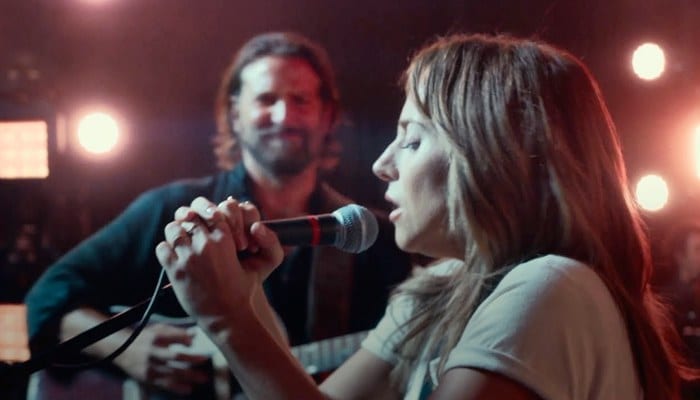
When A Star is Born was released to theatres – it had high expectations. It was a hit at international film festivals and Oscar buzz was already starting. Loaded with stars from stage, screen, and the music industry, it was guaranteed to bring in the audiences and pack theatres. While critics are raving about the performances, the message the film is bringing is also resonating with audiences as well. The story deals with characters attempting to overcome addictions as well as suicide. It’s a film that has people talking about serious issues. But is it Hollywood’s job to educate people about issues such as mental health? With the lines between education and entertainment blurring – is this a platform that could serve the wrong purposes? And with all things celebrity, is there a risk to glorifying acts of suicide or addiction? There are a lot of questions and that’s where the experts from CARF International can help. Michael Johnson is Managing Director of Behavioral Health at CARF and is an expert in mental health and substance use disorder. Mike is available to speak with media regarding this topic – simply click on his icon to arrange an interview.


On World Food Day, Cedar Crest College works to combat food insecurity among students
World Food Day -- an annual event established by the United Nations in 1945 -- will be celebrated on October 16, 2018. Cedar Crest College will join the celebration by continuing to work diligently to eliminate food insecurity among its students. The college's Closing the Gap Committee is holding a Fall Food Drive through October 22 to help stock the campus Resource Pantry. The pantry is open to all students – traditional undergrads, adult learners and graduate students. It offers non-perishable food items, toiletries and frozen meals.The pantry operates solely on donations and gifts. “It is harder to concentrate on your academic work when you are hungry,” said Mary Alice Ozechoski, Vice President of Student Affairs & Traditional Enrollment. “We believe that students who are food insecure need assistance so they can focus on what matters: completing their education.” Cedar Crest College was one of dozens of schools to participate in a recent survey conducted by Temple University and the Wisconsin HOPE Lab assessing the basic needs of university students across the nation. The study determined that 36 percent of students on U.S. College campuses suffer from food insecurity. You can read the full report here. Mary Alice Ozechoski is available to speak with media regarding this issue. Simply click on her icon to arrange an interview.


Using light therapy for Alzheimer's
Vielight Technology featured on CityTV Segment CityTV reporter, Stella Aquisto speaks to Breakfast Television host Dina Pugliese about the benefits of light therapy and how it can be used to target Alzheimer's. This television segment aired on March 24, 2017 Media Contact Edward D'Mello M: 647-865-2803 E: edward@vielight.com


Guinness World Record Holder Jon Bruney To Speak at Biohacker Summit in Toronto
(Toronto) Renowned Strongman and Fitness Expert to speak at Spark Biohacker Summit at Metro Toronto Convention Center on October 15th, 2018 Jon Bruney, creator of the “Pressing the Limits” motivational strength program, will appear in Toronto at the Spark Biohacker Conference. A devoted researcher in the pursuit of finding the edge in performance, Jon will speak about his experience using transcranial and intranasal light therapy. Jon, one of a number of elite athletes, has been working with Technology developed by Dr. Lew Lim, NMD, MBA and Founder & CEO of Vielight in Toronto. Dr. Lim will be on hand to answer questions about the broad base of international research behind photobiomodulation and what we know so far about it's mechanism. "With photobiomodulation, you can tap into the secrets of the nervous system, helping your body to push farther, to push harder, to push longer than you ever believed you could." Jon Bruney using Vielight photobiomodulation device at his Performance Training Center in Indiana Jon Bruney and Dr. Lew Lim, Founder and CEO of Vielight, will be available for questions at the Vielight exhibition booth held alongside the Biohackers Summit. For one-to-one interviews, please contact Edward D'Mello on 647-865-2803. Session Details Monday Oct. 15, 2018 1230PM - 130PM Metro Toronto Convention Centre South Building (Hall G) 222 Bremner Boulevard Toronto, Ontario M5V 3L9 About John Bruney John's work with competitive athletes includes Olympians and NFL players. He has been featured in Ripley’s Believe it or Not, The Guinness Book of World Records, shown nationwide on NBC’s America’s Got Talent, The Today Show, ABC’s To Tell the Truth, and TruTv’s Guinness World Records unleashed. A true renaissance man in the realm of strength-development, Jon Bruney is a best-selling author, world-class trainer, coach and motivational speaker. He is the author of the best-seller Neuro-Mass: The Ultimate System for Spectacular Strength and The Neuro-Grip Challenge: A Radical Program For Building Strength and Power in Your Upper Body. He also writes a training series called “Foundations”, featured in MILO, widely considered the world’s most prestigious strength training journal. Jon has been responsible for the design of numerous pieces of cutting-edge training equipment now in use around the world. Jon is a veteran of multiple trainer certification courses and was the first to achieve the grueling Battling Ropes Level 2 Certified status. He is also the co-owner of Submit Strength equipment. About the The Biohacker Summit The Biohacker Summit is the largest biohacking event in the world that connects well-being companies with medical professionals, technology experts, investors, entrepreneurs, health and nutrition enthusiasts, and other pioneers. Biohacking - better living through science, technology and nature - is a fast growing international trend. The aim of the conference is to make the world healthier and happier place, prevent disease, and extend human capabilities and lifespan. Media Contact Edward D'Mello M: 647-865-2803 E: edward@vielight.com #photobiomodulation #light #therapy #Toronto #Canada #Ontario #wellness #health #mentalhealth #quantifiedself #biohack #biohacker #mental #brain #body #sport #performance
People know that communities affected by weather disasters like Hurricane Michael are in danger and need aid to rebuild. But psychologist Jamie Aten, founder and director of the Humanitarian Disaster Institute at Wheaton College in Illinois, says many don’t realize that such disasters often fuel the human rights violations of sex and labor trafficking. “The dark reality is that not all are there to help,” Aten says. “Some will likely be human traffickers ready to swoop in and exploit the vulnerable.” In this blog post, Aten and colleague Laura Leonard identify three factors that often fuel demand for sex and labor trafficking: significant damage, mass displacement of survivors, and an influx of outsiders. Aten and Leonard offer tips for recognizing the tactics of potential human traffickers, identifying people who are at risk, and stopping trafficking. Dr. Aten is available to discuss the connection between weather/humanitarian disasters and human trafficking, as well as the psychological and spiritual needs faced by those who have suffered from disasters. To schedule an interview, contact Wheaton College Director of Media Relations LaTonya Taylor at media.relations@wheaton.edu.
