
Experts Matter. Find Yours.
Connect for media, speaking, professional opportunities & more.

With tourism, concerts and other forms of recreation experiencing blockbuster summers, it seems almost hard to believe that we were wearing masks, quarantining and dealing with other COVID-19 restrictions as recently as a year ago. But according to Jennifer Horney, professor and founding director of the University of Delaware's epidemiology program, the virus is far from gone, with waves hitting Japan and the Dominican Republic and a rise in cases in the southern part of the United States. In addition to providing expert analysis for national media on the pandemic, Horney focuses on the impacts of natural disasters on public health, as well as linkages between disaster planning and the actions communities and individuals take to prepare, respond and recover. A core faculty member with UD's Disaster Research Center, Horney has trained rapid response teams around the world to respond to outbreaks of novel and reemerging diseases, such as Influenza A H1N1. She recently published "The COVID-19 Response: The Vital Role of the Public Health Professional," which emphasizes the critical roles that the public health workforce played on the frontlines of the response to the COVID-19 pandemic.


A recent survey conducted on behalf of CAA Insurance Company has found that a growing number of Ontarians have significant concerns about vehicle theft. The findings indicate that almost half of respondents (47 per cent) are very concerned about auto theft. That number increases to 57 per cent for those living in Toronto and the Greater Toronto Area (GTA). In contrast, those who live in either Northern (14 per cent) or Southwestern Ontario (10 per cent) were less worried about auto theft. "As an organization, we are deeply concerned about the rising trend of auto theft in Ontario and across the country. The survey results highlight the urgency of taking comprehensive action to protect our communities," says Elliott Silverstein, director of government relations CAA Insurance Company. Many Ontarians have a false sense of security. While many of those surveyed are concerned about the increase in vehicle theft, far fewer (30 per cent) are worried that their vehicle is at risk of getting stolen. This discrepancy suggests that many Ontarians may have a false sense of security when trusting that their cars are not at risk of being stolen. In most cases, basic auto theft prevention does not go far enough. According to the Solicitor General of Ontario, a car is stolen every 48 minutes. From 2014 to 2021, there was a 72 per cent increase in auto theft across the province, with a 14 per cent increase in the last year alone. While many people are diligent about locking their doors, basic auto theft prevention does not go far enough. Eighty-two per cent of drivers are ensuring their vehicle is always locked. Seventy-seven per cent of drivers ensure valuables are out of sight. Nearly 50 per cent of drivers park their cars in locked garages. Six per cent of drivers use a steering wheel lock, and only 8 per cent use a Faraday box to block the transmission of RFID signals. "Auto theft can happen to anyone, and drivers need to do more than just lock their doors to make their vehicle difficult to steal. We are urging Ontarians to take additional preventive measures to safeguard their vehicles, making them less appealing targets for thieves," adds Silverstein. Tips that can help deter vehicle theft As car-related thefts in Ontario have risen dramatically. Here are tips that can help deter vehicle theft: Secure your parked vehicle with an anti-theft deterrent such as a steering wheel lock, brake pedal lock or wheel & tire lock device like "The Club" Store your key fob in a Faraday box/pouch to block its signal from being hacked Lock your doors, and if you have a garage, park your vehicle inside If you have multiple vehicles, park the less expensive one closest to the street Install motion sensors on your driveway and a camera to capture any activity Cover the VIN (Vehicle Identification Number) so that it’s not visible on the dashboard Store an Air Tag in your vehicle to track your vehicle should it be stolen Ensure items are out of sight, and do not leave valuables in your vehicle at all Never leave your vehicle running Share any suspicious activity with law enforcement CAA Insurance believes that to combat auto theft properly; it will require collaboration with the government, insurers, vehicle manufacturers, and others, including Canada Border Services Agency. About This Survey The survey conducted for CAA Insurance Company is a representative sample of 2,000 Ontarians balanced and weighted on age, gender, and region. Comparative margin of error = +/-3.1%



#Expert Research: Can CBD effectively impede growth of heterotopic lung cancer?
Lung cancer is the most chronic form of cancer and the leading cause of cancer mortality in the world, according to studies by the American Lung Association. Despite recent advances in medical oncology, metastatic lung cancer remains incurable; however, a new discovery by Augusta University researchers has brought new hope to tackling the illness. That discovery, which stems from a joint preclinic study conducted by scientists from the Dental College of Georgia and the Medical College of Georgia at Augusta University and Medicinal Cannabis of Georgia, LLC, was published in the May 2023 issue of Human Cell. The study was led by Babak Baban, PhD, associate dean of research, immunologist and professor at DCG and one of the founders of Medicinal Cannabis of Georgia, an Augusta-based biomedical research and developmental company. The study revealed for the first time that inhalant cannabidiol, commonly referred to as CBD, can effectively impede growth of heterotopic lung cancer. “The central core of our research has been studying inflammatory diseases and for that we picked two different directions: one is centered around chronic inflammation in our system and the other is neurologic diseases such as dementia. Because of their impressive anti-inflammation effects, CBD, CBC and other cannabinoids have attracted our attention,” Baban said. “We have had some exciting findings before, and based on those, we built a new model of lung cancer. This is the first time the effect of the CBD has been assessed in inhalant format using an inhaler. This makes it more translatable into humans and more accurate,” he said. “Obviously, we are just as excited about our discoveries on mechanisms by which CBD worked. They help advance our understanding of the pathophysiology of lung cancer. We have seen some effects on plasticity and cancer stem cells, which appear to be crucial for tumors to regenerate and renew themselves.” Unlike most anti-angiogenesis drugs, inhalant CBD at the experimental dosage did not show any detectable side effects or toxicity. The findings support the notion that inhalant CBD has enough beneficial effects as a viable complementary modality to be included in combination with current standard treatments for lung cancer. Additionally, inhalant CBD delivered using a precisely metered dose is non-invasive, and has high translational value, warranting further research through clinical trials for lung cancer and possibly some other malignancies. “The cannabis plant has over 113 cannabinoids, two of which are very famous: THC and cannabidiol, or CBD. We have conducted extensive research on medicinal cannabis since 2014, but cannabis has been utilized for medicinal purposes for over 1,000 years,” Baban said. “It is not until recently we have started understanding a little better mechanisms how cannabidiols like CBD work.” Babak Baban is a professor, immunologist and associate dean for research at the Dental College of Georgia at Augusta University where he has served for 13 of his 20 years as a translational and clinical immunologist. Babak is available to speak to media about this important topic - simply click on his icon now to arrange a time to speak today.

#Expert Research: Biodegradable ultrasound implant could improve brain tumour treatments
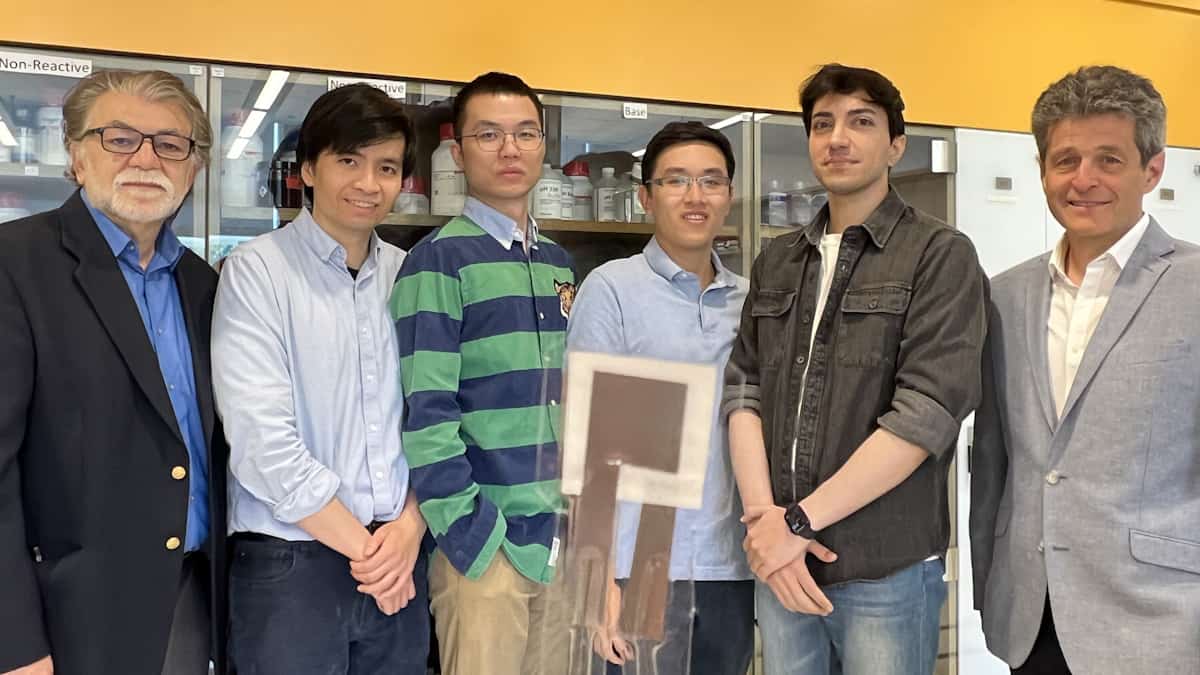
One of the challenges in treating certain types of brain cancer is the way that the blood-brain barrier prevents chemotherapy drugs from reaching the tumors they're meant to target. UConn's Thanh Nguyen, a biomedical and mechanical engineer, is developing new technology that could improve how we are able to treat brain tumors. He recently spoke with Physics World about this groundbreaking research: A new type of biodegradable ultrasound implant based on piezoelectric nanofibres could improve outcomes for patients with brain cancer. Researchers led by Thanh Nguyen from the the University of Connecticut’s department of mechanical engineering fabricated the devices from crystals of glycine, an amino acid found in the human body. Glycine is not only non-toxic and biodegradable, it is also highly piezoelectric, enabling the creation of a powerful ultrasound transducer that could help treat brain tumours. Brain tumours are particularly difficult to treat because the chemotherapy drugs that would be effective in tackling them are blocked from entering the brain by the blood–brain barrier (BBB). This barrier is a very tight junction of cells lining the blood vessel walls that prevents particles and large molecules from making their way through and damaging the brain. However, ultrasound can be safely used to temporarily alter the shape of the barrier cells such that chemotherapy drugs circulating in the bloodstream can pass through to the brain tissues. Currently, to achieve such BBB opening requires the use of multiple ultrasound transducers located outside the body, together with very high intensity ultrasound to enable penetration through the thick human skull bone. “That strong ultrasound can easily damage brain tissues and is not practical for multiple-time applications which are required to repeatedly deliver chemotherapeutics,” Nguyen tells Physics World. By contrast, the team’s new device would be implanted during the tumour removal surgery, and “can generate a powerful acoustic wave deep inside the brain tissues under a small supplied voltage to open the BBB”. The ultrasound would be triggered repeatedly as required to deliver the chemotherapy that kills off the residual cancer cells at tumour sites. After a set period of time following treatment the implant biodegrades, thereby eliminating the need for surgery to remove it. The research, reported in Science Advances, demonstrated that the team’s device used in conjunction with the chemotherapy drug paclitaxel significantly extended the lifetime of mice with glioblastomas (the most aggressive form of brain tumour) compared with mice receiving the drugs but no ultrasound treatment. This is fascinating research and if you are interesting in covering this topic, then let us help. Professor Nguyen focuses on biointegrated materials and devices at nano- and micro-scales for applications in biomedicine, and he's available to speak to media about his research. Simply click on his icon now to arrange an interview today.



Electric vehicles are hitting the streets, but there are potholes to avoid
No doubt about it, electric vehicles are coming and coming fast. Production of EVs has ramped up in the last couple of years but there are many issues that need to be addressed before they become the everyday choice for consumers. Richard Franza, PhD, professor of management at the Hull College of Business at Augusta University said the timing of EVs is contingent on a few things. “It’s not a question of if they’re coming, but how fast will they be here,” said Franza. “One is the speed at which there is infrastructure built for them. There are still not a lot of places to charge a car. We need more charging stations. Eventually, EVs will be predominant.” Franza added a second hurdle is how fast the federal government moves on emissions requirements that will cause consumers to phase out fossil fuel vehicles. Georgia has become one of the leaders in luring EV manufacturers to call the state home. Not just that, but the state is also drawing in companies that supply batteries and other components. “Any time you build a manufacturing or assembly facility, you automatically get the suppliers around them. Even before Georgia got the vehicle manufacturers, we already had a battery manufacturer, so Georgia already has a good network for the automobile industry,” said Franza. Amazon has already made a major investment in EVs and Franza expects other companies like FedEx and UPS, companies that have a fleet of vehicles, to make the switch to EVs as well, since they have more ability to set up charging networks. The biggest question remains: how long it will take before EVs become more prevalent on the streets? Franza said the answer could depend on who you listen to, but other factors come into play. “Right now, electric vehicles account for less than 1% of the vehicles on the road. So I see two leading indicators – the number of gas stations vs. the number of charging stations, and the production of combustion engines vs. electric vehicles. Look for when the ratios of those really start to change, but it’s not black and white. There are several factors that will go into that and it could take longer than people are saying,” Franza said. Covering EVs and the auto industry? Then let us help. Richard Franza, PhD, is available to speak with media about trending issues like inflation, small business and the economy – simply click on his icon now to arrange an interview today.

Georgia Southern University biology professor and researcher Christine Bedore, Ph.D., is helping National Geographic explore the mysteries of shark attacks by sharing her expertise and years of fieldwork as part of the six-part series, “When Sharks Attack 360,” this month. The series, which kicked off July 3, is part of National Geographic’s SharkFest, which will run all month on National Geographic TV, Disney+ and Nat Geo WILD, with new episodes each night through July 11. All episodes are currently available for streaming on Hulu. In episodes 3 and 6, Bedore, an assistant professor in the College of Science and Mathematics who conducts research on sensory systems in sharks, discusses how shark senses may lead to bites by sharks on humans. While filming, she marveled at the channel’s cutting-edge VFX lab and their approach to educating viewers. “Working with National Geographic and the production team on this series was exciting because of the level of experience and creativity of the production team,” said Bedore. “It’s one of the most unique experiences I’ve had filming a documentary so far since it was done in a studio with a green screen, rather than in the field like we typically do. Using the virtual graphics in this series allows us to see these animals from a completely different angle. Although it was challenging to point at a shark that I couldn’t see at the time, we wouldn’t be able to see the detail of the animal at this level filming in the field.” Sharks have long captured the attention of both scientists and the public, and are fascinating animals for many reasons, according to Bedore, who has offered her expertise for previous episodes on Nat Geo WILD, The History Channel and BBC. They’re a species of immense size and diversity, and offer unique behaviors and interactions with other creatures, she noted. Understanding the behavior and physiology of sharks is critical to their survival, as they experience population declines due to overfishing and habitat changes. “In order to combat these changes and ensure the persistence of sharks in our oceans across the world, we first need to understand why they behave the way that they do,” Bedore said. “This series helps us do exactly that. For example, in episode 3 we discuss whether or not sharks can see in color. As a scientist that studies shark color vision, I’m often approached with the question, ‘who cares if sharks can see color?’ As you’ll see, the ability to see color could help sharks identify prey, predators or other objects.” In episode 6, Bedore helps viewers understand that visual acuity, or how clear an image is, may be more important than color when we think about why sharks sometimes have negative interactions with humans. “Being able to discuss my work in these areas through National Geographic’s shark month has been a rewarding experience in helping people understand why these events sometimes happen,” she said. “It’s exciting to study such charismatic animals and have the chance to share your enthusiasm for your research and the sharks with people across the world.” For more information on National Geographic’s “When Sharks Attack 360” visit here. The series can be seen on Hulu, Disney+ and Nat Geo WILD throughout July. To connect with Georgia Southern University biology professor and researcher Christine Bedore to learn more about this fascinating topic - simply contact Georgia Southern's Director of Communications Jennifer Wise at jwise@georgiasouthern.edu to arrange an interview today.


Florida Tech Shark Biologist Stars in National Geographic Program on Shark Attacks
Toby Daly-Engel, the distinguished shark biologist and director of Florida Tech’s Shark Conservation Lab, is a featured expert on “When Sharks Attack…and Why,” an eight-episode program debuting this week as part of National Geographic’s SharkFest 2023. The series debuts July 6 at 9 p.m. Eastern on National Geographic with new episodes airing nightly through July 12. It is also now streaming on Disney+, Hulu and the National Geographic website. The series will air on Nat Geo Wild starting July 26 at 8 p.m. Eastern. As its name suggests, “When Sharks Attack…and Why” investigates shark encounters in America and around the world. “Many attacks are appearing in new and surprising places,” the network notes. Episodes explore incidents in New York, California, Hawaii, Indonesia, Australia and elsewhere. At Florida Tech, Daly-Engel conducts research using a combination of genomics, field ecology and modeling to study shark mating systems and habitat use, and the impacts of climate change on shark populations. On the program, she is our expert guide to anatomical and physiological aspects of sharks, many of which are unique to this species. We first meet Daly-Engel in Episode 1, New York Nightmare. Filmed in her lab, she talks viewers through key parts of a shark’s body using a small dogfish shark. She tells viewers that while a shark’s sense of smell is often touted, these apex predators also have powerful hearing, far better than humans. (In a later episode, she notes a shark’s vision in murky waters is about 10 times stronger than human vision in those conditions.) “I really enjoyed delving into the science behind shark-human interactions,” Daly-Engel said, “and busting the myths that make people afraid of the water.” Daly-Engel is no stranger to SharkFest. Last year she was featured in another SharkFest series, “Shark Attack File,” and she has been on SharkFest and Discovery’s Shark Week programing multiple times, including 2021 when she appeared on three programs across both networks. Looking to know more about shark encounters and attacks? Then let us help with your coverage and questions. Toby Daly-Engel is an assistant professor in the Department of Ocean Engineering and Marine Sciences department at Florida Tech. He's available to speak with media about this topic - simply click on his icon now to arrange an interview today.


MEDIA RELEASE: CAA Announces Provincial School Safety Award, Winners
Two students who calmly helped rescue their peers and a supervisor who has ensured the safety of her patrollers for three decades are being recognized for their efforts. Isabelle Wallace, 12, and Chase Rodgers, 12, received the 2022-2023 CAA School Safety Patroller of the Year award in recognition of their quick response when the school bus they were travelling on slid into a ditch in March. Ashley Hopkins, the vice principal of Primrose Elementary School in Mulmur, Ontario nominated the pair, “they jumped right into action, making sure all students were okay and reassuring them that they were safe,” she said. Using the skills they learned through the CAA School Safety Patrol program, the two helped the bus driver evacuate the bus and escorted their fellow classmates to safety while they waited for help, said Hopkins. Stephanie Pennesi, who is winding down her 31-year teaching career at June Avenue Public School in Guelph, received the CAA School Safety Patrol Supervisor of the Year award for her passion and dedication to the role of patrol supervisor, one she has held for 29 years. Constable Sherry Pettapiece with the Guelph Police and fellow patrol supervisor Dianne Chadder nominated her. Pennesi has been recognized for her dedication before, winning the City of Guelph’s Patrol Supervisor of the Year in 2008 and 2016. “Patrol Supervisors are an integral piece of the program, and Stephanie has been an amazing role model. The kids adore her, and I know I could always count on her professionalism and amazing depth of knowledge to help administer the program at June Avenue Public School,” says Constable Pettapiece. Pennesi has been recognized for her dedication before, winning the City of Guelph’s Patrol Supervisor of the year in 2008 and 2016. “The CAA School Safety Patrol program has kept students safe in school zones since the 1920s by helping students at school crossings and on school buses,” said Teresa Di Felice, assistant vice president, CAA South Central Ontario. “Thank you to all our patrollers, teachers, schools, police, and busing consortiums partners who help make this important safety program a success,” she added. About 20,000 dedicated student volunteers participate in the CAA School Safety Patrol Program and give their time to help keep their peers safe at school crossings and on school buses in more than 900 schools across Ontario.


In this day and age, people of all ages are often on social media. While most of the platforms can be engaging for the good, there are always bad actors out there passing along misinformation. That’s the type of content younger students need to be aware of, according to an Augusta University faculty expert. Stacie Pettit, PhD, program director of the Master of Education in Instruction in the College of Education and Human Development, suggests there needs to be more media literacy and awareness of social media taught to students. With so many videos and posts claiming to be informative, how is one supposed to discern what is factual and what is not? Pettit feels people need to be more aware of how to tell when something is legit as opposed to something that is inaccurate. “Knowing what legitimate research is and what’s not, especially in this political climate, it can be tough to tell,” said Pettit. “More can be done in them understanding how deep it goes and what you search for, you’re going to get things that are skewing your mind to what you already want to believe. I feel like that component can be deeper.” Pettit realizes younger students know how to use social media, but using it in a responsible way can be just as important. People may post videos claiming one thing, but without fact checking, it may be inaccurate and can be a dangerous tool to mold a younger person’s mind. “If you already have your mind made up about something, you’re going to find things. It’s like the old phrase, ‘If you’re looking for a yellow cab, you’re going to find a yellow cab.’ This may be your context, your culture that you’re coming from, but put yourself in this place, how might they feel? Knowing there isn’t just one way to think about something, it’s not just a black and white answer to all these critical issues is important,” Pettit added. She knows it’s of the utmost importance for students to realize that every talking head they see in a video on social media isn’t always speaking the truth. Fact checking, finding another source to support a view and paying attention to the source in the first place can be key pieces of the puzzle students can use to find out the legitimacy of a post from the start. Amid all the misinformation, there are still plenty of legitimate uses for social media platforms. “There’s definitely educational and helpful things on YouTube. I encourage my kids a lot to go there because I’m trying to teach them to be more independent. She’s often like, ‘I don’t know how to do that’ but I tell her to find a video; this is what you’re going to have to do in college,” she said. If you're a journalist covering education and the impacts social media has on students, then let us help. Stacie Pettit, PhD, is a respected leader in middle level teacher education and meeting the needs of marginalized young adolescents. She's available to speak with media; simply click on her icon now to arrange an interview today.
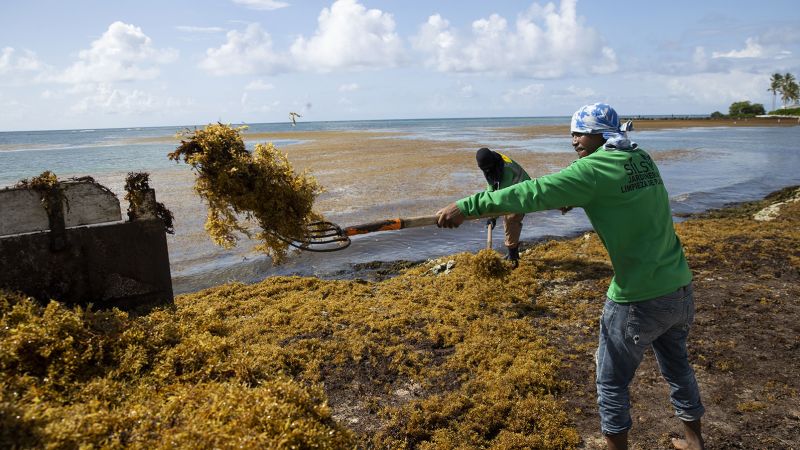
Solving sargassum: Florida Tech researchers exploring ways to make seaweed useful
Sargassum, a type of large brown seaweed, has been in the news lately, with a massive blob that’s visible from space and threatening ocean life. University research funded by the U.S. Environmental Protection Agency could address the issue, while also helping solve another problem in our water. Toufiq Reza, an assistant professor of chemical engineering in the Department of Biomedical and Chemical Engineering and Sciences, along with research students Cadianne Chambers, Swarna Saha, Savannah Grimes and Josh Calhoun, were part of the research paper, “Physical and morphological alteration of Sargassum‐derived ultraporous superactivated hydrochar with remarkable cationic dye adsorption.” The paper was published in the May edition of Springer Nature’s Biomass Conversion and Biorefinery journal. The paper is part of a three-year, nearly $400,000 EPA grant to examine different uses of sargassum. It explains that the team can produce biochar from sargassum that can filter water. Though the team has tested model dye in this paper, they plan to extend their research for other applications including harmful algal bloom remediation and nutrient recovery in the future. While sargassum has been around for centuries (Christopher Columbus is credited with the first written account after he encountered it in 1492), and you’ve probably seen bits of brownish seaweed on the beach – it sometimes smells like rotten eggs – the quantities in the ocean and washing up on shores are a more recent phenomenon. There are multiple reasons behind the increased amount of sargassum, including global warming that intensifies sargassum production and nutrient runoff making its way to ocean water and overfertilizing the seaweed growth. More sargassum is expected to show up on Florida shores in the future, inspiring the team to explore more positive uses of the abundant seaweed. “In the next couple of years, we’ll be seeing much more sargassum coming into our way. It’s not a common practice to utilize sargassum,” Reza said. “We go to a beach and then we see a little bit of sargassum just dried out. That doesn’t bother us that much, but when it started to come as a foot-tall sargassum wave, that’s where it gets more alarming.” Sargassum in the lab is labor intensive. Because it contains salt from the ocean, it is washed with tap water first, then put in a freezer for preservation. Next, it goes through hydrothermal carbonization, a thermochemical process that uses heat and pressure to convert biomass and organic waste (such as the sargassum being used) into solid hydrochar. Lastly, the solid char goes through pyrolysis, where it is heated in a high-temperature, oxygen-free chamber into a biochar that is used to filter water. For Swarna Saha, a first-year doctoral student, her goal as a researcher is to identify an environmental problem and come up with a sustainable solution. Having grown up in Bangladesh around textile factories that generate dyes that pollute the surface water, she was inspired to work on solutions that improved water quality with biochar. “I came in the project when we were experimenting on dye adsorption and saw how a tiny amount of biochar changes the color of the water,” she said. “For me, seeing the results made me the happiest. When we saw that our biochar is effective, that is the biggest achievement for me. That made me happy.” Cadianne Chambers, a second-year doctoral researcher, was motivated by her home country of Jamaica and its massive issues with sargassum. Chambers has heard accounts of fishermen unable to go out to sea because of the sargassum buildup. A popular destination for summer vacation, Jamaica is facing serious environmental and economic problems with waves of sargassum. “A team in Jamaica saw that article and they reached out to us, and they’re trying to cultivate sargassum. They want us to teach them how to make export-quality hydrochar and biochar, which could help solve their environmental problem and generate revenues,” Chambers said. “So, everything is just connecting nicely and I’m hoping to continue our collaboration with them. If it’s something that I can go home and put my PhD research to work and help the community, that would be really satisfying.” Looking to know more about sargassum and the ground-breaking research taking place at Florida Tech? Then let us help with your coverage and questions. Toufiq Reza is an assistant professor in the biomedical and chemical engineering and sciences department at Florida Tech. He's available to speak with media about this topic - simply click on his icon now to arrange an interview today.
