Experts Matter. Find Yours.
Connect for media, speaking, professional opportunities & more.

A year in the spotlight: University of Delaware’s most notable media mentions of 2025
In 2025, the University of Delaware had many exceptional media mentions. Here are some of the most notable. Science coverage dominated Where will the next big hurricane hit? Ask the sharks. (The Washington Post) – Aaron Carlisle, a marine ecologist, was featured for his revolutionary work using sharks to predict major weather events. Scientists could soon lose a key tool for studying Antarctica's melting ice sheets as climate risks grow (NBC News) – Carlos Moffat, an associate professor and oceanographer, spoke about the national budget and how it's impacting climate research. These Katrina Survivors Feel Overlooked. Now, They’re Using TikTok to Tell Their Stories (Rolling Stone) – Jennifer Trivedi, a disaster researcher, spoke about why Hurricane Katrina was such a major story. Malala Yousafzai, Migration and Sustainability (Forbes) – Saleem Ali, a professor of energy and environment, contributed regularly to Forbes on environmental topics. Scientists went hunting for freshwater deep beneath the Atlantic Ocean. What they found could have global implications (CNN) – Holly Michael, a professor of Earth sciences and civil and environmental engineering, spoke about the history of freshwater. Engineering Professor Answers Electric Car Questions (WIRED) – Willett Kempton, a professor of engineering, joined WIRED to answer the internet's most interesting questions about electric cars. Plastic shopping bag policies are actually working, a new study suggests (CNN) – Kimberly Oremus, associate professor of marine science and policy, was featured in several major outlets on the effectiveness of plastic bag bans. Insects are dying: here are 25 easy and effective ways you can help protect them (The Guardian) – Douglas Tallamy, an entomologist, was featured in dozens of outlets for his expertise. Political news coverage was front and center U.S. Chamber of Commerce sues Trump administration over $100,000 H-1B visa fees (NPR) – Daniel Kinderman, a political science professor, was interviewed for his expertise on a lawsuit involving changes in work visas. The government shutdown is over, but expect more fights and higher insurance prices to come (Delaware Public Media) – David Redlawsk, a political psychologist, discussed the recent government shutdown and what an end to it signals. Wrestling Over Charlie Kirk’s Legacy and the Divide in America (The New York Times) – Dannagal Young, a communications professor, commented on how media reacted to the death of Charlie Kirk. Consequences for colleges whose students carry mountains of debt? Republicans say yes (NPR) – Dominique Baker, associate professor of education, was quoted in multiple national outlets for her education expertise. General expertise came in clutch Why the U.S. struggles with passenger service despite having the most rail lines (NPR) – Allan Zarembski, a professor of railroad engineering, was featured in dozens of national publications for his expertise. From folklore to your front porch: The history of the jack-o'-lantern (NPR) – Cindy Ott, an associate professor of history, detailed the history of this autumn staple in multiple outlets. Nexstar Media Group buying Tegna in deal worth $6.2 billion (AP) – Danilo Yanich, professor of public policy, noted the ways the media giant duplicates work across networks. Warren Buffett hired Todd Combs to take over Berkshire's portfolio one day. Here's what close watchers say about his surprise exit. (Business Insider) – Lawrence Cunningham, director of UD's Weinberg Center, was featured throughout the year for his business and economic expertise. Enlighten Me: How to make your holidays truly happy (Delaware Public Media) – Amit Kumar, a professor of marketing, discussed strategies for finding happiness during the holidays throughout the winter season. Students and their stories shined throughout the year Networking: Is it what you know or who you know? (The Chronicle of Higher Education) – UD's career-development office, which assists students on their job journeys, was featured. U of Delaware Creates Yearlong Co-Ops for Business Students (Inside Higher Ed) – A new partnership with the state of Delaware connects business students to local employers, with the goal of reducing brain drain in the region was featured. Wilmington’s 'STEM Queen' earns national Obama–Chesky honor (The News Journal/Delaware Online) – Jacqueline Means, a management information systems major, was featured for earning a national recognition. Vita Nova Restaurant Gives Culinary Students Hands-on Training (Delaware Today) – The student-staffed restaurant, Vita Nova, was featured. Delaware professor transforms writing class by teaching students to use AI as the technology reshapes the workforce (WHYY) – Matt Kinservik, a professor of English, was featured for teaching students to use AI responsibly, exploring its capabilities and fact-checking tools. Pop culture experts weighed in 'Stranger Things' expert at UD chats about Netflix show's appeal (The News Journal/Delaware Online) – Siobhan Carroll, an associate English professor, sat down with a reporter to discuss the latest season and how the horror genre is often a mirror of our real world. “Horrendous And Insulting”: Backlash Erupts Over “Misrepresentation” In 2026 Wuthering Heights (Bored Panda) – Thomas Leitch, an English professor, said that “literal adaptations of classic novels are exceedingly rare, maybe impossible.” Major changes at UD highlighted University of Delaware appoints interim president to the permanent post (The Philadelphia Inquirer) – News of UD's new president, Laura A. Carlson, was covered throughout the region. Retiree learning center gets boost with $1M gift for downstate OLLI classes (Spotlight Delaware) – a large donation to the southern Delaware chapter of the Osher Lifelong Learning Institute, was featured. To speak with any of these experts in 2026 on these stories or others, please reach out to MediaRelations@udel.edu. Happy holidays and cheers for a bright and healthy new year!






With OpenAI’s latest release, GPT-5.2, AI has crossed an important threshold in performance on professional knowledge-work benchmarks. Peter Evans, Co-Founder & CEO of ExpertFile, outlines how these technologies will fundamentally improve research communications and shares tips and prompts for PR pros. OpenAI has just launched GPT-5.2, describing it as its most capable AI model yet for professional knowledge work — with significantly improved accuracy on tasks like creating spreadsheets, building presentations, interpreting images, and handling complex multistep workflows. And based on our internal testing, we're really impressed. For communications professionals in higher education, non-profits, and R&D-focused industries, this isn’t just another tech upgrade — it’s a meaningful step forward in addressing the “research translation gap” that can slow storytelling and media outreach. According to OpenAI, GPT-5.2 represents measurable gains on benchmarks designed to mirror real work tasks. In many evaluations, it matches or exceeds the performance of human professionals. Also, before you hit reply with “Actually, the best model is…” — yes, we know. ChatGPT-5.2 isn’t the only game in town, and it’s definitely not the only tool we use. Our ExpertFile platform uses AI throughout, and I personally bounce between Claude 4.5, Gemini, Perplexity, NotebookLM, and more specialized models depending on the job to be done. LLM performance right now is a full-contact horserace — today’s winner can be tomorrow’s “remember when,” so we’re not trying to boil the ocean with endless comparisons. We’re spotlighting GPT-5.2 because it marks a meaningful step forward in the exact areas research comms teams care about: reliability, long-document work, multi-step tasks, and interpreting visuals and data. Most importantly, we want this info in your hands because a surprising number of comms pros we meet still carry real fear about AI — and long term, that’s not a good thing. Used responsibly, these tools can help you translate research faster, find stronger story angles, and ship more high-quality work without burning out. When "Too Much" AI Power Might Be Exactly What You Need AI expert Allie K. Miller's candid but positive review of an early testing version of ChatGPT 5.2 highlights what she sees as drawbacks for casual users: "outputs that are too long, too structured, and too exhaustive." She goes on to say that in her tests, she observed that ChatGPT-5,2 "stays with a line of thought longer and pushes into edge cases instead of skating on the surface." Fair enough. All good points that Allie Miller makes (see above). However, for communications professionals, these so-called "downsides" for casual users are precisely the capabilities we need. When you're assessing complex research and developing strategic messaging for a variety of important audiences, you want an AI that fits Miller's observation that GPT-5.2 feels like "AI as a serious analyst" rather than "a friendly companion." That's not a critique of our world—it's a job description for comms pros working in sectors like higher education and healthcare. Deep research tools that refuse to take shortcuts are exactly what research communicators need. So let's talk more specifically about how comms pros can think about these new capabilities: 1. AI is Your New Speed-Reading Superpower for Research That means you can upload an entire NIH grant, a full clinical trial protocol, or a complex environmental impact study and ask the model to highlight where key insights — like an unexpected finding — are discussed. It can do this in a fraction of the time it would take a human reader. This isn’t about being lazy. It’s about using AI to assemble a lot of tedious information you need to craft compelling stories while teams still parse dense text manually. 2. The Chart Whisperer You’ve Been Waiting For We’ve all been there — squinting at a graph of scientific data that looks like abstract art, waiting for the lead researcher to clarify what those error bars actually mean. Recent improvements in how GPT-5.2 handles scientific figures and charts show stronger performance on multimodal reasoning tasks, indicating better ability to interpret and describe visual information like graphs and diagrams. With these capabilities, you can unlock the data behind visuals and turn them into narrative elements that resonate with audiences. 3. A Connection Machine That Finds Stories Where Others See Statistics Great science communication isn’t about dumbing things down — it’s about building bridges between technical ideas and the broader public. GPT-5.2 shows notable improvements in abstract reasoning compared with earlier versions, based on internal evaluations on academic reasoning benchmarks. For example, teams working on novel materials science or emerging health technologies can use this reasoning capability to highlight connections between technical results and real-world impact — something that previously required hours of interpretive work. These gains help the AI spot patterns and relationships that can form the basis of compelling storytelling. 4. Accuracy That Gives You More Peace of Mind...When Coupled With Human Oversight Let’s address the elephant in the room: AI hallucinations. You’ve probably heard the horror stories — press releases that cited a study that didn’t exist, or a “quote” that was never said by an expert. GPT-5.2 has meaningfully reduced error rates compared with its predecessor, by a substantial margin, according to OpenAI Even with all these improvements, human review with your experts and careful editing remain essential, especially for anything that will be published or shared externally. 5. The Speed Factor: When “Urgent” Actually Means Urgent With the speed of media today, being second often means being irrelevant. GPT-5.2’s performance on workflow-oriented evaluations suggests it can synthesize information far more quickly than manual review, freeing up a lot more time for strategic work. While deeper reasoning and longer contexts — the kinds of tasks that matter most in research translation — require more processing time and costs continue to improve. Savvy communications teams will adopt a tiered approach: using faster models of AI for simple tasks such as social posts and routine responses, and using reasoning-optimized settings for deep research. Your Action Plan: The GPT-5.2 Playbook for Comms Pros Here’s a tactical checklist to help your team capitalize on these advances. #1 Select the Right AI Model for the Job: Lowers time and costs • Use fast, general configurations for routine content • Use reasoning-optimized configurations for complex synthesis and deep document understanding • Use higher-accuracy configurations for high-stakes projects #2 Find Hidden Ideas Beyond the Abstract: Deeper Reasoning Models do the Heavy Work • Upload complete PDFs — not just the 2-page summary you were given • Use deeper reasoning configurations to let the model work through the material Try these prompts in ChatGPT5.2 “What exactly did the researchers say about this unexpected discovery that would be of interest to my <target audience>? Provide quotes and page references where possible.” “Identify and explain the research methodology used in this study, with references to specific sections.” “Identify where the authors discuss limitations of the study.” “Explain how this research may lead to further studies or real-world benefits, in terms relatable to a general audience.” #3 Unlock Your Story Leverage improvements in pattern recognition and reasoning. Try these prompts: “Using abstract reasoning, find three unexpected analogies that explain this complex concept to a general audience.” “What questions could the researchers answer in an interview that would help us develop richer story angles?” #4 Change the Way You Write Captions Take advantage of the way ChatGPT-5.2 translates processes and reasons about images, charts, diagrams, and other visuals far more effectively. Try these prompts: Clinical Trial Graphs: “Analyze this uploaded trial results graph upload image. Identify key trends, and comparisons to controls, then draft a 150-word donor summary with plain-language explanations and suggested captions suitable for donor communications.” Medical Diagrams: “Interpret these uploaded images. Extract diagnostic insights, highlight innovations, and generate a patient-friendly explainer: bullet points plus one visual caption.” A Word of Caution: Keep Experts in the Loop to Verify Information Even with improved reliability, outputs should be treated as drafts. If your team does not yet have formal AI use policies, it's time to get started, because governance will be critical as AI use scales in 2026 and beyond. A trust-but-verify policy with experts treats AI as a co-pilot — helpful for heavy lifting — while humans remain accountable for approval and publication. The Importance of Humans (aka The Good News) Remember: the future of research communication isn’t about AI taking over — it’s about AI empowering us to do the strategic, human work that machines cannot. That includes: • Building relationships across your institution • Engaging researchers in storytelling • Discovering narrative opportunities • Turning discoveries into compelling narratives that influence audiences With improvements in speed, reasoning, and reliability, the question isn’t whether AI can help — it’s what research stories you’ll uncover next to shape public understanding and impact. FAQ How is AI changing expectations for accuracy in research and institutional communications? AI is shifting expectations from “fast output” to defensible accuracy. Better reasoning means fewer errors in research summaries, policy briefs, and expert content—especially when you’re working from long PDFs, complex methods, or dense results. The new baseline is: clear claims, traceable sources, and human review before publishing. ⸻ Why does deeper AI reasoning matter for communications teams working with experts and research content? Comms teams translate multi-disciplinary research into messaging that must withstand scrutiny. Deeper reasoning helps AI connect findings to real-world relevance, flag uncertainty, and maintain nuance instead of flattening meaning. The result is work that’s easier to defend with media, leadership, donors, and the public—when paired with expert verification. ⸻ When should communications professionals use advanced AI instead of lightweight AI tools? Use lightweight tools for brainstorming, social drafts, headlines, and quick rewrites. Use advanced, reasoning-optimized AI for high-stakes deliverables: executive briefings, research positioning, policy-sensitive messaging, media statements, and anything where a mistake could create reputational, compliance, or scientific credibility risk. Treat advanced AI as your “analyst,” not your autopilot. ⸻ How can media relations teams use AI to find stronger story angles beyond the abstract? AI can scan full papers, grants, protocols, and appendices to surface where the real story lives: unexpected findings, practical implications, limitations, and unanswered questions that prompt great interviews. Ask it to map angles by audience (public, policy, donors, clinicians) and to point to the exact sections that support each angle. ⸻ How should higher-ed comms teams use AI without breaking embargoes or media timing? AI can speed prep work—backgrounders, Q&A, lay summaries, caption drafts—before embargo lifts. The rule is simple: treat embargoed material like any sensitive document. Use approved tools, restrict sharing, and avoid pasting embargoed text into unapproved systems. Use AI to build assets early, then finalize post-approval at release time. ⸻ What’s the best way to keep faculty “in the loop” while still moving fast with AI? Use AI to produce review-friendly drafts that reduce load on researchers: short summaries, suggested quotes clearly marked as drafts, and a checklist of claims needing verification (numbers, methods, limitations). Then route to the expert with specific questions, not a wall of text. This keeps approvals faster while protecting scientific accuracy and trust. ⸻ How should teams handle charts, figures, and visual data in research communications? AI can turn “chart confusion” into narrative—if you prompt for precision. Ask it to identify trends, group comparisons, and what the figure does not show (limitations, missing context). Then verify with the researcher, especially anything involving significance, controls, effect size, or causality. Use the output to write captions that are accurate and accessible. ⸻ Do we need an AI Use policy in comms and media relations—and what should it include? Yes—because adoption scales faster than risk awareness. A practical policy should define: approved tools, what data is restricted, required human review steps, standards for citing sources/page references, rules for drafting quotes, and escalation paths for sensitive topics (health, legal, crisis). Clear guardrails reduce fear and prevent preventable reputational mistakes. If you’re using AI to move faster on research translation, the next bottleneck is usually the same one for many PR and Comm Pros: making your experts more discoverable in Generative Search, your website, and other media. ExpertFile helps media relations and digital teams organize their expert content by topics, keep detailed profiles current, and respond faster to source requests—so you can boost your AI citations and land more coverage with less work. For more information visit us at www.expertfile.com


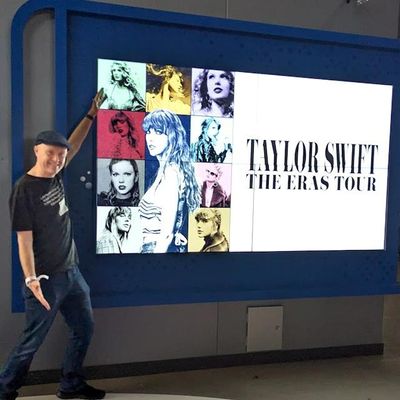
At Texas Christian University, Dr. Andrew Ledbetter, Chair of the Communication Studies Department, is turning his scholarly attention to one of pop culture’s biggest phenomena: Taylor Swift. His research uses data-driven analysis to reveal how Swift’s albums and songs build an interconnected narrative universe — what he calls her “Taylorverse.” Ledbetter ran lyrics across ten albums through semantic-network software to show how certain songs act as linchpins connecting themes of fame, womanhood, love and storytelling. “I was interested in interconnections among the song lyrics,” says Ledbetter. “The songs that are most central have a lot of overlap with other songs, might tend to be songs that are the most popular.” November 03 0 NBC News The work stands out not just for its pop-culture relevance, but for its academic innovation: combining computational text-analysis with narrative theory to unlock why certain tracks resonate more deeply than others. For journalists, cultural commentators or anyone covering the evolving intersection of music, identity and media, Dr. Ledbetter is a go-to expert. He can speak to how storytelling in music shapes audience engagement, how media fandom becomes scholarship, and why Swift’s songwriting continues to spark new research just as much as chart-topping hits. Andrew Ledbetter is available for interviews - Simply click on his icon now to arrange an interview today.


Australia’s Under-16 Social Media Ban Isn’t a Finish Line - It’s a Reality Check
Australia’s move to restrict social media accounts for kids under 16 has become a global lightning rod - and it’s forcing the right conversation: what do we do when a technology is too powerful for a developing brain? But here’s what I think journalists should focus on next: “A ban is a speed bump, not a seatbelt. It might slow kids down - but it won’t teach them how to drive their attention.” That’s the part that gets lost in the headlines. Because even if you can reduce access, you still have to deal with the why behind the behavior: boredom, social pressure, loneliness, stress, sleep debt. “The headlines make it sound like the problem is solved. But the real question is: what happens in the living room on day three?” Offline.now’s early data shows something important: most people genuinely want to change their screen habits, but many feel overwhelmed and don’t know where to start. That’s why we begin with a quick self-assessment and map people into four Types - Overwhelmed, Ready, Stuck, Unconcerned - so the advice matches the person. “We keep treating social media like a self-control test. It’s not. It’s a confidence problem - people don’t know where to start, so they start with shame.” What I’d tell policymakers considering similar bans 1. Pair friction with skills. “If the only plan is ‘block the app,’ you’re betting against the internet. Workarounds aren’t a bug - they’re the default.” 2. Don’t outsource responsibility entirely to families. “If policy turns parents into full-time bouncers and kids into part-time hackers, we’ve built a system that’s guaranteed to fail.” 3. Ask what gets protected, not just what gets restricted. “The real target isn’t ‘screen time.’ It’s the moments screens replace.” What parents need to know that headlines aren't telling them This is a process, not a switch. The best “first phone / first social” plans are adjustable. Modeling beats monitoring. The rules collapse if adults don’t follow them too. Have a handoff plan. If a child’s mood, sleep, school performance, or withdrawal is deteriorating, it may be bigger than habits. Why this is a late December / January story “The holidays are the perfect storm: more free time, more family friction, more devices, less sleep. January is when the bill comes due.” Journalist angles Bans vs. behavior change: what policy can’t solve The workarounds economy: age gates, bypass culture, privacy tension The four Types: why one-size fits all screen-time advice fails families New Year resets for families: simple, shame-free agreements that stick Available for interviews Eli Singer - CEO of Offline.now; author of Offline.now: A Practical Guide to Healthy Digital Balance. I speak about practical behavior change, non-judgmental family agreements, and confidence-based starting points - and I can direct people to licensed professionals via the Offline.now Directory when needs go beyond coaching.



Changing Phone Habits Isn’t a Willpower Problem. It’s a Confidence Problem.
Every January, millions of people swear they’ll “spend less time on my phone.” By February, they’re right back where they started, only now they feel worse about themselves. Eli Singer, founder and CEO of Offline.now and author of Offline.now: A Practical Guide to Healthy Digital Balance, thinks we’re telling the wrong story. “Most people don’t need another productivity hack or a harsher version of ‘just put your phone down,’” Singer says. “They need one tiny experience that proves, ‘I can actually change this.’ That’s confidence. Without it, willpower doesn’t stand a chance.” Drawing on early data from Offline.now’s self-assessment tool, Singer sees a pattern: people are highly motivated to change, but don’t believe they can stick to anything. His framework sorts users into four Types — Overwhelmed, Ready, Stuck and Unconcerned — based on motivation and confidence. Each Type gets different starting moves, all designed to be done in under 20 minutes. “Telling an overwhelmed parent or burned-out executive to do a 30-day social media fast is like asking someone who’s never run to start with a marathon,” he says. “We focus on micro-wins — one phone-free dinner, ten minutes of swapping doomscrolling for something you actually enjoy — because that’s what rebuilds trust in yourself.” Singer is a coach, not a therapist, but Offline.now’s Digital Wellness Directory connects people with licensed therapists, social workers, coaches and dietitians when deeper clinical support is needed. He positions Offline.now as the “front door” for people who know their relationship with screens isn’t working, but don’t know where to start. Why now January is peak “resolution season” and peak disappointment season. Singer can speak to why traditional “digital detox” narratives don’t work, how confidence and micro-steps change the story, and what a realistic New Year phone reset looks like for real people with jobs, kids and ADHD. Featured Expert Eli Singer – Founder of Offline.now and author of Offline.now: A Practical Guide to Healthy Digital Balance. Singer can speak to the platform’s behavioral data on digital overwhelm, the confidence gap, the Offline.now Matrix, and how 20-minute micro-steps outperform all-or-nothing digital detoxes in the real world. Expert interviews can be arranged through the Offline.now media team.

Global Honors Highlight J.S. Held’s Unmatched Technical and Advisory Expertise
J.S. Held proudly celebrates the numerous industry and expert recognitions earned throughout 2025. As a global consulting firm, J.S. Held continues to be acknowledged for its deep financial, technical, and scientific expertise, with leading outlets highlighting the firm’s capabilities across investigations, risk advisory, forensics, turnaround and restructuring, business intelligence, and litigation support. The firm’s curated team of entrepreneurs — each with an unrivaled understanding of both tangible and intangible assets — reflects a collective strength that is recognized worldwide. Beyond organizational achievements, J.S. Held’s experts received individual distinctions that further demonstrate their standing as leaders within their respective fields. Industry publications and ranking bodies honoured these specialists for excellence in arbitration, construction and engineering, environmental consulting, forensic accounting, investigations, litigation support, intellectual property, specialty finance, and a wide range of other highly specialized domains. Together, these recognitions underscore J.S. Held’s commitment to delivering trusted insight and unparalleled expertise as clients navigate increasingly complex challenges. In a rapidly evolving business landscape, the firm remains dedicated to providing informed, innovative, and practical solutions that enable organizations to move forward with confidence. Click on the link below to learn more about our recognition and respective areas of expertise: Expert recognition by notable organizations serves as a further testament to J.S. Held's agile, collaborative, creative, and client-centric team, reflecting the trusted advisor role the firm has earned over the last 50 years. For any media inquiries, contact: Kristi L. Stathis, J.S. Held +1 786 833 4864 Kristi.Stathis@JSHeld.com


LSU Experts Break Down Artificial Intelligence Boom Behind Holiday Shopping Trends
Consumers are increasingly turning to artificial intelligence tools for holiday shopping—especially Gen Z shoppers, who are using platforms like ChatGPT and social media not only for gift inspiration but also to find the best prices. Andrew Schwarz, professor in the LSU Stephenson Department of Entrepreneurship & Information Systems, and Dan Rice, associate professor and Director of the E. J. Ourso College of Business Behavioral Research Lab, share their insights on this emerging trend. AI is the new front door for search: Schwarz: We’re seeing a fundamental change in how consumers find information. Instead of browsing multiple pages of results, users—especially Gen Z—are skipping to conversational AI for curated answers. That dramatically shortens the shopping journey. For years, companies optimized for SEO to appear on the first page of Google; now they’ll have to think about how their products surface in AI-generated recommendations. This may lead to a new form of “AIO”—AI Information Optimization—where retailers tailor product descriptions, metadata, and partnerships specifically for AI visibility. The companies that adapt early will have a distinct advantage in capturing consumer attention. Rice: This issue of people being satisfied with the AI results (like a summary at the top of the Google results) and then not clicking on any of the paid or organic links leads to a huge increase in what we call “zero click search” (for obvious reasons). For some providers, this is leading to significant drops in web traffic from search results, which can be disconcerting due to the potential loss of leads. However, to Andrew’s point of shortening the journey, it means that the consumers who do come through are much more likely to buy (quickly) because they are “better” leads. This translates to seemingly paradoxical situations for providers: they see drops in click-through rates and visitors/leads, yet revenue increases because the visitors are “better.” There is a rise in personalized shopping journeys: Schwarz: AI essentially acts as a personal shopper—one that can instantly analyze preferences, budget, personality traits, or past behavior to produce tailored gift lists. This shifts power toward “delegated decision-making,” in which consumers allow AI to narrow their choices. Younger consumers are already comfortable outsourcing this cognitive load. However, as ads enter the picture, these personalized journeys could be shaped by incentives that aren’t always transparent. That creates a new responsibility for platforms to disclose when suggestions are sponsored and for users to develop a more critical lens when interacting with AI-driven recommendations. Rice: This is also a great point. The “tools” marketers use to attract customers are constantly evolving, but this seems in many ways to be the next iteration of the Amazon.com suggestions that you find at the bottom of the product page for something you click on when searching Amazon (“buy all x for $” or “consumers also looked at…,” etc.), based on past histories of search and purchase, etc. One of the main differences is that you can now create virtually limitless ways to compare products, making comparisons less taxing (reducing cognitive load and stress), which may, in some cases, increase the likelihood of purchase. These idiosyncratic comparisons and prompts lead to the truly unique journeys Andrew is discussing. You no longer have to be beholden to a retailer-specified price range. You could choose your own, or instead ask an AI to list the products representing the best “value” based on consumer reviews, perhaps by asking to list the top ten products by cost per star rating, etc. Advertising is becoming more subtle and conversational: Schwarz: With ads woven directly into AI responses, the traditional boundary between content and advertising blurs. Instead of banner ads, pop-ups, or clearly labeled sponsored posts, recommendations in a conversational thread may feel more like advice than marketing. This has enormous implications for consumer trust. Retailers will likely see higher engagement through these context-aware ad placements, but regulatory scrutiny may also increase as policymakers evaluate how clearly sponsored content is identified. The risk is that advertising becomes invisible—something both platform designers and regulators will need to monitor carefully. Rice: This is definitely true. I was recently exploring an AI-based tool for choosing downhill skis, but the tool was subtly provided by a single ski brand. I’m not sure the distribution of ski brands covered was truly delivering the “best overall fit” for a potential buyer, rather than the best possible ski in that brand. At least in that case, it was somewhat disclosed. It does, however, become an issue if consumers feel misled, but they’d have to notice it first. Still, the advantages are big for retailers, and the numbers don't lie. According to some preliminary Black Friday data, shoppers using an AI assistant were 60% more likely to make a purchase. Schwarz: This shift is going to reshape multiple layers of the retail ecosystem: Retailers will need to rethink how they show up in AI-driven environments. Traditional SEO, ad bids, and social media strategies won’t be enough. Partnerships with AI platforms may become as important as being carried by major retailers today. Because AI tools can instantly compare prices across dozens of retailers, consumers will become more price-sensitive. Retailers may face increasing pressure to offer competitive pricing or unique value propositions, as AI reduces friction in comparison shopping. Retailers who integrate AI into their own websites—chat-based shopping assistants, personalized gift advisors, automated bundling—will gain an edge. Consumers are increasingly expecting conversational interfaces, and companies that delay will quickly feel outdated. As AI tools influence purchasing decisions, consumers and regulators alike will demand clarity around how recommendations are generated. Retailers will need to navigate this carefully to maintain What I think we are going to see accelerate as we move forward: AI-powered concierge shopping will become mainstream. Within a couple of years, using AI to generate shopping lists, compare prices, and find deals will be as common as using Amazon today. Retailers will create AI-specific marketing strategies. Instead of optimizing for keywords, they’ll optimize for prompts: how consumers might ask for products and how an AI system interprets those requests. More platforms will introduce advertising into AI models. ChatGPT is simply the first mover. Once the revenue potential becomes clear, others will follow with their own ad integrations. Greater scrutiny from policymakers. As conversational advertising grows, transparency rules and labeling requirements will almost certainly. A new era of “conversational commerce.” Buying directly through AI—“ChatGPT, order this for me”—will become increasingly common, merging search, recommendation, and transaction into a single seamless experience. I can speak to this on a personal level. My college-aged son is interested in college football, and I wanted to get him a streaming subscription to watch the games. However, the football landscape is fragmented across multiple, expensive platforms. I asked ChatGPT to generate a series of options. Hulu is $100/month for Live TV, but ChatGPT recommended a combination of ESPN+, Peacock, and Paramount+ for $400/year and identified which conferences would not be covered. What would have taken me hours only took me a few minutes! Rice: On the other hand, AI isn’t infallible, and it can lead to sub-optimal results, hallucinations, and questionable recommendations. From my recent ski shopping experience, I encountered several pitfalls. First, for very specific questions about a specific model, I sometimes received answers for a different ski model in the same brand, or for a different ski altogether, which was not particularly helpful, or specs I knew were just plain wrong. Secondly, regarding Andrew’s point about the conversational tone, I asked questions intended to push the limits of what could be considered reliable. For example, I asked the AI to describe the difference in “feel” of the ski for the skier among several models and brands. While the AI gave very detailed and plausible comparisons that were very much like an in-store discussion with a salesperson or area expert, I’m not sure I fully trust when an AI tells me that you can really feel the power of a ski push you out of a turn, this ski has great edge hold, etc. It sounds great, but where is the AI sourcing this information? I’m not convinced it’s fully accurate. It also seems we’re starting to see Google shift toward a more AI-centric approach (e.g., AI summaries and full AI Mode). At the same time, we’re also starting to see AI migrate closer to Google as people use it for product-related chats, and companies like Amazon and Walmart have developed their own AI that is specifically focused on the consumer experience. I can’t imagine it will be long before companies like OpenAI and their competitors start “selling influence” in AI discussions to monetize the influence their engines will have.




Why 48 Hours Outdoors Does More Than a Week of Scrolling Breaks
When people feel burned out from their phones, the default solution is often a “digital detox”: delete the apps for a week, set a screen-time limit, maybe move social icons off the home screen. Then work, group chats and FOMO pull them right back in. Personal Development Coach Mark Diamond, an expert in the Offline.now directory who ran a tech-free summer camp for 25 years, says the real reset button isn’t a slightly less frantic version of the same life. It’s 48 hours of real-world experience outdoors. “I’ve watched kids and adults go from wired and anxious to relaxed and connected in a matter of days — not because we lectured them about screens, but because they were hiking, cooking over a fire, laughing with friends, actually living,” Diamond says. “Nature gives your nervous system something it can’t get from a feed.” The science backs up what he sees at camp. A large meta-analysis of nature exposure in adults found that as little as 10 minutes in natural settings improves markers of mental health — including mood and stress — with larger benefits for longer doses of time outside. A broad review on nature and health reports that regular contact with green and blue spaces is associated with: Better mental health and reduced stress Improved cognitive function and attention Higher levels of physical activity Better sleep quality Experimental work using brain imaging has also shown that short visits to green spaces can boost positive affect and change patterns of brain activation in ways consistent with reduced rumination and improved emotional regulation, the opposite of what many people experience after long periods of doomscrolling. Diamond’s camp experience maps directly onto these findings: after even a weekend of tech-free outdoor time, he sees kids and adults become more patient, more playful and more able to tolerate “boredom”: a key ingredient for real focus and creativity. Offline.now integrates this into its digital balance approach by treating offline, outdoor experiences as a core intervention, not a reward you earn after perfect screen behavior. Instead of asking, “How can I use my phone less?” the question becomes, “What can I do offline that naturally displaces my screen time?” “You don’t have to move to the woods,” Diamond says. “Two days of walks, parks, backyard projects, or local trails can do more for your brain than seven days of white-knuckling your way through a ‘detox’ while you stay indoors thinking about your phone.” For journalists covering digital wellness, mental health, or lifestyle resets, this story connects the dots between nature research, digital fatigue, and why a simple 48-hour outdoor reset might be more realistic and more powerful than yet another all-or-nothing break from apps. Featured Expert Mark Diamond – Personal Development Coach and longtime director of a tech-free outdoor camp. He specializes in outdoor wellness, sustainable behavior change, and helping families and individuals swap abstract “detox” goals for concrete, nature-based experiences that restore mood, focus and connection. Expert interviews can be arranged through the Offline.now media team.


As interest in cryptocurrencies move from the fringes to mainstream conversation and public policy debate, Derek Mohr, clinical associate professor of finance at the Simon Business School at the University of Rochester, offers a clear-eyed voice on the subject. Mohr specializes in financial innovation and digital assets, and he’s been in demand with reporters looking to understand the economics behind everything from “Bitcoin-powered” home heaters to gas stations offering discounts for crypto purchases. His message? Not everything that markets itself as a breakthrough actually adds up. For instance, some companies have pitched devices that promise to heat a home using excess energy generated from bitcoin mining. Mohr recently told CNBC the idea might sound clever, but that its practicality collapses under basic financial and engineering realities. “The bitcoin heat devices I have seen appear to be simple space heaters that use your own electricity to heat the room . . . which is not an efficient way to heat a house,” Mohr said. “Yes, bitcoin mining generates a lot of heat, but the only way to get that to your house is to use your own electricity.” Bitcoin mining, he explained, has become so specialized that home computers have virtually zero chance of earning a mining reward. Industrial mining farms operate on custom-built chips far more powerful than any consumer device. In other words, consumers who think they’re heating their homes and earning crypto are, in reality, just paying for electricity and getting no real mining benefit. A pragmatic voice in a volatile space Mohr’s research and commentary help explain not just what is happening in the crypto world, but why it matters for consumers, businesses, and regulators. Whether evaluating the economics of mining or the viability of crypto payments, he brings a steady, analytical perspective to a domain dominated by hype and fast-moving news cycles. For journalists covering cryptocurrency, fintech, and the future of financial transactions, Mohr is available for interviews on digital payments, bitcoin mining economics, crypto regulation, and emerging trends in financial technologies. Top contact him, reach out to University of Rochester media relations liaison David Andreatta at david.andreatta@rochester.edu.


Christmas Magic on Screen: A Curated List of Must-Watch Holiday Classics
Christmas movies and TV specials hold a special place in the hearts of many, offering a blend of nostalgia, joy and fun that captures the magic of the holiday season, creating a sense of togetherness, drawing families and friends around the glow of the television. James Kendrick, Ph.D., a film historian and professor of film and digital media at Baylor University, has curated a list of his Top 5 Christmas movies and specials, sharing the history of how they became holiday classics sure to fill you with holiday cheer. View his profile 1. It’s a Wonderful Life Frank Capra’s classic is the perennial Christmas movie, which is only fitting given that it began with writer Philip Van Doren Stern penning a short story called “The Greatest Gift” and printing it on 200 holiday cards that he sent to friends and family. Although initially a box office dud, it later fell into the public domain and was used by PBS stations during the 1970s as December counterprogramming, turning it into the holiday classic it always deserved to be. Along with stockings hung by the fireplace, decorated trees and blinking lights on the house, the viewing of “It’s a Wonderful Life” has become indelibly interwoven into contemporary Christmas tradition. Capra weaves a rich tapestry of American life filling the screen, including memorable details and wonderful performances from James Stewart in his first role after returning from duty in World War II, and Donna Reed, then a largely unknown contract player. It is a truly classic, timeless film, one of the few that quite simply never grows old. 2. Die Hard It is a long-settled matter that Die Hard is not just a Christmas movie, but one of the very best. Christmas movies, after all, know no genre, so there is no reason why a violent action film can’t fit the bill for the holidays. The decision to set John McTiernan’s wry action extravaganza against a Christmas-season backdrop only adds to the film’s myriad pleasures, as it makes Bruce Willis’s one-man mission to eradicate a crack team of terrorist-robbers all the more imperative after they take a Los Angeles high-rise hostage along with a party of business executives that include his estranged wife. “The fact that the soundtrack includes as many jingle bells as gunshots (well, maybe not quite as many, but still more than a few) only adds to the seasonal feels,” Kendrick said. 3. A Christmas Story Somewhere inside we are all young, round-faced Ralphie, pining away for our own “official Red Ryder carbine action, 200-shot Range model air rifle with a compass in the stock and this thing which tells time.” The film’s stroke of brilliance in how it ladles halcyon American nostalgia – so many images from the film could have been painted by Norman Rockwell – with a biting sense of cold, but often hilarious, reality. Humorist Jean Shepherd, parts of whose 1966 semi-autobiographical short story collection, In God We Trust: All Others Pay Cash, provided the film’s source material, narrates the film with a mix of humor and irony, making each scene work as both an evocation of a specific time and place in American history and a blank slate onto which we can project our own Christmas memories and dreams. The fact that the genuine, child wonderment of waking up on Christmas morning co-exists so easily with sneering bullies, creatively cursing fathers, draconian teachers, tongues frozen to light poles, inappropriate major awards and the always braying Bumpass hounds is testament to the film’s breadth and depth. 4. A Charlie Brown Christmas The first and best of the Peanuts TV specials (sorry, Great Pumpkin), A Charlie Brown Christmas premiered in 1965 and has been in our hearts ever since. While technically not a feature film, it captures in its brisk 22 minutes both the truth of the Christmas spirit and the attendant interpersonal difficulties of the holiday season. The fact that it does so with such good humor and poignancy means that no Christmas viewing list is complete without it. Charlie Brown’s oft-frustrated attempts to fit in and find meaning in the season amid all the crass commercialism is one of pop culture’s greatest evocations of existential struggle, but all the low points are balanced perfectly with Linus’s simple, illuminating recitation of the annunciation to the shepherds from the Gospel of Luke, which remains remarkably powerful in its unadorned directness. From the mouth of babes, indeed. 5. National Lampoon’s Christmas Vacation This is the movie for everyone who has ever tried their absolute hardest to live up to the hype of the Christmas season, only to end in abject failure. Maybe we haven’t all crashed and burned as badly as poor Clark Griswold does here, but we can all relate to how the idea of a “good ol’ fashioned family Christmas” doesn’t always comport with the realities of family, especially when your family includes the inveterate Cousin Eddie, who thinks nothing of emptying his rusting hulk of an RV’s chemical toilet into a storm drain first thing in the morning while wearing a shorty robe and smoking a cigar. John Hughes’s screenplay is a veritable compendium of modern America’s expectations for the season and how they can all go terribly, horribly wrong, which is enough to make anyone feel better about their own Christmas turkey coming out too dry or inability to find which lightbulb is causing the whole strand to go dark.