
Experts Matter. Find Yours.
Connect for media, speaking, professional opportunities & more.

Cyber attacks and ransomware are incidents that are happening more and more often. They are threatening America’s energy supply, food chain and critical infrastructure. Recently, two Georgia hospitals were victims of a recent attack. Media from across the country asked experts like Frank Katz, director of Georgia Southern University's Center for Applied Cyber Education, who is vulnerable and why. Katz, who directs the Center for Applied Cyber Education at Georgia Southern University’s Armstrong Campus in Savannah, said hospitals can be targets for extortion as well as sources of personal identifying information that can aid in further fraud. “They are more likely to pay than another type of business because it’s a life and death situation,” Katz told WSAV-TV. “It really has become a situation of money, pure and simple. These are thieves that know they can extort the money and often get it.” June 21 – Associated Press Frank Katz, director of the Center for Applied Cyber Education at Georgia Southern University, says hospitals are often easy targets. Having so many employees, he says user IDs and passwords can be easy to figure out. Plus, they’re dealing with emergency medical care. “They are more likely to pay than another type of business because it’s a life and death situation,” Katz said. June 21 – NBC News If you are a reporter looking to cover this subject and speak with Frank Katz, Georgia Southern’s Director of the Center for Applied Cyber Education – then let our experts help. Frank Katz, director of the Center for Applied Cyber Education is available, simply click on his icon or reach out to Georgia Southern Director of Communications Jennifer Wise at jwise@georgiasouthern.edu and she’ll assist with connecting you for an interview today.

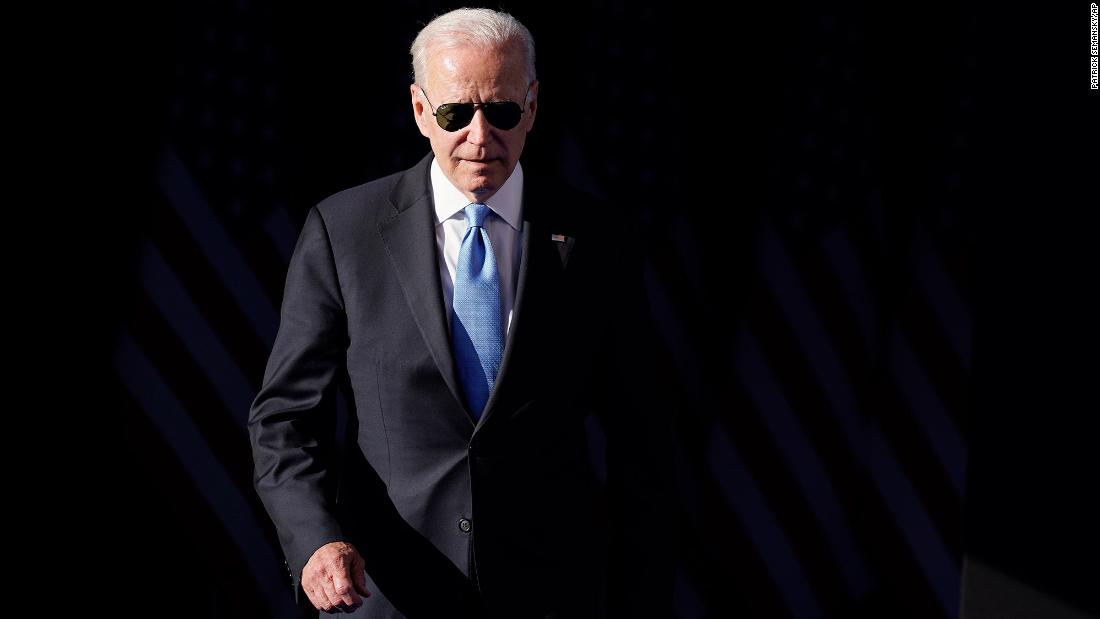
The odd couple – Can Biden and Putin find a way to thaw relations between America and Russia?
It was a meeting of two world powers that came with low expectations but much anticipation. The face-to-face meeting between American President Joe Biden and Russian President Vladimir Putin may not have accomplished much, but it did allow Biden to set a tone on his approach to foreign relations. President Joe Biden's meeting Wednesday with his Russian counterpart came after months of diplomatic wrangling over the details, days of preparation with reams of research and the elaborate construction of two separate lakeside venues for the leaders to appear afterward. But after the summit had concluded, the ornate French style manor home was locked up and the leaders were jetting in opposite directions home, the state of relations between the United States and Russia seemed about the same as before. That is not necessarily a surprise, least of all for Biden, who entered the summit with the vague and modest goal of establishing a "predictable and rational" relationship with Vladimir Putin. Putin's performance afterward was certainly predictable, if not entirely rational. Ultimately, Biden set expectations so low for his first face-to-face encounter with Putin that anything more than someone not showing up at all amounted to breaking even. June 16 - CNN What comes next is up to both leaders – but the world will be watching. Is there a chance to find common ground between the two countries? Will Russia continue to interfere in U.S. elections and hack American agencies - and how will American respond? What happens if Russian opposition leader Alexei Navalny dies in prison? And, did this meeting give Putin the elevated push he needs internationally? If you are a journalist looking to cover this subject – then let us help. Dr. Stephen Farnsworth is a sought-after political commentator on presidential politics. He has been widely featured in national media, including The Washington Post, Reuters, The Chicago Tribune and MSNBC. Dr. Farnsworth is available to speak with media any time. Simply click on his icon to arrange an interview today.



Without Trump – Is Late Night Television Struggling for New Jokes?
For four years, just about every talk show host and comedy show had a fresh supply of almost daily content. The unfiltered comments, gaffes and chaotic ongoings in the White House offered up a steady stream of material for jokes, monologues and coverage. But those days are over. Does Joe Biden's calm presidency and his capable administration mean a deficit of humor for the country’s comedians? UMW’s Dr. Stephen Farnsworth was recently featured in Variety Magazine about his perspective on the current state of late-night political content. Viewers are likely to continue to expect a robust political discussion. “In Washington, the political divisions are as intense as ever, and so it seems that there would be a ready audience for a continuing focus on political humor in late night,” said Stephen Farnsworth, co-author of the 2019 book “Late Night With Trump: Political Humor and the American Presidency” and director of the Center for Leadership and Media Studies at the University of Mary Washington. “The environment may not look all that different post-pandemic.” June 14 - Variety Magazine Dr. Stephen Farnsworth is a sought-after political commentator on presidential politics. He has been widely featured in national media, including The Washington Post, Reuters, The Chicago Tribune and MSNBC. Dr. Farnsworth is available to speak with media any time. Simply click on his icon to arrange an interview today.

America in the 1950’s was all about building highways to pump up the post-war economy and make sure everyone could criss-cross a connected America by car. Urban planners didn’t hesitate to bulldoze neighborhoods that were in the way of this progress. However, history shows that most of those communities that were destroyed housed Black and lower income residents. The result left areas with hot pavement, few green spaces and little tree canopy to provide shade. Recently, UMW’s Pamela Grothe joined the host of With Good Reason to talk about how America needs to undo these past mistakes and make better choices. Grothe recently worked with Jeremy Hoffman, chief scientist at the Science Museum of Virginia, who also appears on the episode, and UMW 2021 graduate Allison Grant on research that explores how redlined communities in Richmond, Virginia, designed to keep Black residents in less desirable neighborhoods, show records of being significantly hotter over the last 30 years than white neighborhoods, which has resulted in more heat-related health issues for Black and lower income residents. Aside from jumping in a pool, trees are our best bet to cool summer heat. Pamela Grothe says we have to be intentional about putting trees in the right places. If you’re a journalist looking to learn more about this topic, then our experts are here to help. Dr. Pamela Grothe is an assistant professor in the Department of Earth and Environmental Sciences as the University of Mary Washington, who earned a Ph.D. in the Paleoclimatology Lab at the Earth and Atmospheric Sciences department at Georgia Institute of Technology. She’s an #expert in climate change and is available to speak with media – simply click on her icon to arrange an interview.

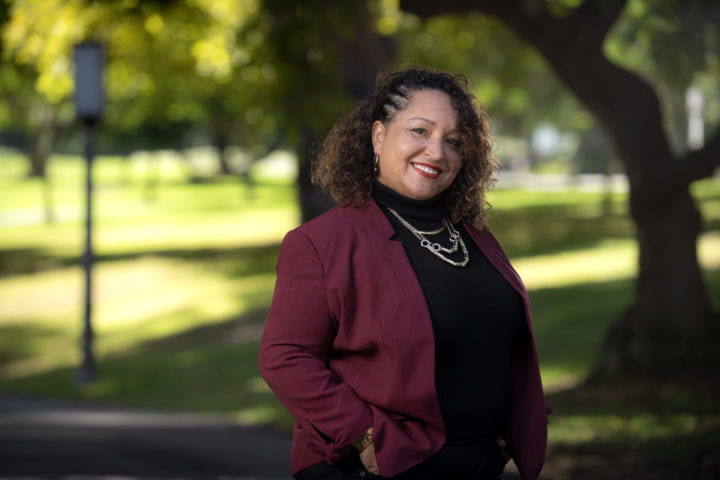
Juneteenth is this Saturday? Our experts can help with your coverage and questions
June 19 — Juneteenth — marks the day in 1865 that the Union Army announced in Texas that the African American slaves were free. Black Americans since then have honored the day, even as it has gone unnoticed by many others. In 2020, Jessica Millward, an associate professor of history at UCI, appeared on the UCI Podcast to discuss the history behind Juneteenth, the decades upon decades of continued struggle, and the hope she feels in this moment. And if you’re a reporter covering this important date in American history – then let our experts help with your stories. Dr. Jessica Millward is an Associate professor in the Department of History at the University of California, Irvine. Her research focuses on comparative slavery and emancipation, African American history, gender and the law. Dr. Millward is available to speak with media about Juneteenth – simply click on her icon now to arrange an interview today.


Did you know in America more than 6 million people are living with Alzheimer’s disease? June is Alzheimer's and Brain Awareness Month and the experts from Georgia Southern University have been busy talking with reporters and media about the importance of brain health and how to monitor your memory for any signs that may require attention. Earlier this month, Georgia Southern’s Adrienne Cohen spoke to NBC News about Dementia and the many types of brain disorders. Alzheimer’s is one of the many types of Dementia, a brain disorder that causes the brain to create gaps, initially effecting the short-term memory. “It can have several stages,” said Adrienne Cohen, Ph.D, associate professor and director, Center for Social Gerontology . “It can effect your memory, it can effect your mood, it can effect the way you interact with other people. It’s a slow progression, initially people might just be confused or can’t remember things and sadly that happens to all of us.” For many, it can be difficult to determine whether a person’s forgetfulness is caused by a number of underlying factors, like vitamin deficiencies or metabolic-related issues, or if it could potentially be something more serious. June 07 – NBC News With nearly six million Americans effected by Alzheimer’s disease, the chance of being effected doubles every five years for every American as they age after 65. This is an important topic and if you are a reporter looking to cover this subject – then let our experts help. Simply reach out to Georgia Southern Director of Communications Jennifer Wise at jwise@georgiasouthern.edu and she’ll assist with connecting you with Dr. Cohen today.

UConn Expert on the "FDA's Big Gamble" with Controversial Alzheimer's Drug
The Food and Drug Administration's accelerated approval of the drug aducanumab for the treatment of Alzheimer's disease is mired in controversy -- three scientists have resigned from the independent committee that advised the agency on the monthly infusion treatment priced at $56,000 per year. C. Michael White, distinguished professor and head of the Department of Pharmacy Practice at the University of Connecticut, explains the situation surrounding the drug's approval this week in an essay published by The Conversation: Over 6 million Americans now have Alzheimer’s disease, and deaths from Alzheimer’s have risen over 145% over the past 20 years. Alzheimer’s disease not only robs individuals of their autonomy but also places a huge burden on family members and the U.S. economy: $355 billion is spent annually on caring for people with Alzheimer’s. Current FDA-approved treatments are only modestly effective at controlling disease symptoms, and none target a possible underlying cause. The accelerated approval pathway allows patients with early-stage Alzheimer’s to access aducanumab while a larger and more definitive clinical trial is conducted. Biogen says it hopes to have the clinical trial completed by 2030. If the study does not find reductions in the hard clinical endpoints, the drug will be withdrawn. If aducanumab is ultimately found to be effective, many patients with early-stage Alzheimer’s will reap the benefits in reductions in hospitalizations, doctor visits, nursing home costs and societal burden. If aducanumab is found to be ineffective, however, Medicare, insurers and patients will have spent tens of millions of dollars on a drug that not only did not work but also exposed patients to adverse events, including the risk of bleeding in the brain. June 10 - The Conversation Dr. C. Michael White is an expert in the areas of comparative effectiveness and preventing adverse events from drugs, devices, dietary supplements, and illicit substances. If you are a journalist looking to cover this topic, then let us help. Dr. White is available to speak with media -- click on his icon now to arrange an interview today.


Tennis Pro Naomi Osaka Elevates the Conversation on Athletes and Mental Health
Though Naomi Osaka's announcement of her dropping out of the French Open and German Open tournaments came as a surprise to many of her followers, there has been plenty of support from fans and corporations for the 23-year-old tennis pro who chose to take time off because of mental health concerns. One company, the Calm App, offered to pay fines for tennis players skipping press briefings. And Formula 1 champion Lewis Hamilton—who, when he was 22 years old, found it difficult to deal with media commitments—offered encouragement to Osaka. "When you’re young and you're thrown into the limelight, it weighs heavily, and most of us are not prepared," Hamilton told The New York Times. Guy Weissinger, PhD, an assistant professor in Villanova's M. Louise Fitzpatrick College of Nursing whose research focuses on mental health, says, "Elite athletes are people. They have mental health struggles—good days and bad days—and it's important that we recognize that mental health is complicated, not just 'doing well' or 'not doing well.' One may be capable of doing one thing (i.e., playing tennis) but not other things (i.e., being peppered by reporters with questions). It saddens me that she needed to withdraw from the tournament rather than the tournament organizers reaching out to find ways to accommodate her mental health needs." He noted that the 23-year-old Osaka is an amazing athlete who rose to global prominence beating Serena Williams in a match that got a lot of negative attention. "While no one was saying that she did not deserve her victory, the conversation was mostly focused on Serena, and Osaka was a teenager caught in a media firestorm. I could see how that would create a high level of baseline anxiety around the Opens and media interactions for her, in addition to the already stressful situation of participating at that elite level of sports. Combine that with the high level of stress that everyone has been experiencing over the last year and a half, with COVID, I'm surprised that she isn't the only person who has said that they would be unable to do media appearances." He says this is a great opportunity for discussion of mental health and how it's a concern for everybody. "Too often, we think of people that are successful as being immune to mental health struggles, but we have to acknowledge that people can be both successful and struggling. Sometimes they will be able to manage (as Naomi has in many circumstances), but sometimes even their best coping mechanisms are not enough." Weissinger hopes that we can find ways for people to 'tap out' of the things that overwhelm their ability to cope. "It's not fair or ethical to only wait until people are not just struggling but completely drowning before trying to support or accommodate them. Like with physical health, prevention before things get bad is better for everyone than trying to fix things when they get really bad."


Augusta University experts looking for clues to predict future cyber attacks
The threat of cyber attacks is a reality for every industry. Cybersecurity is top of mind after recent highly skilled and calculated attacks targeting the Colonial Pipeline in May and shutting down the world’s largest meat supplier earlier this month. With America’s energy and food supply chains making vulnerable targets, everyone from executives, lawmakers, security officials and the media are looking for answers. Augusta University’s Dr. Craig Albert and Dr. Lance Hunter explore the questions surrounding cybersecurity in a recently published study in The Cyber Defense Review. This project examines the political, economic and military factors associated with cyber attacks in an effort to understand which countries or groups are most likely to attack. Here’s an abstract of their piece: Factors that Motivate State-Sponsored Cyberattacks The study of the factors involved in the initiation of violent interstate conflicts has been well documented within international relations. However, scholars have yet to analyze the factors associated with the initiation of international state-sponsored cyberattacks due to the lack of available data. This study is a first attempt to address this limitation. This project examines the political, economic, and military factors associated with the initiation of state-sponsored cyberattacks from 2005–2012, using a unique dataset that incorporates author-collected political, economic, and military data, along with cyber data on known state-sponsored cyberattacks extracted from the Council on Foreign Relations (CFR) Cyber Operations Tracker Dataset. With this unique dataset, we seek to better understand those states most likely to cyberattack other states. The Cyber Defense Review, Spring 2021 The study was also referenced in Voice of America in a piece covering President Biden’s trip to the G-7 Summit in Britain. If you are a journalist looking to cover any aspect of cybersecurity and cyber attacks, Augusta University’s experts are world-renowned on the topic. Dr. Craig Albert is director of the Master of Arts in Intelligence and Security Studies at Augusta University. He is a leading expert on war, terrorism and American politics, and he testified before U.S. Congress regarding the threat from Chechnya following the deadly Boston Marathon bombing. Dr. Lance Hunter is an assistant professor of political science with a background in international relations. His research focuses on how terrorist attacks influence politics in democratic countries and how political decisions within countries affect conflicts worldwide. Both experts are available to speak with media about cyber attacks. Simply click on either expert’s icon to arrange an interview today.


#Experts in the Media – UMW’s Miriam Liss explains to BBC why 'quirky' people are attractive
What could make a face worthy of launching a thousand ships? For thousands of years, and likely long before Helen of Troy, beauty and what makes us attracted to others has been a mystery. There have been studies, theories and tons of experiments – and like a cure for the common cold, finding an easy answer or remedy for the riddle behind beauty is always illusive. However, University of Mary Washington’s Miriam Liss was recently featured on the BBC and explain how sometimes the small things – make the biggest impressions. Recumbent on her chaise lounge, peacock-feather fan in hand, the model casts her gaze over her shoulder towards the artist. It's the early 19th Century, and Jean Auguste Dominique Ingres is painting La Grande Odalisque, a nude oil-on-canvas of a Turkish chambermaid. The painter has captured her allure, but something is not quite right. When it is shown to the public, the painting is heavily criticised – she has a weirdly long back and her body points in too many different directions. A 2004 analysis by French doctors, including one who specialises in vertebral pain, suggests that not only would it be impossible for her to contort her body in this way, she would have needed five extra lumbar vertebrae for her back to look as long as it does. The Romantic style of art from this period is filled with nude women, back to the observer, with tiny waists and wide hips. An "hourglass" figure was thought to be the height of beauty. Whether Ingres had intended to distort her proportions quite so much is debated – though no model could ever have posed like this. Maybe Ingres was exaggerating her slender back, narrow waist and wider hips to add a little more sexiness and slightly overdid it. Subtle differences in our appearance can make a big difference. Slight changes in dress make women seem more trustworthy, competent or attractive. As psychologist Miriam Liss of the University of Mary Washington in Fredericksburg, Virginia, and her co-authors found, to look honest and competent in a career setting, or even electable as a politician, a woman must dress conservatively and not sexily. May 31 – BBC If you are a journalist looking to cover this topic or speak with an expert, then let us help. Miriam Liss is a professor of psychological science and international known expert in the areas of feminism, body image and objectification. She’s available to speak with media; simply click on her icon now to arrange an interview today.
