
Experts Matter. Find Yours.
Connect for media, speaking, professional opportunities & more.

Alternative Data Can Offer Insight into GameStop Action on Wall Street
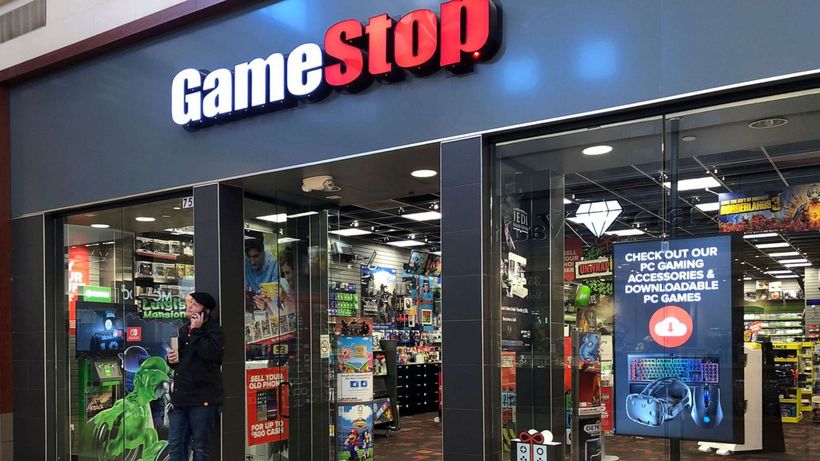
Thomas Shohfi, an assistant professor in the Lally School of Management at Rensselaer, says that looking at alternative data can offer important insights into the turbocharged trading of GameStop. “Volatility in options on GameStop, Nokia, and AMC is exploding,” says Shohfi. “Short sellers are taking massive losses, covering their positions and pushing the stocks even higher. WallStreetBetters keep looking for soft spots in the hedge fund short portfolios to ‘blow up’ their value again and again. It’s a mob-fund mentality.” Working with a former student, Shohfi has analyzed trends from the WallStreetBets subreddit and other social media platforms. He can provide an astute understanding as to how investors have reached this moment, why this has happened, and what the impact that this event will have in the future. “Practitioners, investors, and analysts are always looking for an advantage,” according to Shohfi. “The biggest advantage that we see today is through alternative data. It’s just a rich environment to observe human behavior, incentives, and gender and disclosure effects that affect capital markets like we have seen with GameStop.”

IU Kelley School finance expert available to discuss GameStop, Robinhood
Charles Trzcinka, the James and Virginia Cozad Chair of Finance at the Indiana University Kelley School of Business and an expert on financial markets and investments, is closely following developments involving individual investors and Game Stop and available to talk with reporters. He can discuss the impact of retail investors using the popular Robinhood brokerage and Reddit’s “Wall Street Bets” page on the stock of low priced companies like Gamestop, AMC and stocks such as BlackBerry, Bed Bath and Beyond and Nokia. Several brokerages halt buying of those and other stocks on Thursday. Trzcinka teaches behavioral finance and is familiar with Robinhood's model is to use game technology to trade stock and how it makes money by selling the right to trade against the orders to hedge funds and high frequency traders. In order to schedule an interview, contact George Vlahakis, associate director of communications and media relations at the Kelley School, at vlahakis@iu.edu or 812-855-0846.

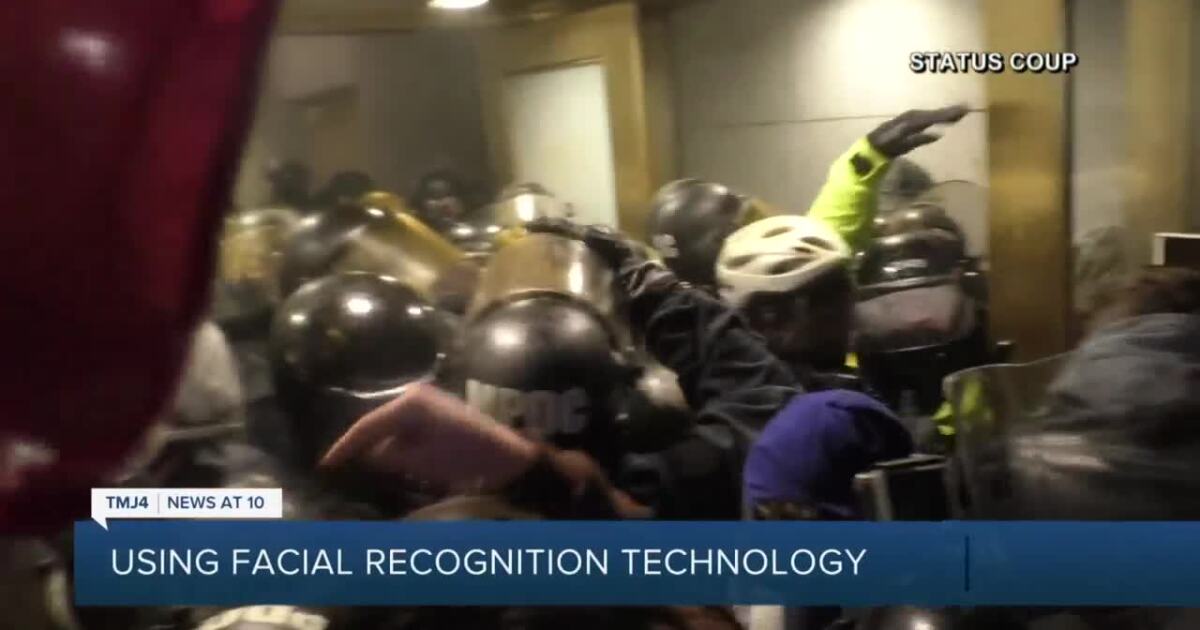
On January 06, America watched with shock as a mob of protesters stormed the gates in Washington, D.C. and invaded the Capitol buildings. For hours, the rioters looted and occupied America’s halls of power and though some were apprehended, many found a way to get out and get back home avoiding arrest. However, media coverage was substantial and some of the protesters were even bold enough to be caught posing for social media. Slowly, authorities are tracking them down, and Dr. Derek Riley, an expert at Milwaukee School of Engineering (MSOE) in the areas of computer science and deep learning, has been explaining how artificial intelligence (AI) technology that’s taught at MSOE is capable of enabling law enforcement's efforts to identify individuals from pictures. "With these AI systems, we’ll show it example photos and we’ll say, 'OK, this is a nose, this is an ear, this is Billy, this is Susie,'" Riley said. "And over lots and lots of examples and a kind of understanding if they guess right or wrong, the algorithm actually tunes itself to get better and better at recognizing certain things." Dr. Riley says this takes huge amounts of data and often needs a supercomputer—like MSOE's "Rosie"— to process it. To get a computer or software to recognize a specific person takes more fine-tuning, Riley says. He says your smartphone may already do this. "If you have a fingerprint scan or facial recognition to open up your phone, that’s exactly what’s happening," Riley said. "So, they’ve already trained a really large model to do all the basic recognition, and then you provide a device with a fingerprint scanning or pictures of your face at the end to be able to fine-tune that model to recognize exactly who you are." Riley says this technology isn't foolproof—he says human intelligence is needed at every step. He added we might be contributing to the data sources some of the technology needs by posting our pictures to social media. "Folks are uploading their own images constantly and that often is the source of the data that is used to train these really, really large systems," Riley said. January 14 – WTMJ, Ch. 4, NBC News The concept of facial recognition and the use of this technology in law enforcement (and several other applications) is an emerging topic – and if you are a reporter looking to cover this topic or speak with an expert, then let us help. Dr. Derek Riley is an expert in big data, artificial intelligence, computer modeling and simulation, and mobile computing/programming. He’s available to speak with media about facial recognition technology and its many uses. Simply click on his icon now to arrange an interview today.



This week, the Lincoln Memorial Reflecting Pool was lit with 400 lights to honor and acknowledge the 400,000 lives lost in America to COVID-19. But the reflecting pool ceremony -- hosted by then-incoming, now newly inaugurated President Joseph Biden -- is the most prominent effort so far to remember those who have died. UConn history professor Micki McElya was interviewed on NPR's All Things Considered to explain the historic significance of this event. "This is an iconic vista of heroes and honor and of memorialization," says history professor Micki McElya, who wrote the book The Politics of Mourning: Death and Honor in Arlington National Cemetery. "It's impossible to consider that terrain without also thinking of the March on Washington for Jobs and Freedom in 1963." The memorial, building upon prior localized efforts, represents the "realization of the work of a lot of people and the realization of the need to come together and honor those who've been lost, but also to reckon with those losses and what this means for this country," McElya says. January 19 – NPR If you are a journalist covering the historic aspects of this occasion or other events taking place – then let our experts help with your stories. Professor McElya is an expert in the histories of women, gender, sexuality, and race in the U.S., with a focus on politics and memory. She’s available to speak with media regarding these topics – simply click on her icon now to arrange an interview today.


Trump, the Capitol, and Social Media – Let our expert answer the questions everyone is asking
Social media played a significant role in the storming of the U.S. Capitol, and its influence in shaping American politics is unlikely to wane, says UConn's Marie Shanahan. And that’s why UConn recently published a piece where Professor Shanahan took on a lot of the trickier questions people are asking in the wake of the storming of the U.S. Capitol on January 6. In a piece just published – she addresses these key questions: While obscure social media platforms like Parler, Gab, and Telegram have gotten a lot of attention recently as gathering places for the kinds of far-right activists who were instrumental in what happened at the Capitol, most of the planning for that event seems to have taken place in the open, on sites like Facebook and Twitter. To what extent was this event a product of social media? It’s hard to talk about Donald Trump’s presidency without talking about social media. What might change now that he seems to have been permanently banned from the most popular platforms? Speaking of that deplatforming, even though Facebook and Twitter can ban any user who violates their terms of service, is there some validity to the argument that in doing so they’re restricting free speech? What kinds of things can be done to address some of these problems in how the public discourse is shaped? Is repealing Section 230 actually a good idea? The piece is attached and it is an insightful must-read for anyone following these developments. Professor Shanahan is an expert in the intersection of journalism and digital communication technology, online news, and digital discourse. If you are a journalist looking to cover this topic and would like to arrange an interview with Professor Shanahan – simply click on her icon now to arrange a time to talk today.


It’s as if there’s an all-out war on the world’s insects – and experts from across the country are all buzzing with some very bad news. Recently, University of Connecticut’s Professor of Ecology and Evolutionary Behavior, David Wagner was featured on CBS National News in an in-depth story about the potential apocalypse the world’s insect kingdom faces. “The world's vital insect kingdom is undergoing "death by a thousand cuts," the world's top bug experts said. Climate change, insecticides, herbicides, light pollution, invasive species and changes in agriculture and land use are causing Earth to lose probably 1% to 2% of its insects each year, said University of Connecticut entomologist David Wagner, lead author in the special package of 12 studies in Monday's Proceedings of the National Academies of Sciences written by 56 scientists from around the globe. The problem, sometimes called the insect apocalypse, is like a jigsaw puzzle. And scientists say they still don't have all the pieces, so they have trouble grasping its enormity and complexity and getting the world to notice and do something. Wagner said scientists need to figure out if the rate of the insect loss is bigger than with other species. "There is some reason to worry more," he added, "because they are the target of attack" with insecticides, herbicides and light pollution… Insects "are absolutely the fabric by which Mother Nature and the tree of life are built," Wagner said. January 12 - CBS News The story is attached above – and must-read material for anyone concerned about insects and the vital role they play in just about every aspect of our world. If you’re a journalist looking to know more about this topic and would like to contact Dr. Wagner – simply click on his icon now to arrange an interview today.

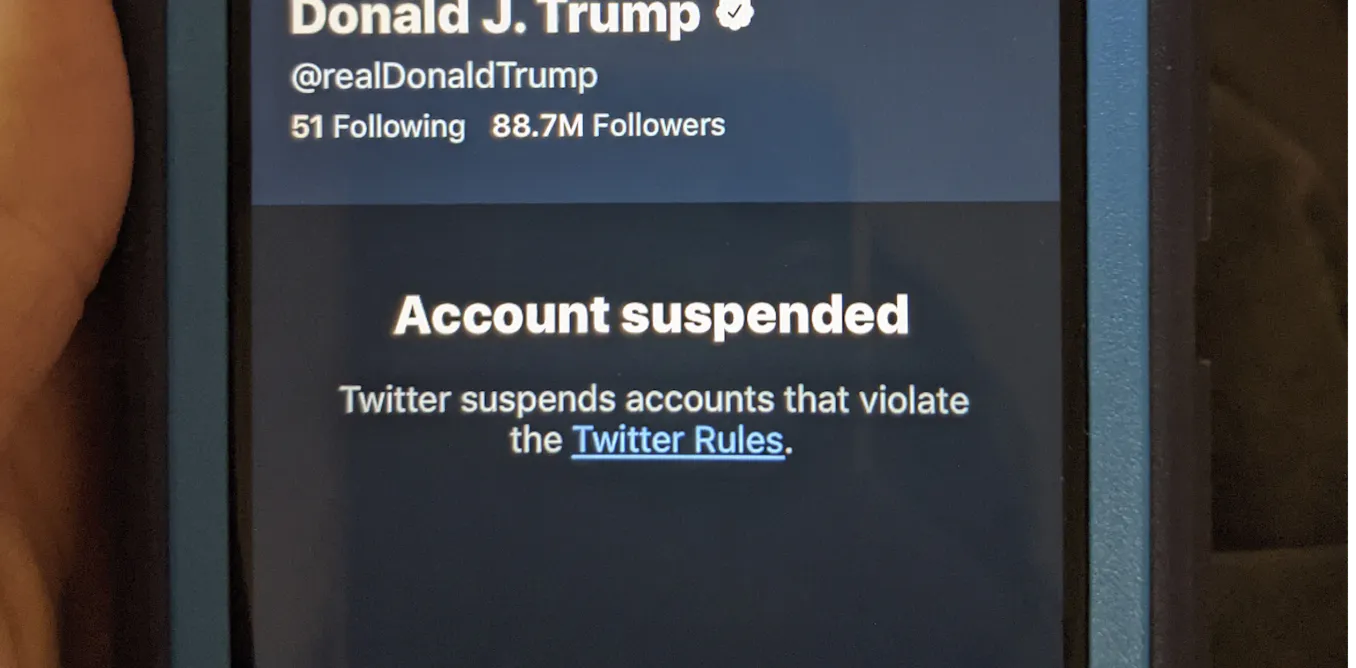
After an incited and encouraged crowd of Trump supporters stormed the Capitol buildings last earlier this month – social media, or at least the executives that run companies like Twitter and Facebook had had enough and opted to oust President Donald Trump from their platforms. Donald Trump has been ‘deplatformed’ and no longer has easy access to an audience of millions of followers. The concept of deplatforming is being widely debated. And recently, University of Connecticut’s Ugochukwu Etudo was asked to lend his expert perspective on the idea. Does the deplatforming of prominent figures and movement leaders who command large followings online work? That depends on the criteria for the success of the policy intervention. If it means punishing the target of the deplatforming so they pay some price, then without a doubt it works. For example, right-wing provocateur Milo Yiannopoulos was banned from Twitter in 2016 and Facebook in 2019, and subsequently complained about financial hardship. If it means dampening the odds of undesirable social outcomes and unrest, then in the short term, yes. But it is not at all certain in the long term. In the short term, deplatforming serves as a shock or disorienting perturbation to a network of people who are being influenced by the target of the deplatforming. This disorientation can weaken the movement, at least initially. However, there is a risk that deplatforming can delegitimize authoritative sources of information in the eyes of a movement’s followers, and remaining adherents can become even more ardent. Movement leaders can reframe deplatforming as censorship and further proof of a mainstream bias. There is reason to be concerned about the possibility that driving people who engage in harmful online behavior into the shadows further entrenches them in online environments that affirm their biases. Far-right groups and personalities have established a considerable presence on privacy-focused online platforms, including the messaging platform Telegram. This migration is concerning because researchers have known for some time that complete online anonymity is associated with increased harmful behavior online. In deplatforming policymaking, among other considerations, there should be an emphasis on justice, harm reduction and rehabilitation. Policy objectives should be defined transparently and with reasonable expectations in order to avoid some of these negative unintended consequences. January 15 – The Conversation If you’re a journalist covering deplatforming and would like to talk with Ugochukwu Etudo – simply click on his icon today and we’ll arrange an interview today.

As Flexible Voting Options Scrutinized, Expert Says Online Voting Not a Safe Alternative
The popularity of — and controversies surrounding — early voting and mail-in ballots demonstrates a demand for more flexible voting options. But online voting shouldn’t be up for consideration, according to James Hendler, the head of the Institute for Data Exploration and Applications at Rensselaer Polytechnic Institute. Hendler also chairs the U.S. Technology Policy Committee of the Association for Computing Machinery, the world’s largest and oldest society of individuals involved in all aspects of computing. In public statements expressing his own opinion and on behalf of the ACM, Hendler has discussed the vulnerabilities of online voting and the organization’s effort to press against its adoption. Hendler argues that online voting is not, and cannot be made to be, secure against malware and denial of service attacks — and that no app or underlying technology, including blockchain, holds potential to overcome those challenges. "The current state of mobile voting is that we are not ready to deploy it at scale, that it has significant technical and socio-technical aspects, particularly cybersecurity, that we need to worry about, and that there are alternatives,” Hendler said. “The ACM has worked hard as an organization to explain our evidence-based reasoning, and to express the hope that online-voting won’t be used now and in the foreseeable future.” In explaining why online voting is more complicated than online banking, shopping and other common internet activities, Hendler said, “The main reason that online voting is more complex is that it must maintain anonymity, no one is allowed to know how you voted. Securing online voting without providing access to identity is extremely difficult. There are other reasons as well including the staggering cost and the lack of a centralized US authority, but identity management remains the number one.” Under his leadership, the ACM’s U.S. Technology Policy Committee, along with leading organizations and experts in cybersecurity and computing, sent a letter to all governors, secretaries of state and other state election directors urging them not to allow the use of internet or voting app systems. Hendler has extensive experience in policy and advisory positions that consider aspects of artificial intelligence, cybersecurity and internet and web technologies as they impact issues such as online voting and the regulation of social media and powerful technologies including facial recognition and artificial intelligence. In light of ongoing political unrest, Hendler is available to speak to diverse aspects of information technology as related to the election, AI in applications like policing, and the politics related to social media.

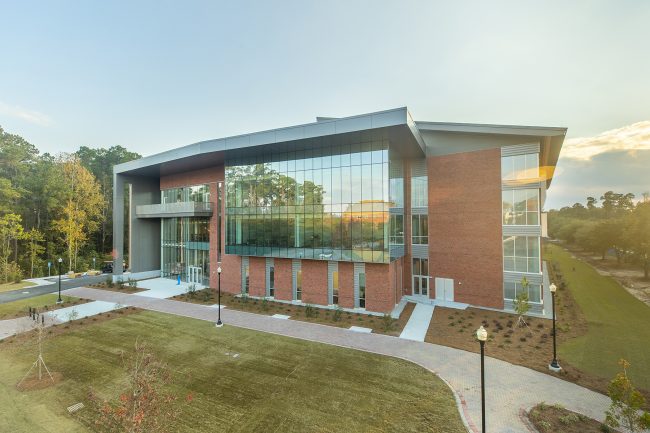
Last Friday, Georgia Southern officially opened its new Engineering and Research Building for students and researchers, a facility that will serve as the epicenter for engineering excellence and innovation in southeast Georgia. The building is designed to facilitate academic and institutional partnerships, inspire creative engineering and accelerate academic success for students in the College of Engineering and Computing. Through the instructional research labs and academic spaces that bridge theory and practice, students will be prepared to solve today’s challenges and to make tomorrow’s discoveries. “Today marks the culmination of years of forethought and investment from a number of state leaders, industry leaders and local advocates, who paved the way for us to be here,” said Georgia Southern President Kyle Marrero. “Leaders who, dating back to the 90s, could see the future of a growing industry, a state on the precipice of being a national leader in technology and innovation, and a critical need to develop talent in applied engineering across south Georgia.” The Engineering and Research Building’s sleek, contemporary environment defined by glass and natural light, soaring high-bay ceilings and modern, industrial feel is strengthened by new, industry-relevant equipment, instrumentation and technology that encourage active learning and sustainability. The highly efficient facility includes sustainable features that complements existing spaces on campus. The three-story building houses applied research spaces with a strong focus on manufacturing engineering, civil engineering, electrical and computer engineering, and mechanical engineering. The workspaces can be easily reconfigured for various uses, projects and applications and provide students with access to industry-grade equipment as well as expanded opportunities for undergraduate research. “The investment of the Engineering and Research Building solidifies Georgia Southern University’s commitment to students in providing a world-class education in the engineering field, while providing the space and resources necessary to facilitate such,” said student Kristifer Bell. “I am enthusiastic to continue my research work and look forward to the interdepartmental collaboration that will be encouraged through the housing of new student and faculty labs under one roof.” The full media release about this historic occasion is attached – and if you are a journalist looking to know more about this facility or Southern Georgia University -- simply reach out to Georgia Southern Director of Communications Jennifer Wise at jwise@georgiasouthern.edu to set and time and date.


The U.S. House of Representatives is set to vote Wednesday to impeach President Donald Trump for inciting the deadly insurrection at the United States Capitol last week. Many House Democrats have called for Trump’s resignation and urged Vice President Mike Pence to remove him under the 25th Amendment. However, with those two options looking extremely unlikely, Democrats are preparing to impeach the president for a second time. The question is how quickly will impeachment happen? On Monday, the House introduced a single article for "incitement of insurrection," which could allow a fast-tracked floor vote on impeachment by Wednesday. Upon receiving the article, the Senate must take it up either through a vote to dismiss the charge or, if that fails, moving ahead with a trial to determine whether to convict the 45th president. There’s been a lot of coverage – and a lot of opinions shared. If you are a journalist covering this ongoing story, that’s where our experts on this topic can help. Dr. Martha Ginn, professor of political science at Augusta University, is an expert on the judicial process, constitutional law and the U.S. Supreme Court. If you have questions, let Ginn share her expertise and experience to ensure your coverage is accurate. Ginn is available to speak with media about this topic – simply click on her name to arrange an interview today.
