
Experts Matter. Find Yours.
Connect for media, speaking, professional opportunities & more.

School will soon be out for the summer, and many young families are opting to explore the beauty of their own country, travelling to top destinations like Toronto, Vancouver, and Halifax rather than heading south. While many travellers prioritize insurance for international trips, a recent CAA survey found that many people overlook the necessity of travel insurance for domestic travel, often assuming provincial healthcare will have them covered. "Exploring Canada’s breathtaking landscapes is an adventure worth taking, but unexpected travel hiccups don’t stop at the border,” says Susan Postma, regional manager, CAA Manitoba. “Whether it’s a sudden medical emergency or trip disruptions, having the right travel insurance ensures you can focus on making memories." A new national travel survey conducted for CAA reveals that nearly four in ten Canadians (39 per cent) travelled outside their home province without any form of travel insurance during their last trip. Some believed it was unnecessary (45 per cent), others worried about the cost (22 per cent), and 19 per cent took their chances, hoping nothing would go wrong. The reality? Provincial health insurance programs typically cover only basic emergency medical services when travelling in another province. “Many Canadians assume they’re fully protected when travelling within the country, but that’s simply not the case,” says Postma “A minor mishap can become a major expense, whether a broken ankle on a hike or a last-minute interruption.” Here are two unexpected ways travel insurance can help: You break your ankle while hiking on one of Canada’s beautiful nature trails and now need an ambulance or an airlift, crutches, and medication. You’re on vacation but must return unexpectedly because someone at home gets seriously ill. In stressful situations, like when a family member falls ill, it helps to have support when you need it. Trip Cancellation Insurance would cover the flight change fee and help get you back home. According to Orion Travel Insurance, part of the CAA family, the average medical claim cost has risen by 15 per cent annually since 2019, with everything from ear infections to air ambulance services becoming significantly more expensive. Here are ten additional tips to help your trip go smoothly, no matter where you travel. Know the cancellation policies and check limits or restrictions for everything you booked. Make sure you understand any key dates related to cancellations or changes. This includes accommodation, flights, car rentals, tours, and cruises. Check limits or restrictions on credit cards, employee benefits, and pensions to determine if you need additional travel insurance coverage. Make sure all your documentation is in order before you book. It is recommended that passport renewals be completed six months before your planned trip. Your passport should still be valid six months after your travel date, as this is required in several countries. There are varying documentation requirements, so make sure you fully understand what information you need to have ready and in what format. Read up on Government of Canada travel advisories for your destination. Understand the risk level associated with travel to a particular destination by checking the Government of Canada Travel Advice and Advisories website. Individual travel advisories remain on a country-by-country basis. It is important that Ontarians/Manitobans understand the ongoing uncertainty associated with international travel. Speak with your physician to discuss your travel plans. It is important that you speak to your physician to ensure you are up to date with needed travel vaccines and have them prescribe enough medication for the length of your trip. Ensure all the medication you take is packed in your carry-on and in its original bottles with labels intact. Consider purchasing travel insurance at the time of booking your trip. To lock in the best protection, book your travel insurance at the same time you book your trip. Booking Trip Cancellation or Interruption insurance will give you peace of mind that you and your investment are protected. Insurance must be in place before things go wrong for you to benefit from coverage. Get to the airport early. The old standby of being at the airport one hour before takeoff for domestic flights and two hours before international flights no longer apply. CAA recommends arriving at the airport at least two hours before domestic flight departures and at least three for international flights. Stay connected. It is important to have access to trusted, up-to-date information while travelling so you can monitor changing conditions and requirements and adapt accordingly. Bookmark the Global Affairs Canada website before departure and check it regularly while abroad. It is also a good idea to sign up for Registration of Canadians Abroad and stay in touch with a family or friend who knows your travel plans. Find these and more information at caamanitoba.com/travelwise Note emergency contact numbers. Provide your travel agent with contact details while travelling abroad and keep all important phone numbers handy; this includes how to call for help and your travel insurance assistance phone number. It is also a good idea to keep a physical copy of all their reservation information and leave those details with a friend or family member. Protect your ID. Ensure you have a digital and paper version of your Travel insurance wallet card, tickets to various events and attractions, and even your passport. You may also want to leave a copy of the necessary paperwork with family members or friends. Pack your carry-on wisely. Include the most important items, such as your passport/ID, boarding pass, travel itinerary, wallet, phone, charger, medications, toiletries, glasses/contacts, noise-canceling headphones, book/e-reader, snacks, empty water bottle, travel pillow, change of clothes, sweater, socks, pen, and reusable bags, in your carry-on bag. For more information on travel insurance and how to stay protected, visit caamanitoba.com/travelwise Based on the sample size of n=2,005 and with a confidence level of 95%, the margin of error for this research is +/- 2%.)



School will soon be out for the summer, and many young families are opting to explore the beauty of their own country travelling to top destinations like Vancouver, Calgary and Halifax rather than heading south. While many travellers prioritize insurance for international trips, a recent CAA survey found that many people overlook the necessity of travel insurance for domestic travel, often assuming provincial healthcare will have them covered. "Exploring Canada’s breathtaking landscapes is an adventure worth taking, but unexpected travel hiccups don’t stop at the border,” says Kaitlynn Furse, Director Corporate Communications, CAA SCO. “Whether it’s a sudden medical emergency or trip disruptions, having the right travel insurance ensures you can focus on making memories." The national travel survey conducted for CAA reveals that four in ten Ontarians (41 per cent) travelled outside their home province without travel insurance during their last trip. Some believed it was unnecessary (43 per cent), others worried about the cost (24 per cent), and 20 per cent took their chances, hoping nothing would go wrong. “Many Canadians assume they’re fully protected when travelling within the country, but that’s simply not the case,” adds Furse. A minor mishap can become a major expense, whether a broken ankle on a hike or a last-minute interruption.” Here are two unexpected ways travel insurance can help: You break your ankle while hiking on one of Canada’s beautiful nature trails and now need an ambulance or an airlift, crutches, and medication. You’re on vacation but must return unexpectedly because someone at home gets seriously ill. In stressful situations, like when a family member falls ill, it helps to have support when you need it. Trip Cancellation Insurance would cover the flight change fee and help get you back home. According to Orion Travel Insurance, part of the CAA family, the average medical claim cost has risen by 15 per cent annually since 2019, with everything from ear infections to air ambulance services becoming significantly more expensive. Here are ten additional tips to help your trip go smoothly, no matter where you travel. Know the cancellation policies and check limits or restrictions for everything you booked. Make sure you understand any key dates related to cancellations or changes. This includes accommodation, flights, car rentals, tours, and cruises. Check limits or restrictions on credit cards, employee benefits, and pensions to determine if you need additional travel insurance coverage. Make sure all your documentation is in order before you book. It is recommended that passport renewals be completed six months before your planned trip. Your passport should still be valid six months after your travel date, as this is required in several countries. There are varying documentation requirements, so make sure you fully understand what information you need to have ready and in what format. Read up on Government of Canada travel advisories for your destination. Understand the risk level associated with travel to a particular destination by checking the Government of Canada Travel Advice and Advisories website. Individual travel advisories remain on a country-by-country basis. It is important that Ontarians/Manitobans understand the ongoing uncertainty associated with international travel. Speak with your physician to discuss your travel plans. It is important that you speak to your physician to ensure you are up to date with needed travel vaccines and have them prescribe enough medication for the length of your trip. Ensure all the medication you take is packed in your carry-on and in its original bottles with labels intact. Consider purchasing travel insurance at the time of booking your trip. To lock in the best protection, book your travel insurance at the same time you book your trip. Booking Trip Cancellation or Interruption insurance will give you peace of mind that you and your investment are protected. Insurance must be in place before things go wrong for you to benefit from coverage. Get to the airport early. The old standby of being at the airport one hour before takeoff for domestic flights and two hours before international flights no longer apply. CAA recommends arriving at the airport at least two hours before domestic flight departures and at least three for international flights. Stay connected. It is important to have access to trusted, up-to-date information while travelling so you can monitor changing conditions and requirements and adapt accordingly. Bookmark the Global Affairs Canada website prior to departure and check it regularly while abroad. It is also a good idea to sign up for Registration of Canadians Abroad and stay in touch with a family or friend who has knowledge of your travel plans. Find these and more information at caasco.com/travelwise Note emergency contact numbers. Provide your travel agent with contact details while travelling abroad and keep all important phone numbers handy; this includes how to call for help and your travel insurance assistance phone number. It is also a good idea to keep a physical copy of all their reservation information and leave those details with a friend or family. Protect your ID. Ensure you have a digital and paper version of your Travel insurance wallet card, tickets to various events and attractions, and even your passport. You may also want to leave a copy of important paperwork with family members or friends. Pack your carry-on wisely. Place the most important items like passport/ID, boarding pass, travel itinerary, wallet, phone, charger, medications, toiletries, glasses/contacts, noise-canceling headphones, book/e-reader, snacks, empty water bottle, travel pillow, change of clothes, sweater, socks, pen, and reusable bags in your carry-on bag. For more information on travel insurance and how to stay protected, visit caasco.com/travelwise Based on the sample size of n=2,005 and with a confidence level of 95%, the margin of error for this research is +/- 2%.)


Supreme Court Takes Action on Transgender Law
On June 18, 2025, the Supreme Court ruled 6-3 that Tennessee could ban gender-affirming care for transgender minors. This decision is expected to not only affect those in Tennessee but those across America. This is not the first time the Supreme Court has upheld anti-transgender laws. President Trump requested that transgender individuals be removed from the military, which the Supreme Court granted on May 6, 2025. This ruling has gotten mixed reactions to those rejoicing and others enraged. Bill Lee, Tennessee governor, reminds others that, "Protecting children is a fundamental responsibility that we take seriously...this [bipartisan legislation] lawfully safeguards young people from irreversible, life-altering medical decisions." Time will tell how this decision made by the Supreme Court will affect other similar cases that will appear before them. Dr. Mark Caleb Smith is the Director of the Center for Political Studies at Cedarville University. Mark is available to speak with the media regarding the Supreme Court and their decision. Simply click on his icon or email mweinstein@cedarville.edu to arrange an interview.


BEPI Poll: Hispanic Economic Outlook Drops Amid Tariffs, Rising Prices
As households face increasing prices for goods and talk of new tariffs, Hispanic optimism in the economy waned in the first quarter of 2025, according to a poll from the Business Economic and Polling Initiative at Florida Atlantic University. The Hispanic Consumer Sentiment Index (HSCI) decreased to 85.7 in the first quarter of 2025, down from 89.6 in the fourth quarter of 2024. When compared to the fourth quarter of 2024, there was a decrease in optimism in four out of five questions used to generate the HCSI. Looking at the year ahead, 53% of Hispanics said they expect the country to experience good business conditions, a decline from 61% in the prior quarter; and 64% of Hispanics indicated they will be better off over the next year, down from 70% in the last quarter of 2024. In terms of the long-run economic outlook of the country, Hispanics are less optimistic in the first quarter of 2025 compared to the fourth quarter of 2024 (52% vs. 58%). Only 51% of Hispanics think it is a good time to buy big-ticket items, compared to 52% in the last quarter of 2024. Only one question had an increase in confidence: 63% of Hispanics said they are better off financially than a year ago, which is 8 percentage points (55%) higher than the last quarter of 2024. “Sentiment softened in four of the five questions this quarter,” said Monica Escaleras, Ph.D., chair and director of BEPI. “Persistently high borrowing costs and everyday price pressures – together with talk of new tariffs and a possible recession – are weighing on household outlooks. These headwinds are keeping many Hispanic families cautious about the economic outlook in the United States.” The poll is based on a sample of 542 Hispanic adults over 18 years old. The survey was administered using both landlines via Interactive Voice Response data collection and online data collection using Dynata. Respondents were sampled between Jan. 1 and March 31 with a margin of error of +/- 4.21 percentage points. Responses for the entire sample were weighted to reflect the national distribution of the Hispanic population by region, education, gender, age and income according to the latest American Community Survey data. Full results can be found here: Looking to know more? We can help. Monica Escaleras is available to speak with media about the BEPI Hispanic Consumer Sentiment Index . Simply click on her icon now to arrange an interview today.


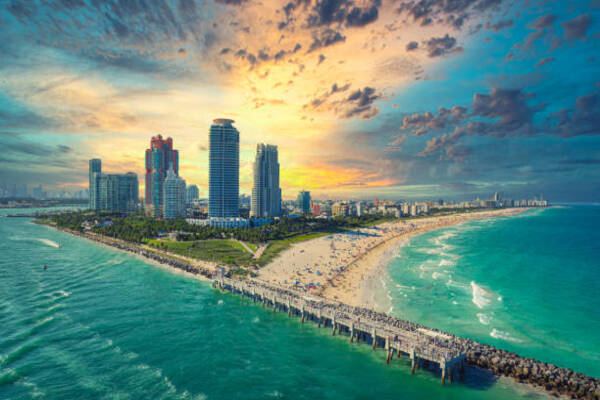
What's the True Story on the State of Tourism in Florida?
Tourism is one of the key economic drivers in Florida. The sector is responsible for approximately 10 percent of the Gross State Product (GSP), employs millions, and contributes billions to the state's economy. But how are things in the sector? It depends on the day, what you're reading or what you're watching: the industry in Florida is either booming or in a vulnerable situation. Here are two examples: Rising tariffs, visa delays, and shifting global travel trends have created a perfect storm, leading to a sharp drop in tourist numbers across Florida and several other U.S. states. The U.S. tourism industry is facing unprecedented challenges as international visitors choose alternative destinations amid political and economic shifts. According to recent data from the U.S. Travel Association, international visits to the U.S. saw a 14% decline in March, reflecting a broader global trend. However, the most significant impact has been felt among Canadian travelers, with a staggering 20.2% decrease in the number of Canadians visiting the U.S. This marks a troubling shift for the U.S., which has long relied on its neighboring country as a key source of international tourism. Florida, which has seen a decrease in tourism since the pandemic, is now facing a compounded crisis. The state, which historically attracted millions of international visitors, is seeing fewer long-term snowbirds, as well as a general decline in international arrivals. The state’s tourism sector, once a booming economic engine, is facing significant challenges. With both fewer foreign visitors and changes in local tourism trends, the state’s economy is under increasing strain. According to the World Travel & Journalism Council, the U.S. is on track to lose more than \$12 billion in international travel spending this year alone due to the decline in visitor numbers. June 06 - Travel and Tour World Whereas government officials are painting a very different picture. Florida welcomed 143 million visitors in 2024, setting a new tourism record for the state. State officials said this is the most visitors in a single year in Florida's history. The trend isn't slowing down, as more than 41 million people visited Florida in just the first three months of this year. May 21 - ABC News So there are questions that need to be answered: What is the current state of tourism in Florida? Have tariffs impacted visits from abroad? Does the high US dollar have anything to do with fewer people coming to the Sunshine State from outside of America? Has domestic travel increased with more Americans choosing Florida as a destination? If the sector is suffering from a decline in visitors, how can it adapt to be more attractive to tourists? If you are a reporter following the tourism industry - we're here to help. Peter Ricci is the Director of the Hospitality and Tourism Management program in Florida Atlantic University’s College of Business. He is a hospitality industry veteran with more than 20 years of managerial experience in segments including food service, lodging, incentive travel and destination marketing. Peter is available to speak with the media about tourism in Florida and the potential for gambling. Simply click on his icon to arrange an interview.


America Sees Another Surge in Political Violence
America has seen its share of political violence, the worst being the Civil War. But unrest is stirring once again in the hearts of Americans as her citizens are being divided by President Trump's deportation of illegal immigrants. Some see it as a solution to cut back violence and drugs in America, while others see it as a cruel, heartless act. Protests are rising up across America as those who oppose the deportation are showing their dislike. People in Ohio, Florida, Alaska and other states are participating in anti-ICE protests. Texas and California have been the most vocal about it, with LA featured on the news many times. As unlawful assembly escalated in LA, looted buildings, cars set on fire and blocked roads, President Trump sent 700 US Marines. This only frustrated state officials more who claimed they had it under control. While 338 arrests have occurred, there have been no reported deaths linked to the protests. This is not the first time LA, California, has seen political violence though, as they have dealt with Watts Riots in 1965, the 1992 Los Angeles riots and in 1997 the North Hollywood shootout. Dr. Stanely Schwartz is an expert on history and is available to speak to media regarding the protests and political violence throughout history – simply email mweinstein@cedarville.edu or text or call (937) 532-6885 to arrange an interview.

Every day, pedestrians and cyclists in Canada experience high-risk near-misses that could have resulted in serious injury or fatalities. A new seven-month study, commissioned by CAA, has uncovered over 600,000 near-miss incidents across 20 intersections nationwide, creating the largest dataset of its kind in Canada. While actual collisions are recorded by police, near misses are not. “The findings are clear, near-misses are not isolated events; they are daily warnings that demand attention,” says Teresa Di Felice, Assistant Vice President of Government & Community Relations at CAA South Central Ontario (CAA SCO). “The results of this study create an opportunity to proactively assess intersection design and implement measures that enhance safety for all road users.” Partnering with Miovision, the study used cameras and AI to monitor and analyze intersections across Canada in real time. Shockingly, one in every 770 pedestrians and one in every 500 cyclists experience a high-risk or critical near-miss. Near-Misses Are Predictors of Future Collisions The study found that near misses most often involved vehicles making a right turn. More than half (55 per cent of pedestrians and 50 per cent of cyclists) had a close call with a vehicle. More than a third (34 per cent of pedestrians and 36 per cent of cyclists) were involved in conflict with a left-turning vehicle. Most Canadian intersections accommodate thousands of pedestrians daily, meaning at least three serious incidents occur at a single location every day. “These aren’t just close calls; they are collisions waiting to happen,” says Di Felice. “By pinpointing near-miss hotspots, municipalities can now prioritize upgrades that prevent collisions before they happen.” Solutions That Make Intersections Safer The study highlights key design features proven to reduce near-misses, including: Dedicated left-turn lanes to prevent dangerous interactions. Leading pedestrian intervals, allowing pedestrians to start crossing before vehicles move. Advanced green lights for left-turning vehicles, reducing hesitation and confusion. Cities that implement these solutions can dramatically decrease the risk of collisions and make their streets safer for all road users. Traditional road safety measures rely on collision data, meaning changes only happen after injuries occur. Near-miss tracking is the next step in proactive safety planning, allowing experts to prevent crashes before they happen. CAA is urging municipal and provincial leaders to embrace technology-driven safety monitoring, citing the compelling benefits revealed by this study. Data was collected using 360-degree cameras at intersections of various designs across seven provinces, including Nova Scotia, Québec, Ontario, Manitoba, Saskatchewan, Alberta and British Columbia. Using AI-powered video analytics, Miovison was able to detect near misses and assess risk levels based on vehicle speed and trajectory. The study's detailed findings can be found here: CAA Intersection Safety Study Media Broll can be found here: https://vimeo.com/1094061982/90cf023ced


Lending Survey Results Reveal Recent and Dramatic Concern Due to Tariff Policy
Global consulting firm J.S. Held releases its proprietary “Lending Climate in America” survey results from Phoenix Management, a part of J.S. Held. The second quarter survey results highlight lenders’ views on important issues, including policy decisions along with their national and global impact. Each quarter, Phoenix Management, a part of J.S. Held, surveys lenders to identify important trends focused on the latest economic issues, business drivers, and credit trends in the current lending climate. The “Lending Climate in America” survey provides valuable information to lenders, attorneys, private equity sponsors, and the financial news media, exploring topics like: What factors do lenders see as most likely to impact the US economy in the next six months? Phoenix’s Q2 2025 “Lending Climate in America” survey asked lenders which factors could have the strongest potential to impact the economy in the upcoming six months. Sixty-seven percent of lenders are paying the most attention to the possibility of a U.S. recession, while 40% of lenders believe overall political uncertainty has the strongest potential to impact the economy. Lenders also expressed moderate concern regarding the possibility of constrained liquidity in capital markets. To see the full results of Phoenix’s “Lending Climate in America” Survey, please visit: https://www.phoenixmanagement.com/lending-survey/ What shifts do lenders observe in their customers’ hiring and capital improvement plans? Lenders revealed what actions their customers may take in the next six months. Over half of the surveyed lenders believe their customers will raise additional capital. Most telling was that lenders believe only 3% of their customers have plans to hire new employees (down from 56% in 1Q) and only 23% have plans for capital improvements (down from 67% in 1Q). Which industries are expected to see the most volatility over the next six months? For the first time in recent memory, the 3 industries that respondents identified as most likely to experience volatility in the next six months were different from the prior quarter - consumer products (60.0% versus 20.7%), retail trade (43.3% versus 31.0%), and manufacturing (33.3% versus 20.7%). How do lenders plan to adjust their loan structures? Additionally, Phoenix’s “Lending Climate in America” survey asked lenders if their respective institutions plan to tighten, maintain, or relax their loan structures for various sized loans. For larger loan structures (greater than $25M), the plan to maintain loan structures remained relatively constant from Q1 to Q2, decreasing by 8 percentage points. As loan sizes decrease, the percentage of lenders that plan to maintain (as opposed to increase) their loan structures increased – quite dramatically in the under $15M range. How has lender sentiment toward the US economy changed from Q1 to Q2? Lender optimism in the U.S. economy decreased for the near term, moving from 2.33 in Q1 2025 to 2.10 in Q2 2025. In this current quarter, there is heavy expectation of a C level performance (63%), with the remainder split between D and B levels. More telling, lender expectations for the U.S. economy’s performance in the longer term increased sharply from 2.11 to 2.53. Of the lenders surveyed, 57% believe the U.S. economy will perform at a B level during the next twelve months, a hefty increase from the prior quarter. The “Lending Climate in America” survey is administered quarterly to lenders from various commercial banks, finance companies, and factors across the country. Phoenix Management, a part of J.S. Held, collects, tabulates, and analyzes the results to create a complete evaluation of national attitudes and trends. To view the full results, click on the button below: To connect with Michael Jacoby or for any other media inquiries, please contact: Kristi L. Stathis, J.S. Held +1 786 833 4864 Kristi.Stathis@JSHeld.com


FAU Data Analysis: Falling Rates Bring Some Relief to Banks
Falling interest rates brought some relief to banks’ portfolios for unrealized losses on investment securities, according to a data analysis from a finance professor at Florida Atlantic University. Only two banks with assets over $1 billion reported unbooked securities losses greater than their total equity in the first quarter of 2025, down from three in the last quarter of 2024, according to the U.S. Banks’ Unrealized Losses on Investment Securities screener. For unbooked losses equal to 50% of Common Equity Tier 1 Capital (CET1) equity, 24 banks were on the list for the first quarter of this year, down from 34 in the fourth quarter of 2024. Rates dropped from the end of 2024 through the end of March, providing some relief to banks that had extensive interest rate risk in their investment securities portfolios. The yield on the 10-year treasury bond fell from 4.57 to 4.25 as of the end of March. “While this would appear to be good news for the U.S. banking industry, with unrealized securities losses declining by $69 billion from the end of 2024 to March, rates have climbed back to where they were at the end of 2024 so that losses today would be back up close to $500 billion,” said Rebel Cole, Ph.D., Lynn Eminent Scholar Chaired Professor of Finance in the College of Business. The aggregate unbooked securities losses on bank balance sheets declined by $69 billion from $483 billion at the end of the fourth quarter in 2024 to $414 billion at the end of the first quarter this year. The quarterly U.S. Banks’ Unrealized Losses on Investment Securities Screener, produced as part of The Banking Initiative in FAU’s College of Business, measures banks’ exposure to risk based on their unrealized losses in their investment securities portfolios. To calculate a bank’s risk, Cole uses the most recently available data from quarterly call reports published by the U.S. Federal Financial Institutions Examination Council. Of the 4,543 banks reporting in the first quarter for this year, Cole focused on 1,042 banks with more than $1 billion in assets to calculate unrealized losses on investment securities and compare those losses to a bank’s CET1. Regulators would force a bank that lost half of its CET1 capital to take remedial actions, such as raising new capital or seeking a merger partner; in the worst case, a bank may face closure by the FDIC. “It’s likely that unbooked losses will continue to grow as interest rates continue to move higher” Cole said. “Both the 50-day and 200-day moving average rate on the 10-Year Treasury bond are rising so losses are growing, not shrinking. And this is only one part of banks’ balance sheets that are suffering from rising rates. There also are massive unrealized losses on banks’ residential and commercial mortgage portfolios that total to another $500 billion.” Looking to know more? We can help. Rebel Cole is available to speak with media about banking and the impact on interest rates. Simply click on his icon now to arrange an interview today.


J.S. Held Announces the First Global Consulting Company Chief Intellectual Property Officer
Global consulting firm J.S. Held proudly announces the appointment of intellectual property (IP) expert James E. Malackowski as the first Chief Intellectual Property Officer (CIPO) of a global consulting company. J.S. Held Chief Executive Officer Lee Spirer observes, “In today's knowledge-based economy, the role of CIPO serves an important strategic and operational role both internally and in support of clients.” Protecting J.S. Held Intellectual Property and Other Intangible Assets J.S. Held experts have developed methodologies, frameworks, proprietary tools, and research that support client work. The CIPO partners across the business to ensure that these intangible assets are identified, protected, and leveraged to benefit the business. “Having dedicated IP leadership will help the company move faster in developing and deploying new methodologies, while ensuring reasonable measures of protecting our innovations,” noted James E. Malackowski. Managing J.S. Held Intellectual Property and Other Intangible Assets J.S. Held maintains a robust portfolio of patents including a “System and Method for Financing an Insurance Transaction”, trademarks, data, trade secrets, and other proprietary technologies that support client work. “As CIPO, I intend to partner with company leadership and our professional experts across the globe to manage and monetize the many patent, trademark, data, and other proprietary assets that set J.S. Held apart among our competitors, benefitting clients and our investors,” added James E. Malackowski. Industry’s Most Comprehensive Global Intellectual Property Consulting Group Ocean Tomo, a part of J.S. Held, is rooted in an expansive understanding of intellectual property (IP) value and risk, providing a foundation of Expertise for the Innovation Economy™. Built upon more than three decades of experience assessing IP in the most rigorous of venues - state, federal, and international courts, Ocean Tomo clients benefit from continuous feedback between litigation economic damage outcomes, transaction pricing, capital market valuations, debt financing terms, equity assessments, and deep technical insight. The team possesses the most comprehensive and market-tested understanding of IP value. Financial, market, and technical experts uniquely understand the contributory value of patented inventions, know-how, brands, and copyrights that permeate every business, viewing IP not simply as an isolated asset, but as an integral component of enterprise value. Multidimensional Intellectual Property-Informed Experts Benefit J.S. Held Clients Intellectual property expertise permeates the global organization. Beyond the expertise within J.S. Held’s dedicated IP practice Ocean Tomo, a part of J.S. Held, multidisciplinary experts across J.S. Held combine intellectual property expertise to core specializations, including: • Artificial Intelligence (AI) • Business Intelligence • Construction Advisory • Enterprise Risk Management • Fraud Investigations • Forensic Accounting • Insurance Claims Consulting • Restructuring, Turnaround, Receivership, and Bankruptcy Tangible and Intangible Asset Value Understanding The depth and breadth of J.S. Held’s work in the property and casualty insurance market and Ocean Tomo’s work across all forms of intellectual property and other intangible assets uniquely combine to create a strong foundation in risk assessment, data analysis, global awareness, regulatory compliance, technological adaptability, and risk mitigation. Collectively, these skills better equip J.S. Held experts to assess business risk across diverse geographies, geopolitical landscapes, regulatory frameworks, and technological advancements for the benefit of our clients. Learn more about the new J.S. Held Chief Intellectual Property Officer, James E. Malackowski: Looking to know more or connect with James E. Malackowski? Simply click on the expert's icon now to arrange an interview today. For any other media inquiries - contact : Kristi L. Stathis, J.S. Held +1 786 833 4864 Kristi.Stathis@JSHeld.com
