
Experts Matter. Find Yours.
Connect for media, speaking, professional opportunities & more.

UConn Expert on the "FDA's Big Gamble" with Controversial Alzheimer's Drug
The Food and Drug Administration's accelerated approval of the drug aducanumab for the treatment of Alzheimer's disease is mired in controversy -- three scientists have resigned from the independent committee that advised the agency on the monthly infusion treatment priced at $56,000 per year. C. Michael White, distinguished professor and head of the Department of Pharmacy Practice at the University of Connecticut, explains the situation surrounding the drug's approval this week in an essay published by The Conversation: Over 6 million Americans now have Alzheimer’s disease, and deaths from Alzheimer’s have risen over 145% over the past 20 years. Alzheimer’s disease not only robs individuals of their autonomy but also places a huge burden on family members and the U.S. economy: $355 billion is spent annually on caring for people with Alzheimer’s. Current FDA-approved treatments are only modestly effective at controlling disease symptoms, and none target a possible underlying cause. The accelerated approval pathway allows patients with early-stage Alzheimer’s to access aducanumab while a larger and more definitive clinical trial is conducted. Biogen says it hopes to have the clinical trial completed by 2030. If the study does not find reductions in the hard clinical endpoints, the drug will be withdrawn. If aducanumab is ultimately found to be effective, many patients with early-stage Alzheimer’s will reap the benefits in reductions in hospitalizations, doctor visits, nursing home costs and societal burden. If aducanumab is found to be ineffective, however, Medicare, insurers and patients will have spent tens of millions of dollars on a drug that not only did not work but also exposed patients to adverse events, including the risk of bleeding in the brain. June 10 - The Conversation Dr. C. Michael White is an expert in the areas of comparative effectiveness and preventing adverse events from drugs, devices, dietary supplements, and illicit substances. If you are a journalist looking to cover this topic, then let us help. Dr. White is available to speak with media -- click on his icon now to arrange an interview today.


Tennis Pro Naomi Osaka Elevates the Conversation on Athletes and Mental Health
Though Naomi Osaka's announcement of her dropping out of the French Open and German Open tournaments came as a surprise to many of her followers, there has been plenty of support from fans and corporations for the 23-year-old tennis pro who chose to take time off because of mental health concerns. One company, the Calm App, offered to pay fines for tennis players skipping press briefings. And Formula 1 champion Lewis Hamilton—who, when he was 22 years old, found it difficult to deal with media commitments—offered encouragement to Osaka. "When you’re young and you're thrown into the limelight, it weighs heavily, and most of us are not prepared," Hamilton told The New York Times. Guy Weissinger, PhD, an assistant professor in Villanova's M. Louise Fitzpatrick College of Nursing whose research focuses on mental health, says, "Elite athletes are people. They have mental health struggles—good days and bad days—and it's important that we recognize that mental health is complicated, not just 'doing well' or 'not doing well.' One may be capable of doing one thing (i.e., playing tennis) but not other things (i.e., being peppered by reporters with questions). It saddens me that she needed to withdraw from the tournament rather than the tournament organizers reaching out to find ways to accommodate her mental health needs." He noted that the 23-year-old Osaka is an amazing athlete who rose to global prominence beating Serena Williams in a match that got a lot of negative attention. "While no one was saying that she did not deserve her victory, the conversation was mostly focused on Serena, and Osaka was a teenager caught in a media firestorm. I could see how that would create a high level of baseline anxiety around the Opens and media interactions for her, in addition to the already stressful situation of participating at that elite level of sports. Combine that with the high level of stress that everyone has been experiencing over the last year and a half, with COVID, I'm surprised that she isn't the only person who has said that they would be unable to do media appearances." He says this is a great opportunity for discussion of mental health and how it's a concern for everybody. "Too often, we think of people that are successful as being immune to mental health struggles, but we have to acknowledge that people can be both successful and struggling. Sometimes they will be able to manage (as Naomi has in many circumstances), but sometimes even their best coping mechanisms are not enough." Weissinger hopes that we can find ways for people to 'tap out' of the things that overwhelm their ability to cope. "It's not fair or ethical to only wait until people are not just struggling but completely drowning before trying to support or accommodate them. Like with physical health, prevention before things get bad is better for everyone than trying to fix things when they get really bad."


Augusta University experts looking for clues to predict future cyber attacks
The threat of cyber attacks is a reality for every industry. Cybersecurity is top of mind after recent highly skilled and calculated attacks targeting the Colonial Pipeline in May and shutting down the world’s largest meat supplier earlier this month. With America’s energy and food supply chains making vulnerable targets, everyone from executives, lawmakers, security officials and the media are looking for answers. Augusta University’s Dr. Craig Albert and Dr. Lance Hunter explore the questions surrounding cybersecurity in a recently published study in The Cyber Defense Review. This project examines the political, economic and military factors associated with cyber attacks in an effort to understand which countries or groups are most likely to attack. Here’s an abstract of their piece: Factors that Motivate State-Sponsored Cyberattacks The study of the factors involved in the initiation of violent interstate conflicts has been well documented within international relations. However, scholars have yet to analyze the factors associated with the initiation of international state-sponsored cyberattacks due to the lack of available data. This study is a first attempt to address this limitation. This project examines the political, economic, and military factors associated with the initiation of state-sponsored cyberattacks from 2005–2012, using a unique dataset that incorporates author-collected political, economic, and military data, along with cyber data on known state-sponsored cyberattacks extracted from the Council on Foreign Relations (CFR) Cyber Operations Tracker Dataset. With this unique dataset, we seek to better understand those states most likely to cyberattack other states. The Cyber Defense Review, Spring 2021 The study was also referenced in Voice of America in a piece covering President Biden’s trip to the G-7 Summit in Britain. If you are a journalist looking to cover any aspect of cybersecurity and cyber attacks, Augusta University’s experts are world-renowned on the topic. Dr. Craig Albert is director of the Master of Arts in Intelligence and Security Studies at Augusta University. He is a leading expert on war, terrorism and American politics, and he testified before U.S. Congress regarding the threat from Chechnya following the deadly Boston Marathon bombing. Dr. Lance Hunter is an assistant professor of political science with a background in international relations. His research focuses on how terrorist attacks influence politics in democratic countries and how political decisions within countries affect conflicts worldwide. Both experts are available to speak with media about cyber attacks. Simply click on either expert’s icon to arrange an interview today.


#Experts in the Media – UMW’s Miriam Liss explains to BBC why 'quirky' people are attractive
What could make a face worthy of launching a thousand ships? For thousands of years, and likely long before Helen of Troy, beauty and what makes us attracted to others has been a mystery. There have been studies, theories and tons of experiments – and like a cure for the common cold, finding an easy answer or remedy for the riddle behind beauty is always illusive. However, University of Mary Washington’s Miriam Liss was recently featured on the BBC and explain how sometimes the small things – make the biggest impressions. Recumbent on her chaise lounge, peacock-feather fan in hand, the model casts her gaze over her shoulder towards the artist. It's the early 19th Century, and Jean Auguste Dominique Ingres is painting La Grande Odalisque, a nude oil-on-canvas of a Turkish chambermaid. The painter has captured her allure, but something is not quite right. When it is shown to the public, the painting is heavily criticised – she has a weirdly long back and her body points in too many different directions. A 2004 analysis by French doctors, including one who specialises in vertebral pain, suggests that not only would it be impossible for her to contort her body in this way, she would have needed five extra lumbar vertebrae for her back to look as long as it does. The Romantic style of art from this period is filled with nude women, back to the observer, with tiny waists and wide hips. An "hourglass" figure was thought to be the height of beauty. Whether Ingres had intended to distort her proportions quite so much is debated – though no model could ever have posed like this. Maybe Ingres was exaggerating her slender back, narrow waist and wider hips to add a little more sexiness and slightly overdid it. Subtle differences in our appearance can make a big difference. Slight changes in dress make women seem more trustworthy, competent or attractive. As psychologist Miriam Liss of the University of Mary Washington in Fredericksburg, Virginia, and her co-authors found, to look honest and competent in a career setting, or even electable as a politician, a woman must dress conservatively and not sexily. May 31 – BBC If you are a journalist looking to cover this topic or speak with an expert, then let us help. Miriam Liss is a professor of psychological science and international known expert in the areas of feminism, body image and objectification. She’s available to speak with media; simply click on her icon now to arrange an interview today.



Republicans are facing a political dilemma: Embrace former President Donald Trump and enjoy full party support, however, expect to lose favor with "never Trumpers" and moderate voters. Or … reject Trump to appeal to voters but face the sling, arrows and potential primary challenges of a vengeful Trump base. It seems like a lose/lose situation for the GOP, and it has been the topic of much conversation and media coverage. In Virginia, the stakes are high politically and The Washington Post recently spoke with UMW’s Stephen Farnsworth about this very situation. Virginia Republicans who oppose or criticize Trump are being shunned or sidelined within the party, said Stephen Farnsworth, a political science professor at the University of Mary Washington, while those who embrace him struggle to win statewide elections or suburban swing districts. The next test in Virginia will come this fall, when GOP gubernatorial nominee Glenn Youngkin, who embraced Trump and won the former president’s endorsement, will compete against the winner of the June 8 Democratic primary. “At the moment, these three former members of Congress are more like voices crying in a Republican wilderness,” Farnsworth said. “Will the party come around to their way of thinking? I think a lot depends on the success or failure of Republican candidates who are all in in their support of former president Trump. If Republicans get swept again in statewide elections, the arguments offered by Riggleman and Comstock and Rigell may make more sense to some of the die-hard activists.” May 22 – Washington Post There’s never a dull day inside or outside of party politics in America. And with mid-terms on the horizon and high expectations for 2024, the moves Republicans make with or without Trump could carry high consequences. And if you are a journalist following these developments within the Republican Party in Virginia or throughout the country, then let us help. Dr. Stephen Farnsworth is a sought-after political commentator on presidential politics. He has been widely featured in national media, including The Washington Post, Reuters, The Chicago Tribune and MSNBC. Dr. Farnsworth is available to speak with media any time. Simply click on his icon to arrange an interview today.

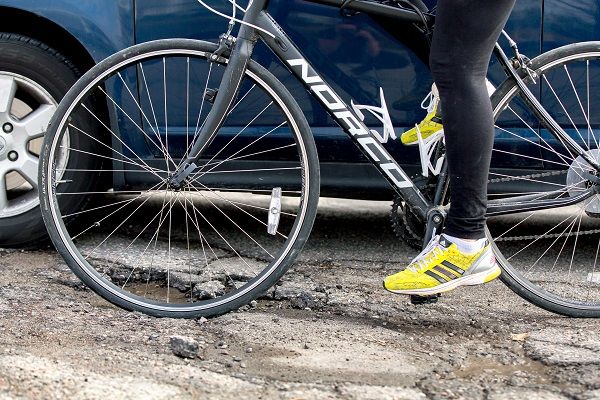
MEDIA RELEASE: Victoria Road in Prince Edward County voted Ontario’s Worst Road.
The votes are in and the CAA Worst Road for 2021 is Victoria Road in Prince Edward County. Making its debut on the Ontario top 10 list, voters cited potholes and crumbling pavement as the main concerns for the Prince Edward County road. Taking the second and third place spots are Carling Avenue in Ottawa and Barton Street East in Hamilton, respectively. “The quality of our roadways affect everyone,” says Tina Wong, government relations specialist for CAA South Central Ontario. “Our roads are the arteries used every day to keep essential workers, goods and services flowing. They should be maintained now more than ever.” Two notable changes in this year’s list include Riverdale Drive in Washago coming off the provincial top 10 list and Toronto’s Eglinton Ave East dropping from first to fifth place. “As people continue working from home and traveling locally during the pandemic, we are seeing different roads appear on the list. We should continue taking advantage of these lighter traffic patterns as an opportunity for necessary road repairs,” adds Wong. In Ontario, 117 municipalities saw roads in their communities nominated. Drivers accounted for a majority of the votes being cast, with cyclists and pedestrians accounting for about a quarter of the votes. Voters shared their primary reasons for selecting a road, with 81 per cent citing potholes or crumbling pavement, followed by traffic congestion (11 per cent) and no or poor walking infrastructure (7 per cent). Ontario’s top 10 list is verified by the Ontario Road Builders’ Association (ORBA). “We are very pleased to partner with CAA on the 2021 Worst Roads Campaign. ORBA provides analysis on the nominated roads, sheds light on why they were chosen and what issues are impacting them. Increased investment in our transportation infrastructure is vital in order to effectively maintain existing assets and plan for the future.” - Doubra Ambaiowei, Technical Director, Ontario Road Builders’ Association. Ontario’s Top 10 Worst Roads for 2021 Victoria Road, Prince Edward County Carling Avenue, Ottawa Barton Street East, Hamilton County Road 49, Prince Edward County Eglinton Avenue East, Toronto Hunt Club Road, Ottawa Eglinton Avenue West, Toronto Innes Road, Ottawa Algonquin Boulevard West, Timmins Queen Street, Kingston Worst Roads by Region Central— Bell Farm Road, Barrie Eastern— Victoria Road, Prince Edward County Halton-Peel-York-Durham— Speers Roads, Oakville Niagara— Whirlpool Road, Niagara Falls North— Algonquin Boulevard West, Timmins South West— Plank Road, Sarnia Western— York Road, Guelph The CAA Worst Roads campaign is a platform for Ontarians to make roads safer by helping municipal and provincial governments understand what roadway improvements are important to citizens and where they need to be made. Votes submitted to the CAA Worst Roads campaign are compiled and released as an annual provincial top 10 list along with a series on regional lists, all designed to spark a dialogue with governments and to help pave the way for safer roads across Ontario. For the full list of the 2021 Worst Roads, please visit www.caasco.com/worstroads


Climate Change-Related Natural Disasters Impact Short-Lived Assets and Interest Rates
For decades, scientists across the globe have warned about the effects of climate change. Given that these changes—global warming, rising sea levels—happen over time and that their disastrous results may not be obvious for decades, studying the effects of climate change on financial markets has posed a problem. According to Christoph Herpfer, assistant professor of finance, Goizueta Business School, most of the existing literature that deals with the effect of climate change on financial markets considers “indefinitely lived assets,” such as owning stock or owning a home—assets that “don’t have an expiration date,” explained Herpfer. To evaluate the effect of climate change in the long run on these assets then requires discount models—ways to value something today based on what it could be worth decades from now. Herpfer, a banking and corporate finance specialist, studies short-lived assets that, on average, expire after 4.5 years. Herpfer wondered if there could be “an alternative channel in which climate change already impacts companies today,” he explained. One that didn’t have to deal with all the “challenges associated with long run discount rates,” he added. In “The rising tide lifts some interest rates: climate change, natural disasters, and loan pricing,” Herpfer and his colleagues—Ricardo Correa, deputy associate director, Board of Governors of the Federal Reserve System, Ai He, assistant professor of finance, University of South Carolina, and Ugur Lel, associate professor, Nalley Distinguished Chair in Finance, University of Georgia, Terry College of Business—consider this question by studying corporate borrowing costs. In 2020, the paper received the best paper award at the Boca Corporate Finance and Governance Conference. The foursome had a novel idea: In recent years, there has been scientific consensus that climate change fuels natural disasters. So Herpfer and his fellow authors wondered if financial institutions took climate change-amplified natural disasters into account when pricing short-term loans. Their answer was, unequivocally, “yes.” Their work and research is captured in a recent article in Emory Business - it's attached and well worth the read. If you're a journalist looking to know more - then let us help. Christoph Herpfer is an assistant professor of finance at Goizueta Business School. He is also a financial economist working at the intersection of banking, law, and accounting. Christoph is available to speak with media about this research - simply click on his icon now to arrange an interview today.


Stress and pressure go hand-in-hand when it comes to college students across America looking to succeed and make the grade. But with the added anxiety of COVID-19 and students forced out of classrooms and lecture halls – the opportunity to cheat is now easier than ever and numbers are trending upwards. UMW’s Professor of Psychological Science David Rettinger, president emeritus of the International Center for Academic Integrity, was recently interviewed about this alarming trend by NBC News and lent his expert opinion on why more students may be making the choice to cheat and what professors and schools can do to make sure everybody stays on the honest path. If you are a journalist looking to cover this subject, then let us help with your stories. Dr. David Rettinger is available to speak with media regarding this issue of cheating and academic integrity. Simply click on his icon now to arrange an interview today.

Weight stigma is a burden around the world – and has negative consequences everywhere
Rebecca Puhl, Professor of Human Development and Family Sciences and Deputy Director, UConn Rudd Center for Food Policy and Obesity, University of Connecticut was recently featured in The Conversation discussing this very important topic. An excerpt of her article is included with the full piece attached. It's an excellent article and well worth the read. Lazy. Unmotivated. No self-discipline. No willpower. These are just a few of the widespread stereotypes ingrained in American society about people who have a higher body weight or larger body size. Known as weight stigma, these attitudes result in many Americans being blamed, teased, bullied, mistreated and discriminated against. There is nowhere to hide from societal weight stigma. Decades of research confirm the presence of weight stigma in workplaces, schools, health care settings, public accommodations and the mass media, as well as in close interpersonal relationships with friends and families. It’s everywhere. I’m a psychologist and researcher at the Rudd Center for Food Policy & Obesity at the University of Connecticut. For 20 years my team has studied weight stigma. We’ve examined the origins and prevalence of weight stigma, its presence across different societal settings, the harm it causes for people’s health and strategies to tackle this problem. We conducted a recent international study that clearly shows that weight stigma is widespread, damaging and difficult to eradicate. This societal devaluation is a real and legitimate experience for people across different countries, languages and cultures. June 01 – The Conversation The issue of weight stigma and shaming is having a devastating impact on all facets of American society – and if you are a reporting looking to cover this topic or to learn more, then let us help. Dr. Rebecca Puhl is Deputy Director for the Rudd Center for Food Policy & Obesity and Professor in the Department of Human Development and Family Sciences at UConn. She is responsible for identifying and coordinating research and policy efforts aimed at reducing weight bias. Dr. Puhl is available to speak with media regarding this important subject – simply click on her icon now to arrange an interview today.


Laughing through lockdown: why comedy is important in times of crisis
Author: Lucy Rayfield Most of us have needed a good laugh over the last 12 months. Searches on Netflix for horror dipped at the peak of the first lockdown, while stand-up comedy saw a huge jump in viewers. In the world of social media, accounts poking fun at responses to the virus have also gained enormous followings, with accounts like Quentin Quarantino and the Reddit thread CoronavirusMemes surging in popularity in the past year. We’ve spent a significant amount of time joking about Zoom meetings, hand-washing songs, and home haircuts. But what makes us switch so quickly between panicking at death tolls and chuckling at a video sent by a friend? As a scholar who’s spent much of my career studying laughter and comedy, I often come across surprising functions of humour. I’ve studied Italian comedy and its reception in 16th-century France, the political consequences of laughter in the Wars of Religion, and the historical antecedents to today’s main theories of humour. We can help you make informed decisions with our independent journalism. Much of my research has revealed fascinating things about how humour appeals to us in times of hardship. But the pandemic has really amplified the roles that comedy can play and brought home our reliance on humour. Humour in ancient Rome Our need to laugh in the face of disaster is by no means new. In ancient Rome, gladiators would leave humorous graffiti on barrack walls before going to their deaths. The ancient Greeks also sought new ways to laugh at deadly disease. And during the Black Death pandemic in 1348, the Italian Giovanni Boccaccio wrote the Decameron, a collection of often funny tales told by storytellers isolating from the plague. Comedy scene in a Roman mosaic on display in the National Archaeological Museum in Naples, Italy. Azoor Photo/Alamy The need to avoid offence with humour is just as ancient. In 335 BCE, Aristotle advised against laughing at anything painful or destructive. The Roman educator Quintilian also outlined in 95 CE the very fine line between ridere (laughter) and deridere (derision). It’s still generally accepted a common position that humour shouldn’t hurt, and this is particularly true when the object of laughter is already vulnerable. When the boundary between laughter and derision is respected, comedy can play a key role in helping us to recover from disaster, providing benefits which explain our tendency to seek humour in serious situations, especially in terms of enhancing our sense of physical and mental wellbeing. How humour helps during crises Laughter serves as a great workout (laughing 100 times burns as many calories as 15 minutes on an exercise bike), helping to relax our muscles and promote circulation. Combinations of exercise and laughter — such as the increasingly popular “laughter yoga” — can also provide significant benefits to patients with depression. Laughter also decreases stress hormones and increases endorphins. In tough times, when we have thousands of thoughts a day, a bout of giggling provides our brains with respite we desperately need. Home haircuts were the source of a number of jokes during the first lockdown. Rosanne Tackaberr/Alamy In the same way, we seek humour in a crisis because it is difficult to feel scared and amused at the same time, and most often, the combination of these emotions result in feeling thrill and not terror. Sigmund Freud explored this in 1905 when revising the so-called “relief theory”, suggesting that laughter feels good because it purges our system of pent-up energy. Even in the 1400s, clerics argued that mirth was vital for keeping up spirits, explaining that people are like old barrels which explode if they aren’t uncorked from time to time. As levels of loneliness reached a record high during the winter lockdown (in November, one in four UK adults reported feeling lonely), laughter has also been crucial in bringing people together. Not only is it typically a communal activity – some scientists believe that our human ancestors laughed in groups before they could speak – it’s even more contagious than yawning. Given that we’re far more likely to laugh at topics we find personally relatable, humour has helped people to identify with one another during lockdowns. This in turn creates a sense of unity and solidarity, alleviating our sense of disconnectedness. Literature scholar and author Gina Barreca maintains that “laughing together is as close as you can get without touching”. Laughter can also be a means of easing our worries. Joking around a fear, especially during a pandemic, can make it more manageable, a phenomenon known by comedians as “finding the funny”. This is linked to “superiority theory”, the idea that we laugh because we feel superior to something or someone else (for example, it’s funny when someone slips on a banana because we ourselves haven’t). We laugh because we are superior, unthreatened, and in control. In this way, joking about a virus heightens our sense of power over it and relieves anxiety. Joking can also be useful because it enables us to talk about our problems and to express fears we may otherwise find hard to put into words. Though many of us have felt guilty for seeking humour in the pandemic, let’s not add this to our list of worries. Certainly, our situation may not always be a laughing matter. But laughing itself matters, and when used appropriately, it can be one of our most effective coping mechanisms during a crisis, allowing us to find a healthier balance with others, with ourselves, and even with events beyond our control.
