
Experts Matter. Find Yours.
Connect for media, speaking, professional opportunities & more.
Ocean Tomo Releases 2025 Intangible Asset Market Value Study Results
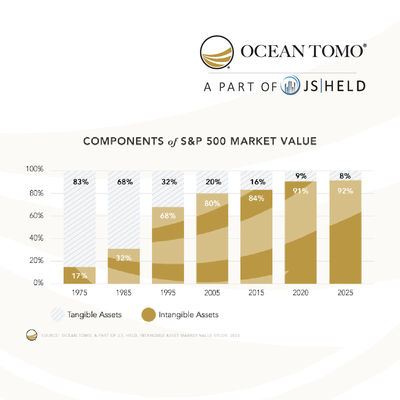
Global consulting firm J.S. Held announces the release of the Ocean Tomo Intangible Asset Market Value (IAMV) study. With this release, the study now reflects a panel of 50 years of data in the US market and 20 years of data in foreign markets. The study examines the components of market value, specifically the role of intangible assets, across a range of global indexes. IAMV is shown as of calendar year end by subtracting net tangible asset value from market capitalization. Commenting on the Components of S&P 500® Market Value, economic expert and study author Matthew Johnson observes, “the composition of corporate value has undergone a fundamental transformation over the past five decades.” In 1975, tangible assets—property, plant, equipment, inventory, and other physical capital—represented 83% of the market value of companies comprising the S&P 500 index, with intangible assets accounting for only 17%. By the end of 2025, this relationship had completely inverted: intangible assets now constitute approximately 92% of S&P 500 market capitalization, while tangible assets have been reduced to a mere 8%. Johnson adds, “This 75 percentage point shift represents what Ocean Tomo has defined as ‘economic inversion’— a wholesale transformation in the nature of value creation whereby economic worth has migrated from what can be ‘touched’ to what can be ‘thought’." The magnitude and implications of this transformation are comparable to the Industrial Revolution of the 18th and 19th centuries. Just as the Industrial Revolution fundamentally restructured economic activity from agrarian and craft-based production to mechanized manufacturing, the intangible revolution has redefined the sources and measurement of corporate value in the 21st century. Ocean Tomo Co-founder and J.S. Held Chief Intellectual Property Officer, James E. Malackowski observes, “While the Industrial Revolution required a century to unfold fully, the intangible revolution has occurred within a single human lifespan, with particularly rapid acceleration occurring in the 1985-2005 period when intangible asset market value increased from 32% to 79%—a remarkable 47 percentage point surge in just two decades.” The 2020-2025 period deserves special attention: S&P 500 IAMV remained stable at approximately 90% despite the Federal Reserve implementing the most aggressive monetary tightening cycle in four decades. Dr. Nikki Tavasoli, PhD, shares, “Traditional financial theory predicts that intangible-intensive firms should be highly sensitive to interest rate changes due to their long-duration cash flows and limited collateral value.” She adds, “The observed stability challenges this prediction and requires explanation, which we address in a forthcoming paper.” In 2005, the IAMV study was expanded beyond the S&P 500 to explore the components of value in several key international markets. Stock market indexes from Europe, China, Japan, and South Korea were selected and analyzed to determine the comparable role of intangible assets. To learn more about the 2025 Intangible Asset Market Value Study, please visit: Media Contact Kristi L. Stathis, J.S. Held 1 786 833 4864 Kristi.Stathis@JSHeld.com JSHeld.com


Surprising finding could pave way for universal cancer vaccine
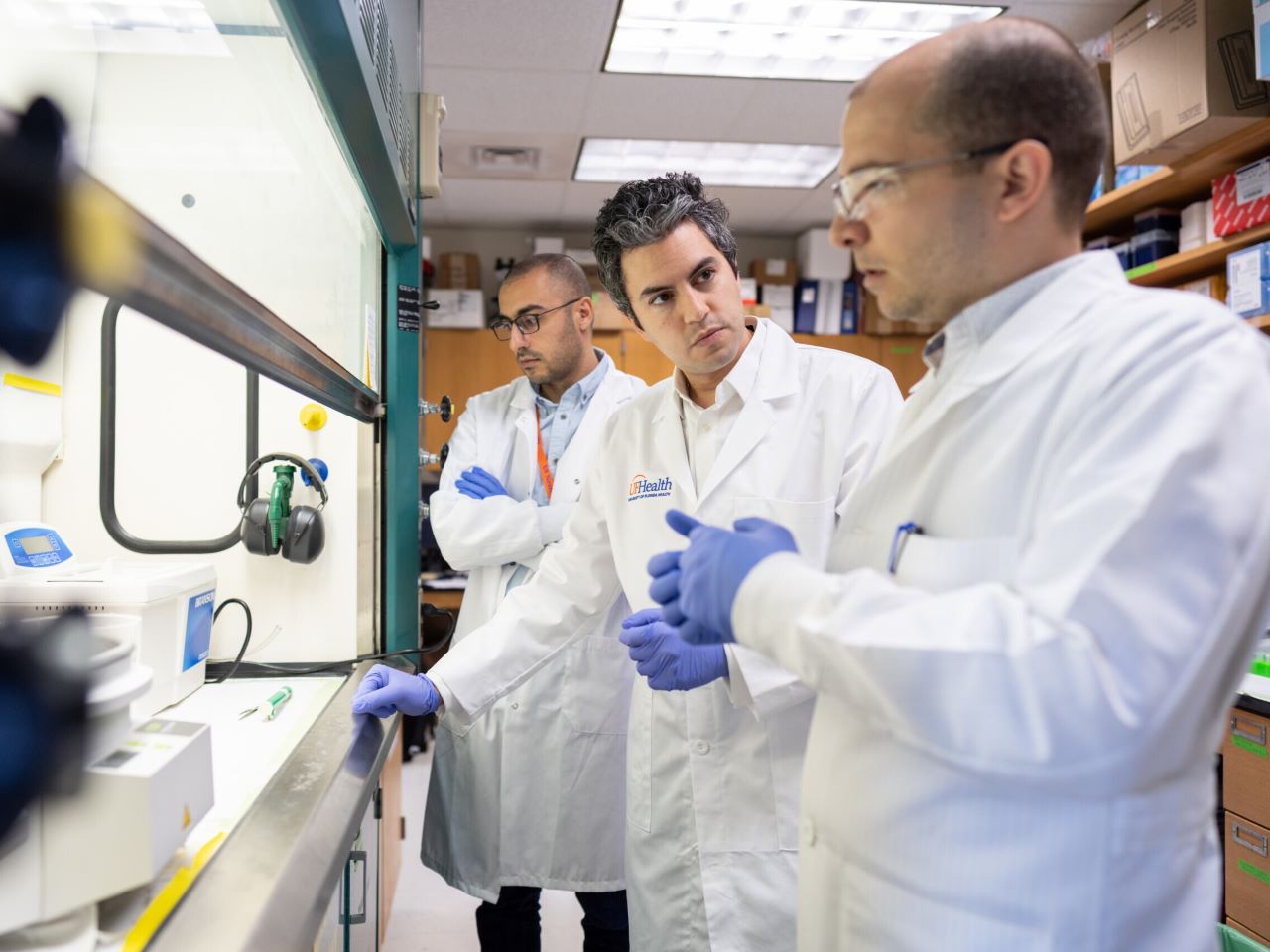
An experimental mRNA vaccine boosted the tumor-fighting effects of immunotherapy in a mouse-model study, bringing researchers one step closer to their goal of developing a universal vaccine to “wake up” the immune system against cancer. Published today in Nature Biomedical Engineering, the University of Florida study showed that like a one-two punch, pairing the test vaccine with common anticancer drugs called immune checkpoint inhibitors triggered a strong antitumor response in laboratory mice. A surprising element, researchers said, was that they achieved the promising results not by attacking a specific target protein expressed in the tumor, but by simply revving up the immune system — spurring it to respond as if fighting a virus. They did this by stimulating the expression of a protein called PD-L1 inside of tumors, making them more receptive to treatment. The research was supported by multiple federal agencies and foundations, including the National Institutes of Health. Senior author Elias Sayour, M.D., Ph.D., a UF Health pediatric oncologist and the Stop Children's Cancer/Bonnie R. Freeman Professor for Pediatric Oncology Research, said the results reveal a potential future treatment path — an alternative to surgery, radiation and chemotherapy — with broad implications for battling many types of treatment-resistant tumors. “This paper describes a very unexpected and exciting observation: that even a vaccine not specific to any particular tumor or virus — so long as it is an mRNA vaccine — could lead to tumor-specific effects,” said Sayour, principal investigator at the RNA Engineering Laboratory within UF’s Preston A. Wells Jr. Center for Brain Tumor Therapy. “This finding is a proof of concept that these vaccines potentially could be commercialized as universal cancer vaccines to sensitize the immune system against a patient’s individual tumor,” said Sayour, a McKnight Brain Institute investigator and co-leader of a program in immuno-oncology and microbiome research. Until now, there have been two main ideas in cancer-vaccine development: To find a specific target expressed in many people with cancer, or to tailor a vaccine that is specific to targets expressed within a patient's own cancer. “This study suggests a third emerging paradigm,” said Duane Mitchell, M.D., Ph.D., a co-author of the paper. “What we found is by using a vaccine designed not to target cancer specifically but rather to stimulate a strong immunologic response, we could elicit a very strong anticancer reaction. And so this has significant potential to be broadly used across cancer patients — even possibly leading us to an off-the-shelf cancer vaccine.” For more than eight years, Sayour has pioneered high-tech anticancer vaccines by combining lipid nanoparticles and mRNA. Short for messenger RNA, mRNA is found inside every cell — including tumor cells — and serves as a blueprint for protein production. This new study builds upon a breakthrough last year by Sayour’s lab: In a first-ever human clinical trial, an mRNA vaccine quickly reprogrammed the immune system to attack glioblastoma, an aggressive brain tumor with a dismal prognosis. Among the most impressive findings in the four-patient trial was how quickly the new method — which used a “specific” or personalized vaccine made using a patient’s own tumor cells — spurred a vigorous immune-system response to reject the tumor. In the latest study, Sayour’s research team adapted their technology to test a “generalized” mRNA vaccine — meaning it was not aimed at a specific virus or mutated cells of cancer but engineered simply to prompt a strong immune system response. The mRNA formulation was made similarly to the COVID-19 vaccines, rooted in similar technology, but wasn’t aimed directly at the well-known spike protein of COVID. In mouse models of melanoma, the team saw promising results in normally treatment-resistant tumors when combining the mRNA formulation with a common immunotherapy drug called a PD-1 inhibitor, a type of monoclonal antibody that attempts to “educate” the immune system that a tumor is foreign, said Sayour, a professor in UF’s Lillian S. Wells Department of Neurosurgery and the Department of Pediatrics in the UF College of Medicine. Taking the research a step further, in mouse models of skin, bone and brain cancers, the investigators found beneficial effects when testing a different mRNA formulation as a solo treatment. In some models, the tumors were eliminated entirely. Sayour and colleagues observed that using an mRNA vaccine to activate immune responses seemingly unrelated to cancer could prompt T cells that weren’t working before to actually multiply and kill the cancer if the response spurred by the vaccine is strong enough. Taken together, the study’s implications are striking, said Mitchell, who directs the UF Clinical and Translational Science Institute and co-directs UF’s Preston A. Wells Jr. Center for Brain Tumor Therapy. “It could potentially be a universal way of waking up a patient’s own immune response to cancer,” Mitchell said. “And that would be profound if generalizable to human studies.” The results, he said, show potential for a universal cancer vaccine that could activate the immune system and prime it to work in tandem with checkpoint inhibitor drugs to seize upon cancer — or in some cases, even work on its own to kill cancer. Now, the research team is working to improve current formulations and move to human clinical trials as rapidly as possible. While the experimental mRNA vaccine at this point is in early preclinical testing — in mice not humans — information about available nonrelated human clinical trials at UF Health can be viewed here.



When individuals sign up for direct-to-consumer genetic testing, the extent to which they ever think about their genetic data is likely in the context of the service for which they paid: information on predisposition to a genetic illness, or confirmation of an ethnic background, for example. But that data doesn’t just sit on a shelf, and while the most mainstream concern for such services is the privacy of your data, there is also the question of what else the companies do with it, and how. Ana Santos Rutschman, SJD, LLM, professor and faculty director of the Health Innovation Lab at Villanova University Charles Widger School of Law, is particularly interested in the latter. In June 2025, she co-authored an amicus brief centered on data protection and patient’s interests amid genetic testing company 23andMe’s bankruptcy proceedings. In December, many of those same co-authors published a paper in Nature Genetics, highlighting 23andMe’s bankruptcy as “an inflection point for the direct-to-consumer genetics market,” especially as it pertains to the broader corporate use of individuals’ scientific data. The reason? “How that data is used all depends on the policies of the individual companies,” she said. Genetic Testing Companies Use Your Data For More Than The Services You Pay For Those who utilize genetic testing companies—for any reason—are likely also consenting, often unknowingly, to other unrelated items. This includes acknowledgment of information related to how your data might be further used or monetized. “Most people don't think about secondary and tertiary uses of their data,” said Professor Rutschman. “[What they consent to] is displayed on the website somewhere, but it’s not easily understandable and accessible. It’s fine print.” Such companies often operate beyond the traditional “fee for a service” relationship with consumers. Yes, they will give you the information you paid for—finding out whether you have German ancestry or are predisposed to certain genetic disease—but instead of that genetic data just being stored somewhere, it’s often sold for research purposes. Today, in the age of AI big data, that might look something like this: The company puts your data in a box with parameters, along with thousands of others. Perhaps they are then able to observe a pattern that, until all that data was compiled, was previously unknown. They come up with a diagnostic or a medicine and patent it. That patent is licensed to somebody else, and the company makes money on the product. The use of that data for scientific purposes—even ones that turn a profit— is not problematic in itself, says Professor Rutschman. “Some people may even choose a company that allows scientific research over one that doesn’t. Many people may not care, but some will. The uses are not common knowledge, and that is worrisome. The public should be well-informed about what’s happening.” Deeper problems may arise when they aren’t informed of those potential uses of their data. Professor Rutschman cited the infamous Henrietta Lacks case, in which Lacks’ cells were, and continue to be, one of the most valuable cell lines in cancer research. Neither Lacks nor her family were paid for the widespread use of her genetic material until a settlement was reached long after her death. “When you have biologics involved, a concern is that if you have something potentially valuable, you may not see any money from it.” Bankruptcy Can Cause Policy Upheaval To understand the role bankruptcy can play in all of this, one needs to refer back to the power of individual company policy in this space. There are no external laws that dictate how these companies can further monetize their data, says Professor Rutschman, as long as they don’t violate other laws, such as privacy laws. That means that when a company like 23andMe goes bankrupt, as was the case in 2025, new ownership could enact completely different corporate policies for use of their property. In their specific case, the company was essentially bought back by 23andMe founder and CEO Anne Wojcicki’s non-profit, all but ensuring policies would remain the same. But that is exactly why Professor Rutschman and others are highlighting this specific case. “Bankruptcy is bad in the sense that there's a lot of uncertainty,” she said. “In this instance, the person coming in was the person who was there before, so the policy is likely to continue. But that's very rare. There are a roster of companies with access to biological materials. 23andMe is a good example of something not going horribly wrong, but with the understanding that it absolutely could.” Ways in which that could happen could be new ownership undermining the original intent of the data use by cessation of the company’s previous policies, or charging exorbitant prices to other entities to use that data for scientific research. “Because there is no law, these new owners can essentially do as they please with their proprietary data, unless they do something incredibly careless that amounts to the level of illegal,” Professor Rutschman said. “And that is concerning.” Onus Falls to Companies to Enact Safeguards To ensure a worst-case scenario for such companies does not unfold in a bankruptcy situation, Professor Rutschman points to a number of safeguards they could enact to protect their original commitments, ensure equitable access to data for scientific research and promote fair trade. One of which is implementing a company policy stating that commitments from a previous iteration of the company need to be honored if ownership is transferred. Those could include, as the authors recommend, policies “honoring original research-oriented commitments under which the data were collected,” as well as not “enclosing the dataset for exclusive commercial use.” She also highlights the need for Fair, Reasonable, and Non-Discriminatory (FRAND) voluntary licensing commitments, which are inherently more science and market friendly. “Companies in many sectors have committed to this approach, and we are saying it should apply in this space as well. You’ll charge your royalty, but it can’t be a billion dollars for a data set, nor would it be done by exclusively selling to one entity. You can get that billion dollars by selling to 15, 50 or 100 companies, and from a scientific research perspective, that’s what we want. Otherwise, you have a monopoly or duopoly. “There are a lot of different models that can be used, but ultimately what we are arguing is leaving this unaddressed is a really bad idea. It leaves everything exposed, and something bad is more likely to happen.”


Wetlands: Nature’s First Line of Defense for Our Coast and Communities
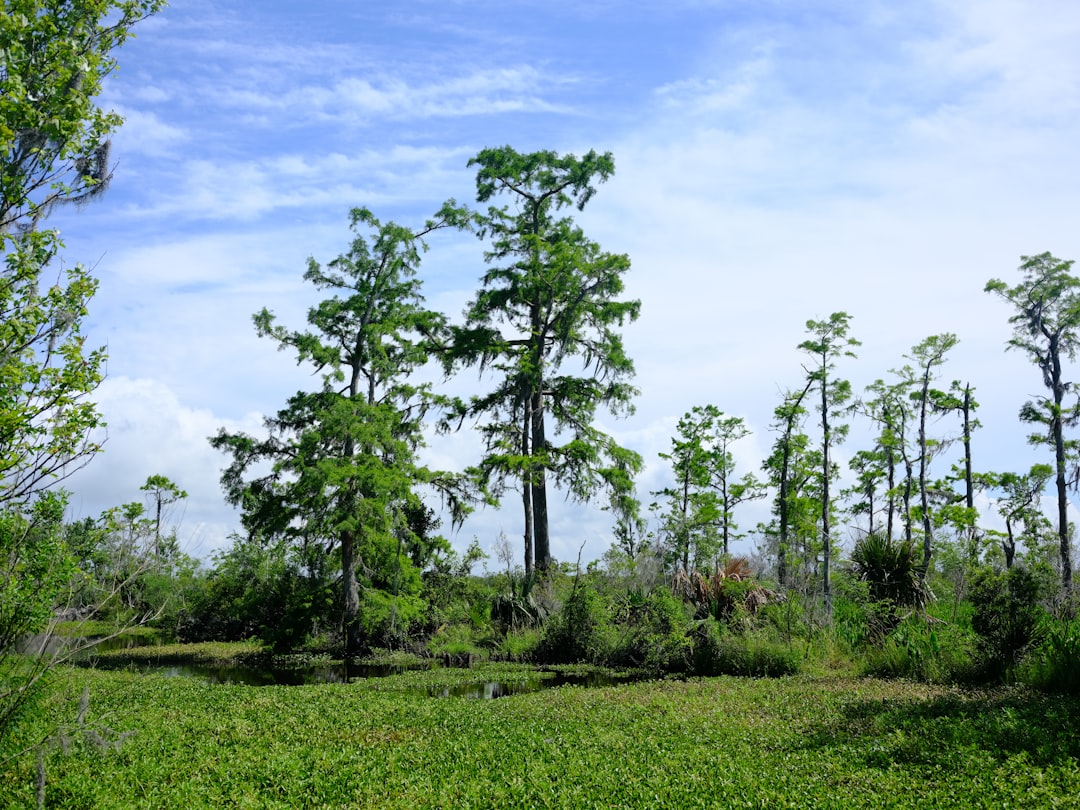
Since the 1930s, Louisiana’s coastline has been reshaped by the relentless advance of the Gulf, with over 2,000 square miles of land disappearing beneath its waters and representing the largest loss of coastal land anywhere in the continental United States. This dramatic transformation has far-reaching consequences, threatening local economies, delicate ecosystems, and heightening the state’s exposure to hurricanes. In the face of these urgent challenges, LSU’s College of the Coast & Environment (CC&E) stands at the forefront, leading pioneering research and bold initiatives that not only protect Louisiana’s coast, but also build stronger, more resilient communities. Below are just a few examples of how CC&E is driving meaningful solutions for our coastal future. Wetlands are vital to protecting our coast, and CC&E researchers are actively investigating the role of both constructed and natural wetlands in reducing coastal flooding hazards. Through several projects funded through the US Army Corps of Engineers, Drs. Robert Twilley, Matthew Hiatt, and CC&E Dean Clint Willson, along with collaborators across campus, are conducting research on coastal ecosystem design - a framework that leverages the benefits of natural and nature-based coastal features, such as wetlands, environmental levees, and flood control gates – and how that could be integrated into engineering design and urban planning. Through the State of Louisiana’s ambitious Coastal Master Plan, administered by the Louisiana Coastal Protection and Restoration Authority, wetland construction and restoration play a huge role in managing the Louisiana coastal region. Such innovative techniques leveraging natural and nature-based features require evaluation to determine the success of such projects, and CC&E researchers are using cutting-edge science to advance this endeavor. Dr. Tracy Quirk and her students are investigating the success of marsh restoration by comparing structural and functional characteristics (e.g., vegetation, elevation, hydrology, accretion, and denitrification) between two created marshes and an adjacent natural reference marsh along the north shore of Lake Pontchartrain, Louisiana. Wetlands not only serve as a buffer from storms and sea level rise but also play a major role in regulating greenhouse gas emissions and contribute to productive vibrant ecosystems. In large collaborative project funded by the National Science Foundation, Dr. Giulio Mariotti is using computer models to forecast how coastal marshes may change in size, shape, and salinity in the future, and how these changes could affect methane emissions. As part of the same project, Drs. Haosheng Huang and Dubravko Justic are creating high-resolution hydrodynamic and biogeochemical models to predict changes in methane emissions in coastal Louisiana. In another project, with funding from Louisiana Center of Excellence, National Science Foundation, Louisiana Sea Grant, and the National Oceanic and Atmospheric Administration, Drs. Matthew Hiatt and John White have established a network of sensors to measure water levels and salinity throughout the wetlands in Barataria Bay, Louisiana, a region that has experienced significant land loss and storm impacts. The goal is to establish an understanding of the drivers of saline intrusion in marsh soils, and to ultimately determine what this means for the ecological resiliency of wetlands experiencing rapid change. CC&E’s leadership in wetlands science is recognized nationwide. It is the only college in the United States to have six faculty members—Drs. John White, John W. Day, Jr., Robert Twilley, William Patrick, James Gosselink, and R. Eugene Turner—honored with the prestigious National Wetlands Award. No other institution has had more than one recipient. Presented annually by the Environmental Law Institute, this award celebrates individuals whose work demonstrates exceptional innovation, dedication, and impact in wetlands conservation and education. CC&E’s unmatched record reflects decades of pioneering research and a deep commitment to safeguarding the nation’s most vulnerable coastal landscapes. Every day, CC&E channels this expertise into action—protecting Louisiana’s coast and, in turn, the communities, wildlife, and ecosystems that depend on it. Through bold research, collaborative partnerships, and a vision grounded in science, the college is shaping a more resilient future for coastal regions everywhere. CC&E is building teams that win in Louisiana, for the world. Article originally published here.


Natural defenses: UF researchers use living infrastructure to protect Florida’s shores
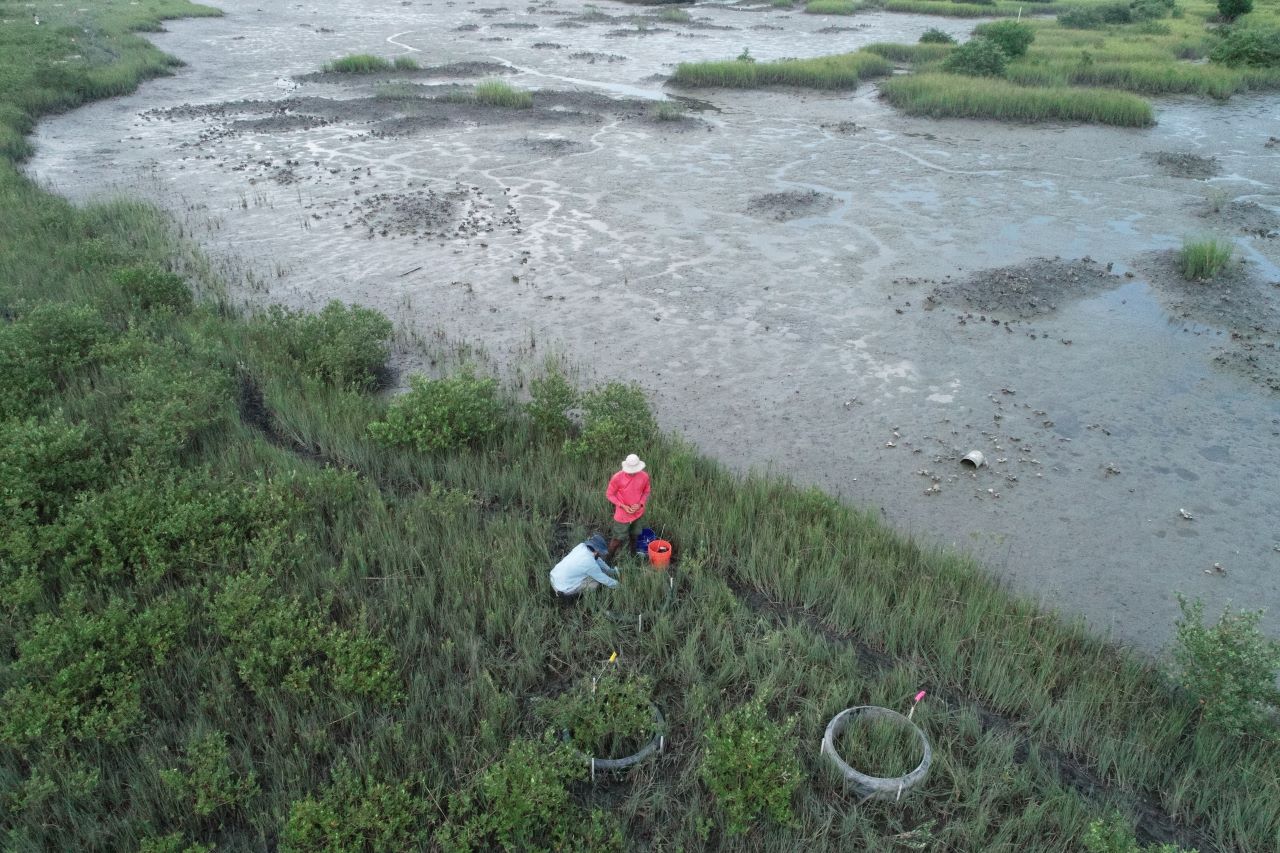
Armed with a $7 million grant from the Army Corp of Engineers, University of Florida researchers are working to bolster shoreline resilience and restore troubled wetlands in St. Augustine through nature-based solutions. “The idea of nature-based solutions is to build what we sometimes refer to as green infrastructure, to use living, natural components as the building blocks,” said Andrew Altieri, Ph.D., an assistant professor with the Engineering School of Sustainable Infrastructure & Environment and interim director of the Center for Coastal Solutions, also known as CCS. Instead of building man-made structures to protect wetlands, for example, restoration crews can move dredged natural sediment otherwise destined for costly disposal to increase wetlands’ size and elevation, restoring their ability to protect shorelines from storm surge, keep pace with sea-level change, filter toxins, store carbon and provide habitats for wildlife. The project is in concert with the Army Corps of Engineers’ goal to naturally reuse and repurpose at least 70% of dredged sediment into other natural areas to benefit habitats and restoration by 2030. “It is critical to understand, test and model how natural processes can be harnessed and strategically implemented to sustainably meet the challenge of rapidly intensifying coastal hazards while also providing environmental, economic and social benefits,” Altieri wrote in the project’s technical summary. Overall, the multi-disciplinary project closely examines patterns and processes of change in coastal landscapes. That includes wetlands — marshes and mangroves — and beach/dune systems. The project comes as these coastal areas are facing threats both natural and human. These areas are essential to wildlife, air quality, native vegetation, storm protection and the overall health of the ecosystem. A 2008 study by the U.S. Fish and Wildlife Service reported a net loss of about 361,000 acres of wetlands in the coastal watersheds of the eastern United States between 1998 and 2004 — an average net decrease of 59,000 acres each year, with experts citing sea-level rise as one of the primary factors. “We're trying to understand the patterns of that loss and what's leading to it,” Altieri said. “These systems are essentially the first and sometimes last line of defense against coastal hazards, risks that include storm surges and coastal flooding. They are forming a buffer, this kind of protective layer on our coast. But they're changing, generally for the worse and are in danger of being lost.” With this project, the CCS-led research team plans to advance the science, technology and engineering principles of nature-based solutions. With marshes, the primary concern is elevation loss, which can drown the vegetation critical to the ecosystem. They are sinking, eroding and succumbing to sea-level changes, Altieri said. “The plants are really important for trapping sediment and holding sediment,” he said. “You lose some of the plants, then you get more erosional loss and a lack of the accumulation of sediment.” Sediment is natural muck on the bottom of water bodies. “If we can add sufficient sediment to increase the elevation to a level where the plants thrive, then they will retain that sediment that's been added to hopefully trap more sediment and accumulate more biomass through their growth,” Altieri said. “It’s something that may need to be done periodically. You may stop that decline, but you may even reverse the process of loss and change the trajectory.” As a bonus, this process saves the cost of disposing of dredged sediment, which is usually piped offshore or to a materials-management area. This project is the next step for CCS-led coastal resilience efforts in St. Augustine. In 2024, CCS and WSP Environment & Infrastructure Inc. launched a coastal wetlands-restoration project to keep pace with sea level change and erosion. The 2025 work is a standalone project with separate funding, Altieri said. The current project also has more research disciplines and project partners, including UF researchers from Landscape Architecture, Geological Sciences and the School of Forest, Fisheries and Geomatic Sciences. “Storm surges, wave energy, coastal flooding – all of that can be slowed or reduced because of wetlands,” Altieri said. “They are basically like shock absorbers. These wetlands, beaches and dunes can be lost or eroded to some degree, but the upland area behind them is essentially protected.” Researching the resilience of dunes comes with a different set of dynamics. Here, they are looking at the plants that support the dunes – sea oats and panic grass, for example. That vegetation also provides a habitat for animals such as beach mice, turtles and birds. On the beach, the team also is looking at water energy and how grain size affects the stability of dunes. “It’s understanding water movement, water energy. How is that interacting with depositing sediment, moving sediment around, sorting sediment? With water, you tend to carry finer particles further than coarser materials,” he said. What does success look like after the award’s five years end? “We'll have an understanding of what's changing on our coasts and why,” Altieri said. “We'll have an understanding of how we can work within this system to modify the natural components and utilize the natural processes. And we will hopefully be working with partners through additional funding mechanisms to actually apply that towards implementation of solutions to increase coastal resilience.” The team also includes Peter Adams, Department of Geological Sciences; Julie Bruck, Department of Landscape Architecture, School of Landscape Architecture and Planning; Maitane Olabarrieta, ESSIE; Alex Sheremet, ESSIE; Nina Stark, ESSIE; Ben Wilkinson, Geomatics Program, School of Forest, Fisheries, and Geomatics Sciences; and Xiao Yu, ESSIE.

Researchers warn of rise in AI-created non-consensual explicit images
A team of researchers, including Kevin Butler, Ph.D., a professor in the Department of Computer and Information Science and Engineering at the University of Florida, is sounding the alarm on a disturbing trend in artificial intelligence: the rapid rise of AI-generated sexually explicit images created without the subject’s consent. With funding from the National Science Foundation, Butler and colleagues from UF, Georgetown University and the University of Washington investigated a growing class of tools that allow users to generate realistic nude images from uploaded photos — tools that require little skill, cost virtually nothing and are largely unregulated. “Anybody can do this,” said Butler, director of the Florida Institute for Cybersecurity Research. “It’s done on the web, often anonymously, and there’s no meaningful enforcement of age or consent.” The team has coined the term SNEACI, short for synthetic non-consensual explicit AI-created imagery, to define this new category of abuse. The acronym, pronounced “sneaky,” highlights the secretive and deceptive nature of the practice. “SNEACI really typifies the fact that a lot of these are made without the knowledge of the potential victim and often in very sneaky ways,” said Patrick Traynor, a professor and associate chair of research in UF's Department of Computer and Information Science and Engineering and co-author of the paper. In their study, which will be presented at the upcoming USENIX Security Symposium this summer, the researchers conducted a systematic analysis of 20 AI “nudification” websites. These platforms allow users to upload an image, manipulate clothing, body shape and pose, and generate a sexually explicit photo — usually in seconds. Unlike traditional tools like Photoshop, these AI services remove nearly all barriers to entry, Butler said. “Photoshop requires skill, time and money,” he said. “These AI application websites are fast, cheap — from free to as little as six cents per image — and don’t require any expertise.” According to the team’s review, women are disproportionately targeted, but the technology can be used on anyone, including children. While the researchers did not test tools with images of minors due to legal and ethical constraints, they found “no technical safeguards preventing someone from doing so.” Only seven of the 20 sites they examined included terms of service that require image subjects to be over 18, and even fewer enforced any kind of user age verification. “Even when sites asked users to confirm they were over 18, there was no real validation,” Butler said. “It’s an unregulated environment.” The platforms operate with little transparency, using cryptocurrency for payments and hosting on mainstream cloud providers. Seven of the sites studied used Amazon Web Services, and 12 were supported by Cloudflare — legitimate services that inadvertently support these operations. “There’s a misconception that this kind of content lives on the dark web,” Butler said. “In reality, many of these tools are hosted on reputable platforms.” Butler’s team also found little to no information about how the sites store or use the generated images. “We couldn’t find out what the generators are doing with the images once they’re created” he said. “It doesn’t appear that any of this information is deleted.” High-profile cases have already brought attention to the issue. Celebrities such as Taylor Swift and Melania Trump have reportedly been victims of AI-generated non-consensual explicit images. Earlier this year, Trump voiced support for the Take It Down Act, which targets these types of abuses and was signed into law this week by President Donald Trump. But the impact extends beyond the famous. Butler cited a case in South Florida where a city councilwoman stepped down after fake explicit images of her — created using AI — were circulated online. “These images aren’t just created for amusement,” Butler said. “They’re used to embarrass, humiliate and even extort victims. The mental health toll can be devastating.” The researchers emphasized that the technology enabling these abuses was originally developed for beneficial purposes — such as enhancing computer vision or supporting academic research — and is often shared openly in the AI community. “There’s an emerging conversation in the machine learning community about whether some of these tools should be restricted,” Butler said. “We need to rethink how open-source technologies are shared and used.” Butler said the published paper — authored by student Cassidy Gibson, who was advised by Butler and Traynor and received her doctorate degree this month — is just the first step in their deeper investigation into the world of AI-powered nudification tools and an extension of the work they are doing at the Center for Privacy and Security for Marginalized Populations, or PRISM, an NSF-funded center housed at the UF Herbert Wertheim College of Engineering. Butler and Gibson recently met with U.S. Congresswoman Kat Cammack for a roundtable discussion on the growing spread of non-consensual imagery online. In a newsletter to constituents, Cammack, who serves on the House Energy and Commerce Committee, called the issue a major priority. She emphasized the need to understand how these images are created and their impact on the mental health of children, teens and adults, calling it “paramount to putting an end to this dangerous trend.” "As lawmakers take a closer look at these technologies, we want to give them technical insights that can help shape smarter regulation and push for more accountability from those involved," said Butler. “Our goal is to use our skills as cybersecurity researchers to address real-world problems and help people.”


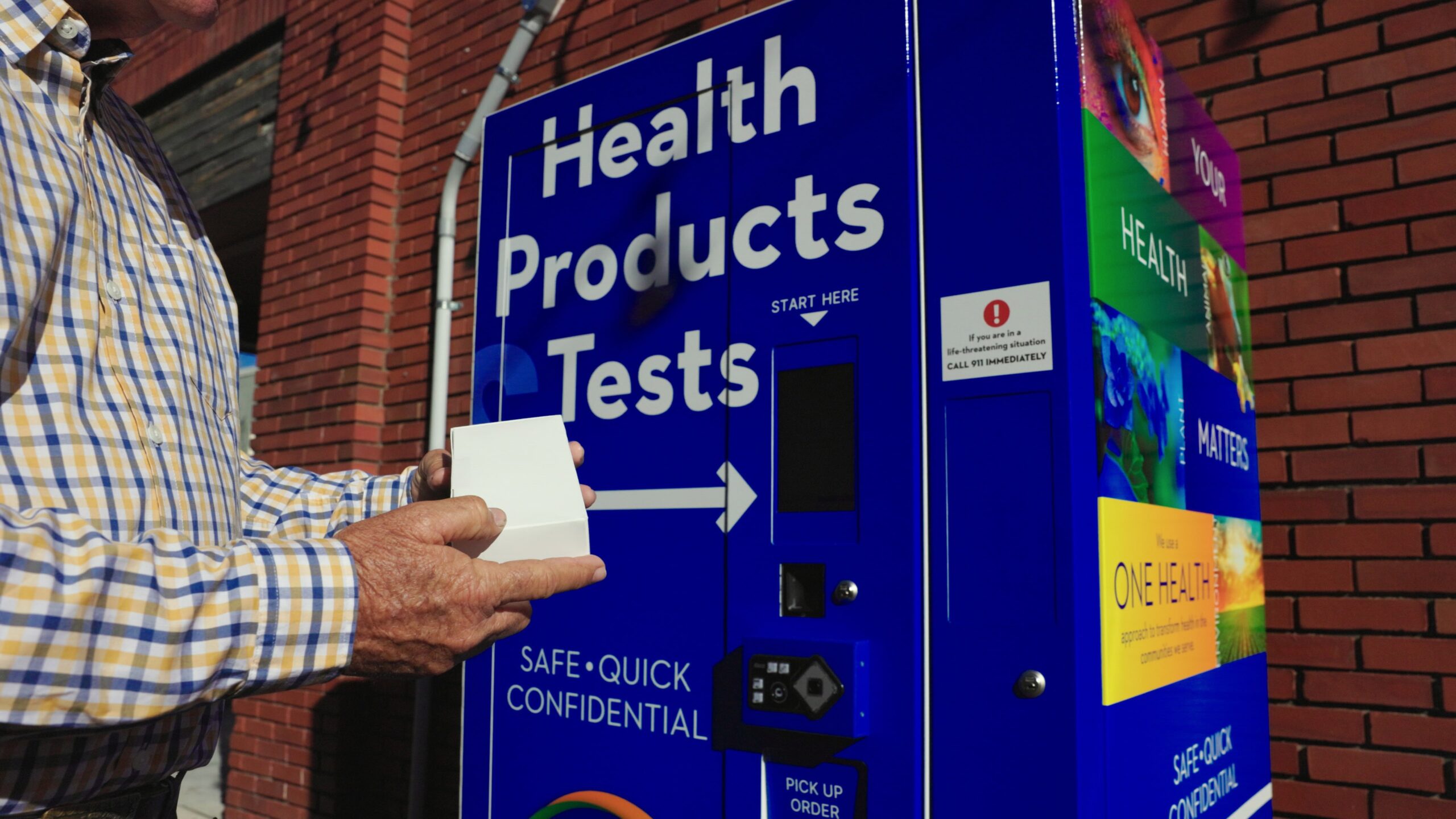
Georgia Southern University’s Institute for Health Logistics & Analytics (IHLA) has launched the Care Station project to address barriers to accessing over-the-counter health products. Care Stations are standalone kiosks open 24/7 that allow users to purchase a range of over-the-counter health products. Items can be paid for using a digital wallet on a mobile phone; cash is not accepted. The first Care Station is located in the alleyway behind Georgia Southern’s City Campus, located at 58 E. Main Street in Statesboro. The project team, led by Jennifer Drey, IHLA community outreach coordinator, and Jill Johns, project manager, prioritized the specific needs of the local population when developing the idea. “By understanding the unique needs of the community, we can offer customized health products and tests in easily accessible locations,” said Drey. Because many of the products are personal in nature, the team designed the kiosks to provide users with privacy. “These kiosks are easy to use, safe and completely confidential,” said Johns. “Whether someone is purchasing pain relievers or sexually transmitted infection tests, their privacy is protected.” To help ensure the Care Stations meet community needs, IHLA encourages Statesboro and Bulloch County residents to share anonymous feedback through an online form at bit.ly/CareStation_Statesboro. To expand access, a second Care Station will open soon in Vidalia, Georgia. Drey said the project serves as a pilot initiative, with the long-term goal of replication statewide. “Rural communities often experience difficulty accessing essential health care supplies and testing compared to their metropolitan counterparts,” she said. “We hope our pilot machines serve as a model for expansion of the program to other rural communities across Georgia.” The Care Station project builds on IHLA’s recently completed Community Health Resource Project (CHRP), which identified key health disparities across rural counties and strengthened partnerships with local stakeholders. A public ribbon-cutting ceremony will be held on Jan. 5, 2026. IHLA uses an integrated One Health approach that aims to sustainably balance and optimize the health of people, animals and ecosystems. Its mission is to transform the health and well-being of communities through applied evidence-based practices and technology integration. Products and tests currently available at the Statesboro Care Station: General Health Allergy medication Bandages Condoms Eyeglass repair kit Hand sanitizer wipes Hygiene kit Pain Relief and Wound Care Ibuprofen Urinary pain relief tablets Rinse-free bath wipes Wound care kit Children’s Health and Wellness Children’s Tylenol Diaper changing kit Menstrual Products Pads Tampons Diabetes Care Glucose tablets Testing Test My Drink sheets Pregnancy tests HIV and syphilis tests Looking to know more about Georgia Southern University's Care Station? Simply contact Georgia Southern's Director of Communications Jennifer Wise at jwise@georgiasouthern.edu to arrange an interview today.


ENLIGHTENing the Holidays: How Meijer Gardens Turned Art and Nature Into a Year-Round Attraction
With the completion of its second season, ENLIGHTEN at Meijer Gardens has moved beyond the idea of a seasonal attraction to become a defining example of how cultural institutions can transform the off-season into a destination experience. The program’s exceptional year-over-year growth, combined with national recognition in only its second year, signals a turning point in how Meijer Gardens engages audiences year-round. At the center of that evolution is Carol Kendra, whose leadership perspective connects ENLIGHTEN’s creative ambition, production scale, and audience growth to a broader strategy of experiential cultural programming. As Chief Operating Officer at Frederik Meijer Gardens & Sculpture Park, Carol Kendra provides strategic oversight for daily operations, guest experience, programming and long-term planning across the organization’s 158-acre campus. It washer leadership and strategic vision helped shape ENLIGHTEN from concept to a growing cultural phenomenon. View her profile Meijer Gardens has long been active outside traditional peak seasons, regularly hosting programs such as Fall at Meijer Gardens, Spring at Meijer Gardens, and its longstanding holiday tradition University of Michigan Health-West: Christmas & Holiday Traditions. These initiatives established a foundation for shoulder-season engagement and demonstrated that audiences were willing to experience the Gardens beyond summer months. ENLIGHTEN marked a deliberate step forward, not simply another seasonal offering, but a fully immersive evening experience that invited visitors to experience Meijer Gardens in a new way during the winter months, using light, sound, and landscape to create a sense of wonder and discovery. The annual event has also garnered attention from media across the country: Taking the Experience to the Next Level What distinguishes ENLIGHTEN is its production and experiential ambition. The program was produced in collaboration with Lightswitch and Upstaging, firms recognized internationally for creating world-class immersive environments and technically sophisticated experiences. Their portfolios include large-scale botanical light installations, major theme park productions, and live and recorded projects for globally recognized, award-winning artists. That expertise elevated ENLIGHTEN into a carefully choreographed, multi-sensory journey that integrates light, sound, landscape, and movement in a way that complements — rather than overwhelms — Meijer Gardens’ art and horticulture. This approach reflects a deliberate investment in experience design, audience flow, and emotional impact. The result is an experience that: Extends engagement well beyond traditional daylight hours Encourages repeat visits across a single season Attracts audiences who may be new to Meijer Gardens ENLIGHTEN reflects how cultural institutions are responding to changing audience expectations. Visitors are increasingly seeking experiences that are immersive, emotionally resonant, and worth traveling for — even during traditionally slower seasons. By building on its history of seasonal programming and elevating it through design, technology, and collaboration, Meijer Gardens demonstrates how institutions can grow without losing authenticity. Expert Insight: As a senior leader involved in shaping Meijer Gardens’ visitor experiences and institutional strategy, Carol Kendra brings expert insight into: How ENLIGHTEN was conceived as both an artistic and operational response to seasonality Why immersive seasonal experiences resonate with broad, multigenerational audiences How art and horticulture can be activated together What measurable growth means for long-term institutional planning and cultural relevance Her perspective helps journalists and industry professionals understand ENLIGHTEN not simply as a holiday event, but as a case study in cultural innovation and audience development.



Designing Reflection: An Expert’s View Inside Michigan’s Japanese Garden
As public gardens increasingly become spaces for artistic expression, cultural exchange, and mindful reflection, Steven LaWarre, Senior Vice President at Frederik Meijer Gardens & Sculpture Park, recently offered his expert insight to Homes and Gardens Magazine into how world-class garden design can shape human experience, invite contemplation, and connect visitors with nature in deeply meaningful ways. With decades of experience in professional horticulture and garden planning, LaWarre has played a central role in creating and nurturing Meijer Gardens' Richard & Helen DeVos Japanese Garden, guiding its interpretive programming, and curating visitor interaction with seasonal changes and design elements. Steve LaWarre is the Senior Vice President at Frederik Meijer Gardens & Sculpture Park, where his visionary leadership and passion for botanical excellence have been instrumental in shaping the Gardens' stunning landscapes and ensuring operational excellence. He leads efforts to sustain the Gardens' exceptional standards in landscape design, sustainable gardening practices, and the care of diverse plant collections. View his profile here The Richard & Helen DeVos Japanese Garden, an eight-acre landscape inspired by centuries-old Japanese horticultural principle, has rapidly evolved into one of the Midwest’s most beloved cultural destinations. Beyond aesthetic beauty, the garden embodies philosophical traditions that encourage visitors to slow down, observe impermanence, and appreciate harmony between the human spirit and the natural world. As audiences seek spaces that offer quiet reflection, seasonal observation, and cultural resonance, LaWarre’s expertise bridges horticulture, design intention, and visitor experience. Read the Homes and Garden Magazine article 'Beyond Wild Expectations: Michigan’s Very Own Slice of Japan – Where Ancient Garden Design Provides a Deep Connection to Nature' below: Expert Insight Steven LaWarre on the Japanese Garden Experience On Winter’s Quiet Presence “It’s just beautiful covered in snow. You hear the waterfalls differently, you see ice sweep over the pond. Everything feels a bit more muffled in the winter, but it somehow puts you at ease,” LaWarre explains, highlighting how seasonal change reveals structure, silence, and contemplative calm. On Spring’s Renewal “The first flush of leaves on the trees is a joyful sight after winter. The small chartreuse green buds contrast to the dark stems,” LaWarre observes, describing the ephemeral nature of bloom and the reminder of restoration that seasonal transformation offers visitors. On Core Garden Elements “The conifers create a backbone of the garden, recognizable in all four seasons… they have been pruned and shaped over time to really create the caricature of a tree,” LaWarre notes, outlining the horticultural artistry behind traditional practices like niwaki pruning. On Cultural Immersion and Mindful Reflection LaWarre describes the garden’s traditional teahouse experience as more than cultural spectacle: “It’s a way to really quiet the senses and participate in mindful reflection, aided by the serenity of garden views… It’s an opportunity to connect with the people you’re with, but also to connect with yourself.” On Design Intent and Human Experience “It’s taught me to look at things differently. As humans, we can be focused on achieving neat lines and symmetry, but taking a moment to observe your surroundings will reveal this isn’t usually how things are in the natural world,” LaWarre reflects, capturing how garden design can subtly reshape perception. In a cultural moment where audiences increasingly seek restorative outdoor experiences, cultural depth, and mindful engagement with public spaces, LaWarre offers perspective and insight into: How garden design influences perception, supports wellness, and fosters cross-cultural appreciation How public gardens are not solely as spaces of beauty, but also living environments that shape emotional and philosophical engagement with the natural world Steve can bring this perspective for media interviews and speaking engagements.


From Ancient Rituals to Fireworks: Why New Year’s Eve Still Matters
New Year’s Eve marks humanity’s shared fascination with time, renewal, and fresh beginnings - a moment to close one chapter and open the next. The tradition dates back more than 4,000 years to ancient Mesopotamia, where the Babylonians celebrated Akitu, a multi-day festival tied to the spring harvest and the rebirth of nature. Rather than a single night of revelry, Akitu was a ritual reset: debts were settled, promises were renewed, and cosmic order was symbolically restored. The date we recognize today, January 1 - comes from ancient Rome. In 46 BCE, Julius Caesar reformed the calendar and dedicated the year’s first day to Janus, the two-faced god of doorways and transitions, who looked both backward and forward. This symbolism still defines New Year’s Eve: reflection on the past paired with hope for what’s ahead. Over centuries, as Christianity spread across Europe, the celebration evolved, blending solemn religious observances with local customs of feasting, bells, and bonfires. In modern times, New Year’s Eve has become a global cultural event, shaped by public countdowns, fireworks, music, and collective rituals. From the iconic ball drop in Times Square to family gatherings and quiet toasts at home, the night offers a shared pause, an almost universal agreement to stop, take stock, and imagine change. Traditions vary frm lucky foods, noise-making to ward off evil spirits, or first-footing to invite good fortune, but the intent is the same. At its core, celebrating New Year’s Eve is about agency and optimism. Resolutions, whether kept or not, are expressions of belief that tomorrow can be different. Across cultures and centuries, the night endures because it gives people permission to hope—to acknowledge what was, release what no longer serves, and step forward together into something new. Looking to go deeper on why New Year’s Eve resonates so powerfully around the world? Our experts can speak to the historical, cultural, and psychological reasons humans mark time this way, and why the midnight reset still matters today. Find your expert here: www.expertfile.com
