
Experts Matter. Find Yours.
Connect for media, speaking, professional opportunities & more.

UPI news service interviewed Dr. Meena Bose for the article “Trump USAID cuts create vacuums of food, medical care for vulnerable populations.” The president’s effort to downsize government agencies makes good on one of his biggest campaign promises, according to Dr. Bose. While presidents have attempted to increase the efficacy of agencies in the past, the article says Trump’s approach is different. “This is kind of a hatchet approach to doing so but I think it has a certain appeal to the president’s constituencies,” Bose told UPI. “He’s getting things done, cutting through red tape.” Dr. Bose is a Hofstra University professor of political science, executive dean of the Public Policy and Public Service program, and director of the Kalikow Center for the Study of the American Presidency.


The Legality of Potential U.S. Takeover of Gaza
Hofstra Law Professor James Sample appeared on CBS News New York to discuss the legality of a potential United States takeover of Gaza.

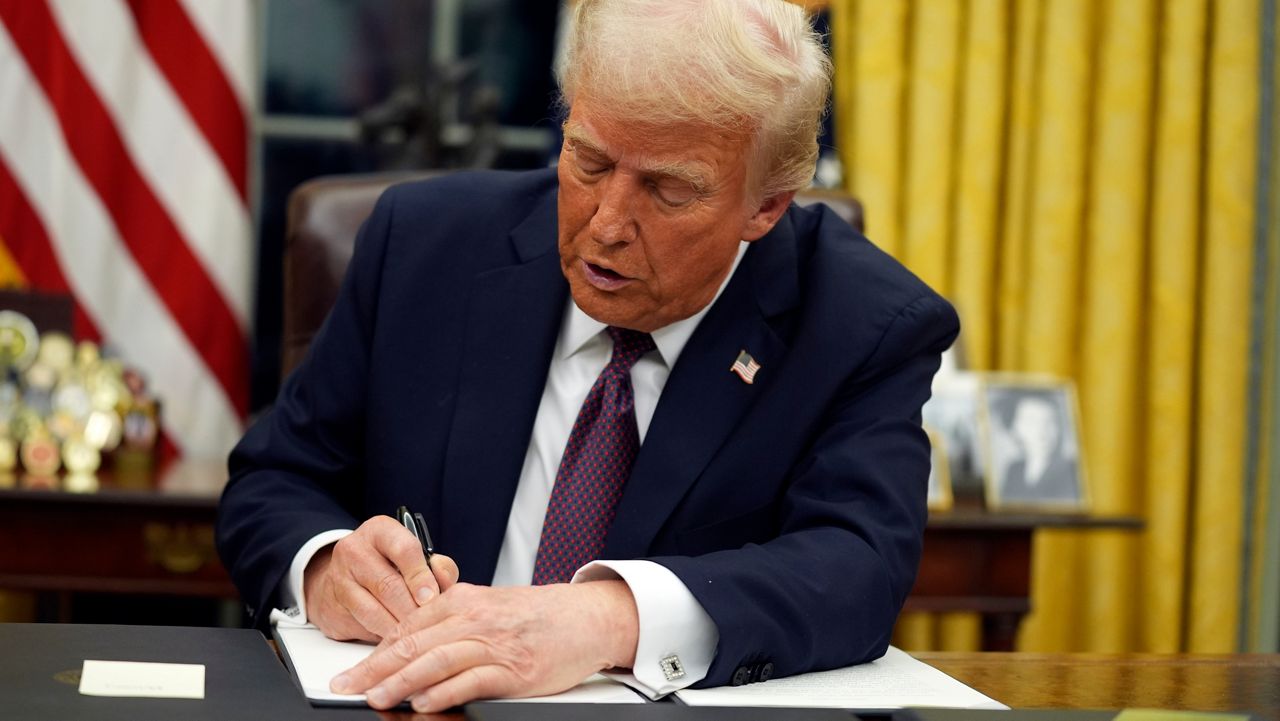
Takeaways from Trump’s Inauguration and Executive Orders
Dr. Meena Bose was interviewed by NY 1 Spectrum News about President Trump’s first day in office and his inauguration. She was also interviewed by WFMD radio in Frederick, MD, about the president repealing restrictions placed on federal immigration officials under the Biden administration. Dr. Bose is a Hofstra University professor of political science, executive dean of the Public Policy and Public Service program, and director of the Kalikow Center for the Study of the American Presidency.

Work on Snow Squall VR Simulation Moves Forward
Last year, Dr. Jase Bernhardt, Hofstra associate professor of geology, environment, and sustainability, was awarded a $100,000 Road to Zero Community Traffic Safety Grant from the National Safety Council, to develop a VR simulation of driving in a snow squall. The project aims to share information about the onset of snow squalls, the importance of heeding emergency weather advisories, and how drivers should respond if they are on the road when a snow squall occurs. Dr. Bernhardt has partnered with meteorologists from the National Weather Service office in State College, PA, and was in Pennsylvania recently to participate in a press conference and conduct field research supporting his work. The press conference was promoted on PAcast – the official website of the Pennsylvania state government. Local news stations like NBC affiliate WJAC-TV; ABC affiliate WHTM-TV; WPMT-TV Fox43 News; and PennWatch covered the press conference.


A Beginner’s Guide to Expertise Marketing
Audiences today are consuming more digital content than ever, but they’ve also become far more discerning. Algorithms, AI search summaries, and social platforms have changed how information is discovered and trusted. The result is that organizations often get caught up in pushing out content quickly—only to be overlooked when it lacks depth or credibility. From misinformation to shallow click-driven posts, audiences are quick to disengage. What they’re seeking now are authoritative voices backed by proven expertise. That’s where Expertise Marketing comes in: a strategy focused on showcasing real knowledge, research, and experience in ways that build trust, attract attention, and strengthen reputation. According to Edelman’s Trust Barometer Study, experts play a vital role in establishing credibility amongst audiences and developing more meaningful interactions with businesses and organizations. As far back as their 2019 report results showed that 56% of people trust businesses as a source of news and information while only 47% trusted the government. On top of that, they also reported that 73% of participants were worried about false information or fake news being used as a weapon. This distrust has only gotten worse since COVID and the polarizing politics of recent years. With this in mind, there’s a real opportunity for knowledge-based organizations to step up and show their smarts through expertise marketing. What is Expertise Marketing? Expertise marketing is the practice of making the knowledge and skills of your human resources more visible to your partners and audiences. It draws attention to the value that your people can bring as brand ambassadors and strategically leverages the work your experts are doing to tell a more personal story. In many cases, expertise marketing can also be used to showcase your strengths in research and innovation. Creating a stronger digital presence, expertise marketing more effectively uses your channels to connect with audiences such as media, customers, partners and donors. It builds a sense of trust with your audiences and above all else, it helps establish your reputation as an industry leader. Expertise Marketing Defined: The practice of collectively promoting an organization's experts as brand ambassadors to demonstrate their skills or knowledge. Best practices to publish and connect organizational expertise in ways that foster internal discovery, collaboration, shared knowledge and diversity. Activities that leverage expertise to nurture conversations and connections with audiences such as media, customers, partners, government and funding agencies. How to Make Your Expertise More Visible Properly executed, expertise marketing is about harnessing your in-house expertise and making it more visible. By delivering comprehensive, relevant information in a visually engaging format, you can create a window into your organization that helps audiences better understand your offering and encourages more meaningful conversations. Here are three areas where expertise excels: On Your Website There’s a good chance that you already created touchpoints for expertise marketing but they’re just not optimized for audiences. For example, many organizations are unaware that the “About Page” is the second most visited page on a website and may overlook its potential for attracting audiences. Other webpages that strongly benefit from expert content include: Speaker’s Bureaus Media Rooms Employee Directories Faculty Directories Blogs Employee Intranets Awards Recognition Research & Technology Transfer Through Search Engines Content marketing and search engine optimization (SEO) go hand-in-hand – and it’s key to making your expertise more visible. In Google’s search algorithm, factors like trust and authority are significantly impacted by items such as content and expertise. While SEO is no small task, tools like the ExpertFile Platform are designed to make aggregating and optimizing expert content as seamless as possible. In addition, organizations can also improve their rankings by: Identifying and showcasing a range of expertise Using rich media to display expert content Regularly updating your website with expert content Producing content related to current trends and emerging news Through Distribution Networks Showcasing your experts isn’t just about hosting profiles on your own website—it’s about ensuring they are discoverable where key audiences are already looking. By publishing expert content on dedicated search engines such as expertfile.com and the ExpertFile Mobile App, organizations dramatically expand their reach beyond their immediate networks. These channels are designed for the very audiences that matter most—media, event organizers, research partners, donors, and prospective clients—who are actively searching for credible voices to inform stories, shape agendas, and build partnerships. Leveraging these distribution networks amplifies visibility, positioning your experts as go-to authorities well beyond the boundaries of your institutional website. In The Media For many organizations, media opportunities are an afterthought but it’s the perfect way to highlight your expertise and attract a broad range of audiences. Media outlets are constantly on the hunt for topic-specific experts to speak at conferences, weigh-in on their editorials and enhance the overall quality of their reporting. By making your experts more visible to this audience, you’re not only building your brand reputation as an industry authority but you’re also creating opportunities for new revenue. Starting an Expertise Marketing Program Bringing an expertise marketing program to life starts by taking a deeper look at your human resources and pinpointing the people in your organization who can support your expertise marketing initiatives. This post on Identifying Expertise is a great starting point for understanding what makes someone an expert and how you can position them for various tasks in your expertise marketing program. From there, it’s about getting buy-in from key stakeholders, collaborating across departments to surface expert content and strategizing with your team about where your expertise is best served. Download The Complete Guide to Expertise Marketing For a comprehensive look at how expertise marketing benefits the entire organization and drives measurable return on investment, follow the link below to download a copy of ExpertFile’s Complete Guide to Expertise Marketing for Corporate & Professional Services, Higher Education Institutions, Healthcare Institutions or Association & Not-for-Profits.





Covering the Tragic Crash in Washington - Our Experts Can Help
The shocking news of an in-air collision in Washington has garnered massive attention from media, airline authorities and industry experts. Reporters covering the story - rely on experts. And that's where's Florida Tech's Shem Malmquist was called to lend his expert perspective, insight and opinion on a story that's making international news. "It just shows that traffic is in our location, there's a potential collision hazard," said Shem Malmquist, a pilot and visiting instructor of general aviation and transport aircraft at the Florida Institute of Technology. And in certain situations, it will provide guidance for the pilots on how to avoid a collision, he said. For example, if TCAS believes the pilot needs to pay attention to other air traffic in the area, it may say "traffic traffic," Malmquist said. January 30 - CBC News Shem Malmquist, who is a pilot and instructor at the Florida Institute of Technology, said midair collisions are extremely rare. Malmquist said if they happen they normally happen at smaller airports without air traffic control towers like the Lantana Airport. "The only method of separating traffic is visually, as well as airplanes communicating their positions to other airplanes, and that's going to create more risk," Malmquist said. January 30 - WPTV/NBC News American Airlines Flight 5342 and a military helicopter collided mid-air late Wednesday night near Ronald Reagan Washington National Airport. Officials believe all 64 people aboard the airplane -- 60 passengers, 4 crew members -- and the three people aboard the helicopter are dead. Officials conducted a frantic rescue effort overnight, which transitioned to a recovery effort early Thursday. Many aboard the plane were in Wichita, Kansas for a figure skating competition. Captain Shem Malmquist, an aviation expert at Florida Institute of Technology, joins FOX 35 to talk more about what happened. January 30- Fox News Orlando Looking to connect with Shem Malmquist regarding this ongoing story? He's available, simply click on his icon now to arrange an interview today.


Expansion Plans? What's Behind Donald Trump's Approach to Canada, Greenland and Panama?
With the inauguration of President Donald Trump just days away, there are many people in America and abroad who are watching and waiting on the first moves of the incoming Trump administration. President Trump has been giving some bold suggestions about the importance of places like Greenland, Canada and Panama to America's national and economic security. Some are explaining Trump's approach as a negotiating tactic to spur on deeper conversations. Others are concerned there's some seriousness to his plans for expansion. Either way, it's getting a lot of coverage as the countdown is on to his resumption of the country's leadership. Last week, Trump waded boldly into global affairs — but he barely touched on those purported priorities. Instead, at a news conference at Mar-a-Lago, he focused on a list of obscure, arguably eccentric goals: acquiring Greenland from Denmark, absorbing Canada as a very large 51st state, and retaking control of the Panama Canal. The president-elect said he would bring all three territories under U.S. control through economic coercion, but did not rule out using force to seize Greenland and the canal. January 13 - Los Angeles Times “That would really be something,” Trump said of the United States' taking control of Canada. “You get rid of that artificially drawn line, and you take a look at what that looks like. And it would also be much better for national security,” Trump said. “They’re great, but we’re spending hundreds of billions here to protect it.” Trump said that the subsidies include substantial military support and that the United States loses out through trade deficits. January 07 - NBC News President-elect Donald Trump has reiterated his desire for the US to acquire Greenland and the Panama Canal, calling both critical to American national security. Asked if he would rule out using military or economic force in order to take over the autonomous Danish territory or the Canal, he responded: "No, I can't assure you on either of those two. "But I can say this, we need them for economic security," he told reporters during a wide-ranging news conference at his Mar-a-Lago estate in Florida. Both Denmark and Panama have rejected any suggestion that they would give up territory. January 08 - BBC The coverage has been intense, but there are still some questions to be asked: How would the world and America's allies react if President Trump applies pressure or force to make any of these countries comply? How might relations between Trump and the U.S. military and intelligence community change in his second term? And, is this just a tactic or could President Trump possibly be serious about his plans? Looking to know more? Professor Peter Campbell studies international security, civil-military relations, international relations and policy relevance. Peter is available to speak with media about this ongoing topic - simply click on is icon now to arrange an interview today.


What to Expect from the Governor’s State of the State Address
Lawrence Levy, associate vice president and executive dean of the National Center for Suburban Studies, was featured on News 12 Long Island to offer a preview of New York Governor Kathy Hochul’s State of the State address.

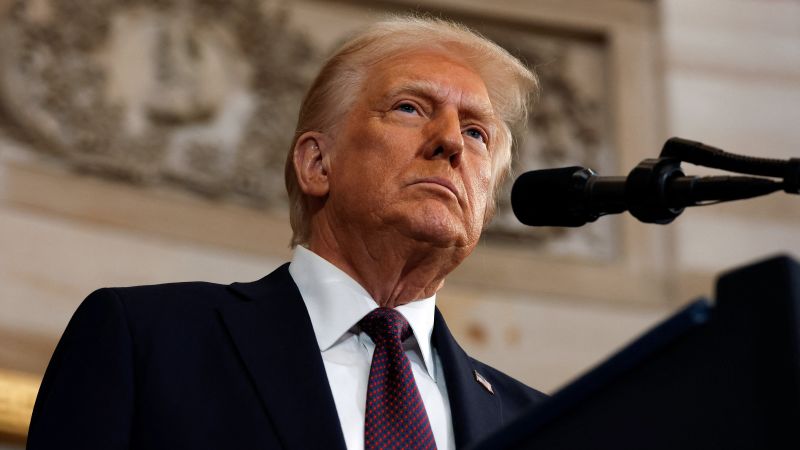
Trump, Trade and Tariffs What to Expect, Will They Work and Who Benefits?
The threat of 25 % tariffs on Canada and Mexico had newsrooms buzzing, politicians scrambling and economists calculating who wins and who loses when trade wars break out among usually amicable neighbors. Factor in Greenland and China - and the story went global. It was a topic that headlined the news as many have watched and waited since the election for President Trump's first days in office to see what the country can expect with incoming policy changes. President Donald Trump said in an Oval Office signing ceremony Monday evening that his administration will impose 25% tariffs on Mexico and Canada on February 1, an extraordinary change in North American trade policy that could raise prices for American consumers. Trump still outlined his broader trade policy for his second term in an executive action Monday. But that action — described by sources as a “placeholder” — doesn’t institute new global tariffs that Trump promised on Day One. As a candidate, Trump proposed sweeping and across-the-board tariffs: up to 20% on imports from all countries, with a 25% tax on goods from Mexico and Canada, plus a punishing 60% levy on goods from China. He also pledged to use tariffs as a negotiating tool on other countries, including, for example, Denmark — putting pressure on the European nation to give control of Greenland to the United States. Asked Monday at an Oval Office signing ceremony about tariffs on China, Trump noted extensive tariffs he imposed during his first administration were still in effect after former President Joe Biden largely left them in place. And on universal tariffs, Trump punted, saying, “We may, but we’re not ready for that just yet.” The executive action signed Monday directed the secretaries of Commerce and Treasury and the United States Trade Representative to investigate the causes of America’s trade deficits with foreign nations, to determine how to build an “External Revenue Service” to collect tariffs, to identify unfair trade practices and to review existing trade agreements for potential improvements. It also directs the government agencies to analyze how the US-Mexico-Canada trade agreement (the USMCA) signed by Trump in his first term is affecting American workers and businesses — and whether America should remain in the free trade agreement. January 21 - CNN As business and political leaders in many countries, especially North America wait for what's ahead, there are questions to be asked: What industries will be targeted? Will tariffs cause higher prices for consumers and increased inflation? Who wins if an all-out trade war happens? How will interwoven sectors like the auto industry and agriculture be impacted? If you're a journalist covering this ongoing story - then let us help. William J. Luther, Ph.D., is an associate professor of economics at Florida Atlantic University, director of the American Institute for Economic Research’s Sound Money Project, and an adjunct scholar with the Cato Institute’s Center for Monetary and Financial Alternatives William is available to speak with media. Simply click on his icon now to arrange an interview today.


Just before the holiday season, as he entered his final month as President of the United States, Joe Biden announced that he would be granting clemency to roughly 1,500 American citizens. The clemency acts, which included sentence commutations for individuals placed on home confinement during the pandemic and pardons for 39 individuals with non-violent offenses, were touted by the administration as the most ever in a single day in modern history. A month later, on January 17, he commuted the sentences of roughly 2,500 individuals convicted of non-violent drug offenses, shattering December's mark and giving him the most pardons and commutations of any president in United States history. The unprecedented size of the actions has been underscored throughout The White House’s press materials and has headlined most subsequent news coverage. But for Anton Robinson, JD, associate professor of law and director of Villanova’s Caritas Clemency Clinic in the Charles Widger School of Law, the importance of the clemency went far beyond the impressive scale. “Acts like these bring much needed awareness to the clemency process, and to the epidemic of excessive sentencing in United States courtrooms,” Professor Robinson said. “At our clinic, we are already having people call to ask about opportunities for pardons and additional support for their cases.” Public perception of presidential acts of clemency can, at times, be marred by partisan divisiveness. To some, these latest acts were overshadowed by President Biden’s earlier pardon of his son, Hunter, and eyes are already on incoming President Trump regarding how he might handle those charged in relation to the January 6 insurrection. Professor Robinson acknowledges that acts like these can cause people to “rightfully question the power that is being used,” but those are the outliers, not the norms, and steer the conversation away from the root purpose of clemency. “People deserve a second chance,” Professor Robinson said. “There’s a tendency for system actors to focus primarily on the crime committed when considering whether a person’s sentence should be cut short. But many are different people today—sometimes decades later—than they were at the time of the crime’s commission. “There is also no shortage of individuals in prison for whom a charge doesn’t tell the whole story. For example, a young person’s involvement in a crime, while sufficient for a legal conviction, might be weighed differently today, given increasing acceptance of scientific research on the portion of the human brain which controls decision-making, impulse control and executive function. Research shows all of that continues to develop well into adulthood.” Determining who fits the criteria for clemency, Professor Robinson says, is not always easy to do. Collecting records of good behavior that illustrate change while in a carceral setting is much more difficult than collecting records of bad behavior. That’s why entities like the Caritas Clemency Clinic, in which Villanova Law students work directly on behalf of such clients under Professor Robinson’s guidance, spend so much time talking to anyone who has had a relationship with the incarcerated person. “What we often find is that despite being incarcerated and having very little given opportunity, these individuals make their own opportunities to build community and rich relationships and try their best to contribute to society in a positive way,” Professor Robinson said. A military veteran who helped church members in poor health perform tasks. A nurse who spearheaded COVID vaccination efforts and natural disaster response. A counselor who helps guide youth away from destructive behavior and involvement with gangs. Those are the types of actions Professor Robinson references, all of which were highlighted specifically in the White House’s fact sheet for President Biden's December acts, just before the words “The United States is a nation of second chances.” “I'm hoping that these large acts of clemency encourage folks to think, ‘Hey, what about my loved one? What about me? I am a completely different person than I was 20 years ago, what can I do to try to secure my freedom and my ability to live the life that I've missed out on?’” Professor Robinson said. “It really is a great opportunity to remind ourselves that people are far better than the worst things that they've ever done, and that we have an opportunity to acknowledge that as a society and to encourage more of this action, both on a federal and state level.”
