
Experts Matter. Find Yours.
Connect for media, speaking, professional opportunities & more.

Expert Insight: Understanding the Pacific Ocean's Missing Cold Water Surge
There's a mystery brewing in the Pacific Ocean, and it's worrying marine researchers. Every winter, between January and April, a blast of cold water surges from the bottom to the top of the Gulf of Panama. The cold surge helps marine life survive heat waves. However, this year, there was no blast. Researchers are concerned about the disappearance and believe it could be a sign of a larger problem. The phenomenon has garnered the attention of reporters from outlets like the New York Times, as well as others from across the nation. They're looking for answers. To help find those answers, experts such as the Florida Institute of Technology's Richard Aronson are available to help explain what's happening deep beneath the surface. Each year between January and April, a blob of cold water rises from the depths of the Gulf of Panama to the surface, playing an essential role in supporting marine life in the region. But this year, it never arrived. “It came as a surprise,” said Ralf Schiebel, a paleoceanographer at the Max Planck Institute for Chemistry who studies the region. “We’ve never seen something like this before.” Richard Aronson, a professor of marine sciences at the Florida Institute of Technology, has studied this particular patch of ocean off the coast of Panama for decades. The cold blob gives those corals a better chance of surviving marine heat waves than other areas, he said. Heat stress has plunged the world’s coral reefs into ongoing mass bleaching that began in January 2023. About 85 percent of the world’s coral reef areas have been affected, according to the National Oceanic and Atmospheric Administration. “The climate is warming, that’s putting coral reefs at risk,” said Dr. Aronson, who was not involved with the paper. While corals can adapt to changes in temperature, the climate is changing too quickly for them to keep up in the long run, he said. Sea surface temperatures have risen by more than 1 degree Celsius since humans began burning fossil fuels during the Industrial Revolution, breaking records in 2024 and 2023. It’s too soon to tell if the blob will return in future years. But if it disappears repeatedly, then “it’s cause for grave concern,” Dr. Aronson said. If you’re covering this topic or looking to speak with an expert about climate change and its impact on our oceans, Richard Aronson is available for interviews. Simply click the icon below to connect with him today.



Intangible assets now make up more than 90% of S&P 500 market value — yet many organizations still lack a dedicated executive role to manage them strategically. This is where the Chief Intellectual Property Officer (CIPO) comes in. In this expert-backed piece, J.S. Held's Chief Intellectual Property Officer James E. Malackowski, CPA, CLP, and his colleague David Ngo unpack the economic forces shaping this role, the skills CIPOs bring to the table, and why forward-thinking companies are making IP leadership a boardroom priority. What you’ll learn: • The economic forces driving the rise of CIPO leadership • How CIPOs bridge legal, technical, and commercial priorities to unlock value • The growing relevance of CIPOs in consulting, insurance, and AI-driven industries • Practical strategies for integrating IP leadership into portfolio and risk management • Why the next decade will define the CIPO’s role in corporate success With deep expertise in IP strategy, valuation, and litigation, Malackowski and Ngo offer a clear, compelling case for elevating IP leadership to the C-suite. Looking to connect with the experts? Click on their profiles to arrange an interview or gain deeper insights into intellectual property strategy, risk, and valuation. James E. Malackowski, CPA, CLP Chief Intellectual Property Officer, J.S. Held | Co-founder and Senior Managing Director, Ocean Tomo Global leader in intellectual property valuation, strategic advisory, and expert testimony. Recognized among IAM’s “World’s Leading IP Strategists” and a pioneer in IP exchange models. David Ngo Senior Analyst, Intellectual Property Disputes Financial Expert Testimony, Ocean Tomo, a part of J.S. Held Specialist in quantifying economic damages in IP disputes and valuing intangible assets, with expertise in applying economic and financial analysis to complex litigation. For any other media inquiries, contact : Kristi L. Stathis, J.S. Held +1 786 833 4864 Kristi.Stathis@JSHeld.com.


Five storms predicted in the Gulf this season, says CoMET Lab
A composite of 500-mb temperatures from the seasonal weather model simulations used to generate the forecast. (The green outline shows the area averaged across for the Gulf of America.) The "-4.85C" is the temperature over the Gulf that ultimately fed into the equation to yield the prediction of 5 named storms. This hurricane season, five named storms are predicted for the Gulf, according to LSU’s Coastal Meteorology, or CoMET Lab, which issues a Gulf of America-specific forecast. Five represents a slight uptick in storm activity, said Paul Miller, the head of the CoMET Lab. Miller is an associate professor in the Department of Oceanography & Coastal Sciences, or DOCS. The seasonal average for the area is 3.7 storms. This forecast in elevated hurricane activity is in alignment with predictions for the Atlantic Ocean as a whole – NOAA has called for between 13 and 19 storms in the basin between the beginning of June and the end of November. CoMET Lab’s forecast works a little differently than the Atlantic-based predictions. Those models generally focus on ocean temperatures, among other factors. CoMET’s forecast, which was initially developed with Geography and Anthropology Professor Jill Trepanier, instead focuses on average atmospheric temperatures around the Gulf, approximately six kilometers, or four miles, above the ground. Miller said he and Trepanier considered a range of potential predictive factors when they first developed the forecast in 2021, before settling on atmospheric temperature. “What our data shows is that the warmer the temperature is, the fewer storms there should be. The colder the temperature is, the more storms,” Miller said. This link to cooler temperatures at high atmospheric altitudes may appear counterintuitive, but, he said, “think of a hot air balloon. It only works if it’s hotter than the air around it… If you go four miles above the ground, that tells you if you have a reservoir of potential buoyancy. If the air can make it to that altitude, it’s got a better chance of continuing to rise and forming [a storm].” Normally CoMET’s forecast utilizes temperatures throughout the month of May, but due to recent changes in data available from NOAA, Miller noted that this year’s forecast is based on readings from the last two weeks of the month. Article originally posted here.
Shark Week: Ocean predators go from villains to heroes, helping to predict hurricanes
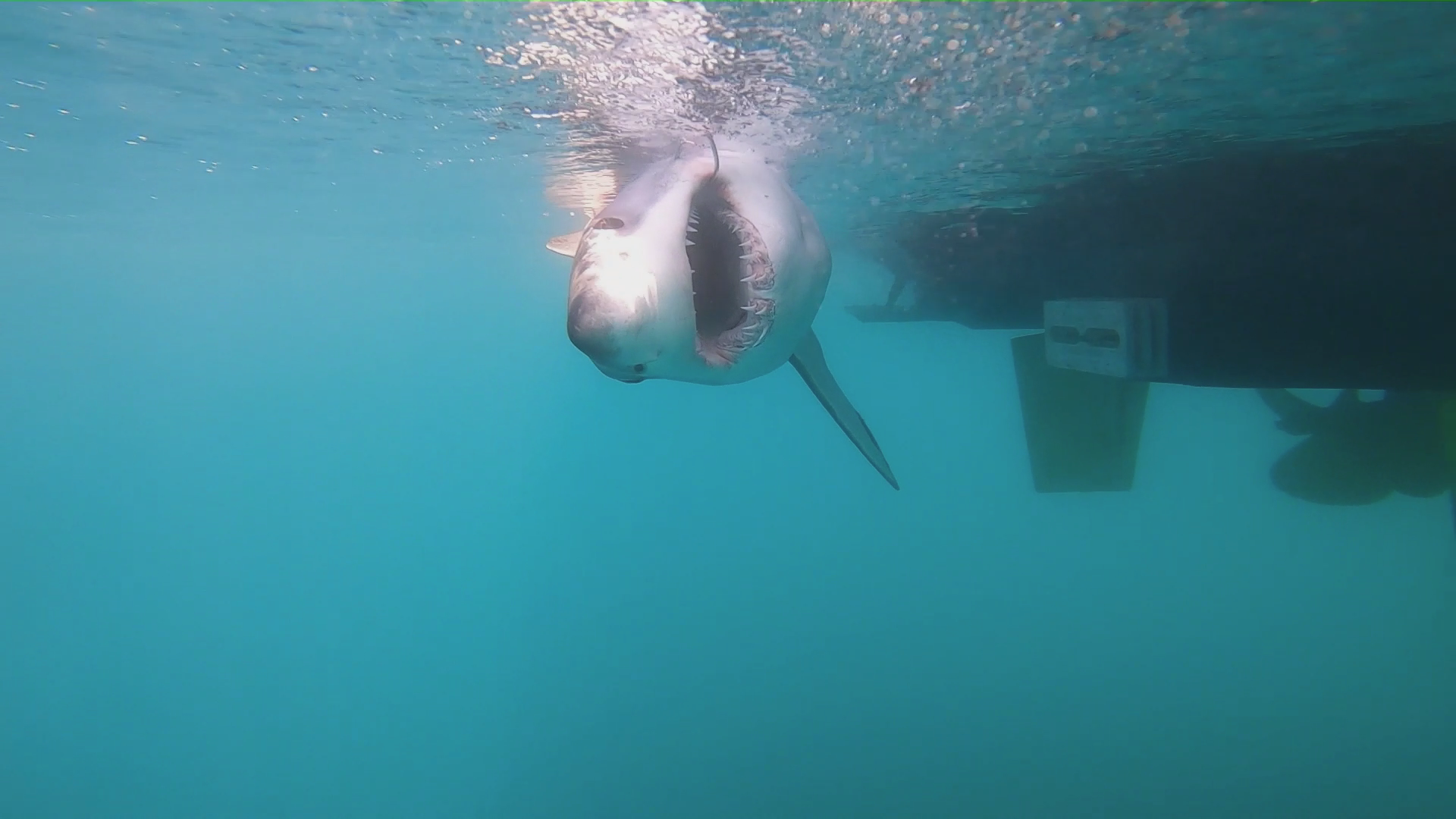
Just in time for Shark Week, the ocean's most famous predators are experiencing a redemption arc. Marine ecologists at the University of Delaware have fitted sharks with sensors and sent them out into the Atlantic Ocean to gather data that could help predict hurricanes. The research is led by UD professors Aaron Carlisle and Matt Oliver and PhD student Caroline Wiernicki. Enlisting sharks as amateur meteorologists comes at a critical time. The National Oceanic and Atmospheric Administration's capacity to forecast hurricanes has been hampered by federal cuts to staff and funding. Sharks also help speed things up. NOAA has partnered with UD and other Mid-Atlantic universities, which deploy gliders to the continental shelf to collect data that tell researchers what the water column looks like as hurricane season approaches. The gliders are effective but also slow moving and expensive to deploy and maintain. The researchers have successfully deployed three tags: two conductivity, temperature and depth (CTD) tags on two mako sharks (for oceanographic data collection); and a satellite tag on one white shark (to help evaluate if that species would be a good candidate for CTD tagging down the road). As of July 21, the white shark has been pinging the research team ever since he was tagged in May. He was recently tracked off Martha's Vineyard and has been surfacing every day – showing up in areas like Cape Cod and Long Island. The mako sharks were tagged off of the Delaware coast and swam south, bopping up and down between the Delmarva Peninsula and just north of Cape Hatteras. Carlisle, Oliver and Wiernicki are available for interviews. To reach Carlisle directly, visit his ExpertFile profile and click on the contact button. Interested journalists can also send an email to MediaRelations@udel.edu.


LSU Lab Helps Louisiana Prepare for Hurricanes, Drought, even Saharan Dust
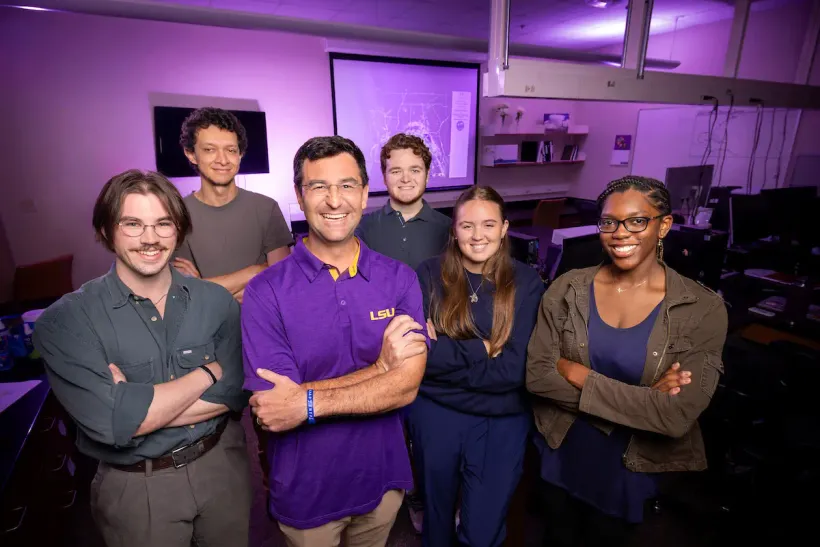
Any hurricane that forms in the Gulf of America is a direct threat to Louisiana and its neighboring states. But most seasonal forecasts focus on the entire North Atlantic Basin, including areas where storms may never come close to any land, much less the U.S. Gulf Coast. A Gulf-specific forecast developed at LSU’s Coastal Meteorology (COMET) Lab addresses that issue by providing storm information specifically geared toward the Gulf region. The lab is run by Paul Miller, an associate professor at LSU who founded it in 2019. “We decided that a Gulf-specific forecast could help state officials and Gulf-area residents better understand how active the upcoming season might be in their part of the Atlantic,” said Miller, who teaches in the Department of Oceanography & Coastal Sciences in the College of the Coast & Environment. Miller said the LSU-Velocity Risk Gulf Hurricane Outlook is one example of how the COMET Lab delivers real benefits to Louisiana. “A lot of forecasts tend to align with each other each year. But ours works a lot differently than some of the other forecasts that are geared towards larger areas of the ocean,” he said. “We’re not the world’s leading hurricane research lab—and we don’t try to be. Instead, we prioritize meeting the largest research gaps relevant to Louisiana residents, spanning a wide variety of weather hazards. “We want to make sure Louisianans experience a clear return-on-investment from our lab’s activities.” Ways the lab supports the state also include: Helping forecast storm surge in real time and informing the decision on when to close flood barriers before a tropical system hits land. Developing rainfall models to support flood prevention efforts. Studying weather patterns that cause drought and low coastal water levels that can lead to marsh loss during dry spells on the Gulf Coast. Saharan Dust Research One area of study that incorporates both air quality and tropical weather is the lab’s research on Saharan dust clouds, which are blown across the Atlantic in an air mass called the Saharan Air Layer, or SAL. “So, this sort of far-off distant concept of Saharan dust is actually something that is kind of important to folks here in Louisiana,” Miller said. This dust can shut down thunderstorm activity in the U.S. Caribbean territories, a key area of research in the COMET Lab, and cause respiratory problems when it reaches the Southeast U.S. The SAL can also suppress hurricane activity in the Atlantic. “Our lab just launched a new project with the Office of Naval Research to determine how dust-dimmed sunlight can affect ocean temperatures in the Atlantic’s most active hurricane breeding grounds,” Miller said. Read the full story here.

Kyle Davis wins NSF CAREER Award for pioneering research on climate-resilient food systems
University of Delaware assistant professor Kyle Davis has received a National Science Foundation (NSF) CAREER Award—one of the most competitive and prestigious honors for early-career faculty—for his work advancing the climate resilience of global food systems. Davis, who holds joint appointments in the College of Earth, Ocean and Environment and the College of Agriculture and Natural Resources, leads cutting-edge research at the intersection of agriculture, sustainability and global environmental change. His focus? Making food production more efficient, climate-smart and socially equitable—especially in regions grappling with limited water resources. With a growing global population and increasing pressure on land and water, Davis’s research is helping to answer one of the most critical questions of our time: How can we feed the world without destroying the planet? His lab’s work recently led to the development of MIRCA-OS, a groundbreaking open-source dataset that offers high-resolution global data on irrigated and rain-fed croplands across 23 crop types. The tool, co-created with UD doctoral student Endalkachew Kebede and published in Nature Scientific Data, allows researchers, farmers and policymakers to assess how crop choices, rainfall and irrigation interact with water systems and food security. Some of the thirstiest crops are grown in the most water-stressed areas Davis said. Shifting crop mixes to crops that require less water but still ensure farmer profits is a promising way to reduce the amount of water needed to irrigate crops and to avoid conditions of water scarcity. Davis’s research spans continents, with active projects in the United States, India, China and Nigeria, where his team is exploring solutions to water scarcity, crop nutrition and agricultural sustainability. His work has appeared in Earth.com, Phys.org and major scientific journals. In 2023, he was recognized with the American Geophysical Union’s Global Environmental Change Early Career Award. In addition to research, Davis is a dedicated mentor, guiding graduate students from around the world. “So much of my research is the result of their passion, abilities, drive and creativity,” Davis said. Davis is available for interviews on topics including sustainable agriculture, water use, climate adaptation, food systems and the power of data science in global development. He can be contacted by clicking the "View Profile" button.


J.S. Held Announces the First Global Consulting Company Chief Intellectual Property Officer
Global consulting firm J.S. Held proudly announces the appointment of intellectual property (IP) expert James E. Malackowski as the first Chief Intellectual Property Officer (CIPO) of a global consulting company. J.S. Held Chief Executive Officer Lee Spirer observes, “In today's knowledge-based economy, the role of CIPO serves an important strategic and operational role both internally and in support of clients.” Protecting J.S. Held Intellectual Property and Other Intangible Assets J.S. Held experts have developed methodologies, frameworks, proprietary tools, and research that support client work. The CIPO partners across the business to ensure that these intangible assets are identified, protected, and leveraged to benefit the business. “Having dedicated IP leadership will help the company move faster in developing and deploying new methodologies, while ensuring reasonable measures of protecting our innovations,” noted James E. Malackowski. Managing J.S. Held Intellectual Property and Other Intangible Assets J.S. Held maintains a robust portfolio of patents including a “System and Method for Financing an Insurance Transaction”, trademarks, data, trade secrets, and other proprietary technologies that support client work. “As CIPO, I intend to partner with company leadership and our professional experts across the globe to manage and monetize the many patent, trademark, data, and other proprietary assets that set J.S. Held apart among our competitors, benefitting clients and our investors,” added James E. Malackowski. Industry’s Most Comprehensive Global Intellectual Property Consulting Group Ocean Tomo, a part of J.S. Held, is rooted in an expansive understanding of intellectual property (IP) value and risk, providing a foundation of Expertise for the Innovation Economy™. Built upon more than three decades of experience assessing IP in the most rigorous of venues - state, federal, and international courts, Ocean Tomo clients benefit from continuous feedback between litigation economic damage outcomes, transaction pricing, capital market valuations, debt financing terms, equity assessments, and deep technical insight. The team possesses the most comprehensive and market-tested understanding of IP value. Financial, market, and technical experts uniquely understand the contributory value of patented inventions, know-how, brands, and copyrights that permeate every business, viewing IP not simply as an isolated asset, but as an integral component of enterprise value. Multidimensional Intellectual Property-Informed Experts Benefit J.S. Held Clients Intellectual property expertise permeates the global organization. Beyond the expertise within J.S. Held’s dedicated IP practice Ocean Tomo, a part of J.S. Held, multidisciplinary experts across J.S. Held combine intellectual property expertise to core specializations, including: • Artificial Intelligence (AI) • Business Intelligence • Construction Advisory • Enterprise Risk Management • Fraud Investigations • Forensic Accounting • Insurance Claims Consulting • Restructuring, Turnaround, Receivership, and Bankruptcy Tangible and Intangible Asset Value Understanding The depth and breadth of J.S. Held’s work in the property and casualty insurance market and Ocean Tomo’s work across all forms of intellectual property and other intangible assets uniquely combine to create a strong foundation in risk assessment, data analysis, global awareness, regulatory compliance, technological adaptability, and risk mitigation. Collectively, these skills better equip J.S. Held experts to assess business risk across diverse geographies, geopolitical landscapes, regulatory frameworks, and technological advancements for the benefit of our clients. Learn more about the new J.S. Held Chief Intellectual Property Officer, James E. Malackowski: Looking to know more or connect with James E. Malackowski? Simply click on the expert's icon now to arrange an interview today. For any other media inquiries - contact : Kristi L. Stathis, J.S. Held +1 786 833 4864 Kristi.Stathis@JSHeld.com

Can AI save our oyster reefs? A team of scientists put it to the test
With global oyster populations having declined by more than 85% from historical levels, restoring and monitoring these critical ecosystems is more urgent than ever. But traditional monitoring methods aren’t cutting it. A team of researchers that included the University of Delaware's Art Trembanis have taken a new approach, testing an AI model designed to recognize live oysters from underwater images. The findings? The AI model, called ODYSSEE, was faster than human experts and non-expert annotators, processing in just 40 seconds what took humans up to 4.5 hours. But it wasn’t yet as accurate. In fact, the tool misidentified more live oysters than both groups of human annotators. Still, the team found that ODYSEE has real potential to monitor reefs in real time. Why does this matter? As climate change, pollution and overharvesting continue to pressure coastal environments, more precise and non-invasive monitoring tools like ODYSSEE could become essential to restoration efforts and environmental policy. Trembanis can discuss this new tool and its ability to identify live oysters without disturbing the reef. His expertise in oceanography, engineering and robotics expertise was key to the team's work. The results, published in the journal Frontiers, offer both caution and hope in the race to improve ocean monitoring with emerging technologies. To set up an interview with Trembanis, visit his profile and click on the contact button.

What's That Smell? Something is Rotten and Florida Atlantic's Seaweed Expert has the Answers
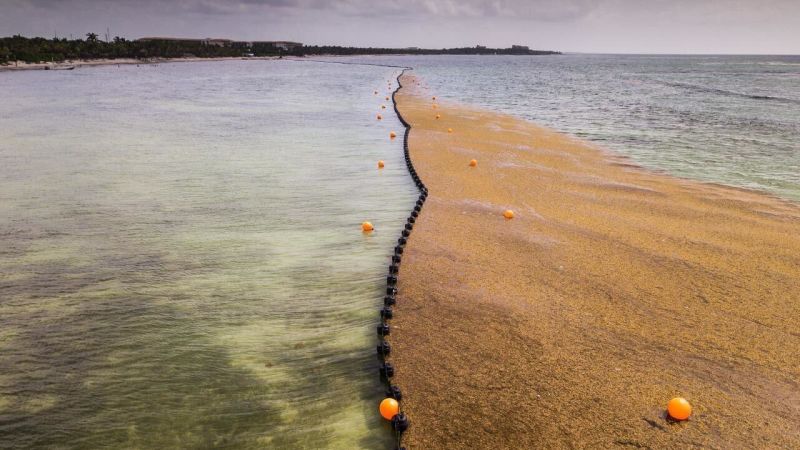
It’s back…and bigger than before. This summer, Floridians can expect a record amount of it! Sargassum, it smells like rotting eggs and a 'mega bloom' of the algae is expected to wash up on beaches soon. Sargassum is essentially a brown seaweed and also a type of algae. When out at sea, it's an essential item that helps feed fish, turtles, crabs and an array of ocean life. But once it hits land, it begins to rot and can be at the very least annoying and even potentially dangerous to humans by emitting harmful gases. The topic is getting a lot of media coverage - with reporters connecting with experts like Florida Atlantic's Brian LaPointe to get the answers and explanations they need. The Atlantic Ocean has a toxic seaweed problem. Floating in brown islands of algae, this year’s sargassum bloom has already broken its own size record by millions of tons — and the growing season isn’t done yet. Now stretching across some 5,500 miles of ocean, the annual bloom is more than just an eyesore: Sargassum hurts ecosystems and economies wherever its overgrown arms reach. And they are spreading into Florida’s waterways, coating marinas and beaches in the Miami area. “Sargassum goes from being a very beneficial resource of the North Atlantic to becoming what we refer to as … a harmful algal bloom, when it comes ashore in excessive biomass,” said Brian LaPointe, a research professor at Florida Atlantic University’s Harbor Branch Oceanographic Institute. For more than a decade, Atlantic coastal communities have been inundated by more and more sargassum. Images of white sand beaches stretching into azure waters have been altered by the toxic and putrid invasion. In the water, it’s home to larvae and other organisms that can irritate the skin of any passing swimmers. As it rots on shore, it emits harmful gases— an infamous stench. It’s a blight on beaches that repels tourists during the high-travel season, ultimately hurting towns that rely on tourism to fuel their economy. Rising ocean temperatures due to human-caused climate change have spurred this sargassum surplus, supercharging the seaweed. In April, the University of South Florida estimated this year’s bloom is already at 31 million tons — “40% more” than the previous record from June 2022, according to LaPointe. May 15 - CNN Looking to know more? We can help. Brian LaPointe is available to speak with media about seaweed, sargassum and what beachgoers can expect this summer in Florida. Simply click on his icon now to arrange an interview today.


The roots of scuba diving lie in exploration. But in an age when advanced instruments can drive research, too, why not stay dry on land? Researchers have used scuba diving as a tool for decades, but as technology evolves, remotely operated vehicles (ROVs) can aid, and sometimes replace, divers in the research process. Still, argues Stephen Wood, no existing tools have the full capability of a human. The professor of ocean engineering says the ability to grab items or quickly turn one’s head is difficult to replicate in an ROV. He also argues that although robots can collect and send data, the ability to assess and interpret an environment through a human lens is essential. “The human cannot leave” the research, Wood says. The American Academy of Underwater Sciences (AAUS) defines scientific diving as “diving performed solely as a necessary part of a scientific, research, or educational activity by employees whose sole purpose for diving is to perform scientific research tasks.” With more than 140 organizational members, AAUS supports diving as a research tool and protects scientific divers’ health and safety. Researchers and students must obtain an AAUS certification, which Florida Tech offers, before undertaking a scientific dive. At Florida Tech, any diver who plans to use compressed air or air blends for activity involving teaching or research must comply with AAUS. Robert van Woesik, professor of marine sciences, studies the dynamics of coral reefs worldwide. He and his students scuba dive to examine and photograph coral assemblages, then return with information they can use to predict the impact of local and global disturbances, recovery from disturbances and future growth. The ability to personally identify different species underwater is crucial to understanding coral reef dynamics. He says that without scuba, the necessary training to develop that skill falls away. “I think it’s still worthwhile knowing the species composition of a reef underwater instead of just saying, ‘Okay, we don’t need scuba divers anymore. We just need photographs and ROVs,’” van Woesik says. He learns the most when he can descend to a reef and see the seascape himself. “I think there’s something to be said to just go in the water and ask some questions,” van Woesik says. “That’s the valuable part of being able to scuba dive, getting amongst it to experience the reef, in tandem with analyzing photographs from around the world on the computer.” Assistant professor of marine sciences Austin Fox says in his research in the Indian River Lagoon, diving is essential for operating—and sometimes finding—instruments. “We spend a lot of time trying to figure out ways to do this stuff without diving…but there’s just no replacement for it.” Austin fox, Assistant professor of marine sciences Scientific diving has taken Florida Tech researchers across the globe, from the murky floor of the Indian River Lagoon to the depths of Antarctica’s McMurdo Sound. Rich Aronson, department head and professor of ocean engineering and marine sciences, studies coral reefs in the tropics and subtidal communities in Antarctica. In 1997, he had the opportunity to visit the McMurdo Station to study invertebrate ecology—specifically, who eats what and whether they leave traces of their predatory activity on the shells of their prey. There, he completed 27 dives of up to 130 feet deep. Some were done through ice-cracks in remote areas, he recalls, whereas others were from holes drilled through 10 feet of sea-ice. He noted that the time to prepare for these dives was extensive—two 30-minute dives took eight hours—and they weren’t without risk. “That was the first and only time I’ve dived under the ice. It’s dangerous because there’s a ceiling above you,” Aronson says. “You jump in the hole and try not to screw it up because if you screw it up, you’re dead.” Though risky, Aronson says scuba diving was crucial to the research. He argues that neither ROVs nor oceanographic sensors could have collected or sampled organisms at fine scales, run transects and made behavioral observations like a human could. Additionally, he says his observations at depth, such as the “sting of subzero water” on his face and “the slowness of reaction of the animals living down there,” are what later inspired a project of his combining deep-sea oceanography and paleontology to project the future of Antarctic seafloor communities in a rapidly warming world. “Science is a lot more subjective than you might think, and feeling the environment helps you understand it.” Richard Aronson, department head and professor of marine sciences The risky nature of scuba diving is why programs like AAUS exist: to standardize safe and responsible diving practices for conducting scientific research. Divers are at risk for a number of pressure-related injuries, such as decompression sickness: a condition in which residual nitrogen can create bubbles in the blood and body tissue upon ascent if the diver rises to the surface too fast. To reduce their risk, divers must plan and track how deep they are going, the time at which they are that depth (and subsequent depths) and how long they need to wait before changing depth. Technology has also evolved since the beginning of scuba to support divers’ safety further. Digital dive computers, developed in the 1980s, help divers estimate how long they can stay at their current depth while underwater (among other things). Additionally, Enriched Air Nitrox (Nitrox) is a gas mixture that contains a higher percentage of oxygen than standard air. Divers who use Nitrox can extend their time at depth and reduce their risk of decompression sickness because of its reduced nitrogen pressure. Van Woesik predicts that dive technology will keep evolving. He imagines there could soon be a system that allows divers to upload data at depth, and a system that aids in species identification without having to decipher an image at the surface. He also believes that innovators will keep working to reduce hazards and prioritize safety, because despite the risks, divers will always get in the water. “Hopefully that technology will get better so we can go deeper, safer, and so we can stay down a bit longer to explore and further understand the natural wonders of the oceans,” van Woesik says. If you're interested in connecting with Stephen Wood, Austin Fox, Richard Aronson or Robert van Woesik - simply contact Adam Lowenstein, Director of Media Communications at Florida Institute of Technology at adam@fit.edu to arrange an interview today.