
Experts Matter. Find Yours.
Connect for media, speaking, professional opportunities & more.

Experts available to comment on G7 summit discussions
A range of experts from the University of Bristol are available to comment on the upcoming G7 summit taking place in Cornwall, UK. Professor Simon Tormey, Professor of Politics and Dean of Social Sciences and Law at the University of Bristol can speak about what G7 means for UK, reboot of US-China relations, climate change, and taxes on large corporations. Simon can also do interviews in French. Dr David Matthews, Reader in Virology in the School of Cellular and Molecular Medicine at the University of Bristol and a member of the 'G2P-UK' National Virology Consortium, can discuss vaccines and global health security. Dr Kate Hendry, Associate Professor of Geochemistry at the University of Bristol can discuss ocean action including net zero oceanographic capability. Dr Tommaso Jucker, Research Fellow at the University of Bristol’s Cabot Institute for the Environment, can cover: supporting the transition to a low carbon economy – the role of forest conservation and reforestation in mitigating climate change, and action to halt and reverse biodiversity loss – ecosystem restoration. Dr Kristen Reyher, Reader in Veterinary Epidemiology and Population Health at the University of Bristol, is able to discuss antimicrobial resistance, antimicrobial stewardship, antimicrobial use, and epidemiology. And Professor Awais Rashid, Professor of Cyber Security at the University of Bristol, is available for the following topics: Internet safety including protecting children and online fraud, darknet markets, privacy issues and data exploitation.


First Commercial-Scale Wind Farm in the U.S. Would Generate Electricity to Power 400,000 Homes
The Vineyard Wind project, located off the coast of Massachusetts, is the first major offshore wind farm in the United States. It is part of a larger push to tackle climate change, with other offshore wind projects along the East Coast under federal review. The U.S. Department of the Interior has estimated that, by the end of the decade, 2,000 turbines could be along the coast, stretching from Massachusetts to North Carolina. "While the case for offshore wind power appears to be growing due to real concerns about global warming, there are still people who fight renewable energy projects based on speculation, misinformation, climate denial and 'not in my backyard' attitudes," says Karl F. Schmidt, a professor of practice in Villanova University's College of Engineering and director of the Resilient Innovation through Sustainable Engineering (RISE) Forum. "There is overwhelming scientific evidence that use of fossil fuels for power generation is driving unprecedented levels of CO2 into our atmosphere and oceans. This causes sea level rise, increasing ocean temperature and increasing ocean acidity, all which have numerous secondary environmental, economic and social impacts." Schmidt notes that what's often missing for large capital projects like the Vineyard Wind project is a life cycle assessment (LCA), which looks at environmental impacts throughout the entire life cycle of the project, i.e., from raw material extraction, manufacturing and construction through operation and maintenance and end of life. These impacts, in terms of tons/CO2 equivalent, can then be compared with the baseline—in this case, natural gas/coal power plants. "With this comprehensive look, I suspect the LCA for an offshore wind farm would be significantly less than a fossil fuel power plant," says Prof. Schmidt. Complementing the LCA should be a thorough, holistic view encompassing the pertinent social, technological, environmental, economic and political (STEEP) aspects of the project, notes Prof. Schmidt. "This would include all views of affected stakeholders, such as residents, fishermen, local officials and labor markets. Quantifying these interdependent aspects can lead to a more informed and balanced decision-making process based on facts and data." "At Villanova's Sustainable Engineering Department, we've successfully used both the LCA and STEEP processes... for many of our RISE Forum member companies' projects," notes Prof. Schmidt.


Network Science Offers Key Insights into Polarization, Disinformation, and Minority Power
People tend to think of the arena of politics as being driven by human decision and emotions, and therefore unpredictable. But network scientists like Boleslaw Szymanski, a computer science professor at Rensselaer Polytechnic Institute, have found that the country’s political activity – from American society’s ever-growing partisan divide to its grappling with the spread of misinformation online – can be explained by abstract and elegant models. These models provide insights — and even answers — to a number of pressing questions: Is increasing access to information driving us apart? Can an entrenched minority ultimately prevail? Could structural changes be made that insulate us from misinformation and reduce the polarization that divides us? Szymanski studies the technical underpinnings of our choices, how we influence one another, and the impact of the algorithms we rely upon to navigate a growing ocean of information. His work has yielded fascinating insights, including research on how a committed minority will overcome less determined opposition and the development of a parameter to determine what drives polarization in Congress. Through his research on the influence of minority opinions, Szymanski found that when just 10 percent of the population holds an unshakable belief, it will ultimately be adopted by the majority of the society. “When the number of committed opinion holders is below 10 percent, there is no visible progress in the spread of ideas. It would literally take the amount of time comparable to the age of the universe for this size group to reach the majority,” said Szymanski, a computer science professor at Rensselaer Polytechnic Institute. “Once that number grows above 10 percent, the idea spreads like flame.” In his present work, Szymanski is researching tools for measuring the level of polarization in specific news sites, search engines, and social media services, and developing remedies, like algorithms that offer better data provenance, detect misinformation, and create internal consistency reasoning, background consistency reasoning, and intra-element consistency reasoning tools. “Informed citizens are the foundation of democracy, but the driving interest of big companies that supply information is to sell us a product,” Szymanski said. “The way they do that on the internet is to repeat what we showed interest in. They’re not interested in a reader’s growth — they’re interested in the reader’s continued attention.” With the political environment becoming increasingly bitter and dubious information becoming ever more prevalent, Szymanski is available to discuss his research on polarization, disinformation, and the power of a committed minority.


How Can Structures Resist the Damaging Power of Wind During Hurricane Season?
Experts are forecasting an active hurricane season, which has the potential to wreak havoc on communities if they are not adequately prepared. Chris Letchford, an expert in wind engineering and the head of the Department of Civil and Environmental Engineering at Rensselaer Polytechnic Institute, studies how wind and ocean waves interact and how structures withstand wind. Letchford is available to speak about the destructive power of extreme wind and how structures can be built or augmented to mitigate damage.


If it's an election in America or Asia – Mary Washington’s experts are sought out by media
The election in Taiwan on January 10 saw a strong anti-China sentiment reinforced with the re-election of President Tsai Ing-wen. Elections in America, and even an ocean away can have ripple effects on economies, relations and even national security. As the world tuned in the results in Taiwan – it was the media that contacted the experts from Mary Washington for insight and opinion. Elizabeth Freund Larus, Professor of Political Science and International Affairs, offered commentary January 10 on CNBC Asia’s Capital Connection on the 2020 Taiwan presidential election. Professor Larus indicated that incumbent Taiwan President Tsai Ing-wen benefited from the Hong Kong protests and that she would likely be re-elected. Dr. Larus projected that a second Tsai administration will continue to diversify Taiwan’s economy and distance itself from China, and that Beijing will put more heat on Taipei, bringing the U.S. into play. Capital Connection is a television business news program aired every weekday on various CNBC channels around the world. It is broadcast live from Singapore. See more here: Are you a journalist covering Asian politics? That’s where our experts can help. Professor Elizabeth Freund Larus teaches political science at the University of Mary Washington and is an #expert on China and the field of Asian studies. She is available to speak to media – simply click on her icon to arrange an interview.



2020 is the goal for launching 5G, a collection of technologies that is expected to increase cellular technology worldwide by 1,000 times the capacity, 100 times more devices and 10 times less delay. “5G is about connecting everything everywhere, anything you can imagine,” says Mojtaba Vaezi, PhD, assistant professor of electrical and computer engineering at Villanova’s College of Engineering, whose area of expertise is wireless communication, signal processing and information and communication technology. Partly because of our changing habits there are applications that will need higher speed, and 5G will increase their capacity. “We’re consuming more and more data these days, so we need higher volume of data. The new generation watches TV online and plays games online. They want to select whatever they like and download it when they want it,” says Dr. Vaezi. “The speed of communication is going to increase about 10 to 20 times, so if it takes one minute to download a movie in your cell phone today, in a few years we’ll be able to download a movie in three to six seconds.” 4G technology has mostly been about connecting cell phones, but 5G will be about connecting all kinds of devices: Cars will be able to connect to other cars, traffic lights and cell phones; customers ordering online will be able to track their package as it travels across the ocean; trucks will connect to each other, sharing information such as if a route needs to be changed. There are many applications, from driverless cars to surgeries on a patient in one country done remotely by a doctor in another country, connecting thousands of miles away in just a fraction of seconds. There are always challenges associated with new technology, however. In particular, 5G researchers worldwide have been working for a decade to increase the capacity and number of connections foreseen for 5G networks. In 4G and previous generations, each cell phone would transmit in distance frequencies, otherwise they’d interfere with each other. In 5G and beyond, cell phones may share their frequencies with other cell phones or devices, or we wouldn’t be able to accommodate the exploding number of new devices. This will introduce inter-device interference which is a challenge. Now, we have two or four antennas packed inside the phone. Soon, mobile towers and cell phones will have tens of antennas, further increasing capacity.

United Nations Climate Panel Issues Grim Report
The United Nations Climate Panel released a grim report on September 25, with lead author and French climate scientist Valerie Masson-Delmotte warning, "Climate change is already irreversible. Due to the heat uptake in the ocean, we can't go back." She shared (1) that seas are rising 2.5 times faster than the rate from 1900 to 1990, (2) that from 2006 to 2015, the ice melting from Greenland, Antarctica and the world's mountain glaciers has accelerated and they are now losing 720 billion tons of ice a year and (3) that marine animals are likely to decrease 15%, and catches by fisheries in general are expected to decline 21% to 24%, by the end of the century because of climate change. Villanova's Stephen M. Strader, PhD, a hazards geographer and atmospheric scientist, says because the earth is warming faster than previously thought we have to act now to curb global greenhouse gas emissions. "Unfortunately, there is a momentum to the climate system. Even if we 100% curb global greenhouse gas emissions immediately, we have committed to substantial global warming." Dr. Strader adds that an interesting note in the United Nations report is the indication that climate action is inseparable from sustainable development. The report mentions that an important aspect of climate change effects is their disproportionate impact on the poor and most vulnerable regions of the world. "Building more sustainable communities will not only reduce inequality and vulnerability," he says. "It will also help fight global climate change. They are hand in hand." "Climate change is an existential crisis to human beings everywhere, regardless of where you live," says Dr. Strader. "It is affecting and will continue to have consequences related to shelter, food and water—the basic necessities to sustain life. The lack of action by politicians, policy makers and the general public is alarming given the threat all of humanity is facing. The threat is not just 10 or 50 years from now, but today."


There’s no question about it – our planet has a problem with plastic. Though simple, cheap, convenient and often necessary, the reality is single use and non-reusable plastics like straws, plastic bags, wrapping and most containers are causing problems. There’s no hiding or ignoring the evidence – plastic is everywhere from landfills, to our rivers and streams and even occupying its own land mass in the ocean. Recently Canada proposed a ban on single use plastics to come in to effect in 2021. The country joined the likes of France, Germany, Italy, the U.K. and the European Union who are all implementing similar policies. The United States, however – has not. Here are some facts from the Center for Biological Diversity. Americans use 100 billion plastic bags a year, which require 12 million barrels of oil to manufacture. The average American family takes home almost 1,500 plastic shopping bags a year. According to Waste Management, only 1 percent of plastic bags are returned for recycling. That means that the average family only recycles 15 bags a year; the rest ends up in landfills as litter. Up to 80 percent of ocean plastic pollution enters the ocean from land. 100,000 marine animals are killed by plastic bags annually. One in three leatherback sea turtles have been found with plastic in their stomachs. Plastic bags are used for an average of 12 minutes. It takes 500 (or more) years for a plastic bag to degrade in a landfill. Unfortunately, the bags don't break down completely but instead photo-degrade, becoming microplastics that absorb toxins and continue to pollute the environment There is no doubt plastic is a serious problem in America – but will the country join in? What will it take from an industry point of view? Will costs outweigh the benefit? Is this a matter of regulation and do Americans have the appetite to make this a political issue? There are a lot of questions and that’s where our experts can help. Dr. Beril Toktay is Professor of Operations Management, Brady Family Chairholder and ADVANCE Professor at Georgia Tech’s Scheller College of Business. She’s the founding Faculty Director of the Ray C. Anderson Center for Sustainable Business. She’s an expert in the areas of sustainable operations and supply chain management, with a special focus on the circular economy. Beril is available to speak about this issue with media – simply click on her icon to arrange an interview.


Research Suggests Future Tropical Storm Trends Related to Climate Change
The National Oceanic and Atmospheric Administration (NOAA) has predicted a "near-normal" 2019 Atlantic hurricane season with nine to 15 named storms, four to eight of which could become hurricanes, including two to four major hurricanes. Hurricane forecasting is an imprecise science, but current research indicates several important trends regarding future tropical storms and climate change, says Stephen Strader, PhD, a severe storm specialist and assistant professor in Villanova’s Department of Geography and the Environment. "Research has suggested that in the future there will likely be fewer tropical storms and hurricanes, but those that do occur are expected to be more intense. This is likely due to the combination of changes in wind shear (i.e., change in wind speed and direction as one goes up in the atmosphere) and warmer ocean temperatures that provide 'fuel' for tropical cyclones," says Dr. Strader. Climate scientists also suggest that tropical storms making landfall will be more likely to "stall out" due to climate change influences on the upper-level atmospheric air pattern, he adds. The combination of more intense tropical storms, greater rainfall rates and the propensity for these storms to stall or slow down once they make landfall will likely result in greater future flooding risk to some major U.S. cities, such as Houston, New Orleans, Tampa Bay and Miami, according to Dr. Strader. Recent examples of this phenomenon include Hurricanes Harvey and Irma in 2017 and Florence and Michael in 2018. "Although NOAA has suggested a near normal tropical storm season, it only takes one devastating storm making landfall to have devastating consequences," Dr. Strader notes.
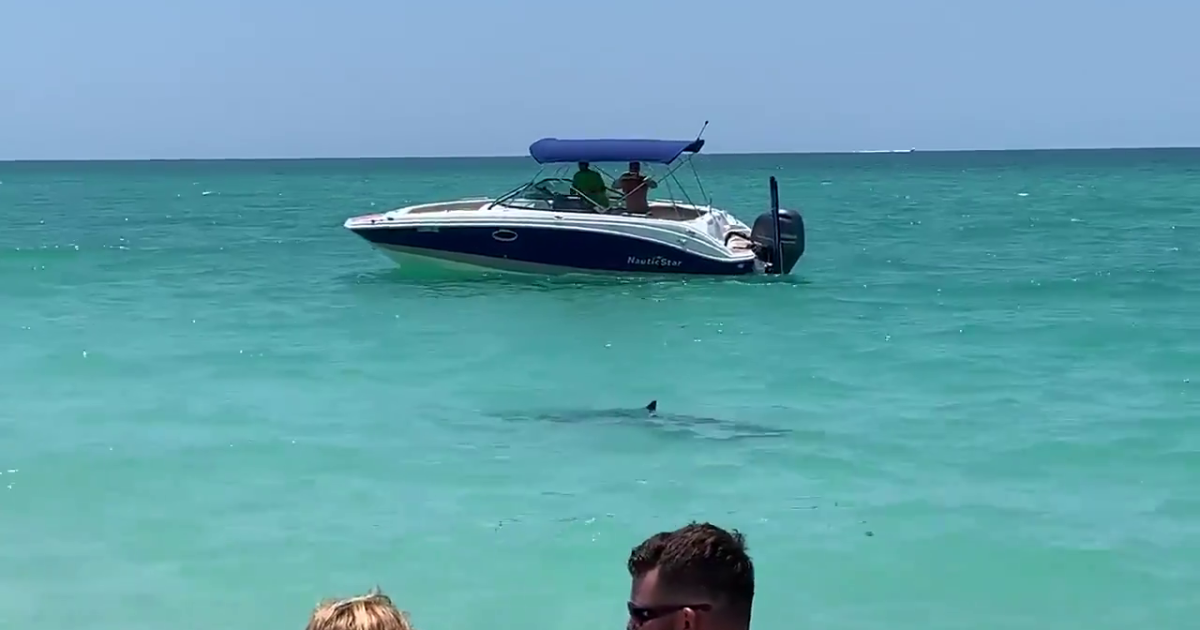
Sawfish and hammerheads – we’ve got shark sightings and here’s what you need to know!
It was a rare occurrence, and for Florida Atlantic University’s resident shark expert Stephen Kajiura, Ph.D. – it happened twice. Kajiura has photographed millions of sharks – but this sighting was no regular day on the water. “The first sawfish was near Boca Raton and was seen swimming southbound in shallow water. He estimated it to be about 9 feet long. The second one was near MacArthur State Park on Singer Island and a little larger. Sawfish can grow as large as 17 feet in length. Kajiura's sawfish encounters are the latest in a regular string of encounters reported by anglers, divers and researchers. In recent years, sawfish have been caught and released by Florida anglers fishing from beaches for sharks, or in inlets for tarpon. Sawfish have become regular catches for anglers fishing the waters of the Indian River Lagoon, Everglades National Park or the waters of Charlotte Harbor. “ - TC Palm – USA Network That was last month, however, just recently, a large hammerhead shark was coming dangerously close to shore, raising some cause for concern about swimmer safety. Lifeguards closed the Nokomis Public Beach for close to an hour until the enormous fish had departed for deeper waters. The encounter left some scared and some curious – looking to catch a glimpse or picture of the gigantic shark. So, what do you do when a shark comes close to shore? How dangerous is it? How can experts or event he public tell when a shark is aggressive or just passing by? Sharks do call the ocean home – what do we all need to do to exist in harmony? Are you covering? Do you need to know more about sharks, the dangers they pose and what we really need to be concerned about and even break down some of the myths and legends about just how concerned humans need to be about these predators? Let our experts help. Stephen Kajiura, Ph.D., is a professor and researcher at Florida Atlantic University. He’s also an expert in sharks and shark behavior. Stephen is available to speak with media – simply click on his icon to arrange an interview.

