
Experts Matter. Find Yours.
Connect for media, speaking, professional opportunities & more.
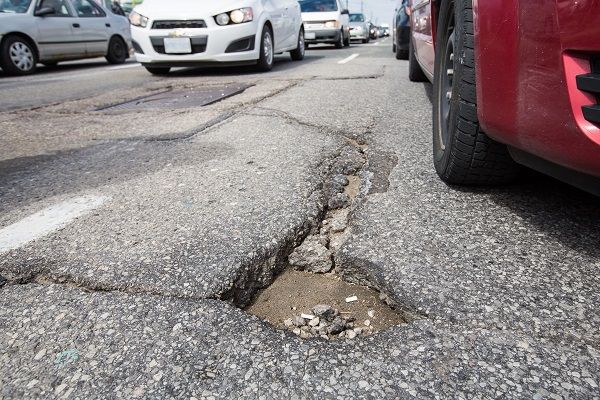
MEDIA RELEASE: After a one-year hiatus, the annual CAA Worst Roads campaign returns
With a renewed focus on education and safety, CAA South Central Ontario (CAA SCO) is proud to announce that following a one-year hiatus due to COVID-19, the annual CAA Worst Roads Campaign is back, and voting is now open. “The campaign is a platform for all road users to highlight which roadway improvements should be prioritized by our different levels of government,” says Raymond Chan, government relations manager CAA SCO. “The campaign gives decision-makers a snapshot of what roads the public perceives are not meeting their expectations.” Over the course of the last year people have changed their transportation habits. More people are cycling or driving their vehicles instead of carpooling and using public transit. CAA believes funding for roadway improvements needs to be consistent to ensure that quality and safety is maintained. “Our roads are essential, they are the arteries used every day to keep workers, goods and services flowing and should be maintained more than ever,” adds Chan. “As people are encouraged to stay home and telework during the pandemic, governments should continue to take advantage of lighter traffic patterns as an opportunity for road repair. These efforts can also be refocused on increasingly popular modes of transportation, such as cycling and walking.” Investing in infrastructure improvements, including the proper maintenance of roads and bridges, is important to the vitality and economic recovery of local communities. CAA continues to advocate for longer-term dedicated infrastructure funding to help municipalities prepare, plan, budget and execute on repair backlogs and capital projects. The success stories over the last 17 years are a result of governments prioritizing infrastructure through multi-year capital investments. Some examples include: 1. Riverdale Drive, Washago Despite appearing on the CAA Worst Roads list for the first time in 2019, the poor road conditions of Riverdale Drive was not new to residents of Severn. After 20 years since the street’s last resurfacing, Council approved $50,000 of prep work for Riverdale Drive led by Ward 5 Councillor Sarah Valiquette. 2. Dufferin Street, Toronto Appearing on the provincial top 10 list annually since 2015, Dufferin Street between Bloor Street and Dundas Street underwent resurfacing from September to November 2018. An estimated 35,000 vehicles travel Dufferin Street daily and the number of commuters is increasing. In response to community concerns, Toronto City Council adopted a motion to expedite studies relating to pedestrian and cyclist safety along Dufferin Street, among other improvements in December 2020. 3. College Road, Windsor The intersection of Campbell and College Avenue underwent sewer, road and water main rehabilitation in May 2019. College Avenue between South Street and Brock Street was repaired in November 2019. CAA is calling on all Ontarians to vote for their Worst Roads today and join the community of drivers, cyclists, transit riders and pedestrians committed to improving Ontario’s roads. Nominations for CAA’s Worst Roads can be cast at caaworstroads.com until April 18. To encourage participants to act on their concerns, they will be entered into a grand prize draw to win free gas for a year, or one of 5 secondary prizes. Once voting closes, CAA will compile a list of the 10 Worst Roads in Ontario, along with the Worst Roads in regions across the province. The regional top five lists will help shine further light on the state of local roads in municipalities across Ontario. CAA will present the list of 2021 Worst Roads to local and provincial officials to help inform future funding and planning decisions. Here is a roundup of Ontario's Top 10 Worst Roads in 2019: 1. Eglinton Avenue East, Toronto 2. Riverdale Drive, Washago 3. Dufferin Street, Toronto 4. County Road 49, Prince Edward 5. Barton Street East, Hamilton 6. Burlington Street East, Hamilton 7. Avondale Road, Belleville 8. Sheppard Avenue East, Toronto 9. Carnegie Beach Road, Scugog 10. Bathurst Street, Toronto


Product Returns Represent Billion-Dollar Strategic Blind Spot for Major Retailers
“Product returns have never, to our knowledge, been explicitly included as a stage in a major customer journey model,” the authors note in their paper. “This exclusion represents a strategic blind-spot for marketers.” In December 2020, Linne Fulcher, vice president, customer strategy, science and journeys at Walmart U.S., published a blog post that outlined Walmart’s new return policy. Dubbed “Carrier Pickup by FedEx,” the service was just in time for the holidays, free, and “here to stay,” Fulcher wrote. She described the policy as “an incredibly convenient way to make that unwanted gift ‘magically’ disappear,” whether customers bought items in a store, online, or from a third party vendor. “We want the returns experience to be easy, safe and seamless,” she added. Returns are big business. According to the National Retail Federation (NRF), U.S. consumers returned an estimated $428 billion worth of merchandise last year—approximately 10.6 percent of total U.S. retail sales. The numbers for ecommerce are even more startling: online shopping accounted for roughly $565 billion of 2020 retail sales, of which $102 billion in merchandise—about 18 percent—was returned. However, retail advisory firm Optoro noted in 2019 that of 117 top retailers, not even a third of them quantify the full cost of returns. Even before the pandemic hit, Sandy Jap, Sarah Beth Brown professor in marketing, Ryan Hamilton, associate professor of marketing, and former Goizueta Business School dean, Tom Robertson, were perplexed at how little academic research existed regarding returns. “Instead of viewing returns as a nuisance and an added cost, they are an opportunity to engage with customers and build brand loyalty,” explains Robertson. “Returns are part and parcel of the new retail landscape. This has been exacerbated by the strong uptick in online.” To help retailers identify opportunities, Jap, Hamilton, and Robertson wrote “Many (Un)happy Returns? The Changing Nature of Retail Product Returns and Future Research Directions,” published in Journal of Retailing last year. The article is essentially a researcher’s road map for exploring this “strategically important area,” says Jap. Some retailers, such as Warby Parker and Stitch Fix, have built returns into their business models. Others, like Zappos and Nordstrom, have made consumer-generated returns easy, assuming that doing so engenders brand loyalty and repeat business. Yet most retailers seem “to lack a coherent philosophy” on returns and “appear not to have built return rates into their business models at all,” the trio state in their paper. “There are so many interesting and important questions to be answered around product returns,” says Hamilton. “Important as returns are, the academic marketing research has barely scratched the surface.” “Many (Un)happy Returns” highlights five specific areas where advancements in theory and practice would provide opportunity for greater understanding: 1. How product returns transform the customer journey 2. The “dark side” of returns—exploring the gray area between justified returns and outright fraud 3. The effects of returns on traditional retailer supply chains 4. Customer response to easy product returns and practices 5. The effect of retailers’ product return practices on their reputation “These questions represent a range of important directions for assembling a body of work on retailer-initiated and customer-initiated return behaviors and processes,” they write. “Ultimately, these might serve to improve the performance of return forecasting models, illuminate optimal go-to-market strategies and distribution processes in the evolving, technology-oriented marketplace that characterizes retailing today.” Each of the five points above are detailed in a piece recently published by Emory University. That article is attached here: If you are a journalist looking to cover this topic or if you are simply interested in learning more, then let us help. Ryan Hamilton, associate professor of marketing at Emory’s Goizueta Business School. Sandy Jap holds the Sarah Beth Brown Endowed Professorship of Marketing Chair at Emory’s Goizueta Business School. Both are available to speak with media, simply click on eithr expert's icon now – to book an interview today.




Learning online honestly. Is cheating becoming part of the ‘new normal’ in education?
The emergence of COVID-19 has seen almost every segment of society and traditional institution in America have to pivot drastically to sustain and carry on, especially the educational system. And as students across America had to log on and learn remotely in the last year, occurrences of cheating are trending upwards. It’s a phenomenon that is getting a lot of attention and University of Mary Washington Psychology Professor David Rettinger, an expert on academic integrity, is getting a lot of calls from media about it. Roughly a year after college campuses were evacuated due to the COVID-19 pandemic, academic integrity remains an issue for students and professors alike. With professors struggling to curb rampant cheating during online exams and students wrestling with the often confusing and stressful realities of online learning, the college classroom has never been more tense… Teen Vogue has spoken with academics and students to learn more about what kind of cheating is happening during remote learning, and what they think should be done about it. University battles with help sites have peaked during the COVID-19 crisis, but the root of the problem has been years in the making. “I call it a game of whack-a-mole,” says David Rettinger, president emeritus of the International Center for Academic Integrity (ICAI) and director of academic integrity at the University of Mary Washington. New sites are constantly rising in popularity, he explains, making it harder for professors to prevent students from seeking answers online, especially now. March 04 – Teen Vogue And how even the most respected of institutions like West Point are handling these cases have also seen Rettinger’s expert perspective sought out to explain. “Expulsion flies in the face of everything we understand about the psychology of ethical and moral behavior,” Rettinger said. That’s partly because the section of the brain that makes you feel “icky” when you do something wrong isn’t fully developed until around age 23 to 26 — after college is over. Rettinger said rehabilitation seems in line with West Point’s mission — to instill the values of duty, honor and country. “That doesn't necessarily mean weeding people out who are imperfect, because we're all imperfect,” Rettinger said. “That means taking the best cadets we can and turning them into the best officers they can be, which means teaching them. And if there's no opportunity for redemption, what are we really teaching?” March 08 – NPR The concept of cheating and how schools are handling it is an emerging issue in America. And if you are a journalist looking to cover this subject, then let us help with your stories. Dr. David Rettinger is available to speak with media regarding this issue of cheating and academic integrity. Simply click on his icon now to arrange an interview today.

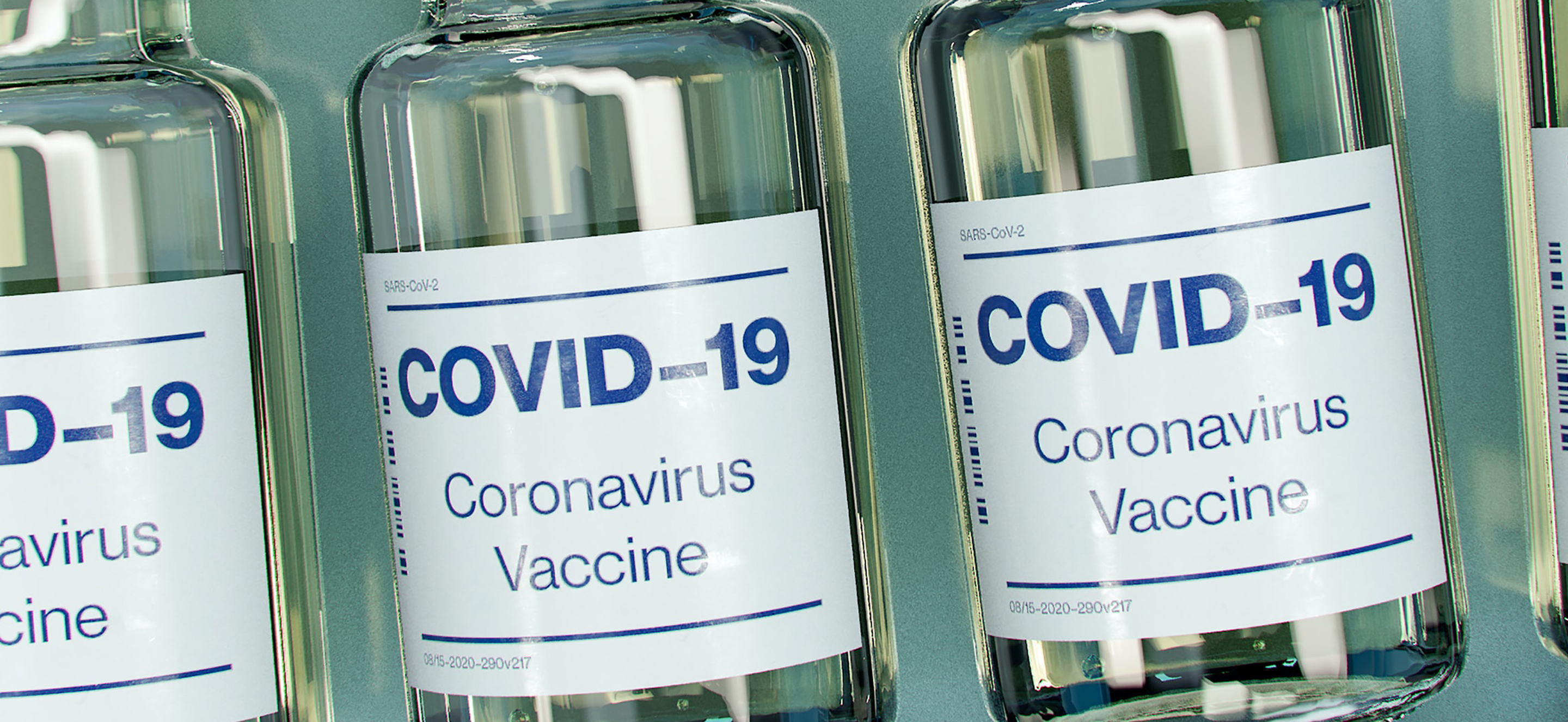
Ask the Expert: Vaccine myths and scientific facts
Now that there are authorized and recommended COVID-19 vaccines, it is critical people receive accurate information. Peter Gulick, professor of medicine at the Michigan State University College of Osteopathic Medicine and infectious disease expert, reviews some myths about the vaccine and counters these with scientific facts. Myth: The COVID-19 vaccines were developed in a rush, so their effectiveness and safety can’t be trusted. Fact: Studies found that the Pfizer/BioNTech and Moderna are both about 95% effective compared to the influenza vaccine, which ranges from being 50% to 60% effective each year. The Johnson & Johnson vaccine is 85% effective at curbing serious or moderate illness. The most important statistic is that all three were 100% effective in stopping hospitalizations and death. As of March 9, 2021, the Centers for Disease Control and Prevention reports that 93.7 million people have been vaccinated and all safety data collected from these doses show no red flags. There have been about 5 cases of anaphylaxis, an allergic reaction, per 1 million but this is no different than allergic reactions from other vaccines. There are many reasons why the COVID-19 vaccines could be developed so quickly and here are a few: The COVID-19 vaccines from Pfizer/BioNTech and Moderna were created with a messenger RNA technology that has been in development for years, so the companies could start the vaccine development process early in the pandemic. China isolated and shared genetic information about COVID-19 promptly so scientists could start working on vaccines. The vaccine developers didn’t skip any testing steps but conducted some of the steps on an overlapping schedule to gather data faster. The Pfizer/BioNTech and Moderna vaccines were created using messenger RNA, or mRNA, which allows a faster approach than the traditional way that vaccines are made. Because COVID-19 is so contagious and widespread, it did not take long to see if the vaccine worked for the vaccinated study volunteers. Companies began making vaccines early in the process — even before FDA authorization — so some supplies were ready when authorization occurred. They develop COVID-19 vaccines so quickly also due to years of previous research on the SARS COV-1, a related virus. Myth: The messenger RNA technology used to make the Pfizer/BioNTech and Moderna COVID-19 vaccine is brand new. Fact: The messenger RNA technology behind these two vaccines has been studied and in development for almost two decades. Interest has grown in these vaccines because they can be developed in a laboratory using readily available materials, making vaccine development faster. mRNA vaccines have been studied before for flu, Zika and rabies. Myth: You only need one dose of J&J vaccine so it’s more effective. Fact: Johnson & Johnson’s vaccine uses a different strategy — a weakened cold virus that is reprogrammed to include the code for the spike protein. Once inside the body, the viral genes trigger a similar response against the virus. All three vaccines are considered overall effective and 100% effective in preventing hospitalizations and death. Myth: Vaccine efficacy and effectiveness mean the same thing. Fact: Efficacy and effectiveness do not mean the same thing. “Efficacy” refers to the results for how well a drug or vaccine works based on testing while “effectiveness” refers to how well these products work in the real world, in a much larger group of people. Most people, however, use them interchangeably even though they have different scientific meanings. Myth: The vaccines aren’t effective against new strains of the virus. Fact: Currently, we know both the U.K. strain as well as the South African variant have increased transmissibility of 30% to 50% over the natural strain. As far as an increase in causing more serious disease, it is not known yet. We have over 600 U.K. variants in Michigan and one case of the South African variant, and I just heard of 47 cases of the U.K. variant in Grand Ledge. We (Michigan) are second in the nation in variants, but that's likely because we test for them more. The most important information is that the vaccines, in general, are 100% effective in prevention of hospitalization and death. So, it is felt they all offer some protection against variants to prevent serious disease. As far as the Johnson & Johnson, it was used with variants and has efficacy overall of 72% in U.S., 66% in Latin America and 57% in South Africa (where the main strain is the South African variant). All companies are looking at modifying (their products) (the mRNA) to cover variants and either give a booster or a multivalent vaccine to cover all variants. Myth: There are severe side effects of the COVID-19 vaccines. Fact: The COVID-19 vaccine can have side effects, but the vast majority go away quickly and aren’t serious. The vaccine developers report that some people experience pain where they were injected; body aches; headaches or fever, lasting for a day or two. This is good and are signs that the vaccine is working to stimulate your immune system. If symptoms persist beyond two days, you should call your doctor. Myth: Getting the COVID-19 vaccine gives you COVID-19. Fact: The vaccine for COVID-19 cannot and will not give you COVID-19. The two authorized mRNA vaccines instruct your cells to reproduce a protein that is part of the SARS-CoV-2 coronavirus, which helps your body recognize and fight the virus, if it comes along. The COVID-19 vaccine does not contain the SARS-Co-2 virus, so you cannot get COVID-19 from the vaccine. The Johnson & Johnson vaccine was developed using adenovirus vector technology and also will not give you COVID-19. It shows your immune system a weakened, common cold virus “disguised” as the coronavirus instead. Adenovirus vaccines have been around for about two decades, the same as mRNA vaccines. Johnson & Johnson developed a vaccine for Ebola using this technology. Myth: The vaccines are ineffective against the virus variants. Fact: More time is needed to study the vaccines’ effectiveness against the variants. Studies are now being conducted to determine if a booster dose is needed to protect against the variants or if modifications to the vaccines are needed. Myth: I already had COVID-19 and I have recovered, so I don't need to get the vaccine. Fact: There is not enough information currently available to say if or for how long after getting COVID-19 someone is protected from getting it again. This is called natural immunity. Early evidence suggests natural immunity from COVID-19 may not last very long, but more studies are needed to better understand this. The CDC recommends getting the COVID-19 vaccine, even if you’ve had COVID-19 previously. However, those that had COVID-19 should delay getting the vaccination until about 90 days from diagnosis. People should not get vaccinated if in quarantine after exposure or if they have COVID-19 symptoms. Myth: I won't need to wear a mask after I get the vaccine. Fact: It may take time for everyone who wants a COVID-19 vaccination to get one. Also, while the vaccine may prevent you from getting sick, more research is needed, but early indications show that while the vaccine is effective in reducing transmission, it is possible for a vaccinated person to spread the virus. Until more is understood about how well the vaccine works, continuing with precautions such as mask-wearing and physical distancing will be important. Myth: COVID-19 vaccines will alter my DNA. Fact: The COVID-19 vaccines will not alter any human genome and cannot make any changes to your DNA. The vaccines contain all the instructions necessary to teach your cells to make SARS-CoV-2's signature spike protein, release it out into the body, and your immune system gets a practice round at fighting off COVID-19. Myth: The COVID-19 vaccine can affect women’s fertility Fact: There is currently no evidence that antibodies formed from COVID-19 vaccination cause any problems with pregnancy, including the development of the placenta. In addition, there is no evidence suggesting that fertility problems are a side effect of any vaccine. People who are trying to become pregnant now or who plan to try in the future may receive the COVID-19 vaccine when it becomes available to them but it’s always prudent to consult with your doctor. Myth: The COVID-19 vaccine was developed to control the general population either through microchip tracking or "nanotransducers" in our brains. Fact: There is no vaccine microchip, and the vaccine cannot track people or gather personal information into a database. Myth: The vaccines were developed and produced using fetal tissue. Fact: The vaccines do not contain fetal cells nor were fetal cells used in the production the Pfizer and Moderna vaccines. Johnson & Johnson used human cell lines or also known as cell cultures to grow the harmless adenovirus but did not use fetal tissue. These same cell lines have been used for other vaccines including hepatitis, chickenpox and rabies and have been around for years. Peter Gulick is an associate professor of medicine at Michigan State University, College of Osteopathic Medicine, and serves as adjunct faculty in the College of Human Medicine and the College of Nursing. Dr. Gulick is available to speak with media - simply click on his icon now to arrange an interview today. Peter Gulick is an associate professor of medicine at Michigan State University, College of Osteopathic Medicine, and serves as adjunct faculty in the College of Human Medicine and the College of Nursing. Dr. Gulick is available to speak with media - simply click on his icon now to arrange an interview today.

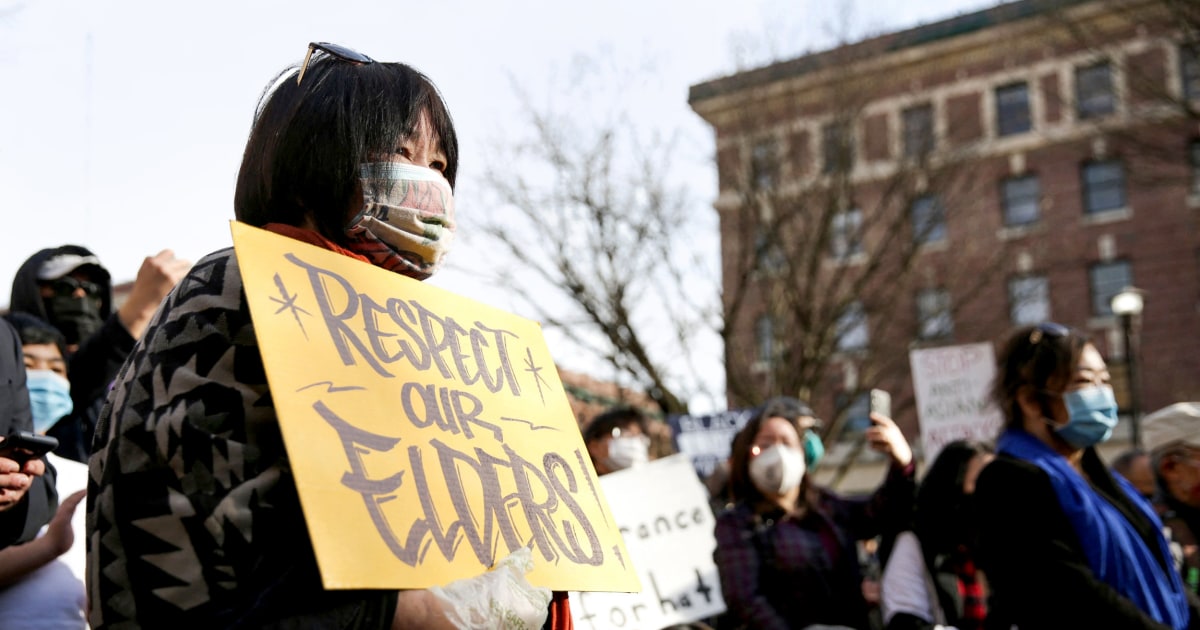
Immigration history expert can provide insight on anti-Asian racism in the U.S.
Anti-Asian hate crimes are on the rise in America, and new data has revealed over the past year that the number of these incidents — which can include shunning, verbal harassment and physical attacks — is greater than previously reported. And a disproportionate number have been directed at Asian women, such as the recent Atlanta spa shootings and the assault on an elderly woman in San Francisco. The research released by reporting forum Stop AAPI Hate on Tuesday revealed nearly 3,800 incidents were reported over the course of roughly a year during the pandemic. It’s a significantly higher number than last year's count of about 2,800 hate incidents nationwide over the span of five months. Women made up a far higher share of the reports, at 68 percent, compared to men, who made up 29 percent of respondents. The non-profit does not report incidents to police. The data, which includes incidents that occurred between March 19 of last year and Feb. 28 of this year, shows that roughly 503 incidents took place in 2021 alone. Verbal harassment and shunning were the most common types of discrimination, making up 68.1 percent and 20.5 percent of the reports respectively. The third most common category, physical assault, made up 11.1 percent of the total incidents. More than a third of incidents occurred at businesses, the primary site of discrimination, while a quarter took place in public streets. According to the data, Asian women report hate incidents 2.3 times more than men. A further examination of the submitted reports showed that in many cases, the verbal harassment that women received reflected the very intersection of racism and sexism. March 16 – NBC News If you’re a journalist covering this news story, then let us help. Dr. Krystyn Moon is an expert in U.S. immigration history, popular culture, race and ethnic studies – and is available to speak with media regarding the recent study and the history of the anti-Asian racism and violence in the United States. If you are looking to arrange an interview, simply click on her icon now to book a time today.


Is This Bitcoin's Time to Shine?
Bitcoin was invented in 2008 and launched in 2009, but after years of skepticism, it's finally becoming a part of mainstream conversation. The cryptocurrency's value has continued to rise since 2017, but with the start of 2021, its price has surged and many more companies are looking for ways to get involved. Tesla and Square have invested. (You can even buy a Tesla with bitcoins.) Goldman Sachs and JPMorgan are exploring ways to meet customer demand for cryptocurrency investment. A National Football League player converted half of his salary into bitcoins. And Major League Baseball's Oakland Athletics are offering a suite for the 2021 season at the price of one bitcoin. So, if it's been around for so long, why are we only seeing this mainstream push now? "I think the Bitcoin ecosystem is developing to the point where people can start to think about using it as a currency," said John Sedunov, PhD, an associate professor of finance who studies Bitcoin. "However, the price still remains volatile, and it isn't clear that the currency can maintain its current $50,00-to-60,000 value." While there are companies adopting and investing now, this will still be a gradual process, Dr. Sedunov says. "As businesses become better able to accept the currency, and perhaps more importantly better able to withstand and manage the volatility of Bitcoin, then the currency will become more widespread in its use. The process would be expedited if the entire supply chain accepted Bitcoin, rather than just the retailer and the end of the chain. This would smooth the process and allow people to utilize the currency without as much concern for converting it." Additionally, Dr. Sedunov notes that there needs to be a continued evolution of the ability of firms to accept and manage the currency, in addition to a reduction in the volatility of the currency. Smaller businesses may be at much more of a risk than large corporations and banks if there is price instability. But the value of Bitcoin won't be this high forever. As the country and economy continue to deal with the impact of the pandemic, there are growing concerns that inflation could be next, pushing consumers to other options, like cryptocurrency. "When the pandemic ends and there is, perhaps, more economic stability, Bitcoin's value will wane a bit, but I don't think it will fade to nothing," Sedunov notes. "The big question mark, to me, is the U.S. Dollar and inflation. Inflation expectations are rising, and this only pushes people more toward alternatives. If this trend continues, then perhaps economic stability will be a bit lower, and more people will flock toward Bitcoin."


CAA Insurance continues to lead the way in providing Ontario auto policyholders with financial relief during the pandemic. CAA Insurance Company is renewing its commitment to customers by enhancing its industry-leading rate relief for Ontario auto policyholders to 15 per cent for a 12-month term. The announcement is one way that CAA Insurance is helping our customers with meaningful relief to help manage expenses during the COVID-19 pandemic. “We recognize that people are either driving less or driving differently, and we don’t expect this to change in the short-term,” says Matthew Turack, president of CAA Insurance Company. “We understand there are many people facing challenges brought on by the pandemic. We believe that insurance companies should step up, give back and help Ontarians manage expenses during the COVID-19 pandemic.” In 2020, CAA Insurance led the insurance industry by providing both rate reductions and financial relief benefits, and we are pleased to continue leading the industry in 2021. Over the past year, CAA Insurance’s initiatives include: In April 2020, CAA Insurance was the first and only insurance company to offer a 10 per cent rate reduction on both auto and home insurance policies for the duration of a 12-month policy term. In May 2020, we announced a $100 auto insurance relief benefit. In October 2020, we provided an additional $50 relief benefit for our active Ontario auto policies. The total amount of pandemic relief that CAA Insurance will give back to home and auto insurance customers during 2020 and 2021 is estimated to be over $130 million. Coupled with our pandemic relief, new customers who have made the switch to CAA Insurance see significant savings. By calling and speaking to one of our agents or brokers, motorists could find savings averaging over $700 per policy. Today’s announced rate relief applies automatically to all new customers effective April 15, 2021, and to existing customers whose auto policies renew on or after June 15, 2021. Customers whose auto policies renewed between January 1 and June 14, 2021, can apply for the incremental rate relief by completing an online form at https://www.caainsurancecompany.com/rate-reduction-policy-details


Fewer cars, but more fatalities - What's happening on America's pandemic roadways
Fewer vehicles are traveling on America's roadways during the ongoing coronavirus pandemic, but the number of fatal car crashes in 2020 increased exponentially compared to the same time period in 2019. UConn expert Eric Jackson, a research professor and director of the Connecticut Transportation Safety Research Center, and behavioral research assistant Marisa Auguste examined the increase in a recent essay published by The Conversation: Curious about traffic crashes during the pandemic, we decided to use our skills as a social scientist and a research engineer who study vehicle crash data to see what we could learn about Connecticut’s traffic deaths when the stay-at-home orders first went into place last March. A partnership between the Department of Transportation, local hospitals and the University of Connecticut discovered what many people intuitively knew: Traffic volume and multivehicle crashes fell significantly during the stay-at-home order. Statewide, daily vehicle traffic fell by 43% during the stay-at-home order compared to earlier in the year, while mean daily counts of multivehicle crashes decreased from 209 before the stay-at-home order to 80 during lockdown. What was unexpected, however, was the significant increase in single-vehicle crashes, especially fatal ones. During the stay-at-home period, the incidence rate of fatal single-vehicle crashes increased 4.1 times, while the rate of total single-vehicle crashes was also up significantly. Data about all crash types in the state, whether single- or multivehicle, tell a similar story. Although preliminary, police reports have placed the 2020 year-end total for traffic deaths at 308, a 24% increase from 2019. While the researchers said that it's unclear why this counterintuitive increase in fatalities on the roads has occurred, their advice to drivers? "Check your speed" and "don't drive angry." If you are a journalist looking to know more about this topic, let us help. Simply click on Eric Jackson’s icon to arrange an interview today.


Ten Years Later: Japan Society Remembers the Great East Japan Earthquake (3.11)
To Mark the 10th Anniversary of the Triple Disaster, Japan Society Will Present Programming Reflecting Upon the Aftermath, Recovery and Spirit of Resiliency After the Great East Japan Earthquake, tsunami and nuclear disaster devastated the Tohoku region of northeastern Japan on March 11, 2011 (3.11), Japan Society's Japan Earthquake Relief Fund (JERF) raised over $14 million from more than 24,600 donors from all 50 U.S. states and 55 countries, the largest amount raised by a nonprofit not specializing in disaster and emergency relief and the 7th largest fundraising campaign by a U.S. nonprofit organization. Through a series of events and videos leading up to the 10-year anniversary of 3.11, Japan Society invites our community to remember those who were lost, and to look toward Tohoku’s continued recovery. We also extend our sincere appreciation to all who donated to the Japan Earthquake Relief Fund (JERF), which was launched by Japan Society the day after the tragic events of 3.11. Since 2011, JERF has funded more than 65 grant projects and 45 organizations supporting Tohoku’s immediate relief and reconstruction efforts as well as the mid- to long-term recovery of these communities. In 2021, Japan Society has earmarked the remaining funds to support additional projects facilitating community-building and economic recovery in disaster-hit areas where challenges have become further exacerbated by the onset of the global pandemic and additional disasters that most recently struck the region on February 13. More information on these organizations and projects is available here. To mark the 10th anniversary of the triple disaster, Japan Society will report back on how JERF grants have contributed to Tohoku’s recovery, and highlight stories of what was witnessed in the aftermath of 3.11, including Tohoku’s resiliency, the bravery and initiative of all who responded to unprecedented challenges, the strength of U.S.-Japan relations, and the spirit of human generosity and goodwill. As we remember and draw lessons from the events of 3.11, we hope to nurture hope for the future of Tohoku and the world. “2021 is a year to reflect on resilience and recovery as we navigate the challenges of the COVID-19 pandemic and remember not just the tragedy of 3.11, but the strength of the Japanese people and the generosity of the world in its aftermath,” said Japan Society President and CEO Joshua W. Walker, Ph.D. “As we mark the 10-year anniversary of these events, we honor those who were lost, and extend our gratitude to the individuals and organizations who offered their support, including the donors to our relief fund.” Events include a contemporary theater performance “Ludic Proxy: Fukushima,” held live on March 6, 7 & 11 and available on demand from March 12 - 16. This video adaptation of Brooklyn-based theater-maker Aya Ogawa’s play Ludic Proxy follows a woman visiting her older sister, who lives on the outskirts of the Fukushima nuclear evacuation zone. The interactive play, which features a unique element of audience participation, explores the theme of human survival in the face of disaster. Taking advantage of our expertise in bringing together American and Japanese experts, a live U.S.-Japan symposium on March 9, 7-9pm EST, “Resilience & Recovery: A U.S.-Japan Dialogue Ten Years after 3.11”, will feature leading voices from Tohoku, Japan and the U.S. to discuss lessons learned from 3.11 on resilience and recovery from catastrophes. The symposium will be co-hosted with JERF recipient, ETIC., a Japanese nonprofit dedicated to nurturing social entrepreneurs and recovery efforts in Tohoku. As its first exhibition upon reopening to the public, Japan Society will also present When Practice Becomes Form: Carpentry Tools from Japan opening on March 11th. The exhibition celebrates the resilient spirit of Japanese architecture and craftsmanship through woodworking tools, architectural patterns, and models. The site-specific exhibition design, conceived by the esteemed architect Sou Fujimoto in collaboration with Brooklyn-based Popular Architecture, introduces major themes from the exhibition and is in dialogue with the gallery’s spaces, highlighting an enduring connection between traditional Japanese wooden construction and modern architecture. Viewing is available every Thursday through Sunday with advance timed-entry ticket reservations online. Further digital features include: Testimonials on the impact of JERF’s support from recipients and participants in fund-supported programs; A special season of Japan Society’s Tea Time series featuring six short interviews with key leaders from the U.S. and Japan including former U.S. Ambassador John V. Roos and retired General Ryoichi Oriki on their responses and lessons learned from the disaster; Dialogues between social entrepreneurs from Tohoku and their counterparts in New Orleans, LA and Wilmington, OH to discuss their work in using data, nurturing social entrepreneurship, and rebuilding communities recovering from natural disasters and economic crisis. These conversations feature alumni from “U.S.-Japan Leaders Exchange: Three-Year Training & Networking Program for Leaders in Tohoku’s Recovery and Reconstruction,” a multi-year program organized by Japan Society and ETIC from 2013-16. For a full list of programs and more information about JERF and the fund recipients, visit the Japan Society webpage. About Japan Society Founded in 1907, Japan Society in New York City presents sophisticated, topical and accessible experiences of Japanese art and culture, and facilitates the exchange of ideas, knowledge and innovation between the U.S. and Japan. More than 200 events annually encompass world-class exhibitions, dynamic classical and cutting-edge contemporary performing arts, film premieres and retrospectives, workshops and demonstrations, tastings, family activities, language classes, and a range of high-profile talks and expert panels that present open, critical dialogue on issues of vital importance to the U.S., Japan and East Asia. Japan Society is located at 333 East 47th Street between First and Second avenues (accessible by the 4/5/6 and 7 subway at Grand Central or the E and M subway at Lexington Avenue). www.japansociety.org


Telecommuting Expert Predicts Permanent Changes to Work After the Pandemic
With the sudden shift to remote work brought about by the COVID-19 pandemic, many corporations have had to quickly assemble a patchwork of policies, procedures, and technologies. Timothy Golden, a professor in the Lally School of Management at Rensselaer Polytechnic Institute, foresees that many companies will adopt remote work on a permanent basis, and need to devote considerable attention and focus to systematically assessing the lessons they have learned. Golden is a leading expert in the field of telecommuting, telework, and the relationship between technology and managerial behavior. With more than 20 years of experience studying the impact of remote work on corporations and individuals, Golden’s insights about the future are rooted in a deep understanding of the history of remote work. In the wake of the pandemic, Golden envisions companies adding a Chief Remote Work Officer, who is responsible for maintaining the effectiveness of the company’s remote work program, to their C-Suite. This person will likely be a boundary spanner who garners resources and support from across silos in the company to ensure remote work remains effective in its long-term implementation. With the continuing importance of remote work, the Chief Remote Work Officer will need a seat at the executive table to ensure it receives the attention it needs. With remote work becoming even more firmly engrained in corporate cultures, Golden expects changes in the ways employees interact. With large numbers of employees continuing to work remotely, employees will expect support for this work mode in many forms — from promotion opportunities and performance metrics, to mentoring and technology support. Another implication of remote work going forward is that the demand for real estate will change, and companies will see real estate as platforms for collaborative work, rather than simply for work. With a significant permanent portion of the workforce likely to remain as remote workers, companies will be able to scale back their real estate yet also reallocate existing spaces to ones that are used for more collaborative interactions, rather than simply offices for individualized working. Golden is available to speak about these and other aspects of the future of remote work, as well as specific lessons he has learned through decades of studying this topic.

