
Experts Matter. Find Yours.
Connect for media, speaking, professional opportunities & more.
Bigly: the effect of Trump's rhetoric on national security
Going against the findings of his own intelligence community, President Donald Trump has called Russian meddling into the 2016 U.S. presidential election a “hoax.” In a recent turn of events, though, the president accused China of interfering with the midterm elections. Has President Trump’s rhetoric on the intelligence community and hesitancy to hold Russia accountable influenced countries, such as China, to also try meddling in U.S. elections? “If people and foreign officials start believing President Trump’s rhetoric, there is a possibility, that we will face issues of doubt and trust concerning U.S. policy and commitments,” said Craig Albert, an expert in U.S.-Russian security affairs, director of the master of arts in intelligence and security studies and associate professor of political science at Katherine Reese Pamplin College of Arts, Humanities and Social Sciences at Augusta University. “Also, President Trump’s rhetoric helps prop up Vladimir Putin as being equal in stature to the leader of the free world and gives Kremlin and Putin greater credibility with Russian citizens and the near abroad.” Midterm elections are on the horizon, and Putin will continue election meddling regardless of Trump’s actions or rhetoric, Albert said. “Russia, under Putin’s leadership, will continue to increase its cyber activity against all sectors of the U.S., including and especially into the cognitive hacking of our electoral process,” he said. Cognitive hacking is when fake sources are used to spread fake news on social media. The success of Russia’s meddling in the 2016 election is emboldening other actors, like China. “Non-state actors like ISIS and Al Qaeda feel empowered to engage in both cognitive and source hacking in order to shift American public opinion,” Albert said. “We already believe China and Iran have engaged in similar operations. It won’t be long before ISIS utilizes the same type of intelligence operations because they are low risk, extremely high reward operations. Albert is available to discuss: • How President Trump’s rhetoric affects the U.S. intelligence community • How Trump’s apparent support for Russia empowers Putin and the Kremlin to continue meddling into U.S. elections • How Russia’s actions are emboldening other non-state actors • Why Trump’s denial of Russian meddling into U.S. elections can further damage U.S. relations with its allies Contact us to schedule an interview with Albert or to learn more about his expertise. Source:


Will gun control be a ballot box issue this November?
This week celebrated National Voter Registration Day, a cross-country effort to encourage those who have not registered to vote in the upcoming elections to take a mere three minutes to register. With Washington divided and both houses competing for power, November’s mid-terms will be a showdown between parties, ideas and polices. Gender may also play a part in how the results come out. Rosalyn Cooperman, a member of Gender Watch 2018, a non-partisan project to track, analyze and illuminate gender dynamics in Election 2018, writes that the difference between men and women voters on guns matter in the midterms. A recent poll of registered voters by Morning Consult and Politico shows there are important differences in attitudes about gun control measures among and between Democratic, Republican, and Independent men and women voters. This may be one of the most contentious and hard-fought elections in history. That’s where our experts can help. Dr. Rosalyn Cooperman's expertise focuses on women in politics. She is available to speak with media regarding this issue in America. Simply click on Rosalyn’s icon to arrange an interview. Source:



Real solutions to the world’s refugee crisis
Just last week, the United States announced its lowest refugee cap in history. Meanwhile, for the fifth year in a row, globally, we have reached a record number of displaced people around the world whose displacement will likely last decades. Refugees are increasingly living outside of camps in middle to low-income countries where they struggle to get their footing. At the same time, the communities that host them are burdened by the influx of a needy population and the tension that can arise when aid bypasses local organizations. Recently, a panel hosted by Catholic Relief Services invited key industry leaders to discuss these challenges and how responding agencies, governments and donors can better support the local communities in ways that promote safety, dignity, and lasting solutions. Bill O'Keefe is the Vice President for Government Relations and Advocacy with Catholic Relief Services and oversees the efforts to impact U.S. foreign policy in ways that reduce poverty overseas. Bill is available to speak to media regarding refugees and how those lasting solutions can be found. Simply click on his icon to arrange an interview. Source:


Going about business . . . and helping change
Politically oriented organizations, such as those advocating equal rights for lesbians and gays, have long been credited with effecting changes in public policy that reduce discrimination. But what about the role of “ordinary” commercial organizations, such as dry cleaners or insurance agencies or clothing stores, that are affiliated with a “challenger” group that has limited recognition in a political system? A recent article by Giacomo Negro, associate professor of organization and management; Glenn Carroll (Stanford); and Fabrizio Perretti (Bocconi) examines such organizations, which are often overlooked in the study of policy outcomes. The researchers find that “politically mundane” commercial enterprises linked to lesbians and gays can contribute distinctly to local enactment of nondiscriminatory policies. The researchers attribute this to the bridges created between these businesses and the larger community, and to the normalcy and legitimacy signaled by their familiar organizational forms. They find that the more diverse in nature these commercial organizations are, the greater their potential to bring about nondiscriminatory policies. But this potential is diminished, they note, in communities where political organizations, particularly those engaging in contentious action, have a larger presence. The authors conclude that commercial organizations are an important complement to political action and can helpfully challenge discrimination while enhancing community connections and awareness. Source:



Populations at risk – how the whole planet is feeling and affected by climate change
The pounding heat of this summer seems like an anomaly, but according to experts, extreme heat waves may be a new reality. The global temperature is rising and the impact of that is being felt on every continent on earth. From Pakistan, to Japan to Mexico to Paris – the rolling waves of summer heat saw temperatures soar. While for some it’s a matter of comfort, the world’s poor and vulnerable populations are going to face serious risk and consequences. For instance, high heat and erratic rainfall can exacerbate drought, and prolonged drought can lead to severe food insecurity and in some cases, famine. Desperation can lead to conflict and worse. The global threat of climate change is very real and will touch every corner of the planet. There are a lot of questions to be answered and that’s where the experts from Catholic Relief Services can help. Lori Pearson leads Catholic Relief Services’ response to the massive impact climate change is having on global agriculture and especially on the lives of smallholder farmers in Africa, Asia and Latin America. She also crafts policy and advocacy recommendations to climate change challenges and global hunger. Lori is available to speak with media regarding this topic – simply click on her icon to arrange an interview. Source:

6 Facts We Learned Working with Migrants and Refugees Around the World Working with migrants and refugees is our business at Catholic Relief Services. CRS was founded in 1943 to assist refugees during World War II. Seventy-five years later, we are still coming to the aid of people escaping conflict, violence and natural disasters. While CRS doesn’t resettle refugees in the United States (these programs are run by the Catholic Church’s Migration and Refugee Service and Catholic Charities), our rich history has taught us valuable lessons on how to best help families fleeing crisis. 5. Adults Need Work and Income. We know from experience that people find pride and purpose in helping earn an income for their families, no matter how small. Refugees and migrants are looking for a hand-up, not a handout and being integrated with their host communities benefits everyone. Caroline Brennan is the Emergency Communications Director for Catholic Relief Services. In her role, she travels to and/or works in areas facing natural or man-made emergencies. See her contact information at the bottom. 6. The Poorest Countries House the Most Refugees and Migrants. Although media stories can give the impression that the U.S. is swamped with migrants, the reality is that 85% of the world’s refugees are in the developing world. The country with the largest refugee population is Turkey, with almost 3 million. One in 3 people in Lebanon is a refugee. The Bidi Bidi Refugee Camp in Uganda alone is home to 229,000 South Sudanese who have fled civil unrest. Richer nations like the U.S. should look at the lessons of how these countries with far fewer resources welcome and host refugees. Caroline Brennan is the Emergency Communications Director for Catholic Relief Services. In her role, she travels to and/or works in areas facing natural or man-made emergencies. See her contact information at the bottom. The experts at Catholic Relief Services are available to help with any media coverage or insight that is required regarding this ongoing news story and issue that is continuing in America. Simply click on any of their icons to arrange a time for an interview. Source:
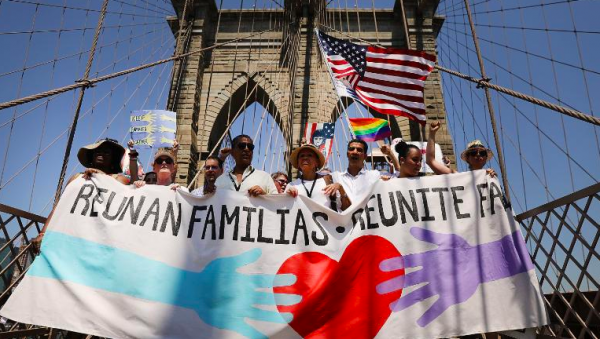
6 Facts We Learned Working with Migrants and Refugees Around the World - Facts 3 and 4 Working with migrants and refugees is our business at Catholic Relief Services. CRS was founded in 1943 to assist refugees during World War II. Seventy-five years later, we are still coming to the aid of people escaping conflict, violence and natural disasters. While CRS doesn’t resettle refugees in the United States (these programs are run by the Catholic Church’s Migration and Refugee Service and Catholic Charities), our rich history has taught us valuable lessons on how to best help families fleeing crisis. 3. Support the Family. The family unit provides the primary support for children during the traumatic refugee experience -- whether it is witnessing violence or crossing a desert on foot. CRS focuses on keeping families together. This means housing a family together and using any services provided – from trauma counseling to income generation – to boost family cohesion. Shannon Senefeld is a global development expert at CRS. She has published and presented extensively on international children’s issues and the importance of strengthened family care for children’s development. See her contact information at the bottom. 4. Kids Need School and Play. CRS is dedicated to keeping up children’s education, to provide stability and normality and give them hope for the future so they can be productive citizens wherever they end up. Kids need to be kids, too. Whether they are in a camp or any sort of migrant or refugee holding center they need a space to play. Caroline Brennan is the Emergency Communications Director for Catholic Relief Services. In her role, she travels to and/or works in areas facing natural or man-made emergencies. See her contact information at the bottom. The experts at Catholic Relief Services are available to help with any media coverage or insight that is required regarding this ongoing news story and issue that is continuing in America. Simply click on any of their icons to arrange a time for an interview. Source:
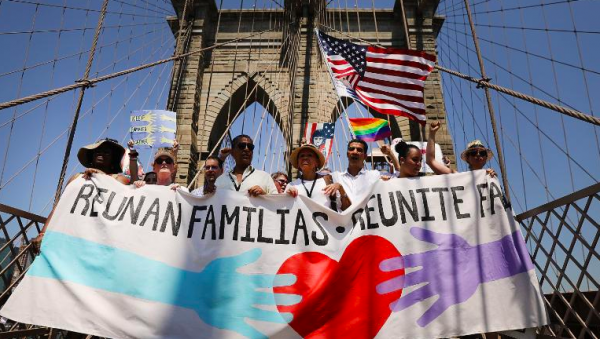
6 Facts We Learned Working with Migrants and Refugees Around the World: Facts 1 and 2 Working with migrants and refugees is our business at Catholic Relief Services. CRS was founded in 1943 to assist refugees during World War II. Seventy-five years later, we are still coming to the aid of people escaping conflict, violence and natural disasters. While CRS doesn’t resettle refugees in the United States (these programs are run by the Catholic Church’s Migration and Refugee Service and Catholic Charities), our rich history has taught us valuable lessons on how to best help families fleeing crisis. 1. People Do Not Want to Leave Their Homes. An astonishing 1 in 110 people have been forced to flee their home (UNHCR). They only do that when they feel they have no other choice. Most people the world over give the same reason for starting their perilous journey across borders -- violence. That’s true for millions fleeing conflict in South Sudan and for tens of thousands fleeing gang violence in Central America. Most often, people flee to other parts within their country first. Only when they see no other option do people leave their country. Rick Jones is the agency's Youth and Migration Advisor in Latin America and the Caribbean. He also specializes in issues affecting Central American migration, including gang violence, poverty, and internal displacement. See his contact information at the bottom. 2. Don’t Separate Families. Based on extensive experience with refugees and migrants, CRS agrees with the criticism of the former U.S. policy of separating children from their parents. Decades of research shows that this is so traumatic for children it can lead to long-term psychological, and even physical damage. Shannon Senefeld is a global development expert at CRS. She has published and presented extensively on international children’s issues and the importance of strengthened family care for children’s development. See her contact information at the bottom. The experts at Catholic Relief Services are available to help with any media coverage or insight that is required regarding this ongoing news story and issue that is continuing in America. Simply click on any of their icons to arrange a time for an interview. Source:

Always Keep Families Together. Separation Damages Children.
The ongoing situation in America’s border towns with the detention and separation of thousands of children from their parents is both highly damaging for children and unnecessary. The actions of American authorities who are enforcing the ‘zero-tolerance’ policies have led to outcries from world leaders, American politicians and a large segment of the public. The following is a statement from Shannon Senefeld, Senior Vice President, Overseas Operations, Catholic Relief Services. “At Catholic Relief Services, keeping children with their parents is always one of our paramount goals. That’s true in emergencies, in health crises, in all of our long-term work combatting poverty and working to end the institutionalization of children. The research is clear – separating children from their families causes lasting mental, and even physical damage. Family support is vital for all children, especially those fleeing violence or dire poverty. “ As a Clinical Psychologist and with a long career working with vulnerable children around the world, Shannon Senefeld can speak with authority on why the ongoing situation with the separation of families on the US border. She can also speak to the root causes that propel families to migrate in the first place, such as rampant gang violence and poverty in Central America. Shannon is available to speak with media. For an interview – simply click on her icon to contact her and arrange a time. Source:

Professor David Iglesias, a former U.S. Attorney in New Mexico who also served as chair of the border and immigration subcommittee under John Ashcroft, is available for interviews about President Trump's executive order ending family separations at the border. Iglesias, now a professor of politics and international relations at Wheaton College (Ill.) and director of the Wheaton Center for Faith, Politics & Economics (wheaton.edu/fpe) had called the policy "a moral outrage" in a recent comments (http://bit.ly/2MIIxtA), and, along with a bipartisan group of former U.S. Attorneys, called on Attorney General Jeff Sessions to end the policy. "The president did the right thing to rescind this policy," he says. "It's to the administration's credit that they pulled back." However, he says, the zero tolerance policy, which still remains in place, is "a terrible idea." Iglesias says it is likely to overload the courts with misdemeanors by first-time offenders. "Federal courts along the border will be overwhelmed with nothing but immigration cases, and serious crimes will languish under the weight of minor offenses," he says. "Federal courts on the southwest border will be reduced exclusively to handling immigration offenses and will essentially become federal traffic court." "Zero tolerance may make a catchy bumper sticker, but it is the very definition of bad public policy," Iglesias says. To request an interview with Professor Iglesias, e-mail media.relations@wheaton.edu. Source:
