
Experts Matter. Find Yours.
Connect for media, speaking, professional opportunities & more.
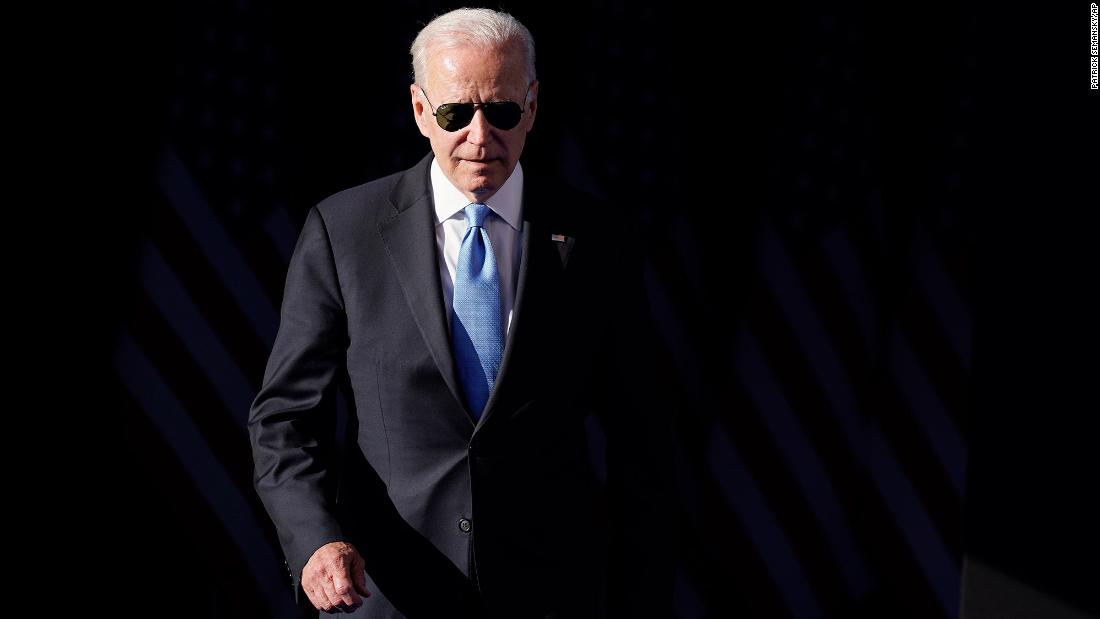
The odd couple – Can Biden and Putin find a way to thaw relations between America and Russia?
It was a meeting of two world powers that came with low expectations but much anticipation. The face-to-face meeting between American President Joe Biden and Russian President Vladimir Putin may not have accomplished much, but it did allow Biden to set a tone on his approach to foreign relations. President Joe Biden's meeting Wednesday with his Russian counterpart came after months of diplomatic wrangling over the details, days of preparation with reams of research and the elaborate construction of two separate lakeside venues for the leaders to appear afterward. But after the summit had concluded, the ornate French style manor home was locked up and the leaders were jetting in opposite directions home, the state of relations between the United States and Russia seemed about the same as before. That is not necessarily a surprise, least of all for Biden, who entered the summit with the vague and modest goal of establishing a "predictable and rational" relationship with Vladimir Putin. Putin's performance afterward was certainly predictable, if not entirely rational. Ultimately, Biden set expectations so low for his first face-to-face encounter with Putin that anything more than someone not showing up at all amounted to breaking even. June 16 - CNN What comes next is up to both leaders – but the world will be watching. Is there a chance to find common ground between the two countries? Will Russia continue to interfere in U.S. elections and hack American agencies - and how will American respond? What happens if Russian opposition leader Alexei Navalny dies in prison? And, did this meeting give Putin the elevated push he needs internationally? If you are a journalist looking to cover this subject – then let us help. Dr. Stephen Farnsworth is a sought-after political commentator on presidential politics. He has been widely featured in national media, including The Washington Post, Reuters, The Chicago Tribune and MSNBC. Dr. Farnsworth is available to speak with media any time. Simply click on his icon to arrange an interview today.



Without Trump – Is Late Night Television Struggling for New Jokes?
For four years, just about every talk show host and comedy show had a fresh supply of almost daily content. The unfiltered comments, gaffes and chaotic ongoings in the White House offered up a steady stream of material for jokes, monologues and coverage. But those days are over. Does Joe Biden's calm presidency and his capable administration mean a deficit of humor for the country’s comedians? UMW’s Dr. Stephen Farnsworth was recently featured in Variety Magazine about his perspective on the current state of late-night political content. Viewers are likely to continue to expect a robust political discussion. “In Washington, the political divisions are as intense as ever, and so it seems that there would be a ready audience for a continuing focus on political humor in late night,” said Stephen Farnsworth, co-author of the 2019 book “Late Night With Trump: Political Humor and the American Presidency” and director of the Center for Leadership and Media Studies at the University of Mary Washington. “The environment may not look all that different post-pandemic.” June 14 - Variety Magazine Dr. Stephen Farnsworth is a sought-after political commentator on presidential politics. He has been widely featured in national media, including The Washington Post, Reuters, The Chicago Tribune and MSNBC. Dr. Farnsworth is available to speak with media any time. Simply click on his icon to arrange an interview today.

Augusta University experts looking for clues to predict future cyber attacks
The threat of cyber attacks is a reality for every industry. Cybersecurity is top of mind after recent highly skilled and calculated attacks targeting the Colonial Pipeline in May and shutting down the world’s largest meat supplier earlier this month. With America’s energy and food supply chains making vulnerable targets, everyone from executives, lawmakers, security officials and the media are looking for answers. Augusta University’s Dr. Craig Albert and Dr. Lance Hunter explore the questions surrounding cybersecurity in a recently published study in The Cyber Defense Review. This project examines the political, economic and military factors associated with cyber attacks in an effort to understand which countries or groups are most likely to attack. Here’s an abstract of their piece: Factors that Motivate State-Sponsored Cyberattacks The study of the factors involved in the initiation of violent interstate conflicts has been well documented within international relations. However, scholars have yet to analyze the factors associated with the initiation of international state-sponsored cyberattacks due to the lack of available data. This study is a first attempt to address this limitation. This project examines the political, economic, and military factors associated with the initiation of state-sponsored cyberattacks from 2005–2012, using a unique dataset that incorporates author-collected political, economic, and military data, along with cyber data on known state-sponsored cyberattacks extracted from the Council on Foreign Relations (CFR) Cyber Operations Tracker Dataset. With this unique dataset, we seek to better understand those states most likely to cyberattack other states. The Cyber Defense Review, Spring 2021 The study was also referenced in Voice of America in a piece covering President Biden’s trip to the G-7 Summit in Britain. If you are a journalist looking to cover any aspect of cybersecurity and cyber attacks, Augusta University’s experts are world-renowned on the topic. Dr. Craig Albert is director of the Master of Arts in Intelligence and Security Studies at Augusta University. He is a leading expert on war, terrorism and American politics, and he testified before U.S. Congress regarding the threat from Chechnya following the deadly Boston Marathon bombing. Dr. Lance Hunter is an assistant professor of political science with a background in international relations. His research focuses on how terrorist attacks influence politics in democratic countries and how political decisions within countries affect conflicts worldwide. Both experts are available to speak with media about cyber attacks. Simply click on either expert’s icon to arrange an interview today.


Experts available to comment on G7 summit discussions
A range of experts from the University of Bristol are available to comment on the upcoming G7 summit taking place in Cornwall, UK. Professor Simon Tormey, Professor of Politics and Dean of Social Sciences and Law at the University of Bristol can speak about what G7 means for UK, reboot of US-China relations, climate change, and taxes on large corporations. Simon can also do interviews in French. Dr David Matthews, Reader in Virology in the School of Cellular and Molecular Medicine at the University of Bristol and a member of the 'G2P-UK' National Virology Consortium, can discuss vaccines and global health security. Dr Kate Hendry, Associate Professor of Geochemistry at the University of Bristol can discuss ocean action including net zero oceanographic capability. Dr Tommaso Jucker, Research Fellow at the University of Bristol’s Cabot Institute for the Environment, can cover: supporting the transition to a low carbon economy – the role of forest conservation and reforestation in mitigating climate change, and action to halt and reverse biodiversity loss – ecosystem restoration. Dr Kristen Reyher, Reader in Veterinary Epidemiology and Population Health at the University of Bristol, is able to discuss antimicrobial resistance, antimicrobial stewardship, antimicrobial use, and epidemiology. And Professor Awais Rashid, Professor of Cyber Security at the University of Bristol, is available for the following topics: Internet safety including protecting children and online fraud, darknet markets, privacy issues and data exploitation.


Republicans are facing a political dilemma: Embrace former President Donald Trump and enjoy full party support, however, expect to lose favor with "never Trumpers" and moderate voters. Or … reject Trump to appeal to voters but face the sling, arrows and potential primary challenges of a vengeful Trump base. It seems like a lose/lose situation for the GOP, and it has been the topic of much conversation and media coverage. In Virginia, the stakes are high politically and The Washington Post recently spoke with UMW’s Stephen Farnsworth about this very situation. Virginia Republicans who oppose or criticize Trump are being shunned or sidelined within the party, said Stephen Farnsworth, a political science professor at the University of Mary Washington, while those who embrace him struggle to win statewide elections or suburban swing districts. The next test in Virginia will come this fall, when GOP gubernatorial nominee Glenn Youngkin, who embraced Trump and won the former president’s endorsement, will compete against the winner of the June 8 Democratic primary. “At the moment, these three former members of Congress are more like voices crying in a Republican wilderness,” Farnsworth said. “Will the party come around to their way of thinking? I think a lot depends on the success or failure of Republican candidates who are all in in their support of former president Trump. If Republicans get swept again in statewide elections, the arguments offered by Riggleman and Comstock and Rigell may make more sense to some of the die-hard activists.” May 22 – Washington Post There’s never a dull day inside or outside of party politics in America. And with mid-terms on the horizon and high expectations for 2024, the moves Republicans make with or without Trump could carry high consequences. And if you are a journalist following these developments within the Republican Party in Virginia or throughout the country, then let us help. Dr. Stephen Farnsworth is a sought-after political commentator on presidential politics. He has been widely featured in national media, including The Washington Post, Reuters, The Chicago Tribune and MSNBC. Dr. Farnsworth is available to speak with media any time. Simply click on his icon to arrange an interview today.

As the eleven-day war between Palestine and Israel sits on a razor-thin ceasefire, it is hoped that American intervention and influence can deliver support, aid and even a lasting truce between two warring factions. For diplomats, it will be like walking a tight rope in an effort to calm both the Israelis and Palestinians while also ensuring Hamas remains on the sidelines. U.S. Secretary of State Antony Blinken is in the region now, leading the cause. The truce that came into effect Friday has so far held, but it did not address any of the underlying issues in the Israeli-Palestinian conflict, something Blinken acknowledged after meeting with Israeli Prime Minister Benjamin Netanyahu. “We know that to prevent a return to violence, we have to use the space created to address a larger set of underlying issues and challenges. And that begins with tackling the grave humanitarian situation in Gaza and starting to rebuild,” he said. “The United States will work to rally international support around that effort while also making our own significant contributions.” He added that the U.S. would work with its partners “to ensure that Hamas does not benefit from the reconstruction assistance.” Blinken will not be meeting with Hamas, which does not recognize Israel’s right to exist and which Israel and the U.S. consider a terrorist organization. May 25 - Associated Press This will be a long and delicate process and there are a lot of questions to consider: Is it possible to negotiate in Gaza and not include Hamas? With Palestinian President Mahmoud Abbas and Israeli Prime Minister Benjamin Netanyahu both facing a political ousting - can a solution even be found? And what are the issues and is there any negotiating the long-sought after two-state solution? If you’re a journalist looking to cover the ongoing tensions between Israel and Palestine – then let us help with your stories and questions. Professor Ralph Carter is an expert in the areas of international politics, U.S. foreign policy, and Mideast conflicts. Dr. Carter is available to speak with media regarding the ongoing developments between Israel and Palestine – simply click on his icon now to arrange an interview today.



New York and Tokyo: Global Cities as Essential Hubs for Our Collective Future
Throughout, cities have faced repeated pronouncements of their demise. Yet, as centers of soft power, cities adapt, persevere, and ultimately, reinvent themselves to thrive. Photo: Orbon Alija / Getty Images On August 24, 2020, in the dog days of the New York summer and at the peak of the COVID-19 pandemic, comedian Jerry Seinfeld wrote an op-ed for The New York Times titled "So You Think New York Is 'Dead' (It's not.)" The king is dead, long live the king! "Real, live, inspiring human energy exists when we coagulate together in crazy places like New York City," wrote Seinfeld. Cities change, "They mutate. They re-form. Because greatness is rare. And the true greatness that is New York City is beyond rare." In fact, megacities around the world have been experiencing similar trends related not just to the novel coronavirus--climate change, natural disasters, population shifts, and transformations in business, infrastructure, and transportation will all shape the contours of the 21st century. New York City's own history--when and why it has been pronounced "dead" during the last century--is instructive in and of itself. Other megacities of consequence should take note and take heart, especially Tokyo, which will be under the microscope in a new way as it prepares to host the Olympic Games in today's unprecedented environment. History repeats itself In the tensions of living in the present time, it's easy to forget New York City's long history of disaster, recovery, growth, and innovation--the 1918-19 influenza epidemic, the seasonal threat of polio, the scourge of HIV-AIDS, and the current pandemic, all define the city's history. In October 1975, New York City, America's largest and wealthiest city, narrowly averted bankruptcy. Refused rescue by the federal government and President Gerald Ford, the city was saved only through the beneficence of the city's own Teacher's Retirement System pension fund, which made up a $150 million shortfall. The next day, the Daily News headline shouted "Ford to City: Drop Dead." We survived, and we thrived! Then there was 9/11, 20 years ago this September, when the U.S. rallied around the city. New Yorkers cheered as heavy equipment driven from across America arrived to help clear the devastation, and were joined by the entire nation in mourning those who were lost. Along came the 2008 financial crisis, sounding another death knell for New York. Today, we know from past history that what has closed will reopen, or be reborn in a different form. And we'll be here to celebrate. Global cities generate soft power Like Tokyo, London, or Paris, New York is a global center for arts and culture, a place where diverse creative arts flourish and inspire people in close proximity, where there is always space for tradition and innovation, and a place, too, for those who come for entertainment. But whether in Japan, Europe, or America, whether in the arts, innovation, or civil society, the soft power of a global city is so much more than the sum of its parts. It is a treasure trove of history, a platform for the future, a home for diversity, and an incubator for social change. What is soft power and why do we need it? The term "soft power" was crafted by Harvard political scientist Joseph Nye in the 1980s, and is now widely used in a foreign policy context. As a 2004 Foreign Affairs review of Nye's book, Soft Power; The Means to Success in World Politics noted: "Nye argues that successful states need both hard and soft power--the ability to coerce others as well as the ability to shape their long-term attitudes and preferences... But overall, Nye's message is that U.S. security hinges as much on winning hearts and minds as it does on winning wars." Almost two decades later, soft power--the cultural, intellectual, and social bonds that bring diverse countries and societies together for mutual understanding--has become a critical component of American foreign policy. This is especially important for the U.S.-Japan alliance, as most recently evidenced by Hideki Matsuyama's thrilling Masters Tournament win and President Biden hosting Prime Minister Yoshihide Suga as the first head of state to visit the White House during his tenure. As I've written before, based on my experience from the State Department, "innovative and entrepreneurial partnerships based on shared objectives--economic growth, stability, and more--will be the engine for increased security and prosperity." In other words, the future of diplomacy will not only be national, but subnational, where megacities like Tokyo and New York will shape their own destinies based on the partnerships that their leaders--political, business, and civil--can forge together in the best interests of their constituents. Japan Society and New York As the President and CEO of Japan Society, my work is to take the Society's mission into its second century, to be the deep connection, or kizuna, that brings the United States and Japan together through its peoples, cultures, businesses, and societies. From our New York headquarters, which opened to the public 50 years ago, we are looking toward the next half century knowing that we will be defined not so much by our now-landmarked building but by our digital and ideational impact. Our future can only be enhanced by continuing to exchange with our friends in Tokyo and beyond. Long before soft power was defined, in the radical days of 1960s New York, Japan Society supported international exchange in the arts between Japan and the U.S. through fellowships and grants to Japanese artists and students, among them Yayoi Kusama, Yutaka Matsuzawa (Radicalism in the Wilderness: Japanese Artists in the Global 1960s), Shiko Munakata (Improvisation in Wood: Kawamata x Munakata, fall/winter 2021), and many others who made history in the arts in both the U.S. and Japan. Now, performing arts commissions and gallery exhibitions at Japan Society build on and evolve U.S.-Japan cultural exchange even as Japanese traditional and contemporary artists have been mainstreamed into New York's major cultural institutions. Our work continues--in arts and culture, education, business, and civil society. Even as the COVID pandemic recedes through continued social distancing practices and increasing vaccinations, the changes it has wrought on the ways we work and communicate are here to stay. Remote work, flexible schedules, and collaboration and connectivity across time zones all predate the pandemic but were scaled up at a rate that was previously unimaginable. While physical borders closed to travelers, virtual ones opened --and technology has allowed us to engage and convene with those near and far like never before. We at Japan Society are committed to finding new connections and building new bridges outside of New York City, starting with Tokyo and then the rest of the world. Our 37 other Japan-America sister societies across the United States have much to offer even as New York remains an essential global stage and financial platform. Partnerships will ultimately define the future of which global hubs thrive and where populations gravitate post-COVID. As we continue our mission for the future of the world, and for the U.S.-Japan alliance, I'm incredibly optimistic for Japan Society and for New York City's long-term evolution. This article was originally published in the Tokyo Metropolitan Government.



Fourth time a charm? Election audits are getting political in the Peach State
If at first you don’t succeed – try and try again. And Republicans did in Georgia, demanding multiple audits of last November’s presidential election, looking under every ballot box for evidence of election fraud, tampering or other shenanigans that could be used to put the results in doubt. So far, nothing has been found. But that’s not stopping those with an eye on a political future from backing down. In fact, election audits are now a hot topic for those looking to occupy the governor’s mansion in Atlanta. In a bid to bolster former President Donald Trump's lies about widespread fraud in the 2020 election, Trump's Republican allies are now seeking Arizona-style audits in other swing states – including Georgia, where the former President's false claims have set off an intraparty war. A day after Trump said in a statement that Georgia should follow Arizona's lead, former Georgia state Rep. Vernon Jones, a Trump supporter who is challenging incumbent Republican Gov. Brian Kemp in next year's GOP primary, proposed an audit Wednesday. "Georgians still have questions about irregularities found in the 2020 election and they deserve answers," he said in a statement. "We must get to the bottom of all of this and other irregularities to restore trust in our election process. If Mr. Kemp refuses to demand an audit, then I will when I am elected to replace him." Jones' characterization of the election was false: Georgia has already tallied the results to confirm Biden's victory there three times and conducted an audit of absentee ballot signatures. The state found no evidence of fraud, and Kemp and other Republican state officials have backed the findings. May 19 – CNN “This call for yet another ballot review is nothing but political theater," says Dr. Gregg R. Murray, professor of political science at Augusta University. "It’s extremely unlikely it would uncover anything that would overturn the 2020 election or substantial irregularities. It would be a huge waste of taxpayer money.” Despite the findings, this is an issue that won’t likely be going away soon, and if you are covering this topic, then let our expert help with your story. Dr. Gregg R. Murray, is available to talk about the election audit and what it might mean for voters in Georgia and across the country. Murray’s research focuses on political behavior and psychology with specific interests in voter mobilization and turnout. He is also executive director of the Association for Politics and the Life Sciences. Simply click on Murray's icon to arrange an interview today.


As America tries to come to grips with and find lasting solutions to issues of systemic racism, new research shows staggering hiring trends that negatively impact Black Americans when they enter the workplace and as they near retirement age. Sociologist and UConn expert Dr. Matthew Hughey discussed the findings with the Washington Post: "A new experiment at Texas A&M University helps illustrate the surprising pattern, which has not been widely studied but tends to line up with Labor Department data reviewed by The Washington Post: Black workers are typically less likely to be hired than White workers with the same experience, but the gap closes in middle age. When he saw the chart above, University of Connecticut sociologist Matthew Hughey was struck by the steadiness of the trend for Whites, compared to the volatile swoop of the line representing Black workers. It shows hiring managers tend to accept White applicants at face value while subconsciously scrutinizing Black ones, he said. “Black people have always been more objectified, scrutinized and surveilled than White people,” Hughey said. “Every little thing is nitpicked on a résumé or explained as a possible red flag.” The larger pattern is common in government data, but the chart comes from a new analysis in the Journal of Policy and Management from Texas A&M economist Joanna Lahey, a widely cited authority on discrimination in the labor market. Lahey noticed the counterintuitive pattern of age discrimination against Black workers when she and her collaborator, Douglas Oxley, asked about 150 business and MBA students to evaluate about 40 résumés each. About a quarter of the students had previously screened résumés in the real world, and 11 percent had experience in human resources." May 14, 2021 - Washington Post If you are a journalist looking to cover this subject, let us help. Professor Matthew Hughey is a scholar of racism and racial inequality in identity formation, organizations, media, politics, science, religion, and public advocacy. If you are looking to book an interview, simply click on Dr. Hughey’s icon today.


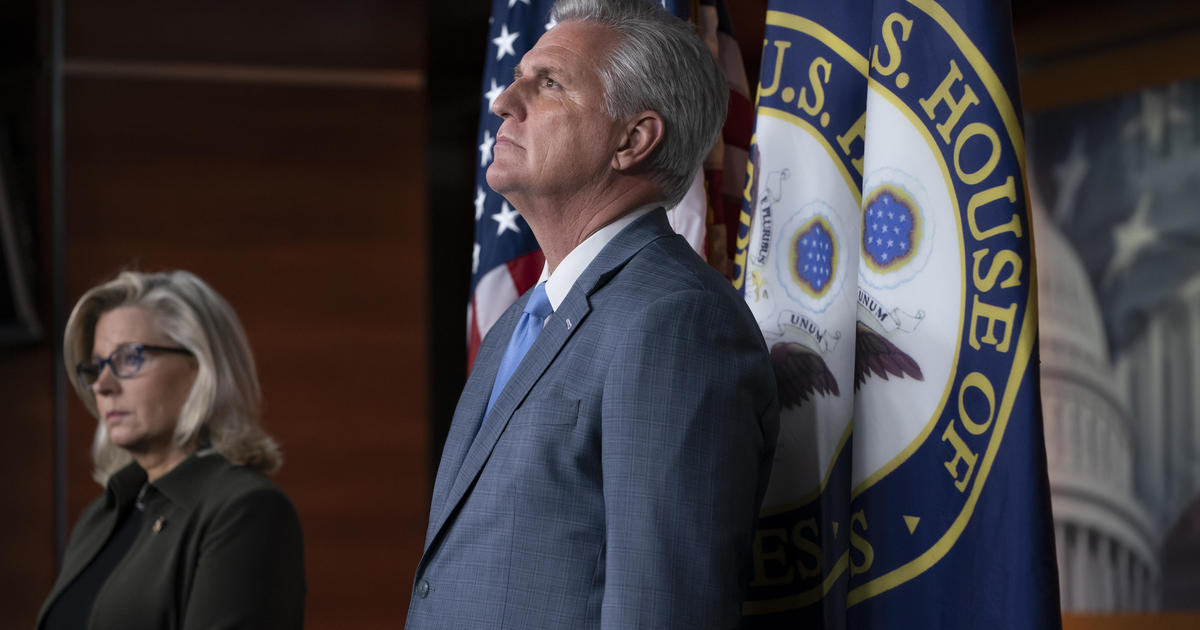
She was once seen as the rising star of the Republican Party, but for Wyoming Congresswoman Liz Cheney, the tides have shifted, and she now finds herself on the outs with the leadership of the GOP. Cheney’s vote to impeach President Donald Trump gained her national attention and accolades from across the aisle, and consequently, several enemies within her own party. Cheney comes with pedigree, profile and a strong following, but with Republicans boasting a record 35 women in Congress, the ousting of Cheney might not have the impact it once did. “It remains to be seen if this decision is a reflection of the Republicans’ willingness to remove a woman from leadership when they aren’t worried about having a ‘woman problem’ in their delegation,” said Dr. Mary-Kate Lizotte, an expert in gender difference in politics and associate professor of political science at Augusta University. What happened Wednesday may have short- and long-term consequences for the Republican party, including how it shapes itself for mid-term elections and the 2024 presidential election. If you are a journalist covering this topic, then let our experts help. Dr. Mary-Kate Lizotte is an expert in political behavior and the implications of gender differences in public opinion. She is available to talk about discuss gender roles in politics and the upcoming Senate runoffs in Georgia. Click on her name to schedule an interview.
