
Experts Matter. Find Yours.
Connect for media, speaking, professional opportunities & more.
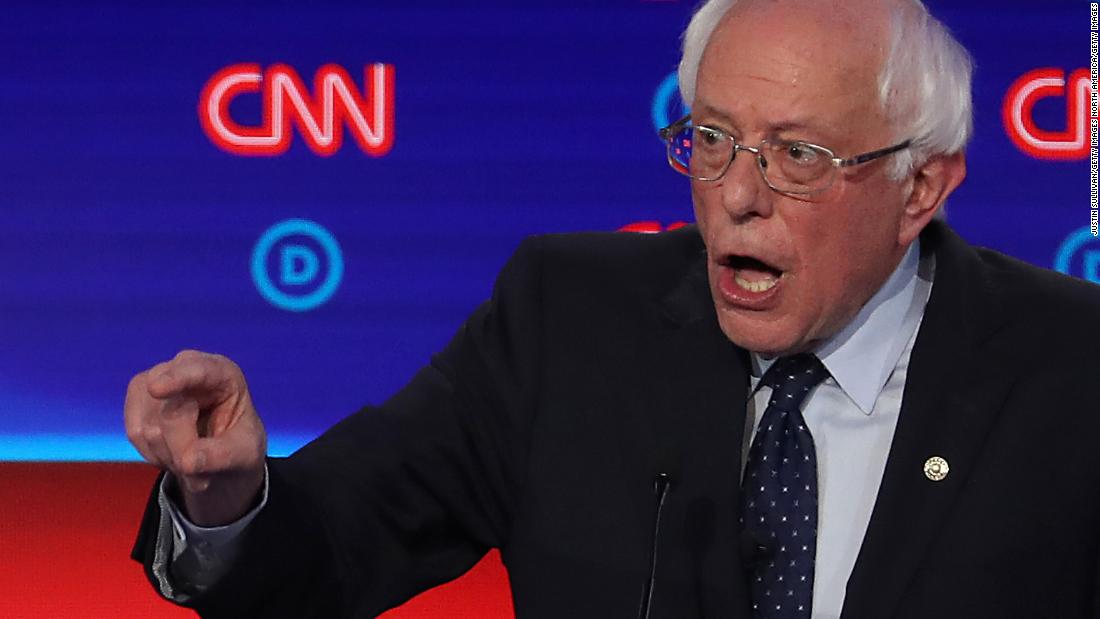
Detroit Rock City – Did any Rock Stars Emerge from Day 1 of the DNC Debates?
It was the first of two crucial days for anyone looking to lead the DNC into the 2020 election next fall. The reality is, with more candidates on the field than a World Cup soccer match, it’s too crowded for the very limited amount of airtime, fundraising and attention needed to win this race. Quite soon, there will need to be a substantial culling of this herd. Odds are, come the end of summer the field will be whittled down to three or four from the current two dozen (or so) currently contesting. Last night was Day 1 of the DNC debates in Detroit. Here were the key takeaways: Bernie Sanders came out spitting fire about health care and tried to reassert his prominence. Sanders has receded recently, was this the resurgence he needed? Pete Buttigieg made it clear he is the young, fresh and non-Washington choice – will it stick and can he gain traction? Montana Governor Steve Bullock knew this was his shot to get the attention a campaign needs. Late to the game, can he emerge as a credible candidate? And Elizabeth Warren and Beto O’Rourke seemed to fade into the crowd – is this a death knell for a campaign at this point? It was a long night and another one happens tonight. So, who emerged as the winner and who fell hard on Day 1? Who needs to leave? And what were the key policy planks that are starting to stick There is still a long way to go until the first Iowa primary in February, but if you are a journalist covering this long road – let us help. Dr. Stephen Farnsworth is professor of political science and international affairs at the University of Mary Washington. A published author and a media ‘go-to’ on U.S. politics, he is available to speak with media regarding the long journey to lead the DNC in 2020. Simply click on his icon to arrange an interview.



A crowd of presidential candidates – who needs to surge and who needs to go?
To date, there are 25 registered and “serious” candidates vying to lead the Democratic Party in the 2020 election against President Donald Trump. To put it in perspective: If this were an NFL game, you’d have a full field and still three players left watching and waiting on the sidelines for their chance to touch the ball. It’s a lot of people. Odds are, given the enormous costs and time a campaign requires, it’s just not sustainable for most of the candidates. On July 30 and 31, CNN will be hosting two debates to try and introduce all these candidates to a national audience. Screen time will be limited and opportunities must be seized. It’s a crucial moment for most of the 25. So next week, some will emerge and likely, others will have to accept the reality that they just won’t be president. What will it take to emerge from the pack? Of the more popular candidates – who is at risk of losing relevance? Is there a dark horse who could upset the more usual suspects? There is a lot to know going into these debates and that’s where our experts can help. Dr. Gregg R. Murray, professor of political science at Augusta University, is available to talk about the current race to lead the DNC. Murray’s research focuses on political behavior and psychology with specific interests in voter mobilization and turnout. He is also executive director of the Association for Politics and the Life Sciences.


Democratic Presidential Debates
Jason Husser, director of the Elon University Poll and associate professor of political science, recently offered his thoughts about the crowded field of contenders for the Democratic presidential nomination, and how viewers can assess the performance of the host of candidates during televised debates. "It's easy to think about these debates in terms of a sports metaphor — who won?" Husser says. "If we think about these debates as a game, that would mean you have 20 teams on the field, you have an unclear set of rules that change depending upon who you're talking to about how you score points and what it takes to win. And you have refs that are biased ... . When we think about these debates, especially about who won and who lost, we miss a real opportunity to learn about the candidates." The Elon University Poll will be offering valuable insight into what's on the mind of N.C. voters leading up to the 2020 elections, with North Carolina to host the GOP Convention in August 2020 and sure to be a battleground state again. If Dr. Husser can assist with your reporting about the 2020 presidential election and N.C. politics, please reach out to Owen Covington, director of the Elon University News Bureau, at ocovington@elon.edu or (336) 278-7413. Dr. Husser is available for phone, email and broadcast interviews.


In what was once a wide field to replace the fallen British Prime Minister Theresa May has now become a race for Boris Johnson to lose. As the outspoken and bold British MP looks to unite his party, pull Britain from the EU by the end of October and defeat Labour in the next election – what will his presence at 10 Downing Street mean for his country, Europe the rest of the world? Britain is one of the cornerstones of the west, but what will a wildcard like Johnson mean? What’s his background and do people need to know more about the man who will reside in the chair as historic figures like Tony Blair, Margaret Thatcher and Sir Winston Churchill? If you are covering and need to no more – that’s where we can help. Dr. Glen Duerr's research interests include nationalism and secessionism, comparative politics, and international relations theory. Glen is available to speak to media regarding Boris, Brexit and Britain – simply click on his icon to arrange an interview.


Tuesday November 03, 2020 – it’s 17 months away. For most of us – that is two World Series and at least a one new iPhone released before the date even hits the calendar. But if you are a political junkie or a journalist – that date is the finish line for what is an expected election of historic proportions that is already underway. On the left, there are at least two dozen candidates vying to lead the Democrats. Some are brand name Washington players; some are rising stars and some are long shots – but each is trying to separate themselves from the peloton of politicians hoping to make that big splash in Iowa during the first week of February in 2020. And if Iowa doesn’t provide results – there’s always New Hampshire and then the Carolinas. On the other side, President Donald Trump has already declared his candidacy. He’ll rely on the economy and odds are...hoping his teflon that ensure nothing ever seems to sticks sustains through the next year and a half. Through it all there will be controversy, scandals, rhetoric, policies and promises. And if you are a journalist, you’ll need an expert to help you navigate through it all. That’s where we can help. Mark Caleb Smith is the Director of the Center for Political Studies at Cedarville University. Mark is available to speak with media regarding the long journey to lead the DNC in 2020 and the election. Simply click on his icon to arrange an interview.

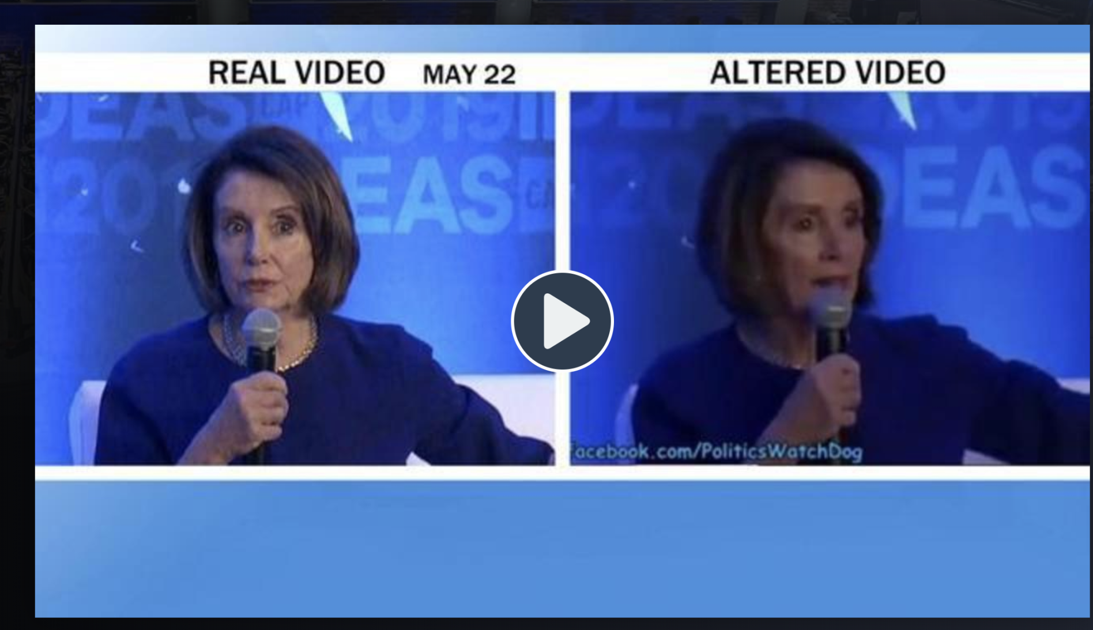
A closer look at deepfakes. Let our experts explain if there’s a reason to worry.
Deepfakes…they’re eerie, entertaining and getting a lot of attention. Deepfake videos are made using artificial intelligence technology which can manipulate someone's face in a video to make it look like they are saying something that they didn't. It's one level up from dubbing, or lip syncing, and can appear very convincing. One example is a video that was made using footage of Mark Zuckerburg in 2017; it was doctored and falsely portrays the Facebook CEO discussing how he had stolen data. – The Sun, June 26 The new concept is all the rage and has seen people spoofed, mocked and tricked. But as once again technology outpaces legislation and with an election approaching, deepfakes have some people going off the deep end. Every day, thousands of videos are posted online, which means that any potential filtering program would need to be able to quickly and efficiently detect fake content. Even then, such media would likely be removed only after being published, meaning that the video would likely have already had an impact. For these reasons, deepfakes are expected to contribute to the upcoming 2020 election in the United States, likely acting as an agent of spreading fake news. However, Edward Delp, a Purdue University professor who developed a computer program to help detect these videos, believes deepfakes pose a bigger threat. “Deepfakes pose a threat to more than just political videos,” he said. “It can be used in making fake child pornography, revenge porn and financial bribes. Just general criminal behavior.” – The Exponent (Purdue University), June 21 As deepfakes become more common on social media and the internet, odds are they will make their way – accidentally or not – into the actual media. And as America still battles with the fake news phenomenon, will Deepfakes further erode our trust in media and our leaders? As deepfakes become more common on social media and the internet, odds are they will make their way into the actual media. So, what can be done? How will these deepfakes affect the perception of news media? What simple advice can we apply to verify if something is real or fake? And do these videos represent a threat to democracy, as some experts are saying? Dr. Gregg R. Murray, professor of political science at Augusta University, is available to talk about the implications of this new threat. Murray’s research focuses on political behavior and psychology with specific interests in voter mobilization and turnout. He is also executive director of the Association for Politics and the Life Sciences.
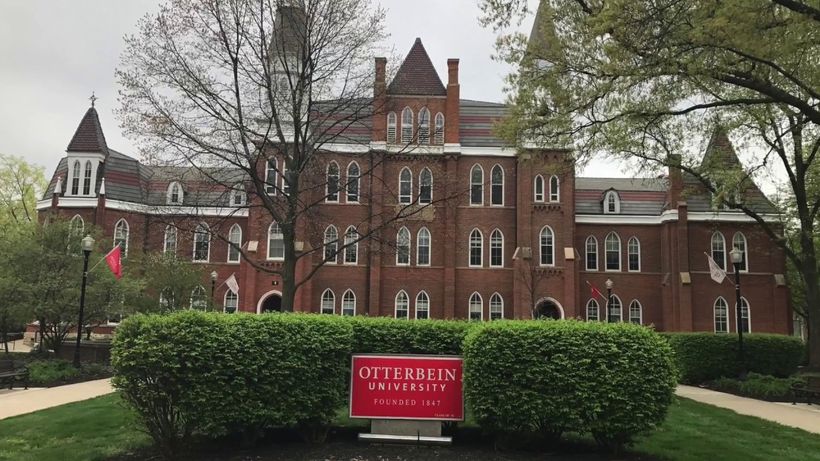
This year, 26 students from Columbus (Ohio) City Schools (CCS) walked across the stage to receive their Otterbein degrees as part of the Class of 2019. It was a result of a partnership between two great educational institutions that is ensuring post-secondary education is accessible to students in central Ohio. “(The event) was a great example of how two educational institutions can come together and make an impact on the lives of young people and the larger community,” said Tanya L. McClanahan, supervisor of higher education partnerships for CCS. For some time now, Otterbein and CCS have been working together to provide several academic options and initiatives to students from Ohio’s largest school district. Since 2014 the Urban Districts Initiative has been working with Columbus City Schools, as well as South-Western City Schools, Westerville City Schools, Whitehall City Schools and Cristo Rey, all districts with more than 35%of students living in poverty. The Initiative is an enhanced need-based aid model that reduces the gap between aid and expected family contribution to the smallest amount possible and has driven significant increases in enrollment of low-income students at Otterbein, as well as sparking a significant increase in student success. The Seniors-to-Sophomores program, where Otterbein offers a summer College Credit Plus course for CCS students that pairs an academic course with a for-credit study skills course. The University also has a STEM skills refresher course for entering students funded through a grant from Nationwide. Otterbein offers Professional Learning Communities (PLCs) for district teachers and Otterbein faculty. In PLCs, teachers and faculty come together to discuss issues related to pedagogy and serving students to enhance the work of both institutions. Recently, Otterbein introduced a scholarship for the dependent children of CCS district (benefits eligible) employees that reduces the cost of an Otterbein education to the average of the state supported universities in Ohio. There are a lot of great things happening in Otterbein’s financial aid and recruitment models that are seeing positive outcomes in the Otterbein and central Ohio communities - and if you need to know more, that’s where our experts can help. Jefferson Blackburn Smith is the Vice President for Enrollment Management and is an expert in financial aid, scholarships, politics, and higher education. He is available to speak to media regarding these topics – simply click on his icon to arrange an interview. To learn more, click the link below: https://www.otterbein.edu/news/cohort-of-columbus-city-schools-alumni-to-graduate-from-otterbein-university-sunday/


Big Brother is watching (literally)…let our experts explain the new social credit system
There’s a new way of life coming to China, and for most observers it feels a lot like the book 1984. As officially explained, China’s new ‘Social Credit System’ – it is designed to enforce accountability, keep the public safe and as the Chinese government put it – to create a “culture of sincerity” that will “restore social trust.” What it will do is shame, embarrass, hamstring and potentially ruin the social and economic opportunities for anyone who falls out of line with strict government regulations and rules. It sounds frightening to us, but according to Chinese officials, it’s just a concept Westerners are to ‘unsophisticated’ to comprehend. Here’s a snapshot from the article attached below outlining some of the social shaming and consequences: “And the punishments are shocking. The government algorithm will go as far as to install an “embarrassing” ring tone on the phones of laolai, shaming them every time they get a call in public. But an embarrassing ring tone, flight bans and slow trains are just the beginning of the dystopian nightmare that is now daily life in China for tens of millions of people. A low social credit score will exclude you from well-paid jobs, make it impossible for you to get a house or a car loan or even book a hotel room. The government will slow down your internet connection, ban your children from attending private schools and even post your profile on a public blacklist for all to see. According to Australia’s ABC News, the government has produced a “Deadbeat Map” via an app on WeChat, which shows a radar-style graphic identifying every laolai in the vicinity of the user. “Tapping on a person marked on the map reveals their personal information, including their full name, court-case number and the reason they have been labeled untrustworthy. Identity-card numbers and home addresses are also partially shown,” ABC reported.” New York Post It’s as astounding as it is almost Orwellian. And it is happening. Are you covering and do you need to know more? That’s where our experts can help. Dr. Glen Duerr's research interests include nationalism and secessionism, comparative politics, and international relations theory. Glen is available to speak to media regarding the rise of extremism – simply click on his icon to arrange an interview.

Trump, tariffs and the long game
He said he’d get tough on China and make sure America was getting the better end of any trade deal – and President Trump seems bound and determined, despite the critics and advice from his own cabinet, that massive tariffs and a trade war with China is a good thing for America. Last week Trump more than doubled tariffs on $200 billion in Chinese goods. China reacted with tariffs on American agricultural and other products. The response, Trump is now looking at approximately $300 billion in import levies on more Chinese goods. As far as trade wars go, this one could be epic in its scale and economic proportions. But who will blink first, who will win and ultimately – who is paying the costs and taking on the burden of all the financial collateral damage at the end of the day? Is this a matter of short-term pain for long-term gain for America’s economy? Or is this political posturing that will at the end of the day hurt the country’s bottom line? There are a lot of questions to be asked and that’s where two of the experts from Cedarville can help. Dr. Glen Deurr's research interests include nationalism and secessionism, comparative politics, and international relations theory. Jeff Haymond, Ph.D. is Dean, School of Business Administration at Cedarville ad is an expert in finance and trade. Glen and are both available to speak to media regarding the current trade war with China – simply click on either expert’s icon to arrange an interview.

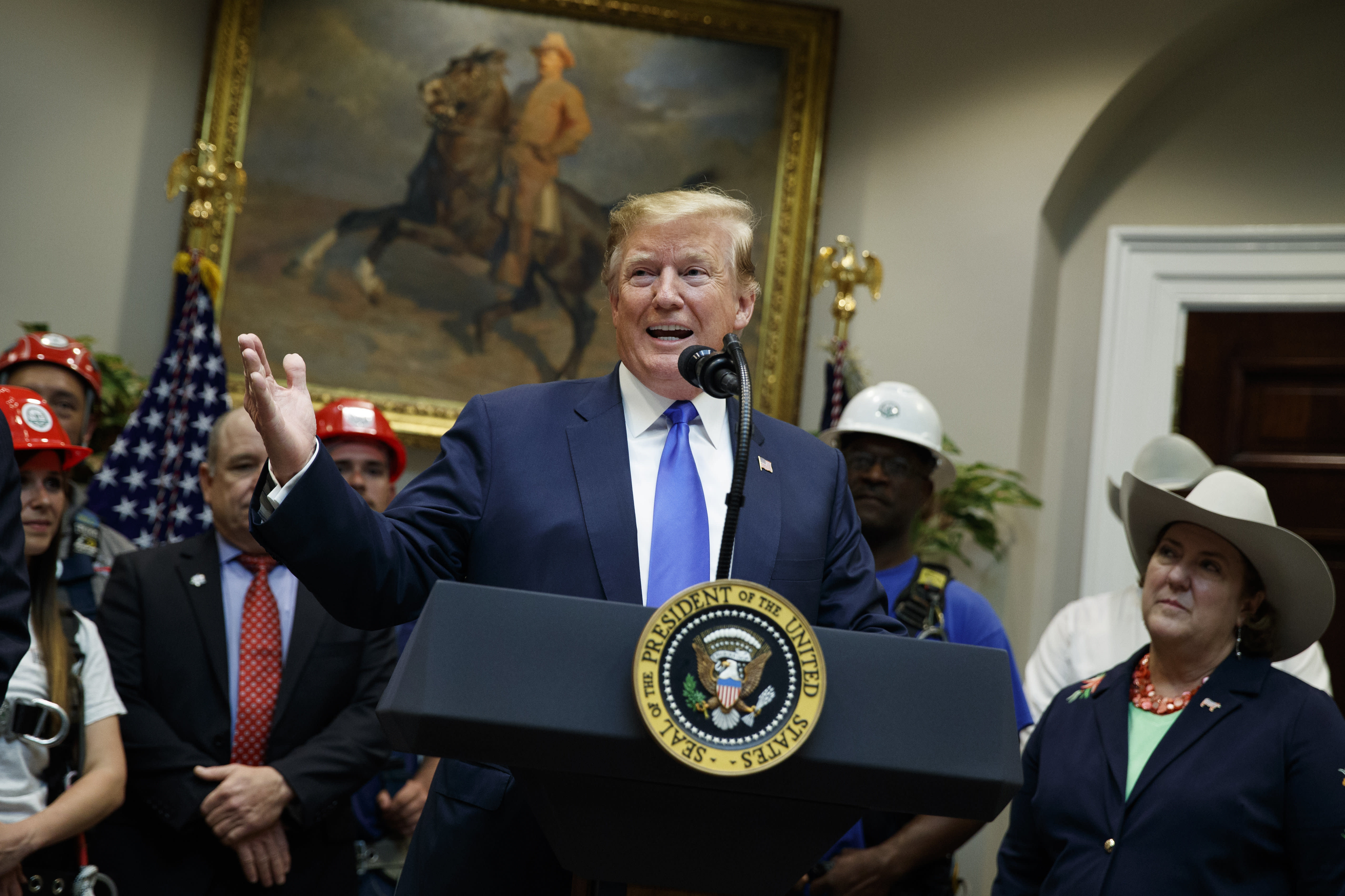
Is Wall Street hedging on a Trump win in 2020? Let our experts tell you why.
“The economy, stupid!” It’s a famous quote that Bill Clinton campaigner James Carville used in 1992. And the Ragin’ Cajun was right – odds are, when it comes to Americans casting a vote in presidential elections – the economy calls the shots on how they vote. And despite the scandals, the Tweets, the gaffes and the indictments – the economy under President Donald Trump is booming. So, while convention and traditional politics would likely write of the presidency of Donald Trump as a one term wonder - an article about a recent report commissioned by Goldman Sachs says Democrats and pundits shouldn’t be so sure to write him off. ‘In a comprehensive report released late Saturday, the investment bank gave its preliminary thoughts on a general election that’s still more than a year away. While Trump re-election is far from assured, Goldman’s economists believe the president is bolstered by “the advantage of first-term incumbency and the relatively strong economic performance,” in what is sure to be a “close call” election.’ - Yahoo! Finance Are you covering the race for 2020? Should Democrats change their focus away from the scandals and the Mueller Report and focus on economics? If not, what are the issues that will sway undecideds next year? And what will a potential run by an Independent candidate mean for the race? There are so many storylines already at play and a long way to go before November 2020 – but the election is already daily news and that’s where our experts can help. Dr. Marc Clauson is a professor of history and law at Cedarville. Marc is an expert in the fields of political and economic philosophy Dr. Clauson is available to speak with media – simply click on his icon to arrange an interview.