
Experts Matter. Find Yours.
Connect for media, speaking, professional opportunities & more.

#Expert Opinion: 'Gun laws need an overhaul'
In the aftermath of last week's school shooting in Georgia, Jennifer Necci Dineen and Kerri M. Raissian from UConn’s ARMS Center contributed this compelling piece to The Atlanta Journal-Constitution. The entirety of the article is available here: On Sept. 4, the United States experienced its 45th school shooting of 2024, this time at Apalachee High School in Winder, Georgia. Barrow County Sheriff Jud Smith called the shooting “pure evil” and reported the suspected shooter would be tried as an adult. Since then, the shooter’s father has also been charged. A criminal justice response is vital, but it cannot be our only response. Gun laws need an overhaul. The failure to do so means that we will continue charging shooters and their families and attending the funerals of those senselessly killed. Laws are the role of government. Should elected officials fail to act (again), we think it is also fair to hold them responsible for the firearm violence killing our nation’s children. Georgia lawmakers have passed legislation to protect children in other ways. Georgia requires that children be at least 16 years old and to have held a learner’s permit for a year before they can drive: minors under 16 cannot be employed in dangerous or harmful jobs; and those under 17 cannot marry. These restrictions recognize that children’s prefrontal cortex, the part of their brain responsible for reasoning, impulse control and decision-making, is not yet fully formed. Yet, despite firearms being the leading cause of death for children in the United States, Georgia has minimal regulations governing children’s firearm access. There is no minimum age for purchasing or possessing rifles or shotguns, no permit required for carrying firearms in public (whether open or concealed) and no mandate for secure firearm storage (such as unloading, locking and storing ammunition separately). Details of the shooting in Winder continue to emerge, but let’s start with what we know. Reports indicate that the shooter and his father were questioned by the Jackson County Sheriff’s Office in May 2023 following multiple anonymous tips about online threats, including images of guns. The suspect’s father claimed that his child did not have unfettered access to the guns. The authorities did not have probable cause for an arrest, and so they left and the guns stayed. And, in fact, the father bought his son a new gun — an AR-15 — as a Christmas present. Perhaps more disturbing is that this kind of negligence and indifference is not an anomaly. A similar set of facts surround the Nashville Waffle House shooter and the Michigan Oxford High School Shooter. In both cases, parents ignored warning signs and helped their sons keep or procure firearms that were used in mass shootings. Moreover, almost three-quarters of guns used in gun-related incidents at schools come from the home or someone the shooter knows. It’s fair to ask: Where are the parents? However, we also want to know where are the elected officials charged with keeping us and our children safe when they are at school, the movies, a parade or otherwise living their lives? Laws mandating secure firearm storage, permitting, minimum age requirements and background checks have been proven to lower firearm homicide rates. Emergency risk protection orders, or red-flag laws, which temporarily prevent individuals deemed a danger to themselves or others from possessing or purchasing firearms, have also been effective in reducing firearm homicides. Georgia’s failure to implement such regulations, allowing a child with underdeveloped decision-making skills to access a gun, means the state shares the blame for the gun-related injuries and deaths at Apalachee High School. Georgia Gov. Brian Kemp is right. It’s not the time to “talk about safety and policy.” The time was years ago, but it’s never too late to do the right thing. Kerri Raissian is an associate professor in the School of Public Policy at the University of Connecticut; director of the University of Connecticut's UConn’s Center for Advancing Research, Methods, and Scholarship (ARMS) in Gun Violence Prevention; and co-director of the Institute for Collaboration on Health, Intervention, and Policy (InCHIP) Gun Violence Prevention Research Interest Group. Her research focuses on child and family policy, with an emphasis on understanding how policies affect fertility, family formation, and family violence. She is available to speak to media about this important topic - simply click on her icon now to arrange an interview today.


#ExpertSpotlight: Mpox - are we ready?
As global health continues to navigate the challenges of infectious diseases, the re-emergence and spread of Monkeypox (now known as Mpox) underscores the ongoing threat posed by zoonotic viruses. This topic is critical not only because of its public health implications but also due to the broader issues it raises concerning global preparedness, vaccination strategies, and the socio-economic impact of outbreaks. The resurgence of Mpox, particularly in non-endemic regions, highlights the need for vigilant public health measures and cross-border cooperation to contain its spread. As the world remains focused on preventing another global health crisis, Mpox serves as a pertinent reminder of the interconnectedness of human, animal, and environmental health. Key story angles include: Vaccination strategies and public health response: Explore how different countries are deploying vaccines to control Mpox, and the challenges faced in achieving widespread immunity. Global health security and disease surveillance: Investigate the effectiveness of international disease surveillance systems in detecting and responding to outbreaks like Mpox, and the lessons learned from the COVID-19 pandemic. The role of zoonotic diseases in global pandemics: Examine the origins of Mpox as a zoonotic disease, and the broader implications for how human activities are influencing the spread of diseases from animals to humans. Impact on marginalized communities: Discuss how Mpox disproportionately affects marginalized populations, including those with limited access to healthcare, and the importance of equitable health interventions. Public communication and misinformation: Analyze the role of media and public health authorities in communicating accurate information about Mpox, combating misinformation, and educating the public about prevention and treatment. Economic implications of outbreaks: Examine the economic impact of Mpox outbreaks, particularly in regions where tourism, trade, and healthcare resources are significantly affected by public health crises. By addressing these angles, journalists can provide critical insights into the multifaceted impact of Mpox on global health, public safety, and socio-economic stability, contributing to a more informed and prepared public. Connect with an expert about Mpox: To search our full list of experts visit www.expertfile.com Photo Credit: National Institute of Allergy and Infectious Diseases


Gold medal-worthy experts for Olympic Summer Games coverage
The University of Delaware boasts several experts who can comment on health-related topics such as injuries and training and business-focused areas like marketing and team behavior as they relate to the 2024 Olympic Games in Paris. Matt Robinson Professor, sport management Relevant expertise: Will be in Paris and can discuss the Olympics from an onsite perspective; can give the backstory on The International Coaching Enrichment Certificate Program (ICECP) and what’s new in the Paris Olympics. Link to profile and contact Tom Kaminski Professor, kinesiology and applied physiology Relevant expertise: Can comment on the impact of heading in Olympic soccer and has studied the risks of concussions in sports for nearly three decades. Link to profile and contact Karin Silbernagel Professor, physical therapy Relevant expertise: Research aims to advance the understanding of tendon and ligament injuries and repair. Can also discuss sailing. Link to profile and contact Tim DeSchriver Associate professor, sport management Relevant expertise: Sport finance, economics and marketing Link to profile and contact Other experts: INJURIES: Tom Buckley Associate professor, kinesiology and applied physiology Relevant expertise: Head impacts from boxing. Stephanie Cone Assistant professor, biomedical engineering Relevant expertise: Studies the structure-function relationship that exists in tendons and ligaments with a special interest in changes in this relationship during growth and following injury. Mike Eckrich Clinical instructor, physical therapy Relevant expertise: Weightlifting; can talk about the difference between men’s and women’s injuries and form in the sport. Donald Ford Physical therapy Relevant expertise: Shoulder injuries/rehab expert Jeffrey Schneider Senior instructor, kinesiology and applied physiology Relevant expertise: Athletic training and injury prevention, with a particular interest in ice skating injuries. Worked with athletes competing in Winter Olympics (2002, 2006) as a strength and conditioning coach and athletic trainer. EVENTS: Jocelyn Hafer Assistant professor, kinesiology and applied physiology Relevant expertise: Race Walk events and how biomarkers are used in walking studies. Airelle Giordano Associate professor, physical therapy Relevant expertise: Gymnastics; she was a collegiate gymnast Kiersten McCartney Doctoral student Relevant expertise: Can chat about Paralympic Triathlon (running, hand cycling, swimming). Steve Goodwin Associate professor, health behavior and nutrition sciences Relevant expertise: He is also in Paris leading a study abroad cohort. He has been to multiple Olympics, and can also speak to on-site experience, differences in games, etc. George Edelman Adjunct professor, physical therapy Relevant expertise: How the "underwaters” technique gives Olympians an edge. BUSINESS: John Allgood II Instructor, sport management Relevant expertise: Sport business management, event management SCIENCE: Joshua Cashaback Assistant professor, biomedical engineering Relevant expertise: Specializes in neuromechanics and control of human movement. His research falls under two major themes: The neuroplasticity and adaptation research line tests how reinforcement feedback can subserve our ability to acquire new motor skills.


On this day in 1981, the Centers for Disease Control and Prevention (CDC) reported the first cases of what would later be known as Acquired Immunodeficiency Syndrome (AIDS). This event marks a crucial moment in medical history, heralding the beginning of an epidemic that would profoundly impact millions of lives globally. This topic remains newsworthy due to its lasting implications on public health, medical research, and social stigma. Understanding the evolution of the AIDS crisis provides insights into ongoing challenges in healthcare, policy, and community support. Key story angles that may engage a broad audience include: Historical Overview of the AIDS Epidemic: Tracing the timeline of the AIDS crisis from its early days to the present, highlighting key medical and social milestones. Advancements in HIV/AIDS Treatment and Research: Exploring the breakthroughs in antiretroviral therapies, the search for a cure, and the latest research developments. Public Health Policies and Responses: Analyzing the effectiveness of public health initiatives and policies in managing and preventing HIV/AIDS, including current strategies and future directions. Social and Cultural Impact: Investigating how the AIDS epidemic has influenced societal attitudes, policies towards marginalized communities, and the ongoing fight against stigma and discrimination. Global Perspective: Examining the global impact of HIV/AIDS, comparing responses and outcomes in different regions, and the role of international organizations in combating the epidemic. Personal Stories and Advocacy: Sharing personal narratives of those affected by HIV/AIDS, the role of advocacy groups, and the importance of community support in addressing the epidemic's challenges. These angles provide journalists with a range of perspectives to explore, ensuring comprehensive coverage of the historical, medical, and societal dimensions of the AIDS epidemic. Connect with an Expert about the History of AIDS in America: Dr. Adey Nyamathi Founding Dean and Distinguished Professor of Nursing · UC Irvine Petra Molnar Associate Director · Refugee Law Lab, Osgoode Hall Law School Andrea Benoit Assistant Professor (Adjunct) · Western University David J. Hardy Professor of Psychology | Psychological Science · Loyola Marymount University Valerie Earnshaw Associate Professor, Human Development and Family Sciences · University of Delaware To search our full list of experts visit www.expertfile.com Photo credit: Ehimetalor Akhere Unuabona

It's National Heat Awareness Day - Our #Experts are Here to Help
As global temperatures continue to rise, Heat Awareness is becoming an increasingly critical issue that affects public health, safety, and infrastructure. This topic is not only newsworthy due to its immediate impact on communities but also because of its connection to broader issues such as climate change, urban planning, and health equity. The importance of Heat Awareness spans across various sectors, providing numerous story angles for journalists to explore: The health risks associated with extreme heat and strategies for prevention and protection The role of urban planning and green infrastructure in mitigating heat island effects The impact of heatwaves on vulnerable populations, including the elderly, children, and low-income communities Technological and innovative solutions for cooling cities and enhancing public resilience The intersection of climate change policies and heat management strategies Public awareness campaigns and community initiatives to promote heat safety As we enter the warmer months, journalists have an opportunity to delve into these multifaceted narratives, highlighting the urgent need for Heat Awareness and the collaborative efforts required to safeguard communities against the growing threat of extreme heat. Connect with an Expert about Heat Awareness: Douglas J. Casa, Ph.D. CEO-Korey Stringer Institute, Board of Trustees Distinguished Professor, Department of Kinesiology · University of Connecticut Mariana Brussoni Associate Professor · University of British Columbia Paul Gordon, Ph.D. Professor of Health, Human Performance and Recreation · Baylor University Dave Hubbard Founder · America's Fitness Coach® To search our full list of experts visit www.expertfile.com Photo Credit: Ibrahim Rifath

Understanding the red flags: Signs of intimate partner violence explained by an expert
Intimate partner violence is a serious and widespread issue that affects millions of individuals every year. Angela Hattery, professor of women and gender studies at the University of Delaware and co-director of its Center for the Study & Prevention of Gender-Based Violence, can talk about ways to spot warning signs in an effort to prevent further harm and provide support to those in need. "When we think about the warning signs, especially for progressing to lethal violence, the absolute top early warning sign is strangulation,” Hattery recently said to The 19th, a nonprofit newsroom focused on women and LGBTQ+ people. In an article on the recent passing of O.J. Simpson, she noted that "the Simpson trial was a missed opportunity" and "While the nation debated Simpson’s guilt or innocence, it overlooked the signs of intimate partner violence that his wife had reported before her murder." Hattery's expertise has appeared in a number of outlets including The Conversation and New York Public Radio, an NPR affiliate. She can be reached by clicking her "View Profile" button.


#ExpertSpotlight: 10th anniversary of Flint, MI, water crisis beginning
The 10th anniversary of the Flint, MI water crisis marks a pivotal moment in environmental justice and public health awareness. This event matters deeply to the public as it sheds light on systemic failures in infrastructure management, government accountability, and the disproportionate impacts of environmental hazards on marginalized communities. Here are several sub-topics that could be of interest to a broad audience: Health Impacts and Long-term Consequences: Explore the lingering health effects on residents exposed to lead-contaminated water, including neurological disorders, developmental delays, and mental health challenges. Government Response and Accountability: Investigate the role of local, state, and federal authorities in addressing the crisis, including accountability measures taken against officials responsible for the negligence and mismanagement. Community Resilience and Activism: Highlight the resilience of Flint residents and grassroots organizations in advocating for clean water access, demanding justice, and implementing community-led solutions. Infrastructure Challenges Nationwide: Examine the broader implications of Flint's water crisis on infrastructure investment, maintenance, and regulation across the United States, particularly in aging urban areas. Policy Reforms and Prevention Efforts: Discuss policy reforms enacted post-crisis to prevent similar incidents, such as improvements in water quality testing, infrastructure upgrades, and measures to ensure environmental justice. Legacy of Environmental Injustice: Analyze the broader socio-economic factors contributing to environmental injustices like the Flint water crisis, including racial disparities in access to clean water and the intersectionality of poverty and environmental hazards. This anniversary presents an opportunity for journalists to revisit the ongoing repercussions of the Flint water crisis, amplify the voices of affected communities, and advocate for sustainable solutions to prevent similar tragedies in the future. Connect with an Expert about the Flint, MI water crisis: To search our full list of experts visit www.expertfile.com Gerald Kauffman Project Director, Water Resources Center, Institute for Public Administration; Assistant Professor, Biden School of Public Policy and Administration · University of Delaware Viviane Yargeau Professor, Department of Chemical Engineering · McGill University Jared L. Cohon University Professor · Carnegie Mellon University Joe Brown Assistant Professor, Environmental Engineering · Georgia Tech - COE For journalists with questions or looking to cover the streaming wars, here is a select list of experts. Photo Credit: Bruno Guerrero
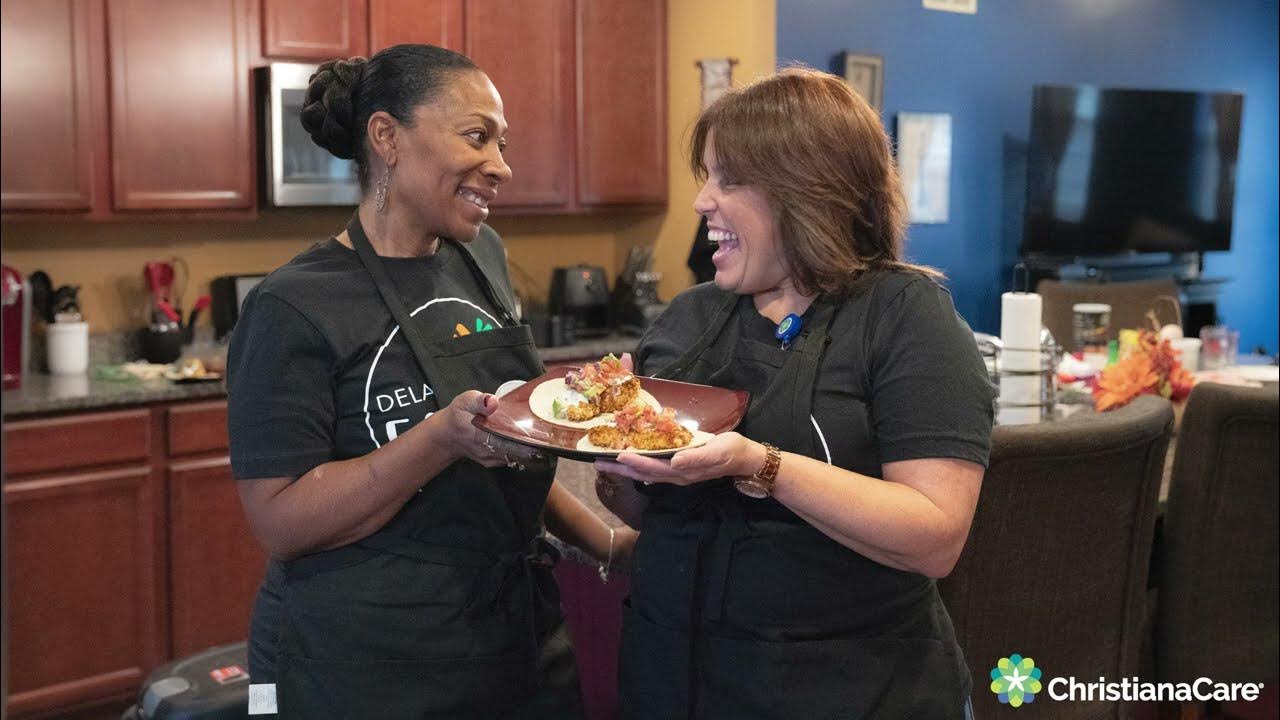
Food is Medicine: ‘It’s Not Just About Food–It’s About Friendship
Kim Solomon’s kitchen showed all the signs of a good lunch in the making – chopped veggies on the counter, a few dirty dishes in the sink and two people laughing as they cooked. “Don’t worry, we’re going to clean all this up,” ChristianaCare community health worker Michelle Torres, BBA-HM, said as she sliced tilapia for the heart-healthy fish tacos she was making with Solomon. “I’m not worried about the mess, especially when it tastes this yummy,” Solomon said as she watched Torres place the raw fish – coated with panko crumbs, spices and an egg wash – into the air fryer. A few years earlier, Solomon’s lunch would have been something quick from the pantry after cooking for her sons or helping a neighbor. But after dealing with the life-threatening effects of high blood pressure, she is learning – with Torres’ help – how to prioritize her own nutrition and health. Solomon is one of more than 225 patients enrolled in the Delaware Food Farmacy, a ChristianaCare partnership with Lutheran Community Services that provides weekly deliveries of locally sourced produce, meat and other foods, along with one-on-one support from a community health worker. Delaware Food Farmacy participants report lower A1C blood glucose levels, healthier blood pressure readings and reduced body mass index. Dishing out good health “It took me getting very sick to finally make my own health a priority in my life, and that’s a humbling experience,” said Solomon, who lives in Bear, Delaware. “This is not just about food – it is about friendship, and Michelle’s support really gives me motivation. It keeps me excited to hear her voice and know that she’s there for me.” Kim Solomon (left) finds prioritizing her own nutrition and health can be delicious, as she prepares panko-crusted tilapia for fish tacos with community health worker Michelle Torres. ChristianaCare is expanding efforts to reduce food insecurity among patients in an ongoing commitment to ending disparities and in recognition that access to nutritious food is critical to overall health. In addition to the Delaware Food Farmacy, over 100 Maryland Primary Care Program (MDPCP) patients are participating in Healthy Food, Healthy Hearts, a 12-week program that delivers fresh groceries to under-resourced Medicare patients with complex health needs. “Our focus is empowering people to maintain their health by giving them the resources they need for whole-person care, including healthy food and education related to meal preparation and living with a chronic health condition,” said Erin Booker, LPC, chief biopsychosocial officer for ChristianaCare. “Through our work with our community partners in the Food Farmacy program in Delaware and our Healthy Food, Healthy Hearts program in Maryland, we are acknowledging the intersection of nutrition and health care and the importance of creating a more equitable food system.” Food is Medicine Both programs operate on the Food Is Medicine model, which recognizes that nutritious foods are essential for good health – and they must be accessible in the community, particularly in under-resourced areas. Studies have shown that evidence-based, tailored food interventions can lead to improved health outcomes and better use of health care services among participants while also reducing food insecurity, said Michelle Axe, MS, CHES, program manager of Food and Social Care Initiatives for ChristianaCare. The Centers for Disease Control and Prevention estimated in 2023 that food insecurity results in nearly $77 billion in excess health care spending. Veggie power: Much of the food in the Food Farmacy is sourced locally through a cooperative agreement with Delaware’s Department of Agriculture and the Farm-to-Community Program, which connects local farms with organizations distributing food to the community. Among Food Farmacy graduates, 26% report a decrease in food insecurity and 18% said they experience less anxiety. “With these programs, we’re offering participants an opportunity to make a change in their life, not only for them as individuals, but for the entire family,” Axe said. “This is about more than food.” From farm to table Getting health care professionals to prescribe healthier food options – and then making it possible for the patients to obtain them – helps close the gap between medical nutrition and financial health, said Rob Gurnee, executive director of Lutheran Community Services. “Providing food – that’s our core competency,” Gurnee said. “What really makes this program different and incredibly valuable is that ChristianaCare can funnel the right people into the program and then maintain these relationships to help patients make changes that are sustainable. Together, we utilize the strengths of our organizations with the goal of improving health outcomes.” Each week, Delaware Food Farmacy participants select from a menu of fresh produce, lean meats and fish, whole grains, low-fat dairy, snacks and other healthy items, all of which fall under the Dietary Approach to Stop Hypertension (DASH) diet. Fresh-picked: With Delaware Food Farmacy, patients are getting local produce that is typically picked within 24 to 48 hours. Much of the food distributed through Delaware Food Farmacy is sourced locally through a cooperative agreement with Delaware’s Department of Agriculture and the Farm-to-Community Program, which connects local farms with organizations distributing food to the community. Solomon’s refrigerator is filled with local produce, eggs and lean meats from the Food Farmacy program, but it’s Torres who keeps Solomon on the path to good health with her encouraging personality and a tasty supply of easy-to-make recipes. A recipe for healthy eating: Air Fryer Fish Tacos. Kim Solomon’s review? “Yummy.” “She’s there to support you and help you understand it’s going to be OK,” Solomon said. “She goes above and beyond every time. We need more Michelles in our world.”



30th Anniversary of the Rwandan Genocide
This Saturday is the 30th anniversary of the Rwandan genocide is a solemn occasion that holds profound significance for the public, reminding us of the horrors of mass violence and the importance of remembrance, reconciliation, and prevention. This event matters as it serves as a stark reminder of the devastating consequences of ethnic hatred and political violence, urging us to confront past atrocities and work towards building a more just and inclusive society. By reflecting on the lessons learned from the Rwandan genocide, we can strive to prevent similar tragedies from occurring in the future and promote peace, tolerance, and understanding. Story angles of interest to a broad audience may include: Commemorating the victims and survivors of the Rwandan genocide Examining the root causes and historical context of the genocide The role of international community in responding to the genocide and lessons learned Efforts towards reconciliation, justice, and healing in Rwanda Addressing the long-term impact of the genocide on Rwandan society and its diaspora Strategies for preventing genocide and mass atrocities in the future. Connect with an Expert about the Rwandan Genocide For journalists with questions or looking to cover the Rwandan Genocide, what caused it and the state of Rwanda today here is a select list of experts. To search our full list of experts visit www.expertfile.com Richard A. Wilson, Ph.D. Gladstein Distinguished Chair of Human Rights and Board of Trustees Distinguished Professor · University of Connecticut Glen Duerr, Ph.D. Professor of International Studies · Cedarville University Stephen Sloan, B.B.A., M.A., PhD. Director of Institute for Oral History, Associate Professor of History · Baylor University Lisa A. Costello Professor, Writing and Linguistics & Director, Women's, Gender and Sexuality Studies Program · Georgia Southern University Photo Credit: Reagan M

Cancer Diagnosis and Prevention Breakthroughs | Media Advisory
With two cancer diagnoses in the Royal family - cancer is regrettably a trending topic but also a vitally important one for everyone. In the ongoing battle against cancer, recent advancements in diagnosis and prevention offer promising avenues for both medical practitioners and the general public. With cancer being one of the leading causes of death globally, developments in this field not only hold significant importance for healthcare but also for individuals and families impacted by the disease. Here's why this matters and potential story angles: Why it Matters: Health Impact: Improved diagnostic tools and preventive measures can lead to earlier detection and more effective treatment options, potentially saving lives. Economic Implications: The economic burden of cancer treatment on individuals, families, and healthcare systems underscores the importance of preventative measures and early detection. Public Health: Addressing cancer at the diagnostic and prevention stages contributes to broader public health initiatives, reducing the overall incidence and mortality rates. Story Angles: Breakthrough Technologies: Explore innovative diagnostic technologies such as liquid biopsies or AI-driven imaging systems transforming cancer detection. Lifestyle and Prevention: Investigate lifestyle factors, from diet and exercise to environmental exposures, and their role in cancer prevention. Genetic Research: Cover advancements in genetic testing and personalized medicine, offering insights into individual risk factors and tailored prevention strategies. Access to Care: Examine disparities in access to cancer screening and prevention measures, particularly among underserved communities. Survivor Stories: Highlight stories of individuals who have benefited from early detection or preventive interventions, offering hope and inspiration. Policy and Advocacy: Discuss the role of policy initiatives and advocacy efforts in promoting cancer prevention strategies and ensuring equitable access to screening and diagnostic services. Connect with an Expert about Cancer Diagnosis and Prevention Breakthroughs For journalists seeking research or insights for their coverage about Cancer Diagnosis and Prevention Breakthroughs here is a select list of experts from our database. To search our full list of experts, visit www.expertfile.com Anna McDaniel Dean of the College of Nursing – University of Florida Jorge Cortes Director, Georgia Cancer Center – Augusta University Nicholas J. Petrelli Bank of America endowed medical director of the Helen F. Graham Cancer Center and Research Institute – ChristianaCare Katherine Reeves Professor of Epidemiology and Associate Dean of Graduate and Professional Studies, School of Public Health and Health Sciences – University of Massachusetts Amherst Nicole Onetto Deputy Director and Chief Scientific Officer – Ontario Institute for Cancer Research Photo Credit: National Cancer Institute