
Experts Matter. Find Yours.
Connect for media, speaking, professional opportunities & more.
The hidden treasure of digital piracy? It can boost bottom line for manufacturers, retailers
HBO's popular television series "Game of Thrones" returns in April, but millions of fans continue to illegally download the program, giving it the dubious distinction of being the most pirated program. Many may wonder why the TV network hasn't taken a more aggressive approach to combating illegal streaming services and downloaders. Perhaps it is because the benefits to the company outweigh the consequences. Research analysis by faculty in Indiana University's Kelley School of Business and two other schools found that a moderate level of piracy can have a positive impact on the bottom line for both the manufacturer and the retailer -- and not at the expense of consumers. "When information goods are sold to consumers via a retailer, in certain situations, a moderate level of piracy seems to have a surprisingly positive impact on the profits of the manufacturer and the retailer while, at the same time, enhancing consumer welfare," wrote Antino Kim, assistant professor of operations and decision technologies at Kelley, and his co-authors. "Such a win-win-win situation is not only good for the supply chain but is also beneficial for the overall economy." While not condoning piracy, Kim and his colleagues were surprised to find that it can actually reduce, or completely eliminate at times, the adverse effect of double marginalization, an economic concept where both manufacturers and retailers in the same supply chain add to the price of a product, passing these markups along to consumers. The professors found that, because piracy can affect the pricing power of both the manufacturer and the retailer, it injects "shadow" competition into an otherwise monopolistic market. "From the manufacturer's point of view, the retailer getting squeezed is a good thing," Kim said. "It can't mark up the product as before, and the issue of double marginalization diminishes. Vice versa, if the manufacturer gets squeezed, the retailer is better off. "What we found is, by both of them being squeezed together -- both at the upstream and the downstream levels -- they are able to get closer to the optimal retail price that a single, vertically integrated entity would charge." In the example of "Game of Thrones," HBO is the upstream "manufacturer" in the supply chain, and cable and satellite TV operators are the downstream "retailers." Kim and his co-authors -- Atanu Lahiri, associate professor of information systems at the University of Texas-Dallas, and Debabrata Dey, professor of information systems at the University of Washington -- presented their findings in the article, "The 'Invisible Hand' of Piracy: An Economic Analysis of the Information-Goods Supply Chain," published in the latest issue of MIS Quarterly. They suggest that businesses, government and consumers rethink the value of anti-piracy enforcement, which can be quite costly, and consider taking a moderate approach. Australia, for instance, due to prohibitive costs, scrapped its three-strikes scheme to track down illegal downloaders and send them warning notices. Though the Australian Parliament passed a new anti-piracy law last year, its effectiveness remains unclear until after it is reviewed in two years. As with other studies, Kim and his colleagues found that when enforcement is low and piracy is rampant, both manufacturers and retailers suffer. But they caution against becoming overzealous in prosecuting illegal downloaders or in lobbying for more enforcement. "Our results do not imply that the legal channel should, all of a sudden, start actively encouraging piracy," they said. "The implication is simply that, situated in a real-world context, our manufacturer and retailer should recognize that a certain level of piracy or its threat might actually be beneficial and should, therefore, exercise some moderation in their anti-piracy efforts. "This could manifest itself in them tolerating piracy to a certain level, perhaps by turning a blind eye to it," they add. "Such a strategy would indeed be consistent with how others have described HBO's attitude toward piracy of its products."


Declaring a New Year's Resolution for 2019? Baylor Experts Can Help
WACO, Texas (Dec. 17, 2018) – As 2019 approaches, many Americans are considering ways to improve themselves via New Year’s resolutions. Whether it’s personal, like losing weight or clearing clutter, or it’s professional, such as being a better manager or breaking away from smartphones, the options are wide-ranging. Here is a listing of Baylor University research that might help advise those seeking positive change in the coming year. First and Foremost, Resolve not to Over-resolve Only 10 to 20 percent of people keep their resolutions, says Sara Dolan, Ph.D., associate professor and graduate program director of clinical psychology. She advises setting “bite-sized goals instead of a massive behavior change.” Rather than giving up sugar completely or going all out at the gym, she advises achieving small successes before moving on. Ask Yourself: “Do I really want to work from home?” Many U.S. employees believe working from home – or at least away from the office – can bring freedom and stress-free job satisfaction. A 2018 Baylor University study says, “Not so fast.” The research, led by Sara Perry, Ph.D., assistant professor of management in Baylor University’s Hankamer School of Business, found that: Autonomy is critical to protecting remote employees’ well-being and helping them avoid strain. Employees reporting high levels of autonomy and emotional stability appear to be the most able to thrive in remote-work positions. Employees reporting high levels of job autonomy with lower levels of emotional stability appear to be more susceptible to strain. “Any organization, regardless of the extent to which people work remotely, needs to consider well-being of their employees as they implement more flexible working practices,” the researchers wrote. Read more here. Save Money by being a Better Negotiator In today’s retail climate, where stores struggle to keep up with online competition and customers can compare prices with the ease of their smartphones, the price tag is just a starting point for negotiations, said negotiation expert Emily Hunter, Ph.D., associate professor of management in Baylor’s Hankamer School of Business. “No longer do you need to pay sticker price for everything you buy. The customer is now empowered to have a say in pricing, and even hourly retail workers are often empowered to give price discounts when requested,” Hunter said. Hunter said negotiations – whether in a retail setting or in the workplace – require confidence. “Many people are hesitant to negotiate because they don’t know how or they are worried about the other person’s reaction (Will they think I’m greedy?),” she said. “But practice can increase your confidence in your ability to negotiate. Rejection is less common than you fear, and retail stores especially are often willing to work with you.” She offered the following tips to increase the chances of greater deals at the check-out counter. Resolving to Be More Generous in the New Year Many Americans already have enough “stuff,” and the gift-giving season sometimes adds to that collection of things we really don’t need. Instead of always receiving, how can we resolve to be more generous in the New Year? “Whatever our station, however much money or resources we have, we all have something to share and something to give,” says Andy Hogue, Ph.D., senior lecturer in Baylor’s Honors College who teaches a course on philanthropy and the public good. “I like the idea of thinking in terms of a New Year’s resolution, sort of resolving to be more generous and helping people to think in those ways.” Hogue offers individuals and families four ways to develop a spirit of generosity in the New Year. Home Cooking Saves Money, Encourages Better Diet The more home-prepared foods used, the less risk there is of eating too many calories and fat calories, says Baylor University nutrition expert Janelle Walter, Ph.D., professor of family and consumer sciences and Nutrition Sciences Program coordinator. Home cooking also saves money and allows for more fruits, vegetables and dairy products — which often are missing when pre-prepared products are used — as well as less fat, sugar and salt. Some tips for prepping at home are making a precise list, lining up recipes and lists of ingredients, shopping when you aren’t hungry and preparing five main dishes at a time to see you through a few days. Involve your family in choosing foods, shopping and preparing foods, Walter says. Many simple and quick recipes are on online sites, she said, referencing these from Southern Living. Consider a New Approach to Dieting Meredith David, Ph.D., assistant professor of marketing in Baylor’s Hankamer School of Business, researched successful dieters and how they were different from others. Her research results have received national attention. “Our research shows that instead of creating rules to avoid one’s favorite treats, dieters should focus on eating healthy foods that they enjoy,” David said. “Dieters who restrict themselves from consuming the foods they love most may be setting themselves up for failure. Instead, they may be better off by allowing occasional ‘treats’ and focusing attention on healthy foods that they enjoy and making it a point to include those tasty but healthy foods in their diet.” Read the full article. Be Humble and Helpful In hard times, you know how much a helping hand means — and how humbling those times can be. So it might be good to resolve to look for opportunities to assist in 2019, while remembering not to pat yourself on the back for doing so. A decision to help someone else is influenced by time pressure, number of bystanders, empathy or a person's own distress — but that’s not all, says Baylor researcher Wade Rowatt, Ph.D., professor of psychology and neuroscience. “While several factors influence whether people will volunteer to help, it appears that humble people, on average, are more helpful than individuals who are egotistical or conceited.” Cultivate Patience — and Better Mental Health People who are more patient toward others also tend to be more hopeful, grateful and satisfied with life, says Sara Schnitker, Ph.D., associate professor of psychology and neuroscience. And there is more than one type of patience, including interpersonal patience — dealing with annoying people without losing your cool; handling life hardships — such as illness or unemployment — without frustration or despair; and coping with such daily hassles as traffic jams, computer woes and long lines. In her research, Schnitker invited undergraduates to two weeks of patience training, where they learned to identify feelings and their triggers, regulate their emotions, empathize and meditate. If you want to build your own patience, she recommends following three steps: identify, imagine and sync. First, take a moment to slow down an identify how you are feeling and why you might be feeling that way. Second, try to imagine or reappraise the situation from a different perspective or in a new way that helps you to be calm. Finally, sync with your purpose. Try to connect how what you are doing or enduring helps you pursue larger goals or your life purpose. When Ailing, Talk to A Doctor Instead of Searching the Internet for Answers Rather than heading to the doctor — or even the medicine cabinet — some people turn first to the Internet when they are ailing , according to a Baylor University researcher. Especially for folks who have trouble handling uncertainty, "cyberchondria" — the online counterpart to hypochondria — worsens as they seek answers, says Thomas Fergus, Ph.D., an associate professor of psychology and neuroscience in Baylor's College of Arts & Sciences. “They may become more anxious. And the more they search, the more they consider the possibilities,” he says. Doubts about health also can trigger worries about medical bills, disability and job loss, he said. And that can lead to a Catch-22 of more Googling (sometimes of questionable sources). Rather than giving in to cyberchondria, resolve to call your doctor — and take what you read with a grain of salt. In Conflicts with your Significant Other, Relinquish Power During spats with your spouse or significant other, the most common thing people want is not an apology, but a willingness to relinquish power, says Keith Sanford, Ph.D., professor of psychology and neuroscience in Baylor University's College of Arts & Sciences. That comes in many forms, among them giving a partner more independence, admitting faults, showing respect and being willing to compromise. Following closely behind the desire for shared control was the wish for the partner to show more of an investment in the relationship by such ways as sharing intimate thoughts or feelings, listening and sharing chores and activities, Sanford said. Sleep Better in the New Year Writing a “to-do” list at bedtime may aid in falling asleep, according to a Baylor University study by Michael K. Scullin, Ph.D., director of Baylor’s Sleep Neuroscience and Cognition Laboratory and assistant professor of psychology and neuroscience. Scullin's 2018 research compared sleep patterns of participants who took five minutes to write down upcoming duties versus participants who chronicled completed activities. Scullin suggests that writing a list may allow the brain to “offload” them instead of cycling through them repeatedly. Other hints: Use the bed for sleep rather than studying or entertainment; keep a regular sleep schedule; avoid electronics near bedtime; don’t take long day naps; and stay away from stimulants at least six hours before bedtime. Clear Out Clutter Without Getting Frazzled “Don’t try to organize the entire house in one weekend,” said Elise King, assistant professor in the department of family and consumer sciences. “You are much more likely to complete a task, especially one that you’ve probably been avoiding, if you break it into small goals. Don’t try to clean out an entire room over a weekend; instead, focus on the desk one week, the closet the next, and so forth.” Finally, involve your family, strive to make organization a routine — and reward yourself for your efforts. Break Away from the Smartphone Baylor marketing researchers James Roberts and Meredith David, Ph.D. have conducted numerous studies on the effects of smartphone technology on relationships. Their studies on “phubbing” – phone snubbing – have garnered national and international interest, given the pervasiveness of smartphone technology and its impact on relationships. Their studies have found: Bosses Who “Phone Snub” Their Employees Risk Losing Trust and Engagement “Phubbing” can damage romantic relationships and lead to higher levels of depression People who are phone snubbed by others are, themselves, often turning to their smartphones and social media to find acceptance “Although the stated purpose of technology like smartphones is to help us connect with others, in this particular instance, it does not,” David said. “Ironically, the very technology that was designed to bring humans closer together has isolated us from these very same people.”


How to Negotiate the Best Retail Price: Baylor Expert Shares 11 Tips
Confidence in retail negotiations can lead to confidence in salary talks as well, management expert says In today’s retail climate, where stores struggle to keep up with online competition and customers can compare prices with the ease of their smartphones, the price tag is just a starting point for negotiations, said a negotiation expert at Baylor University. “No longer do you need to pay sticker price for everything you buy. The customer is now empowered to have a say in pricing, and even hourly retail workers are often empowered to give price discounts when requested,” said Emily Hunter, Ph.D., associate professor of management in Baylor University’s Hankamer School of Business, and an expert in negotiation and conflict management. Hunter said negotiations – whether in a retail setting or in the workplace – require confidence. “Many people are hesitant to negotiate because they don’t know how or they are worried about the other person’s reaction (Will they think I’m greedy?),” she said. “But practice can increase your confidence in your ability to negotiate. Rejection is less common than you fear, and retail stores especially are often willing to work with you.” She offered the following tips to increase the chances of greater deals at the check-out counter. Be nice. First and foremost, always be kind and polite when asking for a discount in retail settings, Hunter said. You are much more likely to be successful if someone wants to help you out, as opposed to demanding a discount or raising your voice to puff up your sense of power. It’s not a power play. Instead, negotiating is a matter of give-and-take. Find defects. It is easier to negotiate an item if you can find something wrong with it. Most stores have a policy in place that allows cashiers and salespeople to offer a moderate discount (typically 10-15 percent), but when they offer it, be persistent and politely try to push them for more. “I’ve negotiated a rug because it was on the sales floor and had frayed edges, a metal cabinet with a dent in the back (Who will ever see that? It’s in the back!), and clothing with a slight stain,” Hunter said. “Point out the defect to the person you are negotiating with and ask for half off.” Look for mark-downs. If an item is marked down or “open-box,” then ask for further discounts, Hunter advised. Remember, the store already acknowledged that the item is worth less than original price and they are likely desperate to be rid of it quickly. “Borrow” a coupon during check-out. When making a purchase, Hunter said she is often asked the question: “Do you have a coupon?” Instead of saying no, she said it might save some money to consider another reply. “Whenever I’m asked this question at check-out, I reply, ‘No, do you have one I could use?’ This works more often than you might think and can result in sweet savings. No clipping required,” she said. Prepare yourself – quickly. When you see an item that could be a good opportunity to negotiate, Hunter said it’s best to prepare quickly with three steps. First, set a strong goal for yourself, usually in the form of a steep discount you will request. Second, set a “redline” price, the highest price you are willing to pay. Third, consider your best alternative – which might be purchasing the same item online for less – if negotiations fail. Find a BATNA. “In negotiation lingo, we call your best alternative your BATNA – Best Alternative to a Negotiated Agreement,” Hunter said. “In retail, it’s extremely important to shop around both at other stores and online to see if the same or a similar item is offered elsewhere for less. This can be your bargaining chip to ask for a discount.” She explained that most big-box stores now have a price-matching policy, but it’s worth trying to go beyond the price match and ask for an additional 10 percent discount, particularly if you agree to purchase at that moment. “Think about it from the store’s perspective,” she said. “They want to keep you from buying from major online retailers, so they might agree to a discount.” Ask for a higher discount than you’re seeking. Let’s say you’re seeking $200 off the price of a refrigerator. Hunter said it’s not wise to start your negotiation by asking for $200 off, because you are almost guaranteed to get less than that. “In negotiations, both sides expect some give-and-take, and the retailer is unlikely to accept your first offer,” she said. “Start by asking for $500 off the fridge and see what they say. Even better, back up your offer by pointing out a defect, a cheaper price online for the same product or evidence of a sale at the same store that just ended.” Pretend you own the business. Think from the seller’s perspective, Hunter advised. Consider what the seller wants from you, the customer. Besides the obvious answer of higher sales and profit, simply offering to write a review online could be very helpful, especially for small businesses. “I once got a great deal on a tool cabinet because I offered to write a positive review on the customer experience survey (you know, the one you get on your receipt that few people fill out?). The manager said that would be wonderful because his store performance is assessed partly based on those customer surveys and he really needed a good review that quarter,” Hunter said. Always negotiate furniture. Hunter said the markup on furniture is often extremely high, as much as 80 percent, and that makes furniture a target for negotiation. “I always negotiate when buying everything from mattresses to sofas to end tables,” she said. “Ask for big discounts at first, as you never know how desperate they are to rotate their stock. And try asking for steeper discounts if you buy multiple pieces, or buying a sofa set and getting the coffee table thrown in for free.” Choose your opponent wisely. When you choose to negotiate, make sure you’re dealing with the people who can make the decisions, Hunter said. Sometimes the clerks on the floor might not be the best option, so jump straight to the cashier or the manager to work with someone who has the authority to make a pricing decision. Remember the ultimate goal. Negotiation is not just about saving a few dollars, Hunter said. Instead, it’s about building negotiating skills. “Negotiating in retail settings can be a helpful practice to build your confidence to negotiate more important items such as salary and work projects,” she said. “While negotiating salary and other relationship-based issues at work differs quite a bit from the strategies described here, the first step is having the confidence to ask.” ABOUT EMILY HUNTER, PH.D. Emily Hunter, Ph.D., associate professor of management in Baylor University's Hankamer School of Business, teaches negotiation and conflict management. Her research on employee work-family issues, workday breaks and deviant behavior has appeared in academic journals such as Journal of Applied Psychology, Journal of Management and Journal of Organizational Behavior. She is also the co-author of "Organized Innovation: A Blueprint for Renewing America's Prosperity." ABOUT BAYLOR UNIVERSITY Baylor University is a private Christian University and a nationally ranked research institution. The University provides a vibrant campus community for more than 17,000 students by blending interdisciplinary research with an international reputation for educational excellence and a faculty commitment to teaching and scholarship. Chartered in 1845 by the Republic of Texas through the efforts of Baptist pioneers, Baylor is the oldest continually operating University in Texas. Located in Waco, Baylor welcomes students from all 50 states and more than 80 countries to study a broad range of degrees among its 12 nationally recognized academic divisions. ABOUT BAYLOR’S HANKAMER SCHOOL OF BUSINESS Baylor University’s Hankamer School of Business provides a rigorous academic experience, consisting of classroom and hands-on learning, guided by Christian commitment and a global perspective. Recognized nationally for several programs, including Entrepreneurship and Accounting, the school offers 24 undergraduate and 13 graduate areas of study. Visit www.baylor.edu/businessand follow on Twitter at twitter.com/Baylor_Business.


Significance of pricing and product-line strategies
In new research, Ramnath Chellappa, associate professor of information systems & operations management, and coauthor Amit Mehra (U Texas) investigate the business practice of IT “versioning,” whereby a company creates different models of a product in order to charge varying prices for each one. Much research takes into account economies of scale and a company’s marginal costs—the price of making an additional unit of a product. However, Chellappa and Mehra note that companies also need to consider consumer usage costs when they decide to create various versions of the same IT product. But for IT products and services, the “costs” are not monetary. The pair note the “time commitment and physical effort” to use IT products or services. They use the example of mobile devices: “One cannot enjoy these information goods without them consuming resources such as memory and processing power.” They determine that “this consumption-related disutility” is critical to feature bundling and consumer segmentation. The researchers create a model to test the consumer cost impact, using a “digital goods firm with a unique production cost structure and agents—consumers who face resource constraints in consuming these goods.” Given the usage costs, they determine that individuals may not necessarily prefer products with more features to lower-quality items. The pair concludes “marginal cost and consumers’ usage costs have the same impact on versioning strategy.” Source:



Who's the best gift-giver? Baylor marketing expert shares her research findings
Meredith David, Ph.D., assistant professor of marketing, studies marketing strategies with an emphasis on consumer behavior and well-being. Her newest study on gift-giving centers on "social projection" -- making choices on behalf of others based on your own preferences. The research reveals that people who are “secure” in interpersonal settings are the ones most likely to engage in social projection (making choices on behalf of others based on their own preferences). Conversely, those who are “anxious” in such settings are less likely to assume that others share their own preferences and less likely to make choices for others based on their personal attitudes. “You’d think that secure people with lots of friends and healthy personal relationships would have a better idea of what someone would like as a gift, but that’s not the case,” David said. “This research shows that individuals who are anxious in interpersonal situations and who have fewer close, personal relationships are better at predicting what a person may like.” Dr. David’s research focuses on marketing strategies with an emphasis on consumer behavior and well-being. Recently, her research has explored how new media technologies, including smartphones, impact personal and workplace relationships. Dr. David has also published research related to customized pricing tactics, interpersonal attachment styles, and the pursuit of health goals. Her research appears in numerous journals including the Journal of Business Research, Journal of the Association for Consumer Research, Journal of Advertising, European Journal of Marketing, and Psychology & Marketing, among others. Dr. David has been interviewed and quoted for her research in many national and international news outlets, including ABC News, Fox News, Oprah.com, Redbook Magazine, Consumer Reports and Health Magazine. Source:
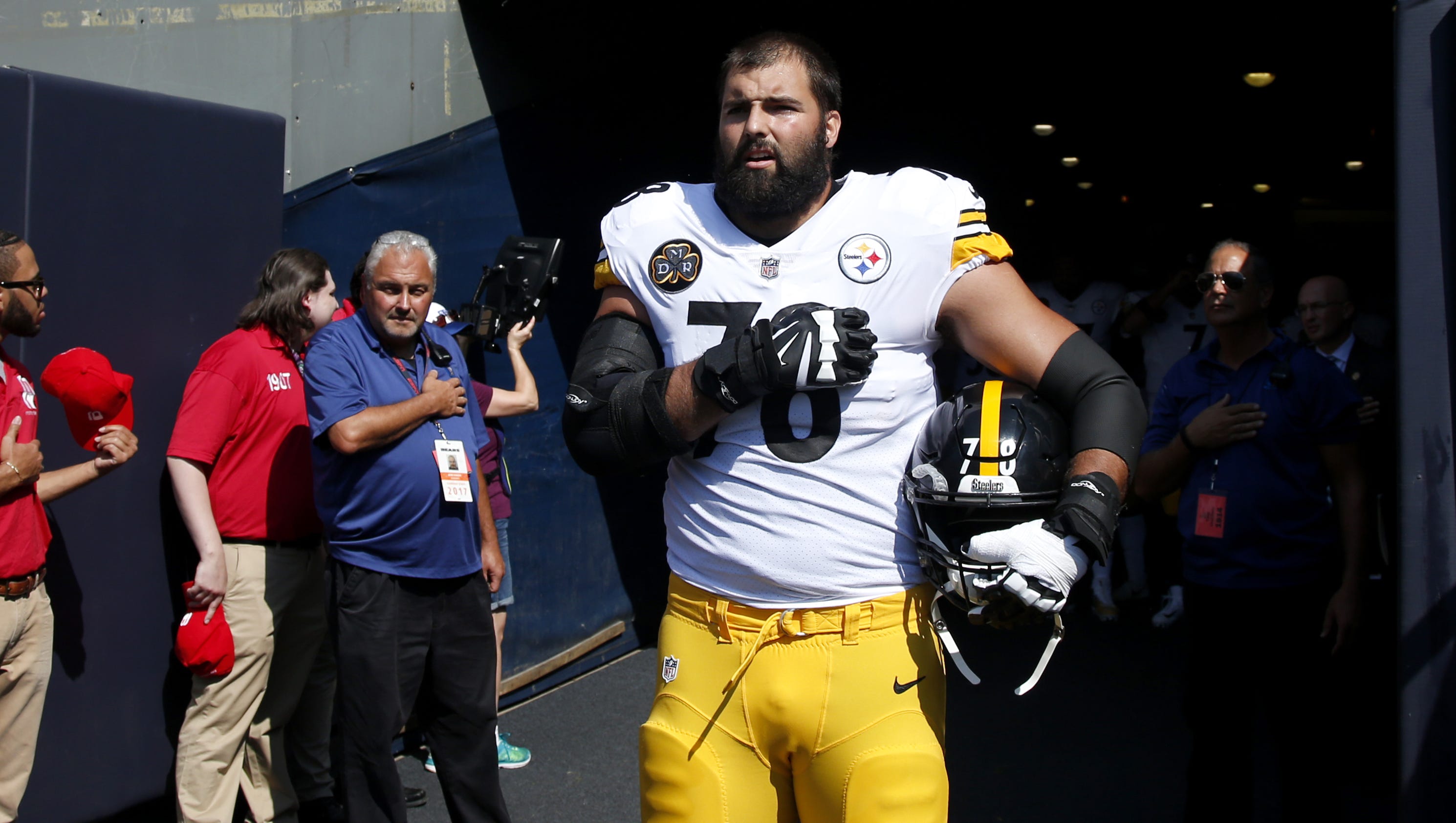
Impact of Protests on NFL Brand? Baylor Sports Sales Expert is Watching How 'Generations' Respond
Kirk Wakefield, Ph.D., is the Edwin W. Streetman Professor of Retail Marketing and director of Baylor University’s Sports Sponsorship & Sales program. He is an oft-quoted expert on marketing and branding of professional sports teams and serves as publisher and editor of The Baylor S3 Report (www.baylors3.com), the industry-leading publication featuring best practices in sports sales and marketing. In response to this season's protests during many of the NFL games, Wakefield said he is closely watching the “generations” of fans, particularly the season ticket holders. He explained that the average NFL season ticket holders are male, in their 40s and have a household income of more than $100,000. “I think the question is if the NFL can truly use this as a unifying rather than divisive tool. The dilemma is that the season ticket holder base is older and more prone to see it as divisive and offensive. But the younger set, tomorrow’s fan base, is likely to side with the players. So, brand equity could erode among current season ticket holders and, at the same time, gain interest and support from millennials – who have not been watching or attending as much.” Wakefield’s research in retailing covering more than two decades focuses primarily upon sports psychology, team sports marketing, entertainment marketing, and fan and consumer response to pricing and promotional tools. He has conducted fan research in almost every venue in sports including the NBA, NFL, MLB, MLS, NHL, and NASCAR. Source:
Impact of Protests on NFL Brand? Baylor Sports Sales Expert is Watching How 'Generations' Respond
Kirk Wakefield, Ph.D., is the Edwin W. Streetman Professor of Retail Marketing and director of Baylor University’s Sports Sponsorship & Sales program. He is an oft-quoted expert on marketing and branding of professional sports teams and serves as publisher and editor of The Baylor S3 Report (www.baylors3.com), the industry-leading publication featuring best practices in sports sales and marketing. In response to this weekend’s protests during many of the NFL games, Wakefield said he is closely watching the “generations” of fans, particularly the season ticket holders. He explained that the average NFL season ticket holders are male, in their 40s and have a household income of more than $100,000. “I think the question is if the NFL can truly use this as a unifying rather than divisive tool. The dilemma is that the season ticket holder base is older and more prone to see it as divisive and offensive. But the younger set, tomorrow’s fan base, is likely to side with the players. So, brand equity could erode among current season ticket holders and, at the same time, gain interest and support from millennials – who have not been watching or attending as much.” Wakefield’s research in retailing covering more than two decades focuses primarily upon sports psychology, team sports marketing, entertainment marketing, and fan and consumer response to pricing and promotional tools. He has conducted fan research in almost every venue in sports including the NBA, NFL, MLB, MLS, NHL, and NASCAR. Source: