
Experts Matter. Find Yours.
Connect for media, speaking, professional opportunities & more.
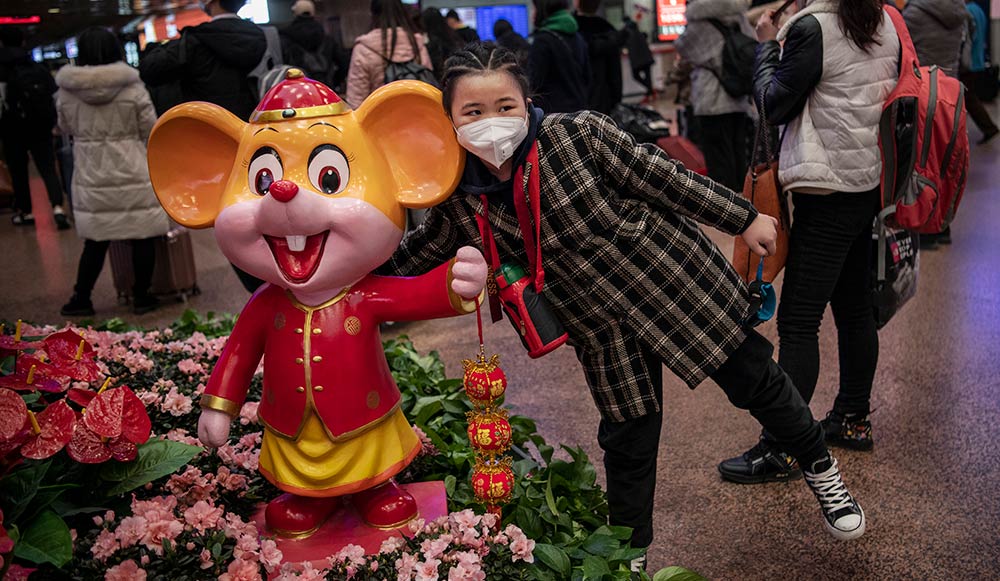
This is typically the busiest travel period in China—if not the world—as millions of people make their way home to celebrate the Chinese New Year, clogging highways, airports, and train stations in the process. As described by Forbes, the country goes into radio silence as more than 1.3 billion Chinese go on vacation at the same time. “It’s been called the largest mammalian migration on the planet, and it always takes place at the Chinese New Year,” says John Osburg, a University of Rochester associate professor in the Department of Anthropology. This year’s celebration may be less than typical, as the country is faced with an outbreak of coronavirus, which has forced the closure of Wuhan, a major port in China, and several other cities. Osburg says, “While I’ve heard from friends in China who are cancelling travel plans, I also have friends who are mostly unconcerned with the threat of the virus.” Osburg spent three years conducting ethnographic research in China, which culminated with his 2013 book, Anxious Wealth: Money and Morality Among China’s New Rich (Stanford University Press). He has also written numerous articles related to China, on such topics as masculinity, consumerism, and state capitalism. His work has provided him the opportunity to observe and understand the week-long Chinese New Year—also known as the Lunar New Year or Spring Festival—which begins this year on January 25. As Osburg explains, it’s a time for families to come together, which accounts for all the travel headaches. And typically, it’s children traveling to see their parents. “One of the more important cultural values in China is filial piety—caring for your parents,” says Osburg. “In order for a lot of young people to make enough money to support themselves, their own families, and their parents, they have to leave their homes in the smaller towns to find better-paying work in big cities.”



3 Steps to Earn Local News Coverage
“HOW DO WE GET OUR COMPANY FEATURED POSITIVELY IN THE LOCAL NEWS?” This is the question I get asked the most as a public relations professional, media coach and as a former long-time journalist with the Canadian Broadcasting Corporation (CBC): how do we get in the local news? The question usually comes from a small, independently-owned business owner — a company or organization that doesn’t have anyone doing marketing or communications. They are looking for LOCAL media coverage primarily — but they don’t even know where to start. It’s understandable for them to ask this question. Earned media is the holy grail of building credibility and reputation — having your executives featured in the news media as experts on a subject. Those stories then get shared on social media and it becomes the gift that keeps on giving, living on in perpetuity on the Internet, helping your search engine optimization. I can tell you this — the local media wants your story pitches. That doesn’t guarantee you’ll get covered. However, local media has been cutback so much and is forced to do so much work in such little time now, that they appreciate a good story idea landing on their desk for consideration — especially during a slow news cycle — and especially if it’s not coming from a slick PR agency voice on the other end of the line. They want authenticity. So, how do you get there? Here are 3 simple tips based on my experiences. In no way am I saying this is the only way to do it — but I’ve seen others have success with it and hopefully you will as well: #1 – Do NOT Hire An Agency Yup. I just said that. And, yes, I do realize I am a public relations professional. However, based on experience, I can tell you the majority of small, independent businesses aren’t going to be able to afford PR firms to get local news. I reiterate we are talking about getting local news coverage — not national news. So, if they’re not going to pay for it anyways, why not give them a hand? I believe in karma. With a little bit of guidance on this blog, you’ll be able to do it yourself. In the past, I’ve helped small companies, pro-bono, get in the media (hoping they make it big and hire me later). In the future, I’ll just send them the link for this blog and save me some time. You can do this. Just stick to the basics. #2 – Prepare A Newsworthy Pitch This is important. And, it can be as complicated and detailed as you want — but for the sake of this blog, I recommend keeping it very simple and keeping it authentic. Answer these questions to decide whether the story you want the media to cover is actually newsworthy from the reporter’s perspective — because they are the people who assess the newsworthiness of a pitch. What is the story? You should be able to summarize the story in less than 30 seconds. Just like a good pitch deck for potential investors, a good media pitch typically involves the identification of a problem or a trend and coming up with a solution for it or insightful analysis in the case of a media story. This is simplified but you get the picture. Why should people care about this story? A good reporter wants stories that appeal broadly to their audience, the public. So, be prepared to proactively explain why people will care about this? Is it timely? Does it impact a broad group of people? Does it solve a problem that’s been impacting society? Who is driving this story? Is it you? Is it one of your employees? Who will be the main interview for the reporter and why them? (FOR TV) What are the visuals? If it’s television, what are some strong visuals the news crew will be able to capture on video? What can viewers expect to see in this story? It will help your TV pitch if you can illustrate a visual image for them ahead of time. #3 – Pick Up The Phone Pick one media outlet you want to pitch your story to and make the call. First decide what news media is good for your story? Is it a story with very strong visuals? Perhaps TV is the way to go. Is it a story that requires a more fulsome conversation? Maybe public radio is the best option. Newspaper is the best if you’re a nervous person and worried about being on TV or radio. Newspaper is the least intrusive of the media. Once you’ve decided what outlet, decide which reporter specifically. No emails at first in my opinion. It’s too impersonal for local news and you risk getting lost in the inbox shuffle. Doing it by phone also allows the reporter to ask any clarification questions they may have, right then and there. Now, if you call the general media outlet phone number, you can end up in phone transfer Hell or end up getting an editor or producer who is putting out six fires and juggling 4 balls. So, you are better to call an individual reporter (perhaps your favourite one). Do this in the first part of the morning before they get too busy. If they’re not there, leave a message and be prepared to call back later. Reporters are busy and may forget to call you back. Don’t take it personally. If you reach them, thank them for taking your call and make your pitch. Get to the point. A few minutes tops for the pitch. If they like it, they’ll tell you. If they don’t like it — again — don’t take it personally and don’t burn any bridges. Thank them for their time. When you get off the phone, contact a reporter with a different media outlet and do it again. Shop that story around and you’re likely to get a nibble. Final Thoughts: This isn’t a science. There are no guarantees. This process is just my personal opinion based on experience. Just be yourself. Be genuine. The reporters will like that as opposed to dealing with professional PR people or communications officers. They may find it refreshing to deal with a “real person” who isn’t trying to spin them. Beyond the initial pitch, whether it’s successful or not, offer yourself as a research resource to them on issues related to your industry — even if it means you won’t be in the story. This is how you build a relationship with a reporter and it may bode well for you in the future. Good luck. Let me know how it goes.



EXPERT PITCHING 101: The Power of Spotlights
Of all the angles and perspectives, when pitching your experts, you need to figure out how yours stands out amongst the rest. How are you getting the perspectives of your subject matter experts out there? Have you figured out your 'bench strength' to know who can comment on what and how? Do you have a good way to get your people out there to the public? Sadly, when asked these questions, most PR and Marketing professionals struggle to give you a straight answer with confidence on how they get their people to comment on certain storylines. With a defeated tone, I often hear, “Well – we have our resident rock star, Professor Jones, who does most of our media interviews” often followed by, “but he’s not always the best person for the story.” Although, most organizations have a list of subject matter experts, they are often over-reliant on the same ‘go-to’ people. Here’s why: First, these people are tried and true. For media, it’s a big deal when contacting an expert for comment - especially if the interview will be conducted on camera. So, why risk the chance of speaking with someone new? The second thing, it’s time consuming. It’s easy to find a previous expert pitch in an email and forward it on to someone new. However, gathering this content for each new person every time an individual is being pitched is very time consuming and difficult to manage. Especially, when this content is strewn across the web and you need to add links for videos on YouTube, books on Amazon, articles on ResearchGate, presentations on SlideShare etc. Once you’ve found the right person for the story, and you’ve aggregated the necessary background content to send, you must tie the loose ends and make the person contextual and relevant. Why is this person the best individual to comment on the story? What angle is this person going to provide? What sort of background qualifies this person to being the subject matter expert on the topic? Don’t worry, help is on the way At ExpertFile, we’ve heard the stories about organizations missing out on opportunities to get national or international media coverage because of their small team. These understaffed teams don’t have enough bandwidth to continuously pitch their people and comment on storylines. Their websites don’t paint a full picture of their experts’ abilities and knowledge. So, we got together with these PR, Marketing and Comms people, and looked to develop a solution. Then we created “Spotlight” - putting all of the necessary tools into the hands of PR, Marketing and Communications teams. Spotlight allows you to contextualize the relevance of your expert with a the story. Write your expert pitch to explain why that person is the best to comment on that topic, and the angle they’d be able to provide. Combine that with rich media profiles created by the ExpertFile team, you now have a central home for all of your experts’ content, and it provides a more engaging representation. So, when the media are vetting, they can now watch a video of that individual speaking in front of a camera, see their latest Media Appearances to know they have experience talking to reporters, and a Contact button for the quickest way to reach that individual, while simultaneously routing to any other internal stakeholders. This last part is important to consider as every story has many angles. Take the recent United Airlines debacle, where a passenger was viciously pulled out of his seat due to the plane being overbooked. Aside from the traumatic events from the video that surfaced of the incident, after the dust settled media are left scrambling to find out more on the protocol for overbooked flights, the global impact (there was a big uproar in China due to initial reporting that he was of Chinese descent), and the economic impact on the company. Which means, you don’t need to limit yourself to an aviation expert in order to comment on an aviation story. Every story has multiple angles - this lets you offer up a unique perspective, pitch a concept others are not covering and insert your expert into an already crowded narrative. Spotlight helps you grow those invisible experts into great sources, and it helps you efficiently pitch when you have resource constraints. Spotlights in Action Since the launch of the ExpertFile News Digest service, we’ve seen some significant results for our customers. We've only been with ExpertFile a short time. We've been using Spotlights from the News Digest and have noticed a lot more attention from media. They're easy to request - and the turnaround is fast. We recently were asked to comment on the Supreme Court nominee and booked a radio show thanks to a Spotlight. It’s been a great way to get additional exposure for Augusta University. We've only been with ExpertFile a short time. We've been using Spotlights from the News Digest and have noticed a lot more attention from media. They're easy to request - and the turnaround is fast. We recently were asked to comment on the Supreme Court nominee and booked a radio show thanks to a Spotlight. It’s been a great way to get additional exposure for Augusta University. -Kelly Jasper Senior Digital Media Coordinator - Augusta University With Spotlights we are seeing immediate pick-up of the stories we want to be part of. It’s letting us tell the Cambrian College story to a wide audience. As well, we’re noticing one Spotlight generates multiple media contacts. Once one outlet sees or reads our expert weighing in on a trending topic - the others follow. It’s an earned media coup. -Shawn Poland Associate Vice President, College Advancement - Cambrian College Once I integrated my Spotlights onto the Emory University business school website, it was so simple for me to have the ExpertFile Newsroom team whip up a pitch and publish it. Especially with limited resource on my team, it’s been a huge help to get my people out there in a more efficient manner. -J. Michael Moore Senior Communications Manager, Emory University - Goizueta School of Business Want to see an example of how to pitch your expert? Send your storyline to success@expertifle.com and we will have our Newsroom team send you a draft Spotlight ASAP. Is there anything that I missed? I’d love to hear what’s worked for you to get your people speaking with the media.

With 2018 in full swing there’s no sign that the issue of fake news is going away. In fact, it continues to plague major social platforms such as Facebook as well as the traditional media players. This erosion of trust begs the question – how can we ensure the right experts on important topics are at the center of the conversation? If your organization has experts, there is a silver lining. There has never been a more important time for experts – the real ones – not the “fake it till you make it” collection of posers and promoters that have read a blog on personal branding. We’re talking about the people who have put in their 10,000 hours of researching, building and publishing. Presenting your top people in a more visible, engaging and approachable way presents huge opportunities for you to build trust and deepen relationships with a variety of audiences, including customers and partners – not just the media. However, to really capitalize, you have to look closely at how audiences interact with your expert content. Based on our work with thousands of experts and their organizations, we’ve prepared a list of key trends and predictions you need to watch if you’re a communications and digital media professional. Trend 1: Organizations are measuring their “Internal Bench Strength”. The power behind any organization is its people, but many organizations fall short in taking stock of their roster of experts who are capable of building voice and reputation with key audiences. Communicators are increasingly turning to internal pulse surveys and annual assessments that better identify competencies, professional interests and attitudes across the organization. Smart organizations are using surveys to create an efficient roster of internal experts and match them to the news cycle. Identifying a “core group” of go-to experts who will best benefit from programs such as media training and carefully mapping key topics to experts will ensure the organization is aligned to support communications objectives – both for proactive story development and responding quickly to breaking news opportunities. Trend 2: Organizations are starting to function more like newsrooms. As newsrooms in the print and broadcast world continue to be streamlined and downsized, organizations can play a key role in helping journalists by making relevant content and credible sources more accessible. Incorporating better search features that allow journalists to quickly find experts using simple keyword searches is an important starting point. Showcasing experts in the context of key news events in a content hub with interesting story angles are increasing in popularity Trend 3: Next generation newsroom platforms will change how media find expert sources. Journalists have a challenging role today amidst a backdrop of fake news and increasing cynicism about the credibility and sources of information. They still have the same day deadlines, but with an increased responsibility to get the story right, so reliable sources are critical to their success. So it’s not surprising that journalists, television bookers and producers are gravitating to solutions that make it easier for them to discover, evaluate and connect with expert sources. We recently integrated our ExpertFile global directory into the Associated Press newsroom software which is used by thousands of print, broadcast and digital newsrooms around the world. The AP, as the world’s leading news organization, recognizes the pressures that publishers and broadcasters are under. They are committed to technology advances that help news organizations. Few journalists have the time to rummage around in poorly designed corporate websites and university faculty directories looking for the best expert. And if you think it’s just junior reporters using these online tools think again. We’re seeing seasoned journalists from top media outlets including The New York Times, CNN, Time Magazine, NBC, The Washington Post, the BBC, NPR Radio and the CBC making regular use of the ExpertFile platform. The bottom line: If you aren’t thinking about broader distribution of your expert content beyond your website you are missing out. Trend 4: New search technologies are helping organizations cut through the content clutter. Searching for the right person based on attributes such as key topics, publications, or geography inside an organization remains a challenge – even for those organizations that have invested heavily in content management solutions and intranet platforms. The organic and onsite search user experience has become a top issue for marketing and IT teams. Audiences who have been spoiled by “Google-like simplicity” expect to find relevant information, or they’re gone within seconds. That’s why many organizations are investing in new search technologies powered by machine learning to provide faster discovery and connections with their subject-matter experts. Last year we built Elasticsearch features right into our platform to save our clients the time and money of doing this for themselves. Search remains one of the biggest opportunities to quickly drive more market attention and audience engagement, as well as to improve internal collaboration between experts. Trend 5: Video will continue to outperform all other forms of content. There’s nothing quite like video to drive the value of owned content. But remember that video is becoming essential to boosting earned media. We’re continually impressed by the new research that continues to emerge on the power of video content. Last fall, LinkedIn reported audience engagement numbers for its new video feed feature that showed 20 times more engagement for video vs. all other forms of content on its platform. As more audiences demand video content, so does the demand in television newsrooms for broadcast-ready experts. That’s why we also partnered with Dejero to help broadcasters who use their platform to search for experts suitable for interviews. If you are looking to get more television coverage, then you have to invest some of your budget on video to showcase your experts. We predict that the most successful organizations will adopt a video-centric approach to storytelling, creating snackable multimedia content that connects with a range of audiences. Many marketers are overthinking video as something requiring a massive production with a big annual shoot”. That doesn’t work for audiences such as journalists who are feeding a real-time news cycle. Our simple advice – look carefully at your video strategy and identify opportunities to use video across your digital properties in areas such as your homepage, media room and even landing pages. We’re interested to hear how your organization is capitalizing on these trends to better promote your experts to key audiences. For more information on how ExpertFile can help your organization incorporate the latest software and services innovations into your thought leadership and expert marketing strategies please drop us a line at dtaenzer@expertfile.com.

Working with Faculty Experts to Build Reputation and Market Visibility
The Baylor University Playbook Featured in CASE Currents Magazine PHOTO CREDIT: BAYLOR UNIVERSITY MEDIA COMMUNICATIONS As traditional and social media organizations such as Facebook race to expose and disrupt the onslaught of “fake news”, a major opportunity exists for higher education institutions to more prominently feature their research and expert opinion to quell this steady flow of misinformation. We know that the gold standard of news reports and social media posts are substantiated with expert research and opinion. What gets in the way of comprehensive reporting and dialogue? It’s often the lack of input from great institutions and their experts. More than ever, traditional media organizations need to provide a steady flow of credible information to trump the influx of unsubstantiated content. But the media (from local mainstream editors to award-winning international investigative journalists) struggle with big challenges: growing editorial demands, small budgets, little time, limits to accessing information – all restricting their ability to pursue new research, data and expertise. So how do they get around this and cut through the clutter? A lot of the responsibility falls on organizations to be more approachable to journalists to help them with expert sources. Schools doing this well are already boosting their reputation with media and other key audiences by showing the relevance of their institution and faculty. In this month’s CASE Currents magazine, a feature article titled “Are Your Professors Ready for Their Close-Up?” Eric Eckert, Baylor University’s Assistant Director of Media Communications and Faculty Development, shares with other institutions the process his team took to prepare its faculty experts for the media spotlight with an in-house training program and the necessary tools to succeed. the Baylor playbook is a great read for any organization looking to boost media coverage and build reputation. Eckert, whose list of responsibilities at the university includes “Faculty Experts”, notes: “We demonstrate our commitment to this program by investing in tools that spread awareness of our researchers’ work. In addition to the time we devote to training and promoting our faculty members, in 2017 our office started using ExpertFile, a content marketing platform that includes the capability to create dynamic faculty profiles that expose our professors to a wider audience of journalists. We can also manage media inquiries through the platform. The software has reduced the time we spend updating faculty profiles. We can quickly add photos, videos, and links to an expert’s media hits and create faculty spotlights—a feature that helps us rapidly promote a professor’s expertise to take advantage of breaking news.” ExpertFile worked with Baylor to develop a searchable platform and content placements for their experts integrated into the Baylor website. To extend the reach beyond the website, Its experts are now also synchronized with the ExpertFile global experts directory and are also visible to thousands of newsrooms throughout the world through our partnerships with the Associated Press and Dejero. Eckert goes on to explain his organization’s use and success with ExpertFile Spotlight. Spotlight is a unique content hub solution that is growing in popularity with marketing teams looking to quickly feature their experts in the context of breaking news, emerging stories, valuable research and newsworthy events. Virtually all of our clients are seeing the importance of providing relevant story angles that can be produced to help journalists on same day deadlines. Eckert goes on to speak of his experience with Spotlights: “In September 2017, we created a spotlight to distribute a Baylor law professor’s comments on President Donald Trump’s decision to withdraw authorization for the Deferred Action for Childhood Arrivals program. A media inquiry received through ExpertFile resulted in a guest appearance on a nationally syndicated radio program in Canada.” Other coverage generated recently by the Baylor team includes: Are you ‘phubbing’ right now? What it is and why science says it’s bad for your relationships The Washington Post You might be cheating on your spouse with your smartphone The Toronto Star Four bad habits that executives should nix The Economist Can ‘bedtime’ teas really help you fall asleep faster? Women’s Health The better way to take a break Fast Company The profile that experts develop through thought out programs such as Baylor’s can extend well beyond media to other key stakeholders, including potential research partners, funders, event organizers, student enrollment and employee recruitment. How are your marketing, communications and media relations’ teams working with your experts across the campus to build market visibility and reputation for your institution? We’d like to know. For more information on how ExpertFile Spotlight works or to read more success stories please drop me a line at Deanne Taenzer at dtaenzer@expertfile.com


Make Your Expert Profile Stand Out!
Successful organizations know that leveraging their leadership and subject matter experts is important to driving visibility and value for the organization. Most About Us pages and corporate bios fail miserably in their goal of engaging key audiences – and they are often very out of date. Based on our years of working with corporate, professional services clients, academic and healthcare institutions and others, we’ve put together the “Top 5 Tips for Creating a Winning Expert Profile”. By following these simple tips we’re confident you’ll be well on your way to driving better conversations with prospective customers, media, analysts, conference organizers and others. We hope these tips provide you the starting point for better showcasing your people. Tip #1: BE VISUAL Your Headshot Creates a Human Connection Profiles with photos get 14x more views (according to research from LinkedIn). A good head shot humanizes your profile and helps establish trust. Make sure to invest in some professional headshots. Avoid busy backgrounds and lose the props unless they are relevant. Tip #2: BE SEARCHABLE Choose Topics to Help You Get Discovered Pay very close attention to which topics you list on your profile as they help determine search results. Find the right balance between general and specialized terms. For example “tax inversion” is a specialized accounting term. But “offshore tax”, “tax havens’”; and “corporate tax planning” or geographic tags related to specific tax havens such as “Bermuda” are more likely search terms used by various audiences looking for a tax expert. Tip #3: BE APPROACHABLE Create a Tagline that Draws People In Your professional headline (tagline) and biography must create and sustain attention. Don’t misuse this prime real estate to simply restate your current job title. Focus on your value proposition to advertise what you’re trained in and summarize the experience you have. Keep it concise using relevant keywords. Here’s an example of a powerful headline for an accomplished expert: “15 Years Experience in Commercial Real Estate | Author | Adjunct Business Professor | Keynote Speaker | TV & Radio Guest | Architectural Enthusiast.” Tip #4: BE DESCRIPTIVE Focus Your Biography on Accomplishments Keep your biography clear, descriptive and up to date. Describe your responsibilities in concise statements led by strong verbs. Incorporate industry specific keywords and topics. Whenever possible, quantify your accomplishments and responsibilities with numbers or percentages. Don’t forget to mention international experience and any special awards or recognition you received. Remember it’s not your life story or a chronology of all your work experience. Leave that for your resume. Tip #5: BE ENGAGING Multimedia Helps Prove Your Expertise Journalists and conference organizers will often avoid profiles that don’t have multimedia as they need to see how well you present your ideas in front of an audience. Videos, photos and audio of podcasts or interviews provide quick validation of your ability to communicate your ideas. If you’re an author upload a thumbnail of your book. Upload clips of your speaking sessions. Did you appear on TV? License a copy of the interview or upload a screenshot of the broadcast.


In this Era of Fake News and Alternate FactsExperts are King
There’s nothing new about fake news. Satirical media outlets such as The Onion have been around for a decade giving us a good laugh. But somewhere in the past 12 months, something changed for the worse. The wool that was being pulled over people’s eyes wasn’t so obvious anymore. Satire and bad humour were replaced by visceral accusations, conspiracies, and smear campaigns. How did we get to this point, and what can be done to stem the tide? A sure sign that we had a problem was a development that was apparent in the last presidential election. New voices were on the national scene branding our traditional media outlets as biased, and elitist. We saw the phrase “mainstream media” become a bigger part of the conversation. Now we have to contend with “fake news.” Unlike traditional journalism fake news outlets deliberately spew wrong information. In an effort to get a story out, mistakes will happen. But in the world of fake news there is no retraction or correction of these mistakes — even when they are exposed as blatantly untrue. Further damage ensues when social media then acts as an enabler as fake news articles get amplified to millions of people, who are clicking away, feeding advertising revenues to these publishers. No matter what your political stripe or where you stood regarding the recent US election, fake news was rampant on both sides spreading false information, invoking anger, and deceiving the public. More recently, a fresher version of fake news has emerged as “Alternate Facts.” A term made famous by Trump adviser Kellyanne Conway as she defended the statements made by Press Secretary Sean Spicer who lectured and insisted that the crowd present for President Trump’s swearing-in was “the largest audience ever to It seems that the whole nature of the game has changed almost overnight. Even the White House press gallery isn’t immune to these developments. This week’s Saturday Night Live sketch brilliantly sums up the aversive relationship that we’re seeing develop between the media and the new administration. (Note: For the record, the photo at the bottom is NOT a C-SPAN broadcast. It’s a comedy sketch. It did not really happen. This is NOT Sean Spicer in the photo below — it’s an actor portrayal). Perhaps most ironic for me is how believable fake news can appear to be. A friend of mine, a former investigative journalist commented that “given the outright absurdity of the actual “real” news cycle,” it’s getting hard for people to sort fact from fiction.” Perhaps this says as much about society as it does about media. So Where Does All This Leave Us? Some say the solution is as simple as removing the bias from our news media. The problem is, I know quite a few (real) journalists and they are serious about reporting facts. They work in newsrooms and report the news, they tell stories, but gathering and checking facts are what define them. As they work to a set of professional standards and deliver real information. However, we’re witnessing a massive change in the way that ideas are shaped and communicated to the public. Sadly, the traditional avenues of information flow and the mutual respect that even democratic nation states have had with the media appears to be eroding. There is also a disturbing undercurrent of thought that traditional news organizations are biased, and every outlet is always serving a hidden agenda. Recent events have prompted the need for news organizations to brief their journalists on how to govern themselves in these very “interesting times.” John Daniszewski, Vice President for Standards for Associated Press in a recent blog post called for clarity regarding the definition of the so-called “alt-right.” “We should not limit ourselves to letting such groups define themselves, and instead should report their actions, associations, history and positions to reveal their actual beliefs and philosophy, as well as how others see them,” writes Daniszewski. Other news organizations are looking at recent events and taking the opportunity to internally brief their journalists. In a recent message to staff, Reuters Editor-in-Chief Steve Adler wrote about covering President Trump the Reuters way: “The first 12 days of the Trump presidency (yes, that’s all it’s been!) have been memorable for all — and especially challenging for us in the news business. It’s not every day that a U.S. president calls journalists “among the most dishonest human beings on earth” or that his chief strategist dubs the media “the opposition party.” It’s hardly surprising that the air is thick with questions and theories about how to cover the new Administration. So what is the Reuters answer? To oppose the administration? To appease it? To boycott its briefings? To use our platform to rally support for the media? All these ideas are out there, and they may be right for some news operations, but they don’t make sense for Reuters. We already know what to do because we do it every day, and we do it all over the world. To state the obvious, Reuters is a global news organization that reports independently and fairly in more than 100 countries, including many in which the media is unwelcome and frequently under attack. We don’t know yet how sharp the Trump administration’s attacks will be over time or to what extent those attacks will be accompanied by legal restrictions on our news-gathering. But we do know that we must follow the same rules that govern our work anywhere.” Adler goes on to provide a set of rules for the Reuters team that I think are very wise, especially given the current environment. Do’s: Cover what matters in people’s lives and provide them the facts they need to make better decisions. Become ever-more resourceful: If one door to information closes, open another one. Give up on hand-outs and worry less about official access. They were never all that valuable anyway. Our coverage of Iran has been outstanding, and we have virtually no official access. What we have are sources. Get out into the country and learn more about how people live, what they think, what helps and hurts them, and how the government and its actions appear to them, not to us. Keep the Thomson Reuters Trust Principles close at hand, remembering that “the integrity, independence and freedom from bias of Reuters shall at all times be fully preserved.” Don’ts: Never be intimidated, but: Don’t pick unnecessary fights or make the story about us. We may care about the inside baseball but the public generally doesn’t and might not be on our side even if it did. Don’t vent publicly about what might be understandable day-to-day frustration. In countless other countries, we keep our own counsel so we can do our reporting without being suspected of personal animus. We need to do that in the U.S., too. Don’t take too dark a view of the reporting environment: It’s an opportunity for us to practice the skills we’ve learned in much tougher places around the world and to lead by example — and therefore to provide the freshest, most useful, and most illuminating information and insight of any news organization anywhere. Winning back the public trust — Why Experts Matter Perhaps a way to help reverse this trend is to ask more of our experts within our organizations, and get them to contribute more to these important conversations. It’s about getting our academics, physicians, professionals, and leaders in their respective fields to contribute more to help the media present a more balanced set of perspectives in ways that engage the public. In this new era, it appears that many experts are invisible to the media on a range of big issues such as climate change, economic data, security, crime and healthcare policy. Opinions — not always informed opinions — are taken as fact. People without qualifications are being asked to speak on topics that require years of study, research, and experience. This is why, now more than ever, we need to see a return of intelligence and knowledge to present true facts. Credible Experts Matter Credible sources are vital in helping ensure the proper degree of research has been done. Published work, peer-reviewed studies, as well as policy that has been developed and practised all play key roles in determining an actual expert. Proven credibility cuts through rhetoric. It promotes the delivery and flow of facts as opposed to feeding only one side of a debate. Being Approachable Matters We have to agree that the current sentiment that many have toward traditional institutions and their experts is that they are not providing enough practical information of benefit to the public. The term “ivory tower” comes up frequently to describe environments such as universities and think tanks. While we need these environments of intellectual pursuit they cannot be seen as disconnected from the practical concerns of everyday life. Transparency Matters Do you know where your information is actually coming from? The flow of money into the development of fake news and so-called “experts” who are pushing agendas is tremendous. We’ve seen it recently with the sugar industry — much like the tobacco industry who literally wrote the book on manipulating and re-wrapping expertise and research in the middle of the last century — setting ideas on nutrition back decades. The market is crying out for a more consistent way to discover and evaluate the credibility of experts. We need a quick and trusted way to review their education, background, publications as well as their affiliations. We need to be able to conduct a front-line background check before we give them the platform to share their perspectives on television, radio, or in print. We need to vet the expert before they reach an audience that relies on the information being communicated to form opinions and make critical decisions that affect their lives. Local News Matters Local media is shrinking. Newsrooms are currently being threatened by constant shifts in both consumption and business models. If we are to promote accurate information and win the war on actual facts, we must make it easier for local journalists to do their jobs. Mainstream media still carries a lot of weight, especially online and television where the nightly news reaches a massive audience. Though the ratings are large, the subject matter doesn’t always resonate with viewers at home. We need to do a much better job helping local media get better access to the experts in our organisations so they can localise issues and tell stories, and do it in ways that everyone can understand. For example, a story on national unemployment numbers has a different context in San Francisco than it does in Flint, Michigan. Climate change is impacting Miami a lot differently than it is in the Great Lake states. In the end, all news is local. Speed Matters News is increasingly a speed game. With social media, a 24-hour news cycle, and the race to be first, time is of the essence. But in this game, haste may not only make waste, the truth may be a casualty as well. Most recently Fox News reported on a violent shooting at a mosque in Quebec City, Canada. Six people were killed by a lone gunman. Fox News reported that the suspect was of Moroccan origin — that was false. The shooter was in fact of Canadian origin. It wasn’t until the Canadian Prime Minister’s office requested a retraction that Fox walked the story back…but it took almost two full days. In true Canadian fashion, Kate Purchase, Communications Director for Prime Minister Trudeau thanked Fox News. In the meantime, wrong information was shared across multiple platforms and seen by millions of people. This is when having your experts prepared, media-trained, and trusted internally to speak with media is key. In times of emergency and chaos, it may be the words, advice and perspective of a high-level expert that can calm a nervous public, or at the very least, clearly explain a situation and its outcomes with accuracy and trust. So Why Should This Matter to You? If you are focused on building your market visibility and brand reputation, making your organization’s experts more discoverable and responsive to media is as much a function of good public relations as it is a public service. In these days of fake news, alternate facts, and unclear agendas, an unbiased and objective point of view presented by a credible expert may be one of the few remaining pillars of integrity we have left. Experts bring credibility, reliability, and an elevated level of perspective and advice that the public can trust. It’s up to all of us to ensure our thought leaders rise above the fray and help rebuild the trust that is essential to building a civil society. How is your organization working with its experts to respond to these challenges? I’m particularly interested in speaking with communications and media relations professionals in higher education, healthcare and professional services as our team conducts more research in this area. Let us know what you think by sharing below. I read every comment.

Secrets to Promoting your Experts to Chase Producers: What exactly do they need from you?
Many moons ago, when I worked in a newsroom, my Executive Producer once said to me, “We only really work five days a year, the other 360 are just filler.” He was being cheeky and clearly exaggerating – but what he meant was that outside of elections, plane crashes and visits by the Pope or President, assignment editors are constantly scrambling to feed the beast and fill a newscast or a paper. It’s even worse in what we now know as the 24-hour news cycle. The news doesn’t sleep anymore. There’s no down time and a lot of time and space to fill. The reality is, with the modern news cycle now being immediate, never ending, online and everywhere the need for content is greater than ever before. From local papers, radio affiliates and even national broadcasts, the need for expertise, opinion and perspective is one of the few common denominators in journalism. And, when it comes to the 24-hour national TV news networks, the demand is even higher with reporters, researchers, technicians, assignment editors, executive producers and chase producers all hunting and scraping for issues and experts to illustrate those issues. This is great insight to be aware of if your role is to get your experts in the news. I worked with Mark Borchiver early in my career. He’s the Associate Producer, CTV National News with Lisa Laflamme which has a viewership of millions across the country. He helps put the show together every night and can tell you that the chase desk is busy all day to feed 24-hour news. They rely on a steady stream of guests and experts. On National News, CTV has a lot of go-to people who either contact CTV or CTV will call them. “The real challenge is to bring fresh talent to the newscast,” Borchiver says. “We need to bring new experts and talking heads into the news family because there’s a certain audience fatigue and predictability factor, when the same guests keep showing up. “ And with media, presentation is just as important as being primed. If you are going to be interviewed or appear on a show that has an audience of a million critical viewers, be prepared. If you are not prepared, there’s a good chance you won’t be invited back, says Borchiver. “Experts need to be media trained and ready for air. Not everyone has the same skill level and not everyone can be taught.” Every news market is different. There are different perspectives, news approaches and quite honestly finding and accessing credible and reliable expertise isn’t as easy as one would think. Even for a news giant like Al Jazeera, in Qatar, finding that ideal person to lend perspective or context isn’t easy. “Part of my job is selecting which stories deserve analysis or reaction from what we call ‘guests’,” Morgan Waters tells me. Morgan, who I also worked with back in my early TV days is now the Executive Producer, Aljazeera English Global. A big job, with high expectations and obviously little room for error. “For us this means a segment, usually live, where anchors conduct interviews for about three to five minutes on a particular subject. This is very important for our organization so I usually deal with about a dozen guest segments every day, plus next day guest planning.” At Al – Jazeera they have a team of interview producers whose job it is to find, pre interview and book these people. They usually go for people through credible organizations that the network trusts, such as NGOs, think tanks, and academic institutions although each interview producer has their own contact list which also include activists, bloggers and civil society. But that isn’t where the credibility check ends. Waters also reminds me, “An expert may work for a credible organization and appear regularly in the media but if I suspect his information is questionable then I won’t ask to book him. “ So in a nutshell, here it is plain and simple. There’s a never-ending news cycle out there. And it needs to be constantly fed. Some organizations wait to be called, while others or pro-actively building relationships with reporters and producers to get their experts seen, heard and read. Many have signed on with ExpertFile, a procured expert database full of people who want to be interviewed and are ready for it. Offering up your in-house expertise and providing someone who is credible, reliable, objective and can shed light, a unique perspective or a fresh angle on news story helps journalists deliver the content they need to the audience that wants. You win. They win. Win-Win. So go feed the beast. Have your organization seen in the news, heard by a massive audience and promoted across multiple media platforms. All for free. Well, free with the exception of some serious effort and savvy on your part. But cost-free for your organization. So what do organizations need to know? Be Fast: When news breaks be responsive. Take advantage of the moment and offer up your expert. Delays reduce your chances that you will get scooped by another organization. Be Prepared: If you offer someone up to media – make sure they have some degree of media training. Be Pro-Active: Don’t wait for media to come to you. Go to them. Be Current: Ensure your expert information such as biographies, publications, photos, videos are easy to review and up to date. Be Discoverable: Get your content outside of your own website. Often media won’t look there first. Ensure your experts can be found in other ways such as the ExpertFile database at Expertfile.com which is home to thousands of experts who are just a click away for media.

Earned Media: The Secret Weapon of Brand Building
I was reading the newspaper recently and saw an article about tax filing season. The article outlined some of the challenges facing people during tax season but it also highlighted some of the opportunities and useful tips. It wasn’t the reporter outlining this information — it was a tax expert the reporter had interviewed and used as a source in their story. The information was incredibly helpful. The expert being interviewed humanized the issue by telling stories about people she had helped. I was engaged. And, because I was engaged, I read the story very carefully. I even remember the name of the expert and the name of her firm. It stuck. I happen to have an excellent accountant — but if I didn’t — I can guarantee I would have called this expert in the story. In fact, I have no doubt she got calls after the article was published. And, from her standpoint and the standpoint of her firm — they paid nothing to be in that article. Not only did they get valuable space in a news story as an expert without paying for the exposure — the reporter likely even thanked her for helping. Advertising executives, marketing agencies and social media “gurus” typically don’t like people like me — news media strategists. We tell clients that the best bang for their buck is “earned media” which means exactly what it says — media that you have earned (and not purchased) whether it be through relationships or by being in an expert database. We help them tell their organic stories by positioning them as experts in their field, which is not easy today given everyone has a LinkedIn account or website calling themselves an “expert” or a “guru”. It’s one thing to proclaim yourself an expert — it’s something completely different to be recognized as one by the news media. You see, despite what some will say, traditional news media is far from dead. Is it facing challenges and reinvention? Absolutely. But, dead? Absolutely not and it’s still the medium by which earned media legends are made. I want to be clear in saying there can be, indeed, a time and place for paid media. The issue is that for too many organizations, it’s the only tangible tool in their toolbox. And it is, by far, the most expensive tool with, questionably, the lowest return on investment. In my opinion, unless you’re spending Coke and Samsung levels of dollars on advertising (multi millions), there’s a good chance your ads are being washed away in the information tsunami — the white noise that is our over-saturated information ecosystem. In many cases, advertising as a stand-alone marketing strategy CAN BE a colossal waste of your money. Even social media marketing and advertising is fast becoming the most cluttered and noisy space for paid and promoted messaging. Due to its lower cost, people are flooding to it making it increasingly more difficult to be heard in the sea of white noise. The fact is that a well-balanced marketing and communication strategy is one that reaches your target audience on a number of levels — some of them could be paid — some of them organically through social media — and the one many people neglect is to serve as experts to drive earned media. It is often neglected because it’s the one marketing tool that requires working with someone who truly understands journalism and journalists — and what their daily and hourly needs are in terms of getting their jobs done. So – yes – it’s hard work and it’s very specialized work. But there are companies, people and tools out there that can help. And, it’s worth the hard work. Being quoted as an expert in a legitimate news story or feature interview can move mountains in terms of building your brand. First of all, being in a news story gives you an instant status AND credibility. In paid advertising, it’s you saying how great you are — it’s self-declared. People are skeptical — they know you’ve paid to say that about yourself; you are blasting out a one way message. However, the traditional media interviewing you is a two way conversation the public is watching in an engaged way. It’s akin to a third party testimonial. In other words, the viewing/reading/listening audience sees a trusted journalist they feel they know who is putting this expert source in their story — this is someone the journalists trusts as an expert source so inherently the message is that the public should trust them as well. In this case, the medium (traditional news media) truly is a big part of the message. You can’t buy that. Legitimacy. Credibility. The foundation of any successful brand. It is earned. I have a college client that I work with. They decided to focus more on earned media, admittedly, with some hesitation. We media coached a number of their professors and Deans. We put a plan into place to develop some tangible relationships with journalists. It started small with one short interview. Then it was two. Then it was a regular spot. And within one year, the amount of earned media they have received has arguably far outpaced the value of all their paid advertising. Some of their people have become go-to experts for the media where they were non existent just a year ago. Prospective students and parents see this college’s experts in the media and immediately associate true tangible value to the institution in considering where to enrol. We built capacity with this College and now they are rolling on their own. They have momentum. This is what you need to reach for. And earned media is the gift that keeps on giving. That newspaper story, radio interview or television panel you were featured in will be shared by the media outlets to their huge social media audiences. Other interested people will then share it further to their networks. This is increases your third party credibility — in some cases reaching more people than the original news story. This rarely happens with ads or paid media and is the secret weapon of earned media. And if you weren’t already convinced, then consider this: earned media creates huge online traffic and can have an extremely positive impact on organic SEO for your website or brand — something paid media can’t do. So, if you’re a hospital, a university or research centre, one of the core issues you’re facing today is recruiting top talent. Recruiting is competitive and complex — yet most potential recruits will begin their research on Google. They will search your institution and see what’s being said about you. If you are getting a lot of positive earned media, that will quickly show up high on your Google search results. The potential recruit reads those news stories and sees your institution is out there with its experts. Even doctors and professors will associate traditional earned media coverage as a measurement in credibility. So, how do you go about increasing your earned media reach? How do you become known as an expert in your field with the media? Admittedly, it’s not as easy as buying a full page ad in a newspapers or boosting a post on Facebook. Earned media is both an art and a science and it requires an intuitive, expert knowledge of the media. Making sure you are listed in searchable online networks that journalists use is a very good start. But there is a caution. You only have one or two chances to prove yourself as a reliable and value added source for journalists. If you become known as a lame or boring guest, you’ll be blacklisted and that opportunity will disappear. So before you go running into the streets declaring yourself an expert ready for national media exposure. Make sure you’re ready to be interviewed by the media because they won’t give you a free ride. They are journalists and not stenographers. You will be asked tough, challenging questions. The key is to be prepared for the opportunity. How do you do that? Well that’s my next column. Stay tuned.

Part 1: Collaborating with Faculty Experts: A How-To Guide for Marketing Departments & Deans
“I don’t have time to do this.” “I don’t think I’m the right expert.” “My subject area is too specific.” Have you ever approached a faculty member with an opportunity to speak to the media or perhaps speak at an event, only to hear responses like these? Asking certain faculty members to help serve as experts can be challenging. While it’s becoming more widely accepted by faculty that responding to such requests is a great way to build their personal reputation – as well as the institution’s – there is still work to be done in this area. With my experiences I wanted to share some useful tips to help you better collaborate with your faculty and get more results: 1. Walk the Halls: Stay Connected to Important Faculty Research & Publications Faculty play a key role in helping you tell compelling stories to a variety of audiences such as media, prospective donors and students. Yet it’s amazing how many communications people are disconnected from important discoveries their experts are working on. They get caught up in day-to-day events and struggle to find time to walk the campus. The first step in collaborating with your faculty is showing them you care. Make yourself approachable as a resource to help them communicate their stories and you’ll see dramatic results. While it may be tough, it is worth the time investment. 2. Take Inventory: Assess Which Experts Can Be Most Valuable in Helping You Engage Various Audiences With so many faculty members across the campus involved in a wide range of activities, it’s important to develop a framework that identifies who you should be working with. While faculty have deep subject-matter expertise, not all are suited to helping with certain engagements such as broadcast media interviews. To better assess your faculty look at these key factors: Credibility Does the expert have a deep understanding of their focus area? How respected are they among their peers? Have they conducted research in this area? Have they been published? Have they spoken at conferences or received awards for their work? Relevance Is their field of research relevant to various audiences such as Media, Prospective Students, Donors and Partners? Engagement How are their writing skills? Do they have experience with public speaking to various audiences? Can they conduct an interview with a reporter? Are they willing to participate or get media training? Responsiveness Do they understand the significant value they can contribute in helping you build your institution’s reputation? Are they comfortable with being in the spotlight? Can they be available on short notice (within hours) for media interviews? Are they interested in building their own personal brand? 3. Get Alignment: Get Senior Leadership on the Bus Consulting with Faculty Deans and other leaders on the campus will help you gain important support for your efforts to work more with faculty. Identifying their objectives at a program level will help you ensure that your work isn’t viewed as another “make work” exercise for faculty. Show them how your work with faculty experts will have potential to impact the following: Brand reputation in the community and among peers Media coverage Increased student enrolment Better Alumni engagement Increased donations to the school Government and research funding Corporate partnerships 4. Tap into Peer-to-Peer Power: Focus on Faculty Evangelists We all know who our “go-to” faculty are. The people who will enthusiastically help you try out some new approaches. These are the faculty who are doing great research but also can tell a great story and are respected among their colleagues. Identify a manageable group (a range of 3-6 experts is a good number to start). Assess them using the criteria we discuss in point #2. Then get these select experts to invest a little time with you to work on topic strategies and content development. Explain to them what you are trying to achieve and listen to their feedback. Getting their support, and helping them develop their content and stories is the key to success. As evangelists, they can be vital to getting buy-in across the campus. 5. “Opt-In” your Experts: Look for Different Types of Contribution While media coverage is a big focus for many organizations it often tends to dominate the discussion about experts. Think about the ways your experts can contribute and help you tell your story to a variety of audiences beyond media (see point #3). Faculty can be engaged in a broad spectrum of activities such as: Television Radio Print Research on specific topics Blog posts Podcasts Speaking at conferences Speaking at student recruiting events Attending or speaking at alumni events Attending or speaking at donor events Build a “Contributions List” that outlines activities where you may need support and get faculty to opt-in. Getting this agreement in advance allows you to better assess where you have “bench strength” to plan for specific projects. At the end of the day, you won’t get 100% of the faculty to jump on board, but we have seen that a good plan and collaborative communication raises engagement and participation. READ PART II of Collaborating with Faculty Experts: A How-To Guide for Organizations.