
Experts Matter. Find Yours.
Connect for media, speaking, professional opportunities & more.

Aston University credit rating expert wins prestigious Fulbright scholarship
Aston Law School’s Dr Daniel Cash is the first member of the University to be awarded a Fulbright scholarship since Donald Biggs in 1974. The Fulbright Program is one of the largest and most prestigious educational exchange programs ever developed It has awarded over 8000 fellowships to students and scholars since its creation in 1946 by Senator J. William Fulbright An Aston University credit rating expert has been awarded a prestigious 12-month scholarship as part of the Fulbright Program in the United States of America. Dr Daniel Cash is the first member of Aston Law School to win one and is the first University staff member to enrol since Donald Biggs in 1974. He will start at New York University’s Stern Business School in April. Whilst there, he will be developing a sector-leading edited collection, bringing together the leading figures in credit rating research. He will also be creating articles on developments within the credit rating sector, and particularly the effect of credit rating agencies on the sovereign debt of the world’s poorest countries. Dr Cash said: “This is the accumulation of more than a decade’s worth of dreaming. I first visited New York in 2007 to try to gain some inspiration after a tough time in my life and ever since then have focused solely on moving over there. “I contacted a professor at NYU during my Masters in 2011 and have kept in touch with him since, even having Visiting Fellowships under him since being at Aston University. This Scholarship is the prize for all of that.” The Fulbright Program is one of the largest and most prestigious educational exchange programs ever developed. It has awarded over 8000 fellowships to students and scholars. Amongst its alumni counts are 39 Heads of State, 60 Nobel Prize Laureates, 75 MacArthur Foundation Fellows and 88 Pulitzer Prize Recipients. Professor George Feiger, executive dean of the College of Business and Social Sciences, who was himself a Fulbright Scholar at Harvard University, said: “The Fulbright Program is highly selective and exclusive and being awarded a scholarship through it is a phenomenal accomplishment for Daniel. It is a flagship initiative that is highly regarded globally and is a just reward for all of his hard work here at Aston University.”

.png)
Aston University cybersecurity experts hold key to vaccine passport rollout
Vaccine passports are certificates to establish proof of vaccination linked to the identity of the holder Renowned expert, Koji Fusa, visiting professor at the Cyber Security Innovation Research Centre (CSI), on the project to develop a global database for citizens to use in real-time. The CSI Centre at Aston University say creating a clear framework of rules for digital identities is achievable Leading cybersecurity industry expert, Koji Fusa, has made progress towards developing a framework for the world’s citizens to store their digital identities and access them in real-time. Koji is a Visiting Professor at the Cyber Security Innovation Research Centre (CSI) at Aston University. The idea would see a platform that has the capability to distribute over 200 individual keys to each of the world’s eight billion people. Each key could be assigned to personal information such as vaccine passports. It will work by vaccine administrators sending the vaccination details of each individual to a dedicated server. That server will issue a QR code which will be passed to the vaccinated person as the digital key for access. The passport holder will keep the QR code which enables access to the server to check their own record at any time. The framework would segment private data in a separate database, which can only be accessed with the individual key along with fingerprint, face and voice recognition technology, making it extremely hard for cyber attackers and scammers to hack. Koji Fusa, a visiting professor at the CSI Centre, said: “The current EU Green Pass initiative and World Health Organisation's initiative have struggled to find the solution for private data protection and counterfeit prevention. This proposed system would solve these two challenges. We have a solution that is secure, something that others have failed to achieve so far. “By having a cloud security server which gives unique reference numbers to all devices, technology issues pointed out by The Royal Society* have been solved. “This will be a huge step forwards for digital identification globally. Not only for vaccine passports, but for people’s personal information too. The framework would make everyday life more secure and simpler. Professor Vladlena Benson, an industry-recognised expert in cybersecurity risk management and director of CSI Centre at Aston Business School, said: “I am delighted to be working on this project with Koji Fusa. With his experience, I’m confident this could become the first such system where the authenticity of the vaccine certification instantly can be checked globally, something that can’t be done currently. "This work is aligned to the trusted identities framework proposed by the UK Government and addresses the issues of data sovereignty and individual information privacy."


Aston University experts discuss 'psychology of penalties' for EURO 2020 podcast series
"I know from my research that when a penalty is taken is key, but there are so many other factors at play... However, the data suggests we can predict the outcome - especially if there's a miss at a crucial time" Dr Shehzad Naroo, Aston University

Psychologists tackle childhood obesity by studying avid eating behaviour
• Psychologists at Aston University, Loughborough University, University College London and Kings College London to collaborate on childhood obesity study • £1-million project awarded by the Economic and Social Research Council • Three-year project to develop practical interventions to tackle obesity in early childhood A team of psychologists are to start work on a three-year project that will assist parents to address over-eating in pre-school children who have large appetites. The group, which specialises in childhood eating behaviour is led by Aston University, and includes researchers from Loughborough University, University College London and Kings College London. It is a result of a long-standing collaboration between the team members. The team have been awarded almost £1-million pounds, by the Economic and Social Research Council. The project aims to help support parents whose children are very focused on and motivated by food and the project will produce guidelines based on the findings that can be used to develop interventions. Childhood obesity is one of the most serious public health challenges of the 21st century and of major societal concern. It places children at high risk of diseases such as diabetes, cardiovascular disease and some cancers in adulthood. According to the charity World Obesity, in just 40 years the number of school-age children and adolescents with obesity has risen more than 10-fold, from 11 million to 124 million (2016 estimates). Professor Jackie Blissett, Aston University and lead academic on the study said: “Childhood obesity usually begins in infancy and early childhood, with up to 90% of children who have obesity at 3 years continuing to have overweight or obesity in adolescence. Some children however, are more vulnerable to the development of obesity than others, due to their genetic susceptibility. “A better understanding of the factors which may help to prevent or reduce the risk of childhood obesity, and applying this understanding to develop effective interventions, is of key importance to solving this complex policy and practice challenge.” The team will use existing longitudinal data from the Gemini study to monitor trends in children’s eating and examine the development of the relationship between children’s appetite and parents’ feeding practices across early childhood. In the second phase of the project, which will be lab-based, the team at Aston University are set to recruit two members of research staff to support the study. In the lab, around 120 children will be observed whilst taking part in various food related tasks, to assess which feeding practices change their eating behaviour and help the researchers find the best way of regulating their food intake. The team intend to test the effectiveness of certain feeding practices and plan to recruit around 2000 new families who will take part in an online survey to assess children’s appetite traits. Professor Claire Farrow, Aston University, and collaborator on the study said: “At present, public health advice regarding children's eating and weight is generic, ineffective, and does not tackle variability in children's appetite avidity, which makes behaviour change even more challenging for parents who struggle to manage their child's eating behaviour.” “Using current theory to inform complex intervention development, our research will examine how parents interact with their pre-school children with avid appetites in the food context, evaluate how these interactions predict short and long-term effects on eating behaviour and develop recommendations for interventions in the future.”



Metal-Breathing Bacteria Could Transform Electronics, Biosensors, and More
When the Shewanella oneidensis bacterium “breathes” in certain metal and sulfur compounds anaerobically, the way an aerobic organism would process oxygen, one of the materials it can produce is molybdenum disulfide, a material that could be used to enhance electronics, electrochemical energy storage, and drug-delivery devices. Shayla Sawyer, an associate professor of electrical, computer, and systems engineering at Rensselaer, has centered much of her research on the unique abilities of this bacterium. Her lab’s exploration in this area could be an important step toward developing a new generation of nutrient sensors that can be deployed on lakes and other water bodies. Compared with other anaerobic bacteria, one thing that makes Shewanella oneidensis particularly unusual and interesting is that it produces nanowires capable of transferring electrons. “That lends itself to connecting to electronic devices that have already been made,” Sawyer said. “So, it’s the interface between the living world and the manmade world that is fascinating.” Sawyer is available to talk about this unique and innovative area of research, and the potential to develop the next generation of electronics and sensors.


Free bioenergy tool launching at Aston University to accelerate bioenergy production in Global South
• Aston University team of bioenergy researchers set to launch free tool to calculate energy potential • The launch event on 1 July will allow participants to use the tool for themselves and is focused on bioenergy development in the Global South • The tool can calculate bioenergy output from waste materials including straw, nutshells and manure A simple tool which allows users to easily calculate how much bioenergy they can produce from biomass is being launched this week by researchers from the Energy and Biproducts Research Institute (EBRI) at Aston University. The easy-to-use tool, called the Bioenergy Mass-Energy Balance Model, allows the user to experiment virtually with different biomass materials in several industrial processes including cement production, tea production and food processing to understand the potential implementation. Developed with the focus on bioenergy development in the Global South, users can simply and easily calculate how much heat or electricity they can produce from the biomass. The EBRI team based at Aston University who developed the tool will be launching the model and summarising their methodologies at an online event on Thursday 1 July. Dr Katie Chong, lecturer in chemical engineering, who led the development team said they were looking forward to the launch. “This tool will be available to everyone for free and has been built in Excel to make it accessible for all. We wanted to keep it as simple as possible and we really think it will make a difference, particularly in Sub-Saharan Africa,” she said. Mirjam Röder, associate professorial research fellow at EBRI, added: “The launch event will be a chance for us to introduce the Mass-Energy Balance Model, summarise the methodologies and give participants the opportunity to use the model and generate their own results in our guided walk-through during the workshop.” The tool was developed as part of a larger two-year research programme by the team at Aston University who are a core member of the consortium implementing the Bioenergy for Sustainable local energy services and Energy Access in Africa (BSEAA). Aston University partnered with NIRAS-LTS, E4Tech and AIGUASOL. The project was funded by the UK Foreign, Commonwealth and Development Office (FCDO) as part of the Transforming Energy Access programme. To sign up for the free event which runs from 9.30am until 11.30am on Thursday 1 July, visit this link. For more details about the world-leading research taking place at EBRI, click here.


Even with a drastic reduction in driving due to the COVID-19 pandemic, Black Americans saw the largest increase in traffic-related deaths in 2020 when compared to other racial groups. An estimated 38,680 people died in motor vehicle traffic crashes in 2020 — the largest projected number of deaths since 2007 — and the number of Black people who died in such crashes was up 23 percent from 2019, according to the U.S. Department of Transportation’s National Highway Traffic Safety Administration. UConn’s Dr. Norman Garrick spoke with NBC News about the new report: Norman Garrick, a civil and environmental engineering professor at the University of Connecticut, said the numbers are saddening, but not surprising. “Black people tend to be overrepresented as walkers in this country,” Garrick said. “This is not by choice. In many cases, Black folks cannot afford motor vehicles. And people that walk in this country tend to experience a much, much higher rate of traffic fatality. We’re talking eight to 10 times more. It’s a perfect storm of a lot of horrible forces.” This most likely represents yet another way the health crisis has had an outsize effect on Black people. Even in the early days of the pandemic, the National Safety Council found that the emptier roads were proving to be more deadly, with a 14 percent jump in roadway deaths per miles driven in March. And Black people are more likely to face traffic injuries in general; from 2010-2019, Black pedestrians were 82 percent more likely to be hit by drivers, according to a 2021 report from Smart Growth America, a Washington, D.C.-based advocacy group focused on urban development. June 22 - NBC News Dr. Garrick is a professor in the UConn School of Engineering's Department of Civil Engineering and is co-director of the Sustainable Cities Research Group. He is an expert in the areas of transportation behaviors, parking, public transit, and bicycle lanes. Dr. Garrick is available to speak with media – simply click on his icon now to arrange an interview today.


A veteran police officer and a bystander were gunned down in a Denver suburb earlier this week in what authorities are saying was a targeted attack by someone who “expressed hatred” for police. A 19-year veteran of the force, Gordon Beesly was allegedly killed because he was simply wearing a uniform and a badge. The tragic fatality is getting massive coverage and UMW’s Laura C. Wilson was interviewed by The Washington Post to provide her expert perspective on the impact this incident will have on survivors. Laura C. Wilson, an associate professor of psychology at the University of Mary Washington in Virginia, said that years ago she might have thought about each mass shooting or shooting in a public place as having unique characteristics that affect survivors. But she now considers the trauma of multiple events. “When we start to see a lot of these events happening in a small community or within the country, we start to have these compounding impacts,” she said. “People now have more evidence that the world is unpredictable, more evidence that regardless of what I do I can’t keep myself safe.” But Wilson stressed that the effects of trauma are unique to every individual, every survivor. There will be extensive coverage of this killing and if you are a reporter looking to cover the issues survivors of mass shooting events will experience, then let us help. Dr. Laura C. Wilson is a clinical psychologist whose expertise focuses on post-trauma functioning, particularly in survivors of sexual violence or mass trauma (e.g., terrorism, mass shootings, combat). Her research interests extend to predictors of violence and aggression, including psychophysiological and personality factors, as well as indicators of PTSD following mass trauma, long-term functioning among first responders, outcomes among survivors of sexual violence and the influence of media on mental illness stigma. Dr. Wilson is available to speak with media, simply click on her icon to arrange an interview today.



Gun violence expert on Biden gun violence plan
Jonathan Metzl, Frederick B. Rentschler II Professor of Sociology and Medicine, Health, and Society, is available for analysis on President Biden's gun violence plan. A recognized author and expert source in the wake of gun incidents and mass shootings, Metzl can speak from a balanced perspective on the legacy of mass shootings, gun violence, gun legislation and reform and narratives around mental health. Dr. Metzl is the author of the book, Dying of Whiteness, which examines the stereotypes of race and mental illness surrounding gun violence, and recent research, which lays out a five-part agenda for future research into mass shootings and multiple-victim homicides.


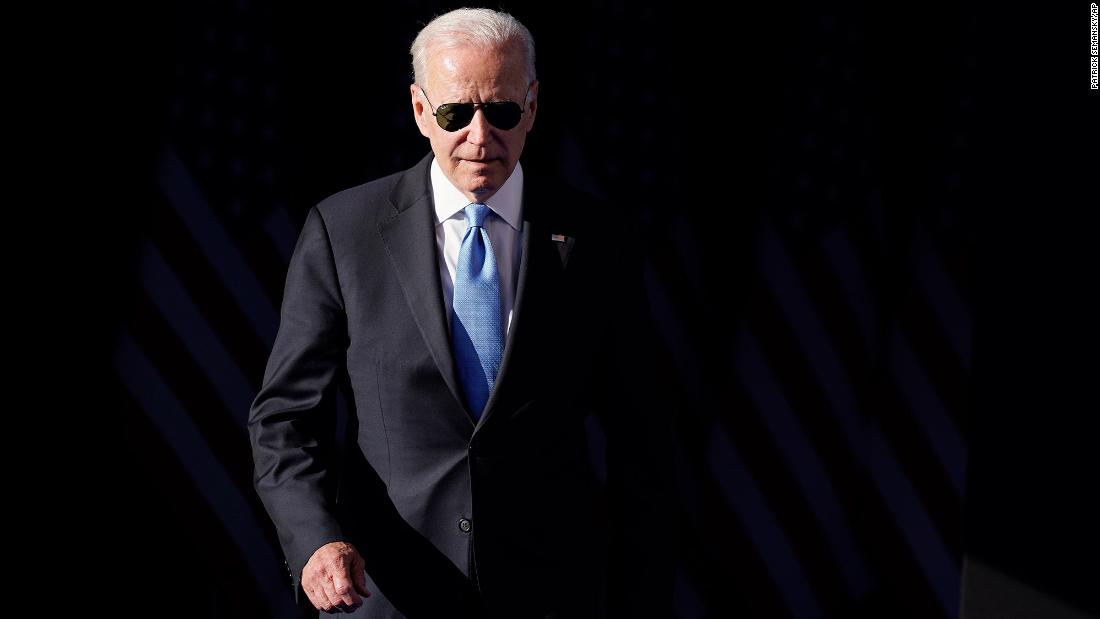
The odd couple – Can Biden and Putin find a way to thaw relations between America and Russia?
It was a meeting of two world powers that came with low expectations but much anticipation. The face-to-face meeting between American President Joe Biden and Russian President Vladimir Putin may not have accomplished much, but it did allow Biden to set a tone on his approach to foreign relations. President Joe Biden's meeting Wednesday with his Russian counterpart came after months of diplomatic wrangling over the details, days of preparation with reams of research and the elaborate construction of two separate lakeside venues for the leaders to appear afterward. But after the summit had concluded, the ornate French style manor home was locked up and the leaders were jetting in opposite directions home, the state of relations between the United States and Russia seemed about the same as before. That is not necessarily a surprise, least of all for Biden, who entered the summit with the vague and modest goal of establishing a "predictable and rational" relationship with Vladimir Putin. Putin's performance afterward was certainly predictable, if not entirely rational. Ultimately, Biden set expectations so low for his first face-to-face encounter with Putin that anything more than someone not showing up at all amounted to breaking even. June 16 - CNN What comes next is up to both leaders – but the world will be watching. Is there a chance to find common ground between the two countries? Will Russia continue to interfere in U.S. elections and hack American agencies - and how will American respond? What happens if Russian opposition leader Alexei Navalny dies in prison? And, did this meeting give Putin the elevated push he needs internationally? If you are a journalist looking to cover this subject – then let us help. Dr. Stephen Farnsworth is a sought-after political commentator on presidential politics. He has been widely featured in national media, including The Washington Post, Reuters, The Chicago Tribune and MSNBC. Dr. Farnsworth is available to speak with media any time. Simply click on his icon to arrange an interview today.
