
Experts Matter. Find Yours.
Connect for media, speaking, professional opportunities & more.

The effect of multitasking on worker performance
Diwas KC, associate professor of information systems & operations management, completed an in-depth investigation of the impact of multitasking in a complex work environment by analyzing patient flow and clinical data of physicians in a large hospital ER. The study provides important findings for understanding multitasking and its “implications for a knowledge economy, where attention and focus are significant drivers of productivity and quality.” The research indicated that multitasking starts out as a positive influence on work, giving physicians the “ability to utilize idle time between tasks.” Additionally, lower levels of multitasking actually improved the quality of care, since “low levels of stress can aid cognitive function.” Once multitasking behavior became excessive, productivity declined dramatically due to a variety of factors, including work interruptions and coordination costs. A higher level of multitasking also led to a drop in detected diagnoses and an increased rate of revisits in a 24-hour period for patients initially treated in the emergency department. Physicians spent less time with patients and their overall focus suffered. Source:



The return on international investment products
Individual investors have access to an ever-increasing number of US-registered equity funds that invest in international assets, as well as institutional investment products focused on global assets. Despite the growing importance of global equity markets for US investors, there is little academic research devoted to their study. Jeffrey Busse, associate professor of finance, Amit Goyal (University of Lausanne), and Sunil Wahal (Arizona State U) advanced the research, tackling the common theory that less developed markets are less efficient and, consequently, “exploitable by active fund managers.” The trio analyzed a large sampling of active retail mutual funds and institutional products investing in global equity markets, concentrating their research on a sample period from 1991 to 2009. The authors used quarterly returns net of trading costs and gross of fees. They also collected information on annual fee schedules, portfolio turnover, and assets under management. On average and in the aggregate, the data showed a lack of “superior performance” for the sampling. The research paper won the Spangler IQAM Best Paper in Investments Prize at the 2014 European Finance Association Annual Meeting in Lugano, Switzerland. Source:


Speculation and its impact on trading volume
Financial researchers have long wondered exactly which economic forces cause variation in asset prices and returns. For instance, traders will often target financial instruments due to their volatile and highly liquid nature, such as US treasury bonds. This speculative behavior takes advantage of the frequent price movements of the product. But the influence of that behavior remains the subject of debate. Francisco Barillas, assistant professor of finance, and Kristoffer Nimark (Cornell U) take a deep dive into the issue by investigating the impact of speculative trading activity on the variation of long maturity US bond yields. For their analysis, Barillas and Nimark use public information to develop a rational model to track “informed traders that take on speculative positions to exploit what they perceive to be inaccurate market expectations about future bond prices.” They argue that their research takes a more “suitable approach for empirical work” by factoring in how traders exploit private information that other traders may not have. The authors note that bond prices alone are not enough information for predicting bond returns. The two write, “If traders have access to different information, this price may differ from what an individual trader would be willing to pay for the bond if he had to hold it until maturity.” Ultimately, they find that this speculation remains a key driver of trading volume, accounting for a “substantial fraction of the variation in historical US bond yields along with the usual analysis of estimating returns based on bond prices.” Source:

Consumer word-of-mouth and social media
Certainly, marketers are well aware of the value of the consumers’ word-of-mouth (WOM) endorsements of a product or service. But the ubiquitous nature of social media demands that advertisers find new ways to tap into how consumers interact and communicate to leverage the power of WOM online. Panagiotis Adamopoulos, assistant professor of information systems & operations management; Vilma Todri, assistant professor of information systems & operations management; and Anindya Ghose (NYU-Stern) take a close look at the role of hidden personality traits of online users and how they play into the effectiveness of product WOM on Twitter. The trio used big data, machine learning methods, and causal inference econometric techniques to study consumer purchases made through Twitter accounts. The research showed an increase in the likelihood of a purchase by 47.58% when there was exposure to WOM tweets from a sender who had similar personality traits to the recipient of the information. The trio found that introvert users were much more accepting of WOM versus extrovert users. They also noted agreeable, conscientious, and open social media users are more effective influencers. The combinations of personality traits of disseminators and recipients of WOM impacted the decision to buy a product, with the researchers noting that a “WOM message from an extrovert user to an introvert peer increases the likelihood of a subsequent purchase by 71.28%.” Source:


Understanding economic development and its environmental impact
While fears about the environmental impact of economic development remains under discussion, the number of proenvironmental international non-governmental organizations (INGOs) continues to grow. But little is known about their influence on countries to create more eco-friendly industrial processes and technologies. In new research from Wesley Longhofer, assistant professor of organization & management, and coauthor Andrew Jorgenson (Boston College), the pair determined which nations they believed were “more embedded in the proenvironmental world society,” determining the level of influence of INGOs, as well as global treaties and professionals, on the countries they studied. The data took into account GDP per capita to find the effect of economic development on carbon emissions. The research examined whether countries that were more likely to feel this global pressure to “enact pro-environmental policies or invest in cleaner technologies” subsequently experienced a drop in rates of carbon emissions. Longhofer and Jorgenson created a measure to analyze the effects of development over time on carbon emissions in 79 countries, using data from 1970 to 2009. They found that “nations that are the most embedded in the environmental world society experienced a moderate decrease” in the impact of economic development on carbon emissions. Essentially, larger and more developed nations were more likely to feel the influence of proenvironmental INGOs than less developed countries, ultimately showing a small drop in carbon emissions. Source:


Securitized loan modification and loan performance
After the collapse of the housing market, the wave of foreclosures in the US changed the economic landscape of many neighborhoods across the country. Some academics and policymakers have argued that the renegotiation of those loans was a much better alternative than foreclosure and that incentives should have been offered to financial institutions to encourage it. However, little research exists to understand the performance of loans that were modified. Gonzalo Maturana, assistant professor of finance, takes a close look at loan modifications made early in the recent housing crisis to better understand the value of offering incentives to modify securitized non-agency loans. According to Maturana, researchers contend that the small number of loan modifications added to the number of foreclosures during the subprime crisis. His analysis consisted of slightly more than 835,000 non-agency securitized loans that became delinquent between August 2007 and February 2009. Maturana found that loan “modification reduces loan losses by 35.8% relative to the average loss, which suggests that the marginal benefit of modification likely exceeded the marginal cost.” Additionally, modifications resulted in fewer liquidations. He also found that modifications were particularly useful “in preventing future loan losses in times of large increases in delinquencies when servicers are more likely to be working at full capacity.” Source:

Relational signaling and gift giving
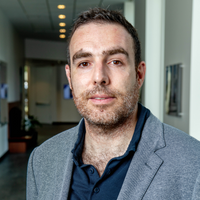
Prior research indicates that gift givers are motivated by competing goals. Often, they will simply select an item of the recipient’s choosing. However, gift givers are also likely to select an item on their own to help show knowledge of the recipient and further define and maintain a personal connection. Morgan Ward, assistant professor of marketing, and coauthor Susan Broniarczyk (U Texas) take the research a step further by analyzing how the closeness of a relationship further impacts the gift-giving decision when a gift registry is readily available. The duo employed five separate studies with human subjects presented with various gift-giving scenarios. The paper notes, “We find that despite their stated primary intention to please recipients, close (vs. distant) givers ultimately are more likely to ignore recipients’ explicit registry preferences in favor of freely chosen gifts.” Ward and Broniarczyk conclude that divergence from the registry was not necessarily about finding a better gift. Instead, it occurred only when givers specifically received attribution for their selection. The closeness of the personal connection resulted in a “perceptual distortion of the gift options in favor of relational-signaling gifts.” Distant givers were much more likely to pick an item from the registry, selecting gifts closely aligned with recipients’ preferences. Source:

6 Facts We Learned Working with Migrants and Refugees Around the World: Facts 1 and 2 Working with migrants and refugees is our business at Catholic Relief Services. CRS was founded in 1943 to assist refugees during World War II. Seventy-five years later, we are still coming to the aid of people escaping conflict, violence and natural disasters. While CRS doesn’t resettle refugees in the United States (these programs are run by the Catholic Church’s Migration and Refugee Service and Catholic Charities), our rich history has taught us valuable lessons on how to best help families fleeing crisis. 1. People Do Not Want to Leave Their Homes. An astonishing 1 in 110 people have been forced to flee their home (UNHCR). They only do that when they feel they have no other choice. Most people the world over give the same reason for starting their perilous journey across borders -- violence. That’s true for millions fleeing conflict in South Sudan and for tens of thousands fleeing gang violence in Central America. Most often, people flee to other parts within their country first. Only when they see no other option do people leave their country. Rick Jones is the agency's Youth and Migration Advisor in Latin America and the Caribbean. He also specializes in issues affecting Central American migration, including gang violence, poverty, and internal displacement. See his contact information at the bottom. 2. Don’t Separate Families. Based on extensive experience with refugees and migrants, CRS agrees with the criticism of the former U.S. policy of separating children from their parents. Decades of research shows that this is so traumatic for children it can lead to long-term psychological, and even physical damage. Shannon Senefeld is a global development expert at CRS. She has published and presented extensively on international children’s issues and the importance of strengthened family care for children’s development. See her contact information at the bottom. The experts at Catholic Relief Services are available to help with any media coverage or insight that is required regarding this ongoing news story and issue that is continuing in America. Simply click on any of their icons to arrange a time for an interview. Source:


Independence Day: Baylor’s Benjamin Franklin Scholars Bring Light to Complex Figure
Founding Father Benjamin Franklin was a complex man. Among his many roles, he was a businessman, entrepreneur, inventor, journalist, author, printer, editor, politician, postmaster, statesman, ambassador and signer of the Declaration of Independence. And even with a treasure trove of accomplishments, sometimes the Franklin legends are bigger than Franklin the man – and it’s taken an army of historians and scholars throughout the centuries to sort it out. As July 4 Independence Day approaches, Baylor University's two Franklin scholars share different perspectives of Franklin, his faith and his business acumen: • Thomas Kidd, Ph.D., Distinguished Professor of History and associate director of Baylor’s Institute for Studies of Religion • Blaine McCormick, Ph.D., associate professor and chair of the management department in Baylor’s Hankamer School of Business Both have penned Franklin books and both have been featured nationally for their research on the Founding Father. Kidd’s 2017 book, “Benjamin Franklin: The Religious Life of a Founding Father,” has received high marks for its analysis of Franklin’s beliefs. From his Puritan upbringing to deism, skepticism and more, the book explores the influences and evolution of faith throughout Franklin’s life. “In today’s polarized political and religious environment, some pundits seek to remake the Founding Fathers in their own image. Benjamin Franklin’s example reveals that the historical truth is often more complicated,” Kidd wrote in a column for The Wall Street Journal. McCormick, who wrote “Ben Franklin: America’s Original Entrepreneur,” discovered a passion to study the Founding Father after listening to an audiobook of Franklin’s autobiography. “Franklin could do things as a statesman, and understand things, and achieve things as a statesman, because he had achieved things in the marketplace first,” he said. “I’ve yet to find a better book for businesspeople to learn about how to run a business in the American Experiment. He wrote the autobiography to help train people in the life of business. Many of the principles are still very robust.” And the way he shared those principles (many of which have been misquoted and made into memes through the decades) is important, McCormick said. “Franklin used sentences no longer than a Tweet to train generations of colonial businesspeople,” he said. “They were short. They were memorable. They were high-impact.” Source:


Always Keep Families Together. Separation Damages Children.
The ongoing situation in America’s border towns with the detention and separation of thousands of children from their parents is both highly damaging for children and unnecessary. The actions of American authorities who are enforcing the ‘zero-tolerance’ policies have led to outcries from world leaders, American politicians and a large segment of the public. The following is a statement from Shannon Senefeld, Senior Vice President, Overseas Operations, Catholic Relief Services. “At Catholic Relief Services, keeping children with their parents is always one of our paramount goals. That’s true in emergencies, in health crises, in all of our long-term work combatting poverty and working to end the institutionalization of children. The research is clear – separating children from their families causes lasting mental, and even physical damage. Family support is vital for all children, especially those fleeing violence or dire poverty. “ As a Clinical Psychologist and with a long career working with vulnerable children around the world, Shannon Senefeld can speak with authority on why the ongoing situation with the separation of families on the US border. She can also speak to the root causes that propel families to migrate in the first place, such as rampant gang violence and poverty in Central America. Shannon is available to speak with media. For an interview – simply click on her icon to contact her and arrange a time. Source: