
Experts Matter. Find Yours.
Connect for media, speaking, professional opportunities & more.
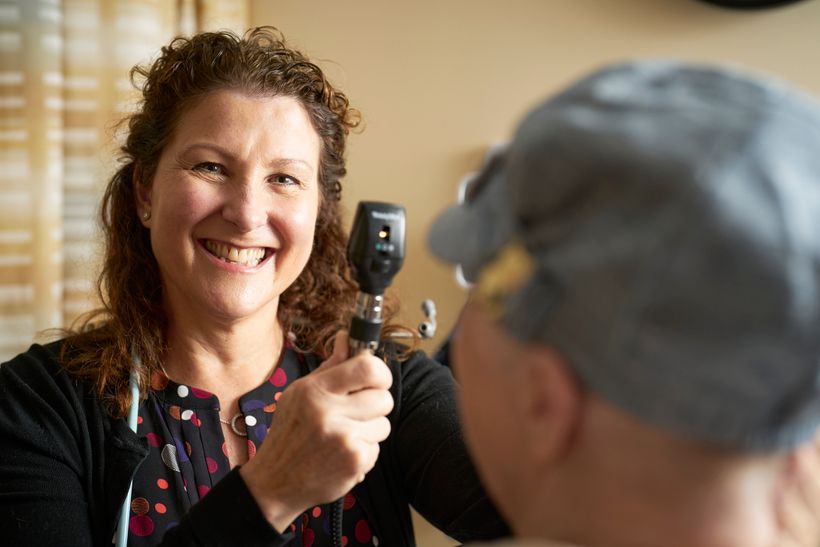
Adding Onsite Primary Care Practice in Cancer Center Earns National Innovator Award
ChristianaCare’s Helen F. Graham Cancer Center & Research Institute is the recipient of The Association of Community Cancer Center’s (ACCC) 2022 Innovator Award for its person-centered model of care that embeds a primary care provider in the cancer center for patients undergoing treatment who do not have a primary care provider. The Graham Cancer Center is among the first cancer programs in the nation to offer a program of this kind to its patients. “Earning the prestigious ACCC Innovator Award for our primary care practice is an accomplishment that belongs to our entire cancer care team which has worked long and hard to develop this unique program designed to improve our patients’ long-term health,” said Nicholas J. Petrelli, M.D., Bank of America endowed medical director of the Helen F. Graham Cancer Center & Research Institute. Patients diagnosed with cancer frequently have one or more concurrent chronic diseases, including heart disease, high blood pressure, COPD and diabetes. Cancer treatment can make these chronic medical problems worse, so it is important for patients to continue to see a primary care provider during their treatment, which can also help eliminate unnecessary emergency department visits. The new Primary Care Practice builds on the success of the Graham Cancer Center’s Oncology Express Unit, a program that offers urgent care to cancer patients in distress during treatment. “We conducted an informal survey that found as many as 15 percent of our patients did not have their own primary care provider,” said Cancer Program Clinical Director Cindy Waddington, MSN, RN, AOCN. “Having a primary care provider onsite working closely with the entire cancer care team helps ensure that essential patient care beyond cancer treatment is not delayed,” Waddington said. Patients are referred to the practice by their oncologists for any non-cancer health concerns. Since opening in January 2021, the program has received referrals to care for 234 patients. “Primary care in oncology has been a long-standing challenge for cancer patients and cancer programs,” said Family Nurse Practitioner Debra Delaney, RN, MSN, ACNS-BC, FNP-BC, who provides primary care services at the Graham Cancer Center. “Thankfully, we’ve been able to solve that challenge by addressing the whole person and promoting healthy living for the long-term.” Delaney helps patients manage their chronic medical conditions by monitoring their labs, refilling prescriptions and coordinating and communicating about any referrals they many need. “Following their cancer treatment, we help our patients transition to another practice, so they can continue to receive care for their primary care needs,” she said. The ACCC featured the program on its BuzzBlog. According to the ACCC, Innovator Award winners demonstrate the ability to advance the goals of improving access, quality and value in cancer care delivery, while also providing replicable solutions for other cancer programs and practices.



• Menopause: Continuing the Conversation will premiere at 12 noon on 18 October • The news-style programme features key industry interviews and news-style reports along with sponsored editorial profiles • It includes a film of Aston University staff telling their own stories. Aston University has joined forces with the British Menopause Society and ITN’s bespoke production hub, ITN Business, to contribute to a programme which raises awareness of the menopause for World Menopause Day. Menopause: Continuing the Conversation features key industry interviews and news-style reports, along with sponsored editorial profiles. It is anchored by television presenter and journalist Louise Minchin and will premiere at 12 noon on 18 October 2022 on the British Menopause Society's YouTube channel. The programme takes a holistic look – from lifestyle to changes in workplace policy - to support and empower women embarking on the perimenopause and beyond. Staff from Aston University tell their own stories in a film which forms part of the programme. World Menopause Day is held every year on 18 October. The day was designated by the International Menopause Society (IMS) to raise awareness of the menopause and to support options to improve health and wellbeing for women in mid-life and beyond. The theme for World Menopause Day 2022 is cognition and mood. According to research by the Chartered Institute of Personnel and Development (CIPD), three out of five working women between the ages of 45 and 55 who are experiencing menopause symptoms say it has a negative impact on them at work, nearly two-thirds of women surveyed said they were less able to concentrate, more than half said they experience more stress, 30 per cent of women said they had taken sick leave because of their symptoms and only a small minority said they told their managers about the real reason for taking sick leave. Beth Lloyd, associate director of organisational development at Aston University, said: “We are excited to announce our involvement in a news-style programme Menopause: Continuing the Conversation in partnership with ITN Business and the British Menopause Society for World Menopause Day. “Menopause is not just a gender or age issue; it is an organisational issue. It can impact on colleagues both directly or indirectly. Awareness on this topic is fundamental to reduce the stigma attached to it so that more people will talk openly about it so it can begin to be normalised and people can get the support they need. “Aston University has taken a proactive approach to raising awareness of the topic including hosting a range of workshops for managers and staff, introducing menopause mentors and creating an informal networking group. Our hope is that these activities will create a truly inclusive workplace and achieve our goal of becoming a recognised menopause friendly employer.”


Can you be hacked while using your mobile device? In a word, yes — here’s how to protect your data
October is Cybersecurity Awareness Month and being aware of all your devices is as important as ever before. Most people are online every day, which opens themselves up to a threat of being hacked. Whether it be a mobile device, laptop, or personal computer, everyone needs to have cyber awareness. Steven Weldon, director of the Cyber Institute at Augusta University’s School of Computer and Cyber Sciences said many straightforward things that can be done to protect devices, such as having lock screens, making sure operating systems are up to date and simply recognizing how, when and where devices are being used. “Smart phones today are probably the most capable computing device that we have and we have it on us all the time,” said Weldon. “The data that can be extracted from these devices can be put together to build a pattern of life on us: where we go, what we do and when we do it. All of this data is potentially at risk if we’re not being careful about who gets access to our smart phones. That’s a great reason to lock the screen and require at least a password or pin to unlock the phone.” Gokila Dorai, PhD, assistant professor in the School of Computer and Cyber Sciences, suggests using biometrics to enhance security. “I would strongly recommend for women, young adults even teenagers, if it’s possible for you to have biometrics as a way to unlock your device, then go for that. These unique ways of unlocking a device would add a layer of protection,” said Dorai. Dorai is one of the growing experts in the field of mobile forensics and her research projects are federally funded. In addition, several SCCS faculty are mentoring undergraduate and graduate students working on cutting edge research related to mobile device security and digital forensics. She also suggested adding a two-factor authentication or multi-factor authentication to add an extra layer of security. When out in the public, it’s easy to connect a mobile device to an unprotected Wi-Fi network. Doing so could open up sites you visit to a hacker. Weldon suggests people should be careful of what apps are used when on public Wi-Fi, since they may expose a lot of personally identifiable information. His suggestion is to use a virtual private network to help protect data that’s being transmitted and received. “We should recognize the data on our smart phones and protect them accordingly,” added Weldon. “Recognizing the value and sensitivity of the data on our smart phones can guide us in how we protect these devices. We may not think as much about the security and privacy of our smart phones as we do about our laptops and desktops. When we think about everything we use our smartphones for, how ubiquitous they are in our lives, we come to realize just how central they are to today’s lifestyle in the digital age.” It’s tough to identify when a mobile device has been hijacked, so both Weldon and Dorai suggest paying close attention to any unusual behavior, even small things such as a battery draining faster than usual. Both are indicators you may need to take corrective actions. Dorai added the government can do more to protect a person’s privacy. “With the introduction of more and more Internet of Things devices in the market, with several different manufacturers, there’s a lot of user data that’s actually getting exchanged. These days, the most valuable thing in the world is data. So stricter measures are required,” she said. She indicated it needs to be a collaborative effort between industry, academia, government, and practitioners to come together and work on ideas to strengthen security. “Yes we want security. We are willing to put up with a little bit of friction for additional security. We want it easy and we generally want it free,” said Weldon. “We don’t read licensing agreements, but we would generally be willing to take certain actions, make certain tradeoffs, to be more secure.” One other major concern are apps in general. While Google Play Store and Apple routinely remove some apps that may be out of date or have security vulnerabilities, they may still be running on a user’s device. “Mobile applications may also hide from you in plain sight in the sense the app icons may not be showing up on the screen, but still they are running in the background,” added Dorai. In essence, the device user is the first line of defense. Taking all the necessary steps to prevent a third party from getting your information is of the utmost importance in the digital age. “I believe a big part of it this discussion is about user awareness. We want that free app but that app is asking for a lot of permissions. There’s an old saying in cybersecurity: if you are not paying for the product, you are the product. There’s also another saying: if it’s smart, it’s vulnerable,” said Weldon. Are you a reporter covering Cybersecurity Awareness Month? If so - then let us help with your stories. Steven Weldon is the Director of Cyber Institute at the School of Computer and Cyber Sciences at Augusta University and is an expert in the areas of cellular and mobile technology, ethics in computer science, scripting and scripting and automation. Gokila Dorai is an Assistant Professor in the School of Computer and Cyber Sciences at Augusta University and is an expert in the areas is mobile/IoT forensics research. Both experts are available for interviews - simply click on either icon to arrange a time today.


Winnipeg, MB, March 16, 2022 - Longing for your next adventure? Look no further because CAA Manitoba has unveiled a new set of luxurious travel packages designed for travellers who are ready to embark on an iconic Canadian adventure. As part of each package, travellers will be flying on a CAA chartered jet with all business class seating, offered in partnership with Air Canada. They will be joined only by those travelling on a Premier Collection tour. Itineraries are curated with affordable luxury in mind. “Our research has shown us that Canadians are looking to experience travel in a more intimate setting and at this time, many are still looking to stay closer to home,” said Susan Postma, regional manager, CAA Manitoba. “By coupling the best of Canadian culture, food and heritage, with the safety and luxury of travelling on a CAA chartered plane, we are confident that these packages will give travellers a delightful option to start exploring again.” Travellers will rediscover the nation’s greatest sights, sounds and smells on one of five journeys showcasing Canada’s unforgettable wonders and hidden gems. “For many of us, travelling again for the first time is a momentous occasion and we wanted to make that extra special by cultivating a premium experience with the utmost attention to health and safety,” said Postma. “Each destination encourages travellers to immerse themselves in every moment and create lasting memories.” Packages feature everything from stargazing to whale watching; enjoying a pancake brunch on a maple farm to World Famous “Digby Scallops” in Nova Scotia; witnessing the highest tides in the world in New Brunswick to taking in Quebec’s most breathtaking waterfall and many more unique experiences in between. “We are very pleased that CAA is recognizing our superior customer service in choosing Air Canada for its unique, luxury travel packages. Our private charter service, Air Canada Jetz, is specially designed for ultra-premium customers, such as pro athletes, celebrities and music stars, ensuring CAA’s explorers will travel in extraordinary style wherever their adventure takes them,” said Eric Bordeleau, senior director, Network Scheduling and Charters at Air Canada. Tours and dates include: Glorious Lakes and Glaciers: Banff, Jasper and Beyond (August 13-20, 2022) – 8 Days Savour Quebec: A Culinary Journey Through Quebec City, Charlevoix and Montreal (August 15 – 24, 2022) – 10 Days Rich and Enticing Quebec: Explore the Spectacular Gaspé Peninsula (August 15 – 24, 2022) – 10 Days Magical Maritimes: Acadian Culture, Delicious Flavours and Historic Charms (September 10-19, 2022) – 10 Days Platinum Journey - Mountains and Memories: Wonders of the West and Rocky Mountaineer (September 13-21, 2022) – 9 Days CAA Travel has over 50 years of experience in helping members plan and book unforgettable travel excursions around the world. CAA’s new Premier Tours Collection packages are part of CAA’s Extraordinary Explorations collection and range in price starting at $6,300 CDN. Extraordinary Explorations is CAA’s collection of unique travel adventures designed for adventurous travellers looking to embark on a luxe vacation for an affordable price. Experience one-of-a-kind destinations, intriguing itineraries and exceptional excursions. Available as escorted and hosted packages, every exploration is guaranteed to create lasting memories. The 2022 Premier Collection packages can be purchased at all CAA stores or by phone at 1-844- 202-8045. Click here for more information.


MEDIA RELEASE: Ten things Manitobans need to know prior to booking travel abroad
Winnipeg, MB, October, 26, 2021 – CAA Manitoba (CAA MB) has compiled a list of ten things that Manitobans should be aware of if they are considering travelling abroad. “Now that the Canadian government is no longer advising against non-essential travel due to COVID-19, those who are considering booking a trip should make sure they understand the scope of what travel looks like at the moment,” said Kaitlynn Furse, director, corporate communications, CAA Club Group. “The checklist for planning a trip has changed and we want to help people navigate this new environment.” Through consultation with its top travel agents, CAA MB has identified ten key considerations that potential travellers may not be aware of. Anyone who is considering travel in the current environment should make sure they have looked into the following and remember that travel requirements and regulations are continually changing. 1. Confirm the COVID-19 situation at destination prior to booking. Understand the risk level associated with travel to a particular destination by checking the Government of Canada Travel Advice and Advisories website. While the Global Affairs Canada Level 3 Travel Advisory to avoid all non-essential travel has been lifted, individual travel advisories do remain on a country-by-country basis. It is important that Canadians understand the ongoing uncertainty associated with international travel, whether that be related to the continued community transmission of COVID-19, or state of health care systems in destinations hit hard by the pandemic. 2. Understand the type, timing, cost and accessibility of required COVID testing. Every country has different requirements when it comes to the COVID tests that are needed prior to travel, and every country has different testing capacities once you are there. There are also requirements in order to return to Canada. Make sure you understand the difference between molecular PCR and rapid antigen tests, in what time period tests must be taken, the associated costs and locations where these tests are available. 3. Confirm change and cancellation flexibility with your travel service provider. Many airlines and hotels have been providing more flexibility when it comes to refunds and changes to bookings. Make sure you understand any key dates related to cancellation and changes and whether you are entitled to a refund or a future travel voucher or credit at the time of booking. 4. Buy travel insurance and understand what is covered. Make sure you have $5 million in coverage for emergency medical situations and that illness related to COVID-19 is included. Understand your entitlements for things like denied boarding in the event of a positive test and coverage related to isolation expenses. 5. Prepare required travel documentation and the format it must be presented in, for both Canada and your destination. Canadians returning home should have all required documentation loaded onto the ArriveCAN App or website. Each destination has varying requirements, so make sure you fully understand what information you need to have ready and in what format. Make sure you also take into consideration connections and any requirements in the connecting destination due to lay over or delays. 6. Take note of local public health rules prior to departure. Many destinations have measures in place such as curfews and quarantine requirements. You should also understand what the regulations are if you happen to test positive for COVID-19 in the country you are visiting. 7. Be aware of changes between booking and departure. Make sure you reconfirm all the details that were researched prior to booking, to ensure they are still accurate prior to departure. What was true when a trip was booked may not be the case by the time you are ready to travel. 8. Double check all research with the appropriate embassy or consulate. Travel at this time is complex and many factors can change quickly, so ensuring you have the most up to date and accurate information is essential. 9. Plan for extra time. From disembarkment and customs to retrieving luggage and exiting the airport, most things on the travel journey are taking longer than during preCOVID travel times. Also note the check-in and baggage drop off deadline for your flight as it may require you to arrive earlier than anticipated. 10. Stay connected. Fully unplugging while travelling is likely a thing of the past. It is important to have access to trusted, up-to-date information while travelling so you can monitor changing conditions and requirements and adapt accordingly. Bookmark the Global Affairs Canada website prior to departure and check it regularly while abroad. It is also a good idea to sign up for Registration of Canadians Abroad and stay in touch with a family or friend that has knowledge of your travel plans.

Aston Institute of Health and Neurodevelopment to host third in a series of livestreamed public lectures This episode of Molecules to Minds will explore Dr Laura Shapiro’s research into how children’s experiences of learning to read impacts on how they learn in the future The one-hour livestream will be followed by a Q&A and round table discussion Aston Institute of Health and Neurodevelopment (IHN) will host a livestreamed public lecture in the series Molecules to Minds on Aston University’s digital channel Aston Originals on Thursday 3 November 2022. Dr Laura Shapiro, a reader in psychology, will present her lecture ‘From gobbledygook to goblins: how a child learns to crack the written code’. Laura will reveal the hurdles and fortunes on the journey from spoken to written language and will discuss how our experience of learning to read changes the way we learn forever. Dr Shapiro's research focuses on the causes and consequences of children’s language and literacy development and is shaped both by fundamental scientific questions and by the concerns of practitioners and policymakers. The lecture will be co-presented with James McTaggart from the Highland Council, Scotland and hosted by Professor Jackie Blissett, co-director of IHN. Laura said: “Most adults take reading for granted, yet for a beginner reader, writing is just gobbledygook. The ability to crack the written code underpins all subsequent learning and provides the key to discovering new worlds and fictional friends.” After the livestreamed lecture, Dr Shapiro and guests will host a Q&A and round table discussion, where audience members can address researchers with their questions. The panel includes a variety of guests: James Cook, headteacher at Cawdor Primary, Scotland, Roxanne Mahroof, a parent and Dr Pamela Wadende a senior lecturer in education at Kisii University, Kenya. Dr Shapiro added: “Being able to read is like a key to the adult world: it underpins our ability to learn. Our research shows that strong language skills are needed to learn to read, and the journey to mastery is a long one. “The good news is that getting better at reading helps you learn more from each thing you read, and in turn spurs you to read more widely. Warning: reading can be addictive.” The lecture is targeted at anyone interested in literacy development in children and young people, including academics, teachers, parents and young people themselves. The livestream will take place at 16:00 – 17:00 BST on Thursday 3 November on the Aston Originals YouTube channel. To register for this event please visit our Eventbrite page.


ChristianaCare Spins Out CorriXR Therapeutics, New Gene Editing Start-Up
Commercial biotechnology venture will harness the power of gene editing to revolutionize patient care with faster, more accurate diagnoses ChristianaCare today announced it has spun out its first commercial biotechnology private start-up company, named CorriXR Therapeutics. CorriXR Therapeutics (pronounced Cor-ix-er; from Galician meaning to correct or edit) will use CRISPR gene editing technology to develop new, clinically relevant oncologic therapeutics in areas of unmet medical need, starting with squamous cell carcinoma of the lung. Its close relationship with ChristianaCare and the ChristianaCare Gene Editing Institute uniquely positions it to research and develop innovative, patient-centered therapies. The new start-up company has been boosted with $5 million in seed financing from ChristianaCare and Brookhaven Bio. “We are excited to spin out CorriXR Therapeutics, which has an enormous opportunity to use the incredible power of gene editing to revolutionize patient care by delivering faster and more accurate diagnoses, targeting treatments and preventing genetic disorders,” said Janice Nevin, M.D., MPH, ChristianaCare president and CEO. The company has developed unique CRISPR/Cas biomolecular tools that disable the genome of a tumor cell but not the genome of a healthy cell, which enables target selectivity. CorriXR Therapeutics will license technology from the Gene Editing Institute and work closely with its scientific researchers and clinical oncologists at the Helen F. Graham Cancer Center & Research Institute. The Gene Editing Institute’s integrated bench-to-bedside approach connects leading-edge science to patient care. “CorriXR Therapeutics is the next phase of the Gene Editing Institute’s evolution and impact as an incubator for groundbreaking technology in a patient-first approach to research,” said Eric Kmiec, Ph.D., chief executive officer of CorriXR Therapeutics. “The novel way we are using CRISPR-directed gene editing technology in solid tumors, beginning with a hard-to-treat form of lung cancer, has enormous promise as a treatment option to improve the lives of people with life-threatening disease.” The CorriXR Therapeutics team includes experienced biotechnology executives and world-renowned scientists and clinicians. The executive team is led by Eric Kmiec, Ph.D., chief executive officer, and Brian Longstreet, chief operating officer. Kmiec is also the executive director and chief scientific officer of ChristianaCare’s Gene Editing Institute. He is widely recognized for his pioneering work in the fields of molecular medicine and gene editing, having discovered many of the molecular activities that regulate the efficiency of human gene editing. Longstreet, a graduate of the University of Pennsylvania’s Wharton School of Business, is a seasoned pharma and biotechnology industry veteran with over 30 years’ experience, beginning at Schering-Plough and then Merck & Co. Recently, he has helped to build start-up biotechnology companies. Earlier this year, ChristianaCare restructured its Gene Editing Institute into a wholly owned subsidiary, which positions it to advance research to develop therapies using CRISPR gene editing technology and to fast-track discoveries for commercial application. The new structure also enables it to expand its educational outreach using its CRISPR in a Box™ educational toolkit and to develop its analytic software program, DECODR™. The Gene Editing Institute originated in ChristianaCare’s Helen F. Graham Cancer Center & Research Institute in 2015.


Simple 20-20-20 screen rule really does help with eye strain, research shows
Scientists find that a short break to look away from screen every 20 minutes improves symptoms of eye strain for computer users Aston University researchers used special software to monitor participants’ gaze for two weeks, measuring symptoms before and after First time that guidance has been scientifically validated. It’s long been recommended as a way of easing eye strain while working at a computer screen. Now the 20-20-20 rule – taking a break of at least 20 seconds, every 20 minutes, to look at least 20 feet away - has been confirmed by scientists at Aston University to help ease some of the symptoms of prolonged computer use. It’s estimated that at least half of people using computers in their regular work have some form of digital eye strain, resulting in eye surface problems including irritation and dryness, or vision issues such as headaches or blurred vision. Humans normally blink around 15 times each minute. When staring at screens, this number decreases generally to half that rate or less. That can lead to dry, irritated, and tired eyes, but twenty seconds focusing elsewhere is long enough for the eyes to relax enough to reduce the strain. This is the first time that the 20-20-20 guidance rule has been properly validated. Researchers at Aston University’s College of Health and Life Sciences set up their study with the help of 29 participants who suffer from symptoms of eye strain. Special software downloaded onto the participants’ own laptop computers used the built-in laptop camera both to check if a user was sitting at the screen and to monitor their gaze direction every few seconds. After 20 minutes of continuous screen viewing, the programme flashed up a message, asking users to rest for 20 seconds while looking at any distant target around 20 feet away, such as out of the window or across a room. The message couldn’t be removed until the task was performed correctly, as measured by the app. Participants’ digital eye strain symptoms were measured before and after two weeks of using the reminders, and one week after completing the study. Results showed a marked decrease in symptoms including dryness, sensitivity and discomfort. Professor James Wolffsohn, Professor of Optometry at Aston University, who led the research in collaboration with the University of Valencia, Spain, said: “The one previous study merely asked people to carry out the suggestions; but here the access control on the software meant we could be sure that participants really had looked away every 20 minutes. We saw a consequent improvement in the symptoms of the group as a whole.” Researchers noted that after the study, the participants’ eye symptoms returned to what they had been before the intervention. Professor Wolffsohn says: “We are planning to conduct longer term studies to see whether we can teach eyelid muscle memory impulses to blink more often during digital viewing, to help mitigate this chronic issue without long term use of reminders.” The findings confirm that people should try and take breaks from their screens. He added: “Although we used sophisticated software, it’s easy for others to replicate the effect by setting a timer on their phone, or downloading a reminder app. It’s a simple way of reminding yourself to take regular breaks for the good of your eyes.” The effects of breaks on digital eye strain, dry eye and binocular vision: Testing the 20-20-20 rule was published in Contact Lens and Anterior Eye journal.

The minister for tech and the digital economy met with representatives from Aston University’s College of Engineering and Physical Sciences and Solihull College & University Centre during a visit to the new Greater Birmingham and Solihull Institute of Technology (GBSIoT) Hub on 2 August. Damian Collins MP was given a tour of the new facility by Rosa Wells, executive director for employment and skills and IoT at Solihull College & University Centre. The Institute of Technology focuses on engineering and advanced manufacturing and is a partnership between local further education colleges, universities and industry partners. It will support learners from across the region to progress to high-skill technical jobs in industry through clear, supported pathways. Construction of the GBSIoT Hub building is nearing completion and will be welcoming students in the coming weeks. During the visit, the minister was shown the cyber physical manufacturing rig, a scaled-down version of a factory of the future, which will create a simulated working environment for IoT learners. The minister then met with executive dean Professor Stephen Garrett and deputy dean Professor Kate Sugden for a tour of Aston University’s Advanced Prototyping Facility conducted by senior project manager Paul Gretton. The facility supports businesses by increasing awareness of the opportunities available through 3D printing to improve the efficiency and effectiveness of existing designs, and to develop new products all the way through to producing prototypes. The visit also included a showcase of Aston University’s Autopod, a state-of-the-art autonomous vehicle funded by the Greater Birmingham and Solihull Local Enterprise Partnership and the Institute of Technology which is used for research and as a teaching tool. Professor Garrett said: “Aston University has a proud history of delivering high-quality technical education and world-leading research. We were delighted to be able to showcase our facilities to Damian Collins MP, whilst discussing our commitment to equipping students with the knowledge and skills they need to succeed in STEM careers.” Damian Collins MP said: “It’s been brilliant to visit the pioneering facilities at Aston University today, especially seeing the cyber rig which will give students first class training to enter the industry with confidence. “Having these opportunities will help young people gain skills they need for future jobs, supporting the UK’s world leading advanced manufacturing and digital industries.” The minister toured the facilities at Aston University as part of his wider visit to the Birmingham 2022 Commonwealth Games. For more information about the College of Engineering and Physical Sciences please visit our website.

Babies react to taste and smell in the womb – new research
Scientists have recorded the first direct evidence that babies react differently to various smells and tastes while in the womb Study took 4D ultrasound scans of 100 pregnant women to see how their unborn babies responded to flavours from foods eaten by their mothers The research team, which also included scientists from Aston University, scanned some mothers to see fetal facial reactions to the kale and carrot flavours. Scientists have recorded the first direct evidence that babies react differently to various smells and tastes while in the womb by looking at their facial expressions. A study led by Durham University’s Fetal and Neonatal Research Lab, UK, took 4D ultrasound scans of 100 pregnant women to see how their unborn babies responded after being exposed to flavours from foods eaten by their mothers. Researchers looked at how the fetuses reacted to either carrot or kale flavours just a short time after the flavours had been ingested by the mothers. Fetuses exposed to carrot showed more “laughter-face” responses while those exposed to kale showed more “cry-face” responses. Their findings could further our understanding of the development of human taste and smell receptors. The researchers also believe that what pregnant women eat might influence babies’ taste preferences after birth and potentially have implications for establishing healthy eating habits. The study is published in the journal Psychological Science. Humans experience flavour through a combination of taste and smell. In fetuses it is thought that this might happen through inhaling and swallowing the amniotic fluid in the womb. Lead researcher Beyza Ustun, a postgraduate researcher in the Fetal and Neonatal Research Lab, Department of Psychology, Durham University, said: “A number of studies have suggested that babies can taste and smell in the womb, but they are based on post-birth outcomes while our study is the first to see these reactions prior to birth. “As a result, we think that this repeated exposure to flavours before birth could help to establish food preferences post-birth, which could be important when thinking about messaging around healthy eating and the potential for avoiding ‘food-fussiness’ when weaning. “It was really amazing to see unborn babies’ reaction to kale or carrot flavours during the scans and share those moments with their parents.” The research team, which also included scientists from Aston University, Birmingham, UK, and the National Centre for Scientific Research-University of Burgundy, France, scanned the mothers, aged 18 to 40, at both 32 weeks and 36 weeks of pregnancy to see fetal facial reactions to the kale and carrot flavours. Mothers were given a single capsule containing approximately 400mg of carrot or 400mg kale powder around 20 minutes before each scan. They were asked not to consume any food or flavoured drinks one hour before their scans. The mothers also did not eat or drink anything containing carrot or kale on the day of their scans to control for factors that could affect fetal reactions. Facial reactions seen in both flavour groups, compared with fetuses in a control group who were not exposed to either flavour, showed that exposure to just a small amount of carrot or kale flavour was enough to stimulate a reaction. Co-author Professor Nadja Reissland, head of the Fetal and Neonatal Research Lab, Department of Psychology, Durham University, supervised Beyza Ustun’s research. She said: “Previous research conducted in my lab has suggested that 4D ultrasound scans are a way of monitoring fetal reactions to understand how they respond to maternal health behaviours such as smoking, and their mental health including stress, depression, and anxiety. “This latest study could have important implications for understanding the earliest evidence for fetal abilities to sense and discriminate different flavours and smells from the foods ingested by their mothers.” Co-author Professor Benoist Schaal, of the National Centre for Scientific Research-University of Burgundy, France, said: “Looking at fetuses’ facial reactions we can assume that a range of chemical stimuli pass through maternal diet into the fetal environment. “This could have important implications for our understanding of the development of our taste and smell receptors, and related perception and memory.” The researchers say their findings might also help with information given to mothers about the importance of taste and healthy diets during pregnancy. They have now begun a follow-up study with the same babies post-birth to see if the influence of flavours they experienced in the womb affects their acceptance of different foods. Research co-author Professor Jackie Blissett, of Aston University, said: “It could be argued that repeated prenatal flavour exposures may lead to preferences for those flavours experienced postnatally. In other words, exposing the fetus to less ‘liked’ flavours, such as kale, might mean they get used to those flavours in utero. “The next step is to examine whether fetuses show less ‘negative’ responses to these flavours over time, resulting in greater acceptance of those flavours when babies first taste them outside of the womb.”