
Experts Matter. Find Yours.
Connect for media, speaking, professional opportunities & more.

June 1 marks Marilyn Monroe’s 100th birthday. Despite her death in 1962, Monroe remains an icon of American pop culture. Amanda Konkle, Ph.D., researches film history, stardom and celebrity prominence. Konkle is an expert in Monroe’s rise to fame and her lasting relevance in modern style. She published the book “Some Kind of Mirror: Creating Marilyn Monroe,” along with several research papers detailing Monroe’s unique status in American history. Konkle can speak to how Monroe connected with audiences during her life by creating a new ideal of feminine power that defined an era. She can explore how Monroe’s acting methods mirrored society’s anxieties and desires, and why they still resonate today. Konkle is available virtually or for in-person interviews at the Armstrong Campus. Simply contact Georgia Southern's Director of Communications Jennifer Wise at jwise@georgiasouthern.edu to arrange an interview today.

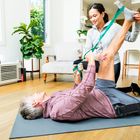
ChristianaCare Expands Access to Physical Therapy With New In Home Collaboration With Luna
ChristianaCare is joining forces with Luna, the leading provider of in home, in person outpatient physical therapy, to expand access to care by bringing hands on physical therapy directly into patients’ homes. The new service, ChristianaCare Physical Therapy At Home, Powered by Luna, will begin taking appointments in June. The collaboration is designed to reduce barriers to care, support strong recovery outcomes and give patients a convenient way to begin physical therapy. Care Delivered Where Patients Need It Most Unlike remote or virtual therapy, the service will provide one on one, hands on care delivered by licensed physical therapists in the convenience of a patient’s home or office. Through Luna’s platform, patients can request care and are matched with a licensed physical therapist who delivers 45 to 55 minute in home sessions and continues in person care throughout the patient’s treatment plan. “Our collaboration with Luna reflects a simple belief: if we can safely deliver high quality care in the home, we should make that option available,” said Jennifer Thomas, MBA, MS, vice president, Rehabilitation Services at ChristianaCare. “By meeting patients where they are, we remove common barriers to care and help people stay engaged in their recovery, regain independence and remain connected to daily life.” Designed to Help More Patients Get Started Too many people who are referred to physical therapy never take the first step. Research on patients referred to physical therapy has found that only about 50% to 76% attend an initial appointment. Travel challenges, scheduling conflicts and difficulty accessing care can all get in the way. ChristianaCare Physical Therapy At Home, Powered by Luna, is designed to make it easier for patients to begin care without delay by bringing licensed physical therapists directly to them and offering scheduling that fits into daily life. “Our focus is on timely access and helping patients get started,” Thomas said. “When care is easier to access and fits into a person’s routine, it is much more likely they will begin treatment. From there, our care teams support patients through a plan that is tailored to their needs and focused on meaningful recovery.” Different From Home Health Care ChristianaCare Physical Therapy At Home, Powered by Luna, follows an outpatient care model, not home health care. Patients do not need to be homebound to receive services. The program focuses on improving strength, balance and movement and is typically covered under Medicare Part B. This differs from home health care, which serves homebound patients who need short term medical services and is usually covered under Medicare Part A. ChristianaCare Physical Therapy At Home, Powered by Luna, can address many of the conditions commonly treated by ChristianaCare Rehabilitation Services, including orthopedic and sports injuries, post surgical rehabilitation, geriatric care, vestibular therapy, women’s health and lymphedema. Experienced Partner With Broad Clinical Expertise Luna has extensive experience delivering in home outpatient physical therapy and partners with health systems nationwide. “We are proud to work with ChristianaCare to expand access to high quality physical therapy in the home,” said Lily Beltran, co-founder and President at Luna. “Our shared focus is on removing barriers to care and delivering consistent, hands on therapy that helps patients recover, stay engaged and achieve their goals.” The service is covered by most major insurance plans, including Medicare, with the same co pay as facility based physical therapy. Patients can request in home care by calling ChristianaCare Rehab Services’ access center at 302-623-1500. ChristianaCare Physical Therapy At Home, Powered by Luna is a service offering of ChristianaCare Rehabilitation Services, which provides comprehensive, patient centered rehabilitation care across a wide range of settings, including outpatient clinics, inpatient facilities, community locations and now in the home.


National Cancer Research Month: Baylor Researchers at Forefront of New Discoveries
May is National Cancer Research Month, which highlights the importance of lifesaving research to the millions of people around the world affected by cancer. Thanks to spectacular advances made by cancer researchers, approximately 18.6 million people in the United States and millions more worldwide are living with, through and beyond their disease. Over the past year, Baylor University Media and Public Relations has reported on Baylor research at the forefront of discovering novel approaches to effective cancer therapies. University researchers are using tumor starvation techniques, natural products, phages, modified bacteria, precision nutrition and more in their trailblazing work on some of the most aggressive cancers, including kidney, pancreatic, oral, colorectal and breast cancers. In a recent article published by the University, it featured the hard work and research of eight Baylor experts driving those discoveries forward: • Kevin G. Pinney is developing a next-generation treatment for kidney cancer that targets the blood vessels feeding tumors. His research focuses on specialized drug conjugates designed to cut off oxygen and nutrients to renal cell carcinoma tumors — essentially starving cancer cells to death. • Daniel Romo is accelerating new therapies for pancreatic cancer using compounds derived from marine natural products. His work on a simplified version of pateamine A could offer a new therapeutic pathway for pancreatic ductal adenocarcinoma, one of the most aggressive and difficult-to-treat cancers. • Joseph Taube is investigating how breast cancers spread and resist treatment. His recent work examines whether a natural compound called Ophiobolin A can trigger inflammatory forms of cancer cell death that may work alongside immunotherapy — particularly in treatment-resistant triple-negative breast cancers. • Leigh Greathouse is combining cancer biology, nutrition science, and AI to personalize cancer prevention and treatment strategies. Her research explores how diet and the gut microbiome influence cancer outcomes and survivorship. • Michael S. VanNieuwenhze is leading groundbreaking colorectal cancer research using modified bacteria to deliver cancer-killing proteins directly into tumor cells. His team is engineering Listeria monocytogenes as a targeted therapeutic delivery system. • Aaron Wright is helping lead a major ARPA-H initiative exploring the use of bacteriophages — viruses that attack bacteria — to reshape the human microbiome and improve health. The project could eventually help prevent diseases linked to oral and colorectal cancers through low-cost phage-based treatments. • Savannah Rauschendorfer is researching how exercise interventions may reduce the harmful cardiac side effects of chemotherapy in adolescent and young adult cancer patients. Her work aims to identify patients at risk of cardiotoxicity earlier and improve long-term survivorship outcomes. • Jonathan Kelber studies the cellular and molecular mechanisms behind aggressive breast and pancreatic cancers. Through his Developmental Oncogene Laboratory, Kelber investigates how cancer cells evolve during tumor progression and tissue regeneration. Together, these researchers showcase how cancer science is rapidly evolving beyond traditional treatments – integrating biology, chemistry, nutrition, exercise science, microbiome research, and artificial intelligence in the search for more effective and personalized therapies.


Seventy There it is. Just sitting there. A number that tends to land somewhere between “good for you” and “are you feeling alright?” And before you answer that, let me tell you I am more than alright. I am thriving. Loudly. Definitely with dancing. And with just enough attitude to make a few people slightly uncomfortable, which I have decided is a sign of a life extremely well lived. But first, let me tell you about the plan. ⁂ The Plan Was Magnificent. It Lasted Eleven Minutes The plan was to retire gracefully. Ease into a slower pace. Read more. Maybe garden. Drink better wine. Finally, work through all those documentaries piling up in my queue with the quiet confidence of someone who had absolutely earned the right to nothing. Here is what actually happened. The documentaries stayed in the queue, and the garden did not get planted. I did, however, read one book. Just one. But it turned out to be exactly the right one. David Brooks wrote The Second Mountain: The Quest for a Moral Life, and I picked it up the way you pick up something that does not look urgent, only to find you cannot put it down. Brooks argues that we spend the first part of our lives climbing what he calls the first mountain: the career, the credentials, the identity, the whole elaborate structure of proving ourselves. And then something happens. You reach the top, or you fall off, or the mountain turns out to be considerably smaller than it looked from the bottom. Either way, you end up in a valley, slightly winded, wondering what comes next. And that, Brooks says, is where real life begins. The second mountain. The one you climb not for yourself but for something greater. The one where the question shifts from “what do I want?” to “what does the world need from me?” I read that while sitting in my living room and thought: that is the whole story, right there. There is a phrase I use throughout this blog: try to keep up. I say it because seventy feels faster and fuller than I ever expected, and because it is an invitation, not a taunt. You still have tread on your tires. I mean that warmly. Try to keep up. ⁂ The Valley Was Not Optional My valley arrived without warning or invitation: I lost my job unexpectedly. No graceful wind-down. No farewell luncheon with a tasteful card, no parade! Just the particular silence that follows the end of something you had not quite finished. Nobody glides gracefully from mountain one to mountain two, no matter how it looks on social media. What nobody tells you about retirement, voluntary or otherwise, is that stopping is quite difficult. Not the logistics. The identity. You spend thirty years answering the question “What do you do?” and then one day no one asks anymore. We carefully plan the money. We almost never plan for the morning when your calendar is empty, your inbox is quiet, and no one expects you anywhere. That morning is its own kind of reckoning. Brooks calls this the valley experience, and he is right that it is unavoidable. It is where you shed the old self so a new one can emerge. There are no shortcuts. I tried several. But then I hired a coach. Not just any coach. A thought leadership coach, which sounds very impressive but turns out to involve a great deal of uncomfortable self-reflection and at least one conversation in which the coach tells you to write a blog. “Do your research,” he said. “Find your niche. Share what you know. And honestly, you should probably write a book.” (Thank you, Peter!) I nodded. I smiled. I thanked him warmly. Then I went home, sat down, and had a completely private, entirely dignified meltdown that I will describe only as spirited. Action absorbs anxiety, so once the spirited moment passed, I got to work. Try to keep up. ⁂ The Second Mountain Has a Name. It Is Retire with Equity I started writing. Article after article, something unexpected happened: I found my voice. It turns out my voice is part educator, part agitator, and part hilarious, where kitchen-table logic meets a spreadsheet. I began calling her Aunt Equity, and she has been absolutely delightful company ever since. A word on naming your alter ego after a financial product: no one recommends it. No self-help book has a chapter that says ‘step three, create a persona rooted in home equity solutions and give her a sassy name.’ And yet Aunt Equity arrived fully formed, with opinions, a logo, and an inexplicable amount of charisma. She is part brand, part character, and entirely my fault. I am keeping her. For Brooks, the second mountain is a calling, not a career move. For me, it is a community. The Canadian retirement community. The people who built this country, paid into it, raised children in it, and are now quietly panicking about whether they have enough to keep going. That community. They are my people, and this is my mountain and I have built my company, Retire with Equity to support it. And I will be honest: this mountain is considerably steeper and way more fun. Try to keep up. ⁂ What Is Your Second Mountain? Here is where this stops being about me and starts being about you. The second mountain is not one thing. It is not a prescription. It is not reserved for people who write blogs, build platforms, or have particularly spirited meltdowns. It is waiting for you, wherever you are, whatever you are carrying, whether you are fifty or seventy or somewhere in between and still not entirely sure you are allowed to want something new. The second mountain looks different for everyone, and that is entirely the point. Also, a feature, not a bug. For some people, it is family. Really showing up for grandchildren in ways that a demanding career never allowed. Being present, not just present-ish. Taking the grandkids to school on Tuesdays because Tuesday is your day now and the best day of the week. Becoming the person in the family who holds things together, not because you have to, but because you finally have the time and the wisdom to do it right. For others, it is community. A neighbourhood organization, a cause that has been pulling at you for years, or a faith community that needs exactly the skills you spent a career building. Brooks tells the story of a woman who was moving out of a rough Chicago neighbourhood, looked out the window, saw little girls playing with broken bottles in an empty lot, turned to her husband, and said: we are not leaving. She ended up running a major community organization. She did not set out to build a movement. She just decided not to look away. And then there are the callings that have been patiently waiting in the back of a drawer since approximately 1987. This is my personal favourite category because it is full of people who surprise themselves completely. Andrea, whom I see every week at the gym, spent her late fifties doing something most people her age were emphatically not doing: she went to law school. In London, England. A yearning carried for decades, quietly set aside while she built a career and raised a family. Then one day she stopped being polite about it and went. She is one of the most alive people I know. David discovered painting. Not dabbling. Painting. He picked up a brush at a class a friend dragged him to, and something clicked open that had apparently been waiting for that exact moment. He paints almost every day now, and the look on his face when he talks about it is that of someone who found something he did not know he had lost. If you are sitting there thinking you have left it too long, or that your moment has passed, that is a you problem, and I say that with complete affection. The door is still open. Walk through it. Brooks calls it the place where your deep gladness meets a deep hunger in the world. I think of it as the morning when you wake up and you are not just filling time. You are fulfilling a purpose. Try to keep up. ⁂ What Actually Works (And What Dottie Has to Do With It) I have a ten-pound dog named Dottie. She is the canine embodiment of purposeful living and, frankly, an unsolicited life coach. Full speed, tail up, no apologies. I take notes. The retirements that work, the ones people describe as genuinely meaningful rather than merely solvent, share a few things in common. They move. Consistently, enjoyably, sustainably. The body is not a liability to be managed in retirement. It is an asset, and it responds remarkably well to being treated like one. For me, part of that meant I needed a break from drinking, and the origin story is not glamorous: I woke up one morning and could not remember how the movie I watched the night before ended. That was the moment. What began as a one-month experiment quietly became almost two years. I sleep better, think more clearly, and no longer find myself wide awake at 2 am doing mental arithmetic about nothing. I feel sharper and more energized at seventy than I did a decade ago. The fifties, it turns out, were not the peak. They were the warm-up act. And for the record, I still cannot remember how that movie ended some mornings. Some things are beyond even sobriety. Physical vitality expands your options. Financial clarity reduces your dread. Purpose gives both of those things a reason to matter. Tend to all three. Not perfectly. Just intentionally. Dottie, for what it is worth, nails all three before anyone else in the house has had coffee. If she is the bar, she is not wrong to set it there. Try to keep up. ⁂ A Confession. Then a Celebration Almost five years into this accidental, exhilarating, occasionally terrifying reinvention, I still do not have it entirely figured out. The documentaries remain unwatched. I still cannot tell you how they end. What I do have is this: evidence, personal and otherwise, that the second mountain is real and better. Not easier. Better. Because when you are climbing toward something that matters beyond your own resume, the climb itself changes. The effort feels different. The setbacks feel survivable. And the view, when you get there, means something. You do not need to have it figured out before you start. You just need to take a step. Then another. Then hire a coach, have your spirited moment, and remember: action absorbs anxiety. Say the number out loud, whatever it is. Forty, fifty, sixty, seventy. Say it. Then decide what it means, because that part is entirely up to you. The first mountain shows you what you are capable of. The second one shows you who you actually are. If you have not read David Brooks’ The Second Mountain, put it at the top of the list. The documentaries can wait. I have confirmed this from personal experience. The Friday night of my birthday week, there was an epic dance party at a local brewery, organized by my wife Bonnie, the woman I met on a dance floor thirty-three years ago and have been dancing with ever since. Bonnie deserves more than a shout-out here. She deserves a medal, a monument, and honestly, serious consideration for sainthood. For over three decades, she has lived with my schemes, my pivots, and my absolute certainty that each new thing is the thing. She has never once wavered. Bonnie is the reason any of this works, and the reason that dance floor was full of people who love me. I am, by any objective measure, an extremely lucky person. I am also aware that she will read this, so I want to be clear: yes, I mean every word, and no, this does not get me out of whatever I am currently scheming. The glow of that party remains, and I know I have truly arrived because there was even a party crasher. I named her Mona. Mona could not resist the pull of that much joy and some absolutely kickin’ eighties music. The story of Mona, the early thirties party crasher, is being reserved for another time, but know this: if your birthday celebration attracts a stranger named Mona, you are doing seventy exactly right. The second mountain, it turns out, has a very good playlist. And if you are worried you are not quite ready for it, or that the moment may have passed, I want to leave you with this: you still have tread on your tires. So does everyone in this community. And if you cannot keep up, at least come dance. You might surprise yourself. Just ask Mona. I am seventy. I am on my second mountain. Come find yours. Try to keep up. ⁂ Sue Don't Retire...Re-Wire! My Book is Now Available for Pre-Order I hope you will consider pre-ordering a copy of Your Retirement Reset for you, a friend or loved one. It's available September 8, 2026 - You can now order on the ECW Press site here. And if you love supporting Canadian booksellers, please also check with your local independent bookstore. Most can easily order it for you.



Approximately 4,400 degrees conferred during Georgia Southern’s 2026 Spring Commencement ceremonies
Last week, approximately 4,400 graduates from Georgia Southern University’s Statesboro, Armstrong, Liberty and Swainsboro campuses received associate, baccalaureate, masters, specialist and doctoral degrees in five Spring 2026 Commencement ceremonies. Georgia Southern President Kyle Marrero welcomed the graduates and their guests to the ceremonies, held at the Allen E. Paulson Stadium and Jack and Ruth Ann Hill Convocation Center in Statesboro, Enmarket Arena in Savannah and East Georgia Campus in Swainsboro on May 11, 13 and 14. “To our graduates, congratulations,” Marrero welcomed the crowds. “Today we recognize and honor your hard work, perseverance and personal growth throughout your academic journey. The road to this moment has not been without its challenges, and your presence here is a reflection of your dedication, resilience and strength. You have every reason to be proud. This commencement is a meaningful milestone not only for each of you personally, but for the entire Georgia Southern community.” The Commencement speakers included: Bob Somers (’83) Nick Westbrook (’20) Berry Aldridge (’15) Kim Hartsock (’20, ’21) Rep. Butch Parrish Somers opened the ceremonies at Paulson Stadium with words of encouragement for the new graduates. “While this day marks your formal education coming to a close, the truth is your education and life is just now beginning,” he said. “When I look out at you, I don’t look at graduates. I see future leaders. And our future is bright because of what you’re going to bring to this world. “Georgia Southern gave me structure, opportunity and people who believed in me. One of my proudest moments was graduating from this incredible institution. Find your north star. What kind of person are you? What are your values? Be genuine with yourself and others. If you’re authentic, people will trust you and they will follow you. Be comfortable being uncomfortable. Real leadership requires vulnerability.” Westbrook relayed the importance of service and character alongside leadership. “You will have the opportunity to influence people, organizations, companies and industries,” he said. “Use that influence for good. Your opportunity will not only be for a better job, more income or a higher position. The highest calling of your opportunity will be what you can do for the people who are affected by your influence. In a world that is becoming increasingly transactional, be the leader that goes the extra mile to make your world a little more relational, more kind, more human.” Aldridge enthusiastically challenged graduates to consistently recalibrate the way they think, and to consciously surround themselves with support. “Class of 2026, you’ve accomplished something incredible, but you’ve done it during a very strange and chaotic time in history,” he said. “I’m not breaking any news when I say that we are standing on the edge of a massive change to our jobs, our technology, our society. “I don’t know how AI is going to change the way we work or influence the job market. I challenge you to be skeptical even in your own most passionately held beliefs. That’s the only way to keep ourselves in check, and it’s the only way to keep ourselves growing. Nurture three types of relationships — one who lifts you up, another who tells you the truth, and one who will always show up — in order to succeed, he continued. And then be that person for others. Hartsock reflected on the generational impact of earning a degree. “For some of you, this is not just a personal achievement, it’s a historic one,” she shared. “You may be the first in your family to earn a college degree, and that accomplishment carries special significance. You are changing the trajectory of your family and setting an example for generations to come.” She asked them to be intentional about who they learn from. “Seek out people who can teach you things that books never will,” she said. “It’s important to look for leaders whose lives are marked not only by achievement, but also by joy and purpose. “Invest in this university. Join the alumni association. Help recruit future Eagles. Create a scholarship. Create opportunities for students to learn from you and work with you. Stay involved,” she said. “You never know, 25 years from now, you might be standing right here where I am. Congratulations, class of 2026 and Hail Southern!” In the closing ceremony in Swainsboro, Parrish encouraged graduates to continue learning. “Today is by no means an end,” he said. “It’s just the beginning. Your education has prepared you for what lies ahead. Your education allows you to create your own path forward. You have a unique opportunity to define your own path. You don’t have to follow anymore. Education is like insurance for whatever you’ll be facing in the future. “Education comes in many forms. There’s formal and informal, traditional, nontraditional and learned education, just to name a few. So, I encourage you to pursue a career in something that you really have a passion for and something that you really want to do. Whatever you decide to do is up to you, and your future is bright and it’s unlimited.” Video and Photo Links Spring 2026 Commencement ceremony 9 a.m. video on May 11 in Statesboro Spring 2026 Commencement ceremony 6 p.m. video on May 11 in Statesboro Spring 2026 Commencement ceremony video on May 13 in Savannah Spring 2026 Commencement ceremony video on May 14 in Statesboro Spring 2026 Commencement photos here Credit: Courtesy of Georgia Southern University Georgia Southern University, a public Carnegie Doctoral/R2 with a Carnegie Community Engagement classification, offers approximately 149 different degree programs serving nearly 31,600 students through 11 colleges on four campuses in Savannah, Hinesville, Statesboro, Swainsboro and online instruction. Founded in 1906, Georgia Southern is a leader in higher education in southeast Georgia with expert faculty and a focus on public impact research and engaging learning opportunities through knowledge and know-how that prepare our students to soar beyond and take ownership of their lives, careers and communities. Visit GeorgiaSouthern.edu.
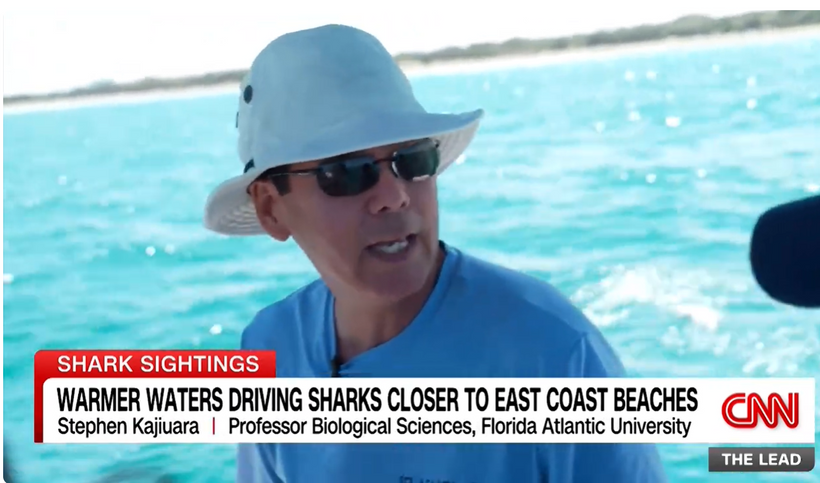
Warming Waters, Wandering Sharks: Why Blacktip Sharks Are Moving North
As ocean temperatures continue to rise, researchers are seeing major changes in the migration patterns of blacktip sharks, and that could mean more encounters between sharks and humans along North America’s east coast. A recent CNN feature highlighted groundbreaking research led by Stephen Kajiura of Florida Atlantic University, whose team is tracking blacktip sharks using GPS tags and onboard cameras to better understand how warming waters are reshaping marine ecosystems. According to Kajiura, average winter water temperatures have risen by roughly 1°C over the past decade, causing blacktip sharks to shorten their traditional southern migration and remain farther north for longer periods. That shift is increasing shark activity near heavily populated beaches, including Florida’s New Smyrna Beach — often referred to as the “shark bite capital of the world” — and even farther north into areas like Long Island, where shark encounters have historically been rare. Stephen Kajiura is a Professor of Biological Sciences at FAU. He studies the sensory biology and behavior of sharks and their relatives as well as their seasonal migrations in southeast Florida. View his profile The research is helping scientists better predict when and where sharks are likely to gather near shorelines. Kajiura notes that blacktip sharks often hunt in the same shallow waters used by surfers and swimmers, where reflective movement from hands or feet can sometimes resemble bait fish. While shark bites remain uncommon, understanding migration behavior is becoming increasingly important for public safety, beach management, and climate research. Journalists covering climate change, marine biology, shark migration, or beach safety can connect with Stephen Kajiura to discuss how warming oceans are changing shark behavior and what coastal communities should expect in the years ahead.



Canada’s Retirement Problem Is Not “Boomer Luxury Communism”
A recent Washington Post column by Pulitzer Prize-winner George F. Will caught my attention. A prominent American conservative warns about a demographic apocalypse. Normal Monday. His argument: an aging population and a politically powerful senior cohort are driving unsustainable government spending, leaving younger generations to foot the bill. He even has a name for it: “Boomer Luxury Communism.” (Does George Will need a Snickers bar?) It made me wonder: are the same forces reshaping retirement here in Canada? I’ve heard the generational accusations. Boomers took the good pensions. Boomers drove up housing. Boomers left the mess. Boomers won’t move and sell me their house. But here’s the thing. Boomers don’t have a case of “Pierre don’t care.” Most of them are quietly terrified. After 25 years in financial services and a decade sitting across kitchen tables from Canadians over 55, I think the story is a lot more complicated than that. According to Statistics Canada data, nearly one in five Canadians (19.5%) is now aged 65 or older, representing more than eight million people nationwide, signalling significant growth in the demographic. Retirement itself has also changed dramatically. Fewer Canadians have access to defined benefit pensions. Costs are rising, from groceries to housing to healthcare. And most people want to remain in their homes as they age. The result is straightforward: retirement is lasting longer, costing more, and relying more heavily on individuals than ever before. That much we share with the United States. But the Canadian reality is more complicated. Canada’s Seniors Are Not Living the Way Many People Assume Where the comparison begins to break down is in how we interpret what’s happening. The idea that Canadian seniors are broadly living comfortably at the expense of younger generations simply doesn’t match what I see in practice. In fact, many older Canadians are experiencing something quite different: Financial uncertainty. Despite having significant assets. On paper, many retirees look secure. They may own their home outright. They may have some savings and receive income from programs like CPP and OAS. But much of that wealth is tied up in housing. Families led by someone aged 65 or older now have a median net worth exceeding $1.1 million, the highest of any age group. (Source: Statistics Canada, Survey of Financial Security) Yet the same data also reveals something important: The value of the principal residence for many seniors far exceeds their retirement savings. Many Canadians are increasingly finding themselves asset-rich on paper but cash-flow constrained in practice. The Rise of FORO: Fear of Running Out When you look more closely at the financial picture for many retirees, income streams are often modest and heavily exposed to inflationary pressures. Longevity adds another layer of uncertainty: A Canadian reaching age 65 today can expect to live another 20 years on average. Longevity is, of course, a triumph of modern society, although financially speaking, it has a way of extending the spreadsheet. Which leads to a question I hear repeatedly around the kitchen table: “Will I have enough money to retire?” This concern is so common that I’ve written extensively about it as FORO: "Fear of Running Out." It shows up in everyday decisions. Let’s call balls and strikes: FORO is real, and left unchecked, FORO thinking gets calcified into a permanent crouch. It’s cautious, it’s understandable — and it can quietly cost you your retirement. Worse than an ill-timed "reply all" to a company-wide email. • People delay travel • They hesitate to help their family. • They postpone home repairs • They underspend, even when they may not need to. I’ve met people who won’t replace a 20-year-old furnace because they’re saving money for an emergency. The furnace failing IS the emergency. This is not reckless consumption. It’s cautious financial restraint. A recent Healthcare of Ontario Pension Plan Retirement survey found that nearly half of Canadians approaching retirement worry about outliving their savings. Other research from Fidelity Canada shows that many retirees spend less than they comfortably could because they fear future financial shocks or healthcare costs. This anxiety matters because retirement is not just a math problem. It is also a confidence problem. This Isn’t Boomer Excess. It’s a System That Shifted What’s happening in Canada is not primarily a story of overconsumption by retirees. It is the result of a long-term structural shift. Canadians are living longer than ever. In fact, the number of Canadians over age 85 - already one of the country’s fastest-growing demographic groups, is projected to nearly triple over the next 25 years. (Source: National Institute on Aging) Over the past several decades, pensions have disappeared. Employers steadily moved away from guaranteed pensions while individuals assumed far greater responsibility for funding their own retirement years. Defined benefit pension coverage has declined significantly in the private sector, particularly among younger workers, leaving more Canadians to manage retirement risk on their own. The CD Howe Institute has written extensively on this topic, calling for pension reform. At the same time, housing became the country’s dominant store of wealth. For many Canadians, rising home values created the impression of growing financial security. But the current housing environment is far more complicated. Now, real estate markets have become less liquid. Some regions are now seeing much softer housing prices after years of extraordinary growth. Cue the song, "Those were the days, my friend, we thought they'd never end." The result is a retirement system increasingly dependent on housing wealth, whether policymakers openly acknowledge it or not. Government is beginning to feel the financial pinch as well. A recent report from the C.D. Howe Institute estimated that demographic aging alone could create more than $2 trillion in long-term fiscal pressure for provincial governments, driven largely by healthcare and age-related spending. In the mid-1970s, there were nearly seven working-age Canadians for every retiree (Source: Statistics Canada). Today, that ratio has fallen to closer to three-to-one. It's a profound demographic shift that is placing growing pressure on labour markets, healthcare systems, and public finances. As retirements accelerate, fewer younger workers are available to replace them, reshaping the country’s economic and fiscal balance. Even high levels of immigration are unlikely to fully offset Canada’s aging challenge over the long term. These pressures are real. But the Canadian story is still more complicated than the increasingly combative generational narratives emerging in the United States. Retirement Became a DIY Project Over time, we slowly moved away from a system that delivered predictable retirement income. Now we ask individuals to assemble their own retirement strategy from scratch. Choose your own adventure: except the stakes are your retirement, and there’s no going back to page one. That shift created flexibility but also risk. And today, that risk is showing up as uncertainty. And while it's tempting to frame this as a generational issue, the more meaningful divide in Canada increasingly looks like this: • homeowners versus non-homeowners • those with pensions versus those without • those with access to advice versus those navigating alone Looking at the issue through this lens helps us better understand how we arrived at this point, and why it should serve as a wake-up call for consumers, policymakers, and the financial industry. Still not convinced? Look at this data from the Statistics Canada Net Worth Report: Near-retirement households with both a workplace pension and homeownership had a median net worth exceeding $1.4 million. Remove those two structural advantages, however, and the financial picture changes dramatically: renters without pensions had a median wealth of less than $12,000. Let me stop and let this one land. Pause, breathe, and read on. The wealth gap, when you look at homeownership and pensions, is staggering. It reveals how profoundly retirement security in Canada is shaped not only by age but also by structural access to housing and pension systems. Two Canadians of the same age can now face entirely different retirement realities depending on just a few foundational variables. That’s not a generational conflict. It’s a serious design problem — a bug, not a feature. The Accumulation Paradox Here is another gap that rarely gets discussed. Canada has done a reasonably good job of helping people accumulate assets. BUT We have done a much poorer job helping them convert those assets into sustainable income. This is especially true when it comes to housing. Research from the National Institute on Ageing and CMHC consistently shows that the overwhelming majority of older Canadians want to age in place rather than downsize or move into institutional care. But Canada’s retirement system increasingly depends on housing wealth, even as many retirees remain reluctant to use it strategically. For many Canadians, home equity is their single largest financial resource. Yet, culturally and psychologically, it is often treated as something to preserve rather than deploy. The result is what I call the Asset Accumulation Paradox: People can be asset-rich and cash-flow constrained at the same time, a perfect example of 2 things being true at the same time. That disconnect sits at the heart of much of the retirement anxiety we see today. Where Canada Stands Compared to the United States In some important ways, Canada is better positioned than the United States. The Canada Pension Plan is actuarially reviewed and designed to remain sustainable over the long term. (Source: Office of the Chief Actuary). And according to International Monetary Fund data, Canada’s public debt burden also remains materially lower than that of the United States as a share of GDP. But that does not mean we can afford complacency. Because beneath the surface, there is a growing gap between what Canadians have and what they feel confident using. If we want to improve retirement outcomes, we need to focus less on assigning blame and more on improving design. That means better tools, better guidance, and more open conversations, especially about how to turn assets into income. The warnings coming out of the United States are worth paying attention to. But Canada’s challenge is different. The risk is not that seniors are taking too much.It’s that too many Canadians are living with uncertainty despite having more options than they realize. The challenge now is not simply helping Canadians accumulate wealth. It is helping them use that wealth with greater confidence, flexibility, and security. So, let’s call this what it is. George Will is not entirely wrong. The numbers are real, the fiscal pressure is real, and yes, someone is going to have to deal with it. But the story he’s telling is a blunt instrument in a situation that requires a scalpel. Canada’s retirement challenge isn’t Boomer Luxury Communism. It’s more like Boomer Luxury Paralysis: sitting on a million-dollar asset, terrified to touch it, underspending in the present to guard against a future that may never arrive. FORO doesn’t discriminate by generation. It just quietly rearranges your life until you’re postponing the trip, skipping the furnace repair, and waiting for permission to enjoy the retirement you actually saved for. The good news? The options are better than most people think. The conversation isn’t about giving anything up. It’s about using what you already have. Sue Don't Retire...ReWire! My Book is Now Available for Pre-Order I hope you will consider pre-ordering a copy of Your Retirement Reset for you, a friend or loved one. It's available September 8, 2026 - You can now order on the ECW Press site here. And if you love supporting Canadian booksellers, please also check with your local independent bookstore. Most can easily order it for you.
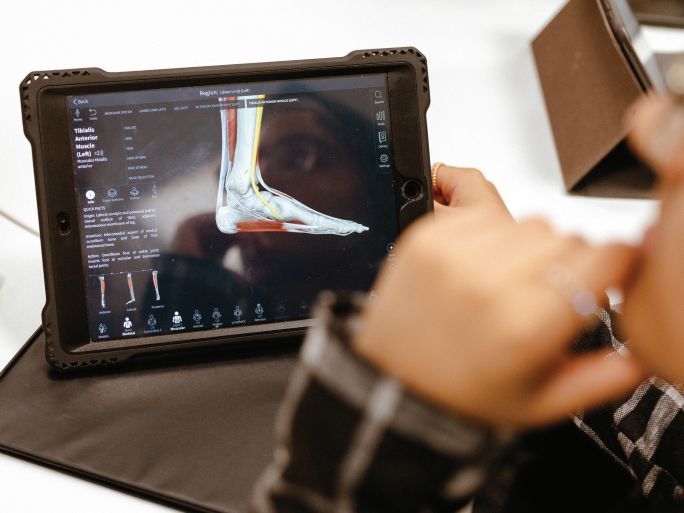
Major trial shows increasing bone density fails to cut fracture risk in brittle bone disease
An international clinical trial involving Aston University researchers has challenged long held assumptions about how brittle bone disease is treated in adults, after finding that substantially increasing bone density did not reduce the risk of fractures. The study, published in the Journal of the American Medical Association (JAMA), examined whether a two stage treatment using the bone building drug teriparatide followed by the bone preserving drug zoledronic acid could reduce fractures in adults with osteogenesis imperfecta, often referred to as brittle bone disease, a rare genetic condition that causes bones to break easily throughout life. Researchers followed 349 adults treated at 27 specialist centres across the UK and Europe. While the treatment led to clear increases in bone density in the spine and hip, fracture rates were no lower than among patients receiving standard care, suggesting that bone quality may matter more than bone density alone in preventing fractures in people with the condition. The findings underline a key distinction between brittle bone disease and more common bone conditions such as osteoporosis, where increasing bone density is known to reduce fracture risk. In osteogenesis imperfecta, the study suggests that bones can become denser without becoming less likely to break, indicating that the underlying quality and structure of bone tissue may play a greater role in fracture risk than density alone. Dr Zaki Hassan Smith, an endocrinologist at Aston Medical School who contributed to the research, said: “This study shows that in osteogenesis imperfecta, simply increasing bone density doesn’t necessarily translate into fewer fractures. That’s important, because it tells us that the disease is more complex than what we see on a scan. The findings help shift the focus towards understanding bone quality and how bones behave in real life, which is essential if we are to develop more effective treatments that genuinely reduce harm for patients.” Osteogenesis imperfecta is a genetic condition that affects collagen, leaving bones fragile and prone to fracture throughout life. There is currently no licensed treatment specifically approved to prevent fractures in adults with the condition, and patients often experience repeated fractures, chronic pain and long term disability. The trial tested a sequential treatment strategy commonly used in osteoporosis, where a bone building drug is followed by a treatment designed to preserve gains in bone strength. Although this approach successfully increased bone density in people with osteogenesis imperfecta, it did not reduce fracture rates, suggesting that treatment strategies effective in osteoporosis may not directly translate to rare bone diseases. Researchers did observe improvements in some quality of life measures among participants receiving the treatment, including reduced pain interference and improved mobility. However, fracture prevention remained unchanged, reinforcing the need for new approaches that target the fundamental properties of bone in osteogenesis imperfecta rather than density alone. The study was led by the University of Edinburgh and funded by the Medical Research Council and the National Institute for Health and Care Research. Aston University contributed clinical and academic expertise through Aston Medical School as part of the large international collaboration, which involved specialist centres across the UK and Europe. The study was led by the University of Edinburgh, with Aston University contributing clinical and academic expertise as part of a wider international collaboration involving multiple specialist centres across the UK and Europe. The research was funded by the Medical Research Council and the National Institute for Health and Care Research. Researchers say the findings provide important guidance for future research, helping to steer efforts towards treatments that focus on bone quality, strength and resilience in everyday life. They also highlight the value of large scale clinical trials in rare diseases, where learning what does not reduce harm is an essential step towards better care. The paper, Teriparatide Plus Zoledronic Acid for Osteogenesis Imperfecta, is published in JAMA. https://doi.org/10.1001/jama.2026.6889

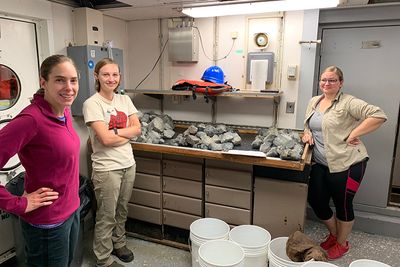
New clues about how earthquakes work
University of Delaware researcher Jessica Warren helped uncover evidence that sections of fast-moving underwater faults may act like “brakes,” controlling the occurrence of big earthquake events on transform faults. Warren can discuss what the findings, released today in the journal Science, mean for earthquake science and future modeling. Situated along a stretch of the equator in the Pacific Ocean, between Indonesia and Central America, the Gofar transform fault is one of the fastest moving faults on Earth — cruising along the seafloor at about 140 millimeters per year. This is over four times faster than the San Andreas fault is moving in California. “Geologically speaking, it's like looking at a moving Acela train next to a SEPTA train on the tracks,” said Warren, a professor of earth sciences at UD. Researchers know that the Gofar transform fault line has experienced a magnitude 6 earthquake about every five to six years over the last three decades. It’s been studied extensively, as these earthquakes occur at the same places along the fault and at the same intensity, time after time. What’s been unknown, until now, is why parts of this fault experience many small microshocks leading up to a main earthquake rupture, then shut down, while other parts of the fault are quiet before the big event and then experience many aftershocks. Now, a multi-institutional team of researchers, including UD’s Warren, reports that sections of the fault without large magnitude earthquakes actually act like brakes in a fast-moving car, controlling the occurrence of big earthquake events on transform faults. This finding is in contrast with currently accepted models of earthquake behavior. The team includes researchers from UD, Indiana University, Woods Hole Oceanographic Institution, Scripps Institution of Oceanography at UC San Diego, the U.S. Geological Survey, Boston College, Western Washington University, the University of New Hampshire and McGill University. In the study, the researchers analyzed two zones along the Gofar transform fault they say have stopped about 15 magnitude 6 earthquakes over the past 30 years. The study findings will inform globally what’s known about how faults and earthquakes behave, at sea and on land. Warren's contributions include leading the initial field research at sea in 2019 on the R/V Atlantis and interpreting results throughout the project, with a focus on connecting the earthquake observations to how rocks in the fault fracture and distort during an earthquake. Why were you studying the Gofar transform fault, in particular? Warren: Geoscientists want to understand faults and earthquakes because they are obviously a big hazard on land. The rocks that make up the seafloor are simpler than those found on land, providing a more controlled space to study earthquakes, despite the challenges of doing research underwater. If you want to understand how faults build up stress and then release it (and where), the Gofar transform fault is amazing, because it experiences earthquakes at reliable intervals of five to six years. This is a lot more regular than any other fault. In 2019, I led a research cruise on the R/V Atlantis that deployed 51 seismometers two miles down on the seafloor to detect these small events. We were able to compare the results of our measurements from 2019 to 2020 to an experiment conducted by my colleague Jeff McGuire on the same fault in 2008. The similarities in the two datasets brought us to the realization that fault sections without large magnitude earthquakes control the overall occurrence of big events on transform faults. When we had that observation in 2008, that might have been a one-off, but getting back this new data and seeing such similar behavior was a new insight into what's happening in the fault. How does that tell you about how earthquakes occur on land? Warren: On land, people spend a lot of time looking at how rainwater and groundwater move in a fault system, and how that influences the behavior of the fault. In the oceans, we have an unlimited amount of water. Once the rock cracks, the water is going to get in there. Being able to look at how a fault changes through the earthquake cycle — which we've now measured most of on this one fault — can help us understand what is universal about how faults work, and how rock friction works. And one of the big players is water. That's why the rock samples that my lab works on matter. Fault structure is another thing that we've been trying to understand. We know from on land that some parts of a fault are linear, while other parts have lots of strands and maybe contain more fractures and that, if you start putting water in the picture, this can limit or change how water moves into the system. Now, we have these very high-resolution maps of the seafloor, where we can see, for the first time, where the fault itself is. One of the next things we want to understand is how fluid gets into the fault, and then how friction in a fault changes when water is there. Why is this important? Warren: The next step is to translate the understanding that we've gained from this specific fault to understanding how faults behave in general. This is the longer path to really understanding earthquake hazards. It's not going to change our hazard models tomorrow, but hopefully it will in the decades to come. To reach Warren directly and arrange an interview, visit her profile and click on the "contact" button. Interested reporters can also email MediaRelations@udel.edu.


Beyond the Recipe: Rebecca Sharpless Explores the Hidden History of Southern Baking
Recently published stories exploring the history of baking traditions are shedding light on how many beloved holiday treats are rooted in centuries of trade, survival and innovation. According to Rebecca Sharpless, professor of history in Texas Christian University’s AddRan College of Liberal Arts, staples like gingerbread and fruitcake carry surprisingly deep historical connections, from medieval spice routes to 19th-century preservation methods that allowed cakes to survive nearly year-long journeys. Sharpless, whose upcoming book People of the Wheat examines the history of wheat culture in North Texas, says many foods now associated with “traditional” Southern baking are actually far more modern than people realize. From red velvet cake to pecan pie, marketing and industrial food production played a major role in shaping today’s culinary traditions. Her research also highlights the social and economic realities behind baking history, including how access to ingredients like wheat and sugar once reflected class, geography and race. The full article and interview is attached below - and if you're a baker, a foodie or a journalist looking to know more about this popular topic - it's a must read. For journalists exploring food history, holiday traditions, agriculture, or the cultural roots of Southern cuisine, Sharpless offers expert insight into how everyday recipes reveal larger stories about migration, labor, trade and identity. And if you're looking to connect with Rebecca Sharpless, simply contact Holly Ellman, Associate Director of Communication, today at h.ellman@tcu.edu.
