
Experts Matter. Find Yours.
Connect for media, speaking, professional opportunities & more.

Want to save on home loans? Just talk to your peers!
For most of us, finance is complex. Yet making financial decisions is part of day-to-day life. Take mortgages. Around 60 percent of U.S. households have a home mortgage, but how many actually understand its real value? Calculating things like interest rate trade-offs or closing costs is not easy, and research finds that a majority of families make financial mistakes because they fail to understand benefits or savings that might be open to them in refinancing. There are ways to overcome this kind of “information friction”—the obstacles to understanding that make it hard for people to process complex financial ideas and concepts. One of these is education. Ensuring that people have direct access to clear information can help inform household decisions. That seems pretty basic. Another, perhaps less understood, mechanism is the “peer effect”—the way we learn from and are influenced by what our peers or colleagues say or do. A new paper published in the Review of Financial Studies by Gonzalo Maturana, associate professor of finance, takes a fresh look at how the peer effect can help households make better decisions about their mortgages. And he finds that work colleagues and associates can actually have a far greater positive impact on our financial outcomes than we might expect. Together with Jordan Nickerson from MIT’s Sloan School of Management, Maturana ran a large-scale study of a particular U.S. peer group: public school teachers employed by the state of Texas. Here’s what the study found: Where there was a lot of mortgage refinancing going on among teachers in a particular school, individuals were a stunning 20.7 percent more likely to refinance their own mortgage. In other words, they were far more disposed to investigate alternatives and take advantage of the better deals on offer. The peer effect was also a critical factor in their subsequent choice of mortgage lender. Maturana and Nickerson also found that the more savings a particular peer group was making in mortgage repayments, the more refinancing activity there was in that school or teacher network. It is clear. With financial decisions, the network effect can create a positive feedback loop, said Maturana. Household finance and mortgages are top of mind and play a part in most American families – and if you are a journalist looking to cover this topic – then let our experts help. Gonzalo Maturana is an Associate Professor of Finance at the Goizueta Business School. He is an expert in the areas of corporate, household and real estate finance. Gonzalo is available to speak to media regarding this topic – simply click on his icon now to arrange an interview today.



Researchers urge: Learn from (someone else’s) experience
Measuring your performance as a business is critical. If you want to grow and be successful, you need to understand what you do well—and not so well. To paraphrase a couple of old adages, we all learn from our mistakes and our experience. But in today’s bumpy and fast-changing business landscape, measuring performance can be tough; tougher still if yours is a complex organization or industry. Whatever you’re looking at to gauge your firm’s performance—whether it’s customer satisfaction, say, or repeat purchases—your measures might well be less than perfect. And that’s because of noise—abstruse or unreliable data that makes it hard to unpack key metrics accurately and to learn from them. How successful a firm is in negotiating this performance measure noise depends on how that firm learns, said Kristy Towry, John and Lucy Cook Chair and professor of accounting at Goizueta Business School. She has led a study that looks at the way organizations and the people in them manage their learning. And she finds that we’re way more adept at cutting through the noise when we learn from each other, rather than basing our learning on our own firsthand experience. What the study found: What Towry and her colleagues found was that when there’s a lot of noise in the data we’re working with, our strategic learning is considerably improved when our learning is vicarious—that’s to say, when we learn from each other. This is down to how much of the big picture we see, said Towry. And experiential learning can make us myopic. “We know from psychology and from the results of this study that experiential learning—basing what we learn mainly off our own firsthand experience—can limit us. Experience tends to make us over-focus on what is happening in the here and now or what has just happened. We forget what happened before and don’t build that into our decision-making.” Vicarious learning, on the other hand, helps us to see the bigger picture. “When we’re learning from each other, it’s also experiential, but the learning is augmented by other people’s experience, meaning that we have a broadened perspective," said Towry. "We’re better able to see the big-picture patterns and trends.” When there’s a lot of noise and complexity to negotiate, vicarious learning helps us make better decisions. And this has huge implications for businesses operating in today’s environment. “Our world is not cut and dried at the best of times. Right now we are dealing with the COVID-19 crisis and the fallout on world economies and trade. The business context for most firms operating in this context is very far from stable, so we can assume there’s a lot of complexity and noise affecting our performance indicators. And with so much change afoot, the experiences we are all having in the workplace are what I would call fairly idiosyncratic,” said Towry. “Business leaders should be very aware of this.” To optimize strategic learning and thrive in complexity, firms need to find ways to allow vicarious learning to happen, she said. That means thinking about how to break down barriers to knowledge sharing, be they organizational silos or emerging challenges associated with things like remote working. Sharing information, insight, and understanding is essential. Kristy L. Towry is John and Lucy Cook Chair and Professor of Accounting at Emory University's Goizueta Business School. To learn more about this research or to talk with Kristy – simply click on her icon now to arrange an interview today.


Innovation: Should it always be a team sport?
Conventional wisdom has it that innovation is very much a team sport. To create a breakthrough innovation that is vastly more successful than its predecessors, you need to prioritize teams over the individual. That's not always the case, according to Tian Heong Chan, assistant professor of information systems & operations management at Emory’s Goizueta Business School. It depends very much on the degree to which the invention can be broken down into discrete chunks of work. Chan and colleagues from INSEAD published a paper, “Revisiting the Role of Collaboration in Creating Breakthrough Inventions,” in the Manufacturing and Service Operations Management journal in 2020. In it, they look at more than one million U.S. patents for new products filed between 1985 and 2009. The majority of these patents were awarded for innovations in function—machines, processes or products that delivered some kind of utility. The others corresponded to design; in other words, the distinct visual form or aspect of a product, like Coca-Cola’s iconic curvy bottle or the Apple iPhone. Sifting these patents for breakthroughs (those ranked by citations as being in the top 5 percent of their product class), Chan and his colleagues were able to look at whether standout innovations were the product of teamwork or whether any of them had actually been developed by a lone innovator. And what they found sheds fascinating and useful new light on the dynamics undergirding the innovation process. As a rule, breakthrough functional products—those awarded patents for some kind of utility—do tend to be created by teams. But when it comes to inventions that are centered on breakthrough designs, it’s a whole different ball game. Here, the solo inventor is every bit as likely to create a breakthrough as an entire team. The study looks at a diverse cross-section of industries from computers to cars, Chan and his co-authors found that lone inventors do relatively better on these types of integral inventions. It’s a fascinating work of research – and if you are looking to know more, then let us help. Tian Heong Chan is an Assistant Professor of Information Systems & Operations Management at Emory’s Goizueta Business School. He is available to speak to his research and this important topic – simply click on his icon now to arrange an interview today.


Covering CRISPR, gene editing – and what it might mean for generations to come? Our experts can help
The two scientists who took the concept of gene editing to the forefront were recently rewarded with the Nobel Peace Prize in Chemistry. The efforts of scientists Emmanuelle Charpentier and Jennifer Doudna and the development of clustered regularly interspaced short palindromic repeats have taken a vaguely titled idea named CRISPR into the modern conversation. Since then, this process has transcended itself into medicine, agriculture and a host of other scientific applications being used around the world today. There is a lot to know about CRISPR: How does it work, what are the risks and what are the potential rewards that have yet to be discovered? There is also a lot of concern about how gene editing could transform life and future life as we know it. If you are a journalist looking to know more about CRISPR, Augusta University has the expert you need for your questions and coverage. Dr. Paul Langridge is an acclaimed scientist specializing in morphogenesis, CRISPR, signal transduction, and cell and molecular biology. He is an expert when it comes to the topics of gene editing and has used the same technologies that the Nobel winners also used in their research. Langridge is available to speak with any reporters looking to cover this topic; simply click on his icon to arrange an interview today.


More than just money – what corporate America needs to do to motivate today’s workforce
In a modern workplace no longer characterized by rigid hierarchies and where power is more diffused, traditional methods of motivation may no longer be enough. We have come to understand the value of providing people with ‘intrinsic motivation’ – a sense of purpose, the importance of creative, interesting work, and maintaining work-life balance. We have naturally moved away from a sole dependence on monetary incentives. However, in a New York Times opinion piece, management author Alfie Kohn asserts that “science has confirmed” that monetary rewards amount to “bribes” that don’t work. Somehow this doesn’t ring true. Has science really confirmed this? Would businesses continue to incentivize performance with monetary rewards if they did not work? And aren’t we all, at least to some extent, motivated by money? To understand if Kohn is right, or if there is a more nuanced answer, Karen Sedatole, Professor of Accounting at Emory University’s Goizueta Business School says we need to look at patterns of human behavior. The classical economic theory, which gave us ‘homo economicus,’ assumes people always behave in a rational way and, as with Gordon Gekko in the ‘Wall Street’ movies, selfishness predominates. Findings from psychology and particularly behavioral economics have started to show this to be incorrect. In fact, people tend to make illogical choices contrary to self-interest. Our capacity to think – via a mix of deep reflective thinking and rapid automatic thinking – can lead us to what economists might consider to be irrational behaviors – albeit with the cognitive biases behind our thinking staying mostly predictable. Do monetary incentives work? We all value money, but our perception of its value is influenced by the importance that we also place on reciprocity and fairness, social norms, trust, and trustworthiness. When it comes to monetary rewards for performance the results will also greatly depend on the quality of the performance measures, along with the type of task being rewarded, and the type of reward. Contrary to Kohn’s assertion, Sedatole points out there are many real-world examples that show monetary incentives can deliver big performance and productivity improvements. In fact, if uncontrolled, bonus incentives can be too powerful a motivator, causing damage – as the UK’s PPI and the Wells Fargo mis-selling scandals both firmly attest. There is also strong academic evidence that monetary rewards can have a positive effect, and equally strong evidence that, when over-used, they can elicit bad behavior. Based on relevant academic research in this area, Sedatole identifies four core principles for the use of monetary incentives: Payment for performance can certainly lead to people making a greater effort than when they are rewarded by salary alone, but only if these core principles are followed: 1. Performance targets – Performance targets should be difficult to hit but not too difficult. 2. Performance metrics – The way performance is measured should be sensitive to the employees’ perceptions and sense of control. Employees should believe that their increased effort improves performance, improved performance leads to greater reward, and reward is valued. Metrics must be precise and not prejudiced by external factors. And, from the organization’s perspective, metrics should be set to meet its objectives. 3. Fairness and social norms – Monetary rewards must be seen to be fair and to comply across organizations. They should also conform to social norms. 4. Characteristics of the task – The efficacy of monetary incentives can depend on the nature of the task and to what extent the task provides intrinsic incentives. Here Alfie Kohn has a point; in some cases, monetary rewards tend to undermine intrinsic incentives. ‘Boring’ tasks have little or no intrinsic motivation, whereas creative tasks – the work of a physician, designer, scientist, etc. – are intrinsically motivating. Where there is intrinsic motivation money can be less relevant and in extreme cases can be seen to devalue the intrinsic factors. Professor Sedatole’s recent webinar: ‘Irrational but Predictable! When to Use Monetary Incentives to Motivate Employees’ explains her findings in further details: simply visit it to view and watch for here: If you are journalist covering this topic – Professor Sedatole is available to speak with reporters – simply click on her icon today to arrange an interview.


People with outgoing personalities get noticed. Heads turn toward those with charismatic voices, emotional speech, high energy, empathetic gestures, and engaging smiles, but on the corporate front, how do these traits come to bear on executive compensation, hiring, and firm outcomes? “The short answer is that extraversion is associated with positive career and firm outcomes,” said T. Clifton Green, professor of finance at Emory’s Goizueta Business School, whose published work Executive Extraversion: Career Firm and Outcomes (The Accounting Review, 2019), explores this phenomenon. The study, with coauthors Russell Jame 10PhD, University of Kentucky’s Gatton College of Business and Economics, and Brandon Lock 12BBA Baruch College’s Zicklin School of Business, City University of New York, highlights the role of personality traits in explaining executive promotions, job tenure, and outside board service. Green also finds evidence that having an extraverted CEO bodes well for investor recognition, sales growth, and acquisitions. The study goes on to explain the personality trait of Extraversion, which is often described as “the single most important aspect of an individual’s personality,” according to Green, with the other of the Big Five traits being Agreeableness, Openness, Emotional Stability, and Conscientiousness. Extraverts tend to be outgoing and gain energy from being around others, whereas introverts tend to be more reserved and recharge through solitude. Psychology research identifies extraversion as the personality trait most closely associated with leadership emergence. The study linked above is available for reading – and if you are a journalist looking to learn more or cover this very interesting topic, then let our experts help. T. Clifton Green is a Professor of Finance at the Goizueta Business School. He is an expert in the areas of market microstructure, with an emphasis on behavioral finance and his research has been featured in the Wall Street Journal, Barrons, Financial Times, and on CNBC.


BLOOMINGTON, Ind. -- During the pandemic, the amount of screen time for many people working and learning from home as well as binge-watching TV has sharply increased. New research finds that wearing blue-light glasses just before sleeping can lead to a better night's sleep and contribute to a better day's work to follow. "We found that wearing blue-light-filtering glasses is an effective intervention to improve sleep, work engagement, task performance and organizational citizenship behavior, and reduced counterproductive work behavior," said Cristiano L. Guarana, assistant professor of management and entrepreneurship at the Indiana University Kelley School of Business. "Wearing blue-light-filtering glasses creates a form of physiologic darkness, thus improving both sleep quantity and quality." Most of the technology we commonly use -- such as computer screens, smartphones and tablets -- emits blue light, which past research has found can disrupt sleep. Workers have become more dependent on these devices, especially as we navigate remote work and school during the coronavirus pandemic. The media have recently reported on the benefits of blue-light glasses for those spending a lot of time in front of a computer screen. This new research extends understanding of the circadian rhythm, a natural, internal process that regulates the sleep-wake cycle and repeats roughly every 24 hours. "In general, the effects of wearing blue-light-filtering glasses were stronger for 'night owls' than for 'morning larks,' said Guarana, who previously has studied how lack of sleep affects business decisions, relationships and other behaviors in organizations. "Owls tend to have sleep periods later in the day, whereas larks tend to have sleep periods early in the day. "Although most of us can benefit from reducing our exposure to blue light, owl employees seem to benefit more because they encounter greater misalignments between their internal clock and the externally controlled work time. Our model highlights how and when wearing blue-light-filtering glasses can help employees to live and work better." The findings appear in the paper, "The Effects of Blue-Light Filtration on Sleep and Work Outcomes," published online by the Journal of Applied Psychology. Guarana is the corresponding author; his co-authors are Christopher Barnes and Wei Jee Ong of the University of Washington. The research found that daily engagement and performance of tasks may be related to more underlying biological processes such as the circadian process. "Our research pushes the chronotype literature to consider the relationship between the timing of circadian processes and employees' performance," the researchers wrote. A good night's sleep not only benefits workers; it also helps their employers' bottom lines. "This study provides evidence of a very cost-effective means of improving employee sleep and work outcomes, and the implied return on investment is gigantic," said Barnes, professor of management and the Evert McCabe Endowed Fellow at the University of Washington's Foster School of Business. "I personally do not know of any other interventions that would be that powerful at that low of a cost." Across two studies, researcher collected data from 63 company managers and 67 call center representatives at Brazil-based offices for a U.S. multinational financial firm and measured task performance from clients. Participants were randomly chosen to test glasses that filtered blue light or those that were placebo glasses. "Employees are often required to work early mornings, which may lead to a misalignment between their internal clock and the externally controlled work time," the researchers said, adding that their analyses showed a general pattern that blue-light filtration can have a cumulative effect on key performance variables, at least in the short term. "Blue-light exposure should also be of concern to organizations," Guarana said. "The ubiquity of the phenomenon suggests that control of blue-light exposure may be a viable first step for organizations to protect the circadian cycles of their employees from disruption." Researchers received no financial support or compensation for this research. The glasses were donated by the Austin, Texas-based company Swanwick.

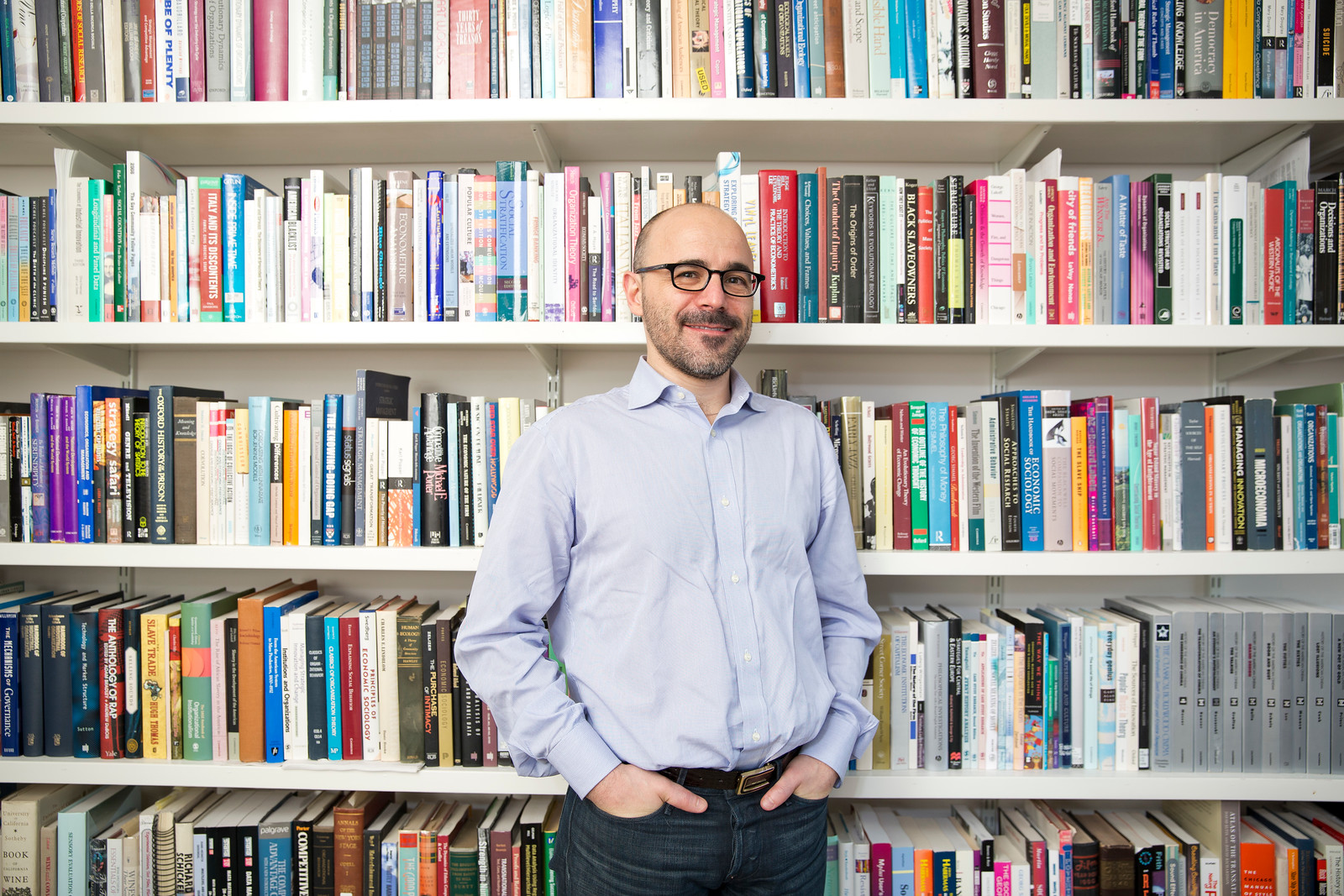
As the persistent turmoil of protests grips America on an almost daily basis, people are becoming more aware of issues, getting engaged and taking sides. Be it around the dinner table debating, marching in the streets or even arguing on a national news panel – topics like Black Lives Matter, masks during COVID, the upcoming election or a host of other hot-topic issues are all part of the American conversation these days. It’s easy and even healthy for people to debate the issues – but for a business to pick a side on a controversial topic, it’s a much different picture. One recent example was Nike’s support of NFL quarterback Colin Kaepernick. However, Nike also had the resources to bolster their support. They had a multi-million-dollar ad budget, a public relations machine generating hours of earned media – and the company was, for the most part playing to its core audience. Though there was push-back, Nike was rewarded with increased sales and its stock surged. For almost a decade now, Chick-fil-A has also boldly taken a stance with its opinion on gay marriage. The restaurant chain has faced mountains of negative press and protests, but the fast-food giant’s bottom lined never suffered. It still sees sales over 10 billion a year. For Nike and Chik-Fil-A and their deep pockets to wade into the fray with an opinion – it’s one thing, but for a small business to share how it feels, there’s a matter of weighing risk versus reward no matter how important the topic might be. “It may well be that it’s harder for entrepreneurs to create a viable business model for their venture in a more polarized context, says Giacomo Negro, a Professor of Organization & Management at Emory University’s Goizueta Business School. “If your business is more hybrid—if you’re supportive of a cause without being overtly affiliated with it—then it could be harder to engage other customers or clients who are uncomfortable doing business with a firm that is even vaguely linked to a specific social group or movement. Similarly, the core supporters of the cause can look at the same organization as not authentically engaged with them.” His findings certainly suggest that existing in a “gray zone,” where you take neither one side or the other, is a hard place for organizations to thrive in times of social change. “If protest activates the cultural boundary surrounding a group’s identity, then increasing protest participation will threaten the viability of precisely those organizations trying to engage inside and outside audiences,” Negro said. “At the same time, bridging inside and outside audiences also conveys a confusing identity and a more limited commitment to pursuing goals relevant to either audience.” With a global pandemic impacting all aspects of national and local economies – small businesses are under pressure to sustain and survive like never before. And if you are a journalist looking to cover the state of small businesses in America and whether or not small business has a role to play in protests and politics in America – then let our experts help with your coverage. Giacomo Negro is a Professor of Organization & Management at Emory University’s Goizueta Business School and is an expert in the area of economic sociology. His resent research study research study, “Which Side Are You On? The Divergent Effects of Protest Participation on Organizations Affiliated with Identity Groups’ focuses on this very subject. Professor Negro is available to speak with media about this topic – simply click on his icon to arrange an interview today.


Continuing to Learn and Explore American History
In the United States, students take several American history courses throughout their K-12 experience. So, why should students bother to continue taking American history courses in college? For Southern Utah University's Dr. Mark Miller, the answer is simple. “When I teach a history course, I am always looking for ways to point out how an issue or event in the past is relevant to something going on in today's world,” said Dr. Miller. “With this year's presidential election going on there have been plenty of examples to tie into regarding past politics and past political crises we have lived through as Americans.” Dr. Miller has conducted some exciting research that will be published in 2021. His upcoming articles includes: “Polygamy under the Red Cliffs: Women’s Voices and Historical Memory at Centennial Park” in Utah Historical Quarterly, “A River Again: Fossil Creek, Desert Fishes, and Dam Removal in the American Southwest” in Pacific Historical Review, and “‘One Territory, Many Peoples:” Racial and Ethnic Groups and the Development of Arizona Territory” in The Smoke Signal. “I think my work on plural marriage and environmental history shows that history is never dead,” said Dr. Miller. “It reveals that in current debates history is quite important. What happened in the past still informs the present. Since both of these topics are quite controversial today, I think historians provide a valuable service by exposing the history behind debates over allowing polygamy in modern America or whether we should make trade offs in development and water use to preserve unique species. Knowledge of people who practice plural marriage and their religious history as well as the history of preservation efforts toward endangered species is vital to all participants in the debates.” Dr. Mark Miller is a professor of history and the department chair of History, Sociology, & Anthropology at Southern Utah University. His research and teaching specialties include United States History, American West, Borderlands, Indigenous Culture and History, World Civilization, and Latin America. He has published articles and books on modern American Indian History, most recently Forgotten Tribes (2006) and Claiming Tribal Identity (2013). He has published articles on race and ethnicity, on indigenous identity and politics in several journals. Dr. Miller is familiar with the media and available for an interview. Simply visit his profile.


Tonight’s face-to-face U.S. presidential debate between Democratic nominee Joe Biden and U.S. President Donald Trump has had all the lead up and electricity of a prize fight. This election, like this year – will be like no other. With traditional campaign festivities for the most part curbed due to COVID-19, this U.S. presidential debate, along with the next two, will serve as the only opportunity for the two candidates to be together in the same place to duke it out live before millions of viewers watching around the globe. There is a lot at stake, and if you are a reporter covering the U.S. presidential debates, Florida Atlantic University’s renowned political science expert, Kevin Wagner, Ph.D., is here to answer all of your questions and is available for interviews. Wagner's research and teaching interests include presidential and judicial politics, political behavior, and legislative behavior. He is also a research fellow of the FAU Business and Economics Polling Initiative (BEPI). Wagner is readily available to speak with media about the debates and the ongoing election – simply click on his icon to arrange an interview today.

