
Experts Matter. Find Yours.
Connect for media, speaking, professional opportunities & more.
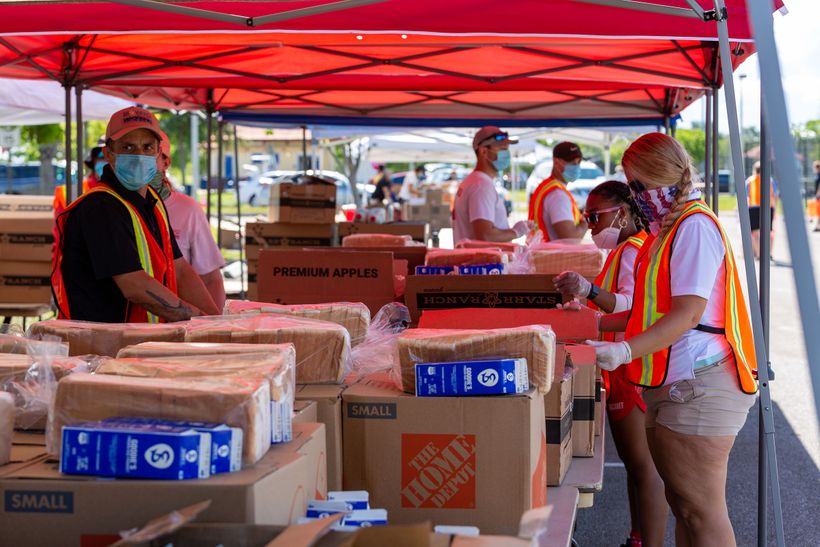
Volunteers receiving government aid while unemployed face scrutiny, bias from public
With the worldwide spike in unemployment caused by the COVID-19 pandemic, many people may turn to volunteerism as a way to pass their newly found free time. But new research suggests that volunteers who also receive government aid are often judged negatively as "wasting time" that could be used to find paid employment. "We found that aid recipients are scrutinized to a greater extent than those who are working, including the underemployed, with observers demonstrating a strong bias toward believing that aid recipients should be using their time to pursue employment opportunities above all else," said Jenny Olson, an assistant professor of marketing at the Indiana University Kelley School of Business and corresponding author of the research forthcoming in the International Journal of Research in Marketing. "This is beyond education, personal leisure, and spending time with family and friends. "As a result, they are given less latitude in how they use their time, and can even be seen as more moral for choosing not to engage in prosocial behaviors, when such behaviors take time away from gaining paid employment," Olson added. "The simple act of volunteering among aid recipients -- versus not mentioning volunteering -- not only shapes judgments of the individual aid recipients, but this information can also impact views toward federal tax policy more broadly." Although volunteering is a positive activity that partially combats the negative stereotype of a welfare beneficiary, Olson and her colleagues found that it also sparks anger among observing consumers, with aid recipients being perceived as being "less moral for choosing to volunteer." Factors that minimize these judgments include being perceived as taking strides toward gaining employment via education and being perceived as unable to work. Other co-authors of the paper, "How Income Shapes Moral Judgments of Prosocial Behavior," are Andrea Morales of Arizona State University, Brent McFerran of Simon Fraser University in Canada and Darren Dahl of the University of British Columbia. The research was supported in part by grants from the Social Sciences and Humanities Research Council of Canada. According to a 2019 report from the Organisation for Economic Cooperation and Development, public spending on government assistance averaged more than 20 percent across 36 countries in 2018. Many countries -- including those in Asia, Europe, and the Americas -- have seen a rise in the number of people receiving benefits over the years, a total now reaching into the billions. The extent to which the welfare state is supported depends, in no small part, on public sentiment. Previous research has shown that support for government spending on welfare programs is directly related to how the voting public perceives the beneficiaries. This is the first paper to document a link between prosocial behavior and support for federal spending on welfare programs. "Given that individuals perceive opportunity costs for their own time, it stands to reason that they perceive them for others as well," Olson said. "Because government programs are supported by 'their' taxpayer dollars, observers often feel justified in suggesting how aid recipients spend their time." The research shows that consumers prefer different patterns of tax redistribution as a function of viewing aid recipients making nonfinancial choices. Specifically, consumers support allocating fewer tax dollars toward supporting government assistance programs after hearing about an aid recipient who volunteers his time. Researchers conducted nine studies across three countries. They randomly presented participants with scenarios about hypothetical aid recipients and asked them to offer judgment about how the recipients used their time, such as engaging in volunteer activities or sending out resumes. Participants were asked how they viewed target individuals on a morality index and how they felt about them emotionally. For interviews with Jenny Olson, contact George Vlahakis at 812-855-0846 or vlahakis@iu.edu.


Air Flow Expert Working to Make Sure New Jet Fighters Take Flight — and Land — Safely
The next generation of jet fighters are being designed to be both stealthy and high-speed and, as part of this makeover, their geometry will be unique and won’t include a vertical tail. The new design will improve the aircraft’s maneuvering, minimalize its visibility, and improve its overall performance — but it will also decrease the aircraft’s performance during takeoff and landing. Miki Amitay, an endowed professor of mechanical, aerospace, and nuclear engineering at Rensselaer and the director of the Center for Flow Physics and Control (CeFPaC), is an expert in this type of problem. With the support of a new grant from the Office of Naval Research, Amitay and his team will use their extensive knowledge of flow physics to determine how air flow will affect these new jet fighters and how that flow can be manipulated or changed for optimal operation. More specifically, the team will use state-of-the-art wind and water tunnels within CeFPaC to research the flow physics associated with this new plane geometry and then explore options for mitigating difficult flow conditions during takeoff and landing. Those options can’t include changing the shape of the plane itself, so the researchers will employ active flow techniques they have developed. For example, Amitay has developed almost weightless actuators that can electrically generate a strong jet — called a synthetic jet — that pushes out puffs of air in such a way that it helps control the flow of air around various parts of the aircraft at specific and optimal times. Amitay is available to talk about the flow physics associated with aircraft flight and new technologies — like his synthetic jet — that can improve performance, efficiency, and safety.


Paper ballots, risk-limiting audits can help defend elections and democracy, IU study finds
BLOOMINGTON, Ind. -- With just over two months before the 2020 election, three professors at the Indiana University Kelley School of Business offer a comprehensive review of how other nations are seeking to protect their democratic institutions and presents how a multifaceted, targeted approach is needed to achieve that goal in the U.S., where intelligence officials have warned that Russia and other rivals are again attempting to undermine our democracy. But these concerns over election security are not isolated to the United States and extend far beyond safeguarding insecure voting machines and questions about voting by mail. Based on an analysis of election reforms by Australia and European Union nations, they outline steps to address election infrastructure security -- such as requiring paper ballots and risk-limiting audits -- as well as deeper structural interventions to limit the spread of misinformation and combat digital repression. "In the United States, despite post-2016 funding, still more than two-thirds of U.S. counties report insufficient funding to replace outdated, vulnerable paperless voting machines; further help is needed," said Scott Shackelford, associate professor of business law and ethics in the Kelley School, executive director of the Ostrom Workshop and chair of IU's Cybersecurity Program. "No nation, however powerful, or tech firm, regardless of its ambitions, is able to safeguard democracies against the full range of threats they face in 2020 and beyond. Only a multifaceted, polycentric approach that makes necessary changes up and down the stack will be up to the task." For example, Australia -- which has faced threats from China -- has taken a distinct approach to protect its democratic institutions, including reclassifying its political parties as "critical infrastructure." This is a step that the U.S. government has yet to take despite repeated breaches at both the Democratic and Republican national committees. Based on an analysis of election reforms by Australia and European Union nations, they outline steps to address election infrastructure security -- such as requiring paper ballots and risk-limiting audits -- as well as deeper structural interventions to limit the spread of misinformation and combat digital repression. "In the United States, despite post-2016 funding, still more than two-thirds of U.S. counties report insufficient funding to replace outdated, vulnerable paperless voting machines; further help is needed," said Scott Shackelford, associate professor of business law and ethics in the Kelley School, executive director of the Ostrom Workshop and chair of IU's Cybersecurity Program. "No nation, however powerful, or tech firm, regardless of its ambitions, is able to safeguard democracies against the full range of threats they face in 2020 and beyond. Only a multifaceted, polycentric approach that makes necessary changes up and down the stack will be up to the task." For example, Australia -- which has faced threats from China -- has taken a distinct approach to protect its democratic institutions, including reclassifying its political parties as "critical infrastructure." This is a step that the U.S. government has yet to take despite repeated breaches at both the Democratic and Republican national committees. The article, "Defending Democracy: Taking Stock of the Global Fight Against Digital Repression, Disinformation and Election Insecurity," has been accepted by Washington and Lee Law Review. Other authors are Anjanette "Angie" Raymond, associate professor of business law and ethics, and Abbey Stemler, assistant professor of business law and ethics, both at Kelley; and Cyanne Loyle, associate professor of political science at Pennsylvania State University and a global fellow at the Peace Research Institute Oslo. Aside from appropriating sufficient funds to replace outdated voting machines and tabulation systems, the researchers said that Congress should encourage states to refuse to fund voting machines with paperless ballots. The researchers also suggest requiring risk-limiting audits, which use statistical samples of paper ballots to verify official election results. Other suggested steps include: Congress requiring the National Institute of Standards and Technology to update their voting machine standards, which state and county election officials rely on when deciding which machines to purchase. Australia undertook such a measure. Creating a National Cybersecurity Safety Board to investigate cyberattacks on U.S. election infrastructure and issue post-elections reports to ensure that vulnerabilities are addressed. Working with universities to develop training for election officials nationwide to prepare them for an array of possible scenarios, and creating a cybersecurity guidebook for use by newly elected and appointed election officials. "With regards to disinformation in particular, the U.S. government could work with the EU to globalize the self-regulatory Code of Practice on Disinformation for social media firms and thus avoiding thorny First Amendment concerns," Raymond said. "It could also work to create new forums for international information sharing and more effective rapid alert and joint sanctions regimes. "The international community has the tools to act and hold accountable those actors that would threaten democratic institutions," added Stemler, who also is a faculty associate at Harvard University's Berkman Klein Center for Internet and Society. "Failing the political will to act, pressure from consumer groups and civil society will continue to mount on tech firms, in particular Facebook, which may be sufficient for them to voluntarily expand their efforts in the EU globally, the same way that more firms are beginning to comply with its General Data Protection Regulation globally, as opposed to designing new information systems for each jurisdiction."

Georgia Southern University saw a significant increase in grant and contract funding awarded to its faculty for research in the 2020 fiscal year. Georgia Southern faculty and staff received 144 awards totaling $10.7 million, which represents nearly a 67% increase over the previous year. The University received $6.4 million in FY2019 and $5.6 million in FY2018. This year marks the first time that faculty-led research at Georgia Southern broke the $10 million threshold. Vice Provost for Research Christopher Curtis, Ph.D., praised the faculty for their achievements. “These are highly competitive awards from the state, the federal government and private enterprises,” he said. “To grow our research portfolio in a national environment of diminishing funding is truly remarkable and a testament to the intellectual firepower and creativity of our professors. Georgia Southern is a Public Impact Research university, which means that the success of these researchers will be felt well beyond the confines of the University and will extend across the region.” Faculty engage in research that contributes significantly to the University’s $1.4 billion economic impact on the coastal region and that makes Georgia Southern a leading Public Impact Research university in the Southeast. The Allen E. Paulson College of Engineering and Computing, the College of Science and Mathematics and the Jiann-Ping Hsu College of Public Health each received over $2 million in sponsored awards in FY2020. If you have any questions about the faculty research being conducted at Georgia Southern University, or if you are a journalist looking to cover this topic - let us help. Christopher Curtis is the Vice Provost for Research at Georgia Southern University. Simply click on his icon to arrange an interview today.


VCU Engineering researchers are working to make clean energy easier and cheaper
Lane Carasik, Ph.D., assistant professor in VCU’s Department of Mechanical and Nuclear Engineering, is developing methods to make clean energy more cost-effective. He’s motivated by a simple principle. “The cheaper we make renewable and clean energy, the easier it is to implement it,” he said. With $100,000 in seed funding from the Jeffress Trust Awards Program, Carasik and his Fluids in Advanced Systems and Technology (FAST) research group are designing efficient, low-cost enhancements to equipment used in solar, nuclear and geothermal energy systems. Jeffress Trust awards support high-impact, one-year projects that integrate computational and quantitative scientific methodologies across a broad range of scientific disciplines. These energy systems use heat exchangers, which take energy from heat generation components and convert it to electricity. Heat exchangers usually comprise two working substances such as water, steam or air separated by tubes or plates. The FAST research group is optimizing a specialty insert that can be placed inside a heat exchanger’s tubes to improve performance. To visualize the insert’s form, imagine holding a piece of metal tape in both hands and gently twisting it. See the FAST Lab and examples of the heat transfer enhancements being designed there. “A liquid running through a tube is relatively undisrupted by the geometry of the tube or the shape of the fluid,” Carasik said. “But this twisted tape component spins the fluid. This increases turbulence, which increases heat transfer.” While “twisted tape” inserts are already in use in some advanced energy systems, the process of fabricating them has been limited by mechanical constraints. Typically, the inserts are placed inside a tube and tack welded at either end. But because of the metal’s limited tensile strength, these inserts can only be twisted a little before they break down and cause manufacturing defects. 3D printing, on the other hand, allows for a more complex — and effective — insert that can be used to characterize heat transfer performance. “With additive manufacturing, you can actually print tighter, ‘twistier’ versions of them,” Carasik said. “You can also add your own intentional defects to find out how to make the heat transfer better and improve the performance of the whole system.” Each geometric form the research group prints and tests starts with a world of calculations: thermal-hydraulics design calculations, solid geometry, material properties and more. From there, components are computer-designed, then printed in the Mechanical and Nuclear Engineering Innovation Lab. Finally, they are tested in the FAST research group’s Modular Separation Effects Testing Facility (MSEFT), a scaled testing loop that emulates the operating conditions experienced by these components. Undergraduates — even first-year students — participate in each step of the process, alongside Carasik, postdoctoral research associate Cody Wiggins, Ph.D., and doctoral student Arturo Cabral. “I really like getting students into research early on, Carasik said. “By the time they’re three years in, they’re working at a level I would expect from bachelor’s level engineers in industry.” Senior Meryem Murphy was curious about undergraduate research but had never really participated. “One day, I was arguing with Arturo about something and Dr. Carasik said, ‘If you’re like this all the time, you should work for the lab.’” She took him up on it and spent her junior year working on an MSEFT redesign and running an experiment to see if 3D-prototyped concepts can be replicated with test metals. Over the summer, Murphy interned with Atomic Alchemy, a medical radioisotope startup in Boise, Idaho. She said the position built on the hard, and soft, skills she gained in the lab. “Sometimes in class, you’re required to collaborate,” she said. “But in research, it’s just ‘what you do’ to get it done.” Rising sophomore Ryan McGuire is also looking forward to starting his second year in the lab. During his freshman year, McGuire helped develop a 3D printing technology to duplicate sequences of 3D-printed parts for the FAST research group. It’s called Retrospective Additive Manufacturing Sequencing — RAMS for short. McGuire said the thrill of solving problems in the lab has made him reassess his own goals. “When I was younger, I wanted to be [famous],” he said. “But now I no longer want to be famous. Research seems like more fun.” Upon hearing about McGuire’s change in priorities, Carasik said, “Researchers can be famous too, and for good reason.”


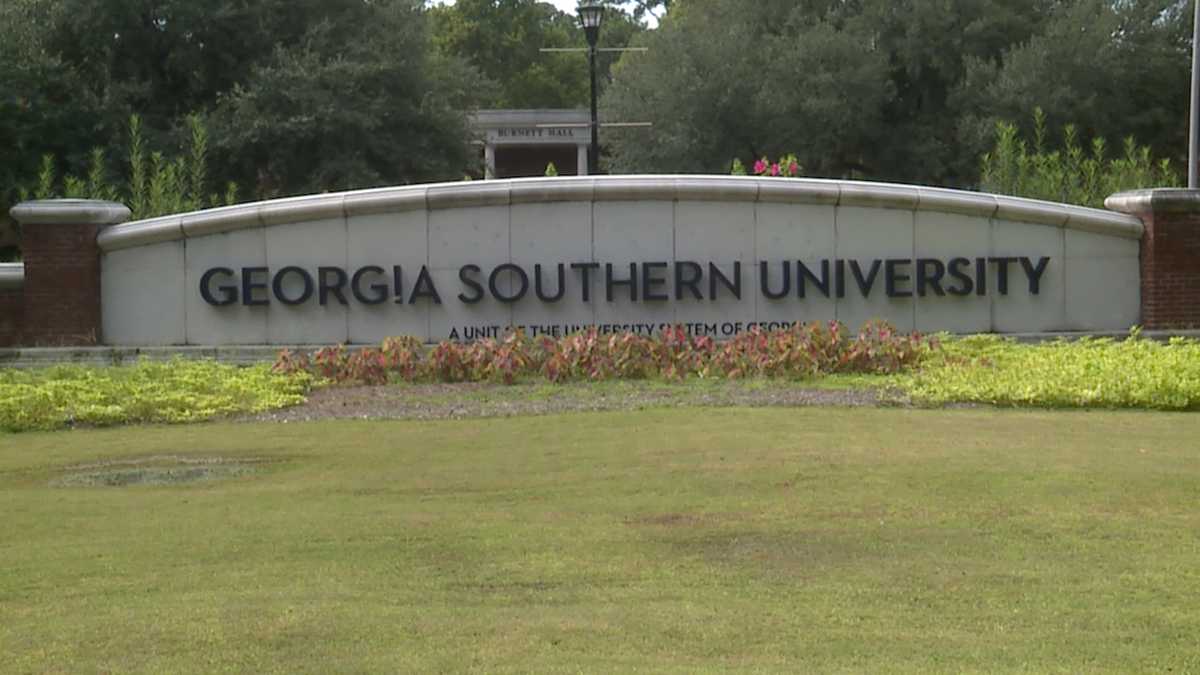
Georgia Southern University President Kyle Marrero delivered a virtual State of the University fall 2020 address to faculty and staff, broadcast live from the Performing Arts Center on the Statesboro Campus on Aug. 12. Maxing out with 1,507 viewers at one point, University members tuned in from remote locations to hear the president discuss how Georgia Southern is successfully adapting during extraordinarily difficult times and will continue to be nimble during the fall semester. “We are being asked to be innovative, flexible, nimble and willing to adapt and change,” Marrero said after welcoming all back to the three campuses. “And I want to thank you. You all have been tremendous, remarkable, heroic even, as we made it through these times and as we navigate through these uncertain times.” Marrero touted the herculean efforts of faculty and staff, who maintained the integrity of the University’s five pillars — student success, teaching and research, inclusive excellence, operational efficiency, effectiveness and sustainability, and community engagement, in the midst of a pandemic that caused the University to move fully online in March. He cited specific examples of performance excellence since March with the following collective efforts: Moved more than 5,000 classes to fully online to complete the Spring 2020 Semester; Delivered summer term fully online while seeing credit-hour generation move up by more than 4%, compared to the Summer 2019 Semester; Moved 4,600 students out of housing and provided support for more than 100 students who remained on campus; Refunded almost $11 million in housing, dining and fees to students; Held virtual Spring 2020 Commencement, viewed by more than 100,000 worldwide; Provided more than $11 million in CARES Act grant funding directly to students; Developed and began implementation of Initial Return to Campus and Return to Campus Plans, based on input from more than 130 faculty staff across campus and public health guidance from the Centers for Disease Control and Prevention and the Georgia Department of Public Health; Modeled a 14% state budget reduction for FY21, then completed a 10% realized reduction, totaling $14.2 million; Developed and implemented flexible and remote work processes; Assessed and modified almost 5,000 courses for fall 2020; Prepared campus with signage, cloth face coverings, face shields, PPE, hand sanitizer stations; Formed and implemented the CARES Service Center; Continued communication, coordination and monitoring of community health care providers, public/private schools, municipalities and agencies. Marrero also presented August figures showing that fall 2020 enrollment looks strong compared to this same time last year, however, he was quick to note that the figures may fluctuate based on various factors throughout the semester. Final fall enrollment figures will be released in October. “We can continue to move forward,” he said. “We can continue to elevate and live our mission and our vision and our values even in these times. We will adapt, we’ll be nimble and we’ll ensure that every day that the public health and safety of our faculty, staff, students and our community is of paramount importance. “I am confident that we are ready as we can be and together we’ll assess and navigate the entirety of the fall semester with the goal and outcome of our students being successful. As a whole Georgia Southern University can make it through this together.” If you are journalist and would like to know more about Georgia Southern university and how it is succeeding during COVID-19, simply reach out to Georgia Southern Director of Communications Jennifer Wise at jwise@georgiasouthern.edu to arrange an interview today.

Environment-Friendly Compound Shows Promise for Solar Cell Use
A widespread transition to solar energy will depend heavily on reliable, safe, and affordable technology like batteries for energy storage and solar cells for energy conversion. Nikhil Koratkar, an endowed professor of mechanical, aerospace, and nuclear engineering at Rensselaer, has dedicated much of his research to exploring ways to make a wide-range of batteries more efficient, affordable, and safe. In research published in Advanced Functional Materials, Koratkar and a team of engineers, material scientists, and physicists demonstrated how a new material — a lead-free chalcogenide perovskite — that hadn’t previously been considered for use in solar cells could provide a safer and more effective option than others that are commonly considered. “The National Academy of Engineering has defined 14 grand challenges; one of those is to make harvesting energy from the sun cheaper and more widespread,” Koratkar said. "That’s the motivation of this work, to come up with new materials that could rival the efficiency of silicon, but bring down the cost of manufacturing solar cells, and that is the key to achieving this goal.” Koratkar is available to talk about this recent discovery, and his broader expertise and research in energy storage.


Airing commercials after political ads actually helps sell nonpolitical products
About $7 billion reportedly will be spent this fall on television and digital commercials from political campaigns and political action committees, filling the airwaves with political ads many viewers dislike. Companies running ads immediately afterward have been concerned about the potential of a negative spillover effect on how they and their products and services are perceived. But new research from the Indiana University Kelley School of Business finds that the opposite is true. Contrary to mainstream thought, political ads instead yield positive spillover effects for nonpolitical advertisers. And this happens regardless of whether the political ad is an attack ad or not, who the ad supports, and whether it's sponsored by a candidate, political party or PAC. Political advertising accounts for nearly 10 percent of all U.S. television ad revenue. The findings are in the article "Impact of Political Television Advertisements on Viewers' Response to Subsequent Advertisements" -- accepted for publication in Marketing Science -- by Beth Fossen, assistant professor of marketing; Girish Mallapragada, associate professor of marketing and Weimer Faculty Fellow; and doctoral candidate Anwesha De, all from the Kelley School of Business. "Our investigations provide insights into the previously unexplored ad-to-ad spillover effects and, more broadly, provides insights into how political messages influence consumers," Fossen said. "Nonpolitical ads that follow political ads benefit through a reduction in audience decline and an increase in positive post-ad chatter." Using data for 849 national prime-time ads during the 2016 U.S. general election, the researchers found that ads airing after a political commercial saw an 89 percent reduction in audience decline and a 3 percent increase in post-ad chatter online. Their findings remained consistent when examining the effect by TV network and political party affiliation. "It seems reasonable to assume that Fox News viewers are more likely to be positively stimulated by pro-Republican ads than viewers of other channels," researchers wrote. "However, evidence from our data suggests that the positive spillover from pro-Republican ads is not higher and is nearly lower on Fox News viewership decline than when pro-Republican ads air on other channels." They found a similar trend when it came to advertising on MSNBC, whose viewers frequently identify with the Democratic Party and progressive causes. Mallapragada said the findings show that television networks and stations can leverage the positive spillover effects on subsequent ads by implementing differential pricing and systematic ad sequencing. Prevailing belief in the business industry has suggested that political ads on television hurt the effectiveness of subsequent ads. To illustrate this concern, during the 2020 Super Bowl, game broadcaster Fox isolated political ads from other paying advertisers in their own ad breaks, a decision that cost the network millions in ad revenue, because it ran nonpaid show promos alongside the political ads instead of commercials from paying advertisers. "The insights from this research enable advertisers to advocate for the inclusion of ad positioning in ad buys and, specifically, negotiate that their ads follow political ads," he said. "Our results may also encourage advertisers outside of the television context to experiment with advertising next to political content, an experimentation that may be especially beneficial for online advertisers given that they commonly blacklist political topics to avoid having their ads appear near political content." Editors: Contact George Vlahakis at vlahakis@iu.edu for a copy of the paper.

A New Way to Fight Pandemics: Use Decoys to Trap the Viruses that Cause Them
With a vaccine for SARS-CoV-2 still months into the future, it’s clear that we need better antivirals to hold COVID-19 and future pandemics at bay. One strategy uses a decoy to block viruses at the point where they latch onto human cells, stopping infection before it can begin. To infect a cell, a virus must first latch onto a specific target on the cell surface, slice through the cell membrane, and insert its own genetic instructions, hijacking the cellular machinery within to produce replicas of the virus. But the virus could just as easily be persuaded to lock onto a decoy molecule, provided that molecule offers the same fit as the cellular target. Once bound to a decoy, the virus would be neutralized, unable to infect a cell or free itself, and would eventually degrade. This decoy strategy has shown promise in combating a number of viruses, including SARS-CoV-2, dengue, Zika, and influenza A. Two prominent researchers at Rensselaer Polytechnic Institute — Jonathan Dordick, a chemical engineer, and Robert Linhardt, internationally recognized for his creation of synthetic heparin — focus on viruses that use glycoproteins to latch onto human cells, a trait common to many viruses including coronaviruses. Their work studies how viruses gain entry into human cells at the molecular level and identifies safe, effective compounds to offer as a decoy. In their most recent test of this viral decoy strategy on mammalian cells, Dordick and Linhardt demonstrated that a compound derived from edible seaweeds substantially outperforms remdesivir, the current standard antiviral used to combat COVID-19. Heparin, a common blood thinner, and a heparin variant stripped of its anticoagulant properties, performed on par with remdesivir in inhibiting SARS-CoV-2 infection in mammalian cells. Both compounds bind tightly to the spike protein on the surface of SARS-CoV-2, the same strategy the team employed in their previous viral work. In 2019, the team created a trap for dengue virus, attaching specific aptamers — molecules the viral latches will bind to — precisely to the tips and vertices of a five-pointed star made of folded DNA. Floating in the bloodstream, the trap lights up when sprung, creating the world’s most sensitive test for mosquito-borne diseases. Dordick and Linhardt are available to speak on the viral decoy strategy, similar antiviral research efforts, and the need for more effective antivirals in future pandemic control.


With Hurricane Season Underway, What Have Engineers Learned from Previous Storms?
With hurricane season already underway and projected to be active, communities need to make sure they have learned the lessons from previous major storms so that they are prepared for the next one. As the technical director for the Network for Earth Engineering Facility at Rensselaer Polytechnic Institute and an expert in centrifuge modeling, Tarek Abdoun can provide that insight. Abdoun led a research team that used physical models within the Rensselaer centrifuge to determine how some of the levees in New Orleans failed during Hurricane Katrina. Those findings have provided engineers with a better understanding of how levees respond to extreme floods. Abdoun is available to talk about what engineers have been able to learn since Katrina, and how that makes levees and dams safer.
