
Experts Matter. Find Yours.
Connect for media, speaking, professional opportunities & more.
Back to school anxiety - How can parents prepare kids as the time to go back to school gets closer?
The new school year is usually an exciting time for kids and a time to celebrate for parents who have been keeping busy all summer long. A new grade and new adventures at school await. But this year, with children heading back to class in just a few short weeks, anticipation has been replaced by anxiety as a lot of kids are stressed about the idea of returning during COVID-19. For most children, predictability can play a major part in being comfortable and feeling secure. As well, with children seeing the news, having spent months in lockdown and knowing that they’ll likely be wearing a mask all day, the pressure of the ‘unknown’ may be enormous. “It is normal for kids to feel nervous about returning to school, especially if they have been learning from home for months,” said Dr. Meredith Rausch, a leading counselor education expert and associate professor in the Department of Advanced Studies and Innovation in the College of Education at Augusta University. “To help ease their anxiety, I encourage parents to reassure their children about the safety measures in place to keep them safe and remind them about the positives, such as being able to see their friends and teachers.” Rausch also recommends the following tactics parents can do at home to help ease the back-to-school anxiety. Wear a mask at home: Wear one while playing a game, reading a book or having some screen time. Normalizing life in a mask may be the new normal. Share how you feel: Parents who can share their feelings will likely prompt children to share their own. Let kids know that adults are nervous and are sometimes afraid too, and encourage young ones to open up and express any lingering or pent up emotions. This coming school year will be like no other in memory, and as parents get kids ready to head back into the classrooms – there are still a lot of questions remaining. If you’re a journalist covering this topic – then let our experts help. Dr. Meredith Rausch is a leading expert in counselor education, and her research focuses on underserved populations, particularly LGBTQ+ individuals and women. Rausch is available to speak with media regarding this important subject. Simply click on her name to arrange an interview today.


Racial and LGBT bias persists in ridesharing drivers despite mitigation efforts
Despite efforts by ridesharing companies to eliminate or reduce discrimination, research from the Indiana University Kelley School of Business finds that racial and LGBT bias persists among drivers. Platforms such as Uber, Lyft and Via responded to drivers' biased behavior by removing information that could indicate a rider's gender and race from initial ride requests. However, researchers still found that biases against underrepresented groups and those who indicate support for the LGBT community continued to exist after drivers accepted a ride request -- when the rider's picture would then be displayed. In other words, their efforts shifted some of the biased behavior until after the ride was confirmed, resulting in higher cancellation rates. Understanding whether bias has been removed also is important for ridesharing companies as they not only compete against each other but also with traditional transportation options. "Our results confirm that bias at the ride request stage has been removed. However, after ride acceptance, racial and LGBT biases are persistent, while we found no evidence of gender biases," said Jorge Mejia, assistant professor of operations and decision technologies. "We show that signaling support for a social cause -- in our case, the lesbian, gay, bisexual and transgender community -- can also impact service provision. Riders who show support for the LGBT community, regardless of race or gender, also experience significantly higher cancelation rates." Mejia and co-author Chris Parker, assistant professor in the information technology and analytics department at American University in Washington, believe they are the first to use support for social causes as a bias-enabling characteristic. Their article, "When Transparency Fails: Bias and Financial Incentives in Ridesharing Platforms," is published in Management Science. They performed a field experiment on a ridesharing platform in fall 2018 in Washington, D.C. They randomly manipulated rider names, using those traditionally perceived to be white or Black, as well as profile pictures to observe drivers' behavior patterns in accepting and canceling rides. To illustrate support for LGBT rights, the authors overlaid a rainbow filter on the rider's picture profile. "We found that underrepresented minorities are more than twice as likely to have a ride canceled than Caucasians; that's about 3 percent versus 8 percent," Mejia said. "There was no evidence of gender bias." Mejia and Parker also varied times of ride requests to study whether peak price periods affected bias. They found that higher prices associated with peak times alleviated some of the bias against riders from the underrepresented group, but not against those who signal support for the LGBT community. They believe that ridesharing companies should use other data-driven solutions to take note of rider characteristics when a driver cancels and penalize the driver for biased behavior. One possible way to punish drivers is to move them down the priority list when they exhibit biased cancellation behavior, so they have fewer ride requests. Alternatively, less-punitive measures may provide "badges" for drivers who exhibit especially low cancellation rates for minority riders. But, ultimately, policymakers may need to intervene, Mejia said. "Investments in reducing bias may not occur organically, as ridesharing platforms are trying to maximize the number of participants in the platform -- they want to attract both riders and drivers," he said. "As a result, it may be necessary for policymakers to mandate what information can be provided to a driver to ensure an unbiased experience, while maintaining the safety of everyone involved, or to create policies that require ridesharing platforms to monitor and remove drivers based on biased behavior. "Careful attention should be paid to these policies both before and after implementation, as unintended consequences are almost sure to follow any simple fix."

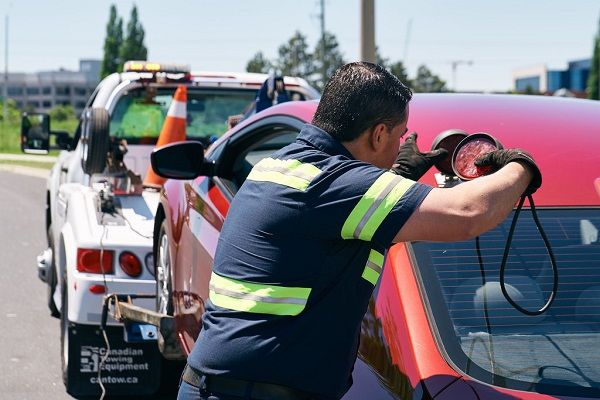
MEDIA RELEASE: CAA study reveals a majority of Ontario drivers favour provincial towing oversight
A recent study conducted on behalf of CAA South Central Ontario (CAA SCO) indicates that 90 per cent of Ontario drivers agree with regulations such as tow truck licensing, certification and provincial oversight. The study, commissioned in April 2020, revealed that only 1 out of 5 Ontario drivers feel “very protected” under the current system. “Consumers should have the confidence that they will be protected regardless of where in the province they are and what kind of towing services they may require,” says Teresa Di Felice, assistant vice-president of government and community relations. The study also showed that half of Ontario drivers believe that tow trucks in Ontario are licensed. This is not the case. A lack of provincial oversight in the towing industry has led to a municipal patchwork of bylaws, which includes inconsistent towing rates, processes, and standards. It has also left motorists unsure on what the rules are, and how to protect themselves from fraudulent activities particularly when it comes to collision tow services. At present, only 18 of Ontario’s 444 municipalities have bylaws regulating towing. That is less than five percent of all communities across the province. “Provincial oversight should provide consistent levels of training for operators, ensure the vitality of an important service on Ontario roads, establish penalties for those that do not follow the rules and recognize people drive outside of cities boundaries.” Some other interesting facts from the study are: An overwhelming majority (91%) of the respondents oppose the idea of anyone driving a tow truck without specific tow truck driver education or training. More than 4 out of 5 respondents agree that the cost of towing and related fees can be misleading. In June, the Ontario government announced its commitment to assemble a task force to review and reform the towing industry. For over a decade, CAA has been advocating for changes to the towing industry. The announcement of a provincial task force is a strong step in the right direction. As part of the journey toward a fair towing framework, please join CAA, the Ontario Provincial Police (OPP) and the Provincial Towing Association of Ontario (PTAO) for a virtual discussion on the challenges of the towing industry and an overview of what the future of towing could entail. The virtual townhall will take place on Wednesday, August 12, 2020 from noon to 1:30 p.m. To register and for more information, visit: https://www.caasco.com/blog/News/government-focuses-on-the-towing-industry-have-your-say The statistically representative study, commissioned by CAA SCO and conducted by Campaign Research between April 21st to 24th, 2020, surveyed 5,003 Ontarians that hold a valid driver’s license. The study was conducted through online surveys. A probabilistic sample of a similar size would have a margin of error of plus or minus 1.4%, 19 times out of 20.



Chatbots can ease medical providers' burden, offer trusted guidance to those with COVID-19 symptoms
COVID-19 has placed tremendous pressure on health care systems, not only for critical care but also from an anxious public looking for answers. Research from the Indiana University Kelley School of Business found that chatbots -- software applications that conduct online chats via text or text-to-speech -- working for reputable organizations can ease the burden on medical providers and offer trusted guidance to those with symptoms. Researchers conducted an online experiment with 371 participants who viewed a COVID-19 screening session between a hotline agent -- chatbot or human -- and a user with mild or severe symptoms. They studied whether chatbots were seen as being persuasive, providing satisfying information that likely would be followed. Their results showed a slight negative bias against chatbots' ability, perhaps due to recent press reports. When the perceived ability is the same, however, participants reported that they viewed chatbots more positively than human agents, which is good news for health care organizations struggling to meet user demand for screening services. "The primary factor driving user response to screening hotlines -- human or chatbot -- is perceptions of the agent's ability," said Alan Dennis, the John T. Chambers Chair of Internet Systems at Kelley and corresponding author of the paper, "User reactions to COVID-19 screening chatbots from reputable providers." "When ability is the same, users view chatbots no differently or more positively than human agents." Other authors on the paper, forthcoming in the Journal of the American Medical Informatics Association, are Antino Kim, assistant professor of operations and decision technologies at Kelley; and Sezgin Ayabakan, assistant professor of management information systems, and doctoral candidate Mohammad Rahimi, both at Temple University's Fox School of Business. Even before the pandemic, chatbots were identified as a technology that could speed up how people interact with researchers and find medical information online. "Chatbots are scalable, so they can meet an unexpected surge in demand when there is a shortage of qualified human agents," Dennis, Kim and their co-authors wrote, adding that chatbots "can provide round-the-clock service at a low operational cost. "This positive response may be because users feel more comfortable disclosing information to a chatbot, especially socially undesirable information, because a chatbot makes no judgment," researchers wrote. "The CDC, the World Health Organization, UNICEF and other health organizations caution that the COVID-19 outbreak has provoked social stigma and discriminatory behaviors against people of certain ethnic backgrounds, as well as those perceived to have been in contact with the virus. This is truly an unfortunate situation, and perhaps chatbots can assist those who are hesitant to seek help because of the stigma." The primary factor driving perceptions of ability was the user's trust in the provider of the screening hotline. "Proactively informing users of the chatbot's ability is important," the authors wrote. "Users need to understand that chatbots use the same up-to-date knowledge base and follow the same set of screening protocols as human agents. ... Because trust in the provider strongly influences perceptions of ability, building on the organization's reputation may also prove useful."

Is there a path to a successful and productive life after imprisonment?
On July 8, Savannah Mayor Van Johnson announced the formation of a new task force focused on helping those formerly incarcerated or with a criminal history seek productive futures when they return to society. The Advocates for Restorative Communities in Savannah (ARCS) will bring together experts, including formerly incarcerated people, who currently work with those in the justice system. The goal is pooling their collective experiences to best serve those returning to Savannah from prison and help them toward a path of success. Georgia Southern University's Maxine Bryant, Ph.D., senior lecturer, Department of Criminal Justice and Criminology, is playing a lead role in the task force. According to Bryant, about 4% of all those in Georgia’s prisons call Chatham County home. Bryant says last year Georgia’s Department of Corrections reported there were around 53,000 people inside their prisons. “Four percent, that’s about 2,000 people, people who are currently incarcerated are probably going to be returning back to Chatham County,” said Bryant. “You add that year after year after year, and then it becomes clear that if we don’t do something, we are a part of the problem, and not the solution.” Bryant added two out of every three people who are released are rearrested within three years. “Not all of those arrests are new crimes,” she said. “Some of them are technical difficulties, technical violations. They couldn’t pay a fine because they didn’t have a job.” June 08 - WTOC TV If you are a journalist and would like to learn more about this program or this topic – then let our experts help. Maxine Bryant’s research interest specifically focuses on factors contributing to the successful community reintegration of released prisons. Specifically, she has written and presented on transitional jobs for newly released prisoners, the role of the Black church in successful offender reintegration, the impact of unaddressed childhood trauma and barriers to successful offender reintegration. She is available to speak with media any time – simply click on her icon to arrange an interview today.


Virtual Reality-Based Surgical Simulations Could Make Patients Safer
Suvranu De, the director of the Center for Modeling, Simulation, and Imaging in Medicine at Rensselaer, has dedicated more than a decade of research to making surgery safer by developing virtual reality-based surgical training simulations that closely mimic the optics and haptics a surgeon may encounter in the operating room. A new $2.3 million grant from the National Institute of Biomedical Imaging and Bioengineering of the National Institutes of Health will further his research in this space, by supporting the development of a collaborative virtual reality-based surgical simulation environment that allows medical professionals to practice technical, cognitive, and interpersonal skills as a team. “People will be wearing head-mounted displays, and they will be immersed in a virtual operating room working on a virtual patient as a team,” De said. “We want to have an expert team in the operating room focused on the treatment of a patient, and not just a team of experts.” Conceptually, this approach is similar to crew resource management practiced by aviation pilots, which has led to a significant reduction in aircraft accidents. The Virtual Operating Room Team Experience (VORTeX) simulation system will provide realistic distractions, interruptions, and other stressors that medical professionals may encounter in an operating room. Traditionally, this type of simulation training has required mannequins, instructors, and a dedicated space, as well as significant coordination and resources. In contrast, the VORTeX system will be both distributed and asynchronous – allowing participants to join the simulation from different locations, and instructors to review the simulation and provide feedback at their convenience. Machine learning algorithms will be used to crunch the data and provide feedback to participants, who will be able to return to the virtual environment to review their performance. De is available to discuss how this type of virtual training is developed and implemented.


Black Gospel Music Expert Shares 10 of the Most Powerful, Enduring Freedom Songs, Protest Spirituals
By Robert F. Darden, Professor of Journalism, Public Relations & New Media, Founder and Director of the Black Gospel Music Restoration Project at Baylor University WACO, Texas (June 19, 2020) – As the protests following the death of George Floyd began to roil the country, it was only a few days before the demonstrators began to sing an array of freedom songs and protest spirituals, as well as a few new adaptations, including Bill Withers’ “Lean on Me.” Some of these songs have been sung by people fighting nonviolently for freedom and justice for hundreds of years. Many have been sung continually in the United States since the 1800s, right through the #blacklivesmatter and #metoo movements. Others have been adopted by freedom fighters in the Arab Spring, at Tiananmen Square and even now in Hong Kong. The Black Gospel Music Restoration Project at Baylor University has the world’s largest collection of digitized vinyl songs and sermons from gospel’s “golden age.” Not surprisingly, there are hundreds of freedom songs and protest spirituals in the collection as well. Below is a list of some of the most influential, most powerful, most enduring and beloved songs that have inspired and encouraged sings for two centuries. Each song is available for listening in the digital collections of the Black Gospel Music Restoration Project. (Assistance provided by Baylor Libraries’ Digitization and Digital Preservation Services.) 10. “We Shall Not Be Moved” and “Which Side Are You On?” When labor unions admitted African Americans in the 1930s and '40s, labor protesters quickly absorbed and adapted the great protest spirituals. These two old union songs were quickly adopted and expanded by the civil rights movement of the '50s and '60s. Listen to “I Shall Not Be Moved” by the Mighty Wonders of Aquasco, Maryland. 9. “A Charge to Keep Have I” In the days before hymnals, a song-leader would sing or speak a line and the congregation, whether in a church or at a mass meeting, would sing it back, called “lining out.” One of the most popular lined-out hymns during the movement was the old hymn, “A Charge to Keep Have I.” Listen to “A Charge to Keep” by Betty Simmons. 8. “Up Above My Head, I Hear Freedom in the Air” This old spiritual became a favorite in the great singing protests of Albany, Georgia, and quickly spread throughout the South. Listen to “Up Above My Head, I Hear Freedom in the Air” by Sister Rosetta Tharpe. 7. “If I Can Help Somebody” Not all freedom songs were defiant in tone. Some provided comfort in difficult times. Some helped encourage those in despair. This is one of those songs. Listen to “If I Can Help Somebody” by Dorothy Love Coates and the Gospel Harmonettes from the LP, Till My Changes Come. 6. “Freedom Highway” Some original songs were composed during the movement that were not only quickly adopted by the civil rights activists, they’ve remained in the repertoire of freedom fighters everywhere. One such song is “Freedom Highway” by the Staple Singers who themselves marched many miles with Dr. Martin Luther King Jr. Listen to “Freedom Highway” by the Staple Singers. 5. “Keep Your Eyes on the Prize”/“Hold On” There are dozens of variations of this civil rights-era favorite. Most include the couplet about Paul and Silas in jail, but all were sung to bolster spirits in tough times. Listen to “Keep Your Hands on the Plow” by The Famous Ward Singers from the LP on Vista Records. 4. “This Little Light of Mine” Fannie Lou Hamer made this old children’s song one of the most popular and righteous of the freedom songs. It was easily adaptable to every situation and good for naming the names of your oppressors. Listen to “The Little Light of Mine” by the Ward Singers. 3. “99 ½ Won’t Do” “99 ½ Won’t Do” was one of the most powerful songs to come out of the Birmingham freedom movement, sung by choirs and soloists alike, and it has since become a staple for many gospel singers, along with “I’m a Soldier in the Army of the Lord.” Listen to “99 ½ Won’t Do” by the Greater Sabathani Baptist Church Mass Choir. 2. “Don't Let Nobody Turn You Around” This freedom song has been sung repeatedly during the George Floyd protests – and has been sung for a hundred years or more. It lends itself well to a tone of defiance against great odds and was another freedom song that was infinitely adaptable to the situation. Listen to “Don't Let Nobody Turn You Around” by the Five Trumpets. 1. “We Shall Overcome” Few songs can match the majesty and soulful power of “We Shall Overcome,” always sung standing, with arms crossed clasping the hands of those on either side. It is at its most powerful -- then and now -- when the lines “black and white together” are included. Listen to “We Shall Overcome” from the 45 by Alice McClarty and the Traveling Echoes. ABOUT BAYLOR UNIVERSITY Baylor University is a private Christian University and a nationally ranked research institution. The University provides a vibrant campus community for more than 18,000 students by blending interdisciplinary research with an international reputation for educational excellence and a faculty commitment to teaching and scholarship. Chartered in 1845 by the Republic of Texas through the efforts of Baptist pioneers, Baylor is the oldest continually operating University in Texas. Located in Waco, Baylor welcomes students from all 50 states and more than 90 countries to study a broad range of degrees among its 12 nationally recognized academic divisions.

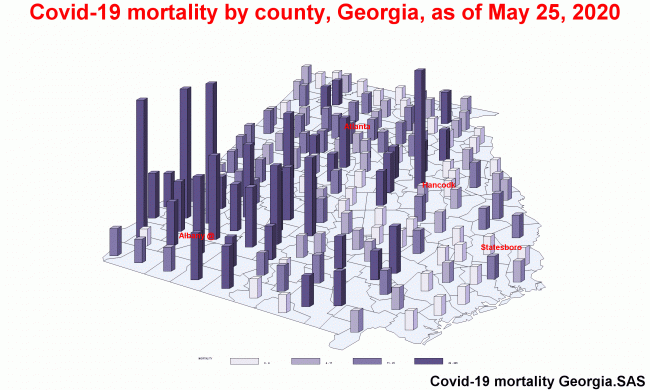
Graduate students in the Jiann-Ping Hsu College of Public Health at Georgia Southern University analyzed mortality data to reveal that a county in southwest Georgia is dealing with deaths from COVID-19 at a rate higher than most other counties in the country. The students found that the mortality rate of 305 per 100,000 residents (as of May 28, 2020) for Terrell County in southwestern Georgia, is 50% higher than that of New York state’s Nassau County, the documented highest rate in New York. The three other Georgia counties that are highest in terms of mortality rate are Hancock, Early and Dougherty counties. Three out of these four are in southwest Georgia, around the Albany area. That accounts for almost half of the 10 counties in the United States with the highest mortality rate, which is defined as a measure of the frequency of occurrence of death among a defined population. However, it’s interesting to note that none of Georgia counties reached the top 20 in terms of incidence and the death numbers per 100 confirmed Covid-19 cases, said professor Dr. Jian Zhang, a veteran medical epidemiologist. “Georgia is doing pretty well to stop the spread of the virus, and hospitals in Georgia are doing well to save hospitalized COVID-19 patients. The high mortality rate, in this case, may be deeply rooted in the historical burden of poverty in Georgia,” Zhang said. The findings are part of a service-learning project Zhang led. A six-student group formed the surveillance team that began running a real-time COVID-19 numbers in his Public Health Surveillance class. If you are a journalist covering COVID-19 and would like to learn more about this research taking place at Georgia Southern University – then let us help. Dr. Jian Zhang has worked with the Chinese Centers for Disease Control and Prevention, and the World Health Organization prior to moving to the United States.


Is Asia a powder keg ready to blow?
This week has seen rising tensions across Asia with key players facing off on what looks to be a dramatic rise in tensions with the potential for action. First off … Korea, where early Tuesday the first salvo was thrown: North Korea has blown up a joint liaison office with the South near the North's border town of Kaesong. The move comes just hours after the North renewed threats of military action at the Korean border. The site was opened in 2018 to help the Koreas - officially in a state of war - to communicate. It had been empty since January due to Covid-19 restrictions. In a statement, South Korea warned it would "respond strongly" if the North "continues to worsen the situation". The destruction of the office, it said, "abandons the hopes of everyone who wanted the development of inter-Korean relations and peace settlement in the Korean Peninsula". "The government makes it clear that all responsibility of this situation lies in the North." June 16 - BBC And this incident occurred which saw gun fire traded between China and India for the first time in almost a half century: Three members of India’s armed forces have been killed in a “violent face-off” with Chinese soldiers on their disputed Himalayan border, the Indian army has said in a statement. The deaths are the first loss of life in the border area in at least 45 years, and come amid a renewed dispute between the two countries in recent weeks. Indian and Chinese soldiers, who often do not carry weapons in the area to avoid escalating conflicts, have brawled, detained each other and deployed forces and equipment in the western Himalayas in recent weeks. “During the de-escalation process under way in the Galwan Valley, a violent face-off took place yesterday [Monday] night with casualties on both sides,” the Indian army said in a statement on Tuesday afternoon Delhi-time. “The loss of lives on the Indian side includes an officer and two soldiers.” It said “senior military officials of the two sides are currently meeting at the venue to defuse the situation”. It was unclear whether shots had been fired or if the men were killed in hand-to-hand combat. Several Indian media reports cited defence sources claiming the fighting involved stones and clubs. The Chinese also military suffered casualties, according to a tweet by the editor-in-chief of China’s state-run Global Times newspaper. “Based on what I know, Chinese side also suffered casualties in the Galwan Valley physical clash,” Hu Xijin wrote. He did not give further details. June 16 - The Guardian The world seems on edge, and if you are a journalist covering these topics and you need the perspective and input of an expert who can help with your story – then let us help. Dr. Glen Duerr's research interests include comparative politics and international relations theory. Glen is an expert on this subject and is available to speak to media regarding this topic– simply click on his icon to arrange an interview.


Protests and politics – let our expert explain how one influences the other
The protests that have been occurring across most of America have seen politically charged language, action, and reaction. Calls for change have been made, and promises have followed by those seeking to attain office or remain in office once the dust has settled and America goes to the polls in the fall. In a recent essay, former President Barack Obama touched on how those protesting can translate emotions into action. “Throughout American history, it’s often only been in response to protests and civil disobedience that the political system has even paid attention to marginalized communities,” said Obama. ”Eventually, aspirations have to be translated into specific laws and institutional practices — and in a democracy, that only happens when we elect government officials who are responsive to our demands.” Social movement expert and Augusta University Sociology Professor Dr. Todd Powell-Williams says protest movements have a significant impact on politics. His research shows societal change not only happens as a result of the crowd but also because the protests get people politically activated. “From the Boston Tea Party to the protests of the Civil Rights Movement, protests have had some degree of success in changing the course of history,” said Powell-Williams. “The recent protests against racial injustice are no different and I’m sure it will influence the outcomes of upcoming elections.” If you are a journalist looking to cover this topic, then let our expert help with your questions and coverage today. Dr. Todd Powell-Williams is an expert in social movements, social control, religion, police science and symbolic interactionism. He is available to speak with media regarding this topic — simply click on his name to arrange an interview. Also, check out the Augusta University Expert Center to view a complete list of our experts.
