
Experts Matter. Find Yours.
Connect for media, speaking, professional opportunities & more.

Looking Back on the January 6th Insurrection
Dr. Meena Bose appeared on Canada’s Global News on January 6 to discuss the fourth anniversary of the Capitol Hill attack in Washington, where supporters of Donald Trump stormed the historic building in an attempt to overturn Joe Biden’s election win. Dr. Bose is a Hofstra University professor of political science, executive dean of the Public Policy and Public Service program, and director of the Kalikow Center for the Study of the American Presidency.


Santa Ana Winds: Nature's Power and Its Impacts on Communities
The Santa Ana Winds, a defining phenomenon of Southern California, are more than just a weather pattern—they are a powerful force shaping the region's environment, safety, and culture. These hot, dry winds can dramatically exacerbate wildfire risks, affect air quality, and even influence human behavior. Understanding the Santa Ana Winds is vital for addressing broader issues of climate change, disaster preparedness, and community resilience. Their far-reaching effects provide journalists with a range of compelling story angles, such as: The meteorological science behind the Santa Ana Winds and why they occur Their role in intensifying wildfires and efforts to mitigate these risks Health impacts, including effects on air quality and respiratory conditions Psychological and behavioral studies linked to wind-driven stress and aggression Historical and cultural significance of the Santa Ana Winds in Southern California How climate change might alter the frequency and intensity of these winds If you're covering the massive fires in California, let us help with your ongoing coverage. Connect with an expert about the Santa Ana Winds: To search our full list of experts visit www.expertfile.com

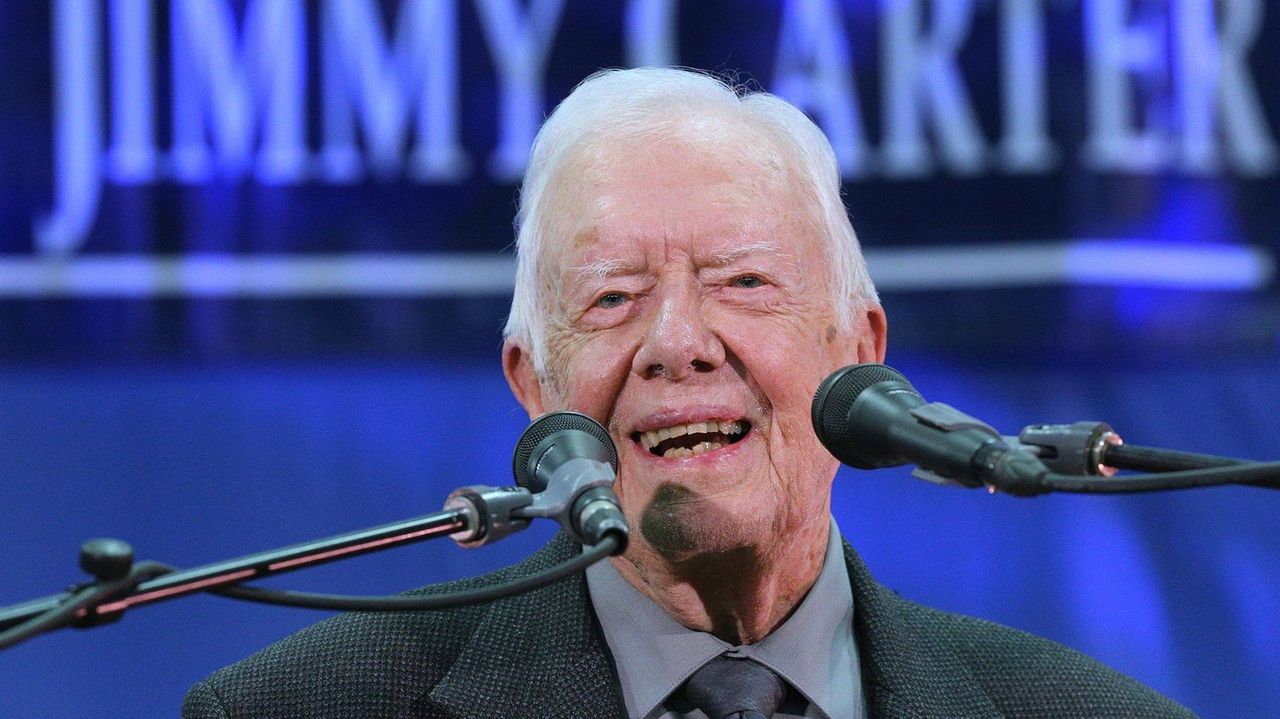
Legacy of Former President Jimmy Carter
Following the death of Jimmy Carter, the 39th president of the United States, Dr. Meena Bose was featured in a Newsday article about his legacy. Dr. Bose is a Hofstra University professor of political science, executive dean of the Public Policy and Public Service program, and director of the Kalikow Center for the Study of the American Presidency. She noted that Carter served under difficult economic and political times. “But then, of course, he went on to have a highly successful post-presidency winning the Nobel Peace Prize, being highly active in public housing policy, voting rights … and really was quite active on the public scene until just a few years ago,” she said. The article also referenced the Hofstra Cultural Center’s 1990 three-day presidential conference on the Carter administration, which President Carter and First Lady Rosalynn Carter attended.

AI Everywhere: Where Artificial Intelligence and Health Care Intersect
Imagine a world where AI doesn’t just support health care providers, but anticipates their next move — detecting diseases faster than human eyes, analyzing patterns and patient data that humans might overlook and revolutionizing health care decision making at every level. Driven by data, AI can identify which patients are most likely to have repeated emergency department visits or thrive from personalized medicine. With the power of robotics enhanced by AI, people with medical needs can gain more independence, managing daily tasks such as taking medication, monitoring their health and receiving personalized care, all from the comfort of their own homes. And this is just the beginning. “AI is transforming – and is going to continue transforming – every industry, especially health care,” said Bharat Rao, a notable figure in the fields of health care, technology and AI. Rao himself has made significant contributions to artificial intelligence, machine learning and data analytics, particularly in health care innovation. His current start-up, CareNostics, uses AI technology to identify patients at increased risk for chronic disease. “We take this for granted,” he said, “but it’s like what I used to see on Star Trek as a kid. The opportunities are limitless.” Rao was a keynote speaker at ChristianaCare’s inaugural Innovation Summit, a two-day conference at ChristianaCare’s Newark campus in Delaware, in fall 2024. During panel discussions and keynotes, more than 200 attendees heard about current and future health tech from national innovators and thought leaders, as well as technical advice for inventors who want to patent ideas and protect intellectual property in a world where “AI Is Everywhere,” the conference’s theme. Speakers emphasized that it’s not just technologists, but also researchers, clinicians and other health care professionals who play an essential role in implementing AI-based health care solutions. “There’s no AI without HI, which is human intelligence,” said Catherine Burch, MS, CXA, CUA, vice president of innovation at ChristianaCare. “You want to help shape the future, not wait for it to shape you.” How AI helps improve patient care “AI is incredibly good at reducing noise in images,” said speaker David Lloyd, a technical leader at Amazon, who discussed the use of AI in radiology. “It can detect anomalies, and it can automate radiologist reports, which saves time for radiologists.” Data informatics is another example of the power of AI to help health professionals determine which patients are at an increased risk for falls, malnutrition or recurrent asthma attacks, enabling them to optimize patient health and prevent hospitalizations. “Some patients with asthma go to the ER repeatedly because their treatment plan isn’t working,” said speaker Vikram Anand, head of data at CareNostics. When patients have uncontrolled asthma, data-rich platforms like CareNostics can provide treating physicians with guidelines and other support to improve patient care, which may lead to evidence-based medication changes or other therapies, he said. Using robots as part of the health care team in patient homes may sound like science fiction, but speakers discussed the current evolution of consumer robotics, like Amazon’s Astro. Astro follows patients around their home, interacts with them and supports their care. When ChristianaCare tested Astro’s impact on HomeHealth patients, they found that it reduced feelings of isolation by 60%. “Astro is like Alexa on wheels,” said speaker Pam Szczerba, PT, MPT, CPHQ, director of ChristianaCare’s HomeHealth quality, education and risk management, who studied patients’ experiences with Astro. “People like interacting with Alexa, but they can only interact in the room they’re in. Astro’s mobility lets it go to the patient.” Based on early successes, health professionals are assessing robots as an extension of clinicians in the home. Early results show that patients with robots show improved activation with their care plans. This may lead to more widespread distribution of household robots to newly diagnosed patients to help prevent disease complications, avoidable emergency department visits and re-hospitalizations. How AI helps ease provider burden Speakers also discussed the potential of AI to improve health care delivery and patient outcomes by handling more administrative work for health professionals. “We can reduce some of the redundancy of work to free up time for people to be creative,” said speaker Terrance Bowman, managing director at Code Differently, a company that educates and prepares people to work in technology-driven workplaces. “AI should be taking the ‘administrivia’ – administrative trivial tasks – out of your life,” said speaker Nate Gach, director of innovation at Independence Blue Cross. “When you want folks to do the creative part of the job that takes brain power, have ChatGPT respond to easy emails.” Other examples shared included the power of AI to record meetings, create summaries and send participants automated meeting minutes. Benefits can be seen across industries. Specific to health care, eliminating the need for note-taking during visits enables more personalized and attentive provider-patient interaction. With the evolution of ambient speech apps, clinicians are no longer just dictating notes into the electronic health record. Now AI is listening to the conversation and creating the notes and associated recommendations. “The physician is no longer spending ‘pajama time’ doing catch-up work, at home late into the evening,” said speaker Tyler Flatt, a director and leading expert in AI and digital transformation at Microsoft. “Especially as we’re dealing with burnout, it’s better for patient and physician satisfaction.” AI may also help caregivers uncover details that they hadn’t noticed, helping them diagnosis patients with subtle symptoms. “We feed a large quantity of data and have it suggest commonalities about patients,” said speaker Matthew Mauriello, assistant professor of computer and information sciences at the University of Delaware. “Some things are very insightful, but humans miss them.” AI has also been used for patient engagement, including chatbots that can assist with tasks like scheduling clinical appointments or acknowledging patient questions. “One of the things AI is great at is natural language understanding,” said David Lloyd. “You can alleviate a lot of the burden if you have something that can talk to your patients, especially if it’s an administrative task.” Creating new health innovations “The key is to think of something you’ve done that’s original and non-obvious,” said Rao, who holds more than 60 patents in AI. “The process of writing about it will help you flesh it out.” Turning breakthrough ideas into game changers is just the start — protecting these innovations is what ensures they shape the future, rather than fade into the past. “Keeping it secret and internal to your organization until you know what you want to do with it is important,” Greg Bernabeo, partner at FisherBroyles, LLP, said. “Otherwise, the opportunity is lost, and you can’t get the genie back in the bottle.” Benefits of non-obvious thinking People who pursue “non-obvious” ideas are often on the cutting edge of technology in and out of health care, said keynote speaker, Ben DuPont, while discussing innovative ideas with Randy Gaboriault, MS, MBA, senior vice president and chief digital and information officer at ChristianaCare. “Amazon was not founded by a book retailer; Airbnb was not founded by somebody who was in hospitality,” said DuPont, author, entrepreneur, and co-founder and partner at Chartline Capital Partners venture capital fund. “Before Uber, the founders were running around Paris and they couldn’t get a taxi.” Innovative ideas often arise when people consider non-obvious points of view while thinking about solutions, DuPont said. Non-experts have the ability to cut through the clutter and find the frustration, which can lead to innovative solutions, which DuPont explores in his book “Non-Obvious Thinking: How to See What Others Miss.” Health providers, for example, may discover ideas when they move out of their comfort zones. “If you want to be a better doctor, go do something that has nothing to do with medicine,” he said. “Innovation happens at the collision of seemingly unrelated disciplines.” Diversity in the workplace is necessary, “but it’s not just diversity in the way people look: It’s diversity in how people think,” DuPont said. “There are people that think in dramatic and different ways. We need those people around the table. They might say: ‘If we just move this little thing over here’ … and it starts an avalanche that changes the world.” Involving the future generation During the Innovation Summit, students with an interest in STEM (science, technology, engineering, and mathematics) from St. Mark’s High School in Wilmington, Delaware, competed against one another at ChristianaCare’s inaugural HealthSpark ChallengeTM. Twenty-six high school juniors and seniors were divided into five teams, then challenged to brainstorm ideas for solutions to address the negative mental health effects of social media on teenagers. Each team created a concept poster and pitched their ideas to Summit attendees. The attendees then voted for their favorite solution. The winning solution, Editing Identifiers, is designed to help minimize negative feelings about body image among teens. The solution would use AI technology to identify altered photos on social media. The goal would be to show teens that photos of “perfect” people aren’t real and alleviate the feelings of body dysmorphia. Looking forward Summit speakers highlighted many ways that AI is already incorporated into health care, as well as ways that health tech, AI, and robotics may improve care for patients in the coming years. “We are just scratching the surface,” Rao said. “It’s like laparoscopic surgery – years ago, it was considered experimental or dangerous. Today, surgery is commonly done laparoscopically, with better outcomes and less infection. AI can help identify care gaps and get the right treatment to the right patient. It’s going to be good for the patient.” In a rapidly evolving landscape, the integration of AI into health care not only enhances patient care but also creates opportunities for innovation and collaboration, said ChristianaCare’s Gaboriault. “As AI continues to advance, the health care industry stands on the brink of a revolution, one where the possibilities are as vast as the data that fuels them.”




New Year’s Resolutions: Origins and Why We Make Them
As the calendar turns, millions around the world embrace the tradition of setting New Year’s resolutions, a practice rooted in self-reflection and renewal. While often seen as a personal commitment to change, this custom also reflects cultural, historical, and psychological aspects of human behavior. Exploring the origins and modern significance of New Year’s resolutions offers a rich opportunity to examine why this tradition endures and what it says about our shared aspirations for the future. Key story angles include: Historical Roots of New Year’s Resolutions: Tracing the tradition back to ancient Babylonian and Roman practices and their influence on today’s customs. Psychology Behind Resolutions: Exploring why people set goals at the start of the year and the factors that influence success or failure in achieving them. Most Popular Resolutions and Their Societal Impact: Analyzing trends in health, finances, and personal growth goals and what they reveal about changing priorities. Global Variations in New Year’s Traditions: Highlighting how different cultures mark the New Year and set intentions for the months ahead. The Science of Habit Formation: Investigating how neuroscience and behavioral science can help people turn resolutions into lasting habits. Skepticism and Alternatives: Examining criticisms of resolutions, including their commercialized aspects, and exploring alternative approaches to self-improvement. The enduring tradition of New Year’s resolutions provides a window into humanity’s shared desire for growth and renewal, offering journalists a timely and engaging topic to explore from multiple perspectives. Connect with an expert about New Year’s Resolutions: To search our full list of experts visit www.expertfile.com

Villanova Professor Investigates Impacts of Hurricanes on Florida Coast
In October 2024, during the height of hurricane season, Hurricanes Milton and Helene swept across the southeastern United States. Their impact on Florida was severe, with damages totaling tens of billions of dollars. While communities in affected states continue to rebuild, a team of researchers mobilized to assess the damage caused in the hopes of better understanding the impacts of hurricane activity in the future. Jonathan Hubler, PhD, assistant professor of civil and environmental engineering at Villanova University, along with Villanova civil engineering graduate student Sarah Burghardt, traveled to Florida with a joint team from the Nearshore Extreme Events Reconnaissance (NEER) Association and the Geotechnical Extreme Events Reconnaissance (GEER) Association to investigate the immediate aftereffects of Hurricanes Milton and Helene. The National Science Foundation-sponsored trip gathered natural hazards research experts and practitioners from across the country, who quickly jumped at the opportunity to examine the impacts of two tropical storms that occurred in quick succession of each other. A few main areas of study were identified by the team so they could hit the ground running once they touched down in Florida. The researchers wanted to focus primarily on the effects of storm surge, waves, sediment erosion and deposition, and debris transport and accumulation from both hurricanes through pre-storm, during-storm, and post-storm data collection. Over 750 miles were covered across just a few days as data was surveyed and collected from Cedar Key, Horseshoe Beach, Venice, Port Charlotte, Port St. Lucie, Vero Beach and other coastal towns. “This was a unique opportunity for our team of scientists because our team collected data before the storms so we will be able to analyze the direct impacts of the storms utilizing the post-storm data that we collected,” said Dr. Hubler. “Although the destruction was difficult to witness firsthand, we are hopeful that our findings will help to mitigate the impact of these major storms in the future.” The data set collected from these storm sites is expected to improve the understanding, prediction, and mitigation of erosion as well as assess the performance of different shoreline protection systems during severe tropical storm events. Findings from the trip will be shared publicly through the NSF’s Natural Hazards Engineering Research Infrastructure (NHERI) DesignSafe-CI, a nationwide network tailored for data sharing among the natural hazards engineering research community. Local Florida communities will also be notified of relevant findings to increase awareness and understanding of risk assessments when preparing for tropical storm events. “It was a productive few days spent in Florida as we collected a significant amount of data and covered a lot of ground in a short span of time. I’m grateful to have been included on this research team and that I had the chance to bring one of my students along. This real-world experience in the field will help further her learning as she completes her studies,” said Dr. Hubler. Dr. Hubler traveled with the NEER and GEER team again in November for another data collection effort. Although the 2024 hurricane season has come to a close, researchers like Dr. Hubler continue to study their impact year-round to discover new mitigation strategies for next year’s season.


Is all screen time bad? Experts weigh in on healthy habits for kids and teens.
With the winter holiday season upon us, many children and adolescents will be home from school for break. As with any extended periods of time outside of school, screen time for children will become a topic of discussion for families. "For academic benefits of screens, it isn't only about the screen 'time,' but about the type of activities youth are doing on screens," said Teya Rutherford, associate professor at the University of Delaware. "There is huge variance in the quality of engagement with online games, etc." During the holiday season, children and adolescents have way more time to fall down the rabbit hole of social media and general web surfing. The American Psychological Association recently released guidelines to help parents coach their teens to have healthier relationships with viewing videos online. Some of the findings include limiting screen time, monitoring content and teaching children and adolescents about misinformation. "This finding is in line with the literature on parental monitoring – in that, if parents monitor their adolescents’ use of social media, then outcomes (i.e., academic achievement) are often better for the adolescent, than for the adolescent whose parent does not engage in such monitoring behaviors," said Mellissa Gordon, associate professor at the University of Delaware. Rutherford can speak about creating engaging online environments, the science behind learning in online environments, motivating students to learn in STEM contexts and self-regulated learning. Gordon conducts research on the social mechanisms that influence adolescent and young adult development. In a 2023 Youth and Society study, she found that as middle schoolers’ social media use increased, their academic performance suffered. Both can be contacted by emailing mediarelations@udel.edu.


Georgia Southern welcomes Georgia state leaders on Wexford Campus in Ireland
Georgia Southern University’s Wexford Campus in Ireland has been invigorating educational, civic, business and trade opportunities between Ireland’s southeast region and the state of Georgia since its establishment in 2022. The bicultural partnership has drawn the attention of state leaders in Georgia, prompting a recent visit to the international campus where Georgia Southern and its Irish partners welcomed the delegation. “We hosted legislators and leaders of industrial development and enterprise organizations,” said Howard Keeley, Ph.D., director of Georgia Southern’s Center for Irish Research and Teaching (CIRT). “These Georgia stakeholders believe that what Georgia Southern is doing in Ireland is important. One of the major concepts behind the Wexford Campus is that it’s a true campus, not just a study-abroad venue. So we’re pursuing several streams of activity. One is teaching and another is research. Another one is economic development, which includes internships and community engagement. We want to be in the community; therefore, to have leading constituents from a variety of industries in Georgia was very gratifying.” Among the attendees were U.S. Congressman Earl L. “Buddy” Carter; Georgia Department of Economic Development Commissioner Pat Wilson and five members of his senior staff, as well senior officials from electrical utilities, including Georgia Power; Trip Tollison, CEO of Savannah Economic Development Authority; Teresa MacCartney, chief operating officer for the University System of Georgia; and Georgia Rep. James Burchett (‘04), along with 10 additional members of the Georgia House of Representatives. “The main thing we wanted to do is show them what the student experience is like,” said Keeley. “We care about our students, and, using philanthropic funds, we’ve invested in a beautiful set of buildings, including one, built in 1886, that will house 50 students at a time. Each year, our goal is full capacity over six minimesters for a total of 300 Georgia Southern students. Historically a religious convent, that structure should open in spring 2026, after extensive remodeling. Many Georgia Southern students, including construction management and interior design majors, are gaining valuable professional skills by contributing to the endeavor.” The Wexford Campus already features the Learning Center, a historic administrative complex constructed in 1812 that has been transformed into a contemporary, high-tech educational space where students learn from local and international experts. They also present their research to peers and visiting Georgia Southern alumni while participating in high-impact experiential learning within the region. Visiting delegates were pleased to learn about the Honors College Global Scholars Program, which hosts 24 Honors College students who, taking an interdisciplinary approach, explore two themes for six weeks each spring in Ireland. This year, a prominent topic of study was sustainability in agriculture. One of Georgia Southern’s European research partners, South East Technological University Ireland, helped guide the students as they compared sustainability challenges along the coasts of Georgia and southeastern Ireland. The students drew on various research efforts, including important knowledge generated by Georgia Southern’s Institute for Water and Health. Similar integrated concepts also inform the summer and fall offerings. In 2024, they included two undergraduate global business courses, as well as the first Europe-based course from the MBA program at Georgia Southern’s Parker College of Business. One focus for the MBA students was Rosslare Europort, just south of Georgia Southern’s Wexford Campus, which has become Ireland’s fastest-growing port as multiple new direct routes to continental Europe have opened in response to Brexit. At a workshop facilitated by a top Rosslare Europort official, the MBA students explored international trade, logistics and supply chain management and the European regulatory environment. Spanning undergraduate, graduate and doctoral levels, the Wexford Campus has also provided courses in accounting, philosophy, sociology, geography, environmental biology, tourism and public health, among other disciplines. Shadowing Irish experts, population health science students from the Waters College of Health Professions focused on designing and delivering preventative-health programs, a critical matter in both Ireland and Georgia. “One of the metrics we use to measure success in Ireland is asking what makes it worthwhile for students to complete the course in Ireland as opposed to staying in the United States,” posed Keeley. “The bottom line is that we’re trying to provide a range of courses that look like Georgia Southern and that meet the degree needs, but also the employment needs in the state of Georgia. We’re always looking at how we can make our students more competitive, deepen their knowledge and give them as much hands-on experience as possible. This is really one of the things that we hope is a differentiator for us.” Notably, annual scholarships are available for the Honors College Global Scholars Program, Department of Political Science and International Studies students and Irish Studies students thanks to generous donations from alumni. In addition, philanthropic support has provided $1,000 to each participating student to offset the cost of transatlantic air travel. “The Wexford Campus’ directives exemplify Georgia Southern’s mission of providing holistic educational opportunities for our students to excel and grow,” said Annalee Ashley, Ed.D., Georgia Southern Vice President for External Affairs, Communications, and Strategic Initiatives, who participated in the trip. “Employers value global consciousness and intercultural skills when hiring, and our students who study abroad can enhance their skills, intellect and hireability in the marketplace. We are proud to serve Georgia and the entire southeastern region in this unique way, and to be supported by the state of Georgia as the University moves toward an R1 designation.” Beyond the campus, the group explored Johnstown Castle, an environmental and agricultural research center and heritage venue, as well as the Dunbrody Emigration Experience Center, whose newest permanent exhibition, Savannah Landing, is based on research by Georgia Southern students. The work highlights more than 170 years of historical ties that connect Savannah and Wexford, where hundreds boarded ships and crossed the Atlantic Ocean to arrive in Georgia’s coastal city in the mid-19th century. The centerpiece project, which was celebrated by the Irish prime minister at a ribbon-cutting in August, was made possible by $832,000 in research-grant funding, secured by the Dunbrody Center and Georgia Southern’s Center for Irish Research and Teaching. “Our guests got to experience history and understand the unique story that connects County Wexford to Savannah and, by extension, the state of Georgia,” noted Keeley. “Furthermore, they were able to see more than three-quarters of a million dollars of investment in Georgia Southern student work. That was super exciting.” The legislative group also met with Georgia Southern’s Irish partners, who shared what this relationship means to the people of Wexford and its hinterland, Southeast Ireland. “We invited all the players onto the field to strategically advance themes of education, economic development, and civic and cultural engagement,” said Keeley. “I believe they concluded that Ireland is a fit. It boasts a thriving economy that is modern, global and innovative. It’s the youngest economy in Europe in terms of workforce, and Ireland is one of the biggest investors in the U.S. economy.” Georgia Southern leadership and local Irish legislators, including four members of the Irish House of Representatives, Senator Malcolm Byrne and members of Wexford County Council, hosted Georgia’s VIPs with open arms. “They wanted to rally around us in the way that a family will rally around you,” said Keeley. “They couldn’t have done more. They totally rolled up their sleeves. It was a complete partnership hosting, and we were able to demonstrate that our network is so solid.” Wexford County Council leader Pip Breen shared opportunities for deeper connections with the Georgia delegation through the Irish nonprofit TradeBridge. Established in 2018, the entity facilitates trade and investment between the southeastern regions of Ireland and Georgia by developing new export markets and job creation opportunities. The trade corridor opens doors for southeastern Irish companies to establish a supportive base in southeastern Georgia, while also creating similar coordinates for companies based in southeastern Georgia to enter the European Union marketplace. Keeley, who was awarded the Presidential Distinguished Service Award for the Irish Abroad from the Government of Ireland in 2023, is a board member. “Georgia Southern’s footprint in southeastern Ireland is an important one for students and for the state of Georgia,” said Ga. Rep. Burchett. “The strides they are making not only allow students to participate in research in engineering, coastal sustainability, history and other important areas of study, but they also directly drive trade and investment opportunities between the southeastern regions of Georgia and Ireland. This was an amazing visit and we value our friendships within the Irish community.” Following the event, Burchett returned the hospitality with an invitation for Wexford County Council members to be recognized in person on the floor of the Georgia General Assembly in March 2025. “They very enthusiastically accepted the invitation,” Keeley shared. “I think when you’re involved in education, when you’re doing business and when you’re building out opportunities, the most important single thing is friendship and like-mindedness. You cannot achieve anything otherwise. There has to be this human-to-human connection. There has to be genuine mutual respect and mutual affection, and that was just in spades.” Georgia Southern’s Wexford Campus was featured on the national Irish TV program, “Nationwide.” You can see it here: Looking to know more, then let us help. Howard Keeley, director of Georgia Southern’s Center for Irish Research and Teaching, is available to speak with media. Simply click on his icon now to arrange an interview today.


13 Georgia Southern faculty ranked among world’s top 2% of scientists
Thirteen distinguished faculty members from Georgia Southern University were ranked among the world’s top 2% of scientists. This list, published annually by Elsevier and Stanford University, recognizes the world’s top scientific researchers. The featured faculty are conducting cutting-edge research in disciplines ranging from glass science to cybercrime prevention. Georgia Southern’s research enterprise has grown tremendously in the last few years, even setting an institutional record for total research expenditures of over $43 million in FY ‘24. Bolstered by an unwavering commitment to discovery, creativity and innovation, the University is on track to achieve R1 status, the highest level of research activity, in the next three to four years. Vice President for Research and Economic Development David Weindorf, Ph.D., P.G. is among the faculty recognized and is humbled to be included. He sees his colleagues’ inclusion as indicative of an already prosperous research culture with ample opportunities for growth. “I am incredibly honored and humbled to work alongside some of the best and brightest at Georgia Southern,” said Weindorf. “I’m delighted our diligent efforts have resulted in such esteemed and well-deserved recognition. While I am grateful to be included in this list, I want to thank all those faculty who inspire me every day and continue to push us forward as we strive to elevate our University and the larger community.” The list and bios of the 13 Georgia Southern scientists are included in the attached release below: If you're interested in learning more or a reporter looking to speak with any of the scientists listed - simply contact Georgia Southern's Director of Communications Jennifer Wise at jwise@georgiasouthern.edu to arrange an interview today.

Exploring language as an early behavioral marker of Alzheimer's Disease
Professors from the University of Delaware and Carnegie Mellon University will use a $3.7 million RF1 grant from the National Institute on Aging (NIA) to examine language as an early behavioral marker of Alzheimer’s Disease. If successful, this research could pave the way for earlier interventions. “Identifying these individuals as early as possible gets them into preventive treatments sooner,” said Alyssa Lanzi, assistant professor of Communications Sciences & Disorders at UD. The study builds on pilot data gathered by Anna Saylor, a third-year doctoral student in the communication sciences and disorders doctoral program, housed in the UD's College of Health Sciences. “We know a lot about how language develops in childhood but not much about how it changes in older adults,” Saylor said. “Our data suggest subtle language changes might signal future cognitive decline.” To explore these changes on a larger scale, Lanzi is collaborating with MacWhinney, who founded TalkBank, open science database of language samples. Within TalkBank is DementiaBank, a shared database of multimedia interactions for studying communication in dementia. However, DementiaBank is outdated and limited in demographics, and the quality and rigor of the data need improvement. Lanzi is seeking to change that. Her five-year study seeks 300 older adults aged 60-90 nationwide from underrepresented backgrounds or populations vulnerable to health disparities. “Current DementiaBank data is representative of Caucasians of a higher socioeconomic status,” Lanzi said. “We must intentionally recruit people who are at the greatest risk — for example, adults who are Black, Asian, Hispanic, Latin and those living in rural areas.” The recruitment strategy, rooted in community engagement at locations in Wilmington, Delaware, is part of the novelty of Lanzi’s grant. “This is a feasibility study to see if our approach in Wilmington can be replicated in other states,” Lanzi said. Lanzi has also established an advisory committee of nationwide faculty with relevant expertise on specific priority populations. Their input will tailor plans to population needs while data is collected through a central site at UD. The Delaware Center for Cognitive Aging Research (DECCAR) also provides critical infrastructure for the study. “This project is an example of the success of DECCAR, and our impact extends far beyond state lines,” said Lanzi, an executive committee member with DECCAR. Participants selected for the study will participate in a comprehensive cognitive and language testing battery via telehealth, so they don’t have to travel to UD’s campus, which is novel and unique to this study. “To study their language, they’ll see pictures and be asked to describe them and share stories from their past,” Lanzi said. Study participants will receive a gift card for participating and feedback about their memory to share with their healthcare provider. “Building trust and giving back are key elements of our strategy,” Lanzi said. Lanzi is already preparing for the next phase of her research, supported by an additional $800,000 grant from the NIA. This phase will test the effects of an online treatment Lanzi developed for individuals identified as at risk. “If we find that language is an early marker of disease, I want to take this research to the next level and develop treatments that teach strategies to enhance independence and improve the quality of life for those at risk of developing dementia,” she said.