Experts Matter. Find Yours.
Connect for media, speaking, professional opportunities & more.

Expert warns: Political violence may escalate to civil war scale during 2024 election season
The violent January 6, 2021 attack on the U.S. Capitol is not the end of the story of contemporary political violence in the United States. Stuart J. Kaufman, professor of political science and international relations at the University of Delaware, projects that political violence will be worse during the 2024 election campaign season. He has found that there is a significant risk that such violence could reach a scale that qualifies as a civil war. Professor Kaufman can speak to how political rhetoric, from politicians and the media, is contributing to an atmosphere that makes political violence increasingly probable, and to the impact that legal charges against former President Donald Trump may have on that probability. Click on his icon to arrange an interview.


Repeatedly seeing headlines of wrongdoing reduces perception of moral offense
A study recently published in Psychological Science reveals that when people repeatedly encounter headlines about corporate wrongdoing, they view the wrongdoing as less unethical and are more likely to believe the headlines are true. Social media can cause scandalous news to go viral in an instant, and the resharing of provocative headlines ensures people repeatedly encounter these scandals. To test the effects of this repetition on moral judgement, researchers at Vanderbilt Peabody College of education and human development and the London Business School sent text messages to study participants with news headlines about corporate misconduct. The study occurred over the course of 15 days as participants engaged in their daily routines. “We often think about social media and the current digital media landscape as increasing our anger and moral outrage, but in this case, repeated exposures to corporate wrongdoings actually made people slightly less outraged about the moral offense,” said Lisa Fazio, associate professor of psychology and human development. “When we repeatedly see news of the latest viral wrongdoing on social media, we often encounter it passively, at random times of the day, and while we might be distracted by other tasks. In our research, we show that even passing encounters can shape our thoughts and emotional reactions,” said Raunak Pillai, the study’s first author and a psychology doctoral student in Fazio’s Building Knowledge Lab. The researchers found that participants rated repeated headlines of wrongdoing as significantly less unethical than new headlines–a phenomenon known as the moral repetition effect–and that participants’ anger diminished when they encountered wrongdoings described in repeated headlines versus new headlines. The less anger they felt, the less unethical they judged the wrongdoing. Likewise, wrongdoings in repeated headlines verses new headlines were rated as less unusual, which also led to judging the wrongdoing as less unethical. That said, the effect size of repetition on moral judgement diminished as participants encountered more headlines; in other words, the effects were larger from the first to the second encounter as compared to the 15th to 16th encounter. As the number of repetitions increased, the effect on moral judgement became progressively smaller. Additionally, the more frequently participants viewed a headline, the truer they thought it was (known as the illusory-truth effect). After the initial views of headlines, participants’ truth ratings rose sharply and then plateaued, suggesting that the first few encounters with a headline have the most impact on peoples’ beliefs. The findings also suggest that perceptions of misconduct as true may elicit a more lenient moral judgment, but the authors say more research is needed to confirm this effect. “The more we hear about a wrongdoing, the more we may believe it—but the less we may care,” the authors write. Fazio and Pillai collaborated with Daniel Effron, Ph.D., from the London Business School on this study.


ChristianaCare’s Union Hospital has been recognized by Healthgrades as a 2023 Patient Safety Excellence Award™ recipient. This distinction places Union Hospital, part of ChristianaCare’s Cecil County Campus in Maryland, among the top 10% of all short-term acute care hospitals as evaluated by Healthgrades. Union Hospital is one of only five hospitals in Maryland to receive the 2023 Patient Safety Excellence Award™. “At ChristianaCare, we commit to being exceptional today and even better tomorrow,” said Kert F. Anzilotti, M.D., MBA, FACR, system chief medical officer. “We are proud that Healthgrades has recognized our deep commitment to excellence in patient safety. This award belongs to all our Union Hospital caregivers.” Among the most important ingredients to Union Hospital’s success in patient safety has been standardization of evidence-based practices. Examples include a standardized process for central line insertion that reduces the risk of central line infections, and standardized patient handling processes that help to prevent falls. Union Hospital also established a multidisciplinary committee that standardized caregivers’ approach to skin assessment to prevent pressure injuries. Safe care saves lives During the 2019-2021 study period, 164,592 potentially preventable patient safety events occurred among Medicare patients in U.S. hospitals.* Healthgrades’ analysis revealed that patients treated in hospitals receiving the Healthgrades 2023 Patient Safety Excellence Award were, on average: 61.4% less likely to experience an in-hospital fall resulting in hip fracture than patients treated at non-recipient hospitals.* 52.7% less likely to experience a collapsed lung resulting from a procedure or surgery in or around the chest than patients treated at non-recipient hospitals.* 66.1% less likely to experience pressure sores or bed sores acquired in the hospital than patients treated at non-recipient hospitals.* 67.3% less likely to experience catheter-related bloodstream infections acquired in the hospital than patients treated at nonrecipient hospitals.* Healthgrades noted that if all hospitals, as a group, performed similarly to the 2023 Patient Safety Award recipients then 95,880 patient safety events could have been avoided on average.* “Through our 2023 Patient Safety Excellence Awards, we seek to recognize hospitals that excel in providing top-quality care for their patients while preventing serious injuries during hospital stays,” said Brad Bowman, M.D., chief medical officer and head of Data Science at Healthgrades. “We are proud to name ChristianaCare’s Union Hospital as a 2023 Patient Safety Excellence Award recipient and look forward to their continued efforts to make patient safety a top priority.” Consumers can visit healthgrades.com for more information on how Healthgrades measures hospital quality and to access the complete methodology. *Statistics are calculated from Healthgrades Patient Safety Ratings and Excellence Award methodology which is based primarily on AHRQ technical specifications (Version 2022.0.1) for MedPAR data years 2019 through 2021 and represent three-year estimates for Medicare patients only.



Extreme heat is stretching the United States' electricity infrastructure to maximum capacity, and the reported disjointedness of the country's three electric grids has made it more difficult to deliver wind and solar power as reinforcements. Willett Kempton, professor of marine science and policy at the University of Delaware, led the development of a way to use electric car batteries to make grids more stable and resilient. Kempton advocates using electric storage through V2G technology to make electricity more reliable at a lower cost today and to enable the grid to use more renewable energy in the future. Kempton, associate director of vehicle-to-grid (V2G) technology for UD's Center for Research in Wind (CReW), pioneered technology for vehicle-to-grid (V2G) vehicles, which are capable of absorbing excess energy when demand for power is low and returning some back to the electric grid when the demand for power is high.

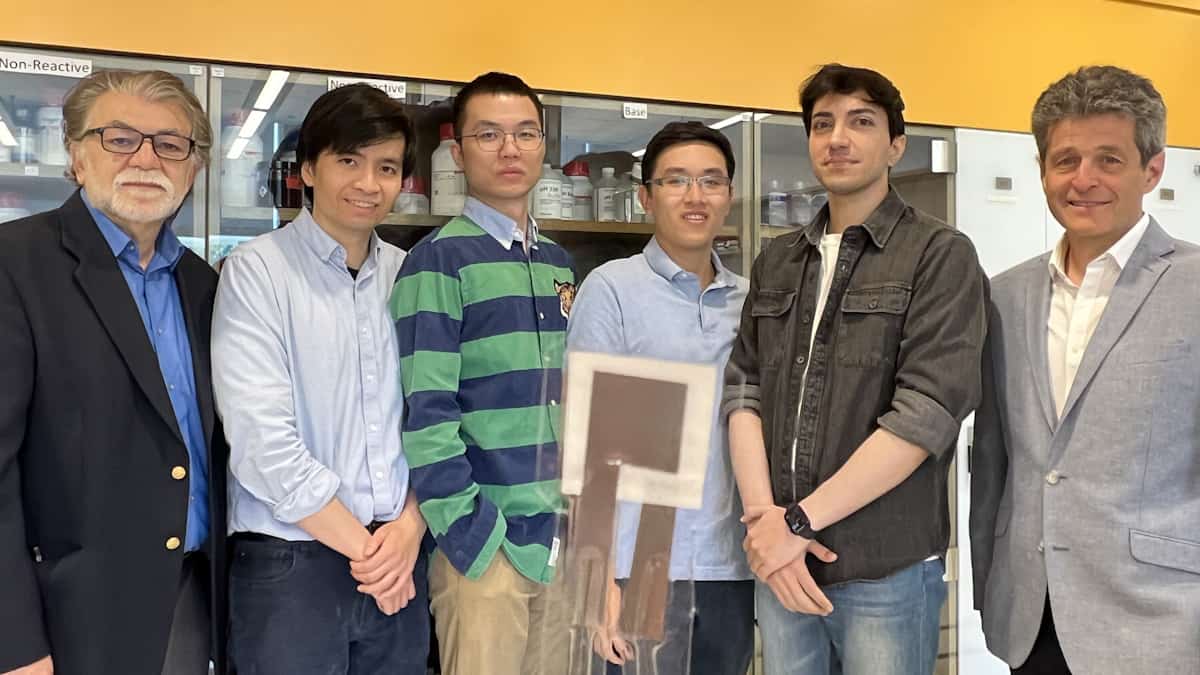
#Expert Research: Biodegradable ultrasound implant could improve brain tumour treatments
One of the challenges in treating certain types of brain cancer is the way that the blood-brain barrier prevents chemotherapy drugs from reaching the tumors they're meant to target. UConn's Thanh Nguyen, a biomedical and mechanical engineer, is developing new technology that could improve how we are able to treat brain tumors. He recently spoke with Physics World about this groundbreaking research: A new type of biodegradable ultrasound implant based on piezoelectric nanofibres could improve outcomes for patients with brain cancer. Researchers led by Thanh Nguyen from the the University of Connecticut’s department of mechanical engineering fabricated the devices from crystals of glycine, an amino acid found in the human body. Glycine is not only non-toxic and biodegradable, it is also highly piezoelectric, enabling the creation of a powerful ultrasound transducer that could help treat brain tumours. Brain tumours are particularly difficult to treat because the chemotherapy drugs that would be effective in tackling them are blocked from entering the brain by the blood–brain barrier (BBB). This barrier is a very tight junction of cells lining the blood vessel walls that prevents particles and large molecules from making their way through and damaging the brain. However, ultrasound can be safely used to temporarily alter the shape of the barrier cells such that chemotherapy drugs circulating in the bloodstream can pass through to the brain tissues. Currently, to achieve such BBB opening requires the use of multiple ultrasound transducers located outside the body, together with very high intensity ultrasound to enable penetration through the thick human skull bone. “That strong ultrasound can easily damage brain tissues and is not practical for multiple-time applications which are required to repeatedly deliver chemotherapeutics,” Nguyen tells Physics World. By contrast, the team’s new device would be implanted during the tumour removal surgery, and “can generate a powerful acoustic wave deep inside the brain tissues under a small supplied voltage to open the BBB”. The ultrasound would be triggered repeatedly as required to deliver the chemotherapy that kills off the residual cancer cells at tumour sites. After a set period of time following treatment the implant biodegrades, thereby eliminating the need for surgery to remove it. The research, reported in Science Advances, demonstrated that the team’s device used in conjunction with the chemotherapy drug paclitaxel significantly extended the lifetime of mice with glioblastomas (the most aggressive form of brain tumour) compared with mice receiving the drugs but no ultrasound treatment. This is fascinating research and if you are interesting in covering this topic, then let us help. Professor Nguyen focuses on biointegrated materials and devices at nano- and micro-scales for applications in biomedicine, and he's available to speak to media about his research. Simply click on his icon now to arrange an interview today.



Georgia Southern University biology professor and researcher Christine Bedore, Ph.D., is helping National Geographic explore the mysteries of shark attacks by sharing her expertise and years of fieldwork as part of the six-part series, “When Sharks Attack 360,” this month. The series, which kicked off July 3, is part of National Geographic’s SharkFest, which will run all month on National Geographic TV, Disney+ and Nat Geo WILD, with new episodes each night through July 11. All episodes are currently available for streaming on Hulu. In episodes 3 and 6, Bedore, an assistant professor in the College of Science and Mathematics who conducts research on sensory systems in sharks, discusses how shark senses may lead to bites by sharks on humans. While filming, she marveled at the channel’s cutting-edge VFX lab and their approach to educating viewers. “Working with National Geographic and the production team on this series was exciting because of the level of experience and creativity of the production team,” said Bedore. “It’s one of the most unique experiences I’ve had filming a documentary so far since it was done in a studio with a green screen, rather than in the field like we typically do. Using the virtual graphics in this series allows us to see these animals from a completely different angle. Although it was challenging to point at a shark that I couldn’t see at the time, we wouldn’t be able to see the detail of the animal at this level filming in the field.” Sharks have long captured the attention of both scientists and the public, and are fascinating animals for many reasons, according to Bedore, who has offered her expertise for previous episodes on Nat Geo WILD, The History Channel and BBC. They’re a species of immense size and diversity, and offer unique behaviors and interactions with other creatures, she noted. Understanding the behavior and physiology of sharks is critical to their survival, as they experience population declines due to overfishing and habitat changes. “In order to combat these changes and ensure the persistence of sharks in our oceans across the world, we first need to understand why they behave the way that they do,” Bedore said. “This series helps us do exactly that. For example, in episode 3 we discuss whether or not sharks can see in color. As a scientist that studies shark color vision, I’m often approached with the question, ‘who cares if sharks can see color?’ As you’ll see, the ability to see color could help sharks identify prey, predators or other objects.” In episode 6, Bedore helps viewers understand that visual acuity, or how clear an image is, may be more important than color when we think about why sharks sometimes have negative interactions with humans. “Being able to discuss my work in these areas through National Geographic’s shark month has been a rewarding experience in helping people understand why these events sometimes happen,” she said. “It’s exciting to study such charismatic animals and have the chance to share your enthusiasm for your research and the sharks with people across the world.” For more information on National Geographic’s “When Sharks Attack 360” visit here. The series can be seen on Hulu, Disney+ and Nat Geo WILD throughout July. To connect with Georgia Southern University biology professor and researcher Christine Bedore to learn more about this fascinating topic - simply contact Georgia Southern's Director of Communications Jennifer Wise at jwise@georgiasouthern.edu to arrange an interview today.


Florida Tech Shark Biologist Stars in National Geographic Program on Shark Attacks
Toby Daly-Engel, the distinguished shark biologist and director of Florida Tech’s Shark Conservation Lab, is a featured expert on “When Sharks Attack…and Why,” an eight-episode program debuting this week as part of National Geographic’s SharkFest 2023. The series debuts July 6 at 9 p.m. Eastern on National Geographic with new episodes airing nightly through July 12. It is also now streaming on Disney+, Hulu and the National Geographic website. The series will air on Nat Geo Wild starting July 26 at 8 p.m. Eastern. As its name suggests, “When Sharks Attack…and Why” investigates shark encounters in America and around the world. “Many attacks are appearing in new and surprising places,” the network notes. Episodes explore incidents in New York, California, Hawaii, Indonesia, Australia and elsewhere. At Florida Tech, Daly-Engel conducts research using a combination of genomics, field ecology and modeling to study shark mating systems and habitat use, and the impacts of climate change on shark populations. On the program, she is our expert guide to anatomical and physiological aspects of sharks, many of which are unique to this species. We first meet Daly-Engel in Episode 1, New York Nightmare. Filmed in her lab, she talks viewers through key parts of a shark’s body using a small dogfish shark. She tells viewers that while a shark’s sense of smell is often touted, these apex predators also have powerful hearing, far better than humans. (In a later episode, she notes a shark’s vision in murky waters is about 10 times stronger than human vision in those conditions.) “I really enjoyed delving into the science behind shark-human interactions,” Daly-Engel said, “and busting the myths that make people afraid of the water.” Daly-Engel is no stranger to SharkFest. Last year she was featured in another SharkFest series, “Shark Attack File,” and she has been on SharkFest and Discovery’s Shark Week programing multiple times, including 2021 when she appeared on three programs across both networks. Looking to know more about shark encounters and attacks? Then let us help with your coverage and questions. Toby Daly-Engel is an assistant professor in the Department of Ocean Engineering and Marine Sciences department at Florida Tech. He's available to speak with media about this topic - simply click on his icon now to arrange an interview today.


Richard G. Cuming Appointed Chief Operating Officer of ChristianaCare
(WILMINGTON, Del. – June 26, 2023) Richard G. Cuming, Ed.D., MSN, RN, NEA-BC, FAAN, has been named ChristianaCare’s chief operating officer (COO). Cuming has been serving as interim COO since the beginning of this calendar year. He joined ChristianaCare in 2016 as the system’s first Chief Nurse Executive. In his role as COO, Cuming oversees the delivery of efficient and fiscally responsible system operations. He also works with other leaders to ensure high-quality and safe patient care. “Ric has been an invaluable asset to ChristianaCare over the past seven years, especially in navigating the many challenges of the COVID-19 pandemic” said Janice E. Nevin, M.D., MPH, ChristianaCare president and chief executive officer. “As leader of our extraordinary, Magnet®-designated nursing staff and president of ChristianaCare HomeHealth, he has improved the lives of patients and caregivers alike. I look forward to him flourishing in this new role.” Prior to coming to ChristianaCare, Cuming oversaw the operations and strategic direction of nursing services, perioperative and emergency services at Einstein Medical Center Philadelphia, Einstein Medical Center Elkins Park, MossRehab, Einstein Center One and Willowcrest, a skilled nursing center. Ric also previously worked at Jackson Health System in Miami as senior vice president and chief nursing executive, and he served as senior vice president and chief administrative officer at Jackson South Community Hospital. Cuming serves on the board of directors of the DAISY Foundation and board of trustees of the Association of Perioperative Registered Nurses Foundation. He was inducted into the American Academy of Nursing and is an alumnus of both the Robert Wood Johnson Foundation Executive Nurse Fellowship Program and the Wharton School of Business General Management Program. Cuming earned his diploma of collegial studies in nursing at John Abbott College in Montreal, his Bachelor of Science in nursing from the University of Ottawa, his Master of Science in nursing at the University of Miami and his doctorate in adult education and human resource development with a minor in advanced nursing administration from Florida International University.


Michael Huggins, Ph.D., will join Georgia Southern University on August 1 as the Dean of the College of Science and Mathematics. “I am excited to welcome Dr. Huggins to our academic leadership,” said Provost and Vice President for Academic Affairs Carl Reiber, Ph.D. “Dr. Huggins has a distinguished career filled with research, service and mentorship. He will be a valuable partner as we move forward with our leadership goals. He brings with him the working knowledge of how to lead a College, along with the foundations needed to advance our research mission.” Huggins comes to Georgia Southern from Tarleton State University, where he has served as a dean since 2020. He led three academic departments with nine undergraduate degree programs and three master’s degree programs. While serving as dean at Tarleton State, Huggins established a $15 million College of Science and Mathematics (COSM) fundraising initiative. He also led efforts to improve COSM First-Time-In-College (FTIC) retention rates resulting in an improvement from 67.3% COSM FTIC retention for the Fall 2019 cohort to 71.7% retention rate for the Fall 2021 COSM FTIC cohort; a 6.5% improvement in just two years. “I am excited to join the Georgia Southern team,” Huggins said. “I look forward to working with the faculty and staff to develop initiatives that support the growth of the College of Science and Mathematics and to ensure the success for all students during their time at the University and beyond.” Huggins holds a B.S. in Chemistry from the University of West Florida, a Ph.D. in Chemistry from University of Nevada, Reno and completed his postdoctoral at University of Texas at Austin. He is also a graduate from the Harvard University Institute for Management and Leadership in Education. To connect with Michael Huggins or to learn more about Georgia Southern University — simply reach out to Georgia Southern's Director of Communications Jennifer Wise at jwise@georgiasouthern.edu to arrange an interview today.

• Professor Patricia Thornley has led a Department for Transport advisory paper • Advises decarbonisation will need low-carbon fuels alongside electrification • Calls for continued investment in this area. A leading energy expert at Aston University has advised government to invest in low carbon fuels - as well as electric - if it wants to reach its 2050 net zero ambition. Professor Patricia Thornley has led a Department for Transport (DfT) advisory paper on low carbon transport fuels. The paper advises that decarbonisation of the UK’s transport systems will need the government to support the use of low-carbon fuels alongside widespread battery electrification where possible. Professor Thornley and the other members who sat on the Scientific Advisory Council examined the challenges and opportunities of developing and using different fuels and their potential impact on the wider energy system. The authors highlight that low carbon fuels such as those made from agricultural waste can deliver reductions in carbon emissions, helping to meet the government’s 2050 net zero ambition. As a result, they state that continued investment in this area is crucial. The paper also states that at this point it’s not yet clear if low carbon fuels will support just the transition to full electrification of the UK’s transport systems or will be a long-term solution. Professor Thornley who is director of Aston University’s Energy and Bioproducts Research Institute (EBRI) and the Supergen Bioenergy Hub said: “Successful decarbonisation of transport systems in the UK will require flexible and adaptive government strategies that support the use of low-carbon fuels alongside widespread battery electrification, where that is possible. “The optimal mix of low carbon fuels vs battery electrification in transport will depend on many different factors, some technological, some supply related, and others linked to the capacity of the UK to generate low carbon electricity. “We urgently need to better understand and manage the airborne emissions that can still be present with low carbon fuels (including hydrogen). That might result in us prioritising different fuels or propulsion systems in different applications or even different parts of the UK. “Agreeing that prioritisation would allow us to prioritise appropriate next generation of infrastructure to support the UK’s net zero ambitions.” Back in March 2022 the Council was asked to provide guidance to the DfT which is currently developing a low carbon fuels strategy. The report, Low carbon transport fuels: DfT Science Advisory Council position paper was published on 5 June and provides an independent advice on the role of low carbon fuels in reducing transport systems’ greenhouse gas emissions.