
Experts Matter. Find Yours.
Connect for media, speaking, professional opportunities & more.

Combating Vaccine Hesitancy Through Messaging
As vaccine hesitancy becomes a threat to Americans' decision to get the COVID vaccine, persuasive messaging is at the forefront of changing people's minds. Allyson Levin, PhD, a visiting assistant professor of communication, believes social media messaging plays a key role—and that post-vaccination selfies can actually help convince people to get the vaccine. "When we don't know what to do, we look to others to guide our behavior," stated Dr. Levin. "It is really important when we see people who share online that they were vaccinated—who are close to us, our friends or family and people we look up to like influencers and celebrities." Further, online communities create a world where it appears that people are getting vaccinated actively. "If we look around and see an environment where people are getting vaccinated, we will want to get vaccinated as well. That will encourage vaccination. At least if we trust those people around us," said Dr. Levin. Dr. Levin also contends that the social media platform TikTok can be extremely useful when information is "scientifically valid, evidence-based and coming from people who understand science like medical professionals." "A unique opportunity we have with TikTok is that users are receiving health information when they aren't looking for it," said Dr. Levin. In addition, she notes the incredible impact company advertisements endorsing COVID vaccinations have had on their wider acceptance. "At the end of the day, it is wonderful that brands are amplifying these messages, like Budweiser donating their airtime during the Super Bowl. There is an element of public relations, too: The brands look good for promoting these messages. But the more people that see these messages, the better." However, Dr. Levin pointed out that, while messaging is extremely important, vaccine availability is crucial. "Access is equally important. Unless people can actually have access to the vaccinations, the message is just one part of it," stated Dr. Levin.


Could Smarter Guns Be the Key To Stopping Mass Shootings and Other Violence?
“Gun violence in this country is an epidemic, and it’s an international embarrassment,” President Biden recently said. At least 45 mass shootings have occurred in America in the last month, according to reports. In the same time period, news of police officers killing unarmed Black men and boys, including 20-year-old Daunte Wright in Minneapolis and 13-year-old Adam Toledo in Chicago, sparked waves of protest around the country. These all-too-common tragedies could be significantly reduced — and even eliminated — without any of the partisan rancor and gridlock typically associated with gun-related debates, says Selmer Bringsjord, an expert in artificial intelligence and reasoning and a professor of cognitive science at Rensselaer Polytechnic Institute. “There is a solution,” Bringsjord, the director of the Rensselaer AI and Reasoning Laboratory, wrote in the Times Union. “A technological alternative to the fruitless shouting match between politicians: namely, AI — of the ethical sort. Guns that are at once intelligent and ethically correct can put an end to the mass-shooting carnage.” Rather than an endless debate over whether the public should have more guns or less, Bringsjord’s novel – and, he says, plausible – proposal is to shift to “smart and virtuous guns, and intelligent restraining devices that operate in accord with ethics, and the law.” Along with his coauthors, Bringsjord detailed his ideas in a recent paper, “AI Can Stop Mass Shootings, and More.” Anticipating some counterarguments, the authors urge readers “to at least contemplate whether we are right, and whether, if we are, such AI is worth seeking.” Bringsjord and his collaborators have created simulations showing how, in only 2.3 seconds, ethical AI technology can perceive a human’s intent and environment and then, if necessary, prevent their gun from firing. Importantly, he notes, the same technology that could prevent a criminal from opening fire in a public area could also prevent a police officer from shooting a person who posed no threat. “Ultimately research along this line should enable humans, in particular some human police, to simply be replaced by machines that, as a matter of ironclad logic, cannot do wrong,” Bringsjord said in a recent public radio segment. The AI capabilities discussed by Bringsjord are the product of prior work over seven years of funding from the Office of Naval Research devoted to developing moral competence in robots. Bringsjord has spoken about robots and logic at TEDxLimassol. He is the author of What Robots Can and Can’t Be and Superminds: People Harness Hypercomputation. He is also the co-author of Artificial Intelligence and Literary Creativity: Inside the Mind of Brutus, a Storytelling Machine. Bringsjord is available to speak about his recent proposals around AI-enabled guns, as well as other aspects of AI, human and machine reasoning, and formal logic.


UMW’s foreign security expert Jason Davidson weighs in on America’s exit from Afghanistan
It is America’s longest war, and after 20 years on the ground, President Biden has announced it’s time to recall the troops and bring them home. As media looked to cover this breaking news, experts from the University of Mary Washington were there to answer the call and help with coverage that has been dominating headlines. “I think the Biden administration is trying to balance the president’s desire to get out and cut U.S. losses, but also the fact that the Taliban has not really complied with their side of the deal so far and they are unlikely to fully comply with a deal, period,” said Jason Davidson, a political scientist at the University of Mary Washington. President Donald Trump’s administration agreed more than a year ago to pull U.S. and NATO troops out of the country by the start of next month. The Taliban has warned of violence if that deadline is not met, but Biden administration officials are hopeful setting a firm withdrawal date a few months down the line will not result in reprisals. Trump’s plan spurred bipartisan objections in Washington when it was announced last year, with Republicans and Democrats denouncing a seemingly arbitrary deadline and predicting chaos if U.S. troops were withdrawn prematurely. Progress toward peace has been sporadic since then, with the Taliban continuing to engage in violence as negotiations stalled. April 13 - ABC News Exiting Afghanistan will be a process that will take time and garner lots of media coverage. And if you are a journalist covering this topic, then let our experts help. Dr. Jason Davidson is a professor of Political Science and International Affairs and is also an expert in American Foreign and Security Policy, and International Security. If you’re looking to arrange an interview with Dr. Davidson, simply click on his icon now to arrange an interview today.



Toolkit is easily incorporated into any laboratory science course Wilmington, Del., April 1, 2021 – St. Georges Technical High School in southern New Castle County, Delaware is the first high school in the United States to use ChristianaCare Gene Editing Institute’s innovative CRISPR in a Box Educational Toolkit™ in a science class. CRISPR in a Box brings to life the much-heralded CRISPR gene editing technology – the “genetic scissors” that allow scientists to edit DNA. The toolkit is designed for educational sessions in secondary and post-secondary schools and is suitable for remote learning. “Gene editing is the future of medicine,” said Eric Kmiec, Ph.D., director of ChristianaCare’s Gene Editing Institute. “Our partnership with the Delaware Department of Education will help cultivate the next generation of genetic scientists and enhance Delaware’s position as a leader in the biosciences.” “We are thrilled that students at St. Georges Technical High School will be the first In the United States to experience a live demonstration of CRISPR gene editing using our Innovative CRISPR in a Box educational toolkit,” said Siobhan Hawthorne, Education and Community Outreach leader at ChristianaCare’s Gene Editing Institute. “This toolkit will provide STEM students with a visual understanding of how the exciting CRISPR technology can unlock medical treatments to improve lives.” Delaware Secretary of Education Susan Bunting praised her department's partnership with ChristianaCare's Gene Editing Institute to develop the “Seeds of STEM” course that teaches high school students about gene editing. “Gene editing approaches diseases in new ways and will have significant impact in the health care and agriscience fields,” Bunting said. “This is a great example of an industry and education partnership investing in youth by providing hands-on knowledge and skills around emerging technology.” “We are so fortunate that ChristianaCare’s Gene Editing Institute reached out to our program to plan a high school ‘first’ opportunity with this new CRISPR experiment,” said Danya Espadas, one of the St. Georges biotech teachers. “Giving students the chance to use a cutting-edge, 21st century tool for medicine in their own high school lab – to have that technology at their fingertips – transcends what they see in a textbook or a video. By being able to do it themselves, it makes it real for them.” Espada said the experiment focuses on editing a gene of a non-infectious E.coli bacteria to become resistant to an antibiotic, thereby allowing researchers to create a new class of antibiotics that cannot be overcome by bacteria that are gene resistant. “We’re talking about eventually saving lives, here,” she said. “What can be more important than that?” The tools in CRISPR in a Box have been designed based on the pioneering discoveries of the Gene Editing Institute that are currently being used to explore next-generation medical therapies and diagnostics for diseases, including lung cancer and sickle-cell anemia. Component items in the toolkit include the CRISPR/Cas complex, a target DNA molecule, a mammalian cell free extract and a synthetic DNA molecule. All materials in the kit are safe, synthetic materials. There are no live cultures or viruses involved. The kit is meant to provide a hands-on demonstration of CRISPR’s capabilities, and not allow for manipulations of living organisms. “The kit is easy and fun to use,” said Kristen Pisarcik, research assistant at the Gene Editing Institute who has taught students at Delaware Technical Community College which first used the toolkit. “In a short period of time students will reliably and successfully complete the laboratory activity and be able to see the results of gene editing,” she said. Since the foundations of the kit touch upon key themes in biology, it can be readily incorporated into practically any science or biology course with a laboratory component, “One of the beauties of CRISPR in a Box is that there is no need to purchase specialized equipment. If a teaching lab can support bacterial cultivation, it can perform the in vitro gene editing lab activity,” Pisarcik said. CRISPR in a Box is the evolution of a partnership between the Gene Editing Institute, Delaware Technical Community College and Rockland Immunochemicals that began in 2017 with a National Science Foundation grant to develop the first-ever gene editing curriculum for community college students. Video and photo collection of first class in U.S. to use CRISPR in a Box™ educational gene editing toolkit. About ChristianaCare’s Gene Editing Institute The Gene Editing Institute, a worldwide leader in CRISPR gene editing technology and the only institute of its kind based within a community health care system, takes a patient-first approach in all its research to improve the lives of people with life-threatening disease. Since 2015, researchers at the Gene Editing Institute have been involved in several ground-breaking firsts in the field, including the development of the first CRISPR gene editing tool to allow DNA repairs outside the human cell which will rapidly speed therapies to patients and a unique version of CRISPR called EXACT that reduces the number of off-target edits to other areas of the genome, which is vital for further research and patient applications. Its researchers are currently developing a patient trial for lung cancer using CRISPR and employing the technology to combat the COVID-19 pandemic. About the biotech program St. Georges Technical High School The Biotech career program of study at St. Georges Technical High School is the first such program offered in a Delaware high school. With two teachers and approximately 100 students in grades 10-12, the program presents advanced content in biology and chemistry with opportunities for students to learn basic laboratory techniques and procedures and to maintain and operate common instruments and equipment used in a biotechnology laboratory. St. Georges is a comprehensive career and technical high school with 1,100 students who study in one of 16 different career pathways.



UConn Researcher Develops Successful Zika Virus Vaccine in Preclinical Studies
UConn researcher Paulo Verardi, associate professor of pathobiology and veterinary science in the College of Agriculture, Health and Natural Resources, has demonstrated the success of a vaccine against Zika virus and recently published his findings in Scientific Reports, a Nature Research publication. He has also filed provisional patents with UConn’s Technology Commercialization Services for the novel vaccine platform technology used to generate the vaccine, as well as genetic modifications made to the vaccine that significantly enhance expression of the vaccine antigen. Verardi, a Brazilian native, was in Brazil visiting family in the summer of 2015 when the Zika outbreak first began to make waves and soon reached epidemic status. Back in the United States, Verardi kept tabs on the Zika epidemic and its emerging connection to microcephaly, a serious birth defect that causes babies to be born with small heads and underdeveloped brains. In October of that year, Verardi called then-Ph.D.-student Brittany Jasperse (CAHNR ‘19) into his office and told her he wanted to apply their newly developed vaccine platform and start developing a vaccine for Zika virus. It’s an impressive achievement and there’s a full article attached for those looking to know more. Verardi emphasizes that developing vaccines for viruses, in this case Zika, help the world be better prepared for outbreaks of novel and emerging viruses by having vaccine development frameworks in place. “Emerging viruses are not going to stop popping up any time soon, so we need to be prepared,” Verardi says. “Part of being prepared is to continue the development of these platforms.” If you’re a journalist looking to know more about Zika virus and this emerging news about a vaccine – then let us help. Dr. Paulo Verardi is a virologist who specializes in vaccine research and development. He is an Associate Professor at UConn and a member of the Center of Excellence for Vaccine Research. Dr. Verardi is available to speak with media regarding this emerging development – simply click on his icon now to arrange an interview today.



Solar geoengineering - it’s a topic that has caused an ethical lightening storm in the science community. The concept is complex. Should the world take on the crisis of climate change by attempting to artificially attempting to cool the earth? It’s an idea that has the National Academies of Sciences, Engineering and Medicine seeking a billion dollars in the next five years to investigate the theory. It’s a topic that is somewhat controversial, and journalists are looking to leading experts from across America for expert insight, opinion and perspective. Prakash Kashwan, a political scientist at the University of Connecticut, said he felt the report could have better emphasized the seriousness of some concerns over others. Uncertainties about the impacts of solar geoengineering on global weather patterns have the potential to affect some regions of the world more severely than others, he pointed out. Some experts have raised concerns about potential effects of geoengineering on monsoon rainfall in parts of Asia and Africa, he said. More than 2 billion people around the world rely on these rainfall patterns to support their water and agricultural needs. These kinds of issues should be given special weight, Kashwan suggested. "Some uncertainties are much more highly consequential for the global society, and especially for the poor and vulnerable," he told E&E News. Kashwan also reiterated concerns about potential political effects. While the report makes clear that geoengineering is not a substitute for climate mitigation, he suggests that this doesn't necessarily prevent policymakers from using it in that way. "The problem is the extent to which researchers are really helpless in deciding how research is used in the political system," he said. "That part has yet to be fully appreciated." Kashwan suggests that more dialogue might be warranted before funding a national research program, with greater input from both the international community and political experts who can weigh in on the ways that geoengineering research might affect political decisions. March 26, Scientific American It's a captivating idea – but it could have political, social and ethical consequences. Dr. Kashwan has also been interviewed by The New York Times. If you are a journalist looking to learn more about solar geoengineering, its possibilities and the reasons some scientists are worried – then let us help with your coverage. Prakash Kashwan is an Associate Professor of Political Science at UConn and an expert in the areas of environmental and climate justice, planetary justice, global commons, climate governance, and climate geoengineering governance. Dr. Kashwan is available to speak with media regarding this topic – simply click on his icon now to arrange an interview today.
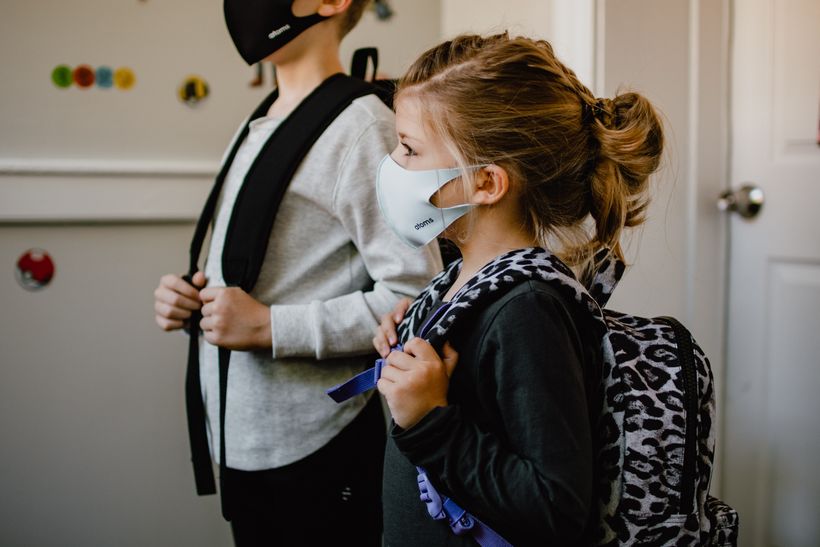
Kids in School: 3 Feet Apart or 6 Feet?
The Centers for Disease Control and Prevention (CDC) recently published updated guidelines for elementary schools, "now [recommending] that, with universal masking, students should maintain a distance of at least 3 feet in classroom settings" as opposed to the previous recommendation of 6 feet. While many have had strong reactions for and against this updated guidance, immunologist Joseph Comber, PhD, an associate teaching professor of biology at Villanova University, wants to add nuance to the conversation. On the one hand, Dr. Comber notes, when the CDC updates health and safety guidelines, the public can trust that as more information and data become available, the science behind the updates becomes more accurate. He stresses that studies "showed no difference in transmission between kids kept 3 feet apart or 6 feet apart in schools." Plus, Comber says, "we already know that kids younger than 10 and 11 are less likely to spread the virus than older kids and adults." However, Dr. Comber cautions that the subjects of the study followed "strict mask guidance and adherence to masking. We don't know what happens if schools enforce 3 feet of distance but are not strict with masking." He also points out that where the study was done can have an impact on the results. Comber emphasizes that "community spread is most important to the specific community and, as we've seen so far, different states and regions can spike with infections at different times." He wonders "if this is especially true in areas that have higher virus circulation than others." Dr. Comber notes that these guidelines are for elementary schools only, with one rather large caveat: "children are increasingly being infected." Another concern with these shifting regulations is whether they will impact public trust. Villanova professor Jie Xu, PhD, is an expert on science and health communications. Her concern about this change is minimal "because science is evolving." She emphasizes that "we need to be able to revise conclusions when new evidence comes in," and she sees the country's "highly politicized environment" as something to be taken more seriously, when it comes to public health. Dr. Xu cites "rising distrust in authorities and institutions (which has been going on for quite some time)" and notes that, when it comes to the nation’s children, in-person versus virtual schooling is a "highly charged issue." In the end, according to Dr. Comber, "it remains to be seen what happens when kids are packed 3 feet into classrooms on a broad scale."

What Can A Forgotten Piece of Our Opioid Addiction and Treatment History Teach Us?
As the nation struggles with the third wave of a continuing opioid epidemic, a newly republished book co-authored by Nancy Campbell, the head of the Department of Science and Technology Studies at Rensselaer Polytechnic Institute, offers insight into present-day drug addiction and treatment by exploring a complex chapter from the nation’s past. Written with JP Olsen and Luke Walden, The Narcotic Farm: The Rise and Fall of America’s First Prison for Drug Addicts details the history of the United States Narcotic Farm, a federal institution that opened in 1935 outside of Lexington, Kentucky. Jointly operated from 1935 to 1975 by the U.S. Public Health Service and the Federal Bureau of Prisons, the Narcotic Farm was a combination prison, hospital, working farm, rehabilitation center, and research laboratory. “All of our scientific knowledge about human opioid addiction comes from that time, comes from that place,” said Campbell, a leading figure in the social history of drugs, drug policy, and harm reduction, on an episode of the Landmark Recovery Radio podcast. The facility, which was also the subject of a 2009 documentary featuring Campbell, has a complicated legacy. It revolutionized treatment methods commonly accepted today, such as using methadone to medically manage heroin detox and the development of drugs like naloxone and buprenorphine. But it fell under a cloud of suspicion in 1975, when Congress learned that researchers had recruited patients as test subjects for CIA-funded LSD experiments as part of the notorious MK-Ultra project. “With the ongoing opioid epidemic worsening this past year in the midst of the COVID-19 pandemic, the lessons learned in this book continue to be relevant today,” Campbell said. Campbell is also the author of Using Women: Gender, Drug Policy, and Social Justice and Discovering Addiction: The Science and Politics of Substance Abuse Research, as well as the co-author of Gendering Addiction: The Politics of Drug Treatment in a Neurochemical World. Her most recent book, OD: Naloxone and the Politics of Overdose, was published in 2020. “Nobody should die of overdose. A high overdose death rate signals that we have not cared for the people who have been hurt most by the war on drugs, first pursued by President Dwight D. Eisenhower in 1954,” Campbell said in a recent “Academic Minute” segment. Campbell is available to discuss a wide range of topics relating to drug policy and history, including the Narcotic Farm.


Product Returns Represent Billion-Dollar Strategic Blind Spot for Major Retailers
“Product returns have never, to our knowledge, been explicitly included as a stage in a major customer journey model,” the authors note in their paper. “This exclusion represents a strategic blind-spot for marketers.” In December 2020, Linne Fulcher, vice president, customer strategy, science and journeys at Walmart U.S., published a blog post that outlined Walmart’s new return policy. Dubbed “Carrier Pickup by FedEx,” the service was just in time for the holidays, free, and “here to stay,” Fulcher wrote. She described the policy as “an incredibly convenient way to make that unwanted gift ‘magically’ disappear,” whether customers bought items in a store, online, or from a third party vendor. “We want the returns experience to be easy, safe and seamless,” she added. Returns are big business. According to the National Retail Federation (NRF), U.S. consumers returned an estimated $428 billion worth of merchandise last year—approximately 10.6 percent of total U.S. retail sales. The numbers for ecommerce are even more startling: online shopping accounted for roughly $565 billion of 2020 retail sales, of which $102 billion in merchandise—about 18 percent—was returned. However, retail advisory firm Optoro noted in 2019 that of 117 top retailers, not even a third of them quantify the full cost of returns. Even before the pandemic hit, Sandy Jap, Sarah Beth Brown professor in marketing, Ryan Hamilton, associate professor of marketing, and former Goizueta Business School dean, Tom Robertson, were perplexed at how little academic research existed regarding returns. “Instead of viewing returns as a nuisance and an added cost, they are an opportunity to engage with customers and build brand loyalty,” explains Robertson. “Returns are part and parcel of the new retail landscape. This has been exacerbated by the strong uptick in online.” To help retailers identify opportunities, Jap, Hamilton, and Robertson wrote “Many (Un)happy Returns? The Changing Nature of Retail Product Returns and Future Research Directions,” published in Journal of Retailing last year. The article is essentially a researcher’s road map for exploring this “strategically important area,” says Jap. Some retailers, such as Warby Parker and Stitch Fix, have built returns into their business models. Others, like Zappos and Nordstrom, have made consumer-generated returns easy, assuming that doing so engenders brand loyalty and repeat business. Yet most retailers seem “to lack a coherent philosophy” on returns and “appear not to have built return rates into their business models at all,” the trio state in their paper. “There are so many interesting and important questions to be answered around product returns,” says Hamilton. “Important as returns are, the academic marketing research has barely scratched the surface.” “Many (Un)happy Returns” highlights five specific areas where advancements in theory and practice would provide opportunity for greater understanding: 1. How product returns transform the customer journey 2. The “dark side” of returns—exploring the gray area between justified returns and outright fraud 3. The effects of returns on traditional retailer supply chains 4. Customer response to easy product returns and practices 5. The effect of retailers’ product return practices on their reputation “These questions represent a range of important directions for assembling a body of work on retailer-initiated and customer-initiated return behaviors and processes,” they write. “Ultimately, these might serve to improve the performance of return forecasting models, illuminate optimal go-to-market strategies and distribution processes in the evolving, technology-oriented marketplace that characterizes retailing today.” Each of the five points above are detailed in a piece recently published by Emory University. That article is attached here: If you are a journalist looking to cover this topic or if you are simply interested in learning more, then let us help. Ryan Hamilton, associate professor of marketing at Emory’s Goizueta Business School. Sandy Jap holds the Sarah Beth Brown Endowed Professorship of Marketing Chair at Emory’s Goizueta Business School. Both are available to speak with media, simply click on eithr expert's icon now – to book an interview today.



How well do you know your sense of touch? UMW’s Sushma Subramanian explains it all in new book
The University of Mary Washington’s Sushma Subramanian’s latest book, How to Feel: The Science and Meaning of Touch, is now available on bookstore shelves and online retailers across America. The journalist, assistant professor and author was recently featured in Discover Magazine, where she shares her inspiration for the book and sits down to answer to serious questions about science and the need to touch. Several years ago, Sushma Subramanian was procrastinating on her work when she noticed her desk was a bit wobbly. It was a rather mundane moment, she recalls, and one that’s only a vague memory now. But as she began to fiddle with the shaky tabletop, the science journalist found herself noting how the experience felt: the grain of the wood against her fingers, the pinching of her skin and the sensation of her muscles straining to lift the desk. As Subramanian explains in her book, How to Feel: The Science and Meaning of Touch, it was a moment when she began to consider how little she knew about this multifaceted sense — “a capacity,” she writes, “that never shuts off.” The questions kept forming, eventually leading Subramanian, a professor of journalism at the University of Mary Washington, to write an article for Discover in 2015 about the development of tactile touch screens — which use haptic technology, such as vibrations in handheld devices. In her latest work, she dives deeper into that world, but also explores the limits of our sense of touch and what makes it so versatile. Discover caught up with Subramanian to talk about touch in the age of COVID-19, the future of tactile research and how we experience the sense differently across personal and cultural barriers. March 08 - Discover Magazine Her interview is also part of the attached article and is a very compelling read. If you are a journalist looking to speak with Sushma Subramanian about her latest book, then let us help. Simply click on Sushma’s icon now to arrange a time and interview.
