
Experts Matter. Find Yours.
Connect for media, speaking, professional opportunities & more.

Liberals' best hope for a new swing vote is... John Roberts?
As Brett Kavanaugh, 53, readies himself for a series of heated Senate Judiciary Committee hearings, many have questioned who will take up his mentor’s mantle on the Supreme Court. For three decades Justice Anthony Kennedy was arguably the most powerful figure in Washington, D.C. Famed for his ability to vote across party lines. Kennedy, who announced his retirement in June, helped shape some of the biggest landmark decisions of the past decade—most notably on the issue of same-sex marriage and LGBTQ rights. As a replacement, Kavanaugh is unlikely to be as magnanimous with his votes. But will that alter the Court’s direction? Only a little, said Dr. Martha Ginn Ginn, assistant dean of the Pamplin College of Arts, Humanities, and Social Sciences and associate professor of political science, said Kennedy’s most likely “successor” is already a fixture of the Court: Chief Justice, and occasional swing voter, John Roberts. “Roberts will likely become the Court’s ‘swing vote’ now that Kennedy’s out,” Ginn said. “While Roberts may move a little more to the center as result, the overall shift will be more conservative.” A scholar of constitutional law and the Supreme Court, Ginn said the Court’s rightward movement won’t be quite as monumental as pundits have proposed. After all, Kennedy’s votes weren’t always left-leaning. In his last term, he sided with his liberal colleagues not once. “I think one point that is getting lost is that Kennedy was, for the most part, a conservative and voted accordingly,” she said. “There were certain issues where he was more likely to join the liberal wing, most prominently LGBTQ rights, but he voted with the conservative justices the majority of the time.” Kennedy’s retirement will certainly shift the Court toward the right, Ginn added, but “not to the same degree as if Ruth Bader Ginsburg retired or died in office.” Meanwhile, as the non-chaos of a Kavanaugh confirmation plays out, Roberts stands to gain as the Court’s new wildcard. Ginn said Roberts’ latest ruling, that law enforcement agencies must obtain warrants to use cell tower data, is a good indication of how he’ll vote as part of a post-Kennedy Court. “I think the role of Chief Justice Roberts becomes even more significant in a Kennedy-less Court and that hasn’t been given much attention,” she said. “I think both sides are forgetting that Roberts is a bit of wild card too when it comes to voting on very consequential cases. The one that comes to mind most Source:


New Star Wars, Same Political Landscape?
There’s been an enormous amount of hype leading into this Friday’s release of Solo: A Star Wars Story. Will the 10th installment of what is the most valuable franchise in film history live up to the lofty expectations of both fans and film executives? What does this latest epic tell us about current events here on Earth? The politics of Star Wars has proved to be an enduring fascination to many throughout the past 40 years. Equating current political events to the Star Wars saga is where the experts From the University of Connecticut can help. Stephen Dyson has dissected the politics of the "Game of Thrones," "Star Trek" and previous editions of "Star Wars." He can "read between the lines" of the movie dialogue and equate on-screen dialogue to what's happening now in the United States. Source:


Just how many glass ceilings do women need to shatter in America?
These days, women are finally making their mark in elected houses and legislatures around the country. It’s seen as a serious advancement since the days of old white men in differing grey suits as the only variety on a ballot. A recent article in Yahoo news quoted University of Mary Washington’s Rosalyn Cooperman observations about how far women have come, but also how much further there is to go. “The attention has been on the record numbers who are running and to the message being sent by those sheer numbers,” says Rosalyn Cooperman, associate professor of political science at the University of Mary Washington in Fredericksburg, Va. “But what kind of change this brings depends not only on who runs and who wins, but how they navigate the rigid political institutions” they are being elected to. But now that women are inching closer to equal on the ballot – it’s once they achieve electoral victory that a whole other gender gap reveals itself. Cooperman recently observed the Virginia House of Delegates where 12 were women were elected to the first time. “More than half of the incoming freshmen were relegated to the science and technology committee, a committee with a light workload and limited jurisdiction,” Cooperman wrote in an article for the website Gender Watch 2018. “The lone Republican woman freshman was assigned to House finance. “Democratic women (and men) delegates,” she continued, “also saw most of their sponsored bills killed in Republican-dominated committees.” For instance, Danica Roem, who broke barriers by being the first transgender candidate delegate in the assembly, saw all 11 of her proposed bills die before leaving committee or even subcommittee. Of all the bills filed by the 16 freshman Democrats, 85 percent never made it to a floor vote. So, is this just a matter of newcomers that need to learn the fine art of politics and horse-trading or is there a deeper issue? Is politics still a ‘man’s game’ and if so what will it take to change it? That’s where our experts can help. Dr. Rosalyn Cooperman's expertise focuses on women in politics. She is available to speak with media regarding this issue in America. Simply click on Rosalyn’s icon to arrange an interview. Source:



A Dream Team or a Star Struck Idea?
There’s a rumour going around that President Donald Trump is being joined by very popular people, both who aren’t afraid of courting controversy themselves - to attend a Summit on Race. Yes. If there ever were three vastly varied high-profiled people who were as equally different as they are famous it might well be Colin Kaepernick, Kanye West and Donald Trump. It’s a right trio out of a reality show or a skit on Saturday Night Live. Right now, it’s a rumour – but it is getting some traction online and in the media. No one has commented officially apart from Cleveland-based pastor Darrell Scott, an outside adviser to President Trump. He seems to be leading the charge to make this a reality. So, could this happen? Should this happen? For Trump it would be a slam-dunk. For West it’s more promotion for an upcoming album. But for Kaepernick –is it an off-side considering his very credible efforts to confront discrimination? Stranger things have happened. And in Donald Trump’s America the opportunity for surprises is ever-present. Are you looking into this and need to know more? That’s where an expert like Dr. Stephen Farnsworth can help. Dr. Farnsworth is professor of political science and international affairs at the University of Mary Washington. A published author and a media ‘go-to’ on presidential politics, he is available to speak with media regarding this issue. Simply click on his icon to arrange an interview. Source:


How serious is the sabre-rattling over Syria?
Last Saturday, though not ‘officially confirmed,’ a poisonous gas attack happened in the besieged Syrian town of Douma. The World Health Organization has confirmed that 500 people showed symptoms of being exposed to "toxic chemicals". This act of aggression supposedly by the Assad government has opened a Pandora’s Box. President Donald Trump is threatening missile strikes. Russian officials are threatening retaliation for any American aggression. Many world leaders are on edge and watching closely – Syria has become a powder keg and what happens next could have global implications. What are President Trump’s options? What could happen if the Russians counter? Is there a diplomatic option? There is an enormous amount at stake and a lot of scenarios to consider. That’s where experts from Missouri State University can help. Dr. David Romano, political science professor at Missouri State University, researches Middle Eastern politics and government. He's an expert in theories of peace and conflict, and foreign policy. He's available to speak about the escalating tensions, potential outcomes and consequences regarding any action in Syria. Click on his icon to arrange an interview. Source:


Baylor Biology Professor Travels To Antarctica To Study Leopard Seals As Part Of NSF-Funded Research
As part of an $800,000 National Science Foundation-funded project, Stephen J. Trumble, Ph.D., associate professor of biology at Baylor, and other experienced Antarctica researchers from the University of California, Santa Cruz and Colorado State University will work to gain an understanding of the foraging ecology and physiology of the leopard seal, an Antarctic apex, or top, predator. “This three-year project will collect data on foraging and dive behavior, diet, habitat use and fuel use in leopard seals,” Trumble said. “Ultimately, the goal is to relate foraging behavior with physiological performance and determine physiological limits. The estimated physiological limits combined with habitat modeling will help us understand how leopard seals may respond and cope with a changing Antarctic environment.” Trumble and his fellow researchers will conduct their research at the remote Cape Shirreff Field Station on Livingston Island, relying on 55-years of combined experience and lights to navigate the terrain in the dark while searching for leopard seals. A vertebrate physiologist and expert in marine mammals, Trumble has made his fair share of national research headlines since he began working at Baylor in 2008. Along with his graduate students in his Laboratory of Ecological and Adaptational Physiology (LEAP), Dr. Trumble investigates and publishes on basic and applied research involving skeletal muscle physiology, organismal energetics, lipid biochemistry, digestive physiology and health indices in models ranging from rats to seals to whales. Source:


‘Internet’ Presidents and the evolving art of communicating
There’s no question the first four presidents of the internet age are different, but Bill Clinton, George W. Bush, Barack Obama and Donald Trump share one thing in common: They have emphasized their personal character to win office and to fight back against critics. In his new book Presidential Communication and Character: White House News Management from Clinton and Cable to Twitter and Trump, University of Mary Washington Political Science Professor Stephen J. Farnsworth examines how presidents sell themselves and their policies in an ever-expanding and sometimes precarious media environment. “Character conversations are ideal for a modern media system that gives rise to short-attention-span politics,” said Farnsworth, a sought-after political commentator who has spent decades researching presidential communications and the media. “They also serve the politicians’ interests, as constantly distracted news consumers may not remember when politicians said one thing yesterday and a different thing today, much less punish them for inconsistency. With the various modern media cocoons that exist today, a person may never hear a president called to account for a comment that turned out to be false.” Dr. Farnsworth is professor of political science and international affairs at the University of Mary Washington. A published author and a media ‘go-to’ on presidential politics, he is available to speak with media regarding this issue. Simply click on his icon to arrange an interview. Source:
Microsoft Working to Close the STEM Gap
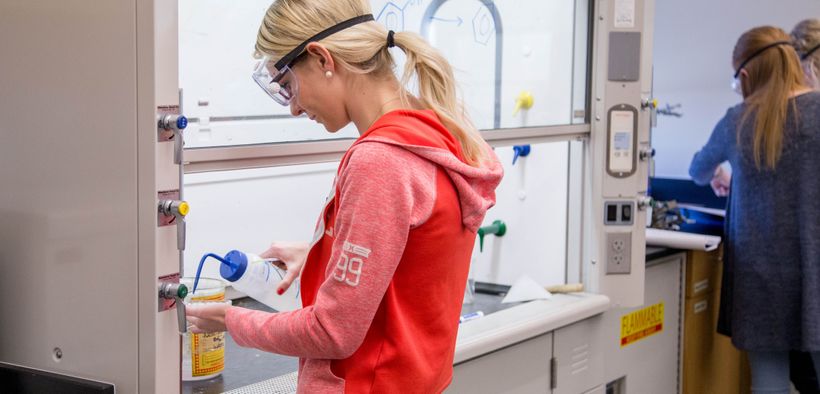
Even with a higher priority placed on science, technology, engineering, and math (STEM) throughout education in the US, only a fraction of girls are likely to pursue a STEM career. According to the National Center for Education Statistics, while more than 57 percent of college undergraduates are women, only 18 percent progress into STEM careers. With a clear gap, Microsoft set out to better understand what causes girls and women to lose interest in STEM subjects and careers, as well as what strategies have the greatest potential to reverse the trend. According to Microsoft, the goal of the study “was to inform our work in this area and to share learnings with schools, government leaders, nonprofits, employers and others. What we learned is that conditions and context can make a significant difference to girls, young women and their interest in STEM. And the solution doesn’t necessarily require a curricula overhaul.” Dr. Shalini Kesar, Associate Professor of Information Systems at Southern Utah University and advocate for women in technology, has known for years that girls and young women are a critical missing part of STEM studies and careers. “The stubborn gender disparity in STEM fields has sparked important debates on the underlying reasons,” said Kesar. “Some attribute the gender disparity to social and infrastructural factors, lack of mentors and role models, and lack of awareness about what these fields offer in terms of educational and career opportunities. Others point to studies that indicate traditional mindsets of computing as ‘boring’ and ‘only for boys’ as a major reason why girls and young women do not consider a degree or career in this field.” The study found that “we may be able to make significant strides just by showing girls and young women how STEM knowledge is applicable outside of the classroom, and how it can power their aspirations to make the world a better place.” “Recently, I was invited to collaborate with Microsoft on research which quantifies many of my observations from over 20 years of working to reduce the gender gap in STEM and computing,” said Kesar. “This work is an essential step forward in helping us learn more about how girls and young women currently perceive STEM.” Dr. Kesar was recently recognized by the Women Tech Council, receiving the Education Excellence Award at the 2016 Women Tech Awards. She is familiar with the media and available for an interview. Simply visit her profile.


Are You Sure More Than Half of LGBTQ Youth Have an Eating Disorder? Because Science Says Otherwise
Each day, thousands of lesbian, gay, bisexual, transgender and queer (LGBTQ) youth wake up to a world filled with homonegativity, violence, gender shaming, bathroom bills that attempt to legislate the most private daily experiences, and family and peer rejection. Research has consistently found violent experiences to be prevalent for this group of young people. For example, gay and lesbian teenagers are respectively eight and 10 times more likely to be victimized at school than their heterosexual peers (D’Augelli), and national meta-studies find similar results (Friedman et al). It’s true that these victimization experiences have resulted in some pretty negative outcomes for LGBTQ young people over time. Studies have estimated that LGBTQ youth are three to four times more likely to report an internalizing disorder (e.g., anxiety, depression), and two to five times more likely to report externalizing disorders (e.g., substance use) than their heterosexual and cisgender peers. Nationally representative studies, like Monitoring the Future and the Youth Risk Behavior Survey, also find similar disparities, with higher rates of substance use, depression and suicidality among nearly all sexual and gender minority groups tracked. With this knowledge in mind, I was shocked to wake up and read headlines purporting “more than half of LGBTQ youth have an eating disorder” on articles published by Teen Vogue and the Huffington Post. At first, I was saddened to think this statement could be true -- that is, until the reality of how ostentatious this claim was set in. More at https://dworakpeck.usc.edu/news/are-you-sure-more-half-of-lgbtq-youth-have-eating-disorder-because-science-says-otherwise Source:


National Nutrition Month - Eat better, save money, live longer
March is National Nutrition Month and it couldn’t come any quicker. After a long winter and spring around the corner, many Americans are ready to start eating healthier. Healthy eating is not merely about shedding pounds. Good nutrition often leads to financial savings and enables us to reduce waste. One way to eat healthier is by cooking at home instead of eating out. Unfortunately, according to the Bureau of Labor Statistics, the average household spends about $3,008 per year on dining out and the food consumed is usually high in trans-fats, sodium and calories. Eating out is an expensive and often times unhealthy habit. That habit is also becoming an addiction – in 1900, only two percent of U.S. meals were eaten outside the home. Recently, that number has climbed to more than 50. It’s not always easy forgoing eating out, but the reward is truly worth the effort. Cost savings aside, cooking at home and eating as a family has proven to make people happier and feel more connected. RD Natalie Allen, clinical instructor of biomedical science at Missouri State University, can share insights about cooking home-cooked meals that are tasty, healthy, cost-effective and don't take a lot of time. Contact her for an interview. Source: