Experts Matter. Find Yours.
Connect for media, speaking, professional opportunities & more.

UF team develops AI tool to make genetic research more comprehensive
University of Florida researchers are addressing a critical gap in medical genetic research — ensuring it better represents and benefits people of all backgrounds. Their work, led by Kiley Graim, Ph.D., an assistant professor in the Department of Computer & Information Science & Engineering, focuses on improving human health by addressing "ancestral bias" in genetic data, a problem that arises when most research is based on data from a single ancestral group. This bias limits advancements in precision medicine, Graim said, and leaves large portions of the global population underserved when it comes to disease treatment and prevention. To solve this, the team developed PhyloFrame, a machine-learning tool that uses artificial intelligence to account for ancestral diversity in genetic data. With funding support from the National Institutes of Health, the goal is to improve how diseases are predicted, diagnosed, and treated for everyone, regardless of their ancestry. A paper describing the PhyloFrame method and how it showed marked improvements in precision medicine outcomes was published Monday in Nature Communications. Graim, a member of the UF Health Cancer Center, said her inspiration to focus on ancestral bias in genomic data evolved from a conversation with a doctor who was frustrated by a study's limited relevance to his diverse patient population. This encounter led her to explore how AI could help bridge the gap in genetic research. “If our training data doesn’t match our real-world data, we have ways to deal with that using machine learning. They’re not perfect, but they can do a lot to address the issue.” —Kiley Graim, Ph.D., an assistant professor in the Department of Computer & Information Science & Engineering and a member of the UF Health Cancer Center “I thought to myself, ‘I can fix that problem,’” said Graim, whose research centers around machine learning and precision medicine and who is trained in population genomics. “If our training data doesn’t match our real-world data, we have ways to deal with that using machine learning. They’re not perfect, but they can do a lot to address the issue.” By leveraging data from population genomics database gnomAD, PhyloFrame integrates massive databases of healthy human genomes with the smaller datasets specific to diseases used to train precision medicine models. The models it creates are better equipped to handle diverse genetic backgrounds. For example, it can predict the differences between subtypes of diseases like breast cancer and suggest the best treatment for each patient, regardless of patient ancestry. Processing such massive amounts of data is no small feat. The team uses UF’s HiPerGator, one of the most powerful supercomputers in the country, to analyze genomic information from millions of people. For each person, that means processing 3 billion base pairs of DNA. “I didn’t think it would work as well as it did,” said Graim, noting that her doctoral student, Leslie Smith, contributed significantly to the study. “What started as a small project using a simple model to demonstrate the impact of incorporating population genomics data has evolved into securing funds to develop more sophisticated models and to refine how populations are defined.” What sets PhyloFrame apart is its ability to ensure predictions remain accurate across populations by considering genetic differences linked to ancestry. This is crucial because most current models are built using data that does not fully represent the world’s population. Much of the existing data comes from research hospitals and patients who trust the health care system. This means populations in small towns or those who distrust medical systems are often left out, making it harder to develop treatments that work well for everyone. She also estimated 97% of the sequenced samples are from people of European ancestry, due, largely, to national and state level funding and priorities, but also due to socioeconomic factors that snowball at different levels – insurance impacts whether people get treated, for example, which impacts how likely they are to be sequenced. “Some other countries, notably China and Japan, have recently been trying to close this gap, and so there is more data from these countries than there had been previously but still nothing like the European data," she said. “Poorer populations are generally excluded entirely.” Thus, diversity in training data is essential, Graim said. "We want these models to work for any patient, not just the ones in our studies," she said. “Having diverse training data makes models better for Europeans, too. Having the population genomics data helps prevent models from overfitting, which means that they'll work better for everyone, including Europeans.” Graim believes tools like PhyloFrame will eventually be used in the clinical setting, replacing traditional models to develop treatment plans tailored to individuals based on their genetic makeup. The team’s next steps include refining PhyloFrame and expanding its applications to more diseases. “My dream is to help advance precision medicine through this kind of machine learning method, so people can get diagnosed early and are treated with what works specifically for them and with the fewest side effects,” she said. “Getting the right treatment to the right person at the right time is what we’re striving for.” Graim’s project received funding from the UF College of Medicine Office of Research’s AI2 Datathon grant award, which is designed to help researchers and clinicians harness AI tools to improve human health.



Why 48 Hours Outdoors Does More Than a Week of Scrolling Breaks
When people feel burned out from their phones, the default solution is often a “digital detox”: delete the apps for a week, set a screen-time limit, maybe move social icons off the home screen. Then work, group chats and FOMO pull them right back in. Personal Development Coach Mark Diamond, an expert in the Offline.now directory who ran a tech-free summer camp for 25 years, says the real reset button isn’t a slightly less frantic version of the same life. It’s 48 hours of real-world experience outdoors. “I’ve watched kids and adults go from wired and anxious to relaxed and connected in a matter of days — not because we lectured them about screens, but because they were hiking, cooking over a fire, laughing with friends, actually living,” Diamond says. “Nature gives your nervous system something it can’t get from a feed.” The science backs up what he sees at camp. A large meta-analysis of nature exposure in adults found that as little as 10 minutes in natural settings improves markers of mental health — including mood and stress — with larger benefits for longer doses of time outside. A broad review on nature and health reports that regular contact with green and blue spaces is associated with: Better mental health and reduced stress Improved cognitive function and attention Higher levels of physical activity Better sleep quality Experimental work using brain imaging has also shown that short visits to green spaces can boost positive affect and change patterns of brain activation in ways consistent with reduced rumination and improved emotional regulation, the opposite of what many people experience after long periods of doomscrolling. Diamond’s camp experience maps directly onto these findings: after even a weekend of tech-free outdoor time, he sees kids and adults become more patient, more playful and more able to tolerate “boredom”: a key ingredient for real focus and creativity. Offline.now integrates this into its digital balance approach by treating offline, outdoor experiences as a core intervention, not a reward you earn after perfect screen behavior. Instead of asking, “How can I use my phone less?” the question becomes, “What can I do offline that naturally displaces my screen time?” “You don’t have to move to the woods,” Diamond says. “Two days of walks, parks, backyard projects, or local trails can do more for your brain than seven days of white-knuckling your way through a ‘detox’ while you stay indoors thinking about your phone.” For journalists covering digital wellness, mental health, or lifestyle resets, this story connects the dots between nature research, digital fatigue, and why a simple 48-hour outdoor reset might be more realistic and more powerful than yet another all-or-nothing break from apps. Featured Expert Mark Diamond – Personal Development Coach and longtime director of a tech-free outdoor camp. He specializes in outdoor wellness, sustainable behavior change, and helping families and individuals swap abstract “detox” goals for concrete, nature-based experiences that restore mood, focus and connection. Expert interviews can be arranged through the Offline.now media team.



CorriXR Launches Bold Collaboration to Create First Inhaled CRISPR Therapy for Lung Cancer
CorriXR Therapeutics, ChristianaCare’s first commercial biotherapeutics spinout, has launched a major collaboration with InhaTarget Therapeutics and Merxin Ltd to develop an inhaled genetic therapy for lung cancer. The goal is to deliver a CRISPR-based treatment straight to tumors in the lungs to improve effectiveness and cut harmful side effects. A New Way to Treat Lung Cancer Lung cancer remains one of the deadliest cancers worldwide. Squamous cell lung carcinoma, an aggressive form of non-small cell lung cancer, accounts for up to 30% of cases. More than 380,000 people are diagnosed each year, yet the five-year survival rate stays under 15%. Standard chemotherapy and immunotherapy often become less effective, and many patients develop resistance that leaves them with few options and rising toxicity. CorriXR is taking aim at this problem. Its CRISPR gene editing system targets NRF2, a key driver of treatment resistance. By switching off NRF2, the therapy has the potential to make tumors sensitive to chemotherapy again and give patients a chance at better outcomes. As reported in a recent paper in Molecular Therapy Oncology, researchers at ChristianaCare’s Gene Editing Institute showed in preclinical lung cancer models that disabling NRF2 can resensitize tumors to chemotherapy with minimal off-target effects. “This partnership is about more than science. It’s about hope for patients,” said Eric Kmiec, Ph.D., founder and CEO of CorriXR Therapeutics and chief scientific officer at ChristianaCare’s Gene Editing Institute. “Lung cancer patients deserve therapies that work and improve quality of life. By combining our CRISPR-based technology with inhaled delivery, we can target tumors directly and reduce systemic toxicity. Our goal is to make treatment simpler, more effective and less invasive.” How the Inhaled Delivery System Works The treatment will be given through inhalation using InhaTarget’s lipid nanoparticle formulation delivered by Merxin Ltd’s advanced inhaler platform. The goal is a non-invasive therapy that patients could use at home. “Combining our pulmonary drug delivery LNP platform with CorriXR’s groundbreaking science and Merxin Ltd’s device technology has the potential to reshape the landscape of lung cancer treatment. We are eager to advance work on this novel combination,” said Frédéric De Coninck, Ph.D., co-founder and CEO of InhaTarget Therapeutics. Merxin Ltd’s technology is central to the approach. Its inhalers are built to deliver precise, consistent doses straight to the lungs. For this collaboration, Merxin Ltd is adapting its device to handle lipid nanoparticle formulations for the first time in a cancer treatment. “Our advanced inhaler technology is designed to ensure non-invasive, precise, consistent delivery of novel therapeutics,” said Philippe Rogueda, Ph.D., co-founder and chief business officer of Merxin Ltd. “We are excited to contribute to this vital effort and help bring innovative solutions to patients with lung cancer.” Why This Matters Patients with squamous cell lung carcinoma often face a fast-moving disease and few treatment choices. A therapy that can reach tumors directly, reduce toxicity and avoid resistance would mark a major shift. “This collaboration underscores the power of combining innovative science with practical delivery solutions,” said Kmiec. “Our CRISPR-based approach is designed to overcome one of the toughest challenges in oncology: treatment resistance. By partnering with experts in inhalation technology, we are moving closer to a therapy that is not only effective but accessible.” Studies will begin soon, with a substantial set of results on effectiveness and impact expected by spring 2026.



NASA Missions Discover Record-Setting Blast
Black Hole Eats Star: NASA Missions Discover Record-Setting Blast Dr. Eric Burns, associate professor of Physics & Astronomy in LSU’s College of Science, leads a consortium that studies gamma-ray bursts (GRBs), including the July event that, because of its long duration, stands in a class by itself. Because opportunities to study such events are so rare, and because they may reveal new ways to create GRBs, astronomers are particularly excited about the July burst. Burns discussed the discovery and the significance of this area of research. Can you explain your interest in gamma-ray bursts, why they matter, and how they play into these new discoveries? "I run a consortium that studies gamma-ray bursts. These are the most luminous explosions in the universe, other than the Big Bang itself. The consortium's been operating for almost 50 years. We've seen 15,000 gamma-ray bursts. We've used these sightings to understand the speed of gravity, where gold is created, and fundamental properties in the universe. In July, we detected a gamma-ray burst that was longer than we've ever seen before. They're normally like 30 seconds long. This one was 8 hours. It was so long that we didn't believe it was a gamma-ray burst for a while." What was your role in investigating this phenomenon? "The consortium I run helped find it and helped figure out where it was coming from. We put a bunch of telescopes on it to try and figure out what was happening and to understand what caused this event. Normal gamma-ray bursts come from a massive star near the end of its life. The interior of the star collapses, and it forms a black hole. That black hole eats it from the inside out, and it launches this matter that's moving at basically the speed of light, and that produces your gamma-ray burst. By chance, a colleague and I had written a paper earlier this year on what is the longest gamma-ray burst you could produce with this scenario. And the answer is 1,000 seconds. So we're pretty sure that what happened here was this: You have that massive star, but instead of its core becoming the black hole, instead you have a black hole that falls into it. Or they sort of fall into each other." How was this long gamma-ray burst discovered? And what led to your involvement in studying it? "We have what’s called gamma-ray burst monitors. They're a version of a telescope, but they're not like a long tube that you use to see visible light with your eyes. They're actually crystals that detect when they are hit by a gamma ray by fluorescing and sending out light. And so we could detect them that way. In the consortium I run, there are about a dozen of these gamma ray detectors. They're all on different satellites. Most of them are around Earth, but some of them are much further out in our solar system. We've automated most of our processes. The spacecraft itself will detect this event and report it to the community. All of that happens in like 30 seconds. In this case, our satellite had four different triggers spread over eight hours, and a member of the community pointed out that these events were coming from the same general area in the sky. So, even before the last trigger, within a couple hours, we realized, oh, there's something really long happening here that we haven't really seen before." Full story available here.



AI Can’t Replace Therapists – But It Can Help Them
For a young adult who is lonely or just needs someone to talk to, an artificial intelligence chatbot can feel like a nonjudgmental best friend, offering encouragement before an interview or consolation after a breakup. AI’s advice seems sincere, thoughtful and even empathic – in short, very human. But when a vulnerable person alludes to thoughts of suicide, AI is not the answer. Not by itself, at least. Recent stories have documented the heartbreak of people dying by suicide after seeking help from chatbots rather than fellow humans. In this way, the ethos of the digital world – sometimes characterized as “move fast and break things” – clashes with the health practitioners’ oath to “first, do no harm.” When humans are being harmed, things must change. As a researcher and licensed therapist with a background in computer science, I am interested in the intersection between technology and mental health, and I understand the technological foundations of AI. When I directed a counseling clinic, I sat with people in their most vulnerable moments. These experiences prompt me to consider the rise of therapy chatbots through both a technical and clinical lens. AI, no matter how advanced, lacks the morality, responsibility and duty of care that humans carry. When someone has suicidal thoughts, they need human professionals to help. With years of training before we are licensed, we have specific ethical protocols to follow when a person reveals thoughts of suicide. Read the full article from US News & World Report here

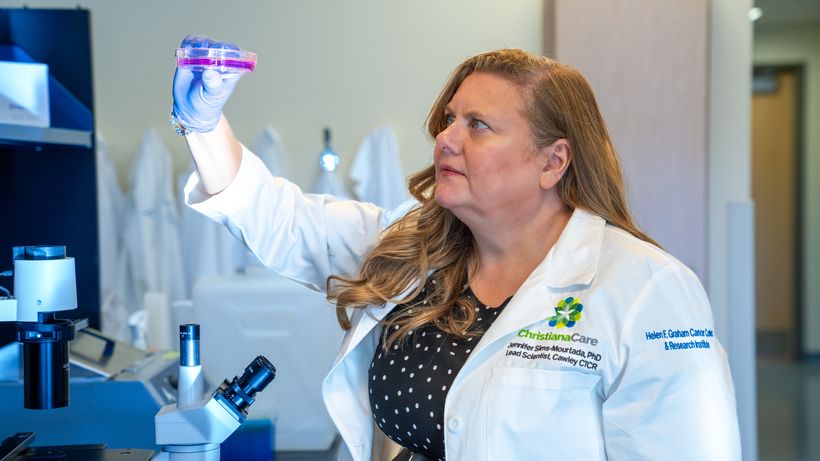
The National Cancer Institute (NCI) has renewed the Cancer Center Support Grant (CCSG) for The Wistar Institute and ChristianaCare’s Helen F. Graham Cancer Center & Research Institute, awarding $16.3 million over the next five years. The renewal received an “exceptional” rating — the highest possible — recognizing the strength and impact of a partnership that combines world-class basic science with leading community-based cancer care. A One-of-a-Kind National Model This collaboration is the only one of its kind in the nation, joining Wistar, an NCI-Designated Basic Cancer Center, with ChristianaCare, one of the country’s premier academic community cancer centers and a National Cancer Institute Community Oncology Research Program. Together, they focus on driving advances against some of the most challenging cancers, including pancreatic, melanoma, breast, lung and ovarian cancers. The grant supports shared infrastructure, scientific resources and programs that enable researchers and clinicians to work seamlessly across both institutions. By connecting laboratory breakthroughs at Wistar with ChristianaCare’s ability to rapidly apply new approaches in a diverse patient population, the partnership accelerates the path from discovery to care. NCI highlighted the collaboration’s effectiveness, noting that “the ongoing alliance with the Helen F. Graham Cancer Center & Research Institute is where most clinical translation into active oncology trials is occurring, supported by productive collaboration between Wistar investigators and Graham Cancer Center oncologists.” Impact on Patients and Community “At ChristianaCare, we are committed to bringing innovation directly to the people we serve. Our collaboration with Wistar connects the best of basic science with the realities of patient care,” said Thomas Schwaab, M.D., Ph.D., Bank of America Endowed Medical Director of the Helen F. Graham Cancer Center & Research Institute. “The NCI’s exceptional score recognizes the promise of this work and the progress we are making together. It is a powerful affirmation that our patients are benefiting from research at the highest level.” “This renewal from the NCI is proof that we are building a model for how cancer research and community care can come together,” said Nicholas J. Petrelli, M.D., director of the Cawley Center for Translational Cancer Research at the Helen F. Graham Cancer Center & Research Institute and associate director of Translational Research at The Wistar Institute Cancer Center. “Through our partnership with Wistar, patients in Delaware and beyond are gaining access to cutting-edge research and therapies for some of the toughest cancers we face.” Dario Altieri, M.D., president and CEO of The Wistar Institute and director of its Ellen and Ronald Caplan Cancer Center, added: “An exceptional rating from the NCI is a reflection of the scientific excellence and real-world impact of this partnership. What makes this collaboration unique is its ability to take discoveries in areas such as melanoma and ovarian cancer and bring them rapidly into clinical practice through ChristianaCare.” NCI underscored the alliance’s reach, noting that “the partnership with the Graham Cancer Center brought cutting-edge cancer research to the community and advanced groundbreaking discoveries to first-in-human oncology clinical trials.” A Pipeline of Research Advancing Faster Than Ever Research achievements supported by the Wistar—ChristianaCare partnership include: Advancing multiple Wistar discoveries into investigator-initiated, first-in-human oncology clinical trials, including studies in pancreatic, melanoma, lung, breast and ovarian cancers. Launching joint research programs across several cancer types, with expanding efforts in cancer risk and population health. Increasing access to high-quality biospecimens — including tumor tissue, biopsies and blood samples — that fuel translational research. Strengthening shared scientific infrastructure supporting immunotherapy research, organoid development, xenograft models and molecular profiling. The Wistar—ChristianaCare partnership, established in 2011, has grown into a nationally recognized alliance that bridges science and medicine. With this CCSG renewal, the collaboration will expand research in pancreatic, melanoma, breast, lung and ovarian cancers and continue advancing prevention, early detection and training programs for the next generation of physician—scientists. The Helen F. Graham Cancer Center & Research Institute depends on grants and community support to keep this work moving forward. To learn more or make a gift, visit Support the Helen F. Graham Cancer Center & Research Institute.

Violence alters human genomes for generations, researchers discover
In February of 1982, the Syrian government besieged the city of Hama, killing tens of thousands of its own citizens in sectarian violence. Four decades later, rebels used the memory of the massacre to help inspire the toppling of the Assad family that had overseen the operation. But there is another lasting effect of the attack, hidden deep in the genes of Syrian families. The grandchildren of women who were pregnant during the siege — grandchildren who never experienced such violence themselves — nonetheless bear marks of it in their genomes. Passed down through their mothers, this genetic imprint offers the first human evidence of a phenomenon previously documented only in animal models. The genetic transmission of stress across multiple generations. “The idea that trauma and violence can have repercussions into future generations should help people be more empathetic, help policymakers pay more attention to the problem of violence,” said Connie Mulligan, Ph.D., a professor of Anthropology and the Genetics Institute at the University of Florida and co-senior author of the new study. “It could even help explain some of the seemingly unbreakable intergenerational cycles of abuse and poverty and trauma that we see around the world, including in the U.S.” While our genes are not changed by life experiences, they can be tuned through a system known as epigenetics. In response to stress or other events, our cells can add small chemical flags to genes that may quiet them down or alter their behavior. These changes may help us adapt to stressful environments, although the effects aren’t well understood. It is these tell-tale chemical flags that Mulligan and her team were looking for in the genes of Syrian families. While lab experiments have shown that animals can pass along epigenetic signatures of stress to future generations, proving the same in people has been nearly impossible. “Resilience and perseverance is quite possibly a uniquely human trait.” —Connie Mulligan Mulligan worked with Rana Dajani, Ph.D., a molecular biologist at Hashemite University in Jordan and co-senior author, as well as anthropologist Catherine Panter-Brick, Ph.D., of Yale University, to conduct the unique study. Dajani envisioned the research project; because of her intimate knowledge of the Syrian population and its tragic history, she designed the study to cover three generations of Syrian refugees to Jordan. Some families had lived through the Hama attack before fleeing to Jordan. Other families avoided Hama, but lived through the recent civil war against the Assad regime. The team collected samples from grandmothers and mothers who were pregnant during the two conflicts, as well as from their children. This study design meant there were grandmothers, mothers and children who had each experienced violence at different stages of development. A third group of families had immigrated to Jordan before 1980, avoiding the decades of violence in Syria. These early immigrants served as a crucial control to compare to the families who had experienced the stress of civil war. Study coauthor Dima Hamadmad, a Syrian researcher and the daughter of refugees, led the search for families that met the study criteria and collected cheek swabs from 138 people across 48 families. "The participants took part in the research out of love for their children and concern for future generations,” she said. “But more than that, they wanted their stories of trauma to be heard and acknowledged.” Back in Florida, Mulligan’s lab scanned the DNA for epigenetic modifications and looked for any relationship with the families’ experience of violence. In the grandchildren of Hama survivors, the researchers discovered 14 areas in the genome that had been modified in response to the violence their grandmothers experienced. These 14 modifications demonstrate that stress-induced epigenetic changes may indeed appear in future generations in humans, just as they can in animals. The study also uncovered 21 epigenetic sites in the genomes of people who had directly experienced violence in Syria. In a third finding, the researchers reported that people exposed to violence while in their mothers’ wombs showed evidence of accelerated epigenetic aging, a type of biological aging that may be associated with susceptibility to age-related diseases. Most of these epigenetic changes showed the same pattern after exposure to violence, suggesting a kind of common epigenetic response to stress – one that can not only affect people directly exposed to stress, but also future generations. “We think our work is relevant to many forms of violence, not just refugees. Domestic violence, sexual violence, gun violence: all the different kinds of violence we have in the U.S,” said Mulligan. “We should study the effects of violence. We should take it more seriously.” It’s not clear what, if any, effect these epigenetic changes have in the lives of people carrying them inside their genomes. But some studies have found a link between stress-induced epigenetic changes and diseases like diabetes. One famous study of Dutch survivors of famine during World War II suggested that their offspring carried epigenetic changes that increased their odds of being overweight later in life. While many of these modifications likely have no effect, It’s possible that some have functional effects that can affect our health, Mulligan said. The researchers published their findings, which were supported by the National Science Foundation, Feb. 27 in the journal Scientific Reports. While carefully searching for evidence of the lasting effects of war and trauma stamped into our genomes, Mulligan and her collaborators were also struck by the perseverance of the families they worked with. Their story was much bigger than merely surviving war, Mulligan said. “In the midst of all this violence we can still celebrate their extraordinary resilience. They have persevered,” Mulligan said. “That resilience and perseverance is quite possibly a uniquely human trait.”

The School of Science at Rensselaer Polytechnic Institute (RPI) has launched a new minor in quantum computing, positioning students at the forefront of one of the most rapidly developing fields in technology. The minor leverages RPI's unique status as the first university in the world to house an IBM Quantum System One on campus, providing students with unprecedented access to utility-scale quantum computing technology. The minor, which is now available to all currently enrolled students, requires four courses drawn from physics, computer science, mathematics, and engineering. The curriculum provides both theoretical foundations and practical exposure to quantum hardware and software, and gives students a leg up in a field rapidly approaching quantum advantage — the point at which quantum systems outperform classical computing approaches on meaningful tasks. "The quantum computing minor will augment the training of RPI students with insight into an emerging technology that will reshape industries from pharmaceuticals to artificial intelligence," said Steven Tait, Ph.D., Dean of the School of Science. "With direct access to the IBM Quantum System One, our students will gain hands-on experience with cutting-edge tools that are not yet widely available. This minor equips them with the interdisciplinary foundation needed to understand and contribute to quantum-enabled innovation." The minor arrives at a pivotal moment in quantum computing's evolution. IBM's demonstration of quantum utility in 2023 marked the beginning of an era in which quantum systems serve as scientific tools to explore complex problems in chemistry, physics, and materials science — areas where quantum advantage offers transformative potential. Hannah Xiuying Fried, graduating this December, is one of the first students to declare the minor. “I'm not a physics or computer science major, so it allows me an accredited way to prove a relevant background to future employers,” she said. “It prepares me for graduate school where I plan to continue pursuing quantum hardware research.” Currently enrolled students may declare the minor now and pursue it alongside their established degree programs. Interested students should contact Chad Christensen at sciencehub@rpi.edu.


RPI to Host Holiday Concert and Troy Victorian Stroll Kickoff December 6
RPI President Martin A. Schmidt ’81, and his wife, Lyn, invite the Capital Region to join them for the RPI Holiday Concert and Troy Victorian Stroll Kickoff, which will take place on Saturday, December 6, at 7 p.m. in the Concert Hall of the Curtis R. Priem Experimental Media and Performing Arts Center (EMPAC) on RPI’s campus. This event is free and open to the public, and a reception with refreshments will follow. The concert, titled “Light in Winter,” will include performances from the RPI Wind Symphony, Concert Choir, and Orchestra, all under the direction of Robert Whalen, RPI lecturer in music and conducting. For the second year in a row, the concert will also serve as the kickoff for the 43rd annual Troy Victorian Stroll, made possible through RPI’s partnership with the Rensselaer County Regional Chamber of Commerce. “This concert is a wonderful opportunity for our students, who work so hard all year, to share their passion for music and create something meaningful for the entire community,” said Whalen. The program, following a “Light in Winter” theme, celebrates the various ways we bring light and joy to the darker winter season. “There is a common connection across cultures of lighting up the darkness in the late fall and winter, said Whalen. “Consider Diwali, Hannukah, Christmas, Alban Arthan, and others. Music and the arts, as well as education, each represent a way of sharing our inner creative light to illuminate the darkness.” During the concert, students will perform music by Smetana, Tchaikovsky, Gershwin, Lauridsen, and Saint-Saens, all following the “Light in Winter” theme. The program will feature two winners of the 2025 RPI Concerto Competition, Reese Bush '27 in Saint-Saens' "Introduction and Rondo capriccioso" for Violin and Orchestra, and Avery Roach '25 singing Gershwin's gorgeous and evocative "Summertime". Performers across the three groups represent 160 students from 34 different majors and all 5 schools, a reminder of just how curious and well-rounded RPI students are, and that art and science don’t just coexist, they actually enhance each other. The opportunity to continue growing as a musician while pursuing an engineering degree is something that connects many of us and inspires the music we create,” said Bush. “We’re excited to share our hard work and passion with the community.” The Holiday Concert is an annual tradition that celebrates peace and unity, the creativity and hard work of RPI students, and the confluence of science, engineering, and art. Combining the concert with the Troy Victorian Stroll has been a great opportunity for RPI to partner with its home city and further engage with the community. RSVP here: Media are welcome to attend.

Dinosaurs in New Mexico Thrived Until the Very End, Study Shows
For decades, many scientists believed dinosaurs were already dwindling in number and variety long before an asteroid strike sealed their fate 66 million years ago. But new research in the journal Science from Baylor University, New Mexico State University, the Smithsonian Institution and an international team is rewriting that story. The dinosaurs, it turns out, were not fading away. They were flourishing. A final flourish in the San Juan Basin In northwestern New Mexico, layers of rock preserve a hidden chapter of Earth’s history. In the Naashoibito Member of the Kirtland Formation, researchers uncovered evidence of vibrant dinosaur ecosystems that thrived until just before the asteroid impact. High-precision dating techniques revealed that fossils from these rocks are between 66.4 and 66 million years old – placing them in the catastrophic Cretaceous-Paleogene boundary. “The Naashoibito dinosaurs lived at the same time as the famous Hell Creek species in Montana and the Dakotas... They were not in decline – these were vibrant, diverse communities.” – Daniel Peppe, Ph.D. “The Naashoibito dinosaurs lived at the same time as the famous Hell Creek species in Montana and the Dakotas,” said Daniel Peppe, Ph.D., associate professor of geosciences at Baylor University. “They were not in decline – these were vibrant, diverse communities.” Dinosaurs in their prime The New Mexico fossils tell a different story than originally thought. Far from being uniform and weakened, dinosaur communities across North America were regionally distinct and thriving. Using ecological and biogeographic analyses, the researchers discovered that dinosaurs in western North America lived in separate “bioprovinces,” divided not by mountains or rivers, but by temperature differences across regions. “What our new research shows is that dinosaurs are not on their way out going into the mass extinction,” said first author Andrew Flynn, Ph.D., ‘20, assistant professor of geological sciences at New Mexico State University. “They're doing great, they're thriving and that the asteroid impact seems to knock them out. This counters a long-held idea that there was this long-term decline in dinosaur diversity leading up to the mass extinction making them more prone to extinction.” Life after impact The asteroid impact ended the age of dinosaurs in an instant – but the ecosystems they left behind set the stage for what came next, the researchers said. Within 300,000 years of their extinction, mammals began to diversify rapidly, exploring new diets, body sizes and ecological roles. The same temperature-driven patterns that shaped dinosaur communities continued into the Paleocene, showing how climate guided life’s rebound after catastrophe. “The surviving mammals still retain the same north and south bio provinces,” Flynn said. “Mammals in the north and the south are very different from each other, which is different than other mass extinctions where it seems to be much more uniform.” Why the discovery matters today The discovery is more than a window into the past – it’s a reminder of the resilience and vulnerability of life on Earth. Conducted on public lands managed by the U.S. Bureau of Land Management, the research highlights how carefully protected landscapes can yield profound insights into how ecosystems respond to sudden global change. With a clearer understanding of the timeline of the dinosaurs’ final days, the study reveals not a slow fade into extinction but a dramatic ending to a story of flourishing diversity cut short by cosmic chance.