
Experts Matter. Find Yours.
Connect for media, speaking, professional opportunities & more.

MEDIA RELEASE: Motorists are urged to slow down and stay alert for trick-or-treaters this Halloween
As Halloween approaches, motorists can expect even the quietest streets becoming busy with trick-or-treaters. To ensure everyone has a safe and fang-tastic night, CAA South Central Ontario (CAA SCO) is reminding motorists to be extra vigilant while driving in areas with higher volumes of pedestrians. “In the excitement of dressing up in costume and going trick-or-treating, children may not always be looking out for oncoming traffic,” says Michael Stewart, community relations consultant, Government and Community Relations, CAA SCO. “With this in mind, it’s important for motorists to slow down, obey all traffic signs and continually scan not only the road ahead, but also driveways, front yards and the spaces between parked cars.” With the majority of trick-or-treating happening after dark, visibility is key for both motorists and pedestrians. Motorists are advised to turn their headlights on 30 minutes before sunset and keep them on when it’s dark while pedestrians should opt for makeup instead of masks to not obstruct their vision. “Trick-or-treaters can also help make themselves more visible to motorists by choosing brightly coloured costumes instead of all-black ones as well as using reflective items and accessories while trick-or-treating,” adds Stewart. CAA is offering free reflector tags at CAA Stores in south-central Ontario that can be attached to backpacks and jackets. Find your nearest CAA Store here and stop by to get up to four free tags per family. CAA is also reminding all road users to take extra caution as daylight saving time ends at 2 a.m. on Sunday, November 6. The return to standard time means fewer daylight hours and reduced visibility for both motorists and pedestrians. What motorists can do to stay safe: Always look for pedestrians crossing the road. Be alert and attentive while driving and yield to pedestrians at crosswalks, school crossings and crossovers. Mind your blind spots. Be aware of blind spots when making turns at intersections. Stay focused and vigilant behind the wheel. Put the phone away, reduce your speed and obey speed limits in residential neighbourhoods. Be cautious and considerate. Be alert around stopped transit vehicles and be courteous to pedestrians with different mobility needs that may require more time to cross. Use your lights. Motorists should use their full lighting system when it gets dark and in low visibility situations. What pedestrians can do to stay safe: Remain on the sidewalk. Sidewalks give pedestrians a designated space to keep them safe. If no sidewalk is present, you should walk on the far-left side of the road. Always be aware of your surroundings. Avoid distractions and be alert while crossing the street. Follow the flow. Follow signals and only cross at designated locations or crosswalks. Stop, look, and listen. Ensure all traffic has come to a complete stop before crossing the road. Always remember to look both ways before crossing. Be visible. Make eye contact with motorists before crossing—never assume that drivers can see you or know your intentions. Pedestrians should also wear bright or reflective clothing or accessories at night to help with visibility.



It's a question people have been asking since we first started looking at the stars - Are we alone out there? It's been the focus of books, movies, childhood dreams and most importantly, scientists who have spent careers searching for intelligent life in the universe. Recently, the popular publication Astronomy magazine contacted some of the leading experts and academics in America and asked that very question. Manasvi Lingam, an astrobiologist and assistant professor in the Department of Aerospace, Physics, and Space Sciences at Florida Institute of Technology was interviewed to add his perspective and expert opinion with the quest to answer a question people have been asking for centuries. If you're a journalist looking to know more or are covering this topic, let us help with your stories! Manasvi Lingam is an assistant professor in the Department of Aerospace, Physics and Space Sciences at Florida Institute of Technology. He is an author and go-to expert for media when it comes to anything in outer space or out of this world. Simply click on Manasvi's icon now to arrange an interview today.


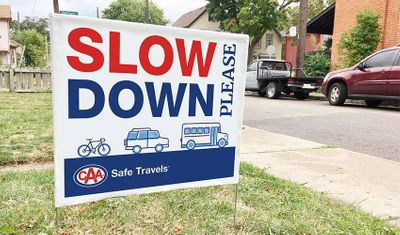
MEDIA RELEASE: CAA urges drivers to protect lives on first national Slow Down Move Over Day
WINNIPEG, May 14, 2019 – CAA is urging motorists to make space for tow trucks providing service on the side of the road on Canada’s first national Slow Down Move Over day. The day promotes a safe working environment for tow truck operators across the country. CAA has long advocated for the protection of roadside assistance workers through Slow Down, Move Over legislation. CAA Clubs across Canada have designated May 14 as Slow Down Move Over day to bring attention to this important issue. “Lack of driver awareness is one of the largest threats to tow-truck operator safety on this day and all others,” said Raymond Chan, government relations, CAA. “Everyone should slow down and move over when they see a tow truck operator on the side of the road.” CAA’s eight Clubs across Canada will be launching public education campaigns and events today to draw attention to the safety risks tow truck operators face. There are approximately 24 million motorists and 15,000 tow truck operators on the road annually in Canada. This leads to thousands of near misses experienced by emergency roadside operators annually and, across North America, nearly 100 tow truck drivers are killed every year after being struck by oncoming traffic while helping stranded motorists with flat tires, breakdowns and collisions. Every tow truck driver knows the number of close calls they've experienced while pulled over on busy roadways. "I figured that was going to be the end, that I was going to be done," said one CAA tow-truck operator after a near-miss during a roadside assistance call. In 2011, the Slow Down Move Over law became part of Manitoba’s Highway Traffic Act. Most provinces and territories have Slow Down Move Over legislation that mandates motorists must slow down and change lanes, if it is safe to do so, to ensure the safety of emergency workers on the roadside, but it is often not observed. Learn more about the Slow Down Move Over Day here: caamanitoba.com/slowdown

Planet 9 Doesn’t Exist, So Why Does It Matter How We Get There? Let Our Expert Explain.
Planet 9 is an oft-discussed hypothetical planet in the outer region of the solar system. A new study involving Florida Tech astrobiologist Manasvi Lingam helps illustrate how we could possibly get there. The study, “Can We Fly to Planet 9?” is from Lingam and researchers Adam Hibberd and Andreas Hein. The team discovered that using current, unmanned transportation methods, it would take 45 to 75 years to get to Planet 9, which is about 42 billion miles away from Earth. By comparison, Pluto, which is the ninth object from the Sun, is roughly three billion miles from Earth. The research and work of Lingam, Hibberd and Hein is also getting a lot of attention from websites like UniverseToday.com. The team also studied near-future transportation methods nuclear thermal propulsion and laser sails. Using nuclear thermal propulsion, it would take approximately 40 years to reach Planet 9. It would take merely six to seven years to reach Planet 9 using laser sail propulsion, which involves using light from lasers to propel the vehicle. In its research, the team used the principles of orbital mechanics, sometimes called spaceflight mechanics. They inputted the complex and nonlinear mathematical equations into a computer, and then solved those equations with some optimization constraints. “What I mean by the latter is that ideally you want to maximize or minimize some quantity as much as possible,” Lingam said. “You might say, ‘Well, I want to minimize the flight time of the spacecraft as much as possible.’ So, what we did is that we put in an optimization constraint. In this case, it happens to be minimizing the time of journey. You solve the mathematical equations for a spacecraft with this condition, and then you end up with the results.” Lingam is inspired by the trendsetting Voyager spacecraft missions of the late 1970s, and one of his goals is to gain additional information about other worlds in our solar system, in addition to Planet 9 Voyager still provides valuable information regarding the outer solar system, though by 2025 it is expected that there may no longer be sufficient power to operate its science instruments. “Any mission to Planet Nine would likewise not just provide valuable information about that hypothetical planet, but it would also yield vital information about Jupiter, because what we do in some of the trajectories is a slingshot or powered flyby around Jupiter,” Lingam said. “It could also provide valuable information about the Sun because we also do a maneuver around the Sun, so you would still be getting lots of interesting data along the journey. And the length of the journey is comparable to that of the functioning time of the Voyager spacecraft today.” If you're a reporter looking to know more - then let us help get you connected to an expert. Manasvi Lingam is an Assistant Professor in the Department of Aerospace, Physics and Space Sciences at the Florida Institute of Technology. He is an author and go-to expert for media when it comes to anything in outer space or out of this world - just recently he was featured in Astronomy.com where he was asked to answer the illusive question - Are we alone? Manasvi is available to speak with media - simply click on his icon now to arrange an interview today.

New center helps meet growing need for pediatric care in our community Families in northern Delaware and surrounding areas have a new option for pediatric care. Today ChristianaCare opened a new 14-bed Pediatric Care Center that provides 24/7 combined short-stay inpatient and emergency care for children and teens. The new center is located on the first floor of the Center for Women’s & Children’s Health on ChristianaCare’s Newark Campus. “This new facility is an exciting step in our continued journey to create the absolute best care for children and families in our community,” said David Paul, M.D., chair of the Department of Pediatrics. “The Pediatric Care Center will significantly improve access to care for children, enhance the patient experience and address the needs of families who want high-quality care in a child-friendly environment.” The 24-hour Pediatric Care Center will be able to evaluate and manage 90% of the pediatric cases currently seen in the Christiana Hospital Emergency Department. The center expects to care for an estimated 6,300 patients the first year, with volume projected to grow 5% each year. The Pediatric Care Center also provides expert care to children and adolescents with behavioral health emergency needs and appropriate referral sources for follow-up care. “Our new Pediatric Care Center makes it easier than ever for families and children to receive excellent care when they need it, in a special space designed just for them,” said Sharon Kurfuerst, Ed.D., OTR/L, FACHE, system chief operating officer at ChristianaCare and President, Union Hospital. “The center will care for the special needs of pediatric patients, making it convenient for them to receive dedicated, expert resources for hospital-based, non-trauma emergency and inpatient care all in one location.” The 8,400 square-foot facility provides 14 beds for emergency and short-stay inpatient and observation care. “We offer 24/7 pediatric emergency care 365 days a year,” said Megan Mickley, M.D., MBA, FAAP, FACEP, medical director, who is board certified in Pediatrics and Pediatric Emergency Medicine and fellowship-trained in Pediatric Emergency Medicine and Emergency Ultrasound. “The Pediatric Care Center team is a diverse, multidisciplinary group led by pediatric physicians trained in a variety of backgrounds, including emergency medicine and hospital medicine,” she said. “Our goals are not only to provide exceptional quality of care for children, but also to improve access to and expand pediatric care services for our neighbors. We look forward to being a trusted partner for pediatric care in our community.” About the Center for Women’s & Children’s Health The Center for Women’s & Children’s Health, which opened in a state-of-the-art facility in 2020 on ChristianaCare’s Newark campus, represents a new standard of care for our community. It is the region’s only National Community Center of Excellence in Women’s Health and offers innovative, patient-centered care for mothers, babies and families. The center provides private rooms for mothers and families after delivery and is one of the only hospitals in the United States to provide couplet care in the Neonatal Intensive Care Unit, keeping mother and baby together even if they both require medical care.


Is Chechnya next as the war in Ukraine shows no signs of stopping?
A long history of conflict in regions such as Eastern Europe, the Balkans and Russia shows these conflicts often grow and eventually draw in other armies or countries. With all eyes on the ongoing war between Russia and Ukraine, there are serious concerns that the powder keg could soon blow. Augusta University's Dr. Craig Albert shares his expertise on war, terrorism and what could be next for the region. As this war between Ukraine and Russia goes on, how does Chechnya come into play? "Chechnya has units fighting on both sides of the conflict. There is a large contingent of independence fighters, rebels and militants fighting for Ukraine, as they have historical grievances with Putin and Russia dating to the Russo-Chechen wars beginning in the early '90s. The official stance of Chechnya, however, under the dictatorship of Kadyrov, is pro-Putin, and has sent upwards of 10,000 troops to fight against Ukraine. Thus, we have the potential of an ethnic civil war breaking out within Chechnya, as they dispute their differences on the battlefield." Do they look at this as an opportunity to break free from Russia? "There are many Chechens that may think this is the perfect strategic opportunity to break away from Russia and claim independence. Others within Chechnya see this as a perfect opportunity to carry out the deeds of the Islamic Caucasus Emirate, officially a part of ISIS, and claim more space for ISIS to operate. It should be noted, most of the civilians just want to live in peace and have economic opportunity as they are still recovering from decades of war in the '90s-2000s." What would that look like if they decided to go on attack? "Depending on which group initiates conflict, it would most likely look like some form of terrorism or insurgency operation. Small-scale and limited in scope. Political assassination could also come into play depending on the side of the people that seek violence." If you’re a journalist looking to know more about the war between Ukraine and Russia and how Chechnya may soon be a factor, then let us help with your questions and coverage. Dr. Craig Albert is director of the Master of Arts in Intelligence and Security Studies at Augusta University. He is a leading expert on war, terrorism and American politics. This is an important national and international issue. Albert is available to speak with media – simply click on his name to arrange an interview today.


James Webb Space Telescope Images Deliver New Look at Universe, Potential for Life in the Cosmos
On July 12, the National Aeronautics and Space Administration (NASA) unveiled its long-awaited first images from the James Webb Space Telescope, a cutting-edge tool sent out with the mission of furthering our understanding of the universe. The telescope delivered on its promise, depicting the cosmos more clearly than we’ve ever seen. Among the many in awe was Villanova astronomy and astrophysics professor Ed Guinan, PhD, who’s familiar with extraterrestrial discovery. In 1968, Guinan helped observe evidence of Neptune’s ring system and has been involved in research beyond our planet for over 50 years. “The first few photos are beautiful, showing highly detailed images of stars, galaxies, nebulae and gravitational lensed distant galaxies” Dr. Guinan said. “Some of the oldest galaxies formed as far back as 13-to-13.5 billion years, right after the Big Bang.” The latest images come almost seven months after Webb’s launch in December. A series of steps needed to be completed for the mission to be successful. “Many things could’ve gone wrong, and if something failed, it would be too far away to fix,” Dr. Guinan said. One of the photos featured a signature of water in the atmosphere of a distant sun-like star, showing the unique capabilities of Webb. Dr. Guinan, along with assistant astrophysics and planetary science professor Scott Engle, PhD, have been researching the potential habitability of Earth-sized exoplanets over the last decade, and he believes this telescope may be able to help bring clarity to finding life outside of our planet. “Several of these potentially habitable exoplanet systems are planned to be observed with the telescope to search for spectroscopic evidence of life,” Dr. Guinan said. “Webb is capable of answering these questions, whether these Earth-sized planets may be suitable for harboring complex life, possibly intelligent life.”


ChristianaCare is out to revolutionize health care. One of the country’s most dynamic health care systems, ChristianaCare is partnering with two leaders in medical and therapy services to provide comprehensive, integrated virtual health services 24/7 to colleges, universities and other institutions of higher education. Together with PursueCare and SimpleTherapy, ChristianaCare created a bundled health care product that combines general medical services from ChristianaCare’s Center for Virtual Health, mental health and addiction treatment programs from PursueCare and hyper-personalized musculoskeletal care from SimpleTherapy. ‘The future of health care is virtual’ “At ChristianaCare, we know that the future of health care is virtual,” said Sharon Anderson, MS, RN, FACHE, ChristianaCare’s chief virtual health officer and president of ChristianaCare’s Center for Virtual Health. “When college students are able to access medical, behavioral health and musculoskeletal services through their phone or laptop, from their dorm room or a private space on campus, they’ll be more likely to get help when they need it. This is about delivering care to students on their terms, so that they can be healthy and supported with high-quality care throughout their college experience.” Personalized virtual health solutions will be available to students at participating higher education institutions through a customized portal accessible from any computer or mobile device. Students will be able to access assessments, resources and virtual treatment via modules or telemedicine sessions with licensed providers. The offering provides students with unlimited, on-demand care from a multidisciplinary team solving for a multitude of conditions. “For college and university student health services and administrators, this partnership offers a powerful new way to provide comprehensive, affordable health solutions that benefit students,” Anderson said. “In a highly competitive recruiting environment, these solutions are easy to implement and can add tremendous value. We are excited to partner with colleges and universities to strengthen their student health programs by creating a comprehensive virtual care solution to meet their student’s health care needs.” Through a single digital portal, participating students can access internal and family medicine providers from ChristianaCare’s Center for Virtual Health. PursueCare’s Joint Commission-accredited mental health, psychiatric and medication-assisted treatment providers, and SimpleTherapy’s licensed physical therapists specializing in musculoskeletal care, acute or chronic pain management, and strength and mobility training can all be accessed through the portal. Students will also have the option of using PursueCareRx for their pharmacy needs. PursueCareRx is a competitively priced full-service pharmacy that accepts most major insurance and delivers directly to customers. “Young adults face an escalating mental health and substance use crisis,” said Nick Mercadante, founder, and CEO of PursueCare. “Colleges and universities are frequently unable to comprehensively serve the increased need, and research suggests substance use, mental health and suicide carry a significant social stigma. Our goal is to work collaboratively with campus health resources to bring a low-barrier solution students can access privately, any time, on their terms. Additionally, partnering with a world-class health system like ChristianaCare means we can help support whole-person care needs.” “Chronic musculoskeletal disorders have never been more prevalent and traditional care pathways are often ineffective and costly,” said Arpit Khemka, co-founder and CEO of SimpleTherapy. "SimpleTherapy removes barriers for students allowing them to take control of their musculoskeletal health, reducing their need for high-cost, high-risk services, such as surgery and opioids, to manage pain. This results in higher compliance rates and more successful outcomes." Customized and co-branded product The product is designed for colleges, universities and all other higher education institutions. For a flat fee, a school will be able to offer care that is customized and co-branded with school-specific content to be an extension of existing campus health services. It provides curated resources for rapid pre-assessment, on-demand chat and discreet, personalized access to care for students on or off-campus. The innovative patient portal aims to improve and strengthen how schools offer health care solutions to their student population while reducing any potential interruptions of academic and athletic pursuits by making it possible for students to conveniently access care from anywhere. In addition, the offering eliminates social stigma and other access obstacles for students who are at-risk or potentially at-risk, making it more likely that students will avail themselves of treatment options and remain in school. These services are currently licensed to operate in Delaware, New Jersey, Pennsylvania and Maryland. Applications for licenses are underway in other states. ChristianaCare has long been a trailblazer in virtual health. Among its achievements, during the COVID-19 pandemic, ChristianaCare developed a COVID-19 virtual monitoring program that helped 37 companies in 14 states safely reopen with daily symptom monitoring, testing and connections to care for more than 10,000 employees. It’s Center for Virtual Health makes receiving care radically convenient, offering a full continuum of virtual care delivery programs. These programs include virtual primary care, specialty care programs and a Hospital Care at Home Program bringing hospital level of care to a patient’s home. The Center for Virtual Health cares for thousands of patients using state-of-the-art virtual care capabilities supporting patients in receiving care anytime, anyplace, including in the comfort of their own homes. For more information about the program, visit StudentCareSolutions.com.

Expert Says Financial Technologies Can Help Address Climate Change
“Financial technologies offer great promise to tackle climate change and provide pathways for developing sustainable economies and lifestyles,” says Aparna Gupta, a professor of quantitative finance at Rensselaer Polytechnic Institute and co-director of the Center for Research toward Advancing Financial Technologies (CRAFT), the first-ever fintech research center backed by the National Science Foundation. CRAFT brings together industry partners and policy makers to conduct research that is relevant for industry and has potential for commercialization. Dr. Gupta says that blockchain technologies combined with smart contracts and Internet of Things (IoT) devices are set to transform property and casualty insurance that is subject to increasing threats from climate change. Similarly, distributed ledger technologies can be utilized for issuing innovative climate finance securities, such as green bonds and climate derivatives, by facilitating traceable, transparent, and standardized transactions. Regulatory readiness to support blockchain-enabled green bonds and other climate finance securities issuance is underway across the globe. Climate fintech is also set to play a pivotal role in increasing renewable power generation and accelerating the transition to clean energy, according to Dr. Gupta. Digital lending platforms use crowdsourcing models to provide debt financing for residential solar energy systems. Climate-conscious consumers can make spending decisions that minimize their carbon footprint through solutions such as using a credit card that allows them to round up their purchases and use the change for planting trees. In the investment management and advisory space, there is a growing recognition of the need for environmentally sustainable investing. Responding to this need, fintech startups are offering platforms for clean energy investments and enabling investors to construct low-carbon-impact financial portfolios. “Financial technologies innovations are poised to transform almost all aspects of financial services, and in doing so, offer great opportunities to address climate change challenges,” Dr. Gupta says. In addition to her leadership in fintech, Dr. Gupta is at the helm of a team of financial and renewable energy experts developing risk management tools to incorporate renewable energy into the energy market. They will set and standardize risk factors to make it easier for this critical industry to be both productive for investors and creators and systematized for users, similar to the rating system created for the bond market. Dr. Gupta also serves on the Climate Risk Working Group of the Financial Risk Manager Advisory Committee for the Global Association of Risk Professionals tasked with identifying the important climate issues for the training of future global risk professionals. Dr. Gupta is among the many experts and researchers at Rensselaer available to speak on this topic.


Has your cell phone data ever inexplicably slowed down? Worse still, perhaps you’ve had a mobile bill come in way higher than you expected. Keeping track of your data usage can be tough, especially when the billing mechanisms routinely deployed by digital service providers are often more complex than they seem. Things like three-part tariffs bundle a certain amount of “free” data or services into a fixed monthly fee, with an excess charge payable whenever you go over your allocation. These packages are usually marketed to consumers as being simple as well as attractive (who after all doesn’t love the sound of “free data?”) but in reality, they can be hard for people to manage—and failing to do so, punitive. Exceed your allotted data and you end up with subpar services or unwanted costs. Underutilize your allocation and you’re leaving money on the table. Meanwhile, in a world where we use digital services to do any number of things—from scrolling to streaming to storing and beyond—how can we accurately track just how much of our allowance we’re getting through? To address this, service providers are increasingly sending usage notifications to customers at different points of the billing cycle. These nudges are designed to help us to act in our own best interest: to take stock and modify our usage accordingly. But do they work? It depends, says Anandhi Bharadwaj, Vice-Dean for Faculty and Research at Goizueta. She and her colleagues have published a study that looks at the impact of these nudges, and they’ve found that they do help all customers adjust their behavior to stay within their allowance, irrespective of how attentive or inattentive they might be to their consumption speed in general. But there are provisos. First off, these consumption nudges seem to be significantly more effective with customers who have purchased higher data allowance than those who opt for low-capped packages. Then, the timing of nudges matters. When notifications arrive later in the billing cycle—right before a bill is due, say—they have significantly more impact across the board, says Bharadwaj. Companies should take note. “Ours is the first study to really unpack the efficacy of nudges in the digital services space, and it shows that who and when are important factors that service providers will need to take into account if they want to improve customer experiences.” Interested in knowing more - let us help. Anandhi Bharadwaj is an information systems expert bringing a wide range of development and executive training experience to the classroom. Her research examines the adoption, use, and impact patterns associated with technological change. Anandhi is available to speak with reporters - simply click on her icon now to arrange an interview today.

