
Experts Matter. Find Yours.
Connect for media, speaking, professional opportunities & more.
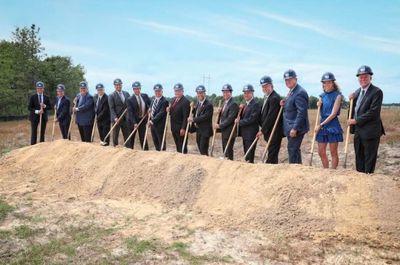
Dignitaries help University officials break ground on Jack and Ruth Ann Hill Convocation Center
State and local dignitaries help break ground on the new Jack and Ruth Ann Hill Convocation Center on Georgia Southern’s south campus in Statesboro. L-R: Georgia Southern Men’s Basketball Coach Brian Burg, Chair of the Georgia Southern Foundation Mike Sanders, University Foundation Board Member Leonard Bevill, University Provost Carl Reiber, Ph.D., Georgia Southern Athletics Director Jared Benko, Regent Everett Kennedy, Majority Leader Jon Burns, USG Chancellor Sonny Purdue, University President Kyle Marrero, Mr. Lance Hill, Congressman Buddy Carter, Chairman Terry England, Congressman Rick Allen, Student athlete Hannah Fuller, Waters College of Health Professions Dean Barry Joyner Ph.D. The opportunity to memorialize the late Sen. Jack Hill and wife Ruth Ann brought an impressive list of state and national leaders to Statesboro on Thursday to help break ground on a new Georgia Southern University Convocation Center that will bear their names. New University System of Georgia (USG) Chancellor Sonny Perdue, state legislators, congressmen and Georgia Southern University President Kyle Marrero – all of whom had worked extensively with Hill over the last several decades – headlined a team of speakers who lauded Hill and his impact on Georgia while helping to kick off a project that will change the face of Statesboro. “I’ve never known a more dedicated public servant than Jack Hill,” said Perdue, who shared an office with Hill and lived with him for a time while they both served in the Georgia Legislature. “It’s an honor to be here today to remember my best political friend in the world.” At 95,000 square feet, the Jack and Ruth Ann Hill Convocation Center will be the largest event venue space between Savannah and Macon and will serve as the signature building on Georgia Southern’s south campus, fronting Veterans Memorial Parkway (US 301 bypass). With an estimated total cost of $64.4 million, the center will be a multi-story complex that provides approximately 7,000 square feet of additional instructional space for the Waters College of Health Professions and provides more than a 50% increase in seating capacity in an arena that will be the new home court for Georgia Southern Eagles NCAA basketball games. The building is named for Jack Hill (‘66), who was the longest-serving Georgia senator when he died in April 2020. He was a senator for 30 years, serving as chairman of several crucial committees, including Appropriations, which has broad jurisdiction over legislation involving budgeting and spending state and federal funds. With Hill’s support, Georgia Southern reached new heights as an institution serving the southeast region and the state of Georgia. Hill was instrumental in helping the University expand its programs and build several new state-of-the-art facilities, including the Engineering and Research Building, which opened for classes in January 2021. His wife of 48 years, Ruth Ann, focused her life on public education and retired as principal of Reidsville Elementary School. She was a triple Eagle, earning degrees from Georgia Southern in 1973, 1990 and 1991. The media release announcing this historic event is attached here: If you're a journalist looking to know ore about this event or Georgia Southern University - simply reach out to Georgia Southern Director of Communications Jennifer Wise at jwise@georgiasouthern.edu to arrange an interview today.


Social media interaction and well-being during a public health crisis
Yvette Wohn, assistant professor at New Jersey Institute of Technology, examines how social media and mobile technologies are used for social support, which includes emotional, informational and financial support — managing both personal and professional relationships. Wohn‘s research area is in human-computer interaction (HCI) and computer-mediated communication. She studies the role of algorithms and social interactions in livestreaming, esports and social media and how they influence well-being. Wohn is conducting research on how physical and social space influences the well-being and productivity of people living or working in enclosed spaces. Some of her experiments look at the effects of simulated nature via digital windows. As Wohn notes, "Seeing nature is important to maintain well-being. In a nutshell, seeing nature on a big screen, even if you know it is fake, can help elevate mood." Wohn is also the principal investigator of two NSF-funded projects examining the role of content moderators on social media, whose role is to keep online spaces positive and factual. Wohn is available to speak with media on topics related to how people use different technologies and social media to connect during these times. To request an interview, click on the button below.


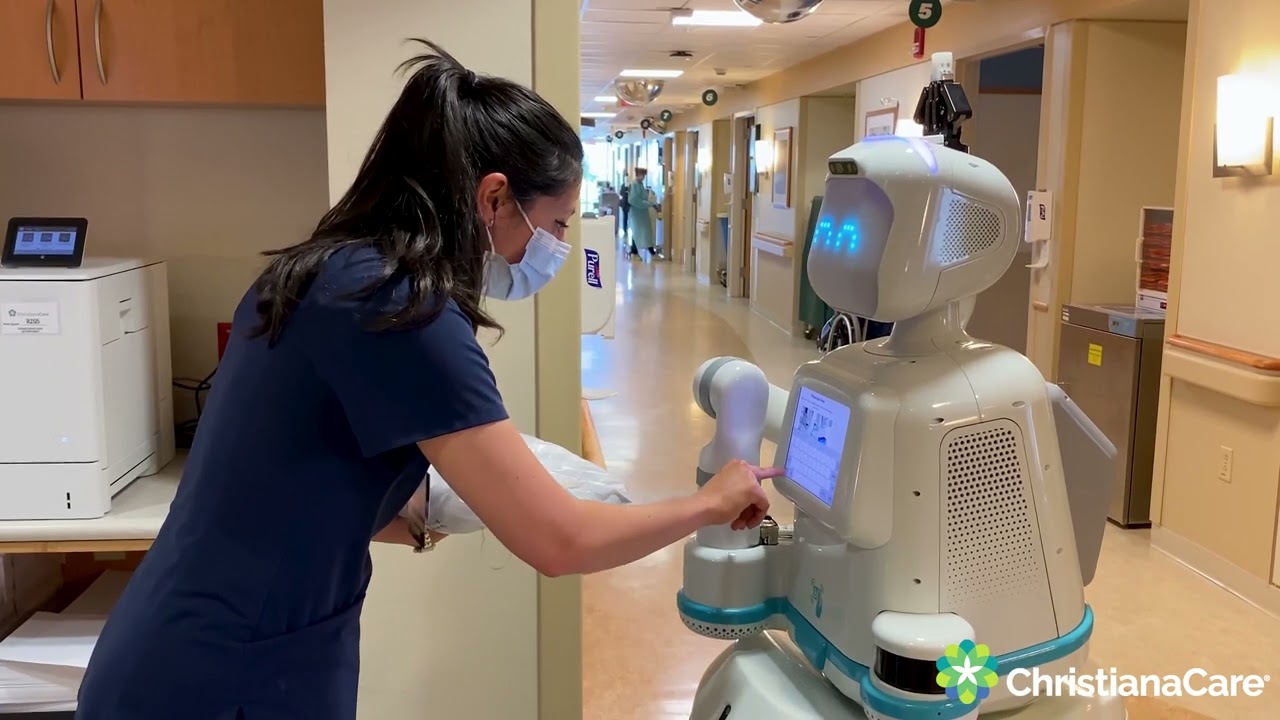
ChristianaCare is the first health system in the Philadelphia region piloting an innovative tool called Moxi, a collaborative robot — or “cobot”— that can assist in the hospital by making deliveries and performing other non-clinical tasks so that nurses and other clinical staff can spend more time focused on what they do best—caring for patients. With a landmark $1.5 million grant from the American Nurses Foundation, ChristianaCare will deploy a total of five Moxi cobots at Christiana Hospital. It is the largest single grant in the history of Nursing at ChristianaCare. Research published in the Journal of Nursing Management shows that nurses spend a significant amount of time — up to 33% of their shifts — on time-consuming but simple tasks such as dropping off lab specimens, collecting supplies or picking up medications from the pharmacy. By taking over these time-consuming but simple tasks, Moxi enables nurses to focus on patient care, where their skills are most needed. “Nurses need the time and space to deliver care and patient education at the top of their license,” said Ric Cuming, Ed.D., MSN, RN, NEA-BC, FAAN, chief nurse executive and president, ChristianaCare HomeHealth. “Moxi will be doing those hunting and gathering tasks such as getting equipment and supplies, which nurses are doing today but don’t need to be doing.” Cobots are designed to share workspace and interact directly with people. In ChristianaCare’s initiative, the Moxi cobots will be integrated with the Cerner Corporation electronic health record (EHR) platform and use artificial intelligence to proactively identify when nurses will need equipment, supplies, medications and lab tests. The Moxi cobots will be deployed to 11 inpatient units, partnering with more than 400 nurses. The American Nurses Foundation grant will enable ChristianaCare to evaluate the impact of cobots on nursing practice with the goal of scaling the technology if successful. “Moxi is not a replacement for a nurse or nursing position — or any position,” Cuming said. “It is an additional resource for nurses and their teams. “With robotic technology, we are using resources wisely and effectively, creating more efficient workflows, reducing repetitive tasks and freeing up nurses’ time for the complex clinical work that they excel at doing.” Reimagining Nursing ChristianaCare is one of 10 grant recipients from the American Nurses Foundation Reimagining Nursing (RN) Initiative. “We are proud that the American Nurses Foundation has the confidence in bold nurse-led ideas that will lead to large-scale, replicable change,” said Katherine Collard, MS, RN-BC, chief nursing informatics officer at ChristianaCare. “This grant will support nurses at ChristianaCare and our nursing colleagues across the nation in realizing their full potential, giving them the tools, resources and power to improve health care now and in the future.” With the American Nurses Foundation grant, ChristianaCare will conduct research on driving nursing outcomes through robotics. “We have a transformative opportunity to generate new knowledge and to move the science forward around robotics in nursing and in health care,” said Susan Birkhoff, Ph.D., RN, nurse scientist at ChristianaCare. “Through research, we will study Moxi’s impact to nursing caregivers that will have broad implications for nursing practice, workforce and education,” she said. ChristianaCare began exploring the potential of robotics to support Nursing with two Moxi cobots acquired in February, funded through the generosity of donors including Good Samaritan, Inc. and E.J. “Woody” Rice. With the grant, said Birkhoff, ChristianaCare will take Moxi to the next “bold frontier,” adding three more cobots with the goal of automating and optimizing nurses’ workflow without interrupting care. With five total cobots, ChristianaCare will be home to the largest number of Moxi robots in health care. The Little Bot That Can Before Moxi can become fully part of the care team, it must learn to navigate the hospital and respond to the nurses’ needs. Using artificial intelligence, Moxi is mapping out Christiana Hospital through sensors and other machine-learning technology so that the cobots can ultimately navigate and work autonomously. “When the Moxi cobots are fully integrated, we anticipate that they will complete up to 200 delivery tasks a day,” Collard said. “By making point-to-point deliveries, Moxi can save nurses hours of time and thousands of steps.” Designed to be compatible with the busy environments of hospitals, Moxi’s features include: Social intelligence: Moxi won’t bump into people or objects in hallways, waves when it sees someone new and happily poses for selfies. Mobile manipulation: Moxi can learn to use its robotic arm to operate existing automatic doors and elevator panels. Human-guided learning: The more Moxi is used, the more Moxi learns and adapts to the environment and specific ways of doing things. Friendly and safe design: With heart-shaped eyes and a friendly appearance, Moxi is designed to navigate safely and get the job done so nurses can focus on patient care. “What Moxi is doing in health systems like ChristianaCare is really transforming the way we think about health care and allowing staff to focus on the people in the hospital as opposed to the tasks,” said Dr. Andrea Thomaz, CEO and co-founder of Diligent Robotics, which created Moxi. “Robots are not something way in the future. Our robots work side-by-side with humans to ease the stress and workload of one of the most demanding jobs in society, nursing. The partnership between Diligent and ChristianaCare shows that the future is now.” Hospital Helper Directly from the Cerner EHR, Moxi will be able to anticipate clinician and patient needs and perform tasks without human involvement. Examples could include: Delivering items to patients based on nurses’ order requests. Making rounds across units to deliver lab samples on collections completed in the electronic health record. Making just-in-time deliveries of pharmaceuticals not stocked on the floor. Prioritizing tasks based on the nursing workload in a unit, so that the busiest nurses will get help first. “Connecting Moxi to the existing technology that clinicians use on a daily basis is key to making it easier to anticipate needs so clinicians can spend more time on patient care,” says Eva Karp, DHA, MBA, RN-BC, senior vice president, chief clinical and patient safety, Cerner. “Moxi could make a real difference in a nurse’s day — alleviating burnout and staffing shortages, which have become especially prevalent since the pandemic.” Incorporating the electronic health record into Moxi is part of the study funded by the American Nurses Foundation. “It’s absolutely in the best interest of our patients that Moxi can work alongside nurses so we can spend more time working directly with our patients to do what we do best,” said Pam Owen, MSN, RN-BC, nurse manager on 7E, one of the pilot units. “And Moxi brings a smile to people’s faces.” Fast Facts About Moxi Works in 22-hour shifts. Needs only two hours of charging time. Weighs about 300 pounds. Can carry a total weight of 70 pounds. Gender-neutral. Pronouns are “it” for a single Moxi cobot and “they” for more than one. Named one of America’s Greatest Disruptors in 2021 by Newsweek and one of the Best Inventions of 2019 by Time Magazine. About ChristianaCare Headquartered in Wilmington, Delaware, ChristianaCare is one of the country’s most dynamic health care organizations, centered on improving health outcomes, making high-quality care more accessible and lowering health care costs. ChristianaCare includes an extensive network of primary care and outpatient services, home health care, urgent care centers, three hospitals (1,299 beds), a freestanding emergency department, a Level I trauma center and a Level III neonatal intensive care unit, a comprehensive stroke center and regional centers of excellence in heart and vascular care, cancer care and women’s health. It also includes the pioneering Gene Editing Institute. ChristianaCare is nationally recognized as a great place to work, rated by Forbes as the 2nd best health system for diversity and inclusion, and the 29th best health system to work for in the United States, and by IDG Computerworld as one of the nation’s Best Places to Work in IT. ChristianaCare is rated by Healthgrades as one of America’s 50 Best Hospitals and continually ranked among the nation’s best by U.S. News & World Report, Newsweek and other national quality ratings. ChristianaCare is a nonprofit teaching health system with more than 260 residents and fellows. With its groundbreaking Center for Virtual Health and a focus on population health and value-based care, ChristianaCare is shaping the future of health care.



Meet the astrobiologist and her students who are searching for life on Mars
By Emma Richards, University of Florida From a young age, Amy Williams wondered if life existed beyond Earth amidst the dark abyss of space, stars and planets — a curiosity that years later landed her a career researching and exploring Mars. Williams, an assistant professor of geology and an astrobiologist at the University of Florida, works as a participating scientist on the Perseverance and Curiosity Rover Science Teams and previously served as a postdoctoral research associate at NASA’s Goddard Space Flight Center. As an astrobiologist and geobiologist, she uses techniques from geology, microbiology and chemistry to search for life beyond Earth. “Even as a little kid watching meteor showers with my family, I wondered if there was someone out there in the stars looking back at Earth.” “Even as a little kid watching meteor showers with my family, I wondered if there was someone out there in the stars looking back at Earth,” she said in an episode of the From Florida podcast. “It’s been a passion of mine my whole career and now it’s the most amazing opportunity to serve on both of the active Mars rover missions.” Williams’ journey to Mars began as a graduate student when a research professor gave her the opportunity to work on the NASA Curiosity mission. From there, Williams built her way up and is now a participating scientist working on day-to-day rover operations. Williams also is opening doors for graduate students at UF to work on Mars research, helping upcoming generation of scientists follow her path. She is specifically interested in involving women and underrepresented groups in her work. Based on her research, Williams said life on Mars, if found, will likely look less like Marvin the Martian and more like microbial life similar to bacteria on Earth. Curiosity landed on Mars in 2012 and Perseverance landed in 2021. The rovers are searching for potential life on Mars by going to habitable environments and searching for evidence of water and essential elements that could supported such life forms. Curiosity has spent nearly its entire mission exploring a large five-kilometer-tall mountain in Gale Crater known as Mount Sharp. The scientists can see Mars’ history and climate based on changes in the chemistry and sediments of the mountain. As for Perseverance, the rover is exploring Jezero Crater, with emphasis on its delta, a geologic deposit that is formed when water from a river flows into a lake. Perseverance will help collect rock and sediment samples from Mars that will be the first brought back to Earth. NASA is also working on a program to eventually send humans to Mars, which will likely take many decades; the first stage in the project will be returning humans to the Moon. “But in the meanwhile, these robots, these rovers that we send to the red planet, they are our proxy,” Williams said. “And looking through the robot rover’s eyes, the images that are returned to us, I recognize this is the closest I will ever be to standing on Mars and looking up at these beautiful geological units, looking up at an alien world that’s so familiar because the tenets of geology apply on Mars, the same as they do on Earth.” To hear more about the Amy Williams' Mars research, listen to the episode on From Florida at this link. Listen to other episodes in the "From Florida" series at this link. To learn more about her work, watch this video featuring Professor Williams:


Will out of this world ideas be the next big thing for Florida's tourism industry?
Look up. That's where you may find the next billion-dollar tourism idea in America. Space tourism seems to be the next frontier for the industry to conquer. With a price tag of at least $50,000 per customer, the potential is huge. With companies like World View test launching in Florida and Space Perspective already headquartered in the Sunshine State, Florida is on the verge of being a destination for tourists looking to go out of this world. The concept sounds impressive, but there still are questions: • Will customers line up for a $50,000 price-point? • How big (or small) is the market for potential customers? • Is it safe and what are the liabilities? • And, if it takes off, what will the ripple effect be for Florida with an influx of high-end tourists? If you are a journalist covering the potential impact of space tourism in Florida, let us help. Peter Ricci, Ph.D., is a clinical associate professor and director of the Hospitality and Tourism Management program in Florida Atlantic University’s College of Business. He is a hospitality industry veteran with more than 20 years of managerial experience in segments including food service, lodging, incentive travel and destination marketing. Peter is available to speak with the media about space-travel tourism as well as other topics such as the labor shortage in hospitality and tourism. Simply click on his icon to arrange an interview.



School to provide increased access to preventative health services for young students so they can learn, grow and thrive To address health issues at the earliest and most preventable stages, provide whole child health, and advance health equity in the community, ChristianaCare opened a new school-based health center at Kuumba Academy Charter School in Wilmington on Friday, May 6th. The creation of the center, made possible through ChristianaCare’s partnership with the Community Education Building (CEB), which houses Kuumba Academy, means that students at the kindergarten-through-8th grade school will have increased access to an array of health services. “At ChristianaCare, we recognize the comprehensive health needs of adolescents in our community and are committed to partnering and using our resources wisely and effectively to expand our school-based health centers,” said Bettina Tweardy Riveros, J.D., chief health equity officer and senior vice president of Government Affairs and Community Engagement at ChristianaCare. “We know that childhood trauma adversely affects the ability of children to learn and build healthy relationships and it increases their risk of mental health issues and lifelong chronic disease. The opening of our school-based health center at Kuumba Academy means that ChristianaCare can support medical and behavioral health services and wraparound social care our children need, so we can positively influence their health, their education and their futures.” With the latest opening, ChristianaCare now operates 21 school-based health centers throughout the First State, in partnership with the Delaware Department of Health & Social Services, the Delaware Division of Public Health and several school districts. Kuumba Academy students, who spoke at an event Friday to celebrate the grand opening, will have access through its school-based health center to the following: Comprehensive behavioral health services. Crisis intervention and suicide prevention. Substance use disorder treatment. Tobacco cessation. Nutrition and weight management. Physical examinations. Health screenings. Treatment for minor illnesses and injuries. Reproductive health. In addition, Kuumba Academy students also will have access to resources that help their families surmount obstacles such as transportation, challenging appointment times, and worries about cost and confidentiality. “Kuumba Academy remains committed to meeting the needs of the whole child and family,” said Sally Maldonado, head of school at Kuumba Academy, the mission of which is to provide an innovative learning environment for the whole child from kindergarten through eighth grade. “The opening of this school-based health center means that our students and families will have daily access to the high-quality behavior and health services that they deserve, and we are grateful to ChristianaCare and CEB for their partnership. We are beginning to see ourselves on the other side of this pandemic and we are energized to emerge with these newfound partnerships focused on health and wellness for our village.” ChristianaCare has partnered with CEB and Kuumba Academy on community-focused health initiatives in the past. In February 2021, ChristianaCare provided more than 800 vaccinations to community members and staff at CEB. On February 7th of this year, ChristianaCare vaccinated 38 people, including 19 children, against COVID-19. This added to the more than 6,000 vaccinations that ChristianaCare Community Health has administered since 2021. “At CEB, we understand the importance that health plays on a child’s ability to learn and succeed,” said Linda Jennings, CEO at CEB. “We are beyond excited to partner with Kuumba and ChristianaCare to launch the Kuumba Academy School-Based Health Center at CEB and add to the list of holistic and integrated support we provide to students and their families.” Today’s event coincides with Better World Day, an annual, national event on the first Friday in May. During Better World Day, students showcase their learning about initiatives that they believe will have a positive impact on their community and the world. Through collaboration and acts of service, students learn the power of their voice to make change. About ChristianaCare Headquartered in Wilmington, Delaware, ChristianaCare is one of the country’s most dynamic health care organizations, centered on improving health outcomes, making high-quality care more accessible and lowering health care costs. ChristianaCare includes an extensive network of primary care and outpatient services, home health care, urgent care centers, three hospitals (1,299 beds), a freestanding emergency department, a Level I trauma center and a Level III neonatal intensive care unit, a comprehensive stroke center and regional centers of excellence in heart and vascular care, cancer care and women’s health. It also includes the pioneering Gene Editing Institute. ChristianaCare is nationally recognized as a great place to work, rated by Forbes as the 2nd best health system for diversity and inclusion, and the 29th best health system to work for in the United States, and by IDG Computerworld as one of the nation’s Best Places to Work in IT. ChristianaCare is rated by Healthgrades as one of America’s 50 Best Hospitals and continually ranked among the nation’s best by U.S. News & World Report, Newsweek and other national quality ratings. ChristianaCare is a nonprofit teaching health system with more than 260 residents and fellows. With its groundbreaking Center for Virtual Health and a focus on population health and value-based care, ChristianaCare is shaping the future of health care. About Kuumba Academy Charter School Kuumba Academy Charter School’s mission is to provide an innovative learning environment for the whole child from kindergarten through eighth grade. Our directors, staff, and families share the core belief that parents are children’s primary educators. KACS parents, in partnership with teachers and administrators, believe that every child can maximize his or her learning potential given the opportunity to do so. In response to the outcry from Wilmington parents looking for a high-quality public education and increased access to arts education for their children, Christina Cultural Arts Center leaders, parents, and community supporters took action and were granted a Department of Education charter to create Kuumba Academy Charter School (KACS) in 2001. KACS was the first school model in the state that partnered a public charter school with a nonprofit community organization. Christina Cultural Arts Center (CCAC) and KACS form a unique nonprofit/public school partnership committed to educational excellence. Through the innovative union of academics, arts, technology, and family engagement, each KACS student’s individual learning style is nurtured—resulting in creative learners who are agents of positive change in the community. The CCAC/KACS model is regarded by many as the single most significant achievement in Wilmington’s post public school desegregation history. About the Community Education Building (CEB) CEB was established in 2012 after Bank of America donated the former MBNA Bracebridge IV building to The Longwood Foundation. Living up to its commitment of increasing access to education, the Longwood Foundation created CEB as an independent entity, and transformed the space into an ecosystem to support the social, emotional, physical, and academic development of Wilmington’s youth. CEB is an innovative co-location and shared services model. Focused on supporting the entire family, CEB offers vibrant programs and support systems that provide a sound foundation for each student. It serves as a hub for families by offering services such as healthy meals, life coaches, and mental health services. This model leads to deeper family engagement in their child’s learning and allows schools to focus on teaching and learning, not operations and overhead. CEB is an educational ecosystem that holistically integrates programs and resources for students and their families, ensuring that every student has an equitable opportunity to succeed.


12 tips to help you build your networking skills in Canada
Your professional network will be one of your most valuable assets in the Canadian job market. Whether you’re trying to land your first job or are looking for a mentor, your network can play an important role in helping you achieve professional success in Canada. As a newcomer to Canada, you’ll have to work harder and refine your networking skills to build connections from scratch in your new country. This article will provide you with tips to help you build your networking skills, so you can start nurturing meaningful professional relationships. 1. Understand that communication is two-sided One of the many advantages of networking is that it’s as much about promoting your personal brand as it is about learning from the experience of others. When someone takes time to speak with you, give them a chance to talk. Active, attentive listening is an essential networking skill that ensures you absorb the information being shared with you. You can then ask intelligent, relevant questions and get insights that might be useful for your professional success in Canada. Keep distractions away and focus on the conversation. It is rude to interrupt when someone is talking, so save your questions until they’ve finished speaking. 2. Improve your public speaking skills Many newcomers avoid networking or public speaking as they lack confidence in their English language or interpersonal skills. However, practice is the best way to overcome the fear of speaking in public. Take the time to work on your language skills. There are many English as a Second Language (ESL) resources and community groups available across the country to help newcomers improve their speaking and listening skills. Practice speaking in front of a mirror or with your friends. Don’t feel insecure if you have an accent or have trouble understanding some words. Remember, Canada is a diverse, multicultural country, and most people are accepting of the fact that English may not be your first language. 3. Practice both verbal and non-verbal communication What you say is only half the image you present—non-verbal communication is just as important. Your body language conveys a lot about your personality and how engaged you are in a meeting. Avoid crossing your arms, closing your fists tightly, or hunching your shoulders, as this can make you seem unfriendly. Practice smiling and gesturing with your hands as you talk in front of a mirror. Be aware of your posture and make eye contact with the people you are talking to. While networking in-person, speak confidently. Respect people’s personal space and avoid standing too close to them. 4. Learn the art of small talk Small talk is culturally important in Canada. It serves as an icebreaker before you get to the actual topic of conversation. Since small talk is meant to create a safe, comfortable environment, be sure to choose non-controversial, light topics. Some common small talk topics include the weather, sports, arts, entertainment, hobbies, and current events. Stay away from topics like politics, personal or family matters, income, and religion. As a newcomer, you can build your small talk skills by staying up-to-date on the news, developing an interest in Canadian arts, culture, and, of course, sports. 5. Ask for constructive feedback An easy way to build your networking skills is to get an honest opinion on what you maybe doing wrong or need to improve. Before an important networking meeting, do a practice run with some friends and ask them for feedback on your small talk, elevator pitch, questions, and overall communication skills. You can also ask for constructive feedback towards the end of your networking meetings. Be open and humble when you ask for tips to help you build your networking skills. In most cases, people are willing to offer guidance and insights that you can leverage in future meetings. 6. Give before you get One mistake many newcomers make is to only think about what they can get out of a connection, without considering what they may be able to offer in return. Networking is not one-sided, so be sure to make a list of your unique skills and strengths before you start. Even if you are new to the Canadian job market, review the LinkedIn profile of the person you’re going to meet to understand their role and see where you can contribute. During your meeting, convey your willingness to help and ask if there’s anything you can support them with. By offering to give before you get, you can build meaningful connections and also prove your value to your network. Once they’ve seen your skills in action, they’ll be more likely to offer guidance, connect you to others, or refer you to job opportunities. 7. Attend networking events and workshops One way to build your networking skills is to jump right in and start networking. Look for both virtual and in-person networking events on industry association websites or on platforms like Eventbrite and Meetup, and attend as many as you can. In addition to making connections, this will also give you a chance to observe the way other people network. You’ll be able to pick up best practices related to small talk, ways to introduce yourself, verbal and non-verbal communication, and questions to ask. If you meet someone particularly impressive, don’t hesitate to follow up and ask if they would be willing to share some tips to help you network better. 8. Prepare, prepare, prepare When it comes to networking meetings, preparation can make all the difference. Put your research skills to good use and learn as much as you can about the background, role, and career path of the individual you’re going to meet. Know what you want to get from your networking meetings—further connections, guidance, or referrals. Prepare a list of questions accordingly, and customize your list based on each person’s industry, skills, and position. Finally, spend some time creating an engaging, authentic elevator pitch. Remember that an elevator pitch is not a sales pitch, but a chance to tell your story and highlight your skills in an impactful way. 9. Ask for recommendations and introductions In Canada, every professional you meet will likely have their own network. As a newcomer, it might not be easy to ask the people you meet to connect you with others. This is a networking skill that you’ll need to build as you start to grow and nurture your network. Before you meet someone for a coffee chat, go through their LinkedIn network and see if they know someone you’d like to be introduced to. If you’re looking for specific information or trying to build a particular skill, it is a good idea to ask your connections if they can recommend someone in their industry or organization who might be able to help. If you’ve cultivated a meaningful relationship, you might also be able to get an introduction to someone in their network. When you are introduced to a person by someone they know and trust, they are more likely to take out time to speak with you. 10. Keep track of your networking meetings For most newcomers, the first few months of networking can be overwhelming. Since you’re building your network from scratch in Canada, you might be meeting as many as four or five people each week. This makes it hard to keep track of who you’ve met and what you discussed. As a result, you might forget valuable insights or miss out on following up with some people. Keeping track of your meetings is an important networking skill. Create a list with names of people you meet, meeting dates, their designations and organization, discussion points, and follow-up actions. When you set up follow-up meetings, you’ll be able to refer to your list to review points that you had discussed with them earlier. This list can also help you identify connections who might be useful when you’re applying for a job. You’ll also be able to clearly see gaps in your network, such as industries you don’t have connections in, so you can focus on those in the future. 11. Follow up and follow through Building meaningful professional relationships takes time and in most cases, the first meeting is only an introduction. The value you can leverage from your connections often depends on how much time and effort you invest in maintaining them. You can start by sending a personalized thank you note within 24 hours of your meeting. If you’ve agreed upon any action items during your meetings, don’t forget to deliver on them. After your initial meeting, you can keep the conversation going by regularly sharing relevant developments and insights, engaging on their social media posts, or asking for their opinion on topics related to the ones you discussed. 12. Don’t give up Finally, patience is another skill you’ll need as you start building your network in Canada. It’s easy to become demotivated when your LinkedIn connection requests go unanswered or when the people you connect with online are unwilling to meet you. Even after the initial coffee chats, some of your connections may not be able or willing to offer you the advice, guidance, or contacts you need. It takes time to nurture relationships and identify how and where someone might be able to add value. You might also have to demonstrate your own willingness to help before someone agrees to support you. Even if some meetings don’t go as well as you had hoped, don’t give up. Each new meeting is a learning opportunity, so keep an open mind. Remember that it only takes one connection or referral to land your dream job in Canada. Networking plays a crucial role in the Canadian job market. However, networking may not come naturally to everyone. As a newcomer to Canada, improving your networking skills will help you build meaningful relationships with people who can bring you closer to achieving your career goals. Original article located here, published by Arrive. About Arrive Arrive is powered by RBC Ventures Inc, a subsidiary of Royal Bank of Canada. In collaboration with RBC, Arrive is dedicated to helping newcomers achieve their life, career, and financial goals in Canada. An important part of establishing your financial life in Canada is finding the right partner to invest in your financial success. RBC is the largest bank in Canada* and here to be your partner in all of your financial needs.


Major study reveals the lasting impact of Covid lockdowns
New research from the University of East Anglia reveals first-hand the lasting impact that lockdowns may have had on people’s mental and physical health. The UK’s first Covid lockdown was announced by Prime Minister Boris Johnson exactly two years ago today. Just a few days later, researchers at UEA launched a major project to track the mental and physical health of the nation through lockdowns and beyond. More than 1,000 participants carried out daily surveys – with questions on a range of lifestyle behaviours including physical activity, diet, sleep, smoking, drinking, and drug use. Some of the participants were then interviewed by the research team, to try to understand what was happening for people from their own viewpoints. Listen to what they had to say in our oral history project Lockdown Voices. New findings published today show how people responded very differently to social restrictions depending on their existing circumstances. For those who were less well-off to start with, adapting to lockdown was more difficult, and health behaviours typically worsened to a greater extent. In contrast, those who were better off at the start of the pandemic demonstrated faster adaptation and were more able to respond positively to restrictions, for example by taking to online exercise classes. It is likely that any lasting impact to mental and physical health will therefore be much greater for those who were worse off to start with. Those with good social links and healthy behaviours already in place described in their interviews how they were able to adapt to lockdown and thrive, whereas some of the more vulnerable in our communities had fallen into unhealthy spirals. Prof Caitlin Notley, from UEA's Norwich Medical School, said: “When the first lockdown was announced back in 2020, we started surveying participants from around the UK daily. Our initial results showed that people were eating less fruit and veg, getting less exercise and drinking more alcohol. “It quickly became apparent that lockdown may have lasting consequences for the physical and mental health of the nation. “We wanted to see whether people’s lifestyles changed in the long-term so we continued the study by carrying out regular surveys with the participants, and interviewing some people to find out more.” Now, two years on, the team’s results show how health inequalities are likely to have widened. Prof Notley said: “Social restrictions imposed as a result of the coronavirus pandemic have had a significant impact on health behaviours at the individual and population level. “It’s fair to say that all of our participants’ lives were disrupted by lockdown and they were forced to adapt. “But people responded to the lockdowns very differently and their experiences of social restrictions varied considerably. “Fundamentally, people were hindered or helped by their existing support structures and resources, such as access to technology to engage with the outside world, or private outdoor space. “Those people who had good friends, community links and who were already health conscious, were able to respond positively and better able to cope. “They were able to adapt to the ‘new normal’, use technology to keep in touch with friends and relatives, order veg boxes, carry on with a healthy diet and take part in healthy pursuits in new and innovative ways such as online fitness classes or ‘doing Joe Wicks’. “But lockdowns are very likely to have caused a sustained widening of social and health inequalities. “Those who remained in work outside the home, or who were retired, were the least impacted overall. But those who were unemployed, younger, on a lower income, clinically unwell or told to fully shield were particularly impacted by strict restrictions. “For these more vulnerable people, supportive social factors were taken away or severely restricted. Anxiety and depression worsened, and unhealthy behaviours like exercising less, drinking more alcohol, and eating a poor diet increased. “As we work through the ‘roadmap to recovery’, emphasis needs to be placed on a collaborative, community-based approach, with a focus on what makes us well. “Encouraging membership of community exercise groups, for example, may help those most impacted to engage again with healthy behaviours to keep them well. We also need to pay attention to how those who are less well-off responded more negatively to the policy of lockdown, so that lessons can be learnt for the future,” she added. ‘Disruption and adaptation in response to the coronavirus pandemic – assets as contextual moderators of enactment of health behaviours’ is published in the British Journal of Health Psychology.

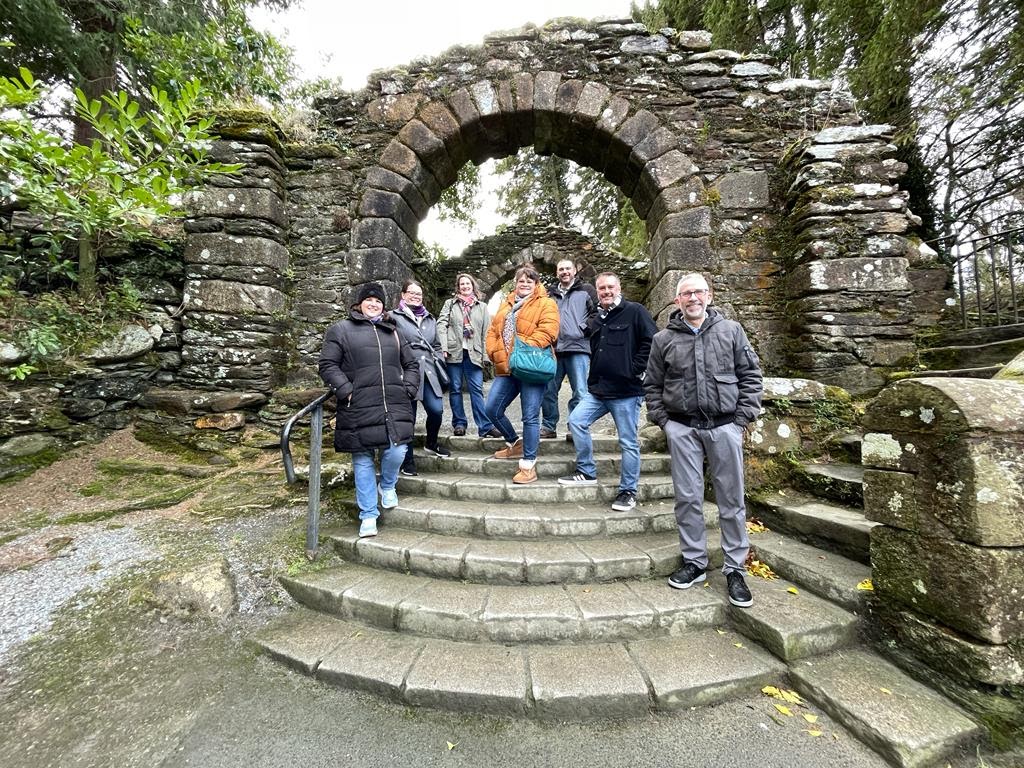
$100K student scholarship pool available for 2022 summer courses in Ireland Six professors from Georgia Southern University’s College of Education (COE) recently broadened their horizons during a trip to Ireland as they learned from and shared insight with instructors and educational leaders in the Wexford County community. Led by Howard Keeley, Ph.D., director of the University’s Center for Irish Research and Teaching, COE faculty traveled to Georgia Southern’s learning center in Wexford, Ireland, to observe Irish educational settings and exchange ideas with local leaders just ahead of a summer study abroad program opportunity for Georgia Southern students in which $100,000 of scholarship funding is available. “The main thing we did was get in front of leaders in the education space in Ireland,” stated Keeley. “We spoke to a number of folks who are either principals or vice principals or, in some way, senior administrators in a variety of schools including all-boys, all-girls, religious, secular and mixed schools.” The group included Catherine Howerter, Ph.D., associate professor of elementary and special education; Kip Sorgen, Ph.D., assistant professor of leadership, technology and human development; Alex Reyes, Ph.D., assistant professor of middle grades and secondary education; Amanda Wall, Ph.D., associate professor of middle grades and secondary education; Betsy Barrow, Ed.D., assistant professor of middle grades and secondary education; and Dan Calhoun, Ph.D., professor of leadership, technology and human development. Reyes, who trains pre-service and in-service teachers to work with culturally and linguistically diverse students, was excited to travel to Wexford after a study abroad program in Czech Republic she spearheaded with Wall was canceled in March 2020 due to the pandemic. Intrigued by Ireland, a plurilingual country, she was curious to see how Wexford’s environment might benefit students culturally. “I thought it was really exciting,” said Reyes. “All of the street signs are in Irish, even though English is the main language spoken. That prioritizing of that cultural heritage is fascinating. It was great to learn that the students in their primary and secondary schools take Irish language and culture as a subject every year.” She was especially motivated by a field trip to an Irish-language school, Meanscoil Gharman, which serves middle and high school students. With the exception of one daily class in English, teachers and students conducted all lessons in Irish. “It was really interesting to see that perspective,” she said. “There has been a revitalization of that culture. I thought that was fascinating to see how that can be handled in school.” In addition, Reyes was duly impressed with the country’s prioritization of social and emotional literacy for children, and the mandated well-being hours that are incorporated into daily school routines as a result of the pandemic. A program that promotes hygiene and an anti-bullying campaign also fit into the wellness curriculum. “It really impressed me that as a nation they prioritize the wellness of students, and how language and cultures can really be supported in a meaningful way,” Reyes said. “It’s affirming to see a proactive approach that has positive outcomes. Now, thinking ahead, we can look at how we can create opportunities for our students to experience this kind of approach.” Sorgen, who teaches in the educational leadership program at Georgia Southern, was interested in Ireland’s professional preparation. “None of them had advanced degrees, like what we offer at Georgia Southern,” noted Sorgen. “Learning about how to be a principal in Ireland is on-the-job training. In Georgia, there are specific educational requirements for our school administrators guided by professional standards. In Ireland, they generally ascend through the ranks, which makes professional mentoring essential to their success. We are exploring ways our educational leadership students could learn from Irish administrators about their experience, specifically with mentoring.” He also foresees the international partnership as a two-way exchange. “Given educational leadership programs are not common in Ireland, our faculty are considering ways in which we could use our expertise to foster leadership development of principals and teachers in Wexford,” said Sorgen. “We would utilize the Georgia Southern Wexford campus to host some of these sessions, furthering Georgia Southern’s relationship within the Wexford community.” Keeley also arranged meetings with education policy makers, including an extended meeting with an Irish congressman who is a representative for the County of Wexford in the Irish national parliament and chairs the joint committee for the Irish equivalent of the House and Senate Committee on education and higher education. “That was a tremendous opportunity for our faculty to talk to somebody at the highest level of government in Ireland, creating Irish state policy on education,” said Keeley. “And I know from the feedback we got from our College of Education colleagues that particularly for those in higher education, that to them was a really useful, next-step experience.” The trip exceeded expectations. “It was a fantastic learning experience for everyone,” said Keeley. “We had lots of high-level and also very practical experiences, and I could see our College of Education team thinking, ‘How can I bring what I’m learning, what I’m experiencing in this moment, into my classroom, into my curriculum, into my prospective study abroad courses in a way to build student success for our Georgia Southern folks.’ I think it was a great visit.” Complementing the faculty’s trip, a COE Irish study abroad program on diverse education in Ireland was recently approved for Summer 2022 and will give education students the opportunity to take one or two courses with the study abroad component. This will be a part of a broader study abroad program in Wexford, presented by the Honors College and the Center for Irish Research and Teaching, with assistance from the Office of the Provost and the Office of Global Engagement. The costs for undergraduate students at Georgia Southern’s Wexford campus will be offset by a $100,000 scholarship fund with awards of $1,000 for each student accepted into the program. “For students traveling to Wexford, Ireland, this summer, we will be able to defray the cost of the program through a generous travel scholarship through the Georgia Southern University Foundation,” said Dustin Anderson, Ph.D., associate provost for Student Success. “The donation makes these the most affordable multi-week programs that we ever have been able to offer.” Keeley is thrilled the gifts from generous donors will enable a number of students to earn valuable global experiences. “For students to have an opportunity to have international lives is powerful, and it’s powerful in ways that sometimes we can’t even predict,” he said. “Just the very fact of being abroad is going to change any of us, right? It can have a really transformative effect to feel a sense that, you know, as a student, ‘I can do this,’ and then a sense after the fact, ‘I did this,’ and just that in itself is educational. Giving students a safe space in Wexford, Ireland, to grow and feel that they are in a sense global citizens and bring the best of America, bring the best of Georgia, bring the best of the states from Savannah to Ireland, and learn to be an ambassador. That’s wonderful.” In addition to the education courses, students will also be able to choose from a Wexford-Savannah honors inquiry and an interdisciplinary program open to all students on human migration with courses in geography, religious studies, public health and a CORE study abroad course. Students interested can learn more about the program by clicking here and can email Kristin Karam in the Office of Global Engagement for more information about the scholarships. Georgia Southern University-Wexford is a global hub for learning housed in a historic building constructed in 1812. The space now features state-of-the-art classrooms and student apartments. Georgia Southern is the first public university in the United States to open an outreach learning facility in Ireland. If you're a reporter looking to know more about this initiative, then let our experts help. Howard Keeley, Ph.D., is the director of the Center for Irish Research and Teaching at Georgia Southern University. He is available - simply click on his icon now to arrange an interview today.


10 resume mistakes to avoid when applying for jobs in Canada
As a newcomer to Canada, applying for your first job can be stressful. The recruitment process may be different from what you’ve experienced back home and it can take some time to understand what will make your application stand out in Canada’s competitive job market. As you look for your first job in Canada, your resume will likely be key in determining whether or not you get the role. In Canada, most companies run the resumes they receive through a resume-scanning software to filter ones that best match the requirements laid out in the job description. If you’re shortlisted, your resume and cover letter will be sent to a recruiter or hiring manager, and they’ll decide whether you’re an ideal candidate for the position. Since your resume will determine the first impression you make on the hiring manager, there’s a lot riding on what you include––or not. Should you really submit that extra page? (Maybe.) Is it okay to exaggerate your credentials? (No!) What about using a fun font? (Better not to.) Here are 10 common resume mistakes newcomers tend to make and guidance on how to avoid them. 1. Using the same resume for different job applications Landing your first job in Canada can take a few months and it’s easy to get overwhelmed and exhausted by the process. When you’re applying to hundreds of job positions, the idea of using the same generic resume for multiple positions can be tempting. However, customizing your resume significantly improves your chances of being selected. Every job is unique––and your application should be too. While your applicant profile won’t vary significantly from one application to the next, the way in which you present it should be customized for each company and job opening. A good way to do this is to look for keywords in each job posting and sprinkle them throughout your resume where they make sense. This will help your resume get past both the resume-scanning software and human recruiters tasked with reading dozens, if not hundreds of applications. Be sure to include experience and behavioural traits mentioned in the job posting. (For example, if the ideal candidate is proficient with a certain type of software, you should definitely mention any experience you have with it.) At the same time, remove experiences and skills that aren’t a match, so whoever reads your resume isn’t distracted by non-essential items. 2. Not reading the job description before creating your resume Reading the job description will give you vital information about the role and the potential candidate an organization is looking for, including key skills and experiences. Not only will this information help you determine if you’re a good candidate, it’ll also help you craft the perfect resume. Many Canadian employers use applicant tracking systems (ATS) to screen resumes and shortlist ones that match the job description. This means it’s essential your application takes the job ad into consideration. As mentioned above, you’ll want to look for keywords and descriptions you can include in your cover letter and resume. It’s also a good idea to include some synonyms and similar words to these keywords. The idea is to include just enough keywords for your resume to pass the ATS, while ensuring that it reads well for a human recruiter. Only include keywords where it makes sense to do so and don’t include too many in a row. Your cover letter and resume should always be grammatically correct, easy to read, and flow naturally. 3. Listing job responsibilities instead of achievements Unlike some countries where resumes are supposed to outline your past roles and responsibilities, in Canada resumes focus on achievements. Listing past job responsibilities doesn’t tell future employers how you performed in a role. The goal is to make you stand out from every other applicant with similar job experience, so make sure you emphasize what you brought to a company or team as an individual. The best way to do this is by listing achievements, citing numbers or data that may grab an employer’s attention, or describing challenges you overcame. This isn’t the time to be modest! You want to share what makes you special. 4. Grammatical errors and typos in your resume Proofread, proofread, and proofread again before hitting “send.” Missing grammatical errors and typos is the worst resume mistake you can make and can cost you a job, even if you’re a good candidate for the role. Grammatical errors will make your resume stand out in all the wrong ways, undermining your credibility and bringing into question your attention to detail. If possible, have a friend, family member, or mentor proofread your cover letter and resume as well. This is even more important if English isn’t your first language. You can use spell check as a guide, but don’t rely on it to catch all your errors. 5. Creating a resume that’s too long or too short One of the biggest questions Canadian job seekers have is how long their resume should be. The exact answer depends on the specific job at hand and an applicant’s work experience, but generally resumes should be one to two pages long. A cover letter should be no longer than one page, but not shorter than three to four paragraphs. The more years of work experience you have under your belt, the closer to two pages your resume can be. If you’re fresh out of school or less than a decade into your career, it’s better to stick to one page. As you progress in your career, it’s also normal to cut out early-career work experience and keep educational experience to a single line. A recruiter for a senior-level position doesn’t need to read about your early-20’s internships or time spent in debate club. 6. Not using action verbs You want to use powerful and impactful language in your resume, which means using action verbs. Action verbs are verbs that imply that the subject (you) is doing something. These are a great way to showcase your initiative, rather than passively saying you were “responsible for” something. Good examples of action words to use in a cover letter or resume include “led,” “managed,” “succeeded,” “surpassed,” “created,” and “delivered.” Try to use a mix of action words and avoid repeating the same ones in consecutive points. 7. Including information not typically included in Canadian resumes In Canada, you’re not supposed to include information like your marital status, religion, gender, age, or sexual orientiation in your cover letter or resume. Unless you’re applying for a modelling or acting job, you’re also not supposed to include a photo or headshot. Not only will this extra information take up valuable page space, it could cause a potential employer to avoid your resume for fear of accusations of unintentional or intentional discrimination. It’s actually illegal in Canada for an employer to ask for information like your sexual orientation, age, or ethnicity in a job application process or interview. To avoid putting a recruiter or employer in an awkward situation, it’s best to stay away from these topics. It’s also considered improper to include salary expectations or irrelevant personal hobbies in your application. In Canada, you can skip writing “references available upon request,” as that’s understood and doesn’t need to be stated. 8. Submitting a cluttered or improperly-formatted resume First and foremost, a resume should always be organized and easy to read. An employer should be able to easily pick out your work experience, any volunteer experience, and educational background. Be sure to leave enough white space around text. This typically means 1 or 1.5 line spacing and wider margins. Job applications also aren’t the time to get creative with fonts. Stick to classics like Times New Roman, Arial, or Calibri with a size of at least 10, but not larger than 14. Avoid mixing fonts or using too many different font sizes. Also avoid going overboard with bolding, underlining, or italicizing. If you need more guidance on formatting your resume in the Canadian style, you’ll find the tips and templates you need in our article on Canadian resumes and cover letters. 9. Listing inaccurate contact information It doesn’t matter how great your resume is if a potential employer can’t contact you. If you’ve recently moved or changed your phone number or e-mail address, make sure the information included in your cover letter and resume is up to date. Either way, proofread this information multiple times to avoid typos. It’s also important to make sure your email address is professional (avoid using contact email addresses like cutiepie468@hotmail.com or rockstar732@yahoo.com). Ideally, it should be formatted firstname.lastname or using your initials and not include any nicknames or slang language. 10. Lying on your resume You may be tempted to exaggerate your experience or accomplishments, but this is a big ethical no-no and a dealbreaker for any potential employer. Many Canadian recruiters and employers will verify your credentials and background through other sources, whether that’s by calling references, conducting background checks, or looking you up on LinkedIn or other social media platforms. If you lie, you’re very likely to get caught. If you’re worried about an employment gap, it’s better to plan to explain it than cover it up with a lie. As a newcomer, landing a first job can be challenging. However, it’s important to avoid the urge to embellish or lie to make your resume more impressive. Remember, most employment contracts include a clause that allows an employer to terminate your position if they find you lied on your job application. That’s not the type of stress you need hanging over your head! Having a good resume is crucial for your job search. Your resume is essentially your first interaction with a prospective employer and it should convey why you’re an ideal candidate for the job. By avoiding these common mistakes, you can make a positive impression and stand out among a pool of candidates to land a job in Canada. Original article located here, published by Arrive. About Arrive Arrive is powered by RBC Ventures Inc, a subsidiary of Royal Bank of Canada. In collaboration with RBC, Arrive is dedicated to helping newcomers achieve their life, career, and financial goals in Canada. An important part of establishing your financial life in Canada is finding the right partner to invest in your financial success. RBC is the largest bank in Canada* and here to be your partner in all of your financial needs. RBC supports Arrive, and with a 150-year commitment to newcomer success in Canada, RBC goes the extra mile in support and funding to ensure that the Arrive newcomer platform is FREE to all.