
Experts Matter. Find Yours.
Connect for media, speaking, professional opportunities & more.

Earned Media: The Secret Weapon of Brand Building
I was reading the newspaper recently and saw an article about tax filing season. The article outlined some of the challenges facing people during tax season but it also highlighted some of the opportunities and useful tips. It wasn’t the reporter outlining this information — it was a tax expert the reporter had interviewed and used as a source in their story. The information was incredibly helpful. The expert being interviewed humanized the issue by telling stories about people she had helped. I was engaged. And, because I was engaged, I read the story very carefully. I even remember the name of the expert and the name of her firm. It stuck. I happen to have an excellent accountant — but if I didn’t — I can guarantee I would have called this expert in the story. In fact, I have no doubt she got calls after the article was published. And, from her standpoint and the standpoint of her firm — they paid nothing to be in that article. Not only did they get valuable space in a news story as an expert without paying for the exposure — the reporter likely even thanked her for helping. Advertising executives, marketing agencies and social media “gurus” typically don’t like people like me — news media strategists. We tell clients that the best bang for their buck is “earned media” which means exactly what it says — media that you have earned (and not purchased) whether it be through relationships or by being in an expert database. We help them tell their organic stories by positioning them as experts in their field, which is not easy today given everyone has a LinkedIn account or website calling themselves an “expert” or a “guru”. It’s one thing to proclaim yourself an expert — it’s something completely different to be recognized as one by the news media. You see, despite what some will say, traditional news media is far from dead. Is it facing challenges and reinvention? Absolutely. But, dead? Absolutely not and it’s still the medium by which earned media legends are made. I want to be clear in saying there can be, indeed, a time and place for paid media. The issue is that for too many organizations, it’s the only tangible tool in their toolbox. And it is, by far, the most expensive tool with, questionably, the lowest return on investment. In my opinion, unless you’re spending Coke and Samsung levels of dollars on advertising (multi millions), there’s a good chance your ads are being washed away in the information tsunami — the white noise that is our over-saturated information ecosystem. In many cases, advertising as a stand-alone marketing strategy CAN BE a colossal waste of your money. Even social media marketing and advertising is fast becoming the most cluttered and noisy space for paid and promoted messaging. Due to its lower cost, people are flooding to it making it increasingly more difficult to be heard in the sea of white noise. The fact is that a well-balanced marketing and communication strategy is one that reaches your target audience on a number of levels — some of them could be paid — some of them organically through social media — and the one many people neglect is to serve as experts to drive earned media. It is often neglected because it’s the one marketing tool that requires working with someone who truly understands journalism and journalists — and what their daily and hourly needs are in terms of getting their jobs done. So – yes – it’s hard work and it’s very specialized work. But there are companies, people and tools out there that can help. And, it’s worth the hard work. Being quoted as an expert in a legitimate news story or feature interview can move mountains in terms of building your brand. First of all, being in a news story gives you an instant status AND credibility. In paid advertising, it’s you saying how great you are — it’s self-declared. People are skeptical — they know you’ve paid to say that about yourself; you are blasting out a one way message. However, the traditional media interviewing you is a two way conversation the public is watching in an engaged way. It’s akin to a third party testimonial. In other words, the viewing/reading/listening audience sees a trusted journalist they feel they know who is putting this expert source in their story — this is someone the journalists trusts as an expert source so inherently the message is that the public should trust them as well. In this case, the medium (traditional news media) truly is a big part of the message. You can’t buy that. Legitimacy. Credibility. The foundation of any successful brand. It is earned. I have a college client that I work with. They decided to focus more on earned media, admittedly, with some hesitation. We media coached a number of their professors and Deans. We put a plan into place to develop some tangible relationships with journalists. It started small with one short interview. Then it was two. Then it was a regular spot. And within one year, the amount of earned media they have received has arguably far outpaced the value of all their paid advertising. Some of their people have become go-to experts for the media where they were non existent just a year ago. Prospective students and parents see this college’s experts in the media and immediately associate true tangible value to the institution in considering where to enrol. We built capacity with this College and now they are rolling on their own. They have momentum. This is what you need to reach for. And earned media is the gift that keeps on giving. That newspaper story, radio interview or television panel you were featured in will be shared by the media outlets to their huge social media audiences. Other interested people will then share it further to their networks. This is increases your third party credibility — in some cases reaching more people than the original news story. This rarely happens with ads or paid media and is the secret weapon of earned media. And if you weren’t already convinced, then consider this: earned media creates huge online traffic and can have an extremely positive impact on organic SEO for your website or brand — something paid media can’t do. So, if you’re a hospital, a university or research centre, one of the core issues you’re facing today is recruiting top talent. Recruiting is competitive and complex — yet most potential recruits will begin their research on Google. They will search your institution and see what’s being said about you. If you are getting a lot of positive earned media, that will quickly show up high on your Google search results. The potential recruit reads those news stories and sees your institution is out there with its experts. Even doctors and professors will associate traditional earned media coverage as a measurement in credibility. So, how do you go about increasing your earned media reach? How do you become known as an expert in your field with the media? Admittedly, it’s not as easy as buying a full page ad in a newspapers or boosting a post on Facebook. Earned media is both an art and a science and it requires an intuitive, expert knowledge of the media. Making sure you are listed in searchable online networks that journalists use is a very good start. But there is a caution. You only have one or two chances to prove yourself as a reliable and value added source for journalists. If you become known as a lame or boring guest, you’ll be blacklisted and that opportunity will disappear. So before you go running into the streets declaring yourself an expert ready for national media exposure. Make sure you’re ready to be interviewed by the media because they won’t give you a free ride. They are journalists and not stenographers. You will be asked tough, challenging questions. The key is to be prepared for the opportunity. How do you do that? Well that’s my next column. Stay tuned.



Baylor Expert Shares Six Lessons We Can Learn From Mr. Rogers About Being a Good Neighbor
WACO, Texas (Nov. 14, 2019) – In this polarized time, when it requires little effort to tear a stranger apart on social media or lash out at a family member because of a difference of opinion, the gentle cadence of Fred Rogers singing a simple song about neighbors loving and helping each other is a welcome respite. The much-anticipated movie, “A Beautiful Day in the Neighborhood,” starring Academy Award-winner Tom Hanks as Rogers – known to generations simply as “Mr. Rogers,” the host of “Mister Rogers’ Neighborhood” – will be released in theaters on Nov. 22. The official movie trailer posted on YouTube has drawn nearly 12 million views. Civics education expert Brooke Blevins, Ph.D., associate professor of social studies education and chair of Baylor University’s department of curriculum and instruction, said the renewed focus on the beloved and soft-spoken TV personality, who died in 2003, might be coming at just the right time. “When you watch Mr. Rogers, time slows down, and you are able to take a deep breath as complicated issues become more understandable and the beauty of relationships is reinforced,” Blevins said. “Imagine if we all walked into the world with the belief that each person was inherently worthy. Imagine if our goal was to help each other recognize that we are worthy of being loved. Imagine if we sought to listen more than we spoke,” she said. “I imagine if this was the case, that our conversation would change, our understanding of those around us would shift, and our national conversations would be more civil.” Below, Blevins shares six lessons we can learn from Mr. Rogers about being better citizens. Each person is worthy to be loved and heard. Like Mr. Rogers, we must recognize that each person we interact with is worthy to be loved and listened to. We must recognize that each person has unique experiences, fears, losses and triumphs that shape the way they understand what’s happening around them. We need to do much more listening and far less talking. We should work together to tackle tough issues in reasoned and evidenced-based ways with civility and a genuine desire to understand those around us. Use your platform for good. Mr. Rogers was deeply committed to creating a better world. Mr. Rogers did not take his role on TV lightly. He saw it as an opportunity to help young people make sense of the world around them and to become more knowledgeable and engaged citizens. He saw television as an opportunity to create community and a shared sense of purpose. As he once noted, “The space between the television screen and whoever happens to be receiving it, I consider that holy ground. A lot happens there.” Lessons we often think are for children are for adults as well. Mr. Rogers was a teacher, a pastor and a friend. His lessons were drawn from the everyday experiences of children’s lives, from current political events to personal and emotional trials children experience. Not only were these lessons for children, but for their parents who were also watching. His lessons focused on cultivating civic discourse, reasoned judgment and evidence-based decision-making, but most importantly, his lessons cultivated understanding and empathy for one’s neighbor. In his conversations and examples, he drew on our shared humanity to help young people make sense of an ever-changing world. Slow down. In a time of fast-paced and often silly cartoons that were designed to move quickly from scene to scene, Mr. Rogers maintained a much slower and thoughtful pace. A pace that was compelling to both young and old alike. He explored issues slowly and with depth, without the silly antics that are so often used to keep children and adults’ attention. He used his time with viewers to develop a relationship that valued their experience and honored their emotional complexity. He sent the message that all people are inherently valuable and are capable of loving and being loved. It’s OK to discuss tough issues – even with children. But be civil and understanding when you do it. As an ordained minister and gifted musician, Mr. Rogers utilized his vocational skills to create a safe space in which difficult conversations could occur. He never shied away from the tough conversations. From issues such as divorce, death, assassination and even 9-11, Mr. Rogers’ helped young people navigate emotionally traumatic events with both knowledge and compassion. Mr. Rogers knew that by talking about our fears, losses and misunderstandings, we could work together to build a better future. As he wrestled with these issues, he asked questions, he inquired, he listened, and he had children do the same. He had a deep-rooted commitment to helping children navigate their world. Be a good neighbor. Being a good neighbor is caring about those around you. It’s not just about tolerance, but truly seeking to understand those in your community. Being a good neighbor means helping those around you recognize that they play an important part in making the world a better and more just place. It means working together to solve complex issues and cultivate a world in which all people can fulfill their true purpose. ABOUT DR. BROOKE BLEVINS Brooke Blevins, Ph.D., teaches both undergraduate and graduate courses in secondary education, social studies education and multicultural education. As a former secondary teacher, she has a passion for equipping teachers with the resources needed to engage in humanizing social studies education. Dr. Blevins also serves as the co-director for the iEngage Summer Civics Institute, for which she and co-founder Dr. Karon LeCompte have raised more than $250,000 in grant funding. Dr. Blevins’ research focuses on social studies education as a means to prepare active and engaged citizens. In her work, Dr. Blevins examines how to prepare teachers to develop both political clarity and pedagogical content knowledge that encourages them to engage in transformational based and humanizing social studies education. In addition, Dr. Blevins also is interested in how to educate and empower young people to become active civic participants through participation in action civics and digital technologies. ABOUT BAYLOR UNIVERSITY Baylor University is a private Christian University and a nationally ranked research institution. The University provides a vibrant campus community for more than 17,000 students by blending interdisciplinary research with an international reputation for educational excellence and a faculty commitment to teaching and scholarship. Chartered in 1845 by the Republic of Texas through the efforts of Baptist pioneers, Baylor is the oldest continually operating University in Texas. Located in Waco, Baylor welcomes students from all 50 states and more than 90 countries to study a broad range of degrees among its 12 nationally recognized academic divisions. ABOUT BAYLOR SCHOOL OF EDUCATION Founded in 1919, Baylor School of Education ranks among the nation’s top 20 education schools located at private universities. The School’s research portfolio complements its long-standing commitment to excellence in teaching and student mentoring. Baylor’s undergraduate program in teacher education has earned national distinction for innovative partnerships with local schools that provide future teachers deep clinical preparation, while graduate programs culminating in both the Ed.D. and Ph.D. prepare outstanding leaders, teachers and clinicians through an intentional blend of theory and practice. Visit www.baylor.edu/soe to learn more.


D. Tyler McQuade, Ph.D., professor in the Department of Chemical and Life Science Engineering at Virginia Commonwealth University College of Engineering, is principal investigator of a multi-university project seeking to use artificial intelligence to help scientists come up with the perfect molecule for everything from a better shampoo to coatings on advanced microchips. The project is one of the first in the U.S. to be selected for $994,433 in funding as part of a new pilot project of the National Science Foundation (NSF) called the Convergence Accelerator (C-Accel). McQuade and his collaborators will pitch their prototype in March 2020 in a bid for additional funding of up to $5 million over five years. Adam Luxon, a Ph.D. student in the Department of Chemical and Life Science Engineering who has been involved from the beginning, explained it this way: “We want to essentially make the Alexa of chemistry.” Just as Amazon, Google and Netflix use data algorithms to suggest customized predictions, the team plans to build a platform and open knowledge network that can combine and help users make sense of molecular sciences data pulled from a wide range of sources including academia, industry and government. The idea is right in line with the goal of the NSF program: to speed up the transition of convergence research into practice in nationally critical areas such as “Harnessing the Data Revolution.” The team itself reflects expertise across several specialties. Working with McQuade are James K. Ferri, Ph.D., professor in the Department of Chemical and Life Science Engineering; Carol A. Parish, Ph.D., professor of chemistry and the Floyd D. and Elisabeth S. Gottwald Chair in the Department of Chemistry at the University of Richmond; and Adrian E. Roitberg, Ph.D., professor in the Department of Chemistry at University of Florida. Two companies are also involved with the project: Two Six Labs, based in Arlington, Virginia, and Fathom Information Design, based in Boston, Massachusetts. Currently, there is no shared network or central portal where molecular scientists and engineers can harness artificial intelligence and data science tools to build models to support their needs. What’s more, while scientists have been able to depict what elements make up a molecule, how the atoms are arranged in space and what the properties of that molecule are (such as its melting point), there is no standard way to represent — or predict — molecular performance. The team aims to fill these gaps by advancing the concept of a “molecular imprint.” The collaborators will create a new system that represents molecules by combining line-drawing, geometry and quantum chemical calculations into a single, machine-learnable format. They will develop a central platform for collecting data, creating these molecular imprints and developing algorithms for mining the data, and will develop machine learning tools to create performance prediction models. Parish said, “The ability to compute molecular properties using computational techniques, and to dovetail that data with experimental measurements, will generate databases that will produce the most comprehensive results in the molecular sciences. “There are many laboratories around the world working in this space; however, there are few organizational structures available that encourage open sharing of these data for the benefit of the community and the common good. We seek to collaborate with others to provide this structure; an open knowledge network or repository where scientists can deposit their molecular-level experimental and computational data in exchange for user-friendly tools to help manage and query the data.” The initial response to their idea has been strong from potential partners. Ferri and the others have already collected more than a dozen letters from major corporations such as Dow and Merck expressing interest in participating. Also on board are Idaho National Laboratory and Argonne National Laboratory, as well as national chemical engineering and chemistry organizations. McQuade said that chemical engineers in major industries including consumer products and oil and gas producers expend a lot of effort running experiments to determine the molecule they want to use, such as finding the best shampoo additive that doesn’t make babies cry. “The ability to design the properties you want is still more art than science.” The team also plans to develop a toolkit for processing and visualizing the data. Roitberg, whose research focuses include advanced visualization, said this could take the form of a virtual reality realm in which a user could find materials that are soluble in water but not oil, for instance, and then be able to browse for similar materials nearby. “We envision a very interactive platform where the user can explore relations between data and desired material properties,” he said.


When people hear the term “assisted living,” they might think “nursing home” or “old folks’ home.” But what people don’t know is that interior designers are working hard to ensure that these facilities provide a sense of comfort and a sense of home to their residents. “Designing for assisted living environments requires careful consideration of the needs of the residents living there. But really, in that way, it is no different from designing for any population,” said Elise King, assistant professor of interior design in Baylor University’s Robbins College of Health and Human Sciences. Baby boomers would rather live at home or in a residential setting, according to SeniorLiving.org. This will require more locations to have independent and assisted living available. With the baby boomer generation transitioning into retirement, many will require additional care but don’t want to be in nursing homes like their parents. “You should always begin by understanding the users of the space and assessing their needs and requirements,” King said. “And what you’ll find is that across the lifespan, while there are different needs which must be met by various functional requirements, our innate desires are not that different.” 1. Bring outdoors inside by incorporating nature into facility design. One way designers enhance facilities is by incorporating nature into their design and bringing the outdoors inside. At Baylor, Debra Harris, Ph.D., associate professor of interior design — who has researched the impact of health care facility design on patients, families and health care workers — teaches a sustainability course that addresses some aspects of nature in design. “We reinforce all aspects of indoor environmental quality through research activities and through the entire design process,” Harris said. “For years, architects have discussed the concept of organic architecture and more recently, the term ‘biophilic design’ has been used,” King said. “And in the past 30 or so years, we’ve seen a growing body of research that supports what we’ve assumed for a long time, essentially that humans desire a connection with nature and that nature can have a positive impact on health and well-being.” She said one way this can be accomplished is by having ample windows, particularly those that look onto greenspaces or treetops. It also is important to consider that some residents will be using walkers, canes or wheelchairs. Window height should be considered so that all residents can benefit. Another way to incorporate nature into the design is by using natural materials when possible or using materials that have textures or patterns reminiscent of nature. Harris agrees that incorporating nature into a facility’s design is important and beneficial to the residents living there. “Direct access to nature, like gardening or nature walks, and indirect access to nature, through a window, provide real tangible benefits,” Harris said. 2. Access to natural light, as well as artificial light that mimics daylight, provides benefits to seniors that are associated with well-being. Harris said having access to natural light provides benefits associated with well-being, such as reinforcing our natural clock, known as circadian rhythms, which helps with the quality of sleep and may contribute to management of chronic conditions. Designing to provide access to nature through gardening and walking also can increase physical activity and social interactions, she said. Artificial lighting is also an important factor in interior design, especially for seniors. Harris said there are lighting systems that can mimic daylight, changing over the course of the day to support our circadian rhythms, which can lead to an elevated sense of well-being. This may contribute to other aspects, such as social interactions, physical activity, and satisfaction, she said. 3. Designing for all five senses is critical for making a facility feel more like home. King said it’s important to design for all the senses, not just the visual aspect of the facility. She said sound, smell and touch are other critical aspects that need to be taken into consideration to make a facility feel more like a home. “Designers have to use research to understand how we can best address the specific needs of a mature population through design,” King said. “By creating environments that value and support these innate needs — self-actualization, esteem, love and belonging, safety needs and physiological needs — we’re reinforcing a sense of place and hopefully, a sense of home.” ABOUT BAYLOR UNIVERSITY Baylor University is a private Christian University and a nationally ranked research institution. It provides a vibrant campus community for more than 17,000 students by blending interdisciplinary research with an international reputation for educational excellence and a faculty commitment to teaching and scholarship. Chartered in 1845 by the Republic of Texas through the efforts of Baptist pioneers, Baylor is the oldest continually operating University in Texas. Located in Waco, Baylor welcomes students from all 50 states and more than 90 countries to study a broad range of degrees among 12 nationally recognized academic divisions. ABOUT ROBBINS COLLEGE OF HEALTH AND HUMAN SCIENCES AT BAYLOR UNIVERSITY The Robbins College of Health and Human Sciences at Baylor University was established in 2014, a result of identified priorities for strengthening the health sciences through Baylor’s strategic vision, Pro Futuris, and the University’s Illuminate strategic plan. The anchor academic units that form Robbins College – Communication Sciences and Disorders; Family and Consumer Sciences; Health, Human Performance and Recreation; Public Health; and Division of Health Professions – share a common purpose: improving health and the quality of life. The College’s curricula promotes a team-based approach to transformational education and research that has established interdisciplinary research collaborations to advance solutions for improving quality of life for individuals, families and communities. For more information, visit www.baylor.edu/chhs.


Planet Analog featured, on 25 May 2019, Bill Schweber’s article “What to do about analog inaccuracies?”. Three options were presented: calibrate the sensor; use better parts; if possible, self cancellation. Circuit Seed is a new platform utilising the Complementary Current injection Field Effect Transistor (CiFET) for processing analog signals using 100% digital components that can be constructed to build any low power analog device. Circuit Seed designs are aligned with all three options presented in the article. Circuit Seed is completely linear, and insensitive to temperature and process variation without correction circuitry that reduce inaccuracies. The build blocks are better parts with low power consumption and low SNR ratio. The CiFET itself uses self cancellation due to the complementary nature of the circuit improving performance. Finally, the designs are less complex thereby requiring less wafer space, fewer BOM which means less cost. In a recent contribution to Planet Analog, author and engineer Bill Schweber takes a look at the importance of being accurate and even tries to and out just how close is ‘close enough’ when it comes to analog design. For more information, please contact: Lesley Gent Director Client Relations, InventionShare™ lgent@InventionShare.com (613) 225-7236, Ext 131 Or visit our website at www.CircuitSeed.com


Experts in the media - Will Facebook, Google take over blockchain?
Banking and big tech are going ‘all-in’ on blockchain initiatives – and it is getting a lot of attention from investors, regulators and the industry. In an announcement this week, Facebook stated it was moving full speed ahead with its cryptocurrency ‘Libra”. With this announcement, Facebook isn’t just moving into the cryptocurrency space—it’s also setting itself up as a financial services company. Unlike many other cryptocurrencies, Libra will be specifically designed for use as a payment medium, rather than a speculative asset. Bitcoin, Ethereum, and other digital currencies are generally difficult to transfer back and forth for everyday payments, partly because the price of the tokens is based primarily on market demand. The value thus fluctuates dramatically. If it works, Libra should be much less volatile since it will be pegged to traditional financial assets, including a raft of government-issued currencies. Slate, June 18, 2019 Recently, Dr. Eric Overby, associate professor of information technology at Georgia Tech's Scheller College of Business was interviewed by Blockchain Tech News to get his perspective on what to expect now that Google and Facebook are adopting blockchain as part of their platforms. The interview is attached below. Eric Overby's research focuses on the transition from physical to electronic modes of interaction and its effect on market efficiency. Eric is available to speak to media regarding blockchain or any other technology related topics – simply click on his icon to arrange an interview.

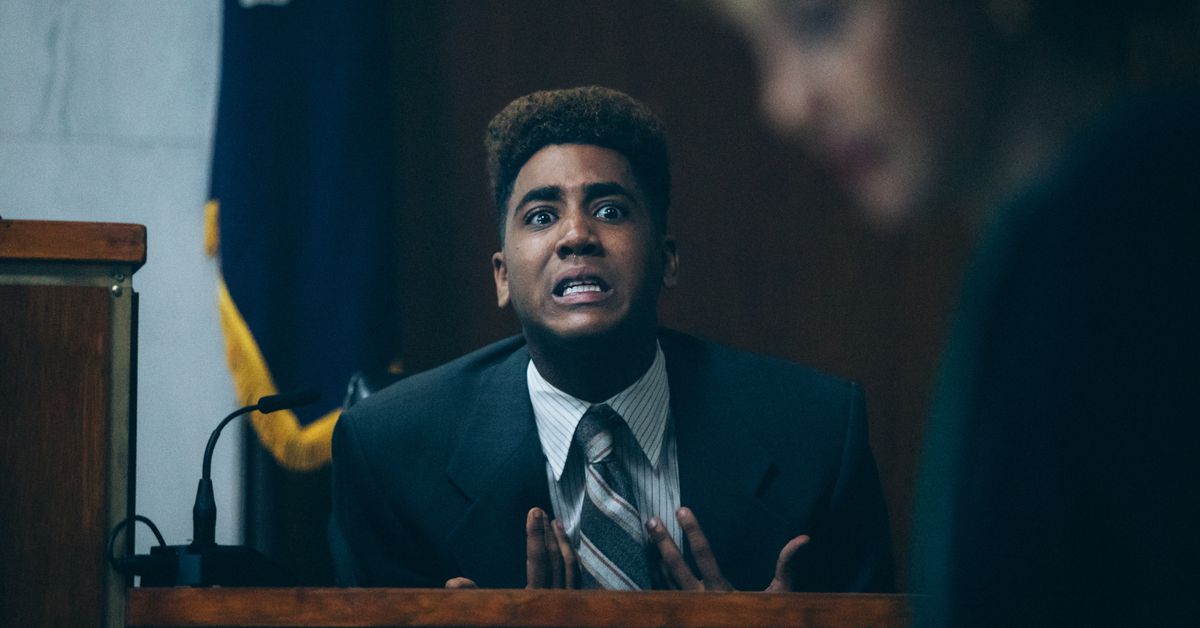
The recent release of the Netflix series “When They See Us” about the Central Park Five raises questions about the power of the media in the public’s perception of news stories. The narrative is different with this production than it was in the media when the trials were going on, and still today, the media has the power to shape – or sensationalize – a news story. In this version, the four-part series attempts to portray what happened and just how this tragic event impacted so many lives for so long. “Over the course of the series, the audience watches the boys, who are all between 14 and 16, get coerced into confessing to a crime they didn’t commit. … While other dramas of this kind often focus on victims and investigators, the focus here is on the accused. It’s a haunting story that shares a space with the innumerable podcasts, films and limited-run docuseries that try to rationalize and memorialize true crime incidents of years past.” – VICE.com Films – and the way they are made – are changing, and some are attempting to change the public’s perception of how actual historic events in America happened. This comes with benefits and no doubt, risks. What challenges do writers and directors take on when trying to tell a true story from our past? How has this been done correctly – and what happens if it fails? And is it up to the entertainment industry to educate audiences about the truth in our collective past? There are a lot of questions, and that’s where the experts from Augusta University can help. Dr. Matthew Buzzell is an award-winning, Emmy-nominated filmmaker whose films have screened at festivals the world over and been broadcast nationally on PBS, Turner Classic Movies and Netflix. Matthew is available to speak with media at any time – simply click on his icon to arrange an interview.


From Asthma and Tick Bites to Dengue Fever, Nurses Tackle Health Impacts of Climate Change
According to statistics compiled by the National Aeronautics and Space Administration (NASA), carbon dioxide levels are at their highest in more than 650,000 years. In addition, 18 of the 19 warmest years ever have occurred since 2001, according to NASA. The World Health Organization reports that between 2030 and 2050 climate change is expected to cause 250,000 additional deaths per year from malnutrition, malaria, diarrhea and heat stress. “Many people don’t realize how much climate change can affect their health,” says Ruth McDermott-Levy, PhD, MPH, MSN, RN, director of the Center for Global and Public Health at Villanova’s M. Louise Fitzpatrick College of Nursing. “We see increases in ground level ozone from the changes in our climate here in the United States and in Europe. And we see the impact of climate change on our patients every day.” Earlier this year, Dr. McDermott-Levy spent several months in Finland collecting nurses’ observations on the impact of climate change. “In Finland extreme cold causes deaths, but increasing heat waves have become a health risk, too. This is especially a risk for the chronically ill and the elderly. And nurses will need to consider heat-related issues when they discharge elderly patients from the hospital to their homes.” In addition to health issues related to climate change, the increasing extreme weather events that bring on flooding and wildfires also disrupt the health care delivery supply chain, making much needed medications, medical supplies, and access to health care providers a greater challenge in delivering care.


Will Apple shine or is a little too late to be dipping its toe into the streaming game?
It was the big unveil a lot of tech insiders, analysts and Apple followers had been anticipating. With Oprah, Steven Spielberg and other members of the entertainment elite on-hand to lend a hand – Apple TV Plus was finally revealed. The service, coming this fall, will be subscription based and will bring exclusive original shows, movies, and documentaries to rival the likes of Amazon, Netflix and Crave. While it is unlikely Canada will see the inclusion of "Apple TV Channels" in all its US-like glory, it is certain that Apple's arrival to the streaming space would further put the squeeze on traditional TV service providers. With yet another premium content streaming service to choose and a finite budget, consumers will have to start making tougher choices between letting go of something or shaving off cost somewhere – unfortunately, the traditional TV cord may be the first in consideration. Here are the questions some insiders are pondering: Will a loyal customer base and strong partner relationships prove advantageous in luring content creators and viewership alike as Apple TV Plus breaks through the boundaries of Apple hardware? Where does the real opportunity lie for companies like Apple? How will they fare as consumers are challenged to make tougher decisions on who gets a share of their wallet? Will it be traditional TV or OTT Video service that gets the boot? According to Manish Nargas "Currently, consumer intent to continue to subscribe to TV services remains relatively stable year over year in Canada and consumers are happy to complement TV with other OTT video services". IDC's latest survey, Canadian Consumer Survey Indicators, 2019: Wireless, Internet, TV, and OTT Video Services shows that "those who do plan to reduce or stop their TV service, do so in order to save money, not on account of dissatisfaction in quality of service." There are a lot of questions to be answered between now and when Apple TV Plus launches and that’s where our experts can help. Manish Nargas is a research analyst specializing in consumer and mobile research. He is an expert in emerging consumer technologies with a focus on usage trends and adoption. Simply click on Manish’s icon to learn more about this survey or to arrange an interview.


Ungrading – is putting down the pen an A+ idea for post-secondary professors?
It’s a growing movement among professors – ungrading. There’s a popular trend out there that says teachers are spending too much time grading and evaluating as opposed to educating. Some professors feel that students need to be engaged by what they learn and not necessarily fixated on the grades they earn. In a recent blog post (see below) UMW’s Jesse Stommel showed how strongly he backs the concept. “There are a surprising number of faculty questioning grades in productive ways, and experimenting with alternative modes of assessment,” said Jesse Stommel, executive director of the Division of Teaching and Learning Technologies at University of Mary Washington, and an early evangelist of ungrading. “If, as teachers, we just ask students why, when and how they learn, what we can get back is way more valuable than any standardized assessment mechanism can reveal.” Ungrading “creates space for that kind of honest reflection and dialogue,” he said. - TaxProfBlog The concept is novel and has support – but will it catch on? Will academia take a turn away from the traditional ways of grading? What will students think and how will they measure progress? And what about parents and potential employers who might rely on the old system when hiring or validating the costs of higher-education? Jesse Stommel is the Executive Director of Teaching and Learning Technologies at the University of Mary Washington and is an expert in faculty development, digital education and modern learning. Jesses is available to speak with media regarding ungrading – simply click on his icon to arrange an interview.
