
Experts Matter. Find Yours.
Connect for media, speaking, professional opportunities & more.

Protein engineer to explore route from DNA blueprint to synthetic antibodies – public lecture
Professor Anna Hine will explore how advances in protein engineering have enabled us to make both synthetic antibodies and their replacements Inaugural lecture will take place at Aston University on Tuesday 28 March 2023 at 6.30pm Members of the public may attend in person or online. Professor Anna Hine, a molecular biologist specialising in protein engineering in the College of Health and Life Sciences at Aston University, is to present her inaugural public lecture on Tuesday 28 March 2023. During her lecture, A route to synthetic antibodies (and their replacements), Professor Hine will take the audience from the basics of molecular biology to explaining her inventions in protein engineering, through to examining the ways in which her research is being applied internationally to develop synthetic antibodies. Professor Hine gained her PhD in molecular biology from The University of Manchester Institute of Science and Technology in 1992 and did her postdoctoral training at Harvard Medical School. She returned to the UK to take up a lectureship in molecular biology at Aston University in 1995. Professor Anna Hine, professor of protein engineering, said: “Antibodies are one of our major lines of defence against infection and we can create them very quickly to help incapacitate a multitude of biological invaders. Humans do this by changing the part of the antibody that recognises the invading pathogen, through a process of rapid, natural mutation. Protein engineers have learned to mimic this process in the laboratory to create synthetic proteins – particularly antibodies - for use in both therapy and fundamental research.” “I am delighted to have the opportunity to present our discoveries in a way that I hope will make just as much sense to non-scientists as to a scientific audience.” Similar to the natural mutation of antibodies, protein engineers can make vast numbers of tiny variations of a protein such as an antibody. Professor Hine added: “We will contemplate the vast numbers involved in protein engineering and present how our Aston University-based inventions have made the creation of DNA (and thus protein) ‘libraries’ as efficient as possible. “We will then examine the ensuing problem of how to find the few proteins that we really want from within a protein library. This includes collaborating with experts who specialise in computer-assisted library design and also working with those who have developed the latest methods to search the libraries that we make.” Professor Hine will also show how her latest collaborative projects are starting to move beyond the antibody itself. The lecture will take place at Aston University at 6.00pm for 6.30pm on Tuesday 28 March 2023. It will be followed by a drinks reception from 7.30 pm to 8.00 pm. The lecture is open to the public and free to attend. Places must be booked in advance via Eventbrite.

Aston University gears up to celebrate 50 years of transport education
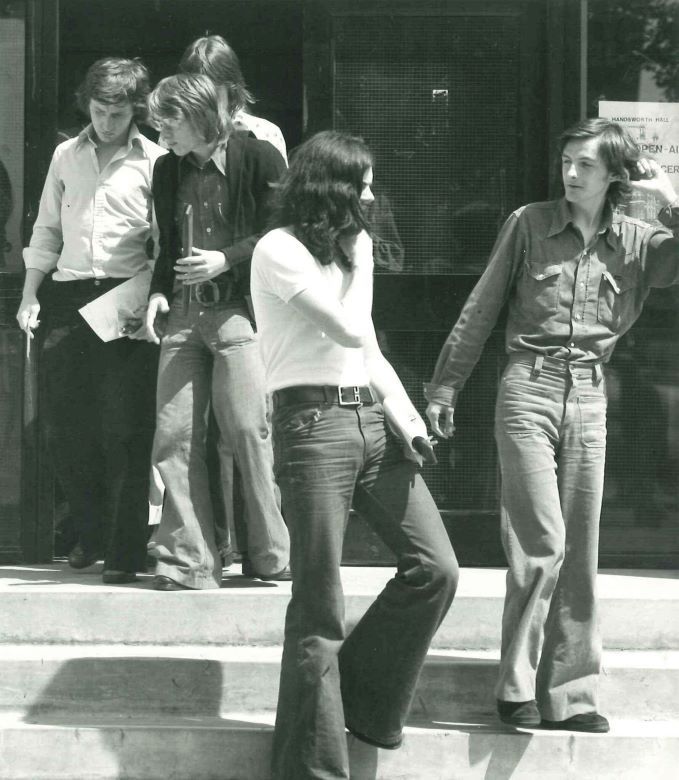
Aston University calls for former transport students to get in touch 2023 marks half a century of transport studies at the University First transport course ran in 1973. Aston University is asking former students to get in contact to help celebrate 50 years of transport education. This year marks half a century of transport studies at Aston University, dating back to 1973 when the subject first appeared as part of a combined honours degree course, with the first transport graduates completing in 1976. In 1982-3 the course became a degree in its own right and 40 years later is still teaching the transport professionals of the future. Aston University is currently the only UK institution to offer a dedicated transport management degree, BSc Transport Management, and a BSc Transport Planning degree apprenticeship. During the past five decades the course has produced graduates equipped with the skills, knowledge and experience needed across the transport sector. Dr Lucy Rackliff, programme director and head of the department of Engineering Systems & Supply Chain Management, said: “Generations of our students have contributed no end to the UK’s skills in this sector. From rail and road, consultancy and government, there are few areas in the transport sphere that have not been improved by our graduates. “If you studied transport at Aston University, we would love to hear from you with any stories and memories from your student days. And of course, we would love to hear about where your transport career has taken you.” Aston University started life in 1875, and in 1895 become the Birmingham Municipal Technical School, teaching chemistry, physics, metallurgy and electrical engineering. In 1966 it received its royal charter to become a university. If you would like to share where your transport career has taken you please get in touch via LinkedIn https://www.linkedin.com/groups/13582956/ or contact the University’s alumni team at alumni@aston.ac.uk

Researchers reveal CBD can counter epileptic seizures in children
• Aston University epilepsy model used to illustrate the mechanisms of seizure activity • Results suggest how CBD can be useful in the treatment of childhood epilepsy • New insight into potential future interventions for hard-to-treat epilepsy. Researchers at Aston University have contributed to the discovery of a previously unknown way in which cannabidiol (CBD), a non-psychoactive component of cannabis, can reduce seizures in many treatment-resistant forms of childhood epilepsy. A group of international collaborators, led by scientists at NYU Grossman School of Medicine, including a team from the Aston Institute of Health and Neurodevelopment at Aston University, found that CBD blocked signals carried by a molecule called lysophosphatidylinositol (LPI). LPI is found in our brain’s neurons and is thought to amplify nerve signals as part of normal function but can be hijacked by some epilepsies to promote seizures. The study, published in the journal Neuron, expanded on previous findings showing that CBD blocks the ability of the molecule LPI to amplify nerve signals in a brain region called the hippocampus. The current study argues that, for the first time, the molecule also weakens signals that counter seizures, further explaining the value of CBD treatment and the generation of seizure activity in epileptic people. As part of the research group, the Aston University team used a leading model of epilepsy, developed by Professor Gavin Woodhall, to perform recordings of electrical signals in brain cells taken from epileptic rodents, some of which had been treated with CBD. By doing this, they were able to pinpoint the molecular mechanisms by which CBD acts to prevent seizure activity in epileptic brains. Professor Woodhall, co-director of Aston Institute for Health and Neurodevelopment, said: “These new insights into epilepsy and the mechanism by which CBD works to stop seizures is the fruit of years of collaboration between neuroscientists in the UK and USA and our industry partner, GW Pharma. We are hopeful that it will lead to even better treatments in future”. Dr Stuart Greenhill, senior lecturer in neuroscience, Aston Institute for Health and Neurodevelopment added: "We are delighted that our epilepsy model is being used to make such meaningful breakthroughs in the mechanisms of epilepsy and is paving the way for a wider range of future treatments". Corresponding author Richard W Tsien, chair of the Department of Physiology and Neuroscience at NYU Langone Health, said: “Our results deepen the field’s understanding of a central seizure-inducing mechanism, with many implications for the pursuit of new treatment approaches. “The study also clarified, not just how CBD counters seizures, but more broadly how circuits are balanced in the brain. Related imbalances are present in autism and schizophrenia, so the paper may have a broader impact.” The results build on how each neuron “fires” to send an electrical pulse down an extension of itself until it reaches a synapse, the gap that connects it to the next cell in a neuronal pathway, and how this activity can change in a network which is likely to generate epileptic seizures. For more information about Aston Institute of Health and Neurodevelopment (IHN) please visit our website.


Aston University welcomes Mexican Ambassador to campus during Global Trade Conference
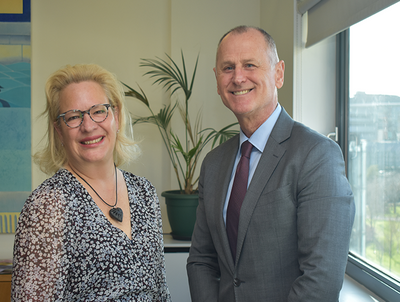
Her Excellency Josefa González-Blanco, Mexican Ambassador to the UK visits West Midlands for the Global Trade Conference The ambassador met with representatives of British industry including University Vice-Chancellor Professor Aleks Subic Josefa González-Blanco was appointed as Mexico's representative in London in 2021. Mexican Ambassador to the UK, Her Excellency Josefa González Blanco Ortiz Mena, has visited Aston University during a high-profile visit to the city to attend the Global Trade Conference and meet with representatives of British industry. The Global Trade Conference (15 February) is an annual event hosted by the Greater Birmingham Chambers of Commerce which offers businesses the opportunity to build relationships and grow their network. During her visit to campus, she met with Vice-Chancellor Professor Aleks Subic, executive director of business engagement Mark Smith, and Lloyd Broad, head of international affairs at Birmingham City Council. Ambassador González Blanco said: “I was thrilled to visit Aston University and to meet the Vice-Chancellor and Chief Executive, Professor Aleks Subic. “We had a chance to review our academic links towards intensifying the research collaboration already in place between Aston Business School, Tecnológico de Monterrey, Conacyt México and Instituto Nacional de Astrofísica.” Professor Aleks Subic said: “It was a pleasure to welcome Her Excellency Josefa González Blanco Ortiz Mena to Aston University. “We are immensely proud of our international collaborations, and meetings such as this one, are crucial in deepening our understanding of areas of common interest and priorities as we work together to advance global partnerships and trade. “I look forward to working further with relevant higher education institutions and industries in Mexico and around the world in line with our 2030 strategy focused on creating a globally relevant university that can make substantial contributions to innovation and trade at international level.”

Aston University turns red to highlight World Encephalitis Day
• Aston Institute of Health and Neurodevelopment (IHN) researchers support World Encephalitis Day on 22 February • Aston University library will be lit up in red – the official campaign colour • Staff and students are encouraged to wear red and tweet their photos in support of the campaign Researchers and staff at Aston Institute of Health and Neurodevelopment (IHN) are marking World Encephalitis Day (22 February) by lighting up the Aston University library on its campus near Birmingham city centre. The library will be lit up in red – the official colour of the campaign - to support and raise awareness of encephalitis and all those affected by the condition. The global awareness campaign, introduced by the charity the Encephalitis Society, is based on the theme of Code Red – an emergency alert code used in hospitals. Encephalitis is inflammation of the brain. It is caused either by an infection invading the brain or through the immune system attacking the brain in error. According to the Encephalitis Society, anyone at any age can develop the condition, with up to 6,000 cases in the UK each year and potentially hundreds of thousands worldwide. In the USA there were approximately 250,000 patients admitted to hospital with a diagnosis of encephalitis in the last decade. Researchers at Aston Institute of Health and Neurodevelopment are working closely with patients affected by the disease through their child-focused research programme. Dr Sukhvir Wright, honorary consultant neurologist at Birmingham Children's Hospital, and Wellcome Trust clinical research career development fellow at IHN, said: “IHN researchers know first-hand what children and families affected by encephalitis go through on a daily basis. That’s why we are fighting to answer the questions that matter most to this community through our work. “Our research includes, developing disease models to help try and improve treatments. We do brain imaging to identify biomarkers that might help predict outcomes and at the bedside of our patients we contribute up-to-date practical information and support for children and their families. This work is carried out closely in partnership with the Encephalitis Society.” As part of the awareness campaign IHN researchers are calling upon staff and students to show their support by wearing red on Wednesday 22 February - and share their pictures on social media. Please use the hashtags #Red4WED #WorldEncephalitisDay #TeamAston and remember to tag @Aston_IHN. For more information about Aston Institute of Health and Neurodevelopment (IHN) please visit our website.


Expert Comment - the humanitarian use of drones in the current Turkish/Syrian earthquake disaster
Dr Muhammad Azmat, Assistant Professor in Logistics and Supply Chain Management at Aston University, Birmingham, is available to provide comment on the humanitarian use of drones in the current Turkish/Syrian earthquake disaster, and why they should be used more. “There are several examples from the recent past that suggest autonomous drones and drone swarms could be an effective tool to speed up search and rescue operations. “I believe there is a need for more awareness of drones and humanitarian organisations should be encouraged in using this new technology.” Dr Azmat has previously written for The Conversation about the potential use of humanitarian drones during the Ukraine war Dr Azmat’s profile: Dr Muhammad Azmat Assistant Professor in Logistics and SCM - Expert with Aston University | ExpertFile If you have any queries, please contact Dr Azmat or Nicola Jones Mobile: (+44)7825 342091 n.jones6@aston.ac.uk Press and Communications Manager, College of Engineering and Physical Sciences, Aston University, Aston Triangle Birmingham, B4 7ET, UK


Birmingham City Council Cabinet Member Cllr Majid Mahmood met with sustainability experts from across Aston University Cllr Mahmood is responsible for the city’s sustainable waste strategy Knowledge exchange projects between the city council and Aston University were discussed. Birmingham City Council’s Cabinet Member for Environment visited Aston University on 30 November to meet with academics working on sustainability challenges. Cllr Majid Mahmood is responsible for developing a financially and environmentally sustainable waste strategy for the city and engaging in citywide and national policy development to tackle the causes and consequences of climate change, among other accountabilities. Cllr Mahmood’s visit included seeing the chemical engineering and applied chemistry labs run by Dr Jiawei Wang and Dr Matthew Derry who are investigating methods for generating energy from waste and creating new, more sustainable materials. He also met with Professor Patricia Thornley, director of the Energy Bioproducts Research Institute (EBRI) along with other colleagues including Dr Katie Chong, who showcased EBRI’s world-leading research into bioenergy and bioproducts and heard from Dr Luciano Batista on the work he is leading at the Centre for Circular Economy and Advanced Sustainability which provides practical answers to tackle world-critical sustainability challenges. During the visit, Cllr Mahmood was able to share some of the challenges and opportunities facing Birmingham City Council, particularly around sustainability, the environment and waste management. He discussed with academics how Aston University’s research could feed into Birmingham City Council’s future waste and energy management plans and how the lived experience of the city should shape the direction of research. A number of knowledge exchange opportunities were also discussed, including using the city council’s experience to develop undergraduate student projects and academics being invited to visit Birmingham’s waste management depots. Cllr Majid Mahmood said: “It has been brilliant to visit Aston University today and to learn about the innovative ways that different academics are tackling the sustainability challenges facing the world. “As the largest metropolitan local authority in the UK, Birmingham is uniquely placed to develop sector leading waste and energy management processes. Working closely with universities like Aston University will help us to achieve this. “I look forward to developing our working relationship and combining our practical experience and research excellence to drive innovation in the sector.”


Aston University to help power Indonesia with affordable energy made from rice straw
Project to convert unwanted rice straw into cheap energy on a commercial scale Most rice straw in Indonesia is burned causing pollution and health problems Project will almost double affordable energy captured from waste. Scientists at the Energy and Bioproducts Institute at Aston University are to start a project to convert Indonesia’s unwanted rice straw into low-cost energy on a commercial scale. Each year the country produces 100 million tonnes of the rice waste, of which 60% is burned in open fields, causing air pollution and has even been linked to lung cancer. The amount burned is equivalent to approximately 85 Terawatts of electricity, which is enough to power Indonesia’s households 10 times over. A consortium which includes Aston University aims to develop processes to capture more affordable energy from rice straw than ever before - and demonstrate that it can be done on a commercial scale. Part of the process involves a biomass conversion technology called pyrolysis. This involves heating organic waste materials to high temperatures of around 500 °C to break them down, producing vapour and solid products. Some of the vapour may be condensed into a liquid product called pyrolysis oil or pyrolysis bio-oil. Both the pyrolysis vapour and liquid bio-oil can be converted to electricity. Current methods convert just 35% of the thermal energy of rice straw to affordable electricity. However, a newly patented combustion engine designed by consortium member, UK-based Carnot Limited, could see that doubled to 70%. Energy extracted this way could help low and middle-income countries create their own locally generated energy, contribute to net zero by 2050, create new jobs and improve the health of locals. The project will help develop a business model which could support companies and local authorities to produce local, cheap energy in Indonesia, and other countries with biomass capacity. Three academic experts from different disciplines at Aston University are involved in this initial project, which focuses on Indonesia’s Lombok Island. Dr Jude Onwudili, Dr Muhammad Imran and Dr Mirjam Roeder are based at Aston University’s Energy and Bioproducts Research Institute (EBRI). Dr Jude Onwudili who is leading the team said: “This project has huge potential - commercialisation of this combined technology will have significant economic benefits for the people of Indonesia through direct and indirect job creation, including the feedstock supply chain and electricity distribution and sales. “About one million Indonesian homes lack access to energy and Indonesia's 6,000 inhabited islands make sustainable infrastructure development challenging in areas such as Lombok Island. “The new techniques being explored could reduce environmental pollution, contribute to net zero and most importantly, provide access to affordable energy from sustainable local agricultural waste. “Aston University is a global leader in bioenergy and energy systems, and I am delighted we received funding to explore this area.” Over a power plant’s life, the project team have calculated that biomass produces cheaper electricity (approx. $4.3$/kWh) compared to solar (approx. $6.6/kWh), geothermal (approx. $6.9/kWh), coal (approx.$7.1/kWh), wind (approx. $8/kWh) and subsidised gas (approx.$8.4ckWh). The project will start in April 2023 with a total of £1.5 million funding for the four partners from Innovate UK. Alongside Carnot Limited, the Aston University scientists will be working with two other UK-based businesses to deliver the project, PyroGenesys and Straw Innovations. PyroGenesys specialises in PyroChemy technology which will convert 70% of the rice straw into vapour or bio-oil for electricity production, with the remainder converted into nutrient-rich biochar, which can be sold back for use as fertiliser on the rice farms. Straw Innovations will contribute their rice straw harvesting and collection expertise, with their many years of similar operations in Asia.


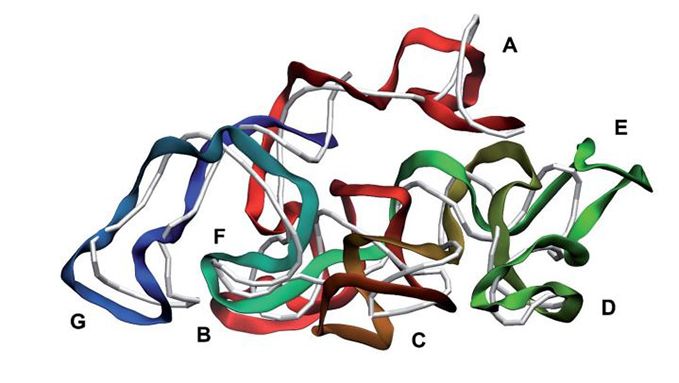
First ever computer reconstruction of a virus, including its complete native genome Will open way for investigating biological processes which can’t currently be fully examined because the genome is missing Could lead the way to research into an alternative to antibiotics. An Aston University researcher has created the first ever computer reconstruction of a virus, including its complete native genome. Although other researchers have created similar reconstructions, this is the first to replicate the exact chemical and 3D structure of a ‘live’ virus. The breakthrough could lead the way to research into an alternative to antibiotics, reducing the threat of anti-bacterial resistance. The research Reconstruction and validation of entire virus model with complete genome from mixed resolution cryo-EM density by Dr Dmitry Nerukh, from the Department of Mathematics in the College of Engineering and Physical Sciences at Aston University is published in the journal Faraday Discussions. The research was conducted using existing data of virus structures measured via cryo-Electron Microscopy (cryo-EM), and computational modelling which took almost three years despite using supercomputers in the UK and Japan. The breakthrough will open the way for biologists to investigate biological processes which can’t currently be fully examined because the genome is missing in the virus model. This includes finding out how a bacteriophage, which is a type of virus that infects bacteria, kills a specific disease-causing bacterium. At the moment it is not known how this happens, but this new method of creating more accurate models will open up further research into using bacteriophage to kill specific life-threatening bacteria. This could lead to more targeted treatment of illnesses which are currently treated by antibiotics, and therefore help to tackle the increasing threat to humans of antibiotic resistance. Dr Nerukh said: “Up till now no one else had been able to build a native genome model of an entire virus at such detailed (atomistic) level. “The ability to study the genome within a virus more clearly is incredibly important. Without the genome it has been impossible to know exactly how a bacteriophage infects a bacterium. “This development will now allow help virologists answer questions which previously they couldn’t answer. “This could lead to targeted treatments to kill bacteria which are dangerous to humans, and to reduce the global problem of antibiotic-resistant bacteria which are over time becoming more and more serious.” The team’s approach to the modelling has many other potential applications. One of these is creating computational reconstructions to assist cryo-Electron Microscopy – a technique used to examine life-forms cooled to an extreme temperature.
Aston University bioenergy researchers to improve measurement of industrial carbon dioxide
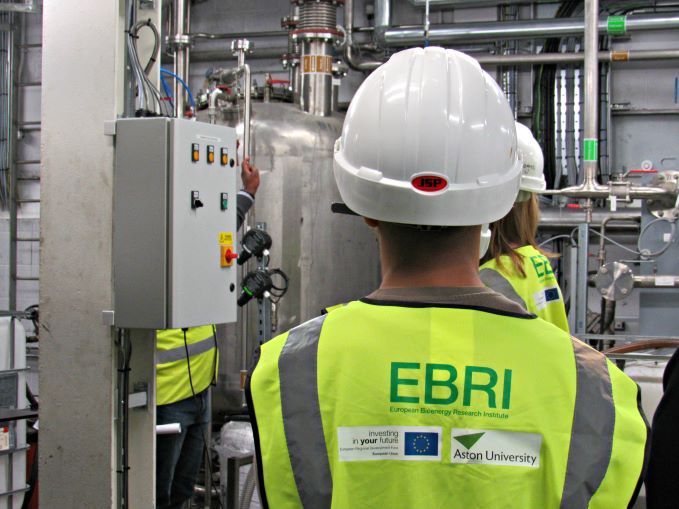
Researchers at Aston University are to take the UK a step nearer to net zero emissions by developing a better system of measuring industrial carbon dioxide. The government is giving the University £100,000 to improve measurement of CO2 streams from sites such as at power plants and factories. The Energy and Bioproducts Research Institute (EBRI) at Aston University is to develop a comprehensive guide based on industry and academic expertise. Industrial decarbonisation will play a major role in achieving the UK’s 2050 ambitious net zero emissions target, however current measurement guidelines need to be improved. The six-month project will be a collaboration between EBRI researchers and the company Progressive Energy and the Energy Institute. Progressive Energy will work alongside potential end-users and the Energy Institute will help to ensure the final guidelines are clear. The work is being led by Dr Paula Blanco Sanchez, who has more than 15 years of experience in bioenergy. She said: “This funding will help Aston University to address a major gap in the decarbonisation pathway. It will contribute to the UK’s net zero target and is another example of how the University is using its expertise to tackle real world problems. “Our experts in EBRI will provide research, industrial experience and knowledge in areas such as gas measurement, metric and analytics, life cycle and techno-economic assessments, and thermal conversion processes.” The funding has been awarded by the Industrial Decarbonisation Research and Innovation Centre (IDRIC) to achieve the net zero ambition set out in the UK Industrial Decarbonisation Strategy (2021). Bryony Livesey, challenge director, Industrial Decarbonisation Challenge, UKRI, said: “The announcement of this funding continues to build upon IDRIC’s whole system approach to decarbonising industry, enabling the UK to remain at the forefront of a global low-carbon future. These successful Wave 2 projects will build evidence on a range of areas from economics and emissions to skilled jobs and wider net zero policy, supporting UK’s green growth and net zero ambitions.” It’s hoped the Aston University project will lead to future collaborations and funding to support UK industry to decarbonise their businesses. In May, June and September the EBRI plant will be opening its doors to professionals who want to enhance their careers with a short hands-on course in Practical Process Engineering. For more information visit https://www.aston.ac.uk/study/courses/practical-process-engineering