
Experts Matter. Find Yours.
Connect for media, speaking, professional opportunities & more.
Science Is Changing the Game: How Research Is Transforming Modern Sports
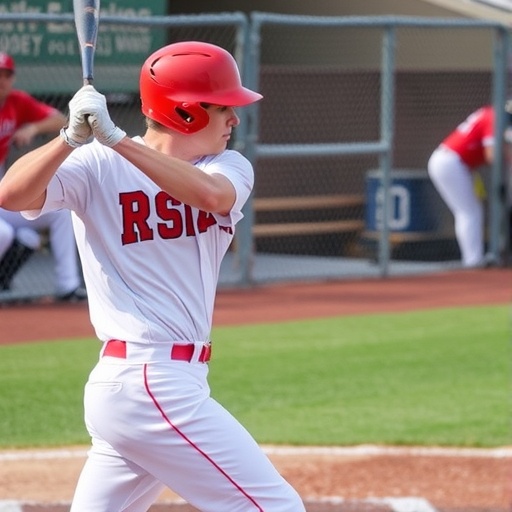
Professional sports have always embraced innovation, but today's competitive advantage increasingly comes from science. Researchers are applying advances in neuroscience, artificial intelligence, biomechanics, data analytics, and human performance to better understand how athletes make decisions, respond under pressure, recover from injury, and maximize performance. What once relied heavily on intuition and experience is now being informed by sophisticated research that can measure, predict, and improve outcomes at every level of competition. Recent studies from Carnegie Mellon University highlight the growing role science is playing across the sports landscape. Whether examining decision-making in high-pressure situations, analyzing performance strategies, or using artificial intelligence to improve health outcomes, researchers are uncovering insights that can help athletes perform at their best while extending careers and reducing injury risk. Ron Yurko is an Assistant Teaching Professor in the Department of Statistics & Data Science at Carnegie Mellon University, and the Director of the Carnegie Mellon Sports Analytics Center (CMSAC). View his profile Scott Powers, an assistant professor at Rice University with vast front-office experience in Major League Baseball—including stints with the Los Angeles Dodgers and the Houston Astros—joined forces with Ron Yurko, a director at the Carnegie Mellon Sports Analytics Center, to analyze this cutting-edge data. Their study, published in The American Statistician in 2026, marks a significant advancement in the quantitative understanding of batting dynamics. It uses high-resolution measurements of bat speed and swing length, metrics that were publicly released for the first time in 2024, to explore how hitters modulate their swings under different pitch counts, particularly when facing two strikes. Eric Yttri is an Associate Professor at Carnegie Mellon University where his research goal is to establish how neural circuits lead to these action selection decisions. View his profile As a neuroscientist, I have been working to uncover how the brain decides when to act and when to wait. Recent research from my team and me helps explain why this split-second pause happens, offering insight not only into elite athletic performance, but also how people make everyday decisions when the potential outcome isn't clear. We found that the key to hesitation is a response to uncertainty. This could be where a dropped hockey puck will land, when a race starts, or placing your order at a new restaurant. Eni Halilaj is an Associate Professor at Carnegie Mellon University where she directs the CMU Musculoskeletal Biomechanics Lab, an interdisciplinary group of engineers seeking to understand and optimize human movement mechanics. View her profile According to Eni Halilaj, an assistant professor in mechanical engineering at Carnegie Mellon University and biomechanist who specializes in orthopedic rehabilitation, 60 percent of those who suffer this common knee injury also develop osteoarthritis early in life. The degenerative joint disease, which affects an estimated 32.5 million individuals in the U.S., is especially problematic for younger patients because of the longer time span during which the chronic condition can cause debilitating pain, stiffness and limited mobility. "How can we make the 60 percent have the same long-term outcome as the 40 percent?" asked Halilaj, who is working to understand the difference between those who do and those who do not develop osteoarthritis following knee trauma. Matthew Walker is a Professor, Astrophysics & Cosmology at Carnegie Mellon University. His research focuses on the astrophysical properties of dark matter, but he is also a former collegiate D1 baseball player and lifelong, passionate fan staying apprised of advancements in the game. View his profile Carnegie Mellon University physics professor Matthew Walker said the system still has limitations, especially on pitches that are extremely close to the edge of the strike zone. "Every measurement device has a margin of error," Walker said. "ABS is, from what I can tell, somewhere around half an inch -- which means if the ABS call says that the pitch was within half an inch of the border between a ball and a strike, whether it says it’s a ball or a strike is really no better than a guess." Walker said that in those situations, the umpire’s original call should remain in place rather than letting the automated system make the final decision. The influence of science in sports extends far beyond professional athletics. Research developed for elite competitors often finds applications in healthcare, rehabilitation, education, workplace performance, and everyday decision-making. As teams continue to invest in analytics, wearable technology, artificial intelligence, and performance science, the relationship between research and sports is expected to grow even stronger. The result is a deeper understanding of how humans learn, adapt, compete, and perform under pressure. If you're covering or looking to know more, we can help! Carnegie Mellon University experts can discuss: • The growing role of science and technology in sports • Performance optimization and decision-making under pressure • Artificial intelligence and data analytics in athletics • Injury prevention, rehabilitation, and athlete health • The future of sports research and innovation



National Tick Collection Provides Front-Line Defense Against Emerging Health Threats
A recently published article in Grice Connect highlighted the national importance of the U.S. National Tick Collection, housed at Georgia Southern University's Statesboro Campus. Home to more than one million specimens representing nearly every known tick species, the collection serves as a critical resource for researchers, public health agencies, and disease surveillance efforts studying the spread of tick-borne illnesses. The collection, owned by the Smithsonian Institution and curated at Georgia Southern University, is one of the largest and most comprehensive tick collections in the world. Researchers use it to identify emerging threats, track changes in tick populations, and better understand the diseases these parasites can carry. As concerns about Lyme disease and other tick-borne illnesses continue to grow, the collection provides scientists with an invaluable resource for monitoring species distribution, studying disease vectors, and supporting public health preparedness. It also plays an important role in training future researchers in a field where specialized expertise is increasingly needed. Lorenza Beati, Ph.D., is curator of the U.S. National Tick Collection and associate professor at Georgia Southern University. Her research focuses on tick taxonomy, genetics, evolutionary relationships, and the role ticks play in transmitting diseases that affect both humans and animals. View her profile The article underscores the collection's growing importance as researchers work to better understand the complex relationships between ticks, pathogens, wildlife, and human health. As environmental conditions change and tick populations expand into new regions, resources like the U.S. National Tick Collection are helping scientists stay ahead of emerging public health challenges. The collection has been entrusted to Georgia Southern since 1990 and includes more than 1 million specimens and more than 125,000 accessioned lots. Beati said the collection is probably the largest curated tick collection in the world. While she said there may be a larger collection elsewhere, she said Georgia Southern’s collection remains especially important because it is active, used for research, and supported by curatorial work. “By having two curators here, we really keep the collection very active,” Beati said. “We publish a lot, we do a lot of research on our samples. We have visitors coming from all over the world to work with us.” June 13 - Grice Connect Covering? We can help! Lorenza Beati is available to speak with media about tick-borne diseases, tick identification, vector ecology, disease surveillance and the critical role scientific collections play in protecting public health. Her expertise can help audiences better understand the growing impact of ticks on human and animal health, as well as the research efforts underway to address these challenges.


UConn Expert Weighs In on FIFA's Hottest New Timeout
For the first time in FIFA World Cup history, every match at the 2026 tournament includes mandatory three-minute hydration breaks midway through each half. Introduced as a player welfare measure amid concerns about extreme summer temperatures across North America, the breaks have quickly become a much discussed development in the tournament. Coaches, players, broadcasters, sports scientists, and fans are all weighing in on the impact the stoppages have on player safety, game flow, strategy, and even commercial opportunities. The conversation has intensified as several matches have been played in challenging heat conditions and prominent coaches have publicly questioned whether the mandatory breaks alter the rhythm of the sport. At the same time, medical experts continue to emphasize the risks posed by heat stress and dehydration during elite athletic competition, particularly in tournaments spanning multiple climates and venues. Experts like UConn's Douglas Casa have been front and center when the media call for insight and perspective. The three-minute mandatory hydration breaks are meant to protect players, and referees, from extreme heat illness and help them maintain their physical performance. In that time, players can cool off and replenish lost water and salt from sweating, but how effective it is depends on how aggressive the cooling methods are. That could mean putting wet, cold towels on the exposed parts of a player's body, such as the neck, head, back and arms. If done well, that could reduce their body temperature by about 0.22 F (0.12 C) per minute, said Douglas Casa, CEO of the University of Connecticut's Korey Stringer Institute who also co-signed the letter to FIFA. "Some people can tolerate a little more fluids comfortably and then do intense exercise. Some people can't because it sloshes around in their stomach and they don't feel super comfortable, so they might not drink as much in such a short period of time," he added. The time, he said, dictates the volume of impact, whether from fluid or cooling, and "that's why we're suggesting doing something like five or six minutes, because it just makes such a big impact when you're dealing with a change of that magnitude." June 18 - NPR Douglas Casa is a professor of kinesiology and chief executive officer of UConn’s Korey Stringer Institute. He is a leading authority on research, advocacy, and education about exertional heat stroke View his profile While the standardized breaks represent a major step forward for player welfare, some leading heat illness experts argue the new policy does not go far enough. Dr. Douglas Casa, a professor of kinesiology at the University of Connecticut and chief executive officer of the Korey Stringer Institute, expressed skepticism regarding the efficacy of such brief intervals. Dr. Casa warned that prolonged, high-intensity physical exertion causes a rapid spike in core body temperature, which dramatically degrades athletic performance and increases the risk of exertional heat illness. He noted that a mere three minutes from whistle to whistle provides insufficient time for optimal physiological cooling and active rehydration, recommending instead that tournament officials expand the mandatory breaks to five or six minutes. Faced with these demanding environmental conditions, several competing national teams are taking proactive measures to gain a competitive edge. Multiple countries have expanded their technical staffs to include specialized sports scientists tasked exclusively with designing aggressive heat-acclimatization and thermal-management strategies. According to Dr. Casa, these data-driven preparation strategies will likely play a monumental role in determining player durability and ultimately crowning the world champion. June 09 - NBC News Covering? We can help. Douglas Casa, who leads UConn's renowned Korey Stringer Institute, is available to discuss: The science behind hydration and cooling breaks in elite sport Heat illness risks facing World Cup athletes Whether mandatory breaks are sufficient to protect players How extreme weather is changing sports medicine and event management The balance between player safety, competition, and fan expectations Check out the video below featuring Doug Casa explaining what happens when the human body gets too hot. Media interested in speaking with Doug Casa can contact the UConn media relations team to arrange an interview.


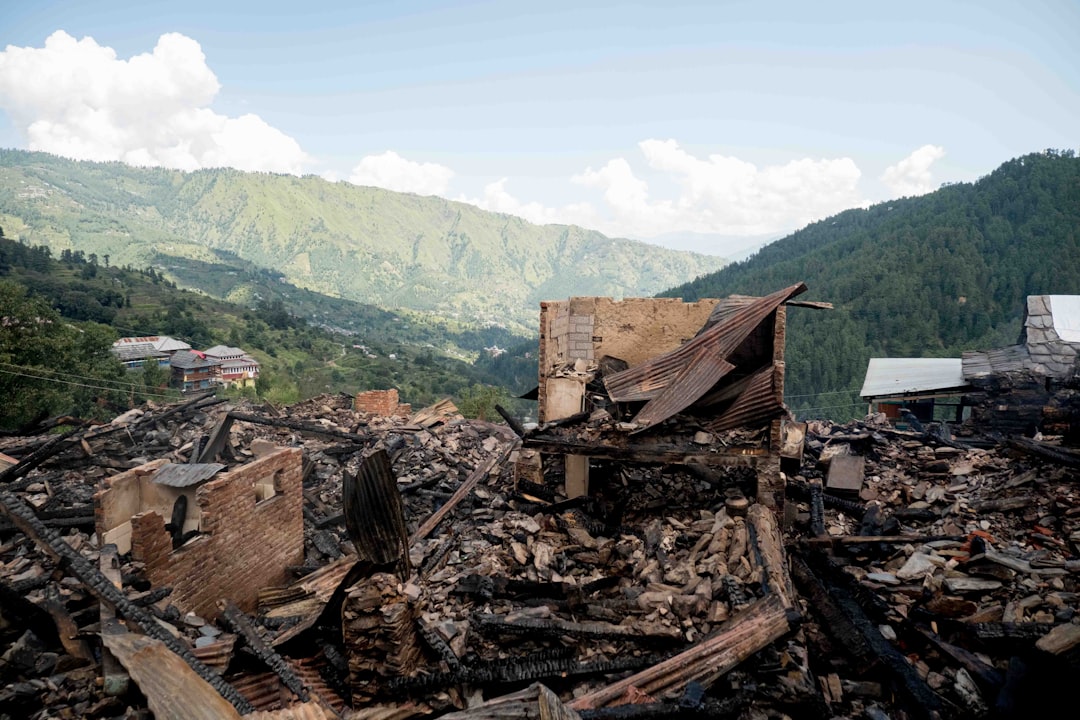
Faculty from the University of Delaware’s renowned Disaster Research Center are available to comment on the back-to-back earthquakes in Venezuela. These experts can discuss critical infrastructure failures, public health threats, emergency logistics and community-led response efforts in the region. Available experts include: From what I’ve seen, it looks like the earthquake occurred on the boundary of the Caribbean and South American plate. A strike-slip fault similar to the San Andreas. There have been a lot of nonductile reinforced concrete frame building collapses. There may be an effect of soil given that a lot of the damage has been near the coast. Jennifer Horney (Professor of Epidemiology) Focus: Public health impacts, post-disaster waterborne/vector-borne disease outbreaks and the breakdown of healthcare delivery due to damaged roads and disrupted communication networks. Tricia Wachtendorf (Co-director, Disaster Research Center) Focus: Disaster response logistics, community improvisation, neighbors as first responders and how to donate effectively to maximize impact. Sarah DeYoung (Associate Professor, Sociology and Criminal Justice) Focus: Maternal and infant health/feeding in emergencies, pet and companion animal evacuations and community-level crisis decision-making. To contact these experts directly and arrange an interview, visit their ExpertFile page and click on the contact button. Interested reporters can also email MediaRelations@udel.edu.



In 1926, Robert H. Goddard launched the world’s first liquid-fueled rocket in Auburn, Mass. Goddard’s 10-foot-tall rocket was airborne for just 2.5 seconds, reaching speeds of 60 miles per hour before landing 184 feet away from the launch site. A century later, the aerospace industry is booming, with new technology and missions making headlines every day—some with incredible success, and others encountering challenges that send scientists back to the drawing board. In February 2026, NASA delayed the launch of Artemis II—its next mission to the moon—citing issues with helium flow in the rocket’s systems. By April, the mission was on track again, and Artemis II completed the first crewed flight to the moon in more than half a century. Crew members for the upcoming Artemis III mission were also recently announced, as well as a timeline and overview for Artemis IV, the first planned crewed mission to the lunar South Pole in 2028. Amid these successes and setbacks, researchers continue to innovate the field and develop new technologies designed to help expand our knowledge of the vast universe. That innovation comes from diverse and unique places, including Villanova University. Research in Flight Student interest in aerospace led to the creation of a Master of Science in Aerospace Engineering (MSAE) program at Villanova University, which began in the Fall 2025 semester. Sergey Nersesov, PhD, associate professor of Mechanical Engineering, was instrumental in the inception of the MSAE program and helped develop courses in space flight mechanics, applied aerodynamics, aerospace structures analysis and advanced flight dynamics and control, among others. The idea for the graduate program was inspired by the growing popularity of the College of Engineering’s Minor in Aerospace Engineering. The minor attracts students from across the university, drawing from other majors and colleges at Villanova. For example, Dr. Nersesov recently collaborated on a research project focused on spacecraft and satellite control systems with Aedan Disanto ‘26 CLAS, an astrophysics and planetary sciences major and aerospace engineering minor. “If you look up at the sky, sometimes you see satellites chasing each other,” said Dr. Nersesov. “Dynamics and control researchers develop algorithms to ensure proper spacing between the satellites so they can function correctly.” The spacing between satellites is crucial to avoid collision, which is also a potential issue when a spacecraft approaches a space station to dock. In this situation the velocities, rotation and orientation of both vehicles are carefully controlled so that docking mechanisms align correctly, which requires up to 12 variables to be coordinated simultaneously. Dr. Nersesov and Disanto analyzed the algorithms needed to guarantee perfect satellite function and built upon them, discovering more efficient ways to operate vehicles in space. This summer, Dr. Nersesov and his students will also begin designing a prototype for a new kind of drone. Typical drones use ample amounts of energy to become airborne and capture photos or video content because they rely entirely on thrust to hold themselves up. To improve effectiveness, Dr. Nersesov and his students aim to create a drone in the style of an airplane, with vertical takeoff and landing (VTOL) capability. The drone will take off vertically, like a helicopter, but then transition to flying horizontally like an airplane, allowing lift from the wings to reduce the energy needed to stay airborne. As a result, it could stay in the air up to ten times longer than a hovering drone. While the project focuses on a single aircraft design, it represents the type of forward-thinking research driving the aerospace field today. Aerospace Engineering with Biology Elsewhere, Qianhong Wu, PhD, chair of Mechanical Engineering in the College of Engineering, is exploring a concept called super-lubrication, inspired by the way red blood cells move through the human body. Blood cells travel through capillaries narrower than their own diameter without damaging themselves or the vessel walls. A soft, porous layer called the endothelial glycocalyx within the vessels allows cells to glide through, reducing friction. In studying this biological process, an idea emerged that could potentially be translated to the aerospace field. Dr. Wu’s team is currently applying their deep understanding of biomechanical processes to applications that might reduce aerodynamic friction on aircraft surfaces by more than 90 percent. This lower friction may also improve fuel efficiency and extend flight endurance for drones or other aircraft. “Our work is an example of how thinking outside your traditional field can lead to innovation,” said Dr. Wu. “Sometimes the solution comes from a completely different subject, like biology.” A Century of Momentum One hundred years after Goddard’s brief but groundbreaking flight, aerospace innovation has expanded far beyond its earliest experiments. Today, progress in the field depends not only on major missions and milestones, but also on the steady work of researchers refining systems and exploring new ideas. At Villanova, that work is taking shape across disciplines—from spacecraft control systems to biologically inspired materials. Together, these efforts reflect how the field continues to evolve through collaboration and creativity.

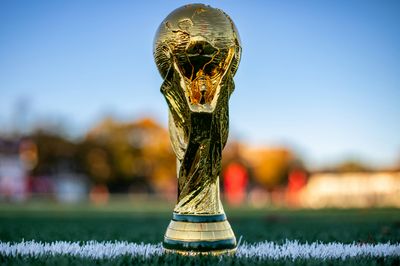
World Cup 2026: Hofstra experts on the science, health, and business behind the tournament.
The 2026 FIFA World Cup comes to the New York metro area, and Hofstra University is ready. From the training room to the boardroom, Hofstra faculty bring research-backed expertise to the stories journalists are chasing this tournament season. Featured Topic The Cultural Game Why soccer means what it means and what this World Cup moment represents The World Cup has always been about more than the game. Brenda Elsey, Professor of History, studies soccer as a cultural and political force across the Americas -- from grassroots identity to gender and power. She can speak to what this tournament represents as a historical moment, on and off the field. Expert Brenda Elsey - History Featured Topic Health and Performance on the World Stage Expert insight on what it takes to compete and recover at a World Cup. Competing at this level means managing the body and the mind across weeks of high-stakes matches with almost no recovery time. Hofstra's health and kinesiology faculty are your sources for the stories behind the performance. Experts Jayne Ellinger - Athletic Training Katie Sell - Exercise Physiology Anna Len - Physical Therapy Genevieve Weber - Mental Health Featured Topic Beyond the Pitch What the World Cup does to cities, economies, and public health systems From local business impact and tourism economics to disease surveillance and emergency preparedness - Hofstra faculty are ready to talk. Experts Andy M. Forman - Marketing & Tourism Lauren Hindman - Management Martine Hackett - Population Health Meshack Achore - Population Health




Decoding epilepsy, one brainwave at a time
Epilepsy isn’t always easy to diagnose. Seizures often don't occur during routine brain-wave recordings, leaving doctors without the direct observation they need to make a clear diagnosis. In a proof-of-concept study in mice, University of Delaware researchers and collaborators showed that using artificial intelligence to detect early warning signs hidden in the brain's electrical rhythms can identify subtle EEG differences linked to a genetic form of epilepsy, even when no visible seizures occurred. The findings, published in the Journal of Neural Engineering, set the stage for the next phase of the research, which will test the method on EEGs from children being evaluated for epilepsy at Nemours Children's Health. A dictionary of brain waves Neurologists often use EEGs to help diagnose epilepsy, but routine recordings offer only about a 20-minute snapshot of brain activity. Without a seizure captured during that window, clinicians must look for far subtler clues that can be difficult to detect visually. That's where AI comes in. “Our machine-learning approach lets the algorithm learn the brain’s ‘language’ of waveforms, spotting subtle patterns humans might miss during manual review,” said Austin Brockmeier, assistant professor in electrical and computer engineering and computer and information sciences. Starting small with a mouse model When Brockmeier presented his computational neuroscience research at a seminar, he caught the attention of Amanda Hernan, an affiliated associate professor of psychological and brain sciences and biomedical engineering at UD and senior research scientist at Nemours Children’s Health. Hernan studies how variations in brain activity affect thinking and learning in children with epilepsy. The two decided to put machine learning to the test using EEGs from mice with epilepsy-causing variations in the TSC1 gene. The researchers used a panel of more than 40 mice, including animals with and without the gene variation, across three different genetic backgrounds, or strains. They extracted EEG segments from five days of recordings from each mouse for analysis. Because the EEG segments contained no seizure activity, the algorithm had to detect differences in the brain's baseline activity alone. It was able to distinguish between the mouse strains and to detect the TSC1 gene variation with high accuracy in two of the three strains. “These results show that EEG patterns contain measurable signals of neurological differences, even without visible seizures,” Hernan said. Taking it to the clinic Now, Brockmeier and Hernan will next apply their approach to EEG recordings from children being evaluated for epilepsy at Nemours Children's Health. Pediatric EEGs are shorter than the multi-day recordings used in the mouse study, and children present with many different types of epilepsy. But the researchers are optimistic. “The goal is to identify biomarkers that flag underlying changes in the brain’s electrical activity before seizures occur,” Hernan said. Earlier detection could lead to earlier treatment and less uncertainty for families. That uncertainty, Hernan said, takes a toll. “Seizures follow natural cycles, but without a way to know where you are in that cycle, the anticipation can be incredibly anxiety-provoking,” she explained. Better pattern recognition could also improve treatment decisions. For example, if a new medication is introduced during a natural lull in seizure activity, its benefits could be overestimated. Looking further ahead, the researchers envision a future where wearable EEG devices allow continuous, real-time monitoring for those with high risk of seizures. Similar approaches could eventually be applied to other neurological conditions, including autism and ADHD. "This is a step toward precision medicine," Brockmeier said. "Brain-wave typing could help identify which interventions will work best for a given patient." For families navigating the daily uncertainty of epilepsy, that kind of precision could make a huge difference. To speak with Brockmeier and Hernan, please reach out to mediarelations@udel.edu.
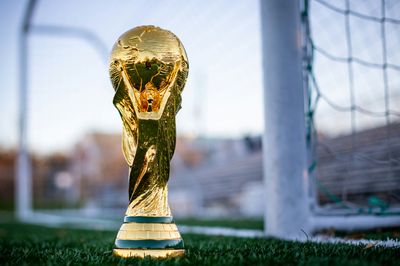
World Cup 2026: Georgia Southern University Experts on the Game Behind the Game
Atlanta is one of the World Cup's biggest host cities. Georgia Southern faculty across economics, health sciences and international studies are ready to speak to the stories behind the tournament. Featured Topic The Atlanta Advantage: Regional Economics of Hosting the World Cup What it means for local businesses, tourism, and the long-term economic legacy of a host city Atlanta's World Cup moment is as much an economic story as a sporting one. Georgia Southern University economics professors Michael Toma, Ph.D., and Anthony Barilla, Ph.D., can speak to tourism revenue, infrastructure investment and what host cities actually gain — and manage —- when the world comes to town. Experts Michael Toma, Ph.D. - Regional Economics and Development Anthony Barilla, Ph.D. - Economics and Public Policy Featured Topic Playing Across a Continent: The Physical Demands of a 48-Team Tournament What elite athletes face competing across climates, time zones and a month-long schedule 48 teams. Multiple cities. Almost no recovery time. Georgia Southern health sciences and kinesiology professor Samuel Wilson, Ph.D., and sports psychologist Brandonn Harris, Ph.D., can explain how a World Cup schedule affects the human body and how elite teams prepare for it. Experts Samuel Wilson, Ph.D. - Health Sciences and Athletic Performance Brandonn Harris, Ph.D. - Kinesiology and Exercise Science Featured Topic More Than a Match: The World Cup as Cultural and Political Exchange How the world's biggest sporting event becomes a stage for diplomacy, identity, and soft power When 48 nations converge on American soil, the game is only part of the story. Political science and international studies expert Christopher M. Brown, Ph.D., can speak to the geopolitical dimensions — national identity, soft power and what it means for the U.S. to host global soccer for the first time in a generation. Experts Christopher M. Brown, Ph.D. - Political Science and International Studies


Happiness isn’t just about chasing big, exciting moments. A lot of the science points to the smaller, everyday things that help people feel connected, calm and grounded. Simple habits like helping others when we see them struggling create a bigger impact than we often expect. University of Delaware's resident "happiness expert" Amit Kumar, a psychologist and assistant professor of marketing in UD's Lerner College of Business & Economics, appeared on NPR's Hidden Brain to discuss that very topic. Kumar discusses why sometimes it feels like we can't help others and how we can surmount those fears to build strong connections and also feel a greater sense of happiness. To speak with Kumar about this topic, click his profile.


World Cup 2026: Story Angles Beyond the Pitch
The 2026 FIFA World Cup will be one of the biggest sports stories of the year, with matches underway across Mexico, Canada and the United States. But the story will reach well beyond the field. As the tournament moves from city to city, it will bring host communities, public agencies, local businesses and civic leaders into the spotlight. That creates a wide range of story angles for journalists, from public health and safety, tourism and economic impact to sports technology, fan culture, athlete performance, national identity and the politics of international sport. Institutions using ExpertFile are helping media cover these broader World Cup stories through dedicated Topic Authority Hubs, Spotlight posts and expert profiles featuring trusted sources across health, business, technology, public policy, culture and sport. Featured World Cup Expert Hubs With the World Cup coming to the New York metro area, Hofstra University’s hub brings together experts on athlete health, recovery, injury prevention, mental performance, public health, tourism, local business impact and the cultural history of soccer. Explore Hofstra’s World Cup 2026 Hub. Source: Hofstra University The University of Delaware’s hub focuses on player safety, concussion research, sports analytics, tourism, youth development, fan behavior, shared experiences and the science behind elite competition. Explore the University of Delaware’s World Cup 2026 Hub. Source: University of Delaware Carnegie Mellon University’s hub looks at the tournament through the lenses of geopolitics, diplomacy, sports marketing, fan engagement, AI, robotics, biomechanics, human performance and emerging sports technologies. Explore Carnegie Mellon’s World Cup 2026 hub. Source: Carnegie Mellon University Emory University’s Goizueta Business School hub explores World Cup 2026 through the business of the tournament, including host city economics, ticket pricing, fan engagement, sports marketing, global sponsorship, brand strategy and the rise of the player brand. Explore Goizueta Business School’s World Cup 2026 hub. Story Angles As coverage plans take shape, these are some of the World Cup 2026 story angles journalists may want to explore. The Topic Authority Hubs featured above offer a helpful starting point, with Spotlight posts and expert profiles connected to many of these issues. Journalists can also search directly on expertfile.com to find additional academic experts who can bring depth, context and clarity to their coverage. The politics behind the tournament The World Cup is never just about sport. It can become a global stage for diplomacy, national pride, protest, soft power and political tension, with countries not only competing on the field but also presenting themselves to the world. For journalists, that creates timely story opportunities around national identity, international relations and the political flashpoints that often surface around major global sporting events. The next generation of fans A World Cup can shape how young people connect with sport, family, community and national identity. For many children and teenagers, this may be the first tournament they experience in a big way — at school, at home, in their community or through local soccer programs. The mental pressure of representing a country Few sporting events carry the emotional weight of the World Cup. Players are not just competing for clubs or contracts. They are carrying national expectations in front of a global audience, often under intense media and social media scrutiny. The science of movement under pressure World Cup matches are full of moments that happen almost too quickly to see: a sudden change of direction, a hard landing, a collision, a late tackle, a split-second decision to accelerate or pull back. Experts can help explain the biomechanics behind elite soccer movement, how the body absorbs stress during competition, and why injuries such as ACL tears and concussions remain such important issues at the highest level of the game. How technology is changing the game AI, sports analytics, wearables, robotics, motion tracking and virtual experiences are changing how soccer is played, trained, analyzed and watched. Some of this technology is visible to fans. Much of it is happening behind the scenes. The hidden science behind the tournament Some of the most important parts of the World Cup are easy to overlook. Playing surfaces, stadium preparation, natural grass requirements, turfgrass systems and venue logistics all play a role in the quality of the tournament. What host cities gain — and what they have to manage The World Cup can bring major attention to host cities, along with increased demand on hotels, restaurants, transportation systems, small businesses and public services. The story is not only how many people visit, but who benefits and what remains after the tournament moves on. Sports analytics in action Data is now part of how elite soccer is understood, taught and analyzed. From performance trends to real-time decision-making, analytics can help explain what is happening inside the game and how teams, coaches and analysts evaluate play at the highest level. Soccer as culture and identity For many fans, soccer is tied to family, community, immigration, history and belonging. The World Cup offers a chance to tell stories about fan culture, grassroots soccer, Latin American soccer history, gender and power in the sport, and why watching together can feel so meaningful. Public health and mass gatherings Millions of fans travelling across borders and gathering in stadiums, fan zones and public spaces create important public health questions. Cities need to think about disease surveillance, emergency preparedness, health system readiness and health equity — all while hosting one of the most visible events in the world. About ExpertFile ExpertFile helps organizations become the most trusted and visible source of expertise in an AI-driven world. The platform combines expert profiles, content publishing, inquiry management, analytics and media distribution into a single Visible Authority infrastructure - enabling universities, healthcare organizations, corporations and associations to improve how their expertise is discovered, cited and engaged across search engines, AI assistants and media channels. Built-in workflow orchestration, governance controls and compliance oversight help organizations reduce risk and achieve greater impact with existing resources. Trusted by leading institutions including Carnegie Mellon University, the Massachusetts Institute of Technology (MIT) and ChristianaCare, ExpertFile helps organizations unlock the full value of their expertise at scale. The ExpertFile Mobile App connects journalists, conference organizers, policymakers, researchers and industry partners with authoritative expertise across more than 50,000 topics.

