
Experts Matter. Find Yours.
Connect for media, speaking, professional opportunities & more.

Examining the Popularity of the Bernie Sanders Meme
The image is a familiar one to millions across the country: Senator Bernie Sanders sitting with his legs crossed and arms across his chest—wearing a face mask, warm coat and knitted mittens—and watching as Joe Biden was sworn in as the 46th president of the United States on January 20, 2021. Two weeks later, however, the photo looks different. That's because very quickly that inauguration snapshot became an internet sensation, with people photoshopping it to create social media memes—placing Senator Sanders in famous paintings or scenes in movies ranging from the Breakfast Club to Star Trek. But what it is that draws people to these scenes and motivates them to create memes? Charles L. Folk, PhD, a professor of psychological and brain sciences at Villanova University, discusses the psychology behind it all. “Scenes and people activate ‘schemas’ in our memory,” says Dr. Folk. “Schemas are organized structures of knowledge, stored in memory, that are built up through experience. For example, we all have a ‘restaurant’ schema that stores information about the things that are typically in restaurants and the kinds of interactions we can expect in a restaurant.” Research suggests that our attention is drawn to objects that are incongruous with the “context” of a scene, Dr. Folk notes. “Thus, if we see a bedroom scene, our bedroom schema is activated, and our attention would be drawn to an object that is incongruent with that schema—like a toaster in a bedroom scene.” Dr. Folk shares that we have schemas for people as well. “Seeing Bernie Sanders activates our Bernie schema,” he says. “Bernie, in particular, has a very unique schema—so just seeing the picture of Bernie with his Vermont mittens is interesting/humorous because it is quite consistent with our schema of him.” “However, activating our Bernie schema in the context of an incongruent scene schema—like Bernie sitting on the bridge of the Starship Enterprise or a well-known movie set/scene—is particularly alluring precisely because of that incongruity,” continues Dr. Folk. Dr. Folk notes that the development of the app that can place the Bernie meme anywhere in Google Maps motivates people further to create their own versions of outrageous incongruity. “This contributes to the viral nature of the meme,” Dr. Folk says.


A lasting legacy - A gift that will touch the lives of generations
$1.48 million estate gift to Georgia Southern University Foundation funds College of Education student scholarships An extraordinary estate gift from a daughter and her husband to honor her parents will touch the lives of generations of students to come through scholarships for Georgia Southern University students working to become public school educators. The $1.48 million gift from the late Janice Sapp Castles and her late husband Charles, named for her late parents, Margaret Elizabeth and Cullen Bernice Sapp, is the second largest estate gift received to date by the Georgia Southern University Foundation. “It is inspiring when alumni, whose lives were transformed through education, give back so generously so that future students can realize the same opportunities,” said Georgia Southern President Kyle Marrero. “The Castles’ gift honors the Sapps’ legacy and their desire to help others succeed.” An alumna of then-Armstrong Junior College, Janice Castles earned an Associate of Arts degree with the financial assistance of a scholarship. That scholarship, coupled with her parents’ determination to live sacrificially to provide for educational opportunities for their children that they themselves had not experienced, allowed Sapp to begin her post-secondary academic ambitions and inspired her to give to others. Sapp continued her education at the University of Georgia earning a master’s and specialist degree in counseling as well as a doctorate in school psychology. Her longstanding education career included serving as a middle and high school teacher, guidance counselor, school counselor and adjunct professor. She also formed her own psychology practice that provided therapy and psychological assessment and diagnosis in the Atlanta area. “The generous support by the Castles family will assist in removing financial barriers for many students pursuing initial teacher preparation degrees at both the undergraduate and graduate levels at Georgia Southern for many years to come,” said College of Education Interim Dean Amy Heaston, Ed.D.. “Initial teacher preparation degrees provide students with the first step to becoming certified to teach. For many students, the Margaret Elizabeth and Cullen Bernice Sapp Memorial Scholarship will provide a needed opportunity to achieve their aspirations of teaching in their own classrooms.” If you are a journalist looking to know more about the Georgia Southern University Foundation or the College of Education -- simply reach out to Georgia Southern Director of Communications Jennifer Wise at jwise@georgiasouthern.edu to set and time and date.

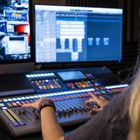
Hitting all the right notes - Georgia Southern music industry degree ready to launch
Georgia Southern University’s Department of Music earned national accreditation for a new music industry degree, the final step for an innovative program that combines music, technology and entrepreneurship. Launching in the fall of 2021, the new music industry program will prepare musicians for evolving careers in music. The program curriculum combines a traditional degree with 21st-century technology and performance opportunities. Accreditation from the National Association of Schools of Music (NASM) allows the new program, Bachelor of Arts in Music with a concentration in music industry, to be offered at the Armstrong Campus in Savannah. Students will have the option of declaring an emphasis area in music technology or music business. “We could not be more excited about this program,” said Steven A. Harper, Ph.D., chair of the Department of Music. “For many years, the music program has been itching to expand its reach and regional impact. Savannah is perfectly suited for a degree of this type and we couldn’t be more pleased to have this degree come to fruition.” The music industry program includes courses in music management, live sound, recording studio techniques, digital audio workstations and music entrepreneurship. “The numerous music industries in Savannah include music manufacturers, performing organizations/venues and major music festivals. These industries can provide ample internship possibilities for hands-on experience in a chosen area,” Harper said. “We are able to reach a student body we’ve never been able to serve before. We can prepare students for a whole different set of in-demand careers and we can create ties with the music industry in Savannah in a way that’s never been possible for us until now. It’s going to be a huge boon for the department, the college, the university and the Armstrong Campus.” One professor key to the program will be Stephen Primatic, DMA, who teaches percussion, theory, jazz and music technology. His versatility is evidenced by the books he has written: two on percussion pedagogy and another on instrument maintenance and repair. “This program will be beneficial to our students, the University and the community of Savannah, offering education and training for music careers in the 21st century,” said Primatic. If you are a journalist looking to know more about the Bachelor of Arts in Music with a concentration in music industry or would like to interview Steven A. Harper, Ph.D., chair of the Department of Music or Professor Stephen Primatic -- simply reach out to Georgia Southern Director of Communications Jennifer Wise at jwise@georgiasouthern.edu to set and time and date.
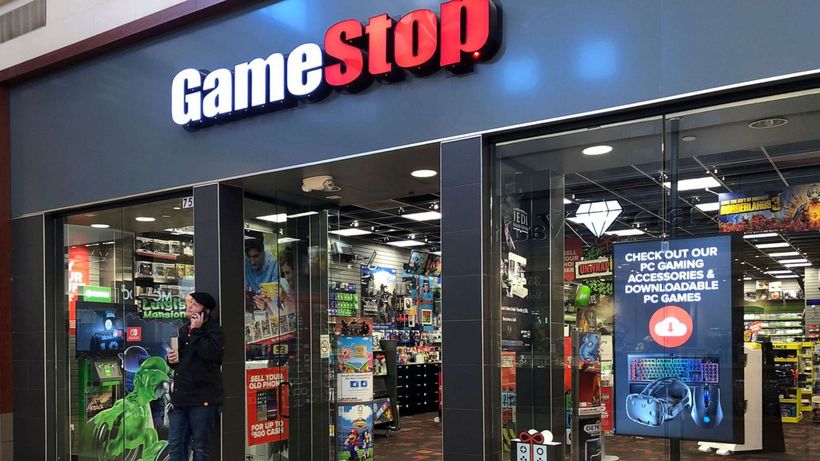
IU Kelley School finance expert available to discuss GameStop, Robinhood
Charles Trzcinka, the James and Virginia Cozad Chair of Finance at the Indiana University Kelley School of Business and an expert on financial markets and investments, is closely following developments involving individual investors and Game Stop and available to talk with reporters. He can discuss the impact of retail investors using the popular Robinhood brokerage and Reddit’s “Wall Street Bets” page on the stock of low priced companies like Gamestop, AMC and stocks such as BlackBerry, Bed Bath and Beyond and Nokia. Several brokerages halt buying of those and other stocks on Thursday. Trzcinka teaches behavioral finance and is familiar with Robinhood's model is to use game technology to trade stock and how it makes money by selling the right to trade against the orders to hedge funds and high frequency traders. In order to schedule an interview, contact George Vlahakis, associate director of communications and media relations at the Kelley School, at vlahakis@iu.edu or 812-855-0846.


How the Biden Administration Can Help Save the Planet
With the inauguration of Joseph R. Biden as the 46th president of the United States came a slew of executive orders—and perhaps most notably America's reentry into the Paris Climate Accord. After the Obama administration joined the largest global cooperative agreement to limit the emission of dangerously climate-altering greenhouse gasses in 2015, the U.S. withdrew in 2017 under former president Donald Trump. Villanova University biology professor Samantha Chapman, PhD, studies how "blue carbon" solutions, like the restoration of wetlands, can contribute to slowing the harmful impact of climate change on the planet. Recently, Dr. Chapman broke down the top three things the Biden administration must do to save the planet, since we are, as she puts it, "close to some scary tipping points." #1: Pressure Brazil’s President Bolsonaro to stop the devastation of the Amazon. "The Amazon Rainforest regulates our global climate. It is imperative that through diplomacy and aid, we incentivize developing countries to preserve their intact lands and biodiversity. We can't do this without helping local communities incentivize the people living in these places to save these lands. Road building in forests is a huge cause of our planet's downward slope." #2: Invest in restoration of natural ecosystems. "We must invest resources into coastal wetlands and forests, here and abroad. USAID could be partially retooled in partnership with the United Stated Geological Survey (USGS), which already does this. These natural ecosystems will serve as natural climate solutions and be harbors for threatened species and nice places for humans to recreate. We must restore the opportunity for nature to re-invoke the necessary feedbacks that make the ecosystems work. Sometimes this involves complicated engineering, sometimes it is simpler and means giving nature space to restore. We're trying both." #3: Find ways to make people feel connected to land and nature—and value it. "This is a vague one and not one that I'm sure any administration can do. The pandemic has given me hope on this—I see so many more people out hiking, fishing, walking, and hanging out in parks. When time comes for voting on taxes, people have to remember that these state parks and preserves and even neighborhood parks cost money to staff and preserve. The U.S. has incredible land and nature and yet, in my experience, Americans value and understand it less than other countries. Some of that has to do with our frontier history. We can learn from Native Americans. Appointing Representative Deb Haaland as the secretary of the interior is one good step the Biden administration has taken in this direction." Dr. Chapman emphasizes that despite the uphill battle ahead, she remains hopeful. "Left to heal and helped to heal, the ecosystem processes that sustain our lives and those of the other amazing organisms on our planet can be restored," she notes. "Good things are happening. They just need to happen at a much larger scale."


Trump’s reaction to defeat further confirms urgency for school focus on social-emotional skills
Sandra Chafouleas, psychologist and behavioral health expert from the University of Connecticut, weighs in: Imagine what would happen if a preschooler didn’t “use their words” when they got upset about sharing, instead stomping around yelling while adults simply observed in silence. Think about what the school climate would feel like if a student punched another during recess while others watched without seeking help. Now consider the actions – and inactions – by Donald Trump on January 6 as the electoral vote counts occurred at the U.S. Capitol. Those behaviors show a desperate need for social emotional learning. According to the Collaborative for Academic, Social, and Emotional Learning (CASEL), social emotional learning involves five core competencies: self-awareness, self-management, social awareness, relationship skills, and responsible decision-making. Trump did not demonstrate these competencies when the election didn’t go the way he wanted. Connecting these school scenarios and Trump’s behaviors is not intended to contribute to the ever-mounting list of recommended consequences that could result from his fueling the insurrection that our nation has just experienced. It does bear noting, however, that if Trump were a Black teenager, he most certainly would have received exclusionary disciplinary action such as suspension and perhaps even expulsion from school. The purpose in connecting the two scenarios is to draw energies toward actions that propel us forward in bridging a divided nation. The responsibility for forward movement falls to future generations, which means it is critical that we pay attention to what happens in schools right now. We need to demand that policies and practice — and necessary resources — are put in place to strengthen school capacity to support students on their path to holding responsibility for democracy. Many excellent resources have quickly appeared to assist educators in teaching about the insurrection. Discussion guides are available to facilitate defining key terms, contrasting events through a social justice lens, and comparing justifications for action using fact checking. Other resources have been released that help adults talk about violence and support emotional safety of kids. What seems to be less prominent, however, is a direct connection to the social, emotional, and behavioral skills that we have just witnessed are missing. Education systems have begun the work of acknowledging their historic roles in contributing to exclusion, inequity, and intolerance of differences. Educators are working hard to turn the tide toward promising alternative approaches. Prominent among those approaches is a focus on social emotional skills. In either classroom scenario above, educators would be jumping into discussion about what supports are needed to address student needs. Social and emotional well-being fulfills us throughout every stage of life – integrating those skills should be in all that we do as adults to model, teach, and give feedback to our children. Of course schools must teach academic content areas and have high expectations, but there is tremendous potential to increase capacity to embed exploration, active practice, and positive feedback about social and emotional skills within each corner of the day. As one example, history professor Kellie Carter Jackson writes about challenges in teaching violence in political history. The author describes the need to question how political violence should be labeled, which could reveal an expression of unmet need by marginalized people. Learning through this analysis offers social and emotional parallels, such as examining biases, recognizing emotions, and examining integrity. As another, Facing History and Ourselves offers a classroom resource specific to the insurrection. Activities reference principles of social and emotional learning, such as steps for educators to practice self-awareness and relationship skills by examining their own emotions and perspectives. Student self-management and social awareness builds through reflection activity that builds civic agency. All of these examples offer incredible opportunity in social and emotional learning that could be advanced with more explicit connection. Entrenching social and emotional learning within the school day beyond this immediate teachable moment also is needed to enable sustained effort. CASEL identifies adults as key to social emotional strategies that will maintain safe, supportive, and equitable learning environments for this moment in history. To do so requires a strong collection of social, emotional, and behavioral education policies and practices. Responsibility for urgently resourcing this collection rests within each of us, right now, to ensure future generations who can and do take part in a resilient democratic nation. Dr. Chafouleas is licensed psychologist and Distinguished Professor, with expertise in school psychology and school mental health at the University of Connecticut’s Neag School of Education. If you’re a reporter looking to speak with Dr. Chafouleas about this topic – let us help. Simply click on her icon to arrange an interview today.


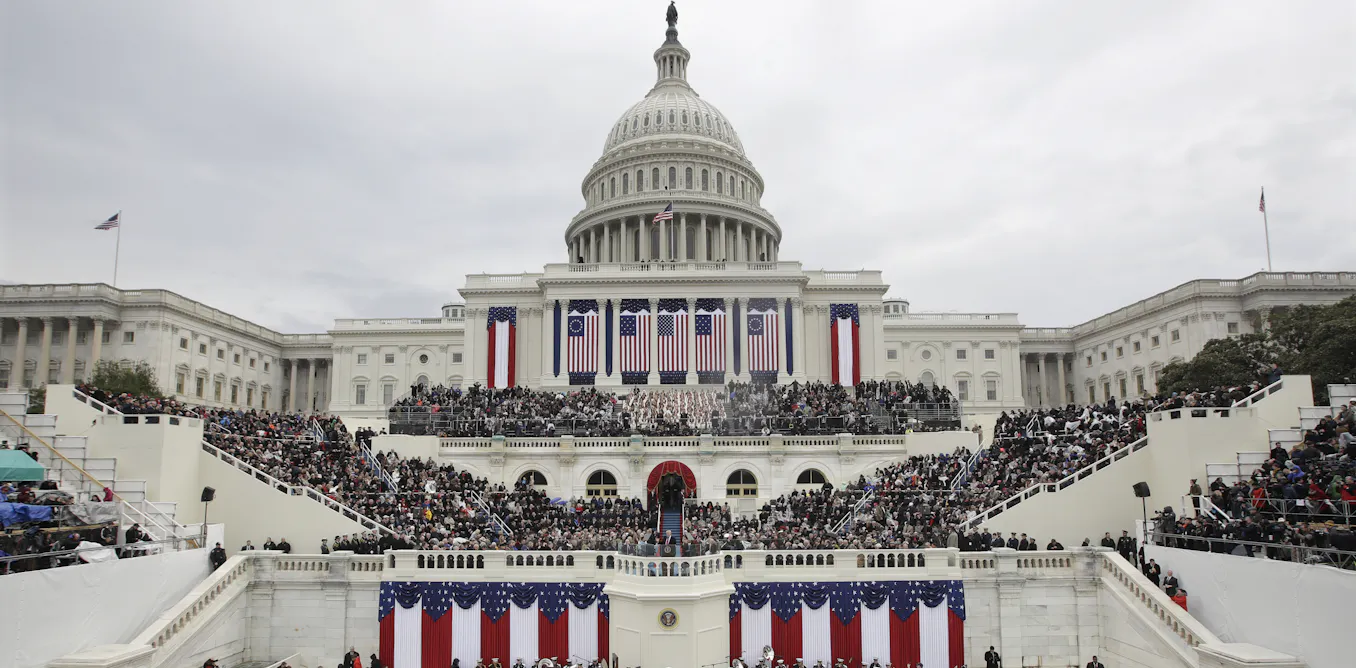
Why do presidential inaugurations matter? Let our expert explain
All eyes are on Washington on Wednesday as the country, and the world for that matter, tune in to watch the inauguration ceremony of Joe Biden as President of the United States. It’s a formal occasion, and one that comes with pomp and circumstance – but after the speeches and the parties, is it a day that really has significance? It’s a question that’s being asked, and one that Dimitris Xygalatas, an anthropologist and cognitive scientist at the University of Connecticut, decided to answer in a recent contribution to The Conversation. In the piece, he examines the appeal of such special and momentous occasions on society and why rituals have a great impact on the public’s perception on major events. The piece is attached – and if you are a reporter looking to learn more of speak to Professor Xygalatas about the significance of the inauguration, simply click on his icon to arrange an interview now.


It’s as if there’s an all-out war on the world’s insects – and experts from across the country are all buzzing with some very bad news. Recently, University of Connecticut’s Professor of Ecology and Evolutionary Behavior, David Wagner was featured on CBS National News in an in-depth story about the potential apocalypse the world’s insect kingdom faces. “The world's vital insect kingdom is undergoing "death by a thousand cuts," the world's top bug experts said. Climate change, insecticides, herbicides, light pollution, invasive species and changes in agriculture and land use are causing Earth to lose probably 1% to 2% of its insects each year, said University of Connecticut entomologist David Wagner, lead author in the special package of 12 studies in Monday's Proceedings of the National Academies of Sciences written by 56 scientists from around the globe. The problem, sometimes called the insect apocalypse, is like a jigsaw puzzle. And scientists say they still don't have all the pieces, so they have trouble grasping its enormity and complexity and getting the world to notice and do something. Wagner said scientists need to figure out if the rate of the insect loss is bigger than with other species. "There is some reason to worry more," he added, "because they are the target of attack" with insecticides, herbicides and light pollution… Insects "are absolutely the fabric by which Mother Nature and the tree of life are built," Wagner said. January 12 - CBS News The story is attached above – and must-read material for anyone concerned about insects and the vital role they play in just about every aspect of our world. If you’re a journalist looking to know more about this topic and would like to contact Dr. Wagner – simply click on his icon now to arrange an interview today.

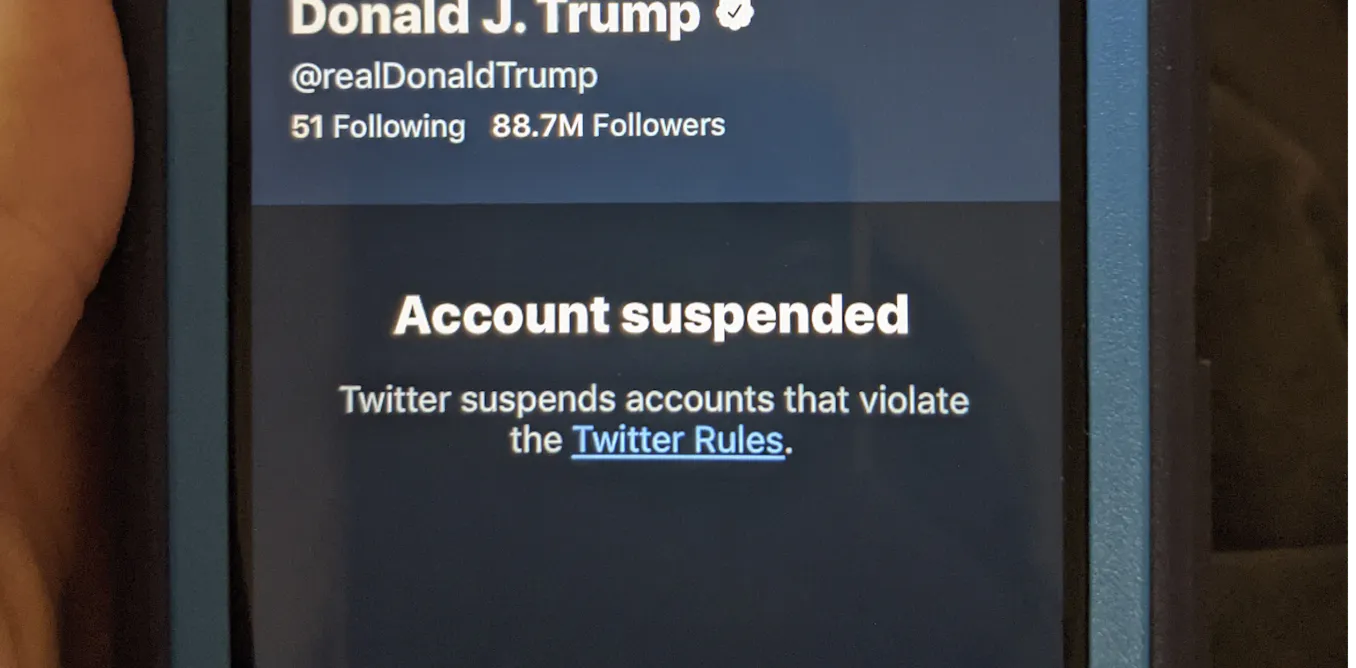
After an incited and encouraged crowd of Trump supporters stormed the Capitol buildings last earlier this month – social media, or at least the executives that run companies like Twitter and Facebook had had enough and opted to oust President Donald Trump from their platforms. Donald Trump has been ‘deplatformed’ and no longer has easy access to an audience of millions of followers. The concept of deplatforming is being widely debated. And recently, University of Connecticut’s Ugochukwu Etudo was asked to lend his expert perspective on the idea. Does the deplatforming of prominent figures and movement leaders who command large followings online work? That depends on the criteria for the success of the policy intervention. If it means punishing the target of the deplatforming so they pay some price, then without a doubt it works. For example, right-wing provocateur Milo Yiannopoulos was banned from Twitter in 2016 and Facebook in 2019, and subsequently complained about financial hardship. If it means dampening the odds of undesirable social outcomes and unrest, then in the short term, yes. But it is not at all certain in the long term. In the short term, deplatforming serves as a shock or disorienting perturbation to a network of people who are being influenced by the target of the deplatforming. This disorientation can weaken the movement, at least initially. However, there is a risk that deplatforming can delegitimize authoritative sources of information in the eyes of a movement’s followers, and remaining adherents can become even more ardent. Movement leaders can reframe deplatforming as censorship and further proof of a mainstream bias. There is reason to be concerned about the possibility that driving people who engage in harmful online behavior into the shadows further entrenches them in online environments that affirm their biases. Far-right groups and personalities have established a considerable presence on privacy-focused online platforms, including the messaging platform Telegram. This migration is concerning because researchers have known for some time that complete online anonymity is associated with increased harmful behavior online. In deplatforming policymaking, among other considerations, there should be an emphasis on justice, harm reduction and rehabilitation. Policy objectives should be defined transparently and with reasonable expectations in order to avoid some of these negative unintended consequences. January 15 – The Conversation If you’re a journalist covering deplatforming and would like to talk with Ugochukwu Etudo – simply click on his icon today and we’ll arrange an interview today.

Renowned educator and author Gloria Ladson-Billings to present Georgia Southern 2021 Fries Lecture
Gloria Ladson-Billings, Ph.D., renowned pedagogical theorist, teacher educator and author, will present the 2021 Norman Fries Distinguished Lecture, hosted by Georgia Southern University’s College of Education. In her lecture, “Culturally Responsive Pedagogy: Educating Past Pandemics,” Ladson-Billings will discuss how pandemics provide opportunities for revisioning and reimagining culturally relevant teaching practices. She suggests that instead of “getting back to normal,” it is time to get on to new and more equitable ways of educating all students and creating a more democratic society. Ladson-Billings is the former Kellner Family Distinguished Professor of Urban Education in the Department of Curriculum and Instruction and faculty affiliate in the Department of Educational Policy Studies at the University of Wisconsin-Madison. She also served as the 2005-06 president of the American Educational Research Association (AERA). Ladson-Billings’ research examines the pedagogical practices of teachers who are successful with Black students. She also investigates critical race theory applications to education. She is the author of critically acclaimed books The Dreamkeepers: Successful Teachers of African American Children and Crossing Over to Canaan: The Journey of New Teachers in Diverse Classrooms, as well as numerous journal articles and book chapters. About Ladson-Billings Former editor of the American Educational Research Journal and a member of several editorial boards, Ladson-Billings’ work has won multiple scholarly awards including the H.I. Romnes Faculty Fellowship, the National Academy of Education/Spencer Postdoctoral Fellowship and the Palmer O. Johnson Outstanding Research Award. She is a 2018 recipient of the AERA Distinguished Research Award and was elected to the American Academy of Arts and Sciences in 2018. About the Norman Fries Distinguished Lectureship series The annual Norman Fries Distinguished Lectureship series began in 2001. It is funded by an endowment in honor of Norman Fries, founder of Claxton Poultry. In his more than 50 years of business, Fries built the company from a one-man operation into one of the largest poultry production plants in the U.S. Past Fries lecturers include David Oreck of Oreck Vacuums, South African apartheid author and lecturer Mark Mathabane, NASA director James W. Kennedy, Pulitzer Prize-winning author and historian Gordon S. Wood, Nobel Prize laureate William D. Phillips, Ph.D., bestselling author Susan Orlean, concussion expert Dr. Russell Gore, and PricewaterhouseCoopers Network chief operating officer Carol Sawdye. The lecture will take place virtually via Zoom on Feb. 8 at 7 p.m. The event is free and open to the public. If you are a journalist looking to know more about the Norman Fries Distinguished Lectureship or would like to interview Gloria Ladson-Billings -- simply reach out to Georgia Southern Director of Communications Jennifer Wise at jwise@georgiasouthern.edu to set and time and date.