
Experts Matter. Find Yours.
Connect for media, speaking, professional opportunities & more.

This presidential election will undoubtedly be the most contentious, controversial, and probably extraordinary in American history. If you thought 2016 was a spectacle, now Joe Biden and Donald Trump are facing off during a global pandemic, which will inevitably force the traditional styles of campaigning like whistle stops and rallies to pivot toward digital town halls and online chats. Despite polling, both parties know they cannot take anything for granted. And there are a lot of factors at play: Has anyone done an almost exclusively online campaign before? What will a lack of massive rallies mean for Donald Trump? What can Joe Biden learn from the Clinton campaign? What are the key states at play and why do they matter so much? Can either candidate bridge the divide between a very divisive America? The next 99 days will be a long and drawn out marathon of drama, policies, and political punches. And if you are covering, let Dr. Stephen Farnsworth be your go-to for everything you need to know during this election. Dr. Stephen Farnsworth is a sought-after political commentator on presidential politics. He has been widely featured in national media, including The Washington Post, Reuters, The Chicago Tribune, and MSNBC. He is author or co-author of six books on presidential communication. Dr. Farnsworth is available to speak with media and help with your coverage – simply click on his icon to arrange an interview today.


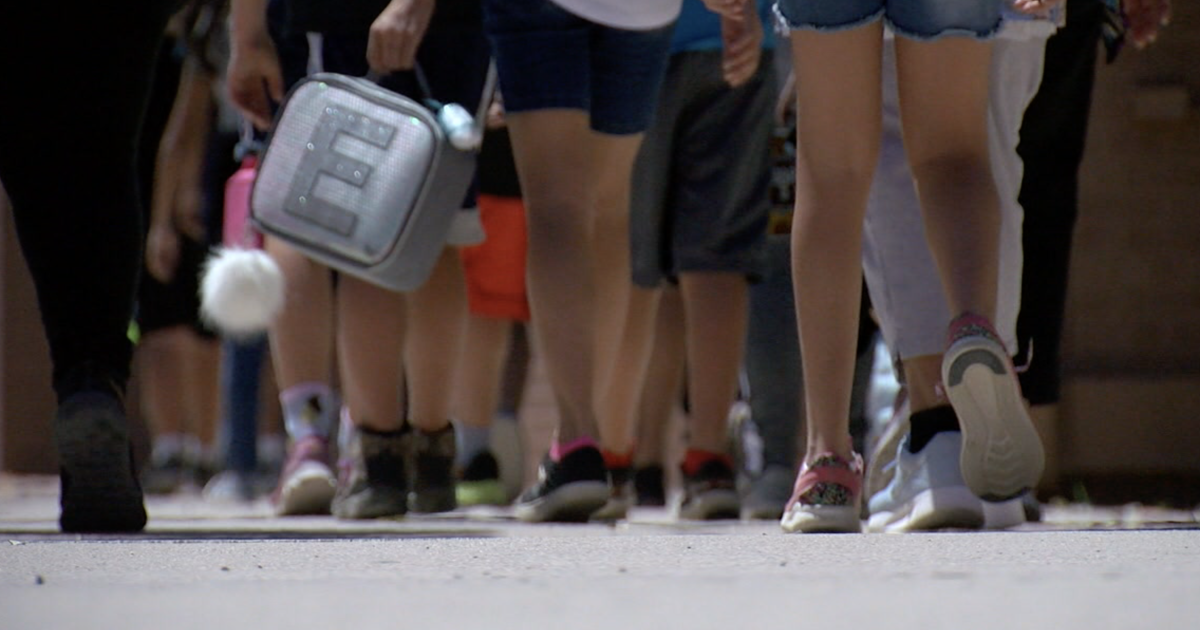
Back to school anxiety - How can parents prepare kids as the time to go back to school gets closer?
The new school year is usually an exciting time for kids and a time to celebrate for parents who have been keeping busy all summer long. A new grade and new adventures at school await. But this year, with children heading back to class in just a few short weeks, anticipation has been replaced by anxiety as a lot of kids are stressed about the idea of returning during COVID-19. For most children, predictability can play a major part in being comfortable and feeling secure. As well, with children seeing the news, having spent months in lockdown and knowing that they’ll likely be wearing a mask all day, the pressure of the ‘unknown’ may be enormous. “It is normal for kids to feel nervous about returning to school, especially if they have been learning from home for months,” said Dr. Meredith Rausch, a leading counselor education expert and associate professor in the Department of Advanced Studies and Innovation in the College of Education at Augusta University. “To help ease their anxiety, I encourage parents to reassure their children about the safety measures in place to keep them safe and remind them about the positives, such as being able to see their friends and teachers.” Rausch also recommends the following tactics parents can do at home to help ease the back-to-school anxiety. Wear a mask at home: Wear one while playing a game, reading a book or having some screen time. Normalizing life in a mask may be the new normal. Share how you feel: Parents who can share their feelings will likely prompt children to share their own. Let kids know that adults are nervous and are sometimes afraid too, and encourage young ones to open up and express any lingering or pent up emotions. This coming school year will be like no other in memory, and as parents get kids ready to head back into the classrooms – there are still a lot of questions remaining. If you’re a journalist covering this topic – then let our experts help. Dr. Meredith Rausch is a leading expert in counselor education, and her research focuses on underserved populations, particularly LGBTQ+ individuals and women. Rausch is available to speak with media regarding this important subject. Simply click on her name to arrange an interview today.


Racial and LGBT bias persists in ridesharing drivers despite mitigation efforts
Despite efforts by ridesharing companies to eliminate or reduce discrimination, research from the Indiana University Kelley School of Business finds that racial and LGBT bias persists among drivers. Platforms such as Uber, Lyft and Via responded to drivers' biased behavior by removing information that could indicate a rider's gender and race from initial ride requests. However, researchers still found that biases against underrepresented groups and those who indicate support for the LGBT community continued to exist after drivers accepted a ride request -- when the rider's picture would then be displayed. In other words, their efforts shifted some of the biased behavior until after the ride was confirmed, resulting in higher cancellation rates. Understanding whether bias has been removed also is important for ridesharing companies as they not only compete against each other but also with traditional transportation options. "Our results confirm that bias at the ride request stage has been removed. However, after ride acceptance, racial and LGBT biases are persistent, while we found no evidence of gender biases," said Jorge Mejia, assistant professor of operations and decision technologies. "We show that signaling support for a social cause -- in our case, the lesbian, gay, bisexual and transgender community -- can also impact service provision. Riders who show support for the LGBT community, regardless of race or gender, also experience significantly higher cancelation rates." Mejia and co-author Chris Parker, assistant professor in the information technology and analytics department at American University in Washington, believe they are the first to use support for social causes as a bias-enabling characteristic. Their article, "When Transparency Fails: Bias and Financial Incentives in Ridesharing Platforms," is published in Management Science. They performed a field experiment on a ridesharing platform in fall 2018 in Washington, D.C. They randomly manipulated rider names, using those traditionally perceived to be white or Black, as well as profile pictures to observe drivers' behavior patterns in accepting and canceling rides. To illustrate support for LGBT rights, the authors overlaid a rainbow filter on the rider's picture profile. "We found that underrepresented minorities are more than twice as likely to have a ride canceled than Caucasians; that's about 3 percent versus 8 percent," Mejia said. "There was no evidence of gender bias." Mejia and Parker also varied times of ride requests to study whether peak price periods affected bias. They found that higher prices associated with peak times alleviated some of the bias against riders from the underrepresented group, but not against those who signal support for the LGBT community. They believe that ridesharing companies should use other data-driven solutions to take note of rider characteristics when a driver cancels and penalize the driver for biased behavior. One possible way to punish drivers is to move them down the priority list when they exhibit biased cancellation behavior, so they have fewer ride requests. Alternatively, less-punitive measures may provide "badges" for drivers who exhibit especially low cancellation rates for minority riders. But, ultimately, policymakers may need to intervene, Mejia said. "Investments in reducing bias may not occur organically, as ridesharing platforms are trying to maximize the number of participants in the platform -- they want to attract both riders and drivers," he said. "As a result, it may be necessary for policymakers to mandate what information can be provided to a driver to ensure an unbiased experience, while maintaining the safety of everyone involved, or to create policies that require ridesharing platforms to monitor and remove drivers based on biased behavior. "Careful attention should be paid to these policies both before and after implementation, as unintended consequences are almost sure to follow any simple fix."


Chatbots can ease medical providers' burden, offer trusted guidance to those with COVID-19 symptoms
COVID-19 has placed tremendous pressure on health care systems, not only for critical care but also from an anxious public looking for answers. Research from the Indiana University Kelley School of Business found that chatbots -- software applications that conduct online chats via text or text-to-speech -- working for reputable organizations can ease the burden on medical providers and offer trusted guidance to those with symptoms. Researchers conducted an online experiment with 371 participants who viewed a COVID-19 screening session between a hotline agent -- chatbot or human -- and a user with mild or severe symptoms. They studied whether chatbots were seen as being persuasive, providing satisfying information that likely would be followed. Their results showed a slight negative bias against chatbots' ability, perhaps due to recent press reports. When the perceived ability is the same, however, participants reported that they viewed chatbots more positively than human agents, which is good news for health care organizations struggling to meet user demand for screening services. "The primary factor driving user response to screening hotlines -- human or chatbot -- is perceptions of the agent's ability," said Alan Dennis, the John T. Chambers Chair of Internet Systems at Kelley and corresponding author of the paper, "User reactions to COVID-19 screening chatbots from reputable providers." "When ability is the same, users view chatbots no differently or more positively than human agents." Other authors on the paper, forthcoming in the Journal of the American Medical Informatics Association, are Antino Kim, assistant professor of operations and decision technologies at Kelley; and Sezgin Ayabakan, assistant professor of management information systems, and doctoral candidate Mohammad Rahimi, both at Temple University's Fox School of Business. Even before the pandemic, chatbots were identified as a technology that could speed up how people interact with researchers and find medical information online. "Chatbots are scalable, so they can meet an unexpected surge in demand when there is a shortage of qualified human agents," Dennis, Kim and their co-authors wrote, adding that chatbots "can provide round-the-clock service at a low operational cost. "This positive response may be because users feel more comfortable disclosing information to a chatbot, especially socially undesirable information, because a chatbot makes no judgment," researchers wrote. "The CDC, the World Health Organization, UNICEF and other health organizations caution that the COVID-19 outbreak has provoked social stigma and discriminatory behaviors against people of certain ethnic backgrounds, as well as those perceived to have been in contact with the virus. This is truly an unfortunate situation, and perhaps chatbots can assist those who are hesitant to seek help because of the stigma." The primary factor driving perceptions of ability was the user's trust in the provider of the screening hotline. "Proactively informing users of the chatbot's ability is important," the authors wrote. "Users need to understand that chatbots use the same up-to-date knowledge base and follow the same set of screening protocols as human agents. ... Because trust in the provider strongly influences perceptions of ability, building on the organization's reputation may also prove useful."

Cancellation of non-conference college football games may lead to a new battle in the courtroom
The Big Ten Conference's decision to cancel all non-conference football games for the upcoming season -- and the possibility that schools in other major conferences may soon follow -- raises a number of potential legal issues, says Nathaniel Grow, associate professor of business law and ethics at the Indiana University Kelley School of Business. “Depending on the terms of the schools' college football scheduling agreement, the university cancelling the game may still owe the other school some level of compensation for breaking the agreement,” Grow said. “If the cancelling university refuses to pay, then it would not be surprising if the other school would elect to file a lawsuit.” A nationally recognized expert in the field of sports law, Grow studied has studied this issue, the subject of a 2010 article in the Journal of College and University Law. "The ultimate outcome of such a lawsuit would hinge largely on the specific terms of two affected schools' contract. In general, though, two provisions of the contract would likely prove to be the most important. First, most scheduling agreements will include some sort of liquidated damages provision, a clause that specifies that one side of the agreement must pay the other party a certain amount of money should the contract be broken. Often times, these contracts will provide that the breaching party must only pay the other school in the event that the opponent is unable to replace the cancelled game on its schedule with one against a sufficiently suitable alternative opponent. "The other relevant clause in these scheduling agreements is likely to be the force majeure provision, sometimes referred to as an ‘Act of God’ clause. Under these provisions, schools may be excused from cancelling a game without penalty if circumstances arise that make playing the game unduly difficult or impossible (for instance, a hurricane or other major weather event). The applicability of such a provision will also vary depending on the specific wording employed in the contract, and whether the clause permits a team to cancel a game on the basis of either a pandemic or a change in conference policy regarding the playing of non-conference games." Grow can be reached at 812-855-8191 or grown@iu.edu.

Joke or not – could Kanye play spoiler in the 2020 election?
It’s set the internet abuzz – and as rap superstar Kanye West (with the help of his wife Kim Kardashian West and billionaire Elon Musk) took to Twitter to declare his intentions to run for president this November. One small problem – West has missed several key deadlines to get on the ballot. However, if he is determined to run, he can ‘t run in key states like Texan, New York or North Carolina. This all seems silly right now, but if the sometimes controversial and very unpredictable celebrity makes a run, in the end – who would it help and who would it hurt? Could West’s popularity siphon off votes from Joe Biden key battleground areas? Or would a West campaign steal the attention and airtime away from Donald Trump leaving him to pitch policy and drastically reducing his reach? In a year that knows nothing normal, if you are covering Kanye West and the 2020 election – let our experts help. Mark Caleb Smith is the Director of the Center for Political Studies at Cedarville University. Mark is available to speak with media regarding this topic and any aspects about the upcoming election. Simply click on his icon to arrange an interview.


As China clamps down on Hong Kong – Is Taiwan next?
As protests erupt again across Hong Kong against the recent imposing of new security laws essentially giving Beijing unprecedented powers – it has some worried about what is next as China pursues it’s One-China policy. In Taiwan people are watching, and concern is growing. Professor Elizabeth Freund Larus teaches political science at the University of Mary Washington and is an #expert on China and the field of Asian studies. She has also been interviewed by media such as CNBC, The Diplomat and CBN News regarding this topic. She has noted that the developments in China, especially with regards to Hong Kong and Taiwan are catching global attention and will impact economies and governments across the globe. Beijing has taken an especially hard line towards Taiwan since the 2016 election of President Tsai Ing-wen of the Democratic Progressive Party (DPP), ramping up military, economic and diplomatic pressure. Tsai views Taiwan as a de facto independent nation and not part of "one China". But the pressure campaign has done little to endear China to Taiwan's 23 million people. In January, Tsai won a second term with a historic landslide and polls consistently show a growing distrust of China... Social media is filled with messages of support for Hong Kong's democracy movement. Some back Taiwanese independence, or highlight China's rights abuses in regions such as Tibet and Xinjiang. Wendy Peng, a 26-year-old magazine editor who said she often shared pro-Hong Kong democracy messages on social media, said she would now avoid visiting the city. "The national security law makes me wonder how far would China go. Right now I don't see a bottom line and there's probably none. I think it's possible they will target Taiwan next," she said. July -7 Yahoo! New/AFP If you are a reporter covering this progressing story – then let our experts help. Elizabeth Larus is available to speak to media, simply click on her icon to arrange an interview.


A New Kind of "Zoom" Science Lesson
With the end of the school year just around the corner and numerous COVID-19 restrictions still in place for the foreseeable future, many parents are worried. Summer camps in Pennsylvania are beginning to open—but with limited capacity. So, what are working caretakers to do with their kids all day? Villanova University professor of chemistry Marta Guron, PhD, and six of her students have created informative science lessons that bring learning and fun together in a virtual environment. In a typical year, Dr. Guron gathers a group together who volunteer their time by visiting local elementary schools to perform hands-on science experiments with fourth-graders, fifth-graders and sixth-graders. When in-person lessons were no longer an option due to the pandemic, the Villanovans adapted their strategy. Though finals are over and Villanova's campus remains empty, six dedicated undergraduate and graduate students are still finding time to go virtual with their lessons. In the following video, Dr. Guron and the Villanova students use PowerPoint, plastic containers, water and their choice of "solids" to talk about density. The supplies for this outreach program are typically provided by Villanova, but in light of everyone being "stuck at home," Dr. Guron encouraged the grade school students to experiment. "If there is something that you don't have at home, it's OK to try to replace different things. For example, some students, when they added different solids, they might have added a penny or a piece of wood. But others might have a bead or something else. It doesn't... much matter." She adds, "Please make sure you talk to your mom and dad before you take anything out!" Some other experiments the team has done include assessing symmetry in crystals, making the gooey, Double Dare-inspired "gak," building a fruit battery, investigating sound and studying capillary action in flowers. Dr. Guron is grateful that her students were still interested in the project, even after the end of a particularly unusual semester. "I thought it was awesome that these students all volunteered time and effort after their final exams were over because of their dedication to the program and to the kids. We are truly a community of helpers."


Black Gospel Music Expert Shares 10 of the Most Powerful, Enduring Freedom Songs, Protest Spirituals
By Robert F. Darden, Professor of Journalism, Public Relations & New Media, Founder and Director of the Black Gospel Music Restoration Project at Baylor University WACO, Texas (June 19, 2020) – As the protests following the death of George Floyd began to roil the country, it was only a few days before the demonstrators began to sing an array of freedom songs and protest spirituals, as well as a few new adaptations, including Bill Withers’ “Lean on Me.” Some of these songs have been sung by people fighting nonviolently for freedom and justice for hundreds of years. Many have been sung continually in the United States since the 1800s, right through the #blacklivesmatter and #metoo movements. Others have been adopted by freedom fighters in the Arab Spring, at Tiananmen Square and even now in Hong Kong. The Black Gospel Music Restoration Project at Baylor University has the world’s largest collection of digitized vinyl songs and sermons from gospel’s “golden age.” Not surprisingly, there are hundreds of freedom songs and protest spirituals in the collection as well. Below is a list of some of the most influential, most powerful, most enduring and beloved songs that have inspired and encouraged sings for two centuries. Each song is available for listening in the digital collections of the Black Gospel Music Restoration Project. (Assistance provided by Baylor Libraries’ Digitization and Digital Preservation Services.) 10. “We Shall Not Be Moved” and “Which Side Are You On?” When labor unions admitted African Americans in the 1930s and '40s, labor protesters quickly absorbed and adapted the great protest spirituals. These two old union songs were quickly adopted and expanded by the civil rights movement of the '50s and '60s. Listen to “I Shall Not Be Moved” by the Mighty Wonders of Aquasco, Maryland. 9. “A Charge to Keep Have I” In the days before hymnals, a song-leader would sing or speak a line and the congregation, whether in a church or at a mass meeting, would sing it back, called “lining out.” One of the most popular lined-out hymns during the movement was the old hymn, “A Charge to Keep Have I.” Listen to “A Charge to Keep” by Betty Simmons. 8. “Up Above My Head, I Hear Freedom in the Air” This old spiritual became a favorite in the great singing protests of Albany, Georgia, and quickly spread throughout the South. Listen to “Up Above My Head, I Hear Freedom in the Air” by Sister Rosetta Tharpe. 7. “If I Can Help Somebody” Not all freedom songs were defiant in tone. Some provided comfort in difficult times. Some helped encourage those in despair. This is one of those songs. Listen to “If I Can Help Somebody” by Dorothy Love Coates and the Gospel Harmonettes from the LP, Till My Changes Come. 6. “Freedom Highway” Some original songs were composed during the movement that were not only quickly adopted by the civil rights activists, they’ve remained in the repertoire of freedom fighters everywhere. One such song is “Freedom Highway” by the Staple Singers who themselves marched many miles with Dr. Martin Luther King Jr. Listen to “Freedom Highway” by the Staple Singers. 5. “Keep Your Eyes on the Prize”/“Hold On” There are dozens of variations of this civil rights-era favorite. Most include the couplet about Paul and Silas in jail, but all were sung to bolster spirits in tough times. Listen to “Keep Your Hands on the Plow” by The Famous Ward Singers from the LP on Vista Records. 4. “This Little Light of Mine” Fannie Lou Hamer made this old children’s song one of the most popular and righteous of the freedom songs. It was easily adaptable to every situation and good for naming the names of your oppressors. Listen to “The Little Light of Mine” by the Ward Singers. 3. “99 ½ Won’t Do” “99 ½ Won’t Do” was one of the most powerful songs to come out of the Birmingham freedom movement, sung by choirs and soloists alike, and it has since become a staple for many gospel singers, along with “I’m a Soldier in the Army of the Lord.” Listen to “99 ½ Won’t Do” by the Greater Sabathani Baptist Church Mass Choir. 2. “Don't Let Nobody Turn You Around” This freedom song has been sung repeatedly during the George Floyd protests – and has been sung for a hundred years or more. It lends itself well to a tone of defiance against great odds and was another freedom song that was infinitely adaptable to the situation. Listen to “Don't Let Nobody Turn You Around” by the Five Trumpets. 1. “We Shall Overcome” Few songs can match the majesty and soulful power of “We Shall Overcome,” always sung standing, with arms crossed clasping the hands of those on either side. It is at its most powerful -- then and now -- when the lines “black and white together” are included. Listen to “We Shall Overcome” from the 45 by Alice McClarty and the Traveling Echoes. ABOUT BAYLOR UNIVERSITY Baylor University is a private Christian University and a nationally ranked research institution. The University provides a vibrant campus community for more than 18,000 students by blending interdisciplinary research with an international reputation for educational excellence and a faculty commitment to teaching and scholarship. Chartered in 1845 by the Republic of Texas through the efforts of Baptist pioneers, Baylor is the oldest continually operating University in Texas. Located in Waco, Baylor welcomes students from all 50 states and more than 90 countries to study a broad range of degrees among its 12 nationally recognized academic divisions.

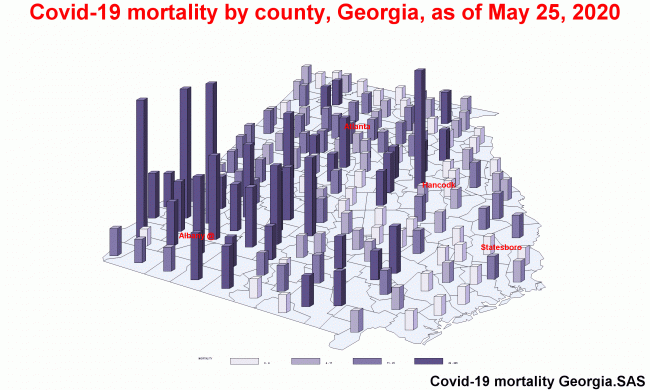
Graduate students in the Jiann-Ping Hsu College of Public Health at Georgia Southern University analyzed mortality data to reveal that a county in southwest Georgia is dealing with deaths from COVID-19 at a rate higher than most other counties in the country. The students found that the mortality rate of 305 per 100,000 residents (as of May 28, 2020) for Terrell County in southwestern Georgia, is 50% higher than that of New York state’s Nassau County, the documented highest rate in New York. The three other Georgia counties that are highest in terms of mortality rate are Hancock, Early and Dougherty counties. Three out of these four are in southwest Georgia, around the Albany area. That accounts for almost half of the 10 counties in the United States with the highest mortality rate, which is defined as a measure of the frequency of occurrence of death among a defined population. However, it’s interesting to note that none of Georgia counties reached the top 20 in terms of incidence and the death numbers per 100 confirmed Covid-19 cases, said professor Dr. Jian Zhang, a veteran medical epidemiologist. “Georgia is doing pretty well to stop the spread of the virus, and hospitals in Georgia are doing well to save hospitalized COVID-19 patients. The high mortality rate, in this case, may be deeply rooted in the historical burden of poverty in Georgia,” Zhang said. The findings are part of a service-learning project Zhang led. A six-student group formed the surveillance team that began running a real-time COVID-19 numbers in his Public Health Surveillance class. If you are a journalist covering COVID-19 and would like to learn more about this research taking place at Georgia Southern University – then let us help. Dr. Jian Zhang has worked with the Chinese Centers for Disease Control and Prevention, and the World Health Organization prior to moving to the United States.

