
Experts Matter. Find Yours.
Connect for media, speaking, professional opportunities & more.

And the award goes to … Georgia Southern University receives two Emmy nominations
The National Academy of Television Arts and Sciences Southeast Chapter has recognized Georgia Southern University’s Multimedia Development Center (MDC) with two professional Emmy award nominations. Nominated for the Emmy awards were Art Berger, Best Technical Director for Georgia Southern football, baseball and basketball, and Ben Powell, Best Technical Director for Georgia Southern basketball. Berger, director of the MDC, said the nominations are a result of a collaborative effort among the student and staff team. The MDC’s mission is to provide students with professional opportunities and deliver excellence in media programming. Students working at the MDC receive hands-on experience delivering more than 150 live streaming events a year including commencement and Georgia Southern football. “We are very proud of our collaboration with Georgia Southern Athletics and our two Technical Director 2019-2020 Emmy award nominations,” said Berger. “These awards reflect the quality and the outstanding dedication of our students and our staff in delivering high-quality ESPN programming. We are extremely proud of our continued excellence in bringing Emmy level ESPN programming to Georgia Southern University.” The MDC has previously received eighteen Emmy nominations as well as five professional wins including best director, best sports director, and best technical director, and two Emmy awards for best audio with the Georgia Southern Symphony. The National Academy of Television Arts and Sciences is a professional organization for individuals in the television and broadcasting industry. If you are journalist and would like to know more about this story - simply reach out to Georgia Southern Director of Communications Jennifer Wise at jwise@georgiasouthern.edu to arrange an interview.


Ask an Expert: How can you recognize false information about the virus?
Lisa K. Fazio, assistant professor of psychology at Vanderbilt Peabody College of education and human development, gives tips to social media consumers on how to recognize misleading information about COVID-19. For more information, read an essay about ways to identify misinformation written by Fazio for the Peabody Reflector. Vanderbilt University faculty are sharing their expertise on a range of topics related to COVID-19. Subscribe to Vanderbilt’s “Ask an Expert” series on YouTube to get the latest updates.


STORY: CAA named the most trusted brand in Canada in the annual Gustavson Brand Trust Index
The Canadian Automobile Association (CAA) has been named the most trusted brand in Canada in the annual Gustavson Brand Trust Index, released today. This is the fourth consecutive year that CAA is one of the top two most trusted brands in Canada, beating out several hundred other prominent international and Canadian brands. This year, CAA tied for first place with Mountain Equipment Coop (MEC), another Canadian, membership-based, not-for-profit organization. Further, CAA finished first, for the third year in a row, in the insurance category of this year’s Index. Conducted by the Peter B. Gustavson School of Business at the University of Victoria, the sixth annual Gustavson Brand Trust Index asked more than 7,800 consumers to score 342 prominent companies and brands, across 27 industry sectors, on a range of brand value measures.

Whistle stops or Zoom chats – What will a campaign for the 2020 election look like?
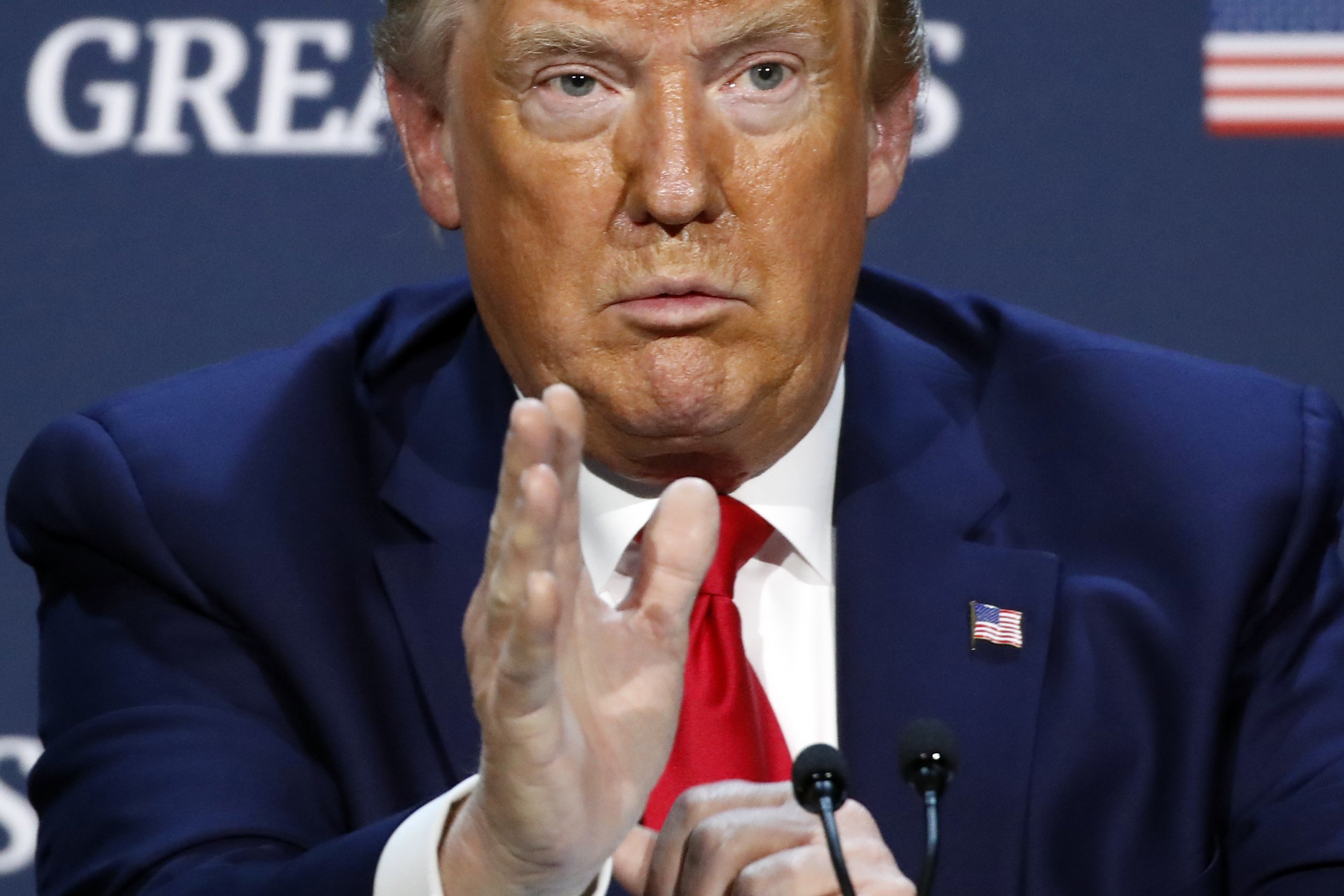
The race for 2020 is on. President Donald Trump has already scheduled his first rally in the very red-leaning Oklahoma whereas Joe Biden has been conducting digital town-halls and online events in his effort to reach voters. Campaigning for president is a billion-dollar ordeal. It usually means months and months on the road; a different message being brought to a different audience and usually in a different state each night from August until November. For President Trump, it seems he’s charging, head down – despite what many critics and officials have to say. Yet Trump has continued to travel — even to states that still have restrictions — and announced this week that he’ll resume his signature campaign rallies beginning next Friday in Tulsa, Oklahoma. The state, which was among the earliest to begin loosening coronavirus restrictions, has a relatively low rate of infection but has seen cases rising. “They’ve done a great job with COVID, as you know, the state of Oklahoma,” Trump said Wednesday. Campaign officials chose the location knowing Republican Gov. Kevin Stitt would raise no objections. Stitt’s most recent reopening phase places no limits on the size of group gatherings. The campaign hopes the location will all but guarantee a large crowd, since Oklahoma is one of the most Republican states in the nation and Trump has never held a rally there as president. Still, the reality could not be completely ignored. “By clicking register below, you are acknowledging that an inherent risk of exposure to COVID-19 exists in any public place where people are present,” Trump’s campaign advised those signing up for the rally. “By attending the Rally, you and any guests voluntarily assume all risks related to exposure to COVID-19 and agree not to hold Donald J. Trump for President, Inc.” liable for illness or injury. Trump is also planning events in Arizona and Florida — states where cases are on the upswing. In Arizona, hospitals have been told to prepare for the worst as hospitalizations have surged. Trump this month decided that he would no longer hold the marquee event of the Republican National Convention —- his acceptance speech — in North Carolina after the state refused to guarantee that he could fill an arena to capacity with maskless supporters. It’s being moved to Jacksonville, Florida. June 12 – Associated Press But as the Trump campaign seems to be sticking to the old school playbook – what will the Democrats do? Can campaigning on-line be effective? Do voters really need to see a person and shake a hand to make a decision who to vote for? Is it better to be safe or sorry when there is so much at stake? If you are covering – then let our experts help with your questions and stories. Mark Caleb Smith is the Director of the Center for Political Studies at Cedarville University. Mark is available to speak with media regarding the DNC Primary, running mates and the upcoming election. Simply click on his icon to arrange an interview.


Protests and politics – let our expert explain how one influences the other
The protests that have been occurring across most of America have seen politically charged language, action, and reaction. Calls for change have been made, and promises have followed by those seeking to attain office or remain in office once the dust has settled and America goes to the polls in the fall. In a recent essay, former President Barack Obama touched on how those protesting can translate emotions into action. “Throughout American history, it’s often only been in response to protests and civil disobedience that the political system has even paid attention to marginalized communities,” said Obama. ”Eventually, aspirations have to be translated into specific laws and institutional practices — and in a democracy, that only happens when we elect government officials who are responsive to our demands.” Social movement expert and Augusta University Sociology Professor Dr. Todd Powell-Williams says protest movements have a significant impact on politics. His research shows societal change not only happens as a result of the crowd but also because the protests get people politically activated. “From the Boston Tea Party to the protests of the Civil Rights Movement, protests have had some degree of success in changing the course of history,” said Powell-Williams. “The recent protests against racial injustice are no different and I’m sure it will influence the outcomes of upcoming elections.” If you are a journalist looking to cover this topic, then let our expert help with your questions and coverage today. Dr. Todd Powell-Williams is an expert in social movements, social control, religion, police science and symbolic interactionism. He is available to speak with media regarding this topic — simply click on his name to arrange an interview. Also, check out the Augusta University Expert Center to view a complete list of our experts.


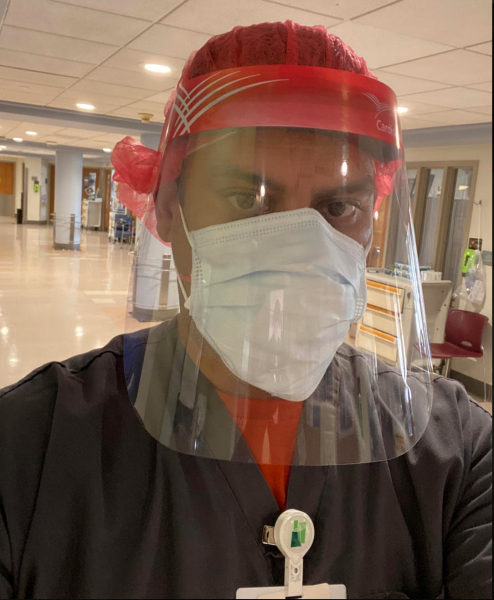
When the first cases of the novel coronavirus arrived in Chatham County, Georgia, Rafael Agosto, who has been a respiratory therapist at St. Joseph’s/Candler Hospital in Savannah for 17 years, had to recalibrate his approach to lung care. “Initially, it was kind of wild because we didn’t know what to expect and how to manage any of these patients,” said Agosto. “What are we looking for, and how do we treat this?” The primary role of a respiratory therapist is to assist patients who have trouble breathing by administering oxygen, managing ventilators and measuring lung function, among other methods. COVID-19 symptoms include fatigue, fever, cough and shortness of breath, and at the onset, Agosto and his colleagues raced to stabilize patients who tested positive for the precarious disease. “We were trying to keep them oxygenated,” he said. “It was sort of like pneumonia, but we wouldn’t treat it like a normal pneumonia because it’s like a deadly pneumonia. Patients were declining very fast so you didn’t have time like you normally would with other patients. And they were of all ages. That’s what was so scary.” While grappling with patient care, Agosto and his co-workers were also dealing with fear for their own safety with exposure to the virus in such close proximity. St. Joseph’s/Candler, Agosto’s employer since he graduated with a B.S. in respiratory care from Georgia Southern University’s Armstrong Campus in 2003, made it a priority to outfit the health care workers with proper personal protection equipment (PPE), Agosto said. “That was scary but they made sure we had what we needed,” he explained. “Safety was the number one key. So the proper PPE, it was everything. We had all of it. A face shield, goggles, scrub cap and masks. They were not comfortable at all. At least here when I wore them I had downtime, but in Boston, holy moly, my face was bruised.” Agosto registered for a four-week rotation with a crisis nurse staffing company that placed him at Good Samaritan Medical Center in Brockton, Massachusetts, a suburb of Boston. COVID-19-related deaths in Massachusetts were outpaced only by New York and California, and Brockton was the second hardest-hit community in the state. “The reason I went was the opportunity to help patients, number one, and to learn how they were managing their ventilator patients there so it could help here,” he explained. On April 19, Agosto reported to the facility, suited up for his first 12-hour shift. “I was in complete shock when I got in there,” Agosto said. “The ICU was full. Every single floor was possible for COVID.” The hospital averaged 80 to 90 cases throughout his stay, and the intensive care unit remained full. Days were hectic and taxing; lunch was an afterthought. His focus was on keeping patients off of ventilators, as global reports show that more than half of ventilated coronavirus patients don’t survive. Yet, “it started becoming hard to get them off ventilators,” and his group often didn’t have a choice but to put patients on 100% oxygen. Stress didn’t let up, but Agosto found moments of solace in interactions with patients. “I would walk into patients’ rooms and they all kept telling me the same thing — they’re scared,” he said. “Because they don’t know anything. It’s like a ghost town because the nurses are running around. Patients felt they weren’t being seen much.” In response, Agosto offered his undivided attention. “That’s one thing that made me feel really good,” Agosto continued. “Just to sit there and talk with them for a few minutes. Or just listening to them. That’s what we’re here for, and they were appreciative.” Agosto returned to Savannah healthy and with a new oxygen delivery device to share with his co-workers at St. Joseph’s/Candler. His manager ordered the devices to serve local patients. “The most important thing I took out of this is that it’s serious, and people are doing everything they can,” Agosto said. “They’re putting their lives in jeopardy for the patients, and I’m glad I had the opportunity to do that.” The accomplishment of his goals in a time of crisis and his continued dedication as a respiratory therapist leave Agosto fulfilled. “I didn’t get sick,” he said. “I helped as much as I possibly could. I did what I wanted to achieve. I’m so happy and blessed because I still love my job.” If you’re a journalist covering COVID-19 and how Georgia Southern University is helping mitigate the spread of this virus – then let us help. Barry Joyner, Ph.D., is the dean of Georgia Southern University’s Waters College of Health Professions - simply click on his icon to arrange an interview today.


The protests inspired by the tragic death of George Floyd have now touched every state in America. The protests have dominated the news and the world has been watching, sometimes in shock. Jennifer E. Cobbina is an associate professor in the School of Criminal Justice at Michigan State University. She has authored books on police protests and is highly regarded as an expert on these issues. Recently, she was interviewed about police tactics, policies and how they might be adding fuel to the fire as opposed to de-escalating the tensions among protestors. Jennifer Cobbina, a professor of criminal justice at Michigan State University, told Insider that protest policing in the 1960s and 1970s was "based on the philosophy of escalated force in which increasing violence on the part of protesters was met with increasing force from police. This approach was primarily aggressive and confrontational in nature." "We see protest police resorting to this strategy" in the ongoing George Floyd and Black Lives Matter protests, she said, even though such tactics "exacerbate tension between police and protesters." Cobbina suggested police adopt the negotiated management approach that was favored from the mid-1970s until the 1990s. This response protects the right to free speech, tolerates some disruption, de-escalates tension, and avoids high levels of police force unless it's absolutely necessary. This would allow demonstrators and police departments to "decrease disruptiveness from protesters and limit the need for police violence," she said. June 02 Insider.com If you are a journalist covering the protests occurring across America and various responses by police and authorities when handling them – let our experts help with your story. Jennifer E. Cobbina is an associate professor in the School of Criminal Justice at Michigan State University. She is an expert in the areas of race, crime, policing, as well as protest movements. Professor Cobbina is available to speak with media – simply click on her icon to arrange an interview today.


Governmental response to the pandemic shuttered much of the regional economy toward the end of the first quarter of 2020, stated Michael Toma, Ph.D., Fuller E. Callaway professor of economics, in Georgia Southern University’s Q1 2020 Economic Monitor. Economic growth ground to a halt as seven of the eight indicators of current economic activity in the region fell. Significant declines were recorded in airplane boardings, hotel sales and port activity. The business forecasting index fell sharply in the first quarter, as initial claims for unemployment insurance skyrocketed during the last week of March. All six leading indicators declined, and further signs of economic damage will be forthcoming in second quarter data, noted Toma. “Looking ahead, the regional economy will experience sharp contraction in the second quarter, likely extending into the third quarter of 2020,” he continued. “The speed of rebound and recovery will be influenced primarily by how people react to governmental easing of restrictions on business activity. More substantial economic recovery will be delayed until such time that business owners, employees and consumers develop a greater level of comfort interacting with each other in the public domain.” If you are a reporter looking to know more about the Georgia economy, including areas such as: Regional expansion Employment trends Tourism and Expected deterioration of local business Then let our experts help with your coverage. Michael Toma, Ph.D., is Georgia Southern University's Fuller E. Callaway professor of economics and is available to speak with media about this topic – simply click on his icon to arrange an interview.

UMW Professor Wrote the Book on Trump’s Relationship With Twitter
The Twitter Presidency of Donald Trump – that’s chapter five of a book by Stephen J. Farnsworth. As the freshly fueled fire between Twitter and Trump burns hotter, Farnsworth, a professor of political science at the University of Mary Washington, is perfectly poised to fan the flames. In fact, he wrote the book on it. Presidential Communication and Character, White House News Management From Clinton and Cable to Twitter and Trump, traces the means used by our commanders in chief to herald their policies, and specifically targets the Trump administration, which Farnsworth calls “the first true Twitter presidency.” Dr. Stephen Farnsworth is a sought-after political commentator on subjects ranging from presidential politics to the local Virginia congressional races. He has been widely featured in national media, including The Washington Post, Reuters, The Chicago Tribune and MSNBC. He is author or co-author of six books on presidential communication. Dr. Farnsworth is available to speak with media and help with your coverage – simply click on his icon to arrange an interview today.


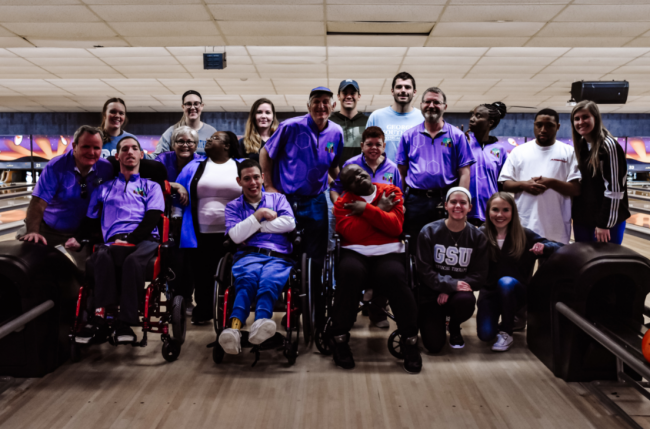
Twelve students in the Doctor of Physical Therapy (DPT) program at Georgia Southern University were awarded scholarships totaling more than $17,000 from the Savannah American Business Clubs (AMBUCS). “This is a recognition of the dedication we have to AMBUCS and helping others in our community,” said scholarship recipient and AMBUCS student leader Alexandra Adams. “Most of us are paying for our education with loans, and the scholarship helps relieve some of the financial burden that comes with pursuing a graduate degree. I am very thankful that AMBUCS has considered me for this scholarship the past two years.” The organization has hosted a League of Exceptional Bowlers on Saturdays for more than 50 years. The DPT students join the Savannah AMBUCS league to assist bowlers with physical and intellectual disabilities to promote an inclusive and competitive environment. In addition to the hands-on experiences, DPT students have the opportunity to interact with different members of the community. “It shows our commitment to the inclusion of our community and our passion for encouraging movement for everyone, despite their limitations, to increase their quality of life,” Adams said. “The program reinforces our classroom training, as well as, enhances our communication skills with others. Each member of our DPT program gets as much of a benefit from attending AMBUCS as the bowlers do.” A century-old membership organization dedicated to helping people with disabilities, the Savannah AMBUCS awards scholarships to students pursuing careers in the allied health professions and who volunteer with AMBUCs. If you’re a journalist looking to cover this story or would like to learn more about the physical therapy and other programs at Georgia Southern University – then let us help. Barry Joyner is the dean of Georgia Southern University’s Waters College of Health Professions - simply click on his icon to arrange an interview today.