
Experts Matter. Find Yours.
Connect for media, speaking, professional opportunities & more.

The Many Faces of Expertise: Theres more than one way to define an expert!
As the lead researcher at ExpertFile I spend a lot of my time thinking about the nature of expertise. I often get asked about the criteria that we use to identify experts, and it’s actually a very difficult concept to pin down. One of my favourite services that we provide to our clients is sitting down with them and helping them articulate what exactly “expertise” means to them. Sometimes this is an easy question, sometimes it is very, very difficult. The fact remains that there is no definition of expertise that perfectly encapsulates every organization’s requirements. How do you begin to select your experts to showcase? Well, there are many different ways of exhibiting expertise. A lot of our clients are higher education institutions who are seeking to promote their academics. The evidence demonstrating their unique experience in their respective fields are easily encapsulated in their academic credentials, awards, grants, publications and professional affiliations. Academics are often at the cutting edge of their fields, and are very experienced telling meaningful stories about them. If a reporter is writing a story about the mountains of Pluto, then an astronomer who has dedicated their lives to the study of extra-Neptunian objects is a perfect choice. By contrast, expertise in the corporate realm is more based on personal experience than academic credentials. This significantly differentiates corporate expert marketing programs from higher education. Although education and credentials remain important, it is generally more graded with a personal experience with the topic at hand. For example, a senior engineer at Google (with extensive media experience) would obviously be a tier A source for explaining the science behind contemporary web search engines, despite potentially having no university education in computer science! (Note: Some fields in computer science, such as machine learning, have a much more academic basis). Both the astronomer and computer scientist are clearly experts, but the means that we used to evaluate their expertise are very different. I’m sure that you can see that both academics and practitioners have meaningful comments to add to news reporters. At ExpertFile, we think that the most important skill an expert can have is the ability to distill their domain-specific knowledge into a compelling, relevant and meaningful story. This ability to tell stories transcends experience, or credentials. A Harvard professor may be a nobel prize winner, but unless he can effectively communicate his research to the media and the public, he will not be perceived as an expert. In contrast, a professor at a local community college may have less august credentials, but if they can tell a good story, then they will engage with the public and media much more effectively. In fact, in some cases “lowly” adjuncts bring vibrant life-experiences and direct understanding of the real world applications of academic theory, and may therefore eclipse the atrophied viewpoints of some tenured faculty isolated for decades in the academy. So at ExpertFile, we feel that a balanced representation of both academics and practitioners at every level is crucial for creating a balanced marketplace of experts that is a valuable resource for all our users. Although our platform contains thousands of academics, some from top flight institutions, we also list thousands of incredibly credible, engaging experts with real world, contemporary experience that can often eclipse that of tenured faculty. We are very proud of our network, and curate an active and vibrant community with a diversity of different voices and perspectives on topics of breaking news interest. We don’t open our network to anyone, the ability to distill meaningful and engaging content for others is crucial, so those who are only shilling a product or self-promoting are not welcome. Some people think that only academics belong on an expert network, but at ExpertFile we believe that would exclude many people with extensive expertise. Similarly, it would be the height of elitism for us to restrict our database to tenured academics from top-tier universities. This would do our users a great disservice by removing those voices with a perspectives gained from practical experience.


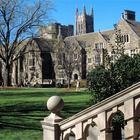
Part 2: How Duke University doubled their media hits by showcasing faculty
Last week we shared the first five major rules of Expert Marketing that are currently being used by Duke University to double their media hits (READ PART I). We also developed some strategies and best practices for higher education institutions to better market their experts. In this blog post, we are going to share our team’s final insights into how to better leverage your experts. Rule #6: Create Once, Publish Everywhere At one time we just had to focus on creating a news site. That’s now expanded to a multi- screen environment that requires we thread content into sites that are being accessed from desktops, mobile devices and even digital signage that is often scattered throughout the campus. Sit down with your digital team and map out how to distribute media across multiple channels such as social networks, news-feeds, homepages, faculty sites, as well as faculty profiles in your expert center or speakers bureau. Many schools still don’t have the “responsive” capability to push their news content out to mobile users. Insiders Tip: Duke applies a “create once publish everywhere” model to ensure that time-crunched journalists can easily connect with their expert commentary, whether they access the website’s desktop or mobile versions, or through a wide range of social channels. Rule #7: Get Your Expert Quotes Ready for the Real-Time News Cycle Organizing a system with your faculty to publish pre-approved expert quotes on your website can pay huge dividends, as news outlets have fewer reporters covering more territory. Many of our clients tell us they are seeing less experienced reporters who have much less time to research and interact with media departments. Having pre-approved quotes ready to go makes it much simpler for media, making you much more attractive to them. This pre-planning can minimize the strain on faculty experts during class hours. An added bonus is that it also minimizes misquotes. Insiders Tip: Duke University aims to provide daily quotes on its website by midday as part of its “news tips” section. While these quotes generally take less than one hour to produce, they have proven most effective. Almost all of their news tips have been used by the media since they started producing them in June 2014. Rule #8: Promote Your Core Areas of Expertise First With so much going on throughout the campus there are a lot of opportunities to promote a diverse range of topics to the media. However, it’s really important to identify the core topics where you have expert commentary in demand. The best media relations people have established their school as go-to sources for select topics. You should also stake your claim. What groundbreaking research can you find on the campus that relates to key news events? Think about what reporters need to communicate to their audiences. Do you have faculty who are credible, approachable and engaging on these topics? Invest the time with your team to develop a master topics list and tune this list regularly based on upcoming faculty contributions and news cycle developments. Insiders Tip: Duke University identified a number of key factors that contribute to the media take-up rate such as the degree of media interest in a story; the relative supply of experts available to media and timing considerations. While it’s impossible to control all these variables, They learned, based on trial and error, that concentrating on core topics where they have an academic focus such as politics, law and the environment generated more coverage. Rule #9: Focus your Editorial Calendar on Key Event Anniversaries It is important to get the mix right when looking for media opportunities. While it will always be to your advantage to leverage breaking news if you can mobilize your faculty experts, there is also a predefined editorial flow to the news across a calendar of special and recurring events. It’s crucial that you get some of these major opportunities on the calendar and develop a campaign to enlist faculty experts. For example, Black History Month and the Super Bowl are both annual recurring events happening in February. It’s good to map these along with other special events that are periodically staged or non- recurring such as a G8 Summit or the upcoming papal visit to the US. If you can mobilize your experts to provide value for media who need to start researching these events well in advance you increase your chances of coverage. Insiders Tip: The Duke University media relations team actively monitors upcoming anniversaries and other timely events that reporters are likely to write about. Events that have the potential to generate stories that Duke can leverage with their experts are reviewed by the communications team in twice weekly scrum meetings. Rule #10: Leverage Tools such as Twitter to Grow your Media Contacts Much of the success you will have with faculty experts hinges on your ability to take your message to the market. So it’s important to focus on grooming and growing your media contacts. Besides buying access to media lists from vendors such as Cision, PR Newswire, Marketwired and Meltwater; don’t forget about Twitter. It provides a huge opportunity to build a list of influencers and key opinion leaders. Using a simple topic and hashtag searches on Twitter, you can begin to map various clusters of people who are following specific news beats that may be relevant to your institution. Remember that media outlets tend to follow other media outlets for story angles and media sources. Having a well organized list of people that have interacted with you in the past is a large part of distributing your news faster to a larger audience. It’s important to do Twitter searches to research specific reporters you want to pitch to see where their interests lie. Insiders Tip: Duke University refines its media lists continually using Twitter. It looks at the social graph of reporters who make use its online news tips to identify other journalists to add to their database.

Part 1: How Duke University doubled their media hits by showcasing faculty
In the February 2015 issue of CASE Currents, Steve Hartsoe, a Senior Editor at Duke University and former Editor for the Associated Press, shares some powerful strategies for working with experts on campus. This article is a must read for any organization looking to build reputation through more focused media relations. Now you might be thinking that Duke is an already renowned university with an extensive network of media contacts so this stuff is easy for them. Not true. Doubling your media hits isn’t easy for any organization. Duke made some major improvements that set them up as a go-to destination for journalists to find credible, relevant sources. However, even implementing just a few of their ideas could drive some big results for your organization – without having to blow out the size of your marketing team or budget. Spoiler alert. The Duke strategy centers on being more strategic and collaborating better with faculty experts. The best practices that the Duke media relations team employed should inspire any organization that wants to generate more coverage. Whether you are looking for media visibility to help drive student enrolment, alumni giving, or corporate partnerships, there are valuable lessons to be found in this article. For the full article check out the January/February issue of CASE Currents at www.case.org. Please note you will need a subscription to view. So what’s going on at Duke that’s driving all this media coverage? To examine this further, our ExpertFile team weighs in below with the first five major rules of Expert Marketing for Schools and summarizes some insider tips they shared from their experience. Tune in next week for the finale! Rule #1: Organize a Team to Help Focus on Expert Marketing As with most initiatives, it’s vitally important to get the support of senior people in the organization when developing an increased focus on faculty experts. Gaining the support of a group of progressive deans within the school as well as notable faculty can be critical. Appoint a specialized team that can help you establish media visibility as a priority for your school. Build your case for an expert marketing program and ask for their support in developing your plan, then set up some regular meetings and make this team visible on the campus. It will help you develop a sense of collaboration and continuity. Insiders Tip: Duke built a “rapid response team” within their media relations department that had a clearly defined meeting schedule. They met twice a week and kept meetings to just 30 minutes in length. These regular check-ins helped identify breaking news opportunities and inspired a sense of priority and established momentum. Rule #2: Strategize with your Experts It’s amazing how many colleges and universities’ media relations departments we talk with that are disconnected from the interesting research conducted by their faculty. Ironically, it’s this research, as well the academic interests and passions of your faculty that feed the most engaging stories you can tell to the media. Make sure you have a good understanding of current and upcoming research that you can pitch. You should also identify what publications and books are being planned by faculty and see how you can collaborate with them. Insiders Tip: Duke invested the time to meet personally with faculty members to get a deeper understanding of their research and identify relevant topics that could be pitched to the media. They also invited some faculty to media meetings to brainstorm on potential news stories. It’s this kind of contact that helped make faculty more responsive to media opportunities and respond to deadlines. Rule #3: “Opt-In” your Experts for Different Types of Contributions It’s becoming more understood by faculty that media coverage can be a very good thing for their career and their organization. However, be careful of one size fits all approaches in recruiting faculty to contribute their expertise. Contribution from faculty comes in different forms. Faculty can be engaged in a broad spectrum of activities that run from broadcast TV interviews, blogging, and even helping speak at recruiting or alumni events. It’s good practice to create a master checklist of possible engagement types and to take an inventory of what your faculty experts may want to opt-in for. Having this inventory allows you to better plan for content development projects and also ensures that faculty clearly understand the duties that are expected of them in a media relations capacity. Insiders Tip: Duke’s media team recruited their experts for a range of contributions based on the level of interest and comfort level of faculty. And they made it clear that agreeing to be a media source meant responding promptly to incoming media inquiries. Rule #4: Provide Media Training and Support While every campus has it’s faculty “rockstars”, who can rise to the challenge of any breaking news opportunity, many experts on the campus can benefit from some form of media training. It’s critical to your media strategy’s success that you provide the experts with support and opportunities to practice their speaking skills in front of a camera. If you expect more experts to step up to the podium, it’s important to make the investment. However, make sure you design these programs to be engaging and don’t overwhelm your faculty by making them too exhaustive. Often they can be coordinated over lunch or in the early morning before classes start and can be focused on key areas such as: public speaking, blogging tips, video training, and social networking guidelines. Get a sense of where your key gaps are among faculty before you dive in. Also remember these sessions can provide valuable opportunities to shoot video interviews, B-Roll clips and even headshots that can be used to provide media assets for your website, alumni magazine and other properties. Insiders Tip: Duke invests in media training for its faculty experts and administrators offering a two and a half hour media training workshop each year to participating faculty, covering interview techniques via phone, video and social media. Rule #5: Meet Journalists on Their Terms Reporters appreciate media relations contacts that help them get their job done. Operating under tighter breaking news cycles they have less time to discover and research experts. In todays competitive media market what sells papers or builds ratings is often what gets covered. You have to focus your experts on helping journalists tell stories that matter to all those “eyeballs”. The best media relations professionals understand the value in building relationships with journalists. These connections are often essential in establishing your organization as a relevant, trusted source of expert commentary. Given the importance of these relationships, we’re also seeing the renewed popularity of industry conferences hosted by organizations such as the MAKI Network (www.thembasite.com) and Wynne Events – BAM Conference (www.wynneevents.com). These events give schools a unique opportunity to listen to and meet journalists from major news networks. ExpertFile sponsored both MAKI and Wynne events this past year, and we were impressed by the roster of global media attending. Insiders Tip: While Duke still distributes the requisite daily news on campus events and other university happenings, they don’t get mired in all of this content. They also focus a great deal of their activities on expert content that positions their university as a go-to source that is both credible and relevant to a variety of media audiences. READ PART II of How Duke University doubled its media hits by showcasing faculty experts.

Baylor Study: Fear of Missing Out (FOMO) Plus Social Media Connections Can Equal Happiness
FOMO – aka the “fear of missing out” – can have a positive impact on well-being when it leads to social media use that increases social connections, according to a new Baylor University study. James A. Roberts, Ph.D., The Ben H. Williams Professor of Marketing, and Meredith David, Ph.D., assistant professor of marketing in Baylor’s Hankamer School of Business, coauthored the study, “The Social Media Party: Fear of Missing Out (FOMO), Social Media Intensity, Connection, and Well-Being,” published in the International Journal of Human-Computer Interaction. Roberts and David collaborate often and are nationally recognized experts on the effects of technology and social media on relationships and well-being. For this collaboration, the researchers conducted two studies consisting of 565 college students from a large U.S. university to determine the effect FOMO has on social media use, social connection to others and psychological well-being. FOMO is defined in the study as apprehension that others might be having a rewarding experience from which one is absent. According to Roberts, approximately 75% of young adults struggle with FOMO. “The human need to belong is an innate drive that dictates much of our behavior. Social media capitalizes on this need to belong,” Roberts said. “Social media has a dual nature. It lets us interact with others, which is good, but it also exposes us to more social opportunities than we can take part in that fosters a sense of missing out and inadequacy.” The study found: FOMO is a significant predictor of subjective well-being, and social media intensity had a slight significant effect on well-being. Social media is an omnipresent conduit for attempting to make such connections. It is likely that FOMO encourages the use of social media to stay connected. From the first study of 107 college students, David and Roberts gathered data to measure FOMO, social media intensity and social connection. Although FOMO typically has a negative connotation on social interactions, the study showed that the fear of missing out can lead to greater feelings of social connection. “We found that FOMO might actually have a positive impact on social connection through its impact on social media intensity and attachment,” Roberts said. “FOMO drives our use of social media to connect socially with others. Being socially connected leads to happier people.” The second study of 458 college students used the same measures, but also included an assessment on subjective well-being (happiness). The study tested their complete conceptual model in which subjective well-being is an ultimate outcome of FOMO (through its impact on social media intensity and social connection). Roberts said that social media can be a positive resource to help those with FOMO create social interactions, if it is being used actively through online actions such as posting, liking and commenting. “The problem is that people often turn to social media but use it passively – such as creeping on people or viewing pages without interacting – which can then lead to lower levels of happiness because creeping does not foster social connection,” Roberts said. “FOMO can lead to happier people if it drives people to use social media to connect but not simply to ‘creep’ on others.” ABOUT THE STUDY AND AUTHORS James A. Roberts, Ph.D., The Ben H. Williams Professor of Marketing, and Meredith David, Ph.D., assistant professor of marketing in Baylor University’s Hankamer School of Business, coauthored the study, “The Social Media Party: Fear of Missing Out (FOMO), Social Media Intensity, Connection, and Well-Being,” which is published in the International Journal of Human-Computer Interaction. OTHER RESEARCH BY ROBERTS AND DAVID Cellphones Can Damage Romantic Relationships, Lead to Depression People Who Are “Phone Snubbed” By Others Often Turn To Their Own Phones, Social Media For Acceptance Bosses Who “Phone Snub” Their Employees Risk Losing Trust and Engagement When ‘Religiosity’ Competes with Materialism, Charitable Giving Takes a Hit ABOUT BAYLOR UNIVERSITY Baylor University is a private Christian University and a nationally ranked research institution. The University provides a vibrant campus community for more than 17,000 students by blending interdisciplinary research with an international reputation for educational excellence and a faculty commitment to teaching and scholarship. Chartered in 1845 by the Republic of Texas through the efforts of Baptist pioneers, Baylor is the oldest continually operating University in Texas. Located in Waco, Baylor welcomes students from all 50 states and more than 90 countries to study a broad range of degrees among its 12 nationally recognized academic divisions. ABOUT HANKAMER SCHOOL OF BUSINESS AT BAYLOR UNIVERSITY At Baylor University’s Hankamer School of Business, integrity stands shoulder-to-shoulder with analytic and strategic strengths. The School’s top-ranked programs combine rigorous classroom learning, hands-on experience in the real world, a solid foundation in Christian values and a global outlook. Making up approximately 25 percent of the University’s total enrollment, undergraduate students choose from 16 major areas of study. Graduate students choose from full-time, executive or online MBA or other specialized master’s programs, and Ph.D. programs in Information Systems, Entrepreneurship or Health Services Research. The Business School also has campuses located in Austin and Dallas, Texas. Visit www.baylor.edu/business and follow on Twitter at twitter.com/Baylor_Business.


Smooth Operator: When earnings management is a good thing
New research from the Kelley School of Business makes the case that smoothing the numbers can be beneficial – if you’ve got the right team in place to handle the job. Smoothing, in this case, means adjusting accounting reserves up or down. And contrary to the common wisdom that all earnings management is bad, researchers have identified a setting in which it can be good. In a paper titled “Managerial Ability and Income Smoothing,” David Farber, associate professor of accounting at the Indiana University Kelley School of Business at IUPUI, and fellow researchers Bok Baik of Seoul National University and Sunhwa Choi of Sungkyunkwan University find that when high ability management teams use their discretion to smooth bumps in earnings, future earnings and cash flows become more predictable and a firm’s stock price improves. “We found that more capable managers who use discretionary accounting choices to signal future performance provide more useful financial reporting,” said Farber. “Firms with high ability managers who smooth earnings have more predictable earnings and cash flows, and the stock market incorporates that information into a firm’s stock price. High ability management teams are better able to anticipate changes in their firms’ prospects and can therefore better estimate accrual adjustments necessary to smooth their earnings. These managers are trying to communicate to the market by saying, essentially, ‘We had some volatility in earnings this period, but going forward, we expect earnings to follow the path based on the smoother earnings.’” The study also showed that if a firm’s management team is not high ability and they attempt to smooth earnings, the firm will likely see negative implications, like less predictable earnings and lower stock prices. Additionally, the reputations of managers in these firms will likely suffer. A final version of the paper will be published in The Accounting Review, one of the top scholarly accounting journals in the world, in July 2020.


This month, U.S. Secretary of State Mike Pompeo announced a shift in U.S. policy toward settlements in the Israeli-occupied West Bank. Pompeo announced that the Trump administration does not view the settlements as inconsistent international law, and rescinded a 1978 state department legal opinion that held that view. The move now leaves the issue of individual settlements up to Israeli courts. Assistant Professor Sandy Marshall has spent time as a volunteer instructor in a Palestinian refugee camp in the West Bank and returned to the region this past summer to advance his research into the experiences of Palestinian refugee children. A human geographer, he has conducted extensive research into the impact of conflict, division and displacement on children and youth in the Middle East. Asked for a brief comment on the shift in U.S. policy, here’s what Marshall had to say: “Coming on the heels of the U.S. embassy move to Jerusalem and recognition of Israeli sovereignty over the Golan Heights, the change in policy on West Bank settlements is another nail in the coffin of a negotiated peace-settlement based on the two-state solution, represent U.S. rejection of broad international legal consensus . This move undermines any remaining legitimacy the U.S. has in the region as a peace-broker and threatens further destabilization of the region.” If you're interested in talking with Professor Marshall as you continue to cover this important topic, please reach out to Owen Covington, director of the Elon University News Bureau, at ocovington@elon.edu or (336) 278-7413. Professor Marshall is available for phone, email and broadcast interviews.


Saint Mary’s University of Minnesota has been awarded a $1,732,643 grant from the Kern Family Foundation for the university’s School of Education Character and Virtue Initiative. Using grant funding, Saint Mary’s will develop an enhanced curriculum for current and future educational leaders that places a strong emphasis on moral character, virtue, and ethics. The course content will be enhanced using the University of Birmingham’s (UK) Jubilee Centre for Character and Virtue framework. It will be customized to align with the Lasallian Virtues of a Teacher and the Cardinal Virtues matrix already informing the university’s mission and practices. “Saint Mary’s is a Lasallian Catholic university with a strong reputation for preparing the majority of our state’s educators and educational administrators, and — thanks to this generous grant from the Kern Family — we will strengthen the licensing programs for principals and superintendents, as well as directors of special education by placing character and virtue education philosophies and practices into current programming,” said Father James P. Burns, IVD, Ph.D., president of Saint Mary’s. “This initiative aims to change the face of education today by equipping educational administrators with the framework for virtue that needs to be at the forefront in our schools, and in the hearts and minds of those leading our schools.” Other components of the initiative include establishing an annual retreat on character and virtue in leadership, developing a Character and Virtue School Leadership Academy, designing a character and virtue professional development series for partner schools, and creating online modules. In addition, Saint Mary’s will explore other program pathways and credentials related to this theme that includes microcredentials, certificates, and additional degrees. “We are incredibly grateful to the Kern Family Foundation for partnering with us on this important initiative,” said Audrey Kintzi, vice president for Advancement and Communication at Saint Mary’s. “School administrators have an arduous but extremely important job and, as they face the many challenges that exist in today’s education systems, our goal is to arm them to lead with integrity and to set an example for their faculties and staff and the students in their care.” "Our School of Education prides itself in being one of the state’s largest providers of principal, superintendent, and director of special education candidates,” said Lynn Albee, Ed.D., interim dean of Education. “Through our collaborative relationship with eduCATE, we are able to positively impact the educational experiences of students in Wisconsin as well. This is an exciting opportunity for Saint Mary's Educational Administration program to really make a difference in the lives of Midwest school leaders, as well as children in schools.” Audrey Kintzi, vice president for Advancement and Communication at Saint Mary’s is available to speak with media regarding this grant from the Kern Family Foundation - simply click on her profile to arrange an interview.


Lake Victoria, the largest lake on the African continent and the largest tropical lake in the world, has the potential to dry up more quickly than researchers previously realized, and the White Nile tributary (the only outlet for Lake Victoria) could disappear within a decade, according to a new study published in Earth and Planetary Science Letters. The drying up of these bodies of water, which the project’s researchers say is driven by climate change, could be devastating to large swaths of East Africa and millions of people, according to the study, “Rapid Pleistocene desiccation and the future of Africa's Lake Victoria.” Baylor University faculty members Daniel J. Peppe, Ph.D., associate professor of geosciences, and Joseph D. White, Ph.D., professor of biology in Baylor University’s College of Arts & Sciences, were part of a team of researchers led by Emily Beverly, Ph.D., assistant professor of sedimentary geology at the University of Houston. Beverly earned her doctoral degree in geology at Baylor in 2015. The research team developed a model for Lake Victoria to help understand how changes in rainfall and temperature, due to climate change, would affect the future of the lake. They discovered that relatively small changes in climate could cause lake levels to drop rapidly. “Using future climate projections, our model also predicts that at current rates of temperature change and previous rates of lake level fall, Lake Victoria could have no outlet to the White Nile within 10 years, and Kenya could lose access to the lake in less than 400 years, which would significantly affect the economic resources supplied by Lake Victoria to the East African community,” the researchers wrote. Water Budget Model Peppe said he and his colleagues developed a water budget model for Lake Victoria in Kenya that examines how changes in rainfall and temperature cause changes in water levels in the lake. “Modeling indicates Lake Victoria can transition back and forth between modern lake levels and being completely dried up in centuries to a few millennia,” Peppe said. The water budget model used information related to: The lake’s size The catchment area, which drains into the lake How much water enters the lake The flow out of the lake Modern climate to estimate lake evaporation Discharge out of the lake and the size of lake The model showed the desiccation and refilling of Lake Victoria can happen over short periods and is directly tied to the mean annual precipitation levels and associated runoff. The research team was also able to use the model to predict the effects of future climate change on Lake Victoria. “We input different climate parameters in the model based on past reconstructions and future projections to see what happened to lake levels in the past and what will happen in the future,” Peppe said. Combined observations from this new modeling and estimates of ancient precipitation indicate that Lake Victoria was likely dried up between 36,000 to 100,000 years ago, Peppe said. “As Lake Victoria dried up, this affected the dispersal patterns of early modern humans and other mammals as grasslands expanded with the retreat of the lake,” he said. Repercussions of Disappearance Peppe said the disappearance of the White Nile could have broad repercussions, including depriving Uganda of its primary source of electricity via hydropower and the water that sustains the Nile during non-flood stages. “In addition, every major port city around Lake Victoria could become landlocked in as little as 100 years. In 400 years, Kenya would have no access to the lake while Uganda and Tanzania would gain huge areas of potential farmland setting up a potentially dangerous dynamic between countries that currently fight over the lucrative fishing rights to the lake,” Peppe said. The researchers wrote that additional regional climate modeling is urgently needed to understand the effects of climate change on the region. ABOUT THE STUDY The new study, “Rapid Pleistocene desiccation and the future of Africa's Lake Victoria,” is published in the journal Earth and Planetary Science Letters. The research team was led by Emily J. Beverly, Ph.D., assistant professor of sedimentary geology at the University of Houston; Joseph D. White, Ph.D., professor of biology in Baylor University’s College of Arts & Sciences; Daniel J. Peppe, Ph.D., associate professor of geosciences in Baylor University’s College of Arts & Sciences; J. Tyler Faith, Ph.D., assistant professor of anthropology, at University of Utah; Nick Blegen, Ph.D., Royal Society Eric Shooter International Fellow, Department of Geography, University of Cambridge; and Christian A. Tryon, Ph.D., professor of anthropology, University of Connecticut. ABOUT BAYLOR UNIVERSITY Baylor University is a private Christian University and a nationally ranked research institution. The University provides a vibrant campus community for more than 17,000 students by blending interdisciplinary research with an international reputation for educational excellence and a faculty commitment to teaching and scholarship. Chartered in 1845 by the Republic of Texas through the efforts of Baptist pioneers, Baylor is the oldest continually operating University in Texas. Located in Waco, Baylor welcomes students from all 50 states and more than 90 countries to study a broad range of degrees among its 12 nationally recognized academic divisions. ABOUT THE COLLEGE OF ARTS & SCIENCES AT BAYLOR UNIVERSITY The College of Arts & Sciences is Baylor University’s oldest and largest academic division, consisting of 25 academic departments and seven academic centers and institutes. The more than 5,000 courses taught in the College span topics from art and theatre to religion, philosophy, sociology and the natural sciences. Faculty conduct research around the world, and research on the undergraduate and graduate level is prevalent throughout all disciplines. Visit www.baylor.edu/artsandsciences.

Impact of Record-Breaking Floods in Venice
Over the last week, Venice, Italy, has been hit with historic flooding. On Sunday, November 17, water levels topped 1.5 meters for the third time since last Tuesday’s 1.87-meter flood, which marked the worst in more than half a century. Venice’s mayor declared a state of emergency and has estimated the flooding damage at hundreds of millions of euros. The flooding is putting some of Venice’s most historic architecture at risk and threatening some of the city’s cultural marvels and priceless artwork. The situation has also renewed the debates around the underwater barrier system—the MOSE flood defense project—that has been under construction for more than 16 years and is not yet operational despite five billion euros of public funding. Luca Cottini, PhD, an associate professor at Villanova University, is a scholar of Italian culture. He recently discussed some of the issues currently facing Venice. “The flooding in Venice makes visible once again not just the fragility of Italian beauty and the vulnerability of Italy’s geography, but also the inadequacy of Italian politics in the prevention and response to natural disasters,” said Dr. Cottini. Dr. Cottini also addressed the city’s tourism and how tourists view the floods. “The situation also illustrates the cynical nature of modern-day global tourism, observing high waters more as an attraction than a tragic event impacting invaluable monuments and the lives of many peoples,” he said.


Baylor Expert Shares Six Lessons We Can Learn From Mr. Rogers About Being a Good Neighbor
WACO, Texas (Nov. 14, 2019) – In this polarized time, when it requires little effort to tear a stranger apart on social media or lash out at a family member because of a difference of opinion, the gentle cadence of Fred Rogers singing a simple song about neighbors loving and helping each other is a welcome respite. The much-anticipated movie, “A Beautiful Day in the Neighborhood,” starring Academy Award-winner Tom Hanks as Rogers – known to generations simply as “Mr. Rogers,” the host of “Mister Rogers’ Neighborhood” – will be released in theaters on Nov. 22. The official movie trailer posted on YouTube has drawn nearly 12 million views. Civics education expert Brooke Blevins, Ph.D., associate professor of social studies education and chair of Baylor University’s department of curriculum and instruction, said the renewed focus on the beloved and soft-spoken TV personality, who died in 2003, might be coming at just the right time. “When you watch Mr. Rogers, time slows down, and you are able to take a deep breath as complicated issues become more understandable and the beauty of relationships is reinforced,” Blevins said. “Imagine if we all walked into the world with the belief that each person was inherently worthy. Imagine if our goal was to help each other recognize that we are worthy of being loved. Imagine if we sought to listen more than we spoke,” she said. “I imagine if this was the case, that our conversation would change, our understanding of those around us would shift, and our national conversations would be more civil.” Below, Blevins shares six lessons we can learn from Mr. Rogers about being better citizens. Each person is worthy to be loved and heard. Like Mr. Rogers, we must recognize that each person we interact with is worthy to be loved and listened to. We must recognize that each person has unique experiences, fears, losses and triumphs that shape the way they understand what’s happening around them. We need to do much more listening and far less talking. We should work together to tackle tough issues in reasoned and evidenced-based ways with civility and a genuine desire to understand those around us. Use your platform for good. Mr. Rogers was deeply committed to creating a better world. Mr. Rogers did not take his role on TV lightly. He saw it as an opportunity to help young people make sense of the world around them and to become more knowledgeable and engaged citizens. He saw television as an opportunity to create community and a shared sense of purpose. As he once noted, “The space between the television screen and whoever happens to be receiving it, I consider that holy ground. A lot happens there.” Lessons we often think are for children are for adults as well. Mr. Rogers was a teacher, a pastor and a friend. His lessons were drawn from the everyday experiences of children’s lives, from current political events to personal and emotional trials children experience. Not only were these lessons for children, but for their parents who were also watching. His lessons focused on cultivating civic discourse, reasoned judgment and evidence-based decision-making, but most importantly, his lessons cultivated understanding and empathy for one’s neighbor. In his conversations and examples, he drew on our shared humanity to help young people make sense of an ever-changing world. Slow down. In a time of fast-paced and often silly cartoons that were designed to move quickly from scene to scene, Mr. Rogers maintained a much slower and thoughtful pace. A pace that was compelling to both young and old alike. He explored issues slowly and with depth, without the silly antics that are so often used to keep children and adults’ attention. He used his time with viewers to develop a relationship that valued their experience and honored their emotional complexity. He sent the message that all people are inherently valuable and are capable of loving and being loved. It’s OK to discuss tough issues – even with children. But be civil and understanding when you do it. As an ordained minister and gifted musician, Mr. Rogers utilized his vocational skills to create a safe space in which difficult conversations could occur. He never shied away from the tough conversations. From issues such as divorce, death, assassination and even 9-11, Mr. Rogers’ helped young people navigate emotionally traumatic events with both knowledge and compassion. Mr. Rogers knew that by talking about our fears, losses and misunderstandings, we could work together to build a better future. As he wrestled with these issues, he asked questions, he inquired, he listened, and he had children do the same. He had a deep-rooted commitment to helping children navigate their world. Be a good neighbor. Being a good neighbor is caring about those around you. It’s not just about tolerance, but truly seeking to understand those in your community. Being a good neighbor means helping those around you recognize that they play an important part in making the world a better and more just place. It means working together to solve complex issues and cultivate a world in which all people can fulfill their true purpose. ABOUT DR. BROOKE BLEVINS Brooke Blevins, Ph.D., teaches both undergraduate and graduate courses in secondary education, social studies education and multicultural education. As a former secondary teacher, she has a passion for equipping teachers with the resources needed to engage in humanizing social studies education. Dr. Blevins also serves as the co-director for the iEngage Summer Civics Institute, for which she and co-founder Dr. Karon LeCompte have raised more than $250,000 in grant funding. Dr. Blevins’ research focuses on social studies education as a means to prepare active and engaged citizens. In her work, Dr. Blevins examines how to prepare teachers to develop both political clarity and pedagogical content knowledge that encourages them to engage in transformational based and humanizing social studies education. In addition, Dr. Blevins also is interested in how to educate and empower young people to become active civic participants through participation in action civics and digital technologies. ABOUT BAYLOR UNIVERSITY Baylor University is a private Christian University and a nationally ranked research institution. The University provides a vibrant campus community for more than 17,000 students by blending interdisciplinary research with an international reputation for educational excellence and a faculty commitment to teaching and scholarship. Chartered in 1845 by the Republic of Texas through the efforts of Baptist pioneers, Baylor is the oldest continually operating University in Texas. Located in Waco, Baylor welcomes students from all 50 states and more than 90 countries to study a broad range of degrees among its 12 nationally recognized academic divisions. ABOUT BAYLOR SCHOOL OF EDUCATION Founded in 1919, Baylor School of Education ranks among the nation’s top 20 education schools located at private universities. The School’s research portfolio complements its long-standing commitment to excellence in teaching and student mentoring. Baylor’s undergraduate program in teacher education has earned national distinction for innovative partnerships with local schools that provide future teachers deep clinical preparation, while graduate programs culminating in both the Ed.D. and Ph.D. prepare outstanding leaders, teachers and clinicians through an intentional blend of theory and practice. Visit www.baylor.edu/soe to learn more.