Experts Matter. Find Yours.
Connect for media, speaking, professional opportunities & more.

Rip Current Simulations Save Lives
Jase Bernhardt, Hofstra University associate professor of geology, environment, and sustainability and director of meteorology, was referenced in a USA Today article about simulations that teach the public about rip current safety. For years, Dr. Bernhardt has been leading research that offers a virtual reality simulation of being caught in a rip current and teaches ways swimmers can navigate to safety. The development of this technology is supported in part by New York Sea Grant (NYSG).


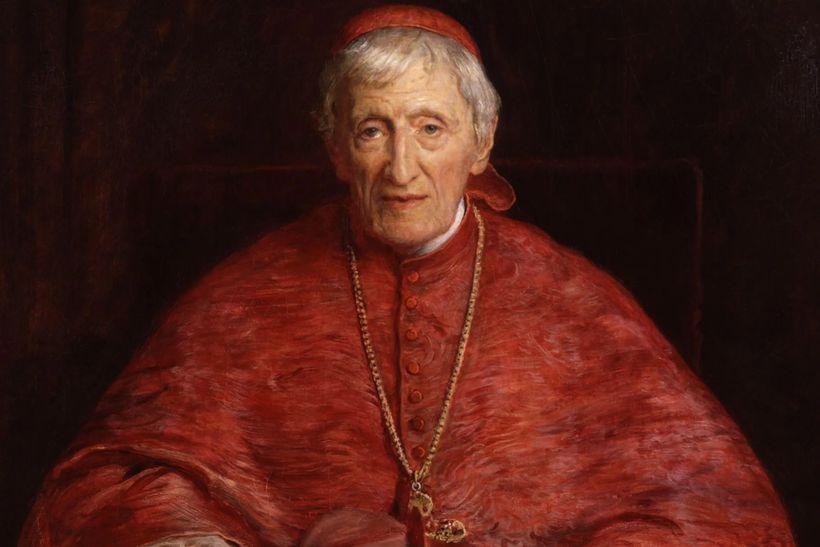
Pope Leo XIV's first year as leader of the Catholic Church was marked by observation, listening and careful communication, and was largely devoid of major doctrinal or political action. As reasonably expected of a new pontiff, he issued his first major document—the apostolic exhortation Dilexi te. He also embarked on his first international trip, traveling to Türkiye and Lebanon, where he celebrated the 1700th anniversary of the Council of Nicaea. But perhaps publicly overlooked was his elevation of a 19th-century saint to Doctor of the Church—a designation reserved for saints found to have made significant contributions to doctrine and spirituality through writings and teachings. After approving it in July 2025, Pope Leo issued that designation to St. John Henry Newman on All-Saints Day, making him only the 38th individual given the title. "The move to make St. John Henry Newman a Doctor of the Church was already underway, but Pope Leo verified it and actually carried it out, bringing Newman into a newfound kind of prominence," said Michael Moreland, PhD, professor of Law and Religion at Villanova University Charles Widger School of Law, and a scholar of St. Newman. A Bridge Between Anglican and Catholic Theology Newman, considered an influential individual in the shaping of modern Catholic theology and education, was not always Catholic. Born in England in 1801, Newman became an Anglican priest in his mid-20s. He later was a prominent leader of the Oxford Movement—one intended to recover elements of traditional Catholic heritage in Anglicanism. It led to the birth of Anglo-Catholicism and caused many Anglicans to convert to the Roman Catholic faith, including Newman himself. Newman was received into the Catholic Church in 1845 and was ordained a Catholic priest in 1847. He would go on to become an influential theologian for his contributions to the ideas of faith, conscience and doctrine. "He established what he called the 'evolution of the doctrine'—the idea that the deposit of faith is not something immobile, but something that grows in awareness over time," said Luca Cottini, PhD, professor of Italian Studies at Villanova University. "He [Newman] was also a person of the university; an intellectual," said Dr. Moreland. "He was known for his voluminous writings on all kinds of issues, including his famous book 'The Idea of a University.'" In 1878, Pope Leo XIII made then-Father Newman—who was not even a Bishop at the time—a Cardinal. Like the current Pope Leo, the elevation of Newman was one of Pope Leo XIII's first acts of government. "It's an astonishing resemblance between our current Pope and his namesake," Dr. Cottini said. "Both recognized this important theologian and his contributions to Catholicism within the first year of their papacy." Newman died in 1890 and is remembered as an influential theologian, scholar and an important bridge between Anglicanism, Catholicism and the modern world. He was beatified in 2010 by Pope Benedict XVI and canonized by Pope Francis in 2019 before Pope Leo XIV elevated him to Doctor of the Church. Newman's Promotion Shrouded in Significance Beyond its relative rarity—only five individuals have been promoted to Doctor of the Church since 1971—Newman's elevation is significant in many ways, according to Dr. Moreland. "He was an Anglican by birth who converted to Roman Catholicism," he said. "He was someone from the English-speaking world, not from continental Europe, and he was from the 19th century, which is relatively recent in this context." Newman is only the second Doctor of the Church from England, and aside from Thérèse of Lisieux, born in 1873, is the only Doctor of the Church born after 1700. Beyond the significance related to Newman himself, Pope Leo's recent action underscored a critical focus of the Church, and evidenced its personal importance to the pontiff himself. "It highlighted Newman's role in education," Dr. Moreland says. "That is something Pope Leo has been formed by in important ways: as a seminary rector, seminary professor and as part of the Order of St. Augustine, which values education highly." At the Mass elevating Newman to Doctor of the Church, Pope Leo also named Newman a co-patron saint of Catholic Education, joining 13th-century priest and theologian St. Thomas Aquinas. He then added Newman’s feast day of October 9—the day he converted to Catholicism in 1845—to the General Roman Calendar, thus bringing his memorial to the global Church. "I think Pope Leo elevating Newman to a Doctor of the Church, along with these subsequent actions, signifies the emphasis he is going to place on education during his papacy," Dr. Moreland said.


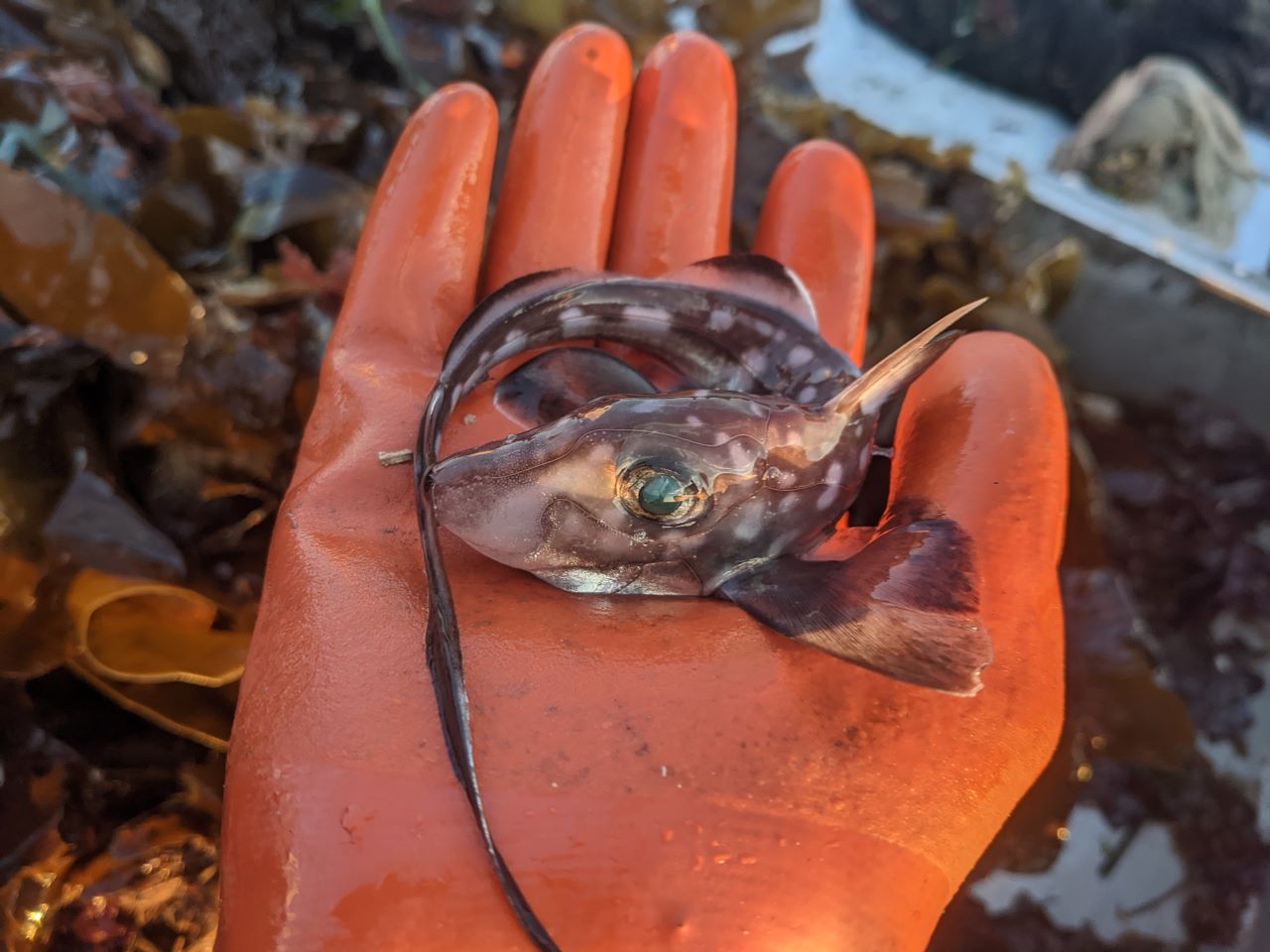
Ghost sharks grow forehead teeth to help them have sex
Male “ghost sharks” — eerie deep-sea fish known as chimaeras that are related to sharks and rays — have a strange rod jutting from their foreheads, studded with sharp, retractable teeth. New research reveals these are not merely lookalikes, but real rows of teeth that grow outside the mouth. What’s more, the toothy appendage is likely used for mating. Found only in males, the forehead rod — called a tenaculum — is the ghost sharks’ only source of distinct teeth, and it seems to be used to grasp females in much the same way sharks use their toothy mouths in mating. “If these strange chimaeras are sticking teeth on the front of their head, it makes you think about the dynamism of tooth development more generally,” said Gareth Fraser, Ph.D., a professor of biology at the University of Florida and senior author of the study. “If chimaeras can make a set of teeth outside the mouth, where else might we find teeth?” The team, including scientists from the University of Washington and the University of Chicago, studied both fossils and living specimens to solve the mystery. A 315-million-year-old fossil showed the tenaculum attached to the upper jaw, bearing teeth incredibly similar to those in the mouth. Modern chimaeras collected from Puget Sound revealed the same tooth-growing process on the head, seen in modern-day shark jaws. And genetic testing confirmed they expressed the same tooth-specific genes as oral teeth. “What we found is that the teeth on this strange appendage look very much like rows of shark teeth. The ability to make teeth transferred onto that appendage, likely from the mouth,” Fraser said. “Over time, the tenaculum shortened but retained the ability to make oral teeth on this forehead appendage.” Fraser collaborated with Washington’s Karly Cohen, Ph.D., and Michael Coates, Ph.D., from Chicago on the study, which was published this week in the Proceedings of the National Academy of Sciences. As experts in shark evolution and anatomy, the scientists were intrigued by these tooth-filled rods sprouting from the ghost shark foreheads. The central mystery: Is the tenaculum covered in true teeth related to oral teeth or more similar to the tooth-like scales plastering the skin of sharks and some ghost sharks? CT scans of the fossils and modern chimaeras gave the scientists unprecedented, detailed insights into the development of the tenaculum teeth, which looked remarkably similar to the teeth of today’s sharks. The nail in the coffin came from genetic evidence. The tenaculum teeth express genes found only in true teeth, never in shark skin denticles. "What I think is very neat about this project is that it provides a beautiful example of evolutionary tinkering or ‘bricolage,’” said Coates, a professor of biology at the University of Chicago. “We have a combination of experimental data with paleontological evidence to show how these fishes co-opted a preexisting program for manufacturing teeth to make a new device that is essential for reproduction." Cohen, a postdoctoral researcher at the University of Washington’s Friday Harbor Labs and first author of the paper, said scientists had never spotted teeth outside the mouth in this way before. “The tenaculum is a developmental relic, not a bizarre one-off, and the first clear example of a toothed structure outside the jaw,” she said. The bizarre path from a mouth full of teeth to forehead teeth used for mating demonstrates the impressive flexibility of evolution, the researchers say, always ready to repurpose structures for strange and unexpected new uses. “There are still plenty of surprises down in the ocean depths that we have yet to uncover,” Fraser said.


Covering Cuba? Augusta has one of the leading experts ready to help with your coverage
Cuba is facing one of its most severe crises in decades, as compounding economic and energy challenges continue to strain everyday life on the island. Persistent fuel shortages have led to rolling blackouts, transportation disruptions, and reduced industrial output, while inflation and shortages of basic goods have eroded purchasing power for ordinary Cubans. Tourism, once a critical source of foreign exchange, has struggled to fully recover, and the country continues to grapple with declining productivity and limited access to international capital. These pressures have contributed to rising public frustration, increased migration, and a government response that blends cautious economic reforms with efforts to maintain stability. Paolo Spadoni is an ideal expert for journalists covering this evolving situation. As a specialist in Cuba’s political economy, his work focuses on the island’s external sector, including foreign investment, remittances, tourism and the impact of international sanctions. He brings a rare ability to connect on-the-ground developments – such as energy shortages or policy changes, to the broader structural realities shaping Cuba’s economy. With deep academic research and ongoing analysis of current reforms, Spadoni offers clear, credible insight into whether Cuba’s latest measures signal meaningful transformation or simply short-term responses to a prolonged crisis. Paolo Spadoni, PhD, is a widely recognized expert on Cuba and its international relations. He is a tri-lingual political economist with a specialization in international relations and a focus on Latin America’s political and business environments. His research focuses on international relations theories, Cuba's economy and business market, foreign investment in Cuba and U.S.-Cuba relations. View his profile Since this crisis escalated, Spadoni has been the 'go-to' expert for reporters with media from across North America like Reuters, Bloomberg and The New York Times connecting with him for his expertise, input and perspective on the situation. LA TERCERA: “The Cuban tourism sector was already struggling before the Covid pandemic. The best year for international tourism in Cuba was 2017 in terms of foreign exchange earnings. That was the year in which $3.3 billion was collected, and tourism represented 10% of Cuba's GDP at that time. In terms of employment, it provided 120,000 direct jobs and roughly 500,000 indirect jobs. So it played a significant role. That was the best year for international tourism in Cuba, which coincidentally ended in November of that year with the sanctions imposed by the first Trump administration. From then on, tourism from North American visitors began to decline, but European and Canadian visitors were already decreasing,” Spadoni explained to La Tercera. CBC NEWS: "Most of those investments are real estate investments more than tourism investments, meaning the Cuban military has taken possession of prime locations in the best tourism areas of Cuba," said Paolo Spadoni, an associate professor at Augusta University in Augusta, Ga., and co-author of the 2025 book The Cuban Tourism Industry: Evolution, Challenges and Prospects. Columbia Law School: "While seeking to finalize an economic agreement with Cuba, the Trump administration could secure deals across various sectors of the economy. However, tourism holds the most promising opportunities in the short term." Global News (Canada):

Finding joy in learning: How lighthearted moments transform English as a Foreign Language classrooms
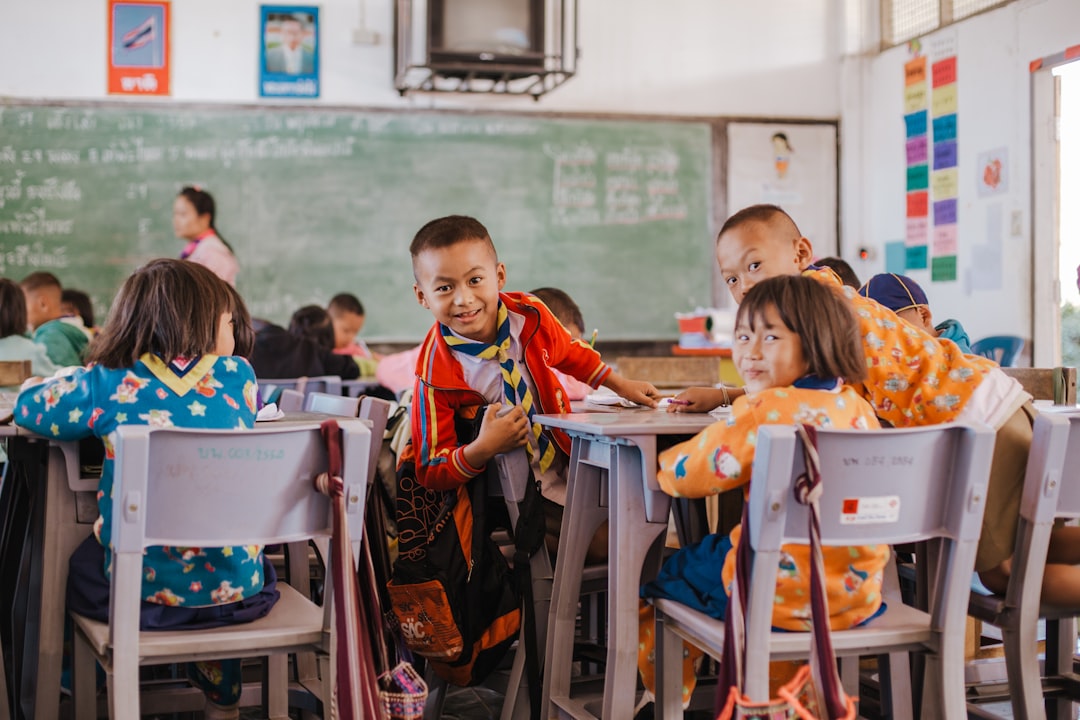
In classrooms, not every meaningful learning moment can be planned. At the University of Delaware, educator and researcher Chad Davidson is exploring how spontaneous, lighthearted interactions between teachers and students can open the door to deeper understanding in real time. His recent paper in Language Teaching and Educational Research, "Exploring Spontaneous Acts of Lightheartedness in EFL Classrooms: A Reflective Duoethnography", examines how these unscripted moments – rooted in trust, positivity and a willingness to embrace the unexpected – help create environments where students feel comfortable taking the risks essential to learning. In this Q&A, Davidson discusses the inspiration behind his research, what he’s discovered about these classroom dynamics and how they could shape teaching practices moving forward. Q: What is the focus of this research, and why is it important? Davidson: Spontaneous acts of lightheartedness promote real-time learning because it's being open to the unknown in positive ways since the true dynamic of every classroom brings continuous unknowns: A teacher never knows 100% how the students will react (these students, in these moods, on this day, etc.), how quickly they will learn or pick up on something or not. A teacher, hence, spontaneously responds in real-time to the until-then-unknown student reactions in order for those particular students best to then grasp the concept or skill that is the present goal (or “learning objective”) that those students grasp. The hope is that the teacher's spontaneous response (as it often is with many teachers) is positive and lighthearted in order to foster students to also be open to such unpredictability in the classroom and to foster students' comfortability with the vulnerability to be open to taking spontaneous risks that are necessary for that transformation that we call learning – transforming from lack of knowledge to knowledge, from lack of understanding to understanding, from lack of mastery to further mastery. Q: What are some key findings or developments? Davidson: Realizing the essential features that make up spontaneous lighthearted classroom acts; for example, these acts must include trust of the student(s) and from the student(s), and the acts must have good-intentions of creating or maintaining a relaxed environment conducive to safely taking risks for potential learning. Q: How could this work potentially impact the field or the wider public? Davidson: This could foster this act type in classrooms. That is, hopefully more teacher-practitioners will allow themselves and their students to freely enact these in their daily in-class teaching/learning-attempts. Q: What are the next steps or upcoming milestones in your research? Davidson: We incorporated some valuable insights of Mexican philosopher Jorge Portilla. While there is a glut of usage of German, French, British and American philosophers, there is almost no usage of Hispanic or Latin American philosophers in education literature. It would be great to do more work that makes use of the profound thought in the works of Latin/Hispanic philosophers. For me, this would be continuing to go more deeply in applying Jorge Portilla's thought to philosophy of education, such as to classroom management. ABOUT CHAD DAVIDSON Instructor Chad C. Davidson has a Ph.D. in curriculum and instruction with an emphasis in philosophy of language education. He has 17 years of language teaching experience, primarily in teaching and curriculum creation for English for Academic Purposes at various colleges and universities across America (University of Delaware, Kansas State University, Georgia Tech, North Orange County Community College, Johnson County Community College), in Russia (Udmurt State University), and in Turkey (Mus Alparslan University). Moreover, he has studied languages at the following universities abroad: Universidad Autónoma de Guadalajara in Mexico, Universidade do Porto in Portugal, and Aristotle University of Thessaloniki in Greece. To speak with Davidson about his work and the importance of spontaneous acts of lightheartedness, reach out to MediaRelations@udel.edu.

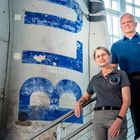
One year after his pioneering flight aboard Blue Origin’s New Shepard rocket, University of Florida space biologist Rob Ferl, Ph.D., is still processing what it meant — not just for his career, but for science itself. “What stands out the most is just the overwhelming gratitude,” Ferl said. “It was such an amazing opportunity for a scientist to go to space and actually do science.” Ferl, a professor in UF’s Horticultural Sciences Department, Director of the Astraeus Space Institute, and Assistant Vice President of Research, became one of the first space biologists to fly alongside his own experiment — a moment that marked a new era in researcher-led missions. His suborbital journey provided a rare opportunity to study how terrestrial biology responds to the very first moments of spaceflight. “For decades, space biology has relied on professional astronauts to carry out experiments designed by scientists on Earth,” Ferl explained. “But to truly understand how biology works in space, I believe you - as the scientist - have to be there. You have to feel the environment.” This September, Ferl and longtime collaborator Anna-Lisa Paul, Ph.D., will be back at Blue Origin’s West Texas launch site, continuing their work with a new series of plant experiments. Ferl and Paul, who directs UF’s Interdisciplinary Center for Biotechnology Research and is a professor in Horticultural Sciences, are tracking fluorescently tagged genes in Arabidopsis plants to study how gene expression changes during the rapid shift from Earth’s gravity to the microgravity of spaceflight and back again. It’s a full-circle moment for Ferl, who remains deeply engaged in the same questions that sent him to space a year ago. Unpacking the Transition from Earth to Space Ferl’s experiment focused on the early metabolic responses of plants during the critical transition from Earth’s gravity to the weightlessness of space. “The scientific community has accumulated plenty of data comparing biology in orbit with that on Earth,” he said. “But we’ve known almost nothing about what happens in those first few minutes as organisms enter space and are exposed to microgravity.” Initial results from the flight reveal intense metabolic changes in the early moments of spaceflight. These changes are distinct from, but connected to, the long-term adaptations seen in orbit. Early Findings, Future Impact While the data from Ferl’s experiment are still on the way to being published, the findings are already shaping the direction of ongoing research. The work contributes to a growing understanding of how terrestrial life, from plants to humans, shares fundamental pathways in responding to the space environment. “This has real implications for the future of space missions,” Ferl noted. “As we send more people and more biology into space in support of exploration, we need a comprehensive understanding of how living systems adapt — right from the start.” Ferl and his team will return to Blue Origin’s launch site in Texas in September to continue their research, sending an uncrewed payload of plants into suborbital space. The flight carries no humans—but it does carry an automated experiment designed to advance their understanding of plant biology in space. It’s part of a broader effort to refine what Ferl calls “researcher-tended missions.” A New Course for UF Space Science The mission has not only shaped the trajectory of Ferl’s research, it has also energized Astraeus and the university’s space biology efforts. “This is about building a new kind of science culture,” Ferl said. “One where the scientists are embedded in every part of the mission, from experiment design to the moment of launch.” As the one-year anniversary of his flight approaches, Ferl remains focused on pushing the boundaries of what science in space can be. But he hasn’t forgotten the magnitude of the moment. “Even a year later,” he said, “the most powerful thing I feel is just: thank you. Thank you for the chance to go, to see it for myself, and to bring that knowledge back to Earth.”

Delaware emerges as a test bed for the future of AI in health care
Delaware is positioning itself as a “living lab” where academia, health systems and government collaborate to shape the future of artificial-intelligence-enabled health care. The latest issue of the Delaware Journal of Public Health, guest edited by University of Delaware computer scientists Weisong Shi and Yixiang Deng, brings together 16 articles from researchers, clinicians, policymakers and industry leaders examining how AI and big data are reshaping health care. The issue, debuting this month, balances Delaware-specific topics with broader perspectives, highlighting three levels of impact: what Delaware can expect in the coming years, what other states can learn from Delaware’s approach and how UD research is advancing AI for health through collaborations. “At UD, we don’t work in isolation. We’re working closely with health care systems so that innovation happens together from the beginning,” says Shi, Alumni Distinguished Professor and Chair of UD’s Department of Computer and Information Sciences. Highlights from the issue include: The nation’s first nursing fellowship in robotics – ChristianaCare, Delaware’s largest health system, created an eight-month fellowship to train bedside nurses to conduct applied robotics research. Nurses who completed the program reported higher job satisfaction, improved well-being and greater professional confidence, suggesting programs like this may help retain the bedside workforce and reduce nationwide staffing shortages. Wheelchairs that navigate hospitals on their own – UD researchers developed a prototype autonomous wheelchair that combines onboard sensors and computing with software that interprets spoken directions from users, a step toward moving beyond systems that only work in controlled environments. To operate effectively in health care settings, the researchers say, wheelchairs must be able to navigate crowded hallways, interact with doors and elevators and recover safely when sensors or navigation systems fail. Smarter insulin dosing for type 1 diabetes – Researchers are developing computer models to predict blood sugar (glucose) trends and guide insulin delivery, but must address issues such as noisy data, reliable real-time prediction and the computational limits of wearable devices. A review by UD researchers and colleagues emphasizes the importance of interdisciplinary collaboration, standardized datasets, advances in computational infrastructure and clinical validation to turn these models into practical tools that improve patient care. To interview Shi about AI in health care and the new DJPH issue, click his profile or email MediaRelations@udel.edu. ABOUT WEISONG SHI Weisong Shi is an Alumni Distinguished Professor and Chair of the Department of Computer and Information Sciences at the University of Delaware. He leads the Connected and Autonomous Research Laboratory. He is an internationally renowned expert in edge computing, autonomous driving and connected health. His pioneering paper, “Edge Computing: Vision and Challenges,” has been cited over 10,000 times.

-fotor-20250826990.jpg)
How a UF reading program is reaching classrooms worldwide
For more than 25 years, Holly Lane, Ph.D., has been laser-focused on a global educational goal: to ensure that students worldwide have access to information about reading. Her passion project, known as the University of Florida Literacy Institute, or UFLI, has already improved the literacy skills of more than 10 million children. What began as a modest classroom tool now has a Facebook community of over 273,000 members; 18 million online toolbox views; and more than 500,000 instructional manuals in classrooms. And as the UFLI brand gains traction, Lane continues to champion what the acronym means and why the program has been so life-changing. “When you learn to read, you fly,” said Lane, who serves as the UFLI director and a professor of special education at UF. UFLI is an ongoing effort by UF faculty and students to improve literacy outcomes for struggling students by addressing two key areas: reader development and teacher development. The program began in 1998 as a tutoring model for beginning readers working with Lane’s pre-service teachers. The idea was that, if teachers understood how to employ effective, evidence-based practices in a one-on-one tutoring session, they could transfer those skills to their small-group or classroom instruction. However, some teachers struggled to make that transition, so a dedicated small-group lesson model was created. That foundation eventually expanded into a dyslexia support program and caught the attention of a surprising partner, best-selling author and philanthropist James Patterson. Known worldwide for his literacy advocacy and generous support of reading initiatives, Patterson has become a key benefactor for the program. When the COVID-19 pandemic hit, a challenge turned into a breakthrough. UFLI started its Virtual Teaching Resource Hub and, in the first week, about 70,000 teachers visited the site and downloaded materials. The turning point came when a school in St. Augustine reached out to UFLI, asking for professional development. “I said, ‘Well, what if we planned the lessons for you instead of teaching you how to plan these lessons?’” Lane said. What followed was what Lane called her “accidental phonics program.” “They ended the year with the best scores they'd ever seen, better than their pre-COVID scores, and that was unheard of,” Lane said. That success led to an effective district-wide pilot in Alachua County with 21 elementary schools. UFLI leaders decided to publish the contents of the program and create a manual that individual teachers could purchase. This concept boomed, and the program even made waves overseas. “Starting with the virtual teaching hub… we had a huge following in Perth and in Melbourne, and now we have an Australian edition of the manual,” Lane said. “We’ve been in every state and every Canadian province and territory, but we're also now in something like 60-some other countries.” Patterson has continued his support by directing efforts toward expanding UFLI’s reach in Florida, aiming to bring the program to every district in the state. Looking ahead, Lane is especially excited about UFLI’s new technology. “We're calling it our assessment and planning portal,” Lane said. “Teachers assess two skills a week, and they enter their data into this program and it spits out small-group lesson plans for the following week that target specific needs of their students.” The data input system is highly advanced, requiring the teacher to simply hold up work in front of a webcam, and the system then reads the student handwriting and imports the data. The program’s structure also ensures that students apply new concepts daily and revisit them regularly. But behind it all is a deeply connected community. For Lane, the success of UFLI boils down to people. “We have an amazing team here,” Lane said. “If anything, that's my superpower, finding really good people who are really good humans but also really good at what they do.” For more information about UFLI, visit ufli.education.ufl.edu.


The January U.S. military action in Venezuela is altering political connections and calculations across the Western Hemisphere, with deep implications for Cuba. The long-standing belief in the United States’ strategic patience regarding adversarial and destabilizing governments has been decisively overturned and threatens the Cuban government’s vulnerability to collapse. Georgia Southern University Associate Professor of International Studies Christopher M. Brown, Ph.D., is a recognized expert in the democratization and democratic theory of Latin American countries and the Caribbean Basin. He offers expert analysis on the shifting political landscape in Venezuela and the long-term resilience of the Havana-Caracas axis. Brown is a National Endowment for Humanities Scholar with the José Martí Institute at the University of Tampa and participated in a Faculty Exchange with the University of Havana. He has authored several books focused on the failed democratic systems in Latin America and most recently published a book titled “Responding to the Venezuelan Migration Crisis: Insights for the Caribbean” (with Georgina Chami Ph.D., University of the West Indies, St. Augustine, Trinidad and Tobago, and Nalanda Roy, Ph.D., Georgia Southern University). His monograph, “Failed Democracies in Latin America and the Caribbean” (Palgrave-Macmillan) was published in August 2023 and he is currently completing, “Democratization of Cuba” (Palgrave-Macmillan), which will be published in June 2026. Brown is available in person at the Statesboro Campus or virtually. Simply contact Georgia Southern's Director of Communications Jennifer Wise at jwise@georgiasouthern.edu to arrange an interview today.


Workplace jargon hurts employee morale, collaboration, study finds
You’ve probably heard it before in a meeting: “Let’s touch base offline to align our bandwidth on this workflow.” Corporate jargon like this is easy to laugh at — but its negative impact in the office can be serious. According to a new study, using too much jargon in the workplace can hurt employees’ ability to process messages, leading them to experience negative feelings and making them feel less confident. In turn, they’re less likely to reach out and ask for or share information with their colleagues. “You need people to be willing to collaborate, share ideas and look for more information if they don't understand something at work,” said Olivia Bullock, Ph.D., an assistant professor of advertising at the University of Florida and co-author of the new study. “And jargon might actually be impeding that information flow across teams.” Age made a difference, though. Older workers had a harder time processing jargon, but were more likely to intend to ask for more information to clarify the message. Younger employees were less likely to seek and share information when confused by jargon. “It gives credence to the idea that younger people are more vulnerable to these workplace dynamics,” Bullock said. “If you're onboarding younger employees, explain everything clearly.” Bullock and her co-author, Tiffany Bisbey, Ph.D., an assistant professor at George Washington University, published their findings Aug. 25 in the International Journal of Business Communication. An expert in communication research, Bullock has long studied jargon’s negative effects for talking about health and science. Then, faced with jargon in her own work, she started to ask how these arcane, technical words might get in the way of a smooth workplace. To find out, Bullock surveyed nearly 2,000 people who were told to imagine they had just started a new job and received an email with important directions. Half had to navigate a jargon-filled message about “intranets” and “EFT” payments. The other half had that jargon translated back into plainer language. The message packed with jargon, not surprisingly, made it harder for people to process the information, which can throw off an entire workday. “It doesn't just make them feel bad about the information they've been given. It makes them feel bad about themselves,” Bullock said. The study then asked people how they would respond to the jargon. The impenetrable language made them feel insecure and less likely to ask for help right when they needed it the most. “They weren’t as willing to collaborate,” Bullock said. “If you can’t ask for more information or share that information downstream, you’re creating silos, and that’s disrupting your workflow and environment.” Having studied jargon for so long, Bullock has one piece of advice for employers and employees alike. “Always reduce jargon,” she said. “The benefit of using jargon doesn’t outweigh the cost.”