
Experts Matter. Find Yours.
Connect for media, speaking, professional opportunities & more.

Richard G. Cuming Appointed Chief Operating Officer of ChristianaCare
(WILMINGTON, Del. – June 26, 2023) Richard G. Cuming, Ed.D., MSN, RN, NEA-BC, FAAN, has been named ChristianaCare’s chief operating officer (COO). Cuming has been serving as interim COO since the beginning of this calendar year. He joined ChristianaCare in 2016 as the system’s first Chief Nurse Executive. In his role as COO, Cuming oversees the delivery of efficient and fiscally responsible system operations. He also works with other leaders to ensure high-quality and safe patient care. “Ric has been an invaluable asset to ChristianaCare over the past seven years, especially in navigating the many challenges of the COVID-19 pandemic” said Janice E. Nevin, M.D., MPH, ChristianaCare president and chief executive officer. “As leader of our extraordinary, Magnet®-designated nursing staff and president of ChristianaCare HomeHealth, he has improved the lives of patients and caregivers alike. I look forward to him flourishing in this new role.” Prior to coming to ChristianaCare, Cuming oversaw the operations and strategic direction of nursing services, perioperative and emergency services at Einstein Medical Center Philadelphia, Einstein Medical Center Elkins Park, MossRehab, Einstein Center One and Willowcrest, a skilled nursing center. Ric also previously worked at Jackson Health System in Miami as senior vice president and chief nursing executive, and he served as senior vice president and chief administrative officer at Jackson South Community Hospital. Cuming serves on the board of directors of the DAISY Foundation and board of trustees of the Association of Perioperative Registered Nurses Foundation. He was inducted into the American Academy of Nursing and is an alumnus of both the Robert Wood Johnson Foundation Executive Nurse Fellowship Program and the Wharton School of Business General Management Program. Cuming earned his diploma of collegial studies in nursing at John Abbott College in Montreal, his Bachelor of Science in nursing from the University of Ottawa, his Master of Science in nursing at the University of Miami and his doctorate in adult education and human resource development with a minor in advanced nursing administration from Florida International University.



Post-pandemic, can America's kids catch up on lackluster literacy rates?
When COVID-19 hit, the education system nearly came to a halt. It went from in-person education in classrooms to virtual learning. Everyone knew there would be learning losses across the board. The question was how severe would they be and could those losses be mitigated? Literacy rates took a big hit, especially in younger students. Without in-classroom instruction, children started to fall further behind. According to the New York Times, about a third of children in the youngest grades are missing reading benchmarks, which is up significantly from before the pandemic. While every demographic has been affected, Black and Hispanic children and those from low-income families have fallen the furthest behind. Can anything be done to help students catch up? Betsy VanDeusen, PhD, director of the Augusta University Literacy Center, said a lot of research is coming out now and what’s being called “high dosage tutoring” is the way kids can catch up. “That just means you have to be able to see students more and more intensive,” said VanDeusen. “So we request for the kids that are at the lowest that we see them three times a week; one time a week won’t do it.” While that works on an individual basis, VanDeusen said there’s no magic bullet. While some schools here and there, and even a few states, may have found a way to help with literacy rates, the field continues to search for ways to implement needed changes across the entire educational system to support all students. She also added the decline in literacy actually started before the pandemic. “We’ve lost a tremendous amount. We lost 20 years of growth on the one national test that’s given. The achievement gap has been documented for decades and it has just been made worse.” This is an important topic and if you're a journalist covering education or how the impacts of COVID-19 are still being felt across the country, then let us help with your coverage. Betsy VanDeusen, PhD, director of Augusta University’s Literacy Center, is available to speak with reporters, simply click on her icon now to arrange an interview today.



Georgia Southern University opens doors to Gullah Geechee Cultural Heritage Center
Georgia Southern University’s Gullah Geechee Cultural Heritage Center officially opened its doors with a grand opening and ribbon cutting on June 19. Coinciding with the Center’s Juneteenth celebration, the public was invited to attend the afternoon festivities at 13040 Abercorn Street in Savannah. The ribbon cutting saw many local dignitaries in attendence, including Savannah Mayor Van R. Johnson, Georgia Rep. Carl Gilliard, Georgia Sen. Derek Mallow and Chatham County Chairman Chester Ellis, as well as Gullah Geechee Cultural Heritage Corridor Executive Director Victoria Smalls, Gullah Geechee historian and preservationist Queen Quet and Georgia Southern Provost and Vice President for Academic Affairs Carl Reiber, Ph.D., offered opening remarks. “This is a monumental occasion,” said Maxine Bryant, Ph.D., director of the Gullah Geechee Center. “To celebrate our grand opening on the nationally recognized Juneteenth is extremely meaningful. We will simultaneously honor the freedom of enslaved Black Americans and the Gullah Geechee culture that has preserved more African traditions than any other group.” The Gullah Geechee people of Coastal Georgia are descendants of enslaved Africans from plantations along the lower Atlantic coast. Many came from the rice-growing region of West Africa and were brought to the Americas for their agricultural and architectural knowledge and skills. The enslaved Africans were isolated on the Sea Islands. This isolation enabled them to create and maintain a unique culture steeped in remnants of Africa. This culture became known as Gullah Geechee and is visible in the people’s distinctive arts, crafts, foodways, use of waterways, music, dance and language. Much of the Gullah Geechee community today, which is estimated to be a population of 1 million, can speak the African Creole language or tell the stories of their ancestors who are credited with influencing southern and American culture. Local Gullah Geechee artists and the McIntosh County Shouters showcased their talent at the event. The Gullah Geechee Cultural Heritage Center, established in 2019, honors myriad contributions made by Gullah Geechee people, provides educational resources for the public, promotes scholarship and research, and serves as a model for national reconciliation and reparations. It is part of the Gullah Geechee Corridor, which stretches across 27 counties in Georgia, South Carolina, North Carolina and Florida. If you're interested in learning more about Georgia Southern University’s Gullah Geechee Cultural Heritage Center - then let us help. Simply reach out to Georgia Southern's Director of Communications Jennifer Wise at jwise@georgiasouthern.edu to arrange an interview today.

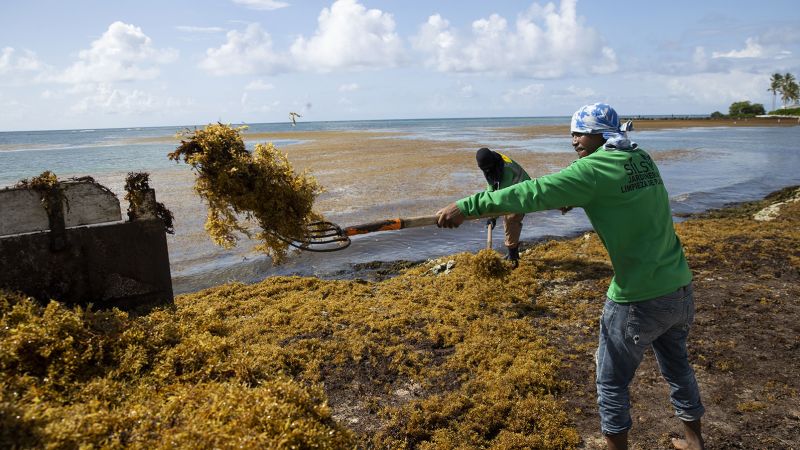
Solving sargassum: Florida Tech researchers exploring ways to make seaweed useful
Sargassum, a type of large brown seaweed, has been in the news lately, with a massive blob that’s visible from space and threatening ocean life. University research funded by the U.S. Environmental Protection Agency could address the issue, while also helping solve another problem in our water. Toufiq Reza, an assistant professor of chemical engineering in the Department of Biomedical and Chemical Engineering and Sciences, along with research students Cadianne Chambers, Swarna Saha, Savannah Grimes and Josh Calhoun, were part of the research paper, “Physical and morphological alteration of Sargassum‐derived ultraporous superactivated hydrochar with remarkable cationic dye adsorption.” The paper was published in the May edition of Springer Nature’s Biomass Conversion and Biorefinery journal. The paper is part of a three-year, nearly $400,000 EPA grant to examine different uses of sargassum. It explains that the team can produce biochar from sargassum that can filter water. Though the team has tested model dye in this paper, they plan to extend their research for other applications including harmful algal bloom remediation and nutrient recovery in the future. While sargassum has been around for centuries (Christopher Columbus is credited with the first written account after he encountered it in 1492), and you’ve probably seen bits of brownish seaweed on the beach – it sometimes smells like rotten eggs – the quantities in the ocean and washing up on shores are a more recent phenomenon. There are multiple reasons behind the increased amount of sargassum, including global warming that intensifies sargassum production and nutrient runoff making its way to ocean water and overfertilizing the seaweed growth. More sargassum is expected to show up on Florida shores in the future, inspiring the team to explore more positive uses of the abundant seaweed. “In the next couple of years, we’ll be seeing much more sargassum coming into our way. It’s not a common practice to utilize sargassum,” Reza said. “We go to a beach and then we see a little bit of sargassum just dried out. That doesn’t bother us that much, but when it started to come as a foot-tall sargassum wave, that’s where it gets more alarming.” Sargassum in the lab is labor intensive. Because it contains salt from the ocean, it is washed with tap water first, then put in a freezer for preservation. Next, it goes through hydrothermal carbonization, a thermochemical process that uses heat and pressure to convert biomass and organic waste (such as the sargassum being used) into solid hydrochar. Lastly, the solid char goes through pyrolysis, where it is heated in a high-temperature, oxygen-free chamber into a biochar that is used to filter water. For Swarna Saha, a first-year doctoral student, her goal as a researcher is to identify an environmental problem and come up with a sustainable solution. Having grown up in Bangladesh around textile factories that generate dyes that pollute the surface water, she was inspired to work on solutions that improved water quality with biochar. “I came in the project when we were experimenting on dye adsorption and saw how a tiny amount of biochar changes the color of the water,” she said. “For me, seeing the results made me the happiest. When we saw that our biochar is effective, that is the biggest achievement for me. That made me happy.” Cadianne Chambers, a second-year doctoral researcher, was motivated by her home country of Jamaica and its massive issues with sargassum. Chambers has heard accounts of fishermen unable to go out to sea because of the sargassum buildup. A popular destination for summer vacation, Jamaica is facing serious environmental and economic problems with waves of sargassum. “A team in Jamaica saw that article and they reached out to us, and they’re trying to cultivate sargassum. They want us to teach them how to make export-quality hydrochar and biochar, which could help solve their environmental problem and generate revenues,” Chambers said. “So, everything is just connecting nicely and I’m hoping to continue our collaboration with them. If it’s something that I can go home and put my PhD research to work and help the community, that would be really satisfying.” Looking to know more about sargassum and the ground-breaking research taking place at Florida Tech? Then let us help with your coverage and questions. Toufiq Reza is an assistant professor in the biomedical and chemical engineering and sciences department at Florida Tech. He's available to speak with media about this topic - simply click on his icon now to arrange an interview today.


We've all been there. A relationship ends and the rebound begins. Now since the beginning of time it seems everyone from friends, family and advice columnists have had different opinions and perspectives on how each of us should approach 'the rebound.' And earlier this month, The Atlantic decided to connect with Georgia Southern's Amy Hackney, Ph.D., a psychology professor, to weigh in with her expert opinion. “Rebound relationships” have a terrible reputation. A romance ignited shortly after another ends seems chaotic—like an opportunistic ricochet rather than an intentional search for compatibility. After a breakup, people are commonly told to take their time grieving before they start dating again. And people dating someone who’s fresh off a breakup are told to be wary—of being used as a distraction, or being treated carelessly by someone fumbling through their own heartache. But research doesn’t seem to support the idea that rebound relationships are inherently toxic or doomed to fail. When someone fresh from a split starts dating, it’s true that they might not be totally over their ex. But new relationships can help people move on from old ones. In one study of participants recovering from breakups, those who’d found a new partner were more confident in their own desirability, more trusting of other people, and less likely to say that they still had feelings for their old partner. Another examined rebounders who’d been in their new relationships for a year and a half on average. The quicker those subjects had jumped into that rebound, the higher they rated on measures of well-being and self-esteem. Amy Hackney, a psychology professor at Georgia Southern University, found something similar when she investigated what helped college students get over breakups. “The sooner they began dating someone new, the faster that they felt that they had recovered from that prior relationship,” she told me. Although that might conflict with conventional wisdom, she thinks it fits with basic social psychology: A partner provides validation, care, and companionship, and when they go away, there’s no reason someone else can’t take their place. Perhaps that sounds unromantic, but according to Hackney, it’s healthy to be reminded—promptly—“how many people we really can have fulfilling relationships with.” As Neil Sedaka would sing 'Breaking up is hard to do' and so too is getting back into the dating game. If you're a journalist looking to know more about this topic - then let our experts help. To connect with Amy Hackney — simply reach out to Georgia Southern's Director of Communications Jennifer Wise at jwise@georgiasouthern.edu to arrange an interview today.

Michael Huggins, Ph.D., will join Georgia Southern University on August 1 as the Dean of the College of Science and Mathematics. “I am excited to welcome Dr. Huggins to our academic leadership,” said Provost and Vice President for Academic Affairs Carl Reiber, Ph.D. “Dr. Huggins has a distinguished career filled with research, service and mentorship. He will be a valuable partner as we move forward with our leadership goals. He brings with him the working knowledge of how to lead a College, along with the foundations needed to advance our research mission.” Huggins comes to Georgia Southern from Tarleton State University, where he has served as a dean since 2020. He led three academic departments with nine undergraduate degree programs and three master’s degree programs. While serving as dean at Tarleton State, Huggins established a $15 million College of Science and Mathematics (COSM) fundraising initiative. He also led efforts to improve COSM First-Time-In-College (FTIC) retention rates resulting in an improvement from 67.3% COSM FTIC retention for the Fall 2019 cohort to 71.7% retention rate for the Fall 2021 COSM FTIC cohort; a 6.5% improvement in just two years. “I am excited to join the Georgia Southern team,” Huggins said. “I look forward to working with the faculty and staff to develop initiatives that support the growth of the College of Science and Mathematics and to ensure the success for all students during their time at the University and beyond.” Huggins holds a B.S. in Chemistry from the University of West Florida, a Ph.D. in Chemistry from University of Nevada, Reno and completed his postdoctoral at University of Texas at Austin. He is also a graduate from the Harvard University Institute for Management and Leadership in Education. To connect with Michael Huggins or to learn more about Georgia Southern University — simply reach out to Georgia Southern's Director of Communications Jennifer Wise at jwise@georgiasouthern.edu to arrange an interview today.
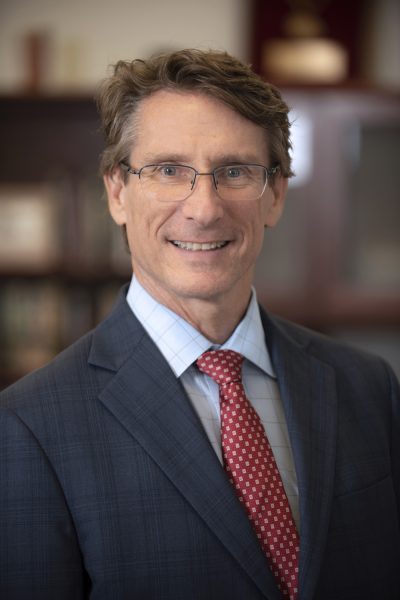
Georgia Southern University names David Owen as new dean of the College of Arts and Humanities
David Owen, Ph.D., will join Eagle Nation on July 1 to serve as the new Dean of the College of Arts and Humanities (CAH). “I am pleased to welcome David to Georgia Southern as the next generation of leadership for the College of Arts and Humanities,” said Provost and Vice President for Academic Affairs Carl Reiber, Ph.D. “David brings with him a wealth of knowledge and understanding in analytical and philosophical foundations that will prepare our students for vital roles in their professional communities.” Owen comes to Georgia Southern from the University of Louisville, where he has served as the interim dean of the College of Arts and Sciences since 2020. Among his many achievements, he transitioned the college to a new enrollment-based budget model, led the development of a three-year retention plan, and led morale improvement efforts among the College. While interim dean, Owen oversaw a budget of $62 million, including $4.8 million in funded research grants and a fundraising campaign that raised $4.3 million in 2021-2022. Prior to becoming interim dean, he was the chairperson of the Department of Philosophy at the University of Louisville. He is a three-time alumnus of the University of Illinois at Chicago, where he received his B.A., M.A. and Ph.D. “I am truly excited to be joining Georgia Southern as dean of the College of Arts and Humanities,” said Owen. “In my meetings, I found the faculty and staff of the College to be extraordinarily talented, and deeply committed to student success. The importance of the arts and humanities to a vibrant civic culture has never been more clear, and I look forward to working with the faculty and staff in CAH, Provost Reiber, colleagues from across campus, and alumni and friends of the college to advance the impact CAH has on students’ lives, on the wider community, and on civic culture.” To connect with David Owen or to learn more about Georgia Southern University — simply reach out to Georgia Southern's Director of Communications Jennifer Wise at jwise@georgiasouthern.edu to arrange an interview today.
If you’re looking for comment on this week’s announcement about government’s proposed £50bn investment in creative industries we have a design expert available. Dr Tim Whitehead is associate dean and senior lecturer, engineering and technology, Aston University. He believes that although the Tory's promise spending for the creative industries they need to invest in education first. His full response is attached and below: “This week the government announced a plan to boost the creative industries by £50bn by 2030 and invest £77m in funding for the sector. “This news is fantastic and long overdue. The UK design economy contributes £97.4bn GVA and for every £1 invested in design we see a return of £4 to the wider economy. “The creative sector is a major British export with film, TV, music being some of the biggest exports. However, we also have physical products; If you’ve ever used an iPhone, a Dyson or ridden on a London double decker bus then you’ve used world class British design. “The funding is welcome, however we really need investment in our schools to teach creativity and align this with recent announcements in maths education. “The majority of our most successful designers / creative engineers started with Design and Technology at school. “Between academic years 2009-10 and 2021-22, the proportion of pupils taking Design and Technology GCSEs fell from around 42% to 27% in all schools in England. With only a minor increase in pupils taking Art and Design GCSE which increased from 27% to 29% over the same period. “There is a big gap here, and we really need to ensure that children have access to a creative education as school. “By embedding creativity into the next generation it will help foster new creative engineers data scientists etc. and the next Dyson.” Dr Tim Whitehead, associate dean and senior lecturer, engineering and technology, Aston University For inquiries contact Nicola Jones, Press and Communications Manager, on (+44) 7825 342091 or email: n.jones6@aston.ac.uk


• Professor Patricia Thornley has led a Department for Transport advisory paper • Advises decarbonisation will need low-carbon fuels alongside electrification • Calls for continued investment in this area. A leading energy expert at Aston University has advised government to invest in low carbon fuels - as well as electric - if it wants to reach its 2050 net zero ambition. Professor Patricia Thornley has led a Department for Transport (DfT) advisory paper on low carbon transport fuels. The paper advises that decarbonisation of the UK’s transport systems will need the government to support the use of low-carbon fuels alongside widespread battery electrification where possible. Professor Thornley and the other members who sat on the Scientific Advisory Council examined the challenges and opportunities of developing and using different fuels and their potential impact on the wider energy system. The authors highlight that low carbon fuels such as those made from agricultural waste can deliver reductions in carbon emissions, helping to meet the government’s 2050 net zero ambition. As a result, they state that continued investment in this area is crucial. The paper also states that at this point it’s not yet clear if low carbon fuels will support just the transition to full electrification of the UK’s transport systems or will be a long-term solution. Professor Thornley who is director of Aston University’s Energy and Bioproducts Research Institute (EBRI) and the Supergen Bioenergy Hub said: “Successful decarbonisation of transport systems in the UK will require flexible and adaptive government strategies that support the use of low-carbon fuels alongside widespread battery electrification, where that is possible. “The optimal mix of low carbon fuels vs battery electrification in transport will depend on many different factors, some technological, some supply related, and others linked to the capacity of the UK to generate low carbon electricity. “We urgently need to better understand and manage the airborne emissions that can still be present with low carbon fuels (including hydrogen). That might result in us prioritising different fuels or propulsion systems in different applications or even different parts of the UK. “Agreeing that prioritisation would allow us to prioritise appropriate next generation of infrastructure to support the UK’s net zero ambitions.” Back in March 2022 the Council was asked to provide guidance to the DfT which is currently developing a low carbon fuels strategy. The report, Low carbon transport fuels: DfT Science Advisory Council position paper was published on 5 June and provides an independent advice on the role of low carbon fuels in reducing transport systems’ greenhouse gas emissions.


Aston University wins £1.8m to boost West Midlands low carbon markets
• Aston University and local industry to develop technology to convert organic material into commercially valuable products • Sawdust, diseased trees and dried chicken litter among what can be transformed into sustainable bioproducts • West Midlands companies are invited to join a cluster to develop new low carbon products for growing markets. Aston University is to receive £1.8 million to transform the West Midlands into a powerhouse of low-carbon product development and commercialisation. The University will be building on its existing research facilities to lead the region’s Biochar CleanTech Accelerator as part of the West Midlands Innovation Accelerator. The project was set up with the aim to secure export contracts for low carbon products worth over £200 million, to be made by a regional industrial cluster. It is hoped that the development of a low-carbon business cluster in the West Midlands will open up new domestic and export markets to help rebuild the region’s engineering and manufacturing status. Biochar, a sustainable form of charcoal, can be used as a soil and plant growth enhancer. It stores carbon in the ground, so there are fewer greenhouse gases in the atmosphere. Other products such as oils can be used as low carbon fuels for boilers and engines and the liquid by-product can be used for low carbon weedkiller, fungicide and plant growth. Aston University’s innovative technology is installed at its urban biochar demonstrator in south Birmingham. The project is based on the strengths of the University’s Energy and Bioproducts Research Institute (EBRI) and its Centre for the Circular Economy and Advanced Sustainability (CEAS). Tim Miller, director of engagement at EBRI, said: “This new development has the potential to rebuild product development, engineering and manufacturing in our region. “The project aims to commercialise knowledge, facilities and the results of long-term university research for the benefit of the environment and our regional economy. “Using the University’s existing expertise and facilities we have the potential to launch new technology-based opportunities as they emerge and mature, The Biochar CleanTech Accelerator is part of the West Midlands Innovation Accelerator which was first announced in the government’s 2022 Levelling up White Paper and started this spring. It is funded through a share of a £100m from Innovate UK, to be divided by three regional innovation accelerators over the next two years. Launched by the West Midlands Combined Authority (WMCA) in March 2023, it will target investment on projects enabling new solutions around Medical and Clean Technologies, to further reinforce the region’s position at the frontier of the UK innovation revolution. The University will also play a key role in two other projects in the West Midlands Innovation Accelerator. Companies interested in joining the cluster can get further information at https://www.aston.ac.uk/biochar-cleantech-accelerator or emailing biochar@aston.ac.uk
