
Experts Matter. Find Yours.
Connect for media, speaking, professional opportunities & more.
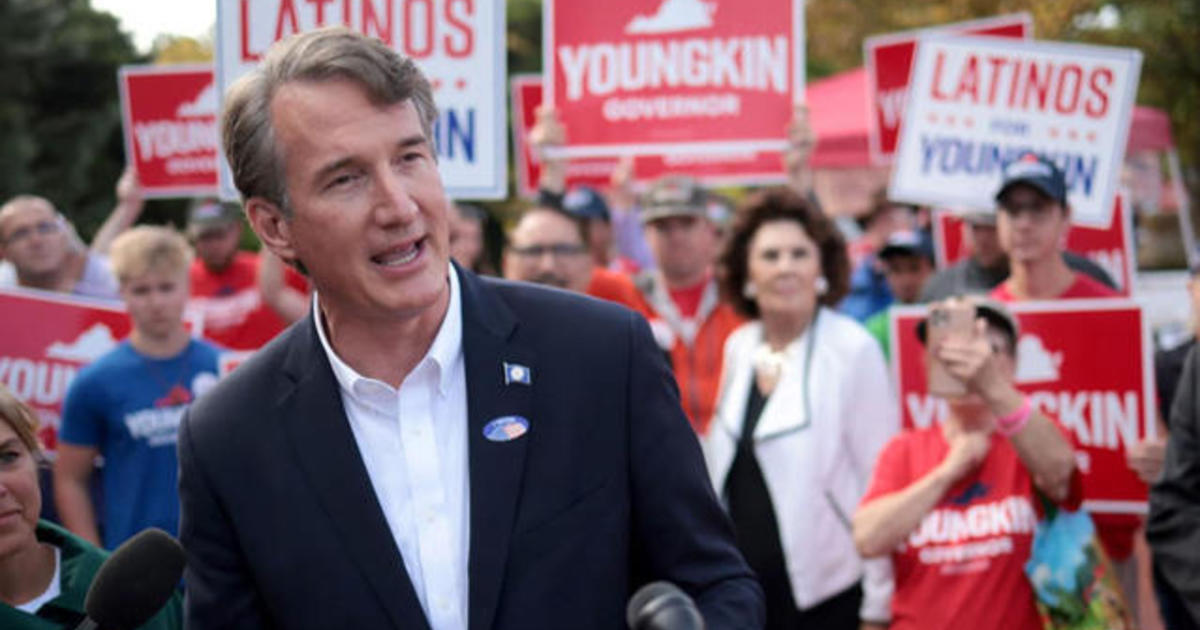
Tomorrow's Election Day, and it’s all eyes on Virginia!
In what is shaping up to be one of the most contested gubernatorial races in recent history, it’s all coming down to Election Day. Media from across the country are all watching and trying to get all the expert insight they can on why this election is so important and what winning or losing could mean for not just the state – but the mid-term elections coming up next November. UMW’s Stephen Farnsworth is the ‘go-to’ for major media outlets across America and for international media following U.S. and Virginia politics. Recently, CBS News called on him to lend his expertise on just where this race sits. "The race for governor in Virginia is in its final stretch with just two weeks to go before Election Day. Former Governor Terry McAuliffe, the Democratic candidate, and Republican nominee Glenn Youngkin have clashed on several issues related to schools from charter schools to vaccine mandates for teachers and students. Stephen Farnsworth, director of the Center for Leadership and Media Studies at the University of Mary Washington, joins CBSN AM to discuss." October 19 - CBS News Dr. Stephen Farnsworth is a sought-after political commentator on presidential politics. He has been widely featured in national media, including The Washington Post, Reuters, The Chicago Tribune and MSNBC. If you are a reporter covering Virginia's gubernatorial race, simple click on his icon to arrange an interview today.



Prof Rachel Warren on the impacts of climate change at COP26
A number of climate experts from the University of East Anglia will be available for interview during the COP26 climate conference in Glasgow. Their areas of expertise range from the impact of climate change on biodiversity, climate geoengineering and carbon removal, to the impact of climate change on sovereign credit ratings, carbon uptake by the oceans, and gender and climate change. Among them is Prof Rachel Warren, Professor of Global Change and Environmental Biology, from UEA's School of Environmental Sciences and Tyndall Centre for Climate Change Research. Her research areas and expertise cover the impacts of climate change on biodiversity. She is an IPCC author and available for interview on topics including climate change policy and modelling, climate change mitigation and adaptation, the impact of climate on ecosystems and species, and sustainability in the context of the Paris Agreement goals to limit global warming to well below 2oC.


Greenhouse gas removal expert Dr Nem Vaugham on COP26
A number of climate experts from the University of East Anglia will be available for interview during the COP26 climate conference in Glasgow. Their areas of expertise range from the impact of climate change on biodiversity, climate geoengineering and carbon removal, to the impact of climate change on sovereign credit ratings, carbon uptake by the oceans, and gender and climate change. Among them is Dr Nem Vaughan, Associate Professor in Climate Change, at UEA's School of Environmental Sciences and Tyndall Centre for Climate Change Research Her research areas and expertise cover greenhouse gas removal, and technologies and practices that aim to remove CO2 from the atmosphere. She is currently the Principal Investigator of a NERC funded four-year consortium project on the Feasibility of Afforestation and Biomass energy with carbon capture and storage for Greenhouse Gas Removal. Her main interest is in climate change mitigation – ways to reduce emissions, to decarbonise and adopt new forms of energy. She is exploring the options of particular technologies and practices for reducing and removing carbon emissions – including biomass energy carbon capture with storage, and afforestation (the introduction of new trees). She recently co-authored an article in The Conversation on the issues around carbon removal: A global carbon removal industry is coming – experts explain the problems it must overcome.

Environmental economics expert Dr Brock on COP26
A number of climate experts from the University of East Anglia will be available for interview during the COP26 climate conference in Glasgow. Their areas of expertise range from the impact of climate change on biodiversity, climate geoengineering and carbon removal, to the impact of climate change on sovereign credit ratings, carbon uptake by the oceans, and gender and climate change. Among them is Associate Professor in Microeconomics, Dr Mike Brock, from UEA's School of Economics. His research areas and expertise cover environmental and behavioural economics, recycling and environmental valuation. He explores how (and why) people behave in a more sustainable or environmental way. Particular projects include financial incentives to encourage recycling through lottery techniques and the use of competitive rankings on personal use of energy to stimulate energy reduction. Mike has also explored people’s behaviours towards wildlife – for example why people flock to see newly-identified species of birds and the environmental of that behaviour.

Environmental governance expert Prof Heike Schroeder to attend COP26
A number of climate experts from the University of East Anglia will be attending the COP26 climate conference in Glasgow. Their areas of expertise range from the impact of climate change on biodiversity, climate geoengineering and carbon removal, to the impact of climate change on sovereign credit ratings, carbon uptake by the oceans, and gender and climate change. Prof Heike Schroeder, from UEA's School of International Development, will attend COP in its second week, from November 7, as principle investigator for the INDIS project on Indigenous visions of sustainable development & climate resilience. Prof Schroeder's research and expertise covers global environmental politics, forest governance and REDD+, the international climate negotiations, urban climate governance, indigenous peoples/knowledge and sustainable development. The team will be showing how Indigenous knowledge might contribute towards national and international targets for climate mitigation, adaptation, and sustainable development. The value of Indigenous knowledge is often ignored by policy-makers, and Indigenous Peoples themselves have few opportunities to articulate and share their knowledge in a way that can impact policy making circles and strengthen sustainable futures. The project’s Indigenous partners from three countries (Uganda, Papua New Guinea, and Bolivia) will be presenting their own visions for just and environmentally sensitive futures. Where: Exhibit slot in the green zone on Mon, 8 Nov 1:00-2:30pm. The project will also have a slot in the IASS Pavilion in the Blue Zone in Week 2 covering findings and outputs.

Oceans expert Dr Bakker to attend COP26
A number of climate experts from the University of East Anglia will be attending the COP26 climate conference in Glasgow. Their areas of expertise range from the impact of climate change on biodiversity, climate geoengineering and carbon removal, to the impact of climate change on sovereign credit ratings, carbon uptake by the oceans, and gender and climate change. Dr Dorothee Bakker will attend the first week of COP26 as part of the Integrated Carbon Observation System European Infrastructure Consortium (ICOS ERIC). Her areas of research and expertise cover processes affecting the air-sea transfer of natural long-lived greenhouse gases (carbon dioxide, methane, nitrous oxide) and the marine carbon cycle in a changing climate. Dr Bakker chairs the SOCAT global group - SOCAT is a Global Ocean Observing System, with more than 100 contributors. Her brief: The ocean takes up a quarter of anthropogenic CO2 emissions. This uptake varies over time (between years and decades) for reasons that we do not fully understand. It is unclear how ocean CO2 uptake will respond when we move towards net zero. Measurements of (surface) ocean CO2 and their synthesis are therefore key for determining ocean CO2 uptake, now and in the future. However, funding for these measurements and their synthesis is precarious. Dr Bakker is currently investigating carbon cycling in UK shelf seas and the Southern and Arctic Oceans. She is a co-author of this year’s Global Carbon Budget paper (for SOCAT synthesis of ocean CO2 measurements).

Rochester's David Primo on how the wealth tax proposal will (or won't) work
“The ‘wealth tax’ that’s being proposed in the current budget is really a tax on unrealized capital gains, so the stock that you have not sold yet but which has seen gains would be taxed before it is sold,” says David Primo, the Ani and Mark Gabrellian Professor and an associate professor of political science and business administration at the University of Rochester. “It applies only to the ‘richest of the rich’ and many questions remain as to how the operational and Constitutional concerns of it will be addressed. This proposal is much different from traditional wealth taxes where the idea has been to assess the wealth of tax payers every year and have the wealthiest individuals pay a tax on their net worth.” Primo is available for interviews and can discuss the precedent that this current wealth tax would establish with regard to taxing stock investments; if this is the best approach to taxing the wealthiest Americans; if it would even generate enough tax dollars to make a difference with the federal government’s current spending obligations; and more.



Presidential plantations – are they leaving out slavery when telling the story of America’s history?
The presidential plantations once belonging to George Washington, Thomas Jefferson, James Madison and James Monroe are picturesque destinations for tourists who want to learn more about these Founding Fathers from Virginia. But these museums often fail to adequately tell the stories of the enslaved people who lived and toiled there. UMW Professor of Geography Stephen Hanna's research on the topic was recently highlighted in Northern Virginia Magazine. Do plantation museums do justice to the memory of the enslaved? Local professor Stephen Hanna wanted to find out, so in 2014 he joined a team of researchers associated with TourismRESET, a world-wide network of scholars who study and challenge social inequity in tourism. Hanna, who teaches geography at the University of Mary Washington in Fredericksburg, received a grant from the National Science Foundation, enabling him to lead undergraduate students through multi-year research on how narratives and exhibits about enslaved populations and slavery were presented or absent at 15 different plantation sites. The goal was to present their findings to museum managers and thus facilitate more historically accurate and meaningful tours. His team is in the final stages of publishing a book summarizing their data and findings, to be released in March 2022. The full article is attached below and is well worth the complete read. If you are a journalist covering this critical topic about American history, then let us help with your questions and stories. Dr. Hanna is available to speak with media regarding this topic. Simply click on his icon to arrange an interview.

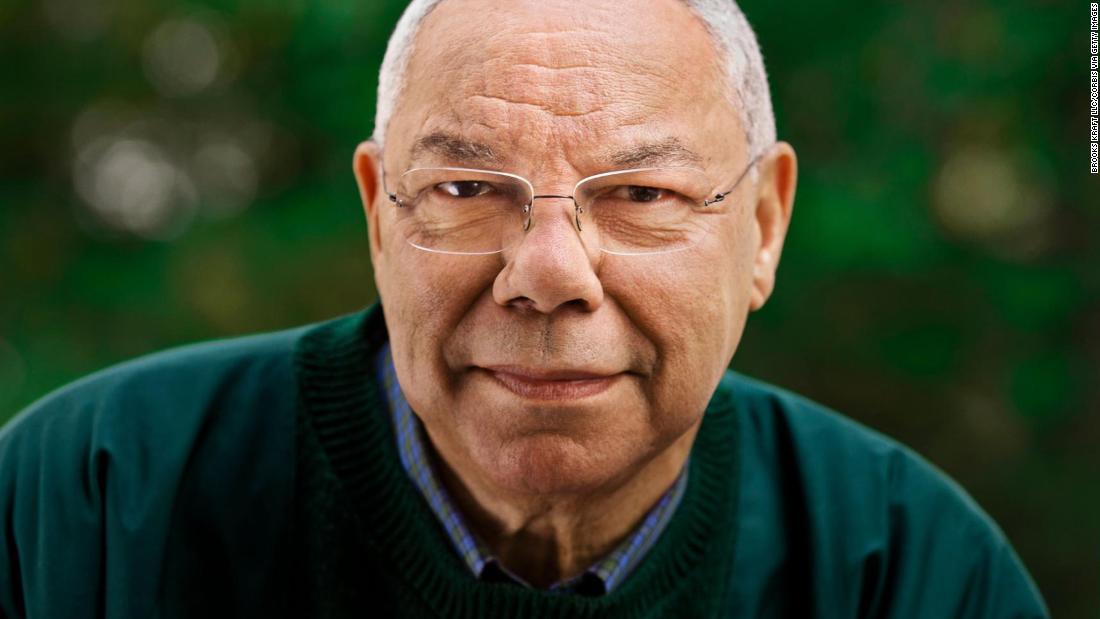
Covering the death of Colin Powell? UMW's foreign policy expert can help
Colin Powell, the first Black US secretary of state whose leadership in several Republican administrations helped shape American foreign policy in the last years of the 20th century and the early years of the 21st, has died from complications from Covid-19, his family said on Facebook. He was 84. "General Colin L. Powell, former U.S. Secretary of State and Chairman of the Joint Chiefs of Staff, passed away this morning due to complications from Covid 19," the Powell family wrote on Facebook, noting he was fully vaccinated. A source familiar with the matter said Powell had multiple myeloma, a cancer of plasma cells that suppresses the body's immune response. Even if fully vaccinated against Covid-19, those who are immunocompromised are at greater risk from the virus. "We have lost a remarkable and loving husband, father, grandfather and a great American," the family said. October 18 - CNN If you are covering the life and legacy of Colin Powell - then let our experts help with your questions and coverage. University of Mary Washington Political Science and International Affairs Professor Jason Davidson is an expert in American foreign and security policy, and international security. He is also the author of the commissioned study, "The Costs of War to United States Allies Since 9/11," which focuses extensively on the human and monetary sacrifices made by America's allies in these conflicts. Davidson, and the document, made waves this spring, landing in the likes of Forbes, The Guardian and The Daily Mail. If you’re looking to arrange an interview with Dr. Davidson, simply click on his icon.

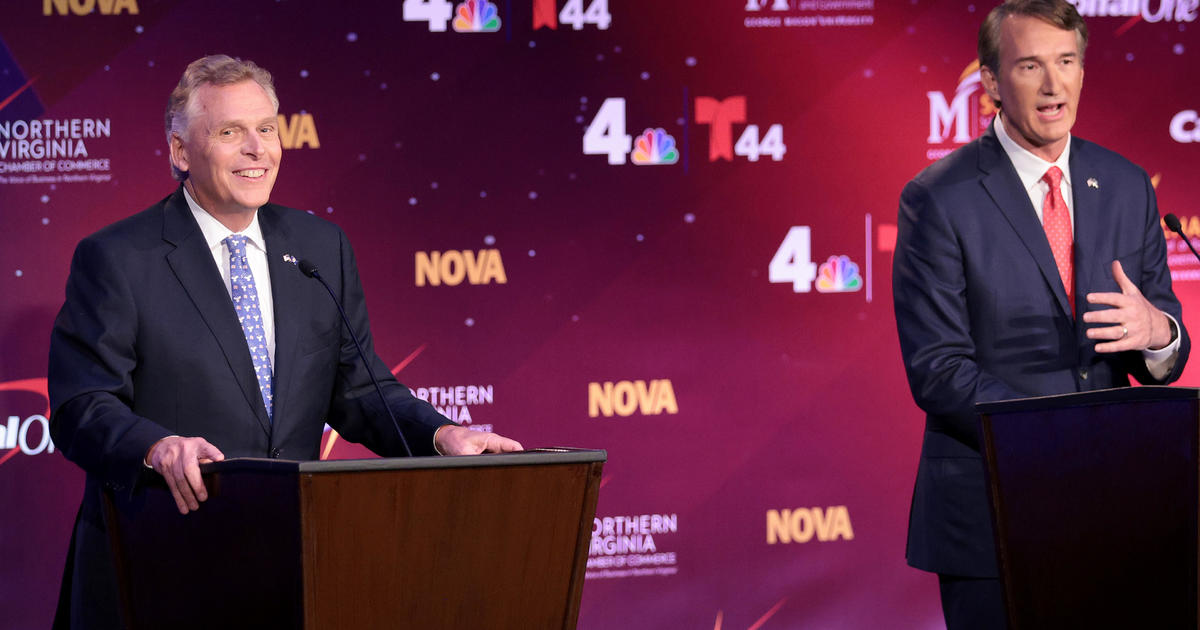
All eyes on Virginia – What’s at stake as the race for Governor goes into overdrive
Virginians are already voting to elect a new governor – and as political junkies, pundits and media across America know, this race could paint a picture of what’s to come in next year’s midterm elections and even as far away as 2024. Stephen Farnsworth, a political science professor at University of Mary Washington, said Mr. Biden's ability to sell his agenda will be "significantly deteriorated" if Republicans win the governor's mansion in Virginia. "If a Biden-like message offered by McAuliffe doesn't succeed in purple Virginia, a lot of Democrats around the country will wonder if it makes more sense to chart a more independent course," he said. CBS News – October 07 Dr. Stephen Farnsworth is a sought-after political commentator on presidential politics. He has been widely featured in national media, including The Washington Post, Reuters, The Chicago Tribune and MSNBC. If you are a reporter covering Virginia's gubernatorial race, simple click on his icon to arrange an interview today.