
Experts Matter. Find Yours.
Connect for media, speaking, professional opportunities & more.
Simple 20-20-20 screen rule really does help with eye strain, research shows
Scientists find that a short break to look away from screen every 20 minutes improves symptoms of eye strain for computer users Aston University researchers used special software to monitor participants’ gaze for two weeks, measuring symptoms before and after First time that guidance has been scientifically validated. It’s long been recommended as a way of easing eye strain while working at a computer screen. Now the 20-20-20 rule – taking a break of at least 20 seconds, every 20 minutes, to look at least 20 feet away - has been confirmed by scientists at Aston University to help ease some of the symptoms of prolonged computer use. It’s estimated that at least half of people using computers in their regular work have some form of digital eye strain, resulting in eye surface problems including irritation and dryness, or vision issues such as headaches or blurred vision. Humans normally blink around 15 times each minute. When staring at screens, this number decreases generally to half that rate or less. That can lead to dry, irritated, and tired eyes, but twenty seconds focusing elsewhere is long enough for the eyes to relax enough to reduce the strain. This is the first time that the 20-20-20 guidance rule has been properly validated. Researchers at Aston University’s College of Health and Life Sciences set up their study with the help of 29 participants who suffer from symptoms of eye strain. Special software downloaded onto the participants’ own laptop computers used the built-in laptop camera both to check if a user was sitting at the screen and to monitor their gaze direction every few seconds. After 20 minutes of continuous screen viewing, the programme flashed up a message, asking users to rest for 20 seconds while looking at any distant target around 20 feet away, such as out of the window or across a room. The message couldn’t be removed until the task was performed correctly, as measured by the app. Participants’ digital eye strain symptoms were measured before and after two weeks of using the reminders, and one week after completing the study. Results showed a marked decrease in symptoms including dryness, sensitivity and discomfort. Professor James Wolffsohn, Professor of Optometry at Aston University, who led the research in collaboration with the University of Valencia, Spain, said: “The one previous study merely asked people to carry out the suggestions; but here the access control on the software meant we could be sure that participants really had looked away every 20 minutes. We saw a consequent improvement in the symptoms of the group as a whole.” Researchers noted that after the study, the participants’ eye symptoms returned to what they had been before the intervention. Professor Wolffsohn says: “We are planning to conduct longer term studies to see whether we can teach eyelid muscle memory impulses to blink more often during digital viewing, to help mitigate this chronic issue without long term use of reminders.” The findings confirm that people should try and take breaks from their screens. He added: “Although we used sophisticated software, it’s easy for others to replicate the effect by setting a timer on their phone, or downloading a reminder app. It’s a simple way of reminding yourself to take regular breaks for the good of your eyes.” The effects of breaks on digital eye strain, dry eye and binocular vision: Testing the 20-20-20 rule was published in Contact Lens and Anterior Eye journal.


The minister for tech and the digital economy met with representatives from Aston University’s College of Engineering and Physical Sciences and Solihull College & University Centre during a visit to the new Greater Birmingham and Solihull Institute of Technology (GBSIoT) Hub on 2 August. Damian Collins MP was given a tour of the new facility by Rosa Wells, executive director for employment and skills and IoT at Solihull College & University Centre. The Institute of Technology focuses on engineering and advanced manufacturing and is a partnership between local further education colleges, universities and industry partners. It will support learners from across the region to progress to high-skill technical jobs in industry through clear, supported pathways. Construction of the GBSIoT Hub building is nearing completion and will be welcoming students in the coming weeks. During the visit, the minister was shown the cyber physical manufacturing rig, a scaled-down version of a factory of the future, which will create a simulated working environment for IoT learners. The minister then met with executive dean Professor Stephen Garrett and deputy dean Professor Kate Sugden for a tour of Aston University’s Advanced Prototyping Facility conducted by senior project manager Paul Gretton. The facility supports businesses by increasing awareness of the opportunities available through 3D printing to improve the efficiency and effectiveness of existing designs, and to develop new products all the way through to producing prototypes. The visit also included a showcase of Aston University’s Autopod, a state-of-the-art autonomous vehicle funded by the Greater Birmingham and Solihull Local Enterprise Partnership and the Institute of Technology which is used for research and as a teaching tool. Professor Garrett said: “Aston University has a proud history of delivering high-quality technical education and world-leading research. We were delighted to be able to showcase our facilities to Damian Collins MP, whilst discussing our commitment to equipping students with the knowledge and skills they need to succeed in STEM careers.” Damian Collins MP said: “It’s been brilliant to visit the pioneering facilities at Aston University today, especially seeing the cyber rig which will give students first class training to enter the industry with confidence. “Having these opportunities will help young people gain skills they need for future jobs, supporting the UK’s world leading advanced manufacturing and digital industries.” The minister toured the facilities at Aston University as part of his wider visit to the Birmingham 2022 Commonwealth Games. For more information about the College of Engineering and Physical Sciences please visit our website.

Babies react to taste and smell in the womb – new research
Scientists have recorded the first direct evidence that babies react differently to various smells and tastes while in the womb Study took 4D ultrasound scans of 100 pregnant women to see how their unborn babies responded to flavours from foods eaten by their mothers The research team, which also included scientists from Aston University, scanned some mothers to see fetal facial reactions to the kale and carrot flavours. Scientists have recorded the first direct evidence that babies react differently to various smells and tastes while in the womb by looking at their facial expressions. A study led by Durham University’s Fetal and Neonatal Research Lab, UK, took 4D ultrasound scans of 100 pregnant women to see how their unborn babies responded after being exposed to flavours from foods eaten by their mothers. Researchers looked at how the fetuses reacted to either carrot or kale flavours just a short time after the flavours had been ingested by the mothers. Fetuses exposed to carrot showed more “laughter-face” responses while those exposed to kale showed more “cry-face” responses. Their findings could further our understanding of the development of human taste and smell receptors. The researchers also believe that what pregnant women eat might influence babies’ taste preferences after birth and potentially have implications for establishing healthy eating habits. The study is published in the journal Psychological Science. Humans experience flavour through a combination of taste and smell. In fetuses it is thought that this might happen through inhaling and swallowing the amniotic fluid in the womb. Lead researcher Beyza Ustun, a postgraduate researcher in the Fetal and Neonatal Research Lab, Department of Psychology, Durham University, said: “A number of studies have suggested that babies can taste and smell in the womb, but they are based on post-birth outcomes while our study is the first to see these reactions prior to birth. “As a result, we think that this repeated exposure to flavours before birth could help to establish food preferences post-birth, which could be important when thinking about messaging around healthy eating and the potential for avoiding ‘food-fussiness’ when weaning. “It was really amazing to see unborn babies’ reaction to kale or carrot flavours during the scans and share those moments with their parents.” The research team, which also included scientists from Aston University, Birmingham, UK, and the National Centre for Scientific Research-University of Burgundy, France, scanned the mothers, aged 18 to 40, at both 32 weeks and 36 weeks of pregnancy to see fetal facial reactions to the kale and carrot flavours. Mothers were given a single capsule containing approximately 400mg of carrot or 400mg kale powder around 20 minutes before each scan. They were asked not to consume any food or flavoured drinks one hour before their scans. The mothers also did not eat or drink anything containing carrot or kale on the day of their scans to control for factors that could affect fetal reactions. Facial reactions seen in both flavour groups, compared with fetuses in a control group who were not exposed to either flavour, showed that exposure to just a small amount of carrot or kale flavour was enough to stimulate a reaction. Co-author Professor Nadja Reissland, head of the Fetal and Neonatal Research Lab, Department of Psychology, Durham University, supervised Beyza Ustun’s research. She said: “Previous research conducted in my lab has suggested that 4D ultrasound scans are a way of monitoring fetal reactions to understand how they respond to maternal health behaviours such as smoking, and their mental health including stress, depression, and anxiety. “This latest study could have important implications for understanding the earliest evidence for fetal abilities to sense and discriminate different flavours and smells from the foods ingested by their mothers.” Co-author Professor Benoist Schaal, of the National Centre for Scientific Research-University of Burgundy, France, said: “Looking at fetuses’ facial reactions we can assume that a range of chemical stimuli pass through maternal diet into the fetal environment. “This could have important implications for our understanding of the development of our taste and smell receptors, and related perception and memory.” The researchers say their findings might also help with information given to mothers about the importance of taste and healthy diets during pregnancy. They have now begun a follow-up study with the same babies post-birth to see if the influence of flavours they experienced in the womb affects their acceptance of different foods. Research co-author Professor Jackie Blissett, of Aston University, said: “It could be argued that repeated prenatal flavour exposures may lead to preferences for those flavours experienced postnatally. In other words, exposing the fetus to less ‘liked’ flavours, such as kale, might mean they get used to those flavours in utero. “The next step is to examine whether fetuses show less ‘negative’ responses to these flavours over time, resulting in greater acceptance of those flavours when babies first taste them outside of the womb.”


Aston University expert to join panel discussion hosted by The Independent on how to heal the NHS
Dr Alexis Paton is the director of the Centre for Health and Society at Aston University The online event, How to heal the NHS, will take place on 27 October at 18.30 BST Experts will examine how to secure the future of the UK’s health system. Dr Alexis Paton, director of the Centre for Health and Society at Aston University, will be joining a panel of experts to examine how to secure the future of the UK's health system at an on online event on 27 October at 18.30 BST. How to heal the NHS - is the Independent’s latest panel discussion in its virtual event series. It will be chaired by health correspondent Rebecca Thomas and the panel will also include Hannah Barham-Brown, a GP and deputy leader of the Women’s Equality Party, and Dr Suzanne Tyler the Royal College of Midwives executive director. Participants will have the opportunity to listen to the experts speaking exclusively with The Independent on this topic and have the chance to ask them a question either pre-submitted ahead of the event or during it using the Q&A box on Zoom. Dr Alexis Paton, director of the Centre for Health and Society, Aston University said: “The concerns about the state and stability of the NHS were deeply entrenched before 2020 and then of course the pandemic hit. “The additional pressures and longer waiting times for appointments and treatment have only grown following a time when NHS staff have experienced stresses like they never have before. The situation has led to increased fears of privatisation and increasing staff shortages. “I welcome this opportunity to contribute to a debate about such a vitally important topic.” To find out how to sign up to the event for free click on the Eventbrite page.


Aston University joins Birmingham Health Partners alliance
Aston University becomes second university member to join Birmingham Health Partners (BHP) BHP brings together excellence from University of Birmingham and four regional NHS trusts The alliance brings together translational medicine, encompassing health data and academic excellence. Aston University has joined Birmingham Health Partners (BHP), becoming the second university to join the city’s university-NHS partnership. BHP brings together academic, clinical and translational excellence from the University of Birmingham, Aston University and four regional NHS trusts: University Hospitals Birmingham NHS Trust; Birmingham Women’s and Children’s NHS Trust; and more recently Sandwell and West Birmingham NHS Trust, the Royal Orthopaedic NHS Foundation Trust, as well as the regional Academic Health Science Network. BHP is known for its unique ecosystem which enables a full spectrum of translational medicine: encompassing health data, an established local health system, academic excellence and an extensive clinical trials capability – to help bring about answers to complex healthcare issues for the direct benefit of people worldwide. Aston University will be represented at board level by Professor Aleks Subic, Vice-Chancellor and Chief Executive of Aston University. While Professor Anthony Hilton, Pro-Vice-Chancellor & Executive Dean College of the College of Health and Life Sciences will join the executive group of BHP. Professor Hilton said: “We are excited to join BHP because it gives Aston University the chance to develop cross institutional collaborations under one umbrella of BHP. It provides an important forum for engagement with our regional NHS trusts and beneficiaries for both research, education and knowledge exchange. “We are keen to see how the alliance will support the funding of future research, enabling us to share innovation at the boundaries of each institutional expertise. “By having a unified West Midlands approach, we can harness key skills, expertise and our resources to have an impact on health in the region.” Managing Director at BHP, John Williams said: "It gives me great pleasure to welcome Aston University to be part of Birmingham Health Partners. “Alongside our NHS partners we will make use of our shared capabilities as employers, educators and researchers to positively impact the health and economic growth of our region."
Aston University to launch Aston Centre for Applied Linguistics
The Centre is an interdisciplinary, multilingual group of researchers made up of academic staff and research students It aims to build on Aston University’s longstanding expertise in research into language education, languages, and applied linguistics The hybrid launch event will take place at the University on 14 September Aston University is launching a new research centre within its College of Business and Social Sciences. The Aston Centre for Applied Linguistics (ACAL), formerly known as the Centre for Language Research at Aston (CLaRA), aims to build on Aston University’s longstanding expertise in research into language education, languages, and applied linguistics by promoting interdisciplinary collaboration and establishing national and international networks and partnerships. ACAL is an interdisciplinary, multilingual group of researchers – academic staff and research students – who work in the field of language and language education research. The Centre will officially be launched through a hybrid event at the University on 14 September 2022. There will be talks by Aston University’s Dr Lucia Busso & Dr Marton Petyko, Dr Marcello Giovanelli, Dr Megan Mansworth and Dr Emmanuelle Labeau as well as guest lectures from Professor Zhu Hua (IOE faculty of education and society, UCL) and Terry Lamb (professor of languages and interdisciplinary pedagogy, University of Westminster and Aston University language graduate). The event will conclude with a celebration of the major publications of ACAL members in 2021-22. Dr Emmanuelle Labeau, director of ACAL, said: “Language actually is all around us: we use it to articulate all our human activities. “Languages actually are all around us: over 100 languages are spoken in Birmingham “My recent AHRC-funded project BRUM (Birmingham Research for Upholding Multilingualism) has shown that research in language(s) is needed in local schools, businesses, public services and culture. “ACAL wants to put the ‘applied’ into linguistics to serve the University, the city, region and beyond. Our researchers are a great asset to the University’s ambitions, and we cannot wait informing and helping shape the Aston University 2030 Strategy.”
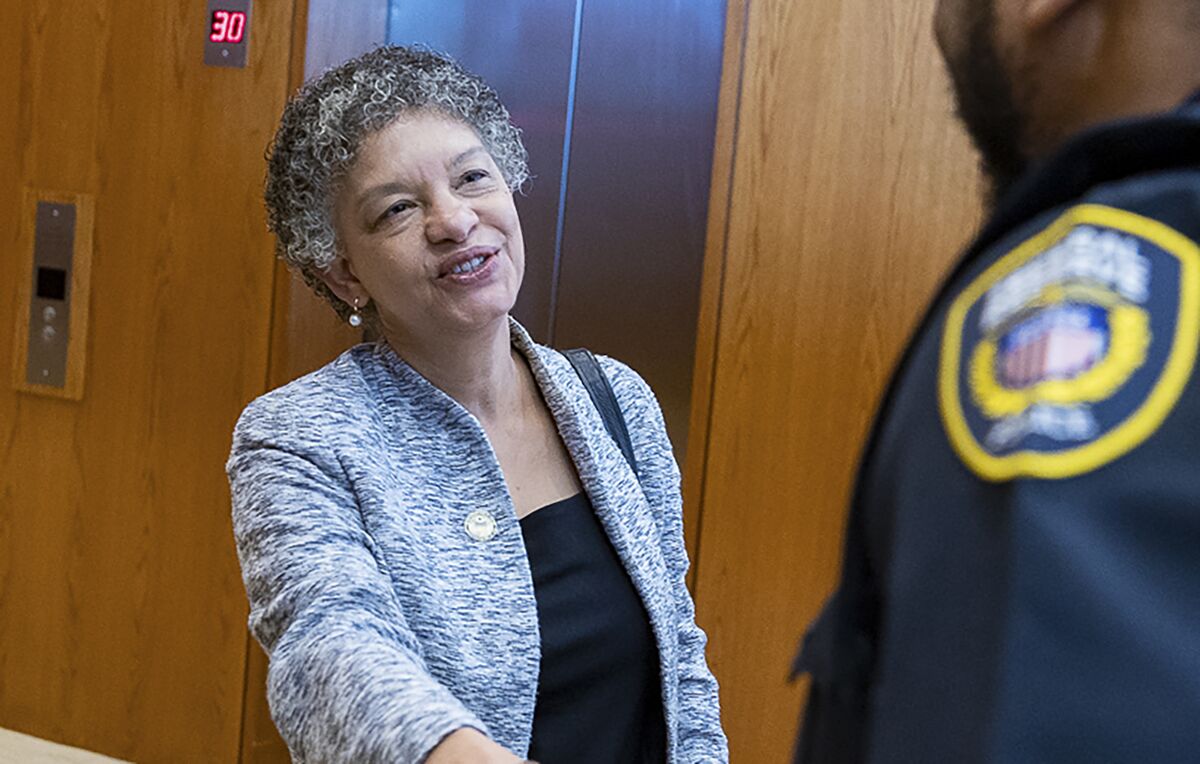
With inflation rampant, everyone is concerned about money and the economy -- not just the prices on everyday goods and services, but their investments as well. The situation has people on edge. Rick Franza, dean of Hull College of Business at Augusta University, said there are differences between the economy and the markets. “Part of that is in the economy, we worry about now and the stock market is more forward-looking, so there’s always some disconnect between the financial markets and the economic reality," Franza said. "The disconnect seems to be worse than ever. There’s less correlation between the economic news and where the stock market goes.” “We used to think that a good jobs report would make a good economy, and typically it does, but in the last couple of months when the jobs report was good, the market has tanked. People are reading it as the strong job market means inflation is not under control." Franza indicated there is a fear factor when it comes to the stock market and its steady decline over the last nine months. Younger investors in the market haven’t seen many bad times, so they are fearful. He also said people nearing retirement are fleeing the market as well. When it comes to the drop in the stock market, it affects anyone who has investments. “Most of us have some kind of investments, especially in retirement accounts,” Franza added. Inflation though, has been the dominating factor in the market right now. "The impact of inflation will be more on small businesses. The large businesses will find a way to weather the storm. If inflation continues and companies can’t be profitable, they’ll start laying off people. Then we’ll have a recession, which will reduce inflation.” It could also have a rippling affect on consumer choices and ultimately costs. “If more companies go out of business, it’ll give us fewer choices, which means the supply chain will be restricted. Then, you’ll pay higher prices because of fewer options. In the long run, if the Fed sticks to its plan to keep raising rates, it will reduce inflation.” If you're looking to know more about this important topic, then let us help. Franza is available to speak with media about trending issues like inflation, small business and the economy – simply click on his icon now to arrange an interview today.



UConn insect expert David Wagner on the troubling decline of the mayfly
One of the world's oldest flying insects is in trouble. Mayflies are in serious decline and, after 300 million years in existence, their dwindling population should be an alarm bell for all of us. More than just a bug with a short life span flying masterfully near creeks, rivers, and ponds, the mayfly plays a serious role in local ecosystems and the environment at large. A key component in the food chain, the mayfly nymph feeds off of algae, plants, and rotting leaves, cleaning up nature's mess while growing large enough to become a meal itself -- for fish, amphibians, lizards, birds, and even humans. Without mayflies, the ripple effect upwards could mean calamity for the planet. In a recent Washington Post Magazine deep-dive, UConn insect expert David Wagner offered his perspective on the on the plight of the mayfly: I reached out to David Wagner, a biologist and lepidopterist at the University of Connecticut, for context, thinking that perhaps the problems were isolated or overblown. He has studied insects for decades and reviewed numerous scientific studies about them from around the globe. He did not provide much comfort. There’s a growing body of research suggesting that the world is in the midst of its sixth mass extinction, he said. The losses of all kinds of creatures appear to be driven by climate change, habitat degradation, pollution and other ecological stressors. In a paper for the Proceedings of the National Academy of Sciences last year, “Insect Decline in the Anthropocene: Death by a Thousand Cuts,” Wagner and several other scientists delivered a stark warning about the disappearance of insects. The report did not focus on mayflies, but Wagner told me they are among the most vulnerable of the world’s insects because of their need for clean, well-oxygenated water. “Mayflies are reliable ‘canaries in the coal mines’ for freshwater systems,” he explained. “And their future prospects, especially in areas that are drying or warming, are bleak.” September 19 - Washington Post Magazine Dr. David Wagner is an expert in caterpillars, butterflies, moths, and insect conservation, and he's commented extensively on the current decline of insects worldwide. Click his icon to arrange an interview today.


Tokyo International Conference on African Development
Aston University co-hosted parts of the eighth Tokyo International Conference on African Development (TICAD8). There was a total of six talks hosted by the University, five of which are available to catch up on below. TICAD8 is the eighth event of TICAD, having been initiated by Japan in 1932. The conference brings together international organisations and business representatives from African countries and Japan to promote the digitalisation of African nations to keep pace with other leading economies. Cyber security and data privacy were two of the main topics up for discussion as well as central bank digital currencies (CBDC). CBDC is a government-issued fiat currency, that is, a currency not backed by a commodity such as gold. The use of an ideal CBDC will eliminate over 100,000 armoured cars carrying cash for ATM machines all over the world, reducing CO² emissions. Experts say transitioning to fiat currency requires the highest level of cyber security. The digitalisation of the healthcare sector in Africa Professor Georg Holländer of Oxford University speaks with Aston University visiting professor - and GVE founder - Koji Fusa. The discussion focuses on the benefits of an electronic health record for both an individual and the health care provider but will also relate these benefits to issues of public health and research. The technical challenges of providing the conventional infrastructure to establish health care records will be touched on with a focus placed on data security. Reasons will be pointed out that impede the uptake of electronic health records, especially in low and middle income countries, and possible solutions are presented to overcome this problem. CBDC and private sector digital currency will facilitate the digitalisation of nations of African countries CBDC will require the highest security and privacy protection. Professor Koji Fusa, Cyber Security Innovation Centre, Aston University, CEO of GVE Ltd discusses the benefits of a comprehensive digitalisation of fiat currency. This will become a powerful digital infrastructure which could expand into other areas like healthcare. The cyber security issue pointed by the US NIST in 2016 could be solved by having a different set of systems which could reduce the risks being presented by international hacking groups having quantum computers in the future. The World Bank's support for digitalisation of Africa Takashi Miyahara, the Executive Director of the World Bank Group, presents this talk in his personal capacity. Mr. Miyahara introduces the World Bank’s contribution to date, and Japan’s collaboration with the Bank, for digital development of Africa. Mr. Miyahara worked for the Ministry of Finance of Japan since 1986 before he took the current position in January 2021. Vaccine and climate transition in Africa René Karsenti, senior adviser and honorary president of the International Capital Market Association (ICMA), former board chair of the International Finance Facility for Immunisation (IFFIm), honorary director general of the European Investment Bank (EIB) and member of the Global Advisory Board of GVE Ltd, talks to Aston University's Koji Fusa about vaccine and climate transition in Africa: two major challenges, lessons from innovative ESG financing and future endeavours. Health and vaccine finance, climate transition and sustainable finance have sparked a revolution in thinking about innovative solutions leading to implementing successfully new humanitarian finance such as IFFIm, financing GAVI, the Vaccine Alliance, as well as other new ESG investments to achieve a positive impact. He says: "Needs remain huge in Africa. "We are now at a decisive moment in such ESG investments. We have evolved in a few years from a situation where investors knew - and cared - little about what their investments were supporting, to one where purpose matters more than ever. "But only by recognizing the urgency for action particularly in Africa and the power of ESG investment, collaboration, technology and innovation would get us there." Cyber security, financial integrity and developments Professor George Feiger is the executive dean of the College of Business and Social Sciences at Aston University. He suggests truly secure data transfer has the capability to transform more than medicine and finance in the efficiency sense and also holds out the promise of helping to clean up the even more consequential problem of looting of the state.

Advantage Ukraine? A surprising surge has Russia in retreat
The war in Ukraine has taken a surprising turn. A hard surge in the northeast of the country has seen Ukraine soldiers reclaiming lost ground and in some cases, even pushing Russian troops back to the border. It's a David and Goliath scenario, and at the moment, Ukraine finally seems to have the upper hand over the larger and more equipped Russian forces that have been clawing away at the country since February. There's been an enormous amount of media attention and reporters are looking to experts for perspective, opinion and explanation. “It seems to be a complete failure of logistics and strategy tactics on the Russian side," said Dr. Craig Albert, director of the Master of Arts in Intelligence and Security Studies at Augusta University. "Everything is just falling apart; their lines are collapsing. Troops are running and leaving behind all their ammunition, leaving vehicles, leaving weapons. That’s just astonishing to me that it is such a disorganized kind of retreat. Russia can use all their propaganda and say they are retrenching elsewhere and trying to solidify their forces further east and further south, but it’s a disorganized retreat and they’re losing lots of numbers but leaving all their equipment to the Ukrainians." Albert can explain what could happen next in Ukraine, as there are several possible scenarios and outcomes in the long and short term of this war. And if you’re a journalist looking to know more about what lies ahead as the war between Ukraine and Russia continues and how it may impact the United States, then let us help with your questions and coverage. Albert is director of the Master of Arts in Intelligence and Security Studies at Augusta University. He is a leading expert on war, terrorism and American politics. This is an important national and international issue. Albert is available to speak with media – simply click on his name to arrange an interview today.
