
Experts Matter. Find Yours.
Connect for media, speaking, professional opportunities & more.

Aston University professor made deputy lieutenant for the West Midlands
Professor Monder Ram has been recognised for his work around ethnic minority entrepreneurship Six individuals have been given the honour for contributing significantly to either national life, to their local communities – or both He will support the Lord-Lieutenant in several ways including attending on Royalty during official visits to the County. The Lord-Lieutenant of the West Midlands, John Crabtree OBE, has announced the appointment of an Aston University professor as a deputy lieutenant for the West Midlands. Six individuals, whose backgrounds range from music to education, entrepreneurship, and tackling homelessness, have been given the honour for contributing significantly to either national life, to their local communities – or both. Professor Monder Ram, director of the Centre for Research in Ethnic Minority Entrepreneurship (CREME) at Aston University, has been recognised for his work around ethnic minority entrepreneurship. The new appointees will support the Lord-Lieutenant, Her Majesty’s personal representative in the West Midlands, in several ways including attending on Royalty during official visits to the County, representation at citizenship ceremonies, supporting the armed forces of the Crown particularly the reserve and cadet forces, encouraging charitable and voluntary work and local initiatives to benefit the community, as well as promoting and encouraging nominations for Honours and Queen’s Awards for the County of the West Midlands. Professor Monder Ram, director of the Centre for Research in Ethnic Minority Entrepreneurship (CREME) at Aston University, said: “I am delighted and honoured to be appointed a Deputy Lieutenant for the West Midlands region. This role will provide an invaluable opportunity for me promote the importance of diversity, inclusion and enterprise, which are central to my work at CREME.” The West Midlands Lieutenancy comprises Birmingham, Coventry, Dudley, Sandwell, Solihull, Walsall and Wolverhampton. It was established in 1974. John Crabtree OBE, the Lord-Lieutenant for the West Midlands and Aston University honorary graduate, said: “The six appointments came at a pivotal time for the West Midlands which this year is on the national and world stage with Coventry as UK City of Culture and the region hosting the Commonwealth Games in July and August - as well as participating fully in the Queen’s Platinum Jubilee. The West Midlands is this year welcoming visitors from throughout the world and the West Midlands Lieutenancy is committed to supporting and representing every community in the County.”


Aston University psychologists to take part in major study to improve concussion prognosis
Researchers from the Aston Institute of Heath and Neurodevelopment, in the College of Health and Life Sciences at Aston University, are taking part in a major multiple partner study to identify new ways to accurately predict whether patients will develop long-term complications as a consequence of concussion. Experts from the University of Birmingham and the Defence Medical Rehabilitation Centre, in collaboration with Defence Medical Services, are to lead the UK consortium carrying out the study. With year one funded by the Ministry of Defence (£2m) and projected to run over eight years, the multi-faceted study will include a trial involving 400 civilians and 400 military personnel aged over 18 with a new diagnosis of concussion (also known as a mild traumatic brain injury or mTBI) which has resulted in them needing hospital treatment or rehabilitation. At specific time intervals over two years, the participants will take part in nine different areas of research using a variety of medical techniques and assessments to establish if these can be used routinely by medics as ‘biomarkers’ to indicate prognosis and long term impact of concussion. Medical techniques and assessments being trialled include brain imaging and function, analysis of blood and saliva samples, and headache measures, as well as mental health, vision, balance, and cognitive performance. mTBI is common and has been declared a major global public health problem, with 1.4 million hospital visits due to head injury annually in England and Wales - 85% of which are classified as mTBI. It is also estimated that up to 9.5% of UK military personnel with a combat role are diagnosed with mTBI annually. The research will involve 20 University of Birmingham experts working across disciplines, including neurology, psychology, sports medicine, mathematics and academics within the University’s Centre for Human Brain Health, and will be coordinated by Birmingham Clinical Trials Unit. It will also be driven by experts at the Defence Medical Rehabilitation Centre Stanford Hall; Imperial College London; University of Westminster; University of Nottingham; Royal Centre for Defence Medicine; and University Hospitals Coventry & Warwickshire. Dr Caroline Witton, reader in psychology and scientific lead for magnetoencephalography (MEG) at the Aston Institute for Health and Neurodevelopment (IHN), Aston University said: "I am very excited to be part of this landmark study of traumatic brain injury. At IHN we are focussed on improving lives through brain imaging and this work has the potential to help the thousands of people each year who suffer long term disability following a concussion." Dr Jan Novak, lecturer in psychology and MRI lead at Aston University said: "It is outstanding that this prestigious work is being conducted at Aston University’s Institute of Health and Neurodevelopment. We will provide our expertise in brain imaging, prediction of outcomes in patient groups, and credentials in mTBI research to enrich the study. It is hoped that it will build upon existing collaborations with other local institutions and government bodies such as the Ministry of Defence." Alex Sinclair, professor of Neurology at the University of Birmingham and chief investigator of the mTBI-Predict project explained: “Although classified as mild, and many recover, the consequences of concussion can be profound with many patients suffering long-term disability due to persistent headaches, fatigue, imbalance, memory disturbance, and poor mental health including post-traumatic stress disorder, while it can have a significant impact on the economy through loss of working hours and demand on the health system. Identifying those patients most at risk of these disabling consequences is not currently possible. There is therefore a pressing need to develop accurate, reproducible biomarkers of mTBI that are practical for use in a clinical setting and can predict long-term complications. "Our programme of research will deliver a step change in the care of patients with mTBI, enabling a personalised medicine approach to target early intervention for those most in need but also identifying those with a good prognosis who can return rapidly to activities of daily living.” Co-Chief Investigator, Air Vice-Marshall Rich Withnall QHS Director of Defence Healthcare, UK Ministry of Defence said: “I am delighted that the Defence Medical Services, including the Defence Medical Rehabilitation Centre at Stanford Hall, will be working hand-in-glove with class-leading civilian colleagues and the National Rehabilitation Centre Programme. I fully support this ground-breaking research which I am confident will lead to significant clinical innovation to benefit military and civilian patients and have a translational positive impact for sporting activities from grass-roots to elite levels.” Chief Executive of Headway, Peter McCabe said: “We know that even a seemingly minor head injury can have a major impact on a person’s life – and often the lives of those closest to them. This is particularly the case if the brain injury goes undiagnosed or its effects are mistaken for other conditions. The frustration of not having an accurate diagnosis or receiving the right support can be compounded by the lack of a clear recovery pathway or timeline. We therefore welcome this study in the hope that it can advance our understanding of concussion and mTBI.”


Pre-school children’s emotional eating partly shaped by innate food drive - research
New research at Aston University is helping to unpick the complex connections between the eating habits of children and their mothers. The research, by PhD student Rebecca Stone, surveyed 185 mothers of young children aged between three and five, asking about their eating habits and those of their children. The findings are published in the Journal of the Academy of Nutrition and Dietetics. Children pick up lots of behaviours by copying their parents – and this is true of their eating habits as well. The aim of the new research was to see how much of children’s emotional eating is explained by the way mothers use food as part of their parenting practices as well as the children’s own attitudes to food more generally. ‘Emotional eating’ is when we turn to food, such as cakes, chocolate and snacks, not because we’re hungry but to compensate for when we’re feeling sad, low or anxious. The survey included questions for mothers about how much they and their children ate in response to emotional states. It also asked about how much children were motivated by food and driven to eat or ask for food throughout the day, which is known as ‘food approach’ behaviour. Stone also asked mothers about the feeding practices that they used with their children – in particular about whether they used food to reward children for good behaviour, or visibly restricted their child’s access to foods, for example having foods in the house but forbidding them. These practices have been shown to make children more interested in food and have also been linked to greater emotional eating in children. When Stone analysed the responses, she found that children who were very motivated by food were more likely to pick up emotional eating behaviour from their parents. Stone used a complex statistical method, known as moderated mediation analysis, to decipher how the different aspects of the relationship interacted: emotional eating in the mother, how she parented the child around food, the child’s food approach tendencies and emotional eating. Professor Claire Farrow, who was one of Stone’s PhD supervisors at Aston University, said: “This study demonstrates that the way that children develop eating behaviours is very complex, and that emotional eating appears to be shaped in part by an innate drive towards food. "In this study we found that parenting practices interact with children’s eating tendencies and that children who are the most driven to approach food are the most influenced by feeding practices that can lead to emotional eating. These findings suggest that a ‘one size fits all’ approach to child feeding isn’t always appropriate and that some children are more susceptible to the influence of behaviours that can lead to emotional eating.” Stone agreed: “Our findings suggest that children who were more motivated to eat were more predisposed to associate food with emotions. Our research supports the idea that emotional eating is a learned behaviour which children often develop in pre-school years, but that some children are more vulnerable to developing emotional eating than others” Although common amongst parents, the research also highlights that using food as a reward or visibly restricting the child’s access to certain foods - even in children as young as three – can be problematic. Giving a piece of chocolate as a reward or telling children they can only have one biscuit as a ‘treat’ is likely to create an emotional response in the child which they then connect to those foods. Stone said: “The research suggests that restricting food in front of children who are already more motivated by food tends to backfire and makes children crave restricted foods even more. What seems to work best is known as ‘covert restriction’ - not letting children know that some foods are restricted (for example, not buying foods that you do not want your child to eat) and avoiding instances where you have to tell children that they are not allowed certain foods.” The researchers suggest parents looking for practical advice on healthy eating and fussy eating should check out the Child Feeding Guide, a free online resource created by Professor Claire Farrow, Professor Emma Haycraft & Dr Gemma Witcomb at Aston and Loughborough Universities.


Aston University Students’ Union to host Birmingham City Council leaders’ hustings
Leaders from the Labour, Conservative, Lib Dem and Green parties will take part in the event It will be held in the Students’ Union in front of an audience on 29 April Aston University alumnus, Charmaine Burton, will chair the hustings which is also being aired on New Style Radio and livestreamed on Instagram. Aston Students’ Union is set to host a Birmingham City Council leaders’ hustings ahead of the local elections on 5 May 2022. Local leaders from the Labour, Conservative, Lib Dem and Green parties will take part in the event that will be held in the Students’ Union in front of a live audience on the 29 April. There will be the opportunity for people in the room, and online, to ask questions directly to the party leaders. On 5 May, all 101 councillors’ seats will be contested in the Birmingham local elections. The leader of the party that wins the most seats will become the leader of Birmingham City Council. The leader and their cabinet will be responsible for which policies the Council should pursue in relation to provision of services and how the Council’s money is spent. Aston University alumnus, Charmaine Burton, will chair the hustings which is also being streamed online on her The Different Anglez show on New Style Radio and livestreamed via the Aston Students’ Union Instagram. Balraj Purewal, president of Aston Students’ Union, said: "It is great that Aston Students’ Union is hosting such an important political event. This is a fantastic opportunity for the general public and students who’re studying politics or are engaged in it to come along and ask questions and get involved. I am excited to welcome the four party leaders to our wonderful venue and am looking forward to holding other important events in it in the future." Charmaine Burton, a former Aston University student who is chairing the hustings, said: "It is so important the citizens of Birmingham have the opportunity to ask about issues of concern to the leaders of the local parties. It is an opportunity to question them about their manifestos which they and their candidates are battling for a seat on in the local elections and will be held accountable to if they gain power." There are 100 places available, and you can book yours here. The event is a partnership between Aston Students’ Union, The Different Anglez Show and Birmingham Race Impact Group (BRIG).

Questions about colon cancer? Our experts are here to help with your coverage
Every year, National Colorectal (colon) Cancer Awareness Month is observed during the month of March in an effort to raise awareness of the importance for colon cancer screenings. The recognition offers health care providers the opportunity to educate the general public about a disease that can be preventable, but can sometimes be seen as difficult for patients to discuss with their doctors. In the spirit of education, one of Augusta University’s experts has provided some insight into the subject of colon cancer. Dr. Asha Nayak-Kapoor is an associate professor of medicine in the Division of Hematology/Oncology in the Department of Medicine at the Medical College of Georgia at Augusta University. Nayak is certified by the American Board of Internal Medicine in Hematology and Oncology Specialties. Q: What are the primary risk factors for colon cancer? “Risk factors for colon cancer include: being overweight or obese, not being physically active, certain types of diets, smoking, alcohol use, being older, a personal history of colorectal polyps or colorectal cancer, a personal history of inflammatory bowel disease, a family history of colorectal cancer or adenomatous polyps, having an inherited syndrome. Common symptoms of colorectal cancer include: bloody stool or rectal bleeding, an ongoing change in bowel habits (diarrhea, constipation, chance in stool consistency), abdominal pain or cramping, gas or persistent abdominal discomfort, you feel like your bowels are not voiding completely, weakness, fatigue, or unexplained weight loss.” Q: How can a person protect themselves from the risks of colon cancer? “Colon cancer is largely preventable if patients undergo screening tests, like a surveillance colonoscopy starting at 45 years or earlier depending on family history. Many lifestyle-related factors have been linked to colorectal cancer. In fact, the links between diet, weight, and exercise and colorectal cancer risk are some of the strongest for any type of cancer. Getting to and staying at a healthy weight may help lower your risk. A diet that's high in red meats (such as beef, pork, lamb, or liver) and processed meats (like hot dogs and some luncheon meats) raises your colorectal cancer risk. Cooking meats at very high temperatures (frying, broiling, or grilling) creates chemicals that might raise your cancer risk. It’s not clear how much this might increase your colorectal cancer risk. Stop smoking. It is best not to drink alcohol. People with a history of colorectal cancer in a first-degree relative (parent, sibling, or child) are at increased risk. The risk is even higher if that relative was diagnosed with cancer when they were younger than 50, or if more than one first-degree relative is affected.” Q: It sometimes seems that colon cancer prevention is aimed more towards men compared to women, but cancer.org lists the risks at 1 in 23 (4.3%) for men and 1 in 25 (4.0%) for women. Is there a reason why perhaps a stigma about colon cancer affecting men more has been created? “According to focus group studies, it can be seen as a taboo topic that is uncomfortable to discuss, and it is not discussed as openly in public as prostate and breast cancer screenings. It can seem embarrassing or humiliating, and can be seen as distasteful dealing with prolonged bowel preparation.” Nayak is a member of several committees, including Onyx and Bayer Speaker Bureau for Nexavar, MCG Cancer Center Molecular Oncology Programme, and MCG Cancer Center Gastrointestinal Tumor Board Committee. If you are a journalist looking to know more about colorectal cancer and would like to speak with an expert for your stories, then let us help. Nayak is available to speak with media about this important subject. Simply click on her icon now to arrange an interview today.


Aston Business School to host information session on government’s flagship programme for SMEs
Businesses can find out how to boost performance, productivity and growth with the national government-backed Help to Grow: Management course The information session will be delivered face-to-face at Aston Business School on 4 April Business leaders will be able to ask questions about the course, which is delivered by leading business schools across the UK. Aston University is set to host an information session on the government’s flagship Help to Grow: Management programme, launched by Chancellor of the Exchequer Rishi Sunak at Aston Business School in August 2021. The 12-week management training programme is 90% funded by the Government and participants can complete it alongside full-time work, giving 30,000 SMEs access to world-class business expertise on everything from financial management to marketing. The information session, in collaboration with NatWest Group, will be delivered face-to-face at Aston Business School on 4 April from 09:30 to 11:00. Businesses will be able to find out how to boost performance, productivity and growth as well as ask questions about the course. Laura Barratt, managing director of The Malted Waffle Company and previous participant of the program, will share her experience of taking part and the benefit it has had on her company. Kate Angel, head of business support operations, Aston Centre for Growth, said: “The information session will provide a great opportunity for business leaders to hear about the value of the course from past participants, network with fellow company leaders and find out how Help to Grow: Management can help drive growth in their organisation.” This event is free and open to all, not just NatWest customers. You can register for the information session here. Find out more about the Help to Grow: Management course here.

Technical training, exposure to multiple industries and an open and inclusive culture help IT Associates innovate across CCG. They are often the quiet contributors to a project, taking a business idea from concept to delivery to allow strategic business endeavours to get off the ground. What they do and how they do it can be mysterious to many, with technical jargon, architectural details and complex processes at play. To succeed in IT requires incredible technical knowledge, a solid understanding of business processes, and innovative mindset with a natural curiosity to understand how multiple industry business systems all work together. Most importantly what’s needed is the desire for continuous learning. The IT department at CCG has enjoyed an incredible period of growth and development over recent years. In the last decade alone, CCG has undergone a major technology transformation, replacing every major business system required to support the different lines of business under the CCG umbrella including CAA Insurance, Orion Travel Insurance, CAA Travel, Membership and Emergency Roadside Services, while also implementing industry-leading innovations like CAA MyPace. We spoke to three tenured Associates to uncover their secret to success working in IT. What drives the culture of a team that often works behind the scenes but is vital to the success of all organizational projects? Lindsay Lamothe Typically, IT Associates have exposure to many business areas, giving them a well-rounded view of the various industries in which CCG operates. At first glance, one might think that this kind of exposure helps drive innovation and growth. But, while this is true for many, Lindsay Lamothe, Senior Business Systems Analyst for CCG’s Roadside Product Management, explains it’s more nuanced. “I think working in multiple lines of business at the organization led me down the path towards IT. I have no formal training in IT but having exposure to the business side of things gave me insights that continue to be valuable now that I work in a business enablement area,” shared Lamothe. “Being exposed to multiple industries while working in IT is a valuable opportunity to grow knowledge, but I think anyone who can learn more about the multiple industries we operate in would be well-positioned to do well in IT.” Lamothe started at CCG as a summer student to pay for university and eventually came on full-time working in auto travel, helping Members with TripTiks. She worked on the frontlines for ten years before shifting into IT and roadside assistance and has now been at the company full-time for 18 years. Her sense of purpose comes through very clearly when you speak to her about the impact of her work. “I am proud to work in IT at CCG because I am passionate about roadside operations. What we do saves lives,” said Lamothe. “If each code fix or enhancement that we work on gets us to the Member even five seconds sooner, that could be a matter of life or death. I know that we are making a difference in people's lives.” Voytek Bialkowski Voytek Bialkowski, just accepted a promotion to a director position in Enterprise Resource Planning. He also started his career at CCG and credits the technical learning opportunities offered for his continued success. Next month he marks the impressive milestone of 15 years with the company. “CCG is unparalleled in the marketplace in terms of professional growth and learning opportunities,” shares Bialkowski. “Our senior leaders have created a true knowledge culture by encouraging and celebrating professional development, certification, and lifelong learning. In my time with the IT department, I have earned four SAP certifications that furthered my technical skillset. I have also leveraged many of the programs available for Associates, such as the Lean Six Sigma White Belt and the Queens mental health certificate.” What truly sets CCG’s IT department apart is the emphasis on technical training that many Associates can receive right out of school or with little prior knowledge. Bialkowski explains, “CCG has provided me with multiple avenues for technological growth. Working on best-in-class systems and learning their functional and technical components has allowed me to become intimately familiar with SAP’s software suite, Greenfield SAP strategies and methodologies, data quality and data migration, application management, software development and testing lifecycle, as well as SQL and other query languages.” It's clear through the experiences of Lamothe and Bialkowski that learning opportunities and a broad array of opportunities to contribute to different areas of the business are key drivers of the success of CCG’s IT Associates. While hard skills and insights are essential, equally important is the culture of a team and the people that one works with to get things done. John Zhao John Zhao, Manager Quality Assurance in IT App Development & Architecture, shared his take on CCG’s culture and how that plays a role in delivering exceptional service to CCG’s business areas. “Collaboration and mutual respect underpin everything we do in IT. This is a big part of how we continue to learn and support each other,” shares Zhao. “Beyond these two values, we are encouraged to apply innovation to our daily process and products.” Innovation, being care-driven, leading by example, and collaboration are values that define CCG’s corporate culture across departments. Still, it is evident in speaking to Zhao that with tight deadlines and often unexpected challenges, they are especially engrained in the culture and approach of the IT department. Zhao’s experience at CCG aligns with Bialkowski and Lamothe’s, showcasing how fostering and developing technical knowledge internally and maintaining a broad perspective that can connect the dots across multiple industries are standard features of our IT approach. All three Associates underscore how the innovative and best-in-class approach of our IT department starts at the top. From Jay Woo, our CEO, to Apra Sekhon, our Chief Innovation Officer and Kin Lee-Yow, our Chief Information Officer, and their leaders. Together, they set the bar on integrating technology and innovation to ensure everyone aligns on promoting growth and knowledge to drive success for CCG’s IT Associates. As technology and innovation continue to grow, it’s valuable for all Associates to understand how this hardworking group of individuals support the essential work we do at CCG.


Major study reveals the lasting impact of Covid lockdowns
New research from the University of East Anglia reveals first-hand the lasting impact that lockdowns may have had on people’s mental and physical health. The UK’s first Covid lockdown was announced by Prime Minister Boris Johnson exactly two years ago today. Just a few days later, researchers at UEA launched a major project to track the mental and physical health of the nation through lockdowns and beyond. More than 1,000 participants carried out daily surveys – with questions on a range of lifestyle behaviours including physical activity, diet, sleep, smoking, drinking, and drug use. Some of the participants were then interviewed by the research team, to try to understand what was happening for people from their own viewpoints. Listen to what they had to say in our oral history project Lockdown Voices. New findings published today show how people responded very differently to social restrictions depending on their existing circumstances. For those who were less well-off to start with, adapting to lockdown was more difficult, and health behaviours typically worsened to a greater extent. In contrast, those who were better off at the start of the pandemic demonstrated faster adaptation and were more able to respond positively to restrictions, for example by taking to online exercise classes. It is likely that any lasting impact to mental and physical health will therefore be much greater for those who were worse off to start with. Those with good social links and healthy behaviours already in place described in their interviews how they were able to adapt to lockdown and thrive, whereas some of the more vulnerable in our communities had fallen into unhealthy spirals. Prof Caitlin Notley, from UEA's Norwich Medical School, said: “When the first lockdown was announced back in 2020, we started surveying participants from around the UK daily. Our initial results showed that people were eating less fruit and veg, getting less exercise and drinking more alcohol. “It quickly became apparent that lockdown may have lasting consequences for the physical and mental health of the nation. “We wanted to see whether people’s lifestyles changed in the long-term so we continued the study by carrying out regular surveys with the participants, and interviewing some people to find out more.” Now, two years on, the team’s results show how health inequalities are likely to have widened. Prof Notley said: “Social restrictions imposed as a result of the coronavirus pandemic have had a significant impact on health behaviours at the individual and population level. “It’s fair to say that all of our participants’ lives were disrupted by lockdown and they were forced to adapt. “But people responded to the lockdowns very differently and their experiences of social restrictions varied considerably. “Fundamentally, people were hindered or helped by their existing support structures and resources, such as access to technology to engage with the outside world, or private outdoor space. “Those people who had good friends, community links and who were already health conscious, were able to respond positively and better able to cope. “They were able to adapt to the ‘new normal’, use technology to keep in touch with friends and relatives, order veg boxes, carry on with a healthy diet and take part in healthy pursuits in new and innovative ways such as online fitness classes or ‘doing Joe Wicks’. “But lockdowns are very likely to have caused a sustained widening of social and health inequalities. “Those who remained in work outside the home, or who were retired, were the least impacted overall. But those who were unemployed, younger, on a lower income, clinically unwell or told to fully shield were particularly impacted by strict restrictions. “For these more vulnerable people, supportive social factors were taken away or severely restricted. Anxiety and depression worsened, and unhealthy behaviours like exercising less, drinking more alcohol, and eating a poor diet increased. “As we work through the ‘roadmap to recovery’, emphasis needs to be placed on a collaborative, community-based approach, with a focus on what makes us well. “Encouraging membership of community exercise groups, for example, may help those most impacted to engage again with healthy behaviours to keep them well. We also need to pay attention to how those who are less well-off responded more negatively to the policy of lockdown, so that lessons can be learnt for the future,” she added. ‘Disruption and adaptation in response to the coronavirus pandemic – assets as contextual moderators of enactment of health behaviours’ is published in the British Journal of Health Psychology.


Earlier this month, Georgia Southern University's Regina Rahimi, Ed.D., chatted with a journalist from Insight into Diversity to discuss the importance of trauma-informed education and how it is becoming a popular treatment for those dealing with the stress of COVID 19 and other sources of anxiety. "In recent years, a growing number of schools of education have begun focusing on trauma-informed teaching practices to help educators holistically address negative academic and social outcomes for students. Now, amid the COVID-19 pandemic, widespread racial injustice, and a host of other major stressors for U.S. youth, these concepts have become more popular, and important, than ever. “When the pandemic came, people really became concerned and interested in new traumas that were [affecting] students,” explains Regina Rahimi, Ed.D, a professor of education at Georgia Southern University. “Not only were students isolated, but if they were in an abusive household or they lived in a community where violence was prevalent, these things all became more pervasive in their lives, so that trauma was just further exacerbated.” March 16 - Insight into Diversity The full article is attached below. If you are a journalist looking to know more about trauma-informed education then let us help with your stories. Regina Rahimi is a professor in the Department of Middle Grades and Secondary Education at Georgia Southern University where her research is focused on issues of gender and sexuality in education and middle and high school drop-outs. She is available to speak with media about this important topic - simply click on her icon now to arrange an interview today.


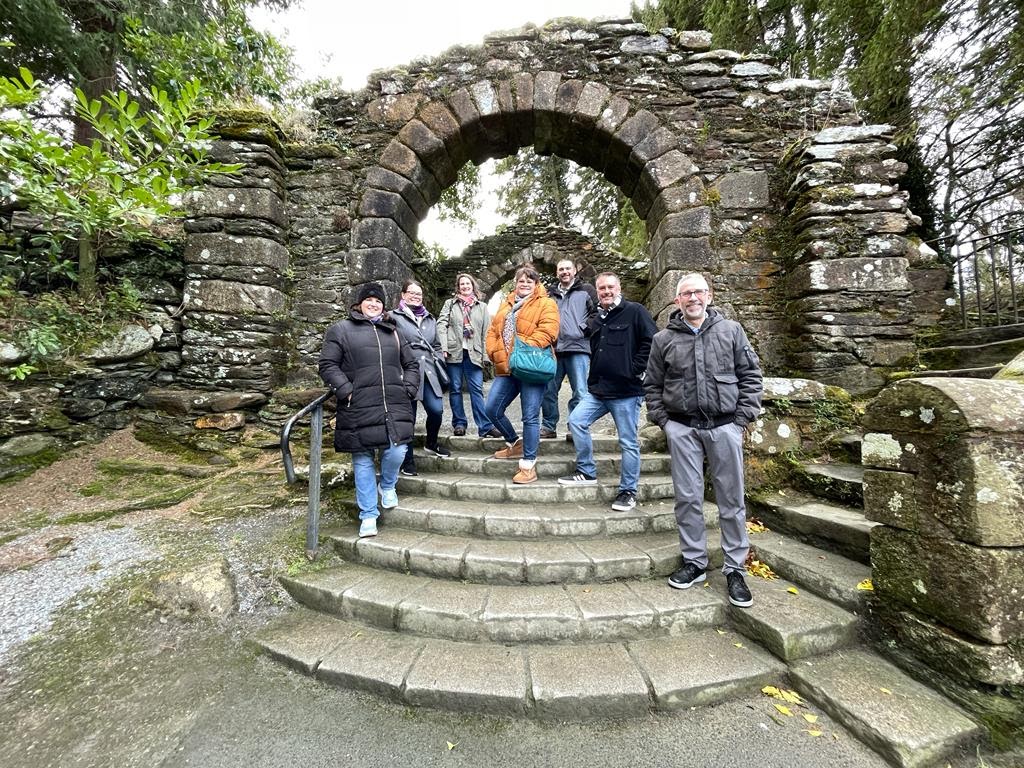
$100K student scholarship pool available for 2022 summer courses in Ireland Six professors from Georgia Southern University’s College of Education (COE) recently broadened their horizons during a trip to Ireland as they learned from and shared insight with instructors and educational leaders in the Wexford County community. Led by Howard Keeley, Ph.D., director of the University’s Center for Irish Research and Teaching, COE faculty traveled to Georgia Southern’s learning center in Wexford, Ireland, to observe Irish educational settings and exchange ideas with local leaders just ahead of a summer study abroad program opportunity for Georgia Southern students in which $100,000 of scholarship funding is available. “The main thing we did was get in front of leaders in the education space in Ireland,” stated Keeley. “We spoke to a number of folks who are either principals or vice principals or, in some way, senior administrators in a variety of schools including all-boys, all-girls, religious, secular and mixed schools.” The group included Catherine Howerter, Ph.D., associate professor of elementary and special education; Kip Sorgen, Ph.D., assistant professor of leadership, technology and human development; Alex Reyes, Ph.D., assistant professor of middle grades and secondary education; Amanda Wall, Ph.D., associate professor of middle grades and secondary education; Betsy Barrow, Ed.D., assistant professor of middle grades and secondary education; and Dan Calhoun, Ph.D., professor of leadership, technology and human development. Reyes, who trains pre-service and in-service teachers to work with culturally and linguistically diverse students, was excited to travel to Wexford after a study abroad program in Czech Republic she spearheaded with Wall was canceled in March 2020 due to the pandemic. Intrigued by Ireland, a plurilingual country, she was curious to see how Wexford’s environment might benefit students culturally. “I thought it was really exciting,” said Reyes. “All of the street signs are in Irish, even though English is the main language spoken. That prioritizing of that cultural heritage is fascinating. It was great to learn that the students in their primary and secondary schools take Irish language and culture as a subject every year.” She was especially motivated by a field trip to an Irish-language school, Meanscoil Gharman, which serves middle and high school students. With the exception of one daily class in English, teachers and students conducted all lessons in Irish. “It was really interesting to see that perspective,” she said. “There has been a revitalization of that culture. I thought that was fascinating to see how that can be handled in school.” In addition, Reyes was duly impressed with the country’s prioritization of social and emotional literacy for children, and the mandated well-being hours that are incorporated into daily school routines as a result of the pandemic. A program that promotes hygiene and an anti-bullying campaign also fit into the wellness curriculum. “It really impressed me that as a nation they prioritize the wellness of students, and how language and cultures can really be supported in a meaningful way,” Reyes said. “It’s affirming to see a proactive approach that has positive outcomes. Now, thinking ahead, we can look at how we can create opportunities for our students to experience this kind of approach.” Sorgen, who teaches in the educational leadership program at Georgia Southern, was interested in Ireland’s professional preparation. “None of them had advanced degrees, like what we offer at Georgia Southern,” noted Sorgen. “Learning about how to be a principal in Ireland is on-the-job training. In Georgia, there are specific educational requirements for our school administrators guided by professional standards. In Ireland, they generally ascend through the ranks, which makes professional mentoring essential to their success. We are exploring ways our educational leadership students could learn from Irish administrators about their experience, specifically with mentoring.” He also foresees the international partnership as a two-way exchange. “Given educational leadership programs are not common in Ireland, our faculty are considering ways in which we could use our expertise to foster leadership development of principals and teachers in Wexford,” said Sorgen. “We would utilize the Georgia Southern Wexford campus to host some of these sessions, furthering Georgia Southern’s relationship within the Wexford community.” Keeley also arranged meetings with education policy makers, including an extended meeting with an Irish congressman who is a representative for the County of Wexford in the Irish national parliament and chairs the joint committee for the Irish equivalent of the House and Senate Committee on education and higher education. “That was a tremendous opportunity for our faculty to talk to somebody at the highest level of government in Ireland, creating Irish state policy on education,” said Keeley. “And I know from the feedback we got from our College of Education colleagues that particularly for those in higher education, that to them was a really useful, next-step experience.” The trip exceeded expectations. “It was a fantastic learning experience for everyone,” said Keeley. “We had lots of high-level and also very practical experiences, and I could see our College of Education team thinking, ‘How can I bring what I’m learning, what I’m experiencing in this moment, into my classroom, into my curriculum, into my prospective study abroad courses in a way to build student success for our Georgia Southern folks.’ I think it was a great visit.” Complementing the faculty’s trip, a COE Irish study abroad program on diverse education in Ireland was recently approved for Summer 2022 and will give education students the opportunity to take one or two courses with the study abroad component. This will be a part of a broader study abroad program in Wexford, presented by the Honors College and the Center for Irish Research and Teaching, with assistance from the Office of the Provost and the Office of Global Engagement. The costs for undergraduate students at Georgia Southern’s Wexford campus will be offset by a $100,000 scholarship fund with awards of $1,000 for each student accepted into the program. “For students traveling to Wexford, Ireland, this summer, we will be able to defray the cost of the program through a generous travel scholarship through the Georgia Southern University Foundation,” said Dustin Anderson, Ph.D., associate provost for Student Success. “The donation makes these the most affordable multi-week programs that we ever have been able to offer.” Keeley is thrilled the gifts from generous donors will enable a number of students to earn valuable global experiences. “For students to have an opportunity to have international lives is powerful, and it’s powerful in ways that sometimes we can’t even predict,” he said. “Just the very fact of being abroad is going to change any of us, right? It can have a really transformative effect to feel a sense that, you know, as a student, ‘I can do this,’ and then a sense after the fact, ‘I did this,’ and just that in itself is educational. Giving students a safe space in Wexford, Ireland, to grow and feel that they are in a sense global citizens and bring the best of America, bring the best of Georgia, bring the best of the states from Savannah to Ireland, and learn to be an ambassador. That’s wonderful.” In addition to the education courses, students will also be able to choose from a Wexford-Savannah honors inquiry and an interdisciplinary program open to all students on human migration with courses in geography, religious studies, public health and a CORE study abroad course. Students interested can learn more about the program by clicking here and can email Kristin Karam in the Office of Global Engagement for more information about the scholarships. Georgia Southern University-Wexford is a global hub for learning housed in a historic building constructed in 1812. The space now features state-of-the-art classrooms and student apartments. Georgia Southern is the first public university in the United States to open an outreach learning facility in Ireland. If you're a reporter looking to know more about this initiative, then let our experts help. Howard Keeley, Ph.D., is the director of the Center for Irish Research and Teaching at Georgia Southern University. He is available - simply click on his icon now to arrange an interview today.
